





 Chat with AI


Medical Insurance 7th Edition by Amy Blochowiak, Joanne Valerius, Nenna Bayes, Cynthia Newby
Edition 7ISBN: 978-1259683077Medical Insurance 7th Edition by Amy Blochowiak, Joanne Valerius, Nenna Bayes, Cynthia Newby
Edition 7ISBN: 978-1259683077 Exercise 11
Medicare RA Analysis
When a practice receives an RA from a carrier, the payment received for each procedure is posted to each patient's account. If any patients on the RA have secondary coverage, secondary claims are then prepared unless they have automatically crossed from the primary to the secondary payer. Before doing so, however, the practice analyzes the RA to make sure the payments received are in keeping with what is expected given the office's fee schedule, the patient's insurance plan, and any deductibles or copayments that may be required from the patient.
In Claim Case Study 16.3, an RA is received from Medicare Nationwide. The first page of the RA shown in Figure 16.3 contains claim information for four patients who have secondary insurance plans. (The primary claim for each of these patients was created in Chapter 15.) Answer the following questions based on the information in the RA before preparing the patients' secondary claims.
FIGURE 16.3 RA from Medicare Nationwide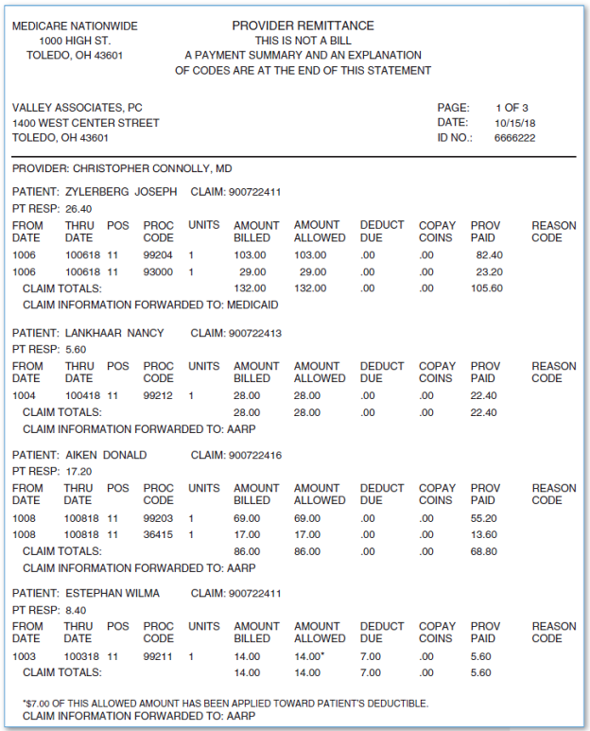
1. As of October 15, 2018, how many patients on the RA have paid their Medicare Part B deductible for 2016 in full?
2. Have any of the patients been denied payment for a claim?
3. How do fees charged by Valley Associates, PC, compare with the Medicare-approved amounts on the claim?
4. How much of the allowed amount for procedure 99204 is Joseph Zylerberg responsible for? What percentage of this will his secondary plan pay, assuming that he pays the $15 copay for the visit?
5. Donald Aiken is responsible for how much of the allowed amount for procedure 36415? How much of this will his secondary plan pay?
6. Notice that the PT RESP amount is shown for each person on the claim. Should you bill the patients for these amounts now?
7. Notice that Wilma Estephan's PT RESP amount is $8.40 for a $14.00 procedure. How much of this amount represents her coinsurance responsibility? Does any of it represent her deductible?
8. The allowed amount for procedure 99211 on Wilma Estephan's claim is $14.00. Normally, Medicare pays 80 percent of the allowed amount, which, in this case, would be $11.20. Why has Medicare paid only $5.60?
9. Using the following figures taken from the PT RESP field on the RA, estimate how much you think each secondary payer will pay. Note the following: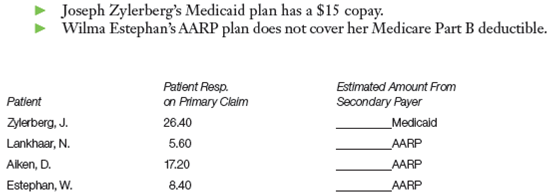
Preparing Secondary Claims
Using the information shown in the Medicare Nationwide RA (Figure 16.3), prepare secondary claims for the following Medicare patients. You will need to base the secondary claims on the primary claims you created for each patient in Chapter 15. Remember to use paper CMS-1500 claim forms or the electronic CMS-1500 form rather than the Medisoft program to prepare the claims.
Remember that you are preparing secondary claims for practice: Ignore the note on the RA saying that the claims have crossed over the particular secondary payer.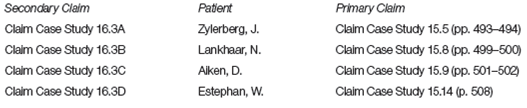
When a practice receives an RA from a carrier, the payment received for each procedure is posted to each patient's account. If any patients on the RA have secondary coverage, secondary claims are then prepared unless they have automatically crossed from the primary to the secondary payer. Before doing so, however, the practice analyzes the RA to make sure the payments received are in keeping with what is expected given the office's fee schedule, the patient's insurance plan, and any deductibles or copayments that may be required from the patient.
In Claim Case Study 16.3, an RA is received from Medicare Nationwide. The first page of the RA shown in Figure 16.3 contains claim information for four patients who have secondary insurance plans. (The primary claim for each of these patients was created in Chapter 15.) Answer the following questions based on the information in the RA before preparing the patients' secondary claims.
FIGURE 16.3 RA from Medicare Nationwide
1. As of October 15, 2018, how many patients on the RA have paid their Medicare Part B deductible for 2016 in full?
2. Have any of the patients been denied payment for a claim?
3. How do fees charged by Valley Associates, PC, compare with the Medicare-approved amounts on the claim?
4. How much of the allowed amount for procedure 99204 is Joseph Zylerberg responsible for? What percentage of this will his secondary plan pay, assuming that he pays the $15 copay for the visit?
5. Donald Aiken is responsible for how much of the allowed amount for procedure 36415? How much of this will his secondary plan pay?
6. Notice that the PT RESP amount is shown for each person on the claim. Should you bill the patients for these amounts now?
7. Notice that Wilma Estephan's PT RESP amount is $8.40 for a $14.00 procedure. How much of this amount represents her coinsurance responsibility? Does any of it represent her deductible?
8. The allowed amount for procedure 99211 on Wilma Estephan's claim is $14.00. Normally, Medicare pays 80 percent of the allowed amount, which, in this case, would be $11.20. Why has Medicare paid only $5.60?
9. Using the following figures taken from the PT RESP field on the RA, estimate how much you think each secondary payer will pay. Note the following:
Preparing Secondary Claims
Using the information shown in the Medicare Nationwide RA (Figure 16.3), prepare secondary claims for the following Medicare patients. You will need to base the secondary claims on the primary claims you created for each patient in Chapter 15. Remember to use paper CMS-1500 claim forms or the electronic CMS-1500 form rather than the Medisoft program to prepare the claims.
Remember that you are preparing secondary claims for practice: Ignore the note on the RA saying that the claims have crossed over the particular secondary payer.
Explanation


This question doesn’t have an expert verified answer yet, let Quizplus AI Copilot help.

Medical Insurance 7th Edition by Amy Blochowiak, Joanne Valerius, Nenna Bayes, Cynthia Newby

Why don’t you like this exercise?
Other Minimum 8 character and maximum 255 character
Character 255







