





 Chat with AI


Exercise Physiology: Theory and Application to Fitness and Performance 9th Edition by Scott Powers, Edward Howley
Edition 9ISBN: 0073523534Exercise Physiology: Theory and Application to Fitness and Performance 9th Edition by Scott Powers, Edward Howley
Edition 9ISBN: 0073523534 Exercise 8
Graph the changes that occur in heart rate, stroke volume, and cardiac output during prolonged exercise. What happens to these variables if the exercise is performed in a hot/humid environment?
Step-by-step solution Verified
Verified
Step 1 of 3
Heart rate is the number of heart beats per minute. It is the speed at which the heart beats. The normal adult heart beat at resting stage is 60 – 100 bpm. During exercise, the heart rate changes and the change depends on the type of work involved. During prolonged exercise, the cardiac output remains at a constant level throughout the duration of exercise. This is represented in the graph given below.
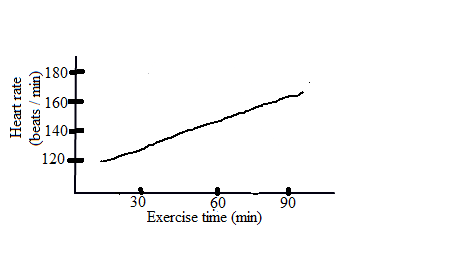
Figure 1: Changes in heart rate with prolonged exercise
Step 2 of 3
Step 3 of 3

Exercise Physiology: Theory and Application to Fitness and Performance 9th Edition by Scott Powers, Edward Howley

Why don’t you like this exercise?
Other Minimum 8 character and maximum 255 character
Character 255







