





 Chat with AI


Exercise Physiology: Theory and Application to Fitness and Performance 9th Edition by Scott Powers, Edward Howley
Edition 9ISBN: 0073523534Exercise Physiology: Theory and Application to Fitness and Performance 9th Edition by Scott Powers, Edward Howley
Edition 9ISBN: 0073523534Graph the heart rate, stroke volume, and cardiac output response to incremental exercise.
 Verified
Step 1 of 3
Heart rate is the number of heart beats per minute. It is the speed at which the heart beats. The normal adult heart beat at resting stage is 60 – 100 bpm. During exercise, the heart rate changes and the change depends on the type of work involved. Generally, heart rate is higher during arm work compared to that of the leg work, at a specific oxygen uptake rate. Exercise in hot and humid climates results in higher heart rate when compared to the same work done at cold and dry climates.
During an intensity exercise, there is a gradual increase in the heart rate until it reaches a plateau where there is no further increase.
The changes in the heart rate with respect to intensity exercise are shown in the graph below:
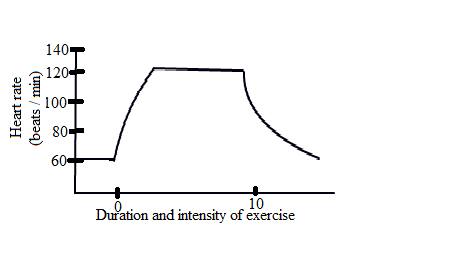
Figure 1: Graphical representation of changes in heart beat with respect to intensity exercise
Step 2 of 3
Step 3 of 3


Why don’t you like this exercise?
Other






