





 Chat with AI


Urinalysis and Body Fluids 6th Edition by Majorie DiLorenzo, Susan Strasinger
Edition 6ISBN: 0803641044Urinalysis and Body Fluids 6th Edition by Majorie DiLorenzo, Susan Strasinger
Edition 6ISBN: 0803641044Following surgery to correct a massive hemorrhage, a 55-year-old patient exhibits oliguria and edema. Blood test results indicate increasing azotemia and electrolyte imbalance. The glomerular filtration rate is 20 mL/min. Urinalysis results are as follows:
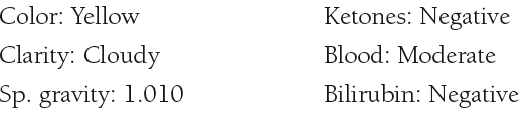
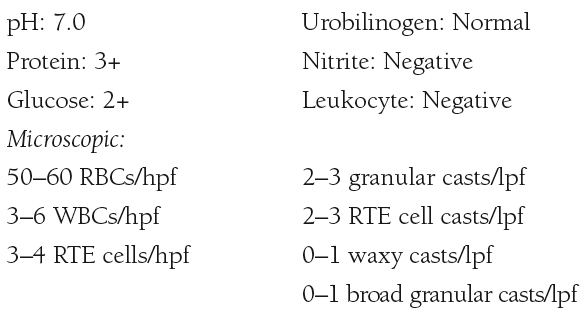
a. What diagnosis do the patient’s history and laboratory results suggest?
b. What is the most probable cause of the patient’s disorder? Is this considered to be of prerenal, renal, or postrenal origin?
c. What is the significance of the specific gravity result?
d. What is the significance of the RTE cells?
e. State two possible reasons for the presence of the broad casts.
 Verified
Step 1 of 5
a.
The patient’s laboratory results and history suggest acute renal failure.
Renal failure:
• Kidney failure occurs in both acute and chronic forms
• Renal failure begins gradually from a small injury to worsen condition that leads to chronic renal failure or end stage of renal disease
Acute renal failure:
• It is contrast to chronic renal failure, which exhibits sudden lack of renal function and it can be reversible
• Causes includes low blood pressure or cardiac output, blood loss in major injury or surgery, hemorrhage, burns, surgery, and septicemia
Step 2 of 5
Step 3 of 5
Step 4 of 5
Step 5 of 5


Why don’t you like this exercise?
Other






