





 Chat with AI


Accounting: What the Numbers Mean 9th Edition by Wayne W McManus, Daniel F Viele, David H Marshall
Edition 9ISBN: 0073527068Accounting: What the Numbers Mean 9th Edition by Wayne W McManus, Daniel F Viele, David H Marshall
Edition 9ISBN: 0073527068The following data apply to Question.
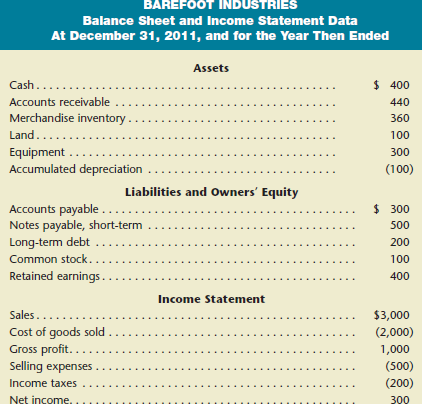
Assume that both total assets and total owners’ equity were the same on December 31, 2010, as on December 31, 2011. The margin, ROI, ROE, and turnover are
a. 10 percent, 20 percent, 60 percent, 2.0.
b. 10 percent, 20 percent, 75 percent, 1.5.
c. 30 percent, 15 percent, 60 percent, 2.0.
d. 30 percent, 15 percent, 75 percent, 1.5.
 Verified
Step 1 of 5
Margin:
Margin is calculated by dividing net income by net sales. It emphasizes that amount of net income earned for every dollar of sales revenue.
Return on investment (ROI): Return on investment is calculated to determine amount of return earned using total assets of the company. It is calculated by dividing net income by average total assets.
Return on equity (ROE): Return on investment is calculated to determine amount of return earned using total stockholders’ equity of the company. It is calculated by dividing net income by average stockholders’ equity.
Turnover: Turnover relates to the net sales generated by the business using total assets of the company. It is calculated by dividing net sales by total assets.
Step 2 of 5
Step 3 of 5
Step 4 of 5
Step 5 of 5


Why don’t you like this exercise?
Other






