


expand icon
book Accounting: What the Numbers Mean 9th Edition by Wayne W McManus, Daniel F Viele, David H Marshall cover

Accounting: What the Numbers Mean 9th Edition by Wayne W McManus, Daniel F Viele, David H Marshall

Edition 9ISBN: 0073527068
book Accounting: What the Numbers Mean 9th Edition by Wayne W McManus, Daniel F Viele, David H Marshall cover

Accounting: What the Numbers Mean 9th Edition by Wayne W McManus, Daniel F Viele, David H Marshall

Edition 9ISBN: 0073527068
Exercise 38

Calculate dividends using the accounting equation At the beginning of its current fiscal year, Willie Corp.’s balance sheet showed assets of $12,400 and  liabilities of $7,000. During the year, liabilities decreased by $1,200. Net income for the year was $3,000, and net assets at the end of the year were $6,000. There were no changes in paid-in capital during the year.

Required:

Calculate the dividends, if any, declared during the year.(Hint: Set up an accounting equation for the beginning of the year, changes during the year, and at the end of the year. Enter known data and solve for the unknowns.)

Here is a possible worksheet format:
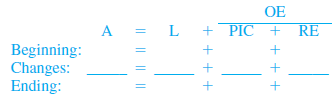
 <span class=bold><span class=bold>Calculate dividends using the accounting equation</span></span> At the beginning of its current fiscal year, Willie Corp.’s balance sheet showed assets of $12,400 and  liabilities of $7,000. During the year, liabilities decreased by $1,200. Net income for the year was $3,000, and net assets at the end of the year were $6,000. There were no changes in paid-in capital during the year. <span class=bold><span class=bold>Required:</span></span> Calculate the dividends, if any, declared during the year.(<span class=italics>Hint: Set up an accounting equation for the beginning of the year, changes during the year, and at the end of the year. Enter known data and solve for the unknowns.</span>) Here is a possible worksheet format:

Step-by-step solution
Verified
like image
like image

Step 1 of 2

Accounting Equation:

Accounting equation represents the relationship between the assets, liabilities and stockholder’s equity. For each transaction the debit must equal the credit. It is also known as balance sheet equation.

    <div class=answer> Accounting Equation: Accounting equation represents the relationship between the assets, liabilities and stockholder’s equity. For each transaction the debit must equal the credit. It is also known as balance sheet equation.   Calculate the dividends if declared, during the year as follows: It is given that the paid-in-capital has not changed during the year and assuming the beginning and ending balance are $0, the beginning retained earnings is computed as shown below:   Compute the ending retained balance at the end of the year as follows: Given, net assets at the end of the year amounting to $6,000. Ending retained balance is equal to the net assets as we assumed that the paid-in-capital is 0. Thus, the ending retained balance is $6,000. Compute the Dividends as follows:   Compute the ending liabilities as follows:   Compute the ending assets as follows:   Total assets have decreased by $1,200.

Calculate the dividends if declared, during the year as follows:

It is given that the paid-in-capital has not changed during the year and assuming the beginning and ending balance are $0, the beginning retained earnings is computed as shown below:

    <div class=answer> Accounting Equation: Accounting equation represents the relationship between the assets, liabilities and stockholder’s equity. For each transaction the debit must equal the credit. It is also known as balance sheet equation.   Calculate the dividends if declared, during the year as follows: It is given that the paid-in-capital has not changed during the year and assuming the beginning and ending balance are $0, the beginning retained earnings is computed as shown below:   Compute the ending retained balance at the end of the year as follows: Given, net assets at the end of the year amounting to $6,000. Ending retained balance is equal to the net assets as we assumed that the paid-in-capital is 0. Thus, the ending retained balance is $6,000. Compute the Dividends as follows:   Compute the ending liabilities as follows:   Compute the ending assets as follows:   Total assets have decreased by $1,200.



Compute the ending retained balance at the end of the year as follows:

Given, net assets at the end of the year amounting to $6,000. Ending retained balance is equal to the net assets as we assumed that the paid-in-capital is 0.

Thus, the ending retained balance is $6,000.

Compute the Dividends as follows:

    <div class=answer> Accounting Equation: Accounting equation represents the relationship between the assets, liabilities and stockholder’s equity. For each transaction the debit must equal the credit. It is also known as balance sheet equation.   Calculate the dividends if declared, during the year as follows: It is given that the paid-in-capital has not changed during the year and assuming the beginning and ending balance are $0, the beginning retained earnings is computed as shown below:   Compute the ending retained balance at the end of the year as follows: Given, net assets at the end of the year amounting to $6,000. Ending retained balance is equal to the net assets as we assumed that the paid-in-capital is 0. Thus, the ending retained balance is $6,000. Compute the Dividends as follows:   Compute the ending liabilities as follows:   Compute the ending assets as follows:   Total assets have decreased by $1,200.

Compute the ending liabilities as follows:

    <div class=answer> Accounting Equation: Accounting equation represents the relationship between the assets, liabilities and stockholder’s equity. For each transaction the debit must equal the credit. It is also known as balance sheet equation.   Calculate the dividends if declared, during the year as follows: It is given that the paid-in-capital has not changed during the year and assuming the beginning and ending balance are $0, the beginning retained earnings is computed as shown below:   Compute the ending retained balance at the end of the year as follows: Given, net assets at the end of the year amounting to $6,000. Ending retained balance is equal to the net assets as we assumed that the paid-in-capital is 0. Thus, the ending retained balance is $6,000. Compute the Dividends as follows:   Compute the ending liabilities as follows:   Compute the ending assets as follows:   Total assets have decreased by $1,200.

Compute the ending assets as follows:

    <div class=answer> Accounting Equation: Accounting equation represents the relationship between the assets, liabilities and stockholder’s equity. For each transaction the debit must equal the credit. It is also known as balance sheet equation.   Calculate the dividends if declared, during the year as follows: It is given that the paid-in-capital has not changed during the year and assuming the beginning and ending balance are $0, the beginning retained earnings is computed as shown below:   Compute the ending retained balance at the end of the year as follows: Given, net assets at the end of the year amounting to $6,000. Ending retained balance is equal to the net assets as we assumed that the paid-in-capital is 0. Thus, the ending retained balance is $6,000. Compute the Dividends as follows:   Compute the ending liabilities as follows:   Compute the ending assets as follows:   Total assets have decreased by $1,200.

Total assets have decreased by $1,200.


Step 2 of 2

close menu
Accounting: What the Numbers Mean 9th Edition by Wayne W McManus, Daniel F Viele, David H Marshall
cross icon



