





 Chat with AI

Deck 46: Animal Reproduction
Full screen (f)

Question

Question
Question
Question
Question
Question
Question
Question
Question
Question
Question
Question
Question
Question
Question
Question
Question
Question
Question
Question
Question
Refer to the following figure, which diagrams the reproductive anatomy of the human male, to answer the question. 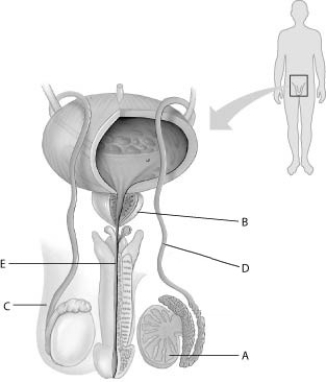 In the figure, which letter points to the prostate gland?
A) A
B) B
C) C
D) D
In the figure, which letter points to the prostate gland?A) A
B) B
C) C
D) D
Question
Refer to the following figure, which diagrams the reproductive anatomy of the human female, to answer the question. 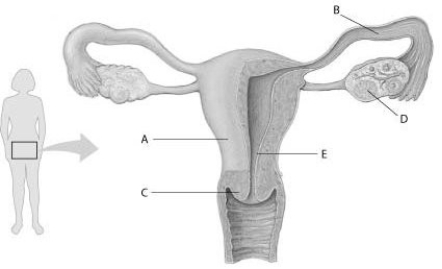 In the figure, which structure is the site of embryo implantation?
A) B
B) C
C) D
D) E
In the figure, which structure is the site of embryo implantation?A) B
B) C
C) D
D) E
Question
Question
Refer to the following figure, which diagrams the reproductive anatomy of the human male, to answer the question. 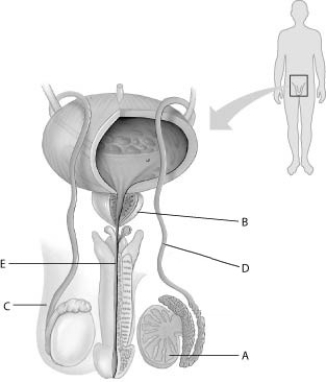 In the figure, which letter points to the vas deferens?
A) A
B) B
C) C
D) D
In the figure, which letter points to the vas deferens?A) A
B) B
C) C
D) D
Question
Question
Question
Refer to the following figure, which diagrams the reproductive anatomy of the human female, to answer the question. 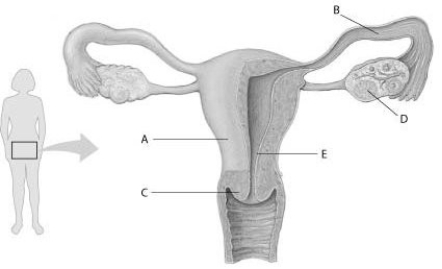 In the figure, which letter points to the corpus luteum?
A) A
B) B
C) C
D) D
In the figure, which letter points to the corpus luteum?A) A
B) B
C) C
D) D
Question
Question
Question
Question
Question
Question
Refer to the following figure, which diagrams the reproductive anatomy of the human female, to answer the question. 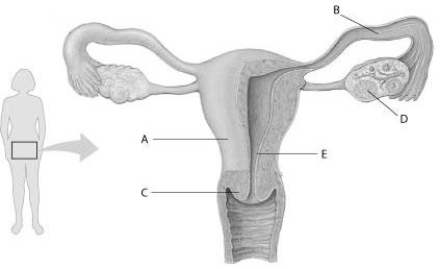 In the figure, which letter points to the cervix?
A) A
B) C
C) D
D) E
In the figure, which letter points to the cervix?A) A
B) C
C) D
D) E
Question
Question
Question
Question
Question
Question
Question
Question
Question
Question
Question
Question
Question
Question
Question
Question
Question
Question
Question
Question
Question
Question
Question
Question
Question
Question
Question
Question
Question
Question
Question
Question
Question
Question
Question

Unlock Deck
Sign up to unlock the cards in this deck!
Unlock Deck
Unlock Deck
1/68

Play

Full screen (f)
Deck 46: Animal Reproduction
1
On a submarine expedition to the ocean bottom, you discover a population of fish that are only female. What type of reproduction does this fish most likely use?
A) sexual
B) budding
C) cloning
D) parthenogenesis
A) sexual
B) budding
C) cloning
D) parthenogenesis
D
2
Regeneration, the regrowth of lost body parts, normally follows ________.
A) all types of asexual reproduction
B) fission
C) fragmentation
D) parthenogenesis
A) all types of asexual reproduction
B) fission
C) fragmentation
D) parthenogenesis
C
3
In an animal that switches between sexual and asexual reproduction, when is sexual reproduction more likely to occur?
A) when conditions for survival are favourable
B) when conditions for survival are unfavourable
C) when males and females find each other
D) What conditions favour sexual over asexual remains a complete mystery.
A) when conditions for survival are favourable
B) when conditions for survival are unfavourable
C) when males and females find each other
D) What conditions favour sexual over asexual remains a complete mystery.
B
4
Among non-mammalian vertebrates, the cloaca is an anatomical structure that functions as ________.
A) a specialised sperm-transfer device produced only by males
B) a shared pathway for the digestive, excretory, and reproductive systems
C) a source of nutrients for developing sperm in the testes
D) a gland that secretes mucus to lubricate the vaginal opening
A) a specialised sperm-transfer device produced only by males
B) a shared pathway for the digestive, excretory, and reproductive systems
C) a source of nutrients for developing sperm in the testes
D) a gland that secretes mucus to lubricate the vaginal opening
Unlock Deck
Unlock for access to all 68 flashcards in this deck.
Unlock Deck
k this deck
5
Asexual reproduction results in offspring that are genetically identical to their parent. What type of cell process occurs to generate this type of offspring?
A) mitosis
B) meiosis
C) cell fusion
D) fertilisation
A) mitosis
B) meiosis
C) cell fusion
D) fertilisation
Unlock Deck
Unlock for access to all 68 flashcards in this deck.
Unlock Deck
k this deck
6
Egg laying in fruit flies can be triggered (induced) when males deposit their sperm in the spermathecae of the females. What is the selective advantage of induced egg laying for the male flies?
A) Because egg laying is induced upon mating, the males do not have to produce as much sperm.
B) More eggs can be fertilised at once when egg laying is induced.
C) Induced egg laying ensures that a male fly's sperm is used for fertilisation.
D) Mating takes less time, so less energy is expended by the males.
A) Because egg laying is induced upon mating, the males do not have to produce as much sperm.
B) More eggs can be fertilised at once when egg laying is induced.
C) Induced egg laying ensures that a male fly's sperm is used for fertilisation.
D) Mating takes less time, so less energy is expended by the males.
Unlock Deck
Unlock for access to all 68 flashcards in this deck.
Unlock Deck
k this deck
7
Sexual reproduction ________.
A) results in over half of the offspring being female
B) produces offspring of greater genetic variety compared to offspring resulting from asexual reproduction
C) is completed more rapidly than asexual reproduction
D) is better suited to environments with relatively constant conditions
A) results in over half of the offspring being female
B) produces offspring of greater genetic variety compared to offspring resulting from asexual reproduction
C) is completed more rapidly than asexual reproduction
D) is better suited to environments with relatively constant conditions
Unlock Deck
Unlock for access to all 68 flashcards in this deck.
Unlock Deck
k this deck
8
Asexual reproduction results in greater reproductive success than does sexual reproduction when ________.
A) pathogens are rapidly diversifying
B) there is some potential for rapid overpopulation
C) a species is expanding into diverse geographic settings
D) a species is in a stable and favourable environment
A) pathogens are rapidly diversifying
B) there is some potential for rapid overpopulation
C) a species is expanding into diverse geographic settings
D) a species is in a stable and favourable environment
Unlock Deck
Unlock for access to all 68 flashcards in this deck.
Unlock Deck
k this deck
9
For water fleas of the genus Daphnia, switching from a pattern of asexual reproduction to sexual reproduction coincides with ________.
A) environmental conditions becoming more favourable for offspring
B) greater abundance of food resources for offspring
C) periods of temperature or food stresses on adults
D) exhaustion of an individual's supply of eggs
A) environmental conditions becoming more favourable for offspring
B) greater abundance of food resources for offspring
C) periods of temperature or food stresses on adults
D) exhaustion of an individual's supply of eggs
Unlock Deck
Unlock for access to all 68 flashcards in this deck.
Unlock Deck
k this deck
10
You decide to study two species of birds, both of which form monogamous pairs (one male and one female). In species 1, you find that the eggs in a pair's nest are in fact almost always the offspring of that pair. In species 2, you are surprised to find that many of the eggs in a nest were actually fathered by males of neighbouring pairs. Apparently, mating outside of monogamous pairings is widespread in species 2. What would you expect to observe if you examined the reproductive tracts of the female birds in the species?
A) Females of species 2 would have sperm from multiple males in their reproductive tracts.
B) Females of species 1 would have sperm from multiple males in their reproductive tracts, but would only use their partners' sperm to fertilise eggs.
C) Ovaries of species 1 are larger than those of species 2.
D) Females of species 1 would produce more oocytes.
A) Females of species 2 would have sperm from multiple males in their reproductive tracts.
B) Females of species 1 would have sperm from multiple males in their reproductive tracts, but would only use their partners' sperm to fertilise eggs.
C) Ovaries of species 1 are larger than those of species 2.
D) Females of species 1 would produce more oocytes.
Unlock Deck
Unlock for access to all 68 flashcards in this deck.
Unlock Deck
k this deck
11
Sexual reproduction ________.
A) allows animals to conserve resources and reproduce only during optimal conditions
B) can produce diverse phenotypes that may enhance survival of a population in a changing environment
C) enables males and females to remain isolated from each other while rapidly colonising habitats
D) guarantees that both parents will provide care for each offspring
A) allows animals to conserve resources and reproduce only during optimal conditions
B) can produce diverse phenotypes that may enhance survival of a population in a changing environment
C) enables males and females to remain isolated from each other while rapidly colonising habitats
D) guarantees that both parents will provide care for each offspring
Unlock Deck
Unlock for access to all 68 flashcards in this deck.
Unlock Deck
k this deck
12
What makes sexually reproduced offspring genetically different from their parents?
A) genetic recombination during meiosis
B) genetic recombination during mitosis
C) crossing over during mitosis
D) Sexual reproduction does not produce genetically different offspring.
A) genetic recombination during meiosis
B) genetic recombination during mitosis
C) crossing over during mitosis
D) Sexual reproduction does not produce genetically different offspring.
Unlock Deck
Unlock for access to all 68 flashcards in this deck.
Unlock Deck
k this deck
13
You decide to study two species of birds, both of which form monogamous pairs (one male and one female). In species 1, you find that the eggs in a pair's nest are in fact almost always the offspring of that pair. In species 2, you are surprised to find that many of the eggs in a nest were actually fathered by males of neighbouring pairs. Apparently, mating outside of monogamous pairings is widespread in species 2. Given this information, what would be the logical prediction to make before comparing testes size of males of the two species?
A) Testes of species 1 are larger than testes of species 2.
B) Testes of species 2 are larger than testes of species 1.
C) There is no relationship between this observation and the size of the testes.
D) The testes of the individual within each species would be exactly the same size.
A) Testes of species 1 are larger than testes of species 2.
B) Testes of species 2 are larger than testes of species 1.
C) There is no relationship between this observation and the size of the testes.
D) The testes of the individual within each species would be exactly the same size.
Unlock Deck
Unlock for access to all 68 flashcards in this deck.
Unlock Deck
k this deck
14
Females of many insect species, including honeybee queens, can store gametes shed by their mating partners in ________.
A) their nests
B) the abdominal tract
C) the uterus
D) the spermatheca
A) their nests
B) the abdominal tract
C) the uterus
D) the spermatheca
Unlock Deck
Unlock for access to all 68 flashcards in this deck.
Unlock Deck
k this deck
15
Animals that have external fertilisation are most likely to reproduce in which of the following areas?
A) sand dune
B) polar ice sheet
C) shallow lake
D) tall-grass plain
A) sand dune
B) polar ice sheet
C) shallow lake
D) tall-grass plain
Unlock Deck
Unlock for access to all 68 flashcards in this deck.
Unlock Deck
k this deck
16
Evidence that parthenogenic whiptail lizards are derived from sexually reproducing ancestors includes ________.
A) the requirement for male-like behaviours in some females before their partners will ovulate
B) the development and then regression of testes prior to sexual maturation
C) the observation that all of the offspring are haploid
D) the persistence of a vestigial penis among some of the females
A) the requirement for male-like behaviours in some females before their partners will ovulate
B) the development and then regression of testes prior to sexual maturation
C) the observation that all of the offspring are haploid
D) the persistence of a vestigial penis among some of the females
Unlock Deck
Unlock for access to all 68 flashcards in this deck.
Unlock Deck
k this deck
17
In close comparisons, external fertilisation often yields more offspring than does internal fertilisation. However, internal fertilisation typically offers the advantage that ________.
A) it requires less time and energy to be devoted to reproduction
B) the smaller number of offspring produced often receive a greater amount of parental investment
C) it permits the most rapid population increase
D) it requires expression of fewer genes and maximises genetic stability
A) it requires less time and energy to be devoted to reproduction
B) the smaller number of offspring produced often receive a greater amount of parental investment
C) it permits the most rapid population increase
D) it requires expression of fewer genes and maximises genetic stability
Unlock Deck
Unlock for access to all 68 flashcards in this deck.
Unlock Deck
k this deck
18
Which of the following organisms reproduces by fission?
A) eels
B) bluefin tuna
C) blue tongue lizards
D) stony corals
A) eels
B) bluefin tuna
C) blue tongue lizards
D) stony corals
Unlock Deck
Unlock for access to all 68 flashcards in this deck.
Unlock Deck
k this deck
19
Environmental cues that influence the timing of reproduction generally do so by ________.
A) increasing the body temperature
B) providing access to water for external fertilisation
C) increasing ambient temperature most favourable for sex
D) direct effects on hormonal control mechanisms
A) increasing the body temperature
B) providing access to water for external fertilisation
C) increasing ambient temperature most favourable for sex
D) direct effects on hormonal control mechanisms
Unlock Deck
Unlock for access to all 68 flashcards in this deck.
Unlock Deck
k this deck
20
Genetic mutations in asexually reproducing organisms lead to more evolutionary changes than do genetic mutations in sexually reproducing ones because ________.
A) asexually reproducing organisms, but not sexually reproducing organisms, pass all mutations on to their offspring
B) sexually reproducing organisms can produce more offspring in a given time than can asexually reproducing organisms
C) more genetic variation is present in organisms that reproduce asexually than is present in those that reproduce sexually
D) asexually reproducing organisms have more dominant genes than organisms that reproduce sexually
A) asexually reproducing organisms, but not sexually reproducing organisms, pass all mutations on to their offspring
B) sexually reproducing organisms can produce more offspring in a given time than can asexually reproducing organisms
C) more genetic variation is present in organisms that reproduce asexually than is present in those that reproduce sexually
D) asexually reproducing organisms have more dominant genes than organisms that reproduce sexually
Unlock Deck
Unlock for access to all 68 flashcards in this deck.
Unlock Deck
k this deck
21
Refer to the following figure, which diagrams the reproductive anatomy of the human male, to answer the question. In the figure, which letter points to the prostate gland?
A) A
B) B
C) C
D) D
In the figure, which letter points to the prostate gland?A) A
B) B
C) C
D) D
Unlock Deck
Unlock for access to all 68 flashcards in this deck.
Unlock Deck
k this deck
22
Refer to the following figure, which diagrams the reproductive anatomy of the human female, to answer the question. In the figure, which structure is the site of embryo implantation?
A) B
B) C
C) D
D) E
In the figure, which structure is the site of embryo implantation?A) B
B) C
C) D
D) E
Unlock Deck
Unlock for access to all 68 flashcards in this deck.
Unlock Deck
k this deck
23
Increasing the temperature of the human scrotum by 2°C (that is, near the normal body core temperature) and holding it there would most likely ________.
A) reduce the fertility of the man by impairing the production of gonadal steroid hormones
B) reduce the fertility of the man by impairing spermatogenesis
C) reduce the man's sexual interest
D) increase the fertility of the affected man by enhancing the rate of steroidogenesis
A) reduce the fertility of the man by impairing the production of gonadal steroid hormones
B) reduce the fertility of the man by impairing spermatogenesis
C) reduce the man's sexual interest
D) increase the fertility of the affected man by enhancing the rate of steroidogenesis
Unlock Deck
Unlock for access to all 68 flashcards in this deck.
Unlock Deck
k this deck
24
Refer to the following figure, which diagrams the reproductive anatomy of the human male, to answer the question. In the figure, which letter points to the vas deferens?
A) A
B) B
C) C
D) D
In the figure, which letter points to the vas deferens?A) A
B) B
C) C
D) D
Unlock Deck
Unlock for access to all 68 flashcards in this deck.
Unlock Deck
k this deck
25
At the time of fertilisation, the maturation of the human oogonium has resulted in ________.
A) one secondary oocyte
B) two primary oocytes
C) four secondary oocytes
D) four zygotes
A) one secondary oocyte
B) two primary oocytes
C) four secondary oocytes
D) four zygotes
Unlock Deck
Unlock for access to all 68 flashcards in this deck.
Unlock Deck
k this deck
26
A physician finds that a nine-year-old male patient is entering puberty much earlier than usual. Such a condition is most likely the result of a tumour in the ________.
A) hypothalamus, producing elevated levels of testosterone
B) anterior pituitary, producing elevated levels of testosterone
C) testes, producing elevated levels of oestrogen
D) anterior pituitary, producing elevated levels of gonadotropins
A) hypothalamus, producing elevated levels of testosterone
B) anterior pituitary, producing elevated levels of testosterone
C) testes, producing elevated levels of oestrogen
D) anterior pituitary, producing elevated levels of gonadotropins
Unlock Deck
Unlock for access to all 68 flashcards in this deck.
Unlock Deck
k this deck
27
Refer to the following figure, which diagrams the reproductive anatomy of the human female, to answer the question. In the figure, which letter points to the corpus luteum?
A) A
B) B
C) C
D) D
In the figure, which letter points to the corpus luteum?A) A
B) B
C) C
D) D
Unlock Deck
Unlock for access to all 68 flashcards in this deck.
Unlock Deck
k this deck
28
The primary difference between oestrous and menstrual cycles is that ________.
A) the endometrium shed by the uterus during the oestrous cycle is reabsorbed with no extensive fluid flow out of the body, whereas the shed endometrium of menstrual cycles is excreted from the body
B) behavioural changes during oestrous cycles are much less apparent than those of menstrual cycles
C) season and climate have less pronounced effects on oestrous cycles than they do on menstrual cycles
D) copulation normally occurs across the oestrous cycle, whereas in menstrual cycles copulation only occurs during the period surrounding ovulation
A) the endometrium shed by the uterus during the oestrous cycle is reabsorbed with no extensive fluid flow out of the body, whereas the shed endometrium of menstrual cycles is excreted from the body
B) behavioural changes during oestrous cycles are much less apparent than those of menstrual cycles
C) season and climate have less pronounced effects on oestrous cycles than they do on menstrual cycles
D) copulation normally occurs across the oestrous cycle, whereas in menstrual cycles copulation only occurs during the period surrounding ovulation
Unlock Deck
Unlock for access to all 68 flashcards in this deck.
Unlock Deck
k this deck
29
Which statement about human reproduction is correct?
A) Spermatogonia and oogonia are haploid cells.
B) In humans, spermatogenesis and oogenesis both function best at normal, core body temperatures.
C) A human oocyte only completes meiosis II after a sperm penetrates it.
D) The earliest stages of spermatogenesis occur closest to the lumen of the seminiferous tubules.
A) Spermatogonia and oogonia are haploid cells.
B) In humans, spermatogenesis and oogenesis both function best at normal, core body temperatures.
C) A human oocyte only completes meiosis II after a sperm penetrates it.
D) The earliest stages of spermatogenesis occur closest to the lumen of the seminiferous tubules.
Unlock Deck
Unlock for access to all 68 flashcards in this deck.
Unlock Deck
k this deck
30
Human sperm cells first arise in the ________.
A) prostate gland
B) vas deferens
C) seminiferous tubules
D) epididymis
A) prostate gland
B) vas deferens
C) seminiferous tubules
D) epididymis
Unlock Deck
Unlock for access to all 68 flashcards in this deck.
Unlock Deck
k this deck
31
Among mammals, the male and female genital structures that consist mostly of erectile tissue include the ________.
A) penis and clitoris
B) vas deferens and oviduct
C) testes and ovaries
D) prostate and ovaries
A) penis and clitoris
B) vas deferens and oviduct
C) testes and ovaries
D) prostate and ovaries
Unlock Deck
Unlock for access to all 68 flashcards in this deck.
Unlock Deck
k this deck
32
Among human males, both semen and urine normally travel along the ________.
A) vas deferens
B) seminal vesicle
C) urethra
D) ureter
A) vas deferens
B) seminal vesicle
C) urethra
D) ureter
Unlock Deck
Unlock for access to all 68 flashcards in this deck.
Unlock Deck
k this deck
33
Refer to the following figure, which diagrams the reproductive anatomy of the human female, to answer the question. In the figure, which letter points to the cervix?
A) A
B) C
C) D
D) E
In the figure, which letter points to the cervix?A) A
B) C
C) D
D) E
Unlock Deck
Unlock for access to all 68 flashcards in this deck.
Unlock Deck
k this deck
34
Which of the following are similar between spermatogenesis and oogenesis in vertebrate animals? Both oogenesis and spermatogenesis ________.
I) begin at the onset of sexual maturity
II) result in the production of four functional haploid cells from one diploid cell
III) lead to the production of gametes from germ cells
IV) are complete at the time of birth
A) Both I and II
B) Both III and IV
C) Both II and III
D) Only III
I) begin at the onset of sexual maturity
II) result in the production of four functional haploid cells from one diploid cell
III) lead to the production of gametes from germ cells
IV) are complete at the time of birth
A) Both I and II
B) Both III and IV
C) Both II and III
D) Only III
Unlock Deck
Unlock for access to all 68 flashcards in this deck.
Unlock Deck
k this deck
35
The surgical removal of the seminal vesicles would likely ________.
A) cause sterility because sperm would not be produced
B) cause sterility because sperm would not be able to exit the body
C) greatly reduce the volume of semen
D) cause the testes to migrate back into the abdominal cavity
A) cause sterility because sperm would not be produced
B) cause sterility because sperm would not be able to exit the body
C) greatly reduce the volume of semen
D) cause the testes to migrate back into the abdominal cavity
Unlock Deck
Unlock for access to all 68 flashcards in this deck.
Unlock Deck
k this deck
36
Mature human sperm and ova are similar in that they ________.
A) both have the same number of chromosomes
B) are approximately the same size
C) each have a flagellum that provides motility
D) are produced from puberty until death
A) both have the same number of chromosomes
B) are approximately the same size
C) each have a flagellum that provides motility
D) are produced from puberty until death
Unlock Deck
Unlock for access to all 68 flashcards in this deck.
Unlock Deck
k this deck
37
In humans, the follicular cells that remain behind in the ovary following ovulation become ________.
A) the ovarian endometrium that is shed at the time of the menses
B) a steroid-hormone synthesising structure called the corpus luteum
C) the thickened portion of the uterine wall
D) the placenta, which secretes cervical mucus
A) the ovarian endometrium that is shed at the time of the menses
B) a steroid-hormone synthesising structure called the corpus luteum
C) the thickened portion of the uterine wall
D) the placenta, which secretes cervical mucus
Unlock Deck
Unlock for access to all 68 flashcards in this deck.
Unlock Deck
k this deck
38
A male's "primary" sex characteristics include ________.
A) deepening of the voice at puberty
B) development of the seminal vesicles and associated ducts
C) elongation of the skeleton prior to puberty
D) onset of growth of facial hair at puberty
A) deepening of the voice at puberty
B) development of the seminal vesicles and associated ducts
C) elongation of the skeleton prior to puberty
D) onset of growth of facial hair at puberty
Unlock Deck
Unlock for access to all 68 flashcards in this deck.
Unlock Deck
k this deck
39
Which of the following structures in females is analogous in function to the vas deferens in males?
A) urethra
B) oviduct
C) uterus
D) vagina
A) urethra
B) oviduct
C) uterus
D) vagina
Unlock Deck
Unlock for access to all 68 flashcards in this deck.
Unlock Deck
k this deck
40
For which of the following is the number the same in spermatogenesis and oogenesis?
A) timing of meiotic divisions
B) functional gametes produced by meiosis
C) meiotic divisions required to produce each gamete
D) different cell types produced by meiosis
A) timing of meiotic divisions
B) functional gametes produced by meiosis
C) meiotic divisions required to produce each gamete
D) different cell types produced by meiosis
Unlock Deck
Unlock for access to all 68 flashcards in this deck.
Unlock Deck
k this deck
41
Which of the following is the most likely explanation for the absence of a protective filter blocking the passage of alcohol between the maternal and foetal circulations in humans?
A) There has not been enough time to evolve such a barrier.
B) Such a barrier would probably also block important molecules that need to be passed to the foetus.
C) The maternal and foetal blood mix directly together in an area with many villi, so a barrier is impossible.
D) Alcohol has some positive effects on the foetus, so evolution has resulted in an intermediate level of filtering that blocks all but the worst abuses of alcohol.
A) There has not been enough time to evolve such a barrier.
B) Such a barrier would probably also block important molecules that need to be passed to the foetus.
C) The maternal and foetal blood mix directly together in an area with many villi, so a barrier is impossible.
D) Alcohol has some positive effects on the foetus, so evolution has resulted in an intermediate level of filtering that blocks all but the worst abuses of alcohol.
Unlock Deck
Unlock for access to all 68 flashcards in this deck.
Unlock Deck
k this deck
42
In correct chronological order, the three phases of the human uterine cycle are ________.
A) follicular → luteal → secretory
B) menstrual → proliferative → secretory
C) follicular → ovulation → luteal
D) proliferative → luteal → ovulation
A) follicular → luteal → secretory
B) menstrual → proliferative → secretory
C) follicular → ovulation → luteal
D) proliferative → luteal → ovulation
Unlock Deck
Unlock for access to all 68 flashcards in this deck.
Unlock Deck
k this deck
43
Which hormone is released from the Sertoli cells that inhibits the release of follicle stimulating hormone?
A) inhibin
B) luteinising hormone (LH)
C) follicle-stimulating hormone (FSH)
D) gonadotropin-releasing hormone (GnRH)
A) inhibin
B) luteinising hormone (LH)
C) follicle-stimulating hormone (FSH)
D) gonadotropin-releasing hormone (GnRH)
Unlock Deck
Unlock for access to all 68 flashcards in this deck.
Unlock Deck
k this deck
44
An ectopic pregnancy occurs when a fertilised egg implants somewhere other than in the lining of the uterus. Usually it implants in the oviduct. Which of the following would be the most likely explanation for such a pregnancy being unsuccessful?
A) The orientation of the baby would be sideways.
B) Human chorionic gonadotropin (hCG) cannot be produced in the oviduct.
C) The lining of the oviduct is unable to support the developing foetus.
D) The necessary hormones cannot reach the developing foetus in the oviduct.
A) The orientation of the baby would be sideways.
B) Human chorionic gonadotropin (hCG) cannot be produced in the oviduct.
C) The lining of the oviduct is unable to support the developing foetus.
D) The necessary hormones cannot reach the developing foetus in the oviduct.
Unlock Deck
Unlock for access to all 68 flashcards in this deck.
Unlock Deck
k this deck
45
Menopause is characterised by ________.
A) the loss of responsiveness by the ovaries to follicle-stimulating hormone (FSH) and luteinising hormone (LH)
B) a decline in production of the gonadotropin hormones by the anterior pituitary gland
C) wearing away of the uterine endometrium
D) a halt in the synthesis of gonadotropin-releasing hormone by the brain
A) the loss of responsiveness by the ovaries to follicle-stimulating hormone (FSH) and luteinising hormone (LH)
B) a decline in production of the gonadotropin hormones by the anterior pituitary gland
C) wearing away of the uterine endometrium
D) a halt in the synthesis of gonadotropin-releasing hormone by the brain
Unlock Deck
Unlock for access to all 68 flashcards in this deck.
Unlock Deck
k this deck
46
Use the following information to answer the question.
Oestrogens found in the environment have raised concerns about effects on reproductive health of animals. Researchers studied the effects that oestrogens in the water have on sexual differentiation in zebrafish. They exposed embryo-larval (0-21 days post-hatching), juvenile (21-42 days post-hatching), and adult (over 200 days post-hatching) fish to three concentrations of 17β-oestradiol (5, 25, and 100 nanograms/litre) that are within the range of concentrations found in water leaving sewage treatment plants in different countries. They then examined the proportion of males and females when the fish exposed at embryo-larval and juvenile stages reached adulthood. Embryo-larval stage fish that had been exposed to 100 ng/l 17β-oestradiol resulted in adult populations that had substantially more females than males compared to control groups. Embryo-larval fish that had been exposed to 5 and 25 ng/l of 17β-oestradiol did not show a statistically significant shift in the proportion of females. (Brion, F., C. R. Tyler, X. Palazzi, B. Laillet, J. M. Porcher, J. Garric, and P. Flammarion. 2004. Impacts of 17β-oestradiol, including environmentally relevant concentrations, on reproduction after exposure during embryo-larval-, juvenile-, and adult-life stages in zebrafish (Danio rerio). Aquatic Toxicology 68:193-217.)
You are assigned to write the report to the Environmental Protection Agency that needs to decide what level of 17β-oestradiol to permit in sewage output. You do not want to make the level any lower than necessary, because it requires substantial additional money for the extra treatment of sewage. Given the data presented, what concentration of 17β-oestradiol would you suggest is safe to prevent feminisation of fish?
A) 2.5 ng/l
B) 12.5 ng/l
C) 25 ng/l
D) 100 ng/l
Oestrogens found in the environment have raised concerns about effects on reproductive health of animals. Researchers studied the effects that oestrogens in the water have on sexual differentiation in zebrafish. They exposed embryo-larval (0-21 days post-hatching), juvenile (21-42 days post-hatching), and adult (over 200 days post-hatching) fish to three concentrations of 17β-oestradiol (5, 25, and 100 nanograms/litre) that are within the range of concentrations found in water leaving sewage treatment plants in different countries. They then examined the proportion of males and females when the fish exposed at embryo-larval and juvenile stages reached adulthood. Embryo-larval stage fish that had been exposed to 100 ng/l 17β-oestradiol resulted in adult populations that had substantially more females than males compared to control groups. Embryo-larval fish that had been exposed to 5 and 25 ng/l of 17β-oestradiol did not show a statistically significant shift in the proportion of females. (Brion, F., C. R. Tyler, X. Palazzi, B. Laillet, J. M. Porcher, J. Garric, and P. Flammarion. 2004. Impacts of 17β-oestradiol, including environmentally relevant concentrations, on reproduction after exposure during embryo-larval-, juvenile-, and adult-life stages in zebrafish (Danio rerio). Aquatic Toxicology 68:193-217.)
You are assigned to write the report to the Environmental Protection Agency that needs to decide what level of 17β-oestradiol to permit in sewage output. You do not want to make the level any lower than necessary, because it requires substantial additional money for the extra treatment of sewage. Given the data presented, what concentration of 17β-oestradiol would you suggest is safe to prevent feminisation of fish?
A) 2.5 ng/l
B) 12.5 ng/l
C) 25 ng/l
D) 100 ng/l
Unlock Deck
Unlock for access to all 68 flashcards in this deck.
Unlock Deck
k this deck
47
In correct chronological order, the three phases of the human ovarian cycle that gives rise to a mature oocyte are ________.
A) follicular → luteal → secretory
B) menstrual → proliferative → secretory
C) follicular → ovulation → luteal
D) proliferative → luteal → ovulation
A) follicular → luteal → secretory
B) menstrual → proliferative → secretory
C) follicular → ovulation → luteal
D) proliferative → luteal → ovulation
Unlock Deck
Unlock for access to all 68 flashcards in this deck.
Unlock Deck
k this deck
48
Two contraceptive methods that are considered permanent and that block the gametes from moving to a site where fertilisation can occur are ________.
A) the male condom and female condom
B) the male condom and oral contraceptives
C) vasectomy and tubal ligation
D) the diaphragm and subcutaneous progesterone implant
A) the male condom and female condom
B) the male condom and oral contraceptives
C) vasectomy and tubal ligation
D) the diaphragm and subcutaneous progesterone implant
Unlock Deck
Unlock for access to all 68 flashcards in this deck.
Unlock Deck
k this deck
49
Use the following information to answer the question.
For your internship at the local zoo, you have been assigned to help with the new orangutan-breeding program. Little is known about orangutan reproductive hormones, but hormone feedback cycles are often the same in closely related animals. You have been asked to use your knowledge of the interactions of human reproductive hormones to recommend injections to promote ovulation in a female orangutan when a visiting male arrives for a brief breeding visit.
Which of the following hormones would you use if you want to induce ovulation in a few days?
A) oestradiol (oestrogen)
B) progesterone
C) luteinising hormone (LH)
D) follicle-stimulating hormone (FSH)
For your internship at the local zoo, you have been assigned to help with the new orangutan-breeding program. Little is known about orangutan reproductive hormones, but hormone feedback cycles are often the same in closely related animals. You have been asked to use your knowledge of the interactions of human reproductive hormones to recommend injections to promote ovulation in a female orangutan when a visiting male arrives for a brief breeding visit.
Which of the following hormones would you use if you want to induce ovulation in a few days?
A) oestradiol (oestrogen)
B) progesterone
C) luteinising hormone (LH)
D) follicle-stimulating hormone (FSH)
Unlock Deck
Unlock for access to all 68 flashcards in this deck.
Unlock Deck
k this deck
50
The primary function of the corpus luteum is to ________.
A) nourish and protect the egg cell
B) maintain progesterone and oestrogen synthesis after ovulation has occurred
C) stimulate the development of the mammary glands
D) support pregnancy in the second and third trimesters
A) nourish and protect the egg cell
B) maintain progesterone and oestrogen synthesis after ovulation has occurred
C) stimulate the development of the mammary glands
D) support pregnancy in the second and third trimesters
Unlock Deck
Unlock for access to all 68 flashcards in this deck.
Unlock Deck
k this deck
51
________ is a medical procedure that prevents oocytes from reaching the uterus.
A) Vasectomy
B) Endometriosis
C) Tubal ligation
D) Coitus interruptus
A) Vasectomy
B) Endometriosis
C) Tubal ligation
D) Coitus interruptus
Unlock Deck
Unlock for access to all 68 flashcards in this deck.
Unlock Deck
k this deck
52
Use the following information to answer the question.
Oestrogens found in the environment have raised concerns about effects on reproductive health of animals. Researchers studied the effects that oestrogens in the water have on sexual differentiation in zebrafish. They exposed embryo-larval (0-21 days post-hatching), juvenile (21-42 days post-hatching), and adult (over 200 days post-hatching) fish to three concentrations of 17β-oestradiol (5, 25, and 100 nanograms/litre) that are within the range of concentrations found in water leaving sewage treatment plants in different countries. They then examined the proportion of males and females when the fish exposed at embryo-larval and juvenile stages reached adulthood. Embryo-larval stage fish that had been exposed to 100 ng/l 17β-oestradiol resulted in adult populations that had substantially more females than males compared to control groups. Embryo-larval fish that had been exposed to 5 and 25 ng/l of 17β-oestradiol did not show a statistically significant shift in the proportion of females. (Brion, F., C. R. Tyler, X. Palazzi, B. Laillet, J. M. Porcher, J. Garric, and P. Flammarion. 2004. Impacts of 17β-oestradiol, including environmentally relevant concentrations, on reproduction after exposure during embryo-larval-, juvenile-, and adult-life stages in zebrafish (Danio rerio). Aquatic Toxicology 68:193-217.)
What is the significance of using the concentrations of 5, 25, and 100 ng/l of 17β-oestradiol in this experiment?
A) These concentrations are similar to those found in many animals.
B) These concentrations are found in the environment.
C) These concentrations are effective, yet not lethal to the fish.
D) These concentrations are standard in toxicology assays.
Oestrogens found in the environment have raised concerns about effects on reproductive health of animals. Researchers studied the effects that oestrogens in the water have on sexual differentiation in zebrafish. They exposed embryo-larval (0-21 days post-hatching), juvenile (21-42 days post-hatching), and adult (over 200 days post-hatching) fish to three concentrations of 17β-oestradiol (5, 25, and 100 nanograms/litre) that are within the range of concentrations found in water leaving sewage treatment plants in different countries. They then examined the proportion of males and females when the fish exposed at embryo-larval and juvenile stages reached adulthood. Embryo-larval stage fish that had been exposed to 100 ng/l 17β-oestradiol resulted in adult populations that had substantially more females than males compared to control groups. Embryo-larval fish that had been exposed to 5 and 25 ng/l of 17β-oestradiol did not show a statistically significant shift in the proportion of females. (Brion, F., C. R. Tyler, X. Palazzi, B. Laillet, J. M. Porcher, J. Garric, and P. Flammarion. 2004. Impacts of 17β-oestradiol, including environmentally relevant concentrations, on reproduction after exposure during embryo-larval-, juvenile-, and adult-life stages in zebrafish (Danio rerio). Aquatic Toxicology 68:193-217.)
What is the significance of using the concentrations of 5, 25, and 100 ng/l of 17β-oestradiol in this experiment?
A) These concentrations are similar to those found in many animals.
B) These concentrations are found in the environment.
C) These concentrations are effective, yet not lethal to the fish.
D) These concentrations are standard in toxicology assays.
Unlock Deck
Unlock for access to all 68 flashcards in this deck.
Unlock Deck
k this deck
53
A vasectomy ________.
A) eliminates spermatogenesis
B) eliminates testosterone synthesis
C) prevents implantation of an embryo
D) prevents sperm from entering the male urethra
A) eliminates spermatogenesis
B) eliminates testosterone synthesis
C) prevents implantation of an embryo
D) prevents sperm from entering the male urethra
Unlock Deck
Unlock for access to all 68 flashcards in this deck.
Unlock Deck
k this deck
54
Labour contractions can be increased by the medical use of a synthetic drug that mimics the action of ________.
A) inhibin
B) luteinising hormone
C) oxytocin
D) prolactin
A) inhibin
B) luteinising hormone
C) oxytocin
D) prolactin
Unlock Deck
Unlock for access to all 68 flashcards in this deck.
Unlock Deck
k this deck
55
A pregnant woman comes into the hospital past her due date. The doctor decides it is time for the baby to be delivered. Before performing a caesarean section, the doctor wants to try to induce labour. Which of the following would she most likely inject?
A) progesterone
B) luteinising hormone (LH)
C) follicle-stimulating hormone (FSH)
D) oxytocin
A) progesterone
B) luteinising hormone (LH)
C) follicle-stimulating hormone (FSH)
D) oxytocin
Unlock Deck
Unlock for access to all 68 flashcards in this deck.
Unlock Deck
k this deck
56
An inactivating mutation in the progesterone receptor gene would likely result in ________.
A) the absence of secondary sex characteristics
B) the inability of the uterus to support pregnancy
C) enlarged and hyperactive uterine endometrium
D) the absence of mammary gland development
A) the absence of secondary sex characteristics
B) the inability of the uterus to support pregnancy
C) enlarged and hyperactive uterine endometrium
D) the absence of mammary gland development
Unlock Deck
Unlock for access to all 68 flashcards in this deck.
Unlock Deck
k this deck
57
Use the following information to answer the question.
For your internship at the local zoo, you have been assigned to help with the new orangutan-breeding program. Little is known about orangutan reproductive hormones, but hormone feedback cycles are often the same in closely related animals. You have been asked to use your knowledge of the interactions of human reproductive hormones to recommend injections to promote ovulation in a female orangutan when a visiting male arrives for a brief breeding visit.
Which of the following hormones would you use if you want to induce ovulation right away?
A) oestradiol (oestrogen)
B) progesterone
C) luteinising hormone (LH)
D) follicle-stimulating hormone (FSH)
For your internship at the local zoo, you have been assigned to help with the new orangutan-breeding program. Little is known about orangutan reproductive hormones, but hormone feedback cycles are often the same in closely related animals. You have been asked to use your knowledge of the interactions of human reproductive hormones to recommend injections to promote ovulation in a female orangutan when a visiting male arrives for a brief breeding visit.
Which of the following hormones would you use if you want to induce ovulation right away?
A) oestradiol (oestrogen)
B) progesterone
C) luteinising hormone (LH)
D) follicle-stimulating hormone (FSH)
Unlock Deck
Unlock for access to all 68 flashcards in this deck.
Unlock Deck
k this deck
58
In excreted urine, a reliable "marker" that a pregnancy has initiated is ________.
A) progesterone
B) oestrogen
C) follicle-stimulating hormone
D) human chorionic gonadotropin (hCG)
A) progesterone
B) oestrogen
C) follicle-stimulating hormone
D) human chorionic gonadotropin (hCG)
Unlock Deck
Unlock for access to all 68 flashcards in this deck.
Unlock Deck
k this deck
59
A primary response by the Leydig cells in the testes to the presence of luteinising hormone is an increase in the synthesis and secretion of ________.
A) inhibin
B) testosterone
C) oxytocin
D) progesterone
A) inhibin
B) testosterone
C) oxytocin
D) progesterone
Unlock Deck
Unlock for access to all 68 flashcards in this deck.
Unlock Deck
k this deck
60
Once uterine contractions have begun, the female body releases several hormones that act in a positive feedback loop. The purpose of this feedback loop is ________.
A) to promote the development of a new follicle
B) to ensure continued contractions until labour is complete
C) inhibit the release of prostaglandins
D) decrease the number of oxytocin receptors in the uterus
A) to promote the development of a new follicle
B) to ensure continued contractions until labour is complete
C) inhibit the release of prostaglandins
D) decrease the number of oxytocin receptors in the uterus
Unlock Deck
Unlock for access to all 68 flashcards in this deck.
Unlock Deck
k this deck
61
In male mammals, excretory and reproductive systems share
A) the vas deferens.
B) the urethra.
C) the seminal vesicle.
D) the prostate.
A) the vas deferens.
B) the urethra.
C) the seminal vesicle.
D) the prostate.
Unlock Deck
Unlock for access to all 68 flashcards in this deck.
Unlock Deck
k this deck
62
Which of the following is not properly paired?
A) seminiferous tubule-cervix
B) vas deferens-oviduct
C) testosterone-oestradiol
D) scrotum-labia majora
A) seminiferous tubule-cervix
B) vas deferens-oviduct
C) testosterone-oestradiol
D) scrotum-labia majora
Unlock Deck
Unlock for access to all 68 flashcards in this deck.
Unlock Deck
k this deck
63
Which of the following is a true statement?
A) All mammals have menstrual cycles.
B) The endometrial lining is shed in menstrual cycles but reabsorbed in oestrous cycles.
C) Oestrous cycles are more frequent than menstrual cycles.
D) Ovulation occurs before the endometrium thickens in oestrous cycles.
A) All mammals have menstrual cycles.
B) The endometrial lining is shed in menstrual cycles but reabsorbed in oestrous cycles.
C) Oestrous cycles are more frequent than menstrual cycles.
D) Ovulation occurs before the endometrium thickens in oestrous cycles.
Unlock Deck
Unlock for access to all 68 flashcards in this deck.
Unlock Deck
k this deck
64
During human gestation, rudiments of all organs develop
A) in the first trimester.
B) in the second trimester.
C) in the third trimester.
D) during the blastocyst stage.
A) in the first trimester.
B) in the second trimester.
C) in the third trimester.
D) during the blastocyst stage.
Unlock Deck
Unlock for access to all 68 flashcards in this deck.
Unlock Deck
k this deck
65
Which of the following characterises parthenogenesis?
A) An individual may change its sex during its lifetime.
B) Specialised groups of cells grow into new individuals.
C) An organism is first a male and then a female.
D) An egg develops without being fertilised.
A) An individual may change its sex during its lifetime.
B) Specialised groups of cells grow into new individuals.
C) An organism is first a male and then a female.
D) An egg develops without being fertilised.
Unlock Deck
Unlock for access to all 68 flashcards in this deck.
Unlock Deck
k this deck
66
Peaks of LH and FSH production occur during
A) the menstrual flow phase of the uterine cycle.
B) the beginning of the follicular phase of the ovarian cycle.
C) the period just before ovulation.
D) the secretory phase of the uterine cycle.
A) the menstrual flow phase of the uterine cycle.
B) the beginning of the follicular phase of the ovarian cycle.
C) the period just before ovulation.
D) the secretory phase of the uterine cycle.
Unlock Deck
Unlock for access to all 68 flashcards in this deck.
Unlock Deck
k this deck
67
For which of the following is the number the same in human males and females?
A) interruptions in meiotic divisions
B) functional gametes produced by meiosis
C) meiotic divisions required to produce each gamete
D) different cell types produced by meiosis
A) interruptions in meiotic divisions
B) functional gametes produced by meiosis
C) meiotic divisions required to produce each gamete
D) different cell types produced by meiosis
Unlock Deck
Unlock for access to all 68 flashcards in this deck.
Unlock Deck
k this deck
68
Which statement about human reproduction is false?
A) Fertilisation occurs in the oviduct.
B) Spermatogenesis and oogenesis require different temperatures.
C) An oocyte completes meiosis after a sperm penetrates it.
D) The earliest stages of spermatogenesis occur closest to the lumen of the seminiferous tubules.
A) Fertilisation occurs in the oviduct.
B) Spermatogenesis and oogenesis require different temperatures.
C) An oocyte completes meiosis after a sperm penetrates it.
D) The earliest stages of spermatogenesis occur closest to the lumen of the seminiferous tubules.
Unlock Deck
Unlock for access to all 68 flashcards in this deck.
Unlock Deck
k this deck
Unlock Deck
Unlock for access to all 68 flashcards in this deck.







