





 Chat with AI

Deck 19: The Evolution of Vertebrate Diversity
Full screen (f)

Question

Question
Question
Question
Question
Question
Question
Question
Question
Question
Question
Question
Question
Question
Question
Question
Question
Question
Question
Question
Question
Question
Question
Question
Question
Question
Question
Question
Question
Question
Question
Question
Question
Question
Question
Question
Question
Question
Question
Question
Question
Question
Question
Question
Question
Question
Question
Question
Question
Question
Question
Question
Question
Question
Question
Question
Question
Question
Question
Question
Question
Use the figure below to answer the questions that follow.
Which line on the graph corresponds to an amniote?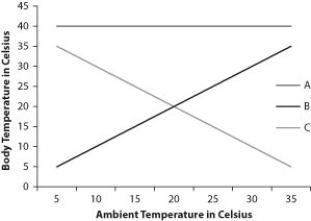
A) A
B) B
C) C
D) A or B
Which line on the graph corresponds to an amniote?
A) A
B) B
C) C
D) A or B
Question
Use the figure below to answer the questions that follow.
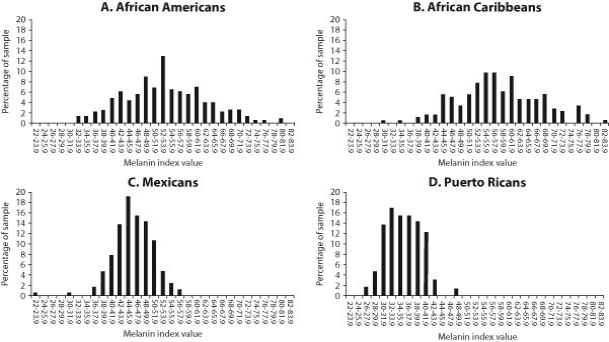 Source: Parra, E. J., Kittles, R. A., & Shriver, M. D. (2004). Implications of correlations between skin color and genetic ancestry for biomedical research. Nature Genetics, 36, S54-S60.
The graphs shown indicate the range of melanin amounts in the skin of populations from four different geographic regions. Which graph is likely to be from a geographic area where there is less UV radiation?
A) A
B) B
C) C
D) D
Source: Parra, E. J., Kittles, R. A., & Shriver, M. D. (2004). Implications of correlations between skin color and genetic ancestry for biomedical research. Nature Genetics, 36, S54-S60.The graphs shown indicate the range of melanin amounts in the skin of populations from four different geographic regions. Which graph is likely to be from a geographic area where there is less UV radiation?
A) A
B) B
C) C
D) D
Question
Use the figure below to answer the questions that follow.
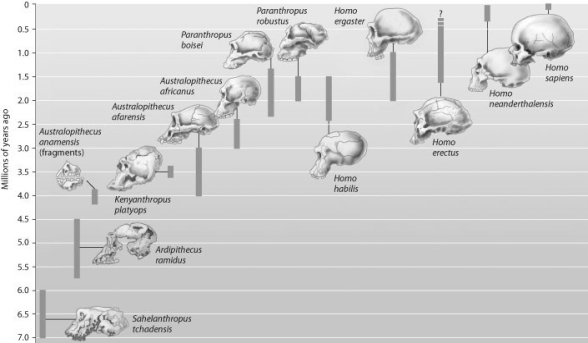
According to this figure, which species lived concurrently with Homo ergaster?
A) Australopithecus anamensis
B) Australopithecus africanus
C) Paranthropus boisei
D) Homo sapiens
According to this figure, which species lived concurrently with Homo ergaster?
A) Australopithecus anamensis
B) Australopithecus africanus
C) Paranthropus boisei
D) Homo sapiens
Question
Use the figure below to answer the questions that follow.
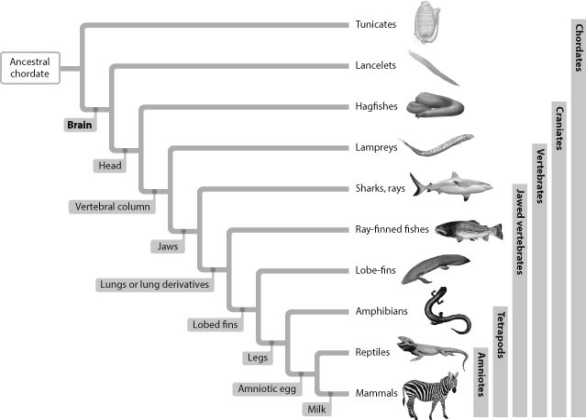
Which clade is most directly related to lancelets?
A) ray-finned fishes
B) lampreys
C) hagfishes
D) lobe-fins
Which clade is most directly related to lancelets?
A) ray-finned fishes
B) lampreys
C) hagfishes
D) lobe-fins
Question
Question
Question
According to this figure, which group includes the closest living relatives to tetrapods such as amphibians, reptiles, and mammals? 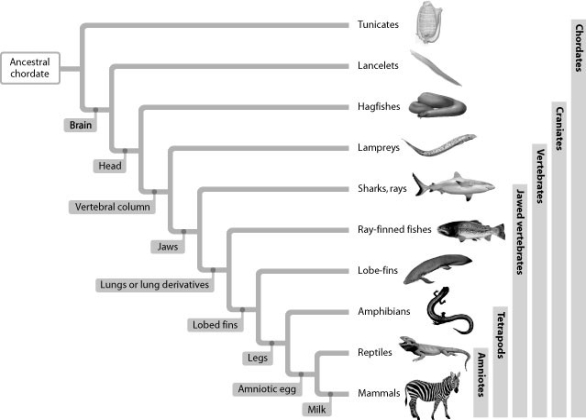
A) tunicates
B) sharks and rays
C) ray-finned fishes
D) lobe-finned fishes
A) tunicates
B) sharks and rays
C) ray-finned fishes
D) lobe-finned fishes
Question
Use the figure below to answer the questions that follow.
Which option lists the major groups or genera from the fossil record in the correct order from earliest to most recent?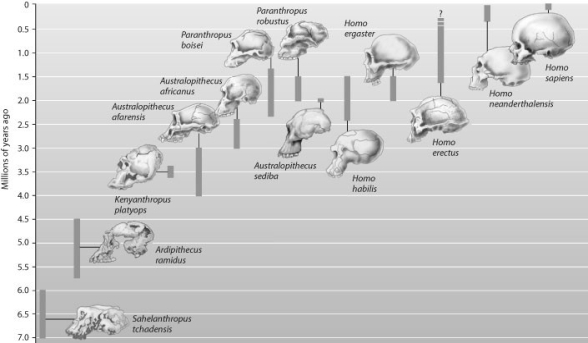
A) Australopithecus, Sahelanthropus, Homo
B) Sahelanthropus, Ardipithecus, Australopithecus, Homo
C) Ardipithecus, Sahelanthropus, Australopithecus, Homo
D) Sahelanthropus, Homo, Australopithecus, Ardipithecus
Which option lists the major groups or genera from the fossil record in the correct order from earliest to most recent?
A) Australopithecus, Sahelanthropus, Homo
B) Sahelanthropus, Ardipithecus, Australopithecus, Homo
C) Ardipithecus, Sahelanthropus, Australopithecus, Homo
D) Sahelanthropus, Homo, Australopithecus, Ardipithecus
Question
Use the figure below to answer the questions that follow.
Suppose a fossil was found and identified to be a species approximately 3.5 million years old. This fossil could be a representative of which species?
A) Australopithecus afarensis or Australopithecus anamensis
B) Kenyanthropus platyops or Australopithecus africanus
C) Kenyanthropus platyops or Australopithecus afarensis
D) Australopithecus afarensis or Australopithecus africanus
Suppose a fossil was found and identified to be a species approximately 3.5 million years old. This fossil could be a representative of which species?
A) Australopithecus afarensis or Australopithecus anamensis
B) Kenyanthropus platyops or Australopithecus africanus
C) Kenyanthropus platyops or Australopithecus afarensis
D) Australopithecus afarensis or Australopithecus africanus
Question
Question
Use the figure below to answer the questions that follow.
Source: Parra, E. J., Kittles, R. A., & Shriver, M. D. (2004). Implications of correlations between skin color and genetic ancestry for biomedical research. Nature Genetics, 36, S54-S60.
The graphs shown indicate the range of melanin amounts in populations from four different geographic regions. Not all populations across the globe have the same number of genes or alleles controlling skin color. Which population is likely to be the most genetically diverse in terms of genes affecting skin color?
A) B
B) C
C) D
Source: Parra, E. J., Kittles, R. A., & Shriver, M. D. (2004). Implications of correlations between skin color and genetic ancestry for biomedical research. Nature Genetics, 36, S54-S60.The graphs shown indicate the range of melanin amounts in populations from four different geographic regions. Not all populations across the globe have the same number of genes or alleles controlling skin color. Which population is likely to be the most genetically diverse in terms of genes affecting skin color?
A) B
B) C
C) D
Question
Use the figure below to answer the questions that follow.
Suppose scientists discovered an organism that had a head with a brain at the anterior end of the dorsal nerve, eyes and other sensory organs, a skull, and a vertebral column. The organism could not be a(n)
A) lamprey.
B) hagfish.
C) ray-finned shark.
D) amphibian.
Suppose scientists discovered an organism that had a head with a brain at the anterior end of the dorsal nerve, eyes and other sensory organs, a skull, and a vertebral column. The organism could not be a(n)
A) lamprey.
B) hagfish.
C) ray-finned shark.
D) amphibian.
Question
According to this figure, which two groups are most closely related? 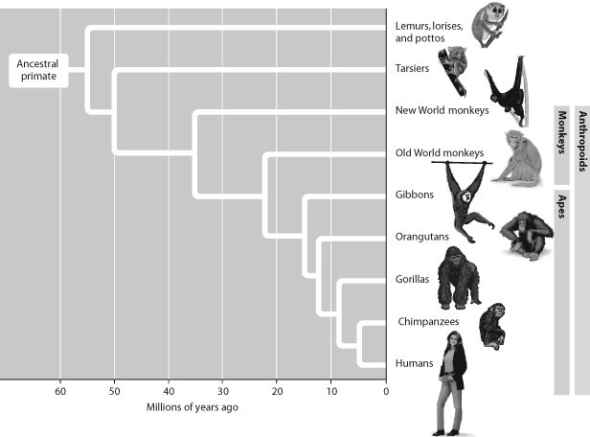
A) tarsiers and gibbons
B) gorillas and orangutans
C) chimpanzees and gibbons
D) Old World monkeys and humans
A) tarsiers and gibbons
B) gorillas and orangutans
C) chimpanzees and gibbons
D) Old World monkeys and humans
Question
Question
Use the figure below to answer the questions that follow.
Source: Parra, E. J., Kittles, R. A., & Shriver, M. D. (2004). Implications of correlations between skin color and genetic ancestry for biomedical research. Nature Genetics, 36, S54-S60.
The graphs shown indicate the range of melanin amounts in populations from four different geographic regions. Of these populations, population D is likely most adapted for
A) having enough vitamin D to produce strong bones.
B) being protected against skin cancer.
C) preventing the breakdown of folate (folic acid).
D) having very active melanin-producing cells.
Source: Parra, E. J., Kittles, R. A., & Shriver, M. D. (2004). Implications of correlations between skin color and genetic ancestry for biomedical research. Nature Genetics, 36, S54-S60.The graphs shown indicate the range of melanin amounts in populations from four different geographic regions. Of these populations, population D is likely most adapted for
A) having enough vitamin D to produce strong bones.
B) being protected against skin cancer.
C) preventing the breakdown of folate (folic acid).
D) having very active melanin-producing cells.
Question
Use the figure below to answer the questions that follow.
The main difference between the earliest evolved tetrapods and the most recently evolved tetrapods is that
A) later tetrapods have larger brains.
B) later tetrapods produce milk to feed their young.
C) early tetrapods lack legs.
D) early tetrapods lack a vertebral column.
The main difference between the earliest evolved tetrapods and the most recently evolved tetrapods is that
A) later tetrapods have larger brains.
B) later tetrapods produce milk to feed their young.
C) early tetrapods lack legs.
D) early tetrapods lack a vertebral column.
Question

Unlock Deck
Sign up to unlock the cards in this deck!
Unlock Deck
Unlock Deck
1/77

Play

Full screen (f)
Deck 19: The Evolution of Vertebrate Diversity
1
Unlike sharks and rays, ray-finned fishes have
A) an operculum.
B) a lateral line system.
C) a flexible skeleton made of cartilage.
D) hinged jaws.
A) an operculum.
B) a lateral line system.
C) a flexible skeleton made of cartilage.
D) hinged jaws.
A
2
Based on Acanthostega fossils, scientists now believe that the earliest tetrapods were
A) fully terrestrial.
B) amphibians that used their limbs to drag themselves over the land from one water hole to another.
C) fish that used their limbs to raise themselves out of the water to get gulps of air for oxygen.
D) reptiles that resembled crocodiles.
A) fully terrestrial.
B) amphibians that used their limbs to drag themselves over the land from one water hole to another.
C) fish that used their limbs to raise themselves out of the water to get gulps of air for oxygen.
D) reptiles that resembled crocodiles.
C
3
Jaws appear to have evolved from
A) the fusion of many bony elements found in the skin of the neck region of jawless ancestors.
B) a large, bony shield that protruded from between the base of the pectoral fins.
C) modification of a disk of bones surrounding the mouth in lampreys.
D) skeletal rods that supported gill slits near the mouth.
A) the fusion of many bony elements found in the skin of the neck region of jawless ancestors.
B) a large, bony shield that protruded from between the base of the pectoral fins.
C) modification of a disk of bones surrounding the mouth in lampreys.
D) skeletal rods that supported gill slits near the mouth.
D
4
Recall that the cuticle seals plant surfaces and helps plants conserve water, and the seed helps derived plant groups to reproduce effectively on dry land. The analogous adaptations in reptiles are ________ (analogous to the cuticle) and ________ (analogous to the seed).
A) scales; jellylike egg masses
B) scales; the amniotic egg
C) scales; aquatic larvae
D) claws; lungs
A) scales; jellylike egg masses
B) scales; the amniotic egg
C) scales; aquatic larvae
D) claws; lungs
Unlock Deck
Unlock for access to all 77 flashcards in this deck.
Unlock Deck
k this deck
5
Which bird trait is an adaptation that is probably less well developed in flightless birds such as penguins and ostriches?
A) honeycombed bone structure
B) amniotic egg
C) vertebrae
D) presence of feathers
A) honeycombed bone structure
B) amniotic egg
C) vertebrae
D) presence of feathers
Unlock Deck
Unlock for access to all 77 flashcards in this deck.
Unlock Deck
k this deck
6
Which statement best summarizes the difference between ectothermic and endothermic organisms?
A) Ectotherms are warm-blooded, but endotherms are cold-blooded.
B) Endotherms control their temperature, but ectotherms have no control over their temperature.
C) Ectotherms absorb external heat, but endotherms use metabolic heat to maintain a warm, steady body temperature.
A) Ectotherms are warm-blooded, but endotherms are cold-blooded.
B) Endotherms control their temperature, but ectotherms have no control over their temperature.
C) Ectotherms absorb external heat, but endotherms use metabolic heat to maintain a warm, steady body temperature.
Unlock Deck
Unlock for access to all 77 flashcards in this deck.
Unlock Deck
k this deck
7
Which adaptations allowed reptiles to complete their life cycles on land?
A) lungs
B) ectothermic metabolism
C) an amniotic egg
D) four legs
A) lungs
B) ectothermic metabolism
C) an amniotic egg
D) four legs
Unlock Deck
Unlock for access to all 77 flashcards in this deck.
Unlock Deck
k this deck
8
The vertebrate group that describes all jawed vertebrates with two pairs of limbs is the
A) craniates.
B) amniotes.
C) tetrapods.
D) mammals.
A) craniates.
B) amniotes.
C) tetrapods.
D) mammals.
Unlock Deck
Unlock for access to all 77 flashcards in this deck.
Unlock Deck
k this deck
9
The key derived character of the lobe-finned fish is the
A) lateral line system.
B) series of rod-shaped bones in their pectoral and pelvic fins.
C) operculum.
D) flattened scales covering their skin.
A) lateral line system.
B) series of rod-shaped bones in their pectoral and pelvic fins.
C) operculum.
D) flattened scales covering their skin.
Unlock Deck
Unlock for access to all 77 flashcards in this deck.
Unlock Deck
k this deck
10
Lampreys differ from fishes in that lampreys
A) lack a backbone.
B) lack an endoskeleton.
C) lack jaws.
D) possess a backbone and skull.
A) lack a backbone.
B) lack an endoskeleton.
C) lack jaws.
D) possess a backbone and skull.
Unlock Deck
Unlock for access to all 77 flashcards in this deck.
Unlock Deck
k this deck
11
Craniates are chordates that all possess
A) a head.
B) jaws.
C) a vertebral column.
D) amniotic eggs.
A) a head.
B) jaws.
C) a vertebral column.
D) amniotic eggs.
Unlock Deck
Unlock for access to all 77 flashcards in this deck.
Unlock Deck
k this deck
12
A key derived character of sharks and rays that distinguishes them from ray-finned fishes is
A) jaws and a swim bladder.
B) vertebrae.
C) calcified (hard) bones.
D) a skeleton made of cartilage
A) jaws and a swim bladder.
B) vertebrae.
C) calcified (hard) bones.
D) a skeleton made of cartilage
Unlock Deck
Unlock for access to all 77 flashcards in this deck.
Unlock Deck
k this deck
13
Which is characteristic of all vertebrates?
A) a skull and a backbone consisting of vertebrae
B) a calcified (hard) skeleton and four legs
C) a hinged jaw
D) lungs or lung derivatives
A) a skull and a backbone consisting of vertebrae
B) a calcified (hard) skeleton and four legs
C) a hinged jaw
D) lungs or lung derivatives
Unlock Deck
Unlock for access to all 77 flashcards in this deck.
Unlock Deck
k this deck
14
Which animals are ectothermic?
A) frogs and mammals
B) lizards and birds
C) turtles and lizards
D) birds and mammals
A) frogs and mammals
B) lizards and birds
C) turtles and lizards
D) birds and mammals
Unlock Deck
Unlock for access to all 77 flashcards in this deck.
Unlock Deck
k this deck
15
Which statement best describes the current scientific view of birds?
A) a group of feathered, endothermic dinosaurs
B) a group of feathered, ectothermic lizards that lack teeth
C) a group of flying, endothermic reptiles that have lost teeth, the amniotic egg, and other heavy body features as an adaptation for flight
D) a group of flying mammals that are derived from monotremes, which also lay amniotic eggs
A) a group of feathered, endothermic dinosaurs
B) a group of feathered, ectothermic lizards that lack teeth
C) a group of flying, endothermic reptiles that have lost teeth, the amniotic egg, and other heavy body features as an adaptation for flight
D) a group of flying mammals that are derived from monotremes, which also lay amniotic eggs
Unlock Deck
Unlock for access to all 77 flashcards in this deck.
Unlock Deck
k this deck
16
By far the largest number of extant fish species on Earth have
A) a cartilaginous skeleton.
B) rasping tongues to enhance their parasitic behavior.
C) an operculum and swim bladder.
A) a cartilaginous skeleton.
B) rasping tongues to enhance their parasitic behavior.
C) an operculum and swim bladder.
Unlock Deck
Unlock for access to all 77 flashcards in this deck.
Unlock Deck
k this deck
17
Amphibians were diverse and abundant in the lush swamp forests of the ________, which is sometimes referred to as the age of the amphibians.
A) Cambrian period
B) Pleistocene epoch
C) Mesozoic era
D) Carboniferous period
A) Cambrian period
B) Pleistocene epoch
C) Mesozoic era
D) Carboniferous period
Unlock Deck
Unlock for access to all 77 flashcards in this deck.
Unlock Deck
k this deck
18
The duck-billed platypus and other monotremes differ from other mammals in that they
A) are aquatic.
B) lay eggs.
C) have mammary glands.
D) have hair.
A) are aquatic.
B) lay eggs.
C) have mammary glands.
D) have hair.
Unlock Deck
Unlock for access to all 77 flashcards in this deck.
Unlock Deck
k this deck
19
Which statement best describes how flight and feathers are related in the evolution of birds?
A) The first flying birds did not have feathers, which evolved later.
B) Feathers and flight evolved at the same time.
C) The first feathered ancestors to birds did not fly but may have used their feathers for insulation and display.
D) Feathers are soft and do not leave fossils or fossil traces, so it is unknown which organisms first had feathers.
A) The first flying birds did not have feathers, which evolved later.
B) Feathers and flight evolved at the same time.
C) The first feathered ancestors to birds did not fly but may have used their feathers for insulation and display.
D) Feathers are soft and do not leave fossils or fossil traces, so it is unknown which organisms first had feathers.
Unlock Deck
Unlock for access to all 77 flashcards in this deck.
Unlock Deck
k this deck
20
Mammals
A) evolved from birds.
B) all give birth to live young.
C) all lay eggs.
D) have hair and mammary glands.
A) evolved from birds.
B) all give birth to live young.
C) all lay eggs.
D) have hair and mammary glands.
Unlock Deck
Unlock for access to all 77 flashcards in this deck.
Unlock Deck
k this deck
21
As an example of the relationship between structure and function the forward-facing eyes shared by all primates help them in
A) manipulating small objects.
B) depth perception as they navigate through forests.
C) swinging from tree branches.
D) seeing in the dark.
A) manipulating small objects.
B) depth perception as they navigate through forests.
C) swinging from tree branches.
D) seeing in the dark.
Unlock Deck
Unlock for access to all 77 flashcards in this deck.
Unlock Deck
k this deck
22
Which part of the body is likely to be much more diverse in mammals compared to that in other groups?
A) the teeth
B) the structure of the vertebrae
C) the structure of the limbs
D) the jawbone
A) the teeth
B) the structure of the vertebrae
C) the structure of the limbs
D) the jawbone
Unlock Deck
Unlock for access to all 77 flashcards in this deck.
Unlock Deck
k this deck
23
"Lucy," who belongs to the group ________, was a bipedal hominin with a brain smaller than that of humans.
A) Australopithecus
B) Homo erectus
C) Ardipithecus
D) Homo habilis
A) Australopithecus
B) Homo erectus
C) Ardipithecus
D) Homo habilis
Unlock Deck
Unlock for access to all 77 flashcards in this deck.
Unlock Deck
k this deck
24
Which animal is an ape?
A) New World monkey
B) Old World monkey
C) orangutan
D) tarsier
A) New World monkey
B) Old World monkey
C) orangutan
D) tarsier
Unlock Deck
Unlock for access to all 77 flashcards in this deck.
Unlock Deck
k this deck
25
Prehensile tails are found among
A) Old World monkeys.
B) most hominoids.
C) New World monkeys.
D) all primates.
A) Old World monkeys.
B) most hominoids.
C) New World monkeys.
D) all primates.
Unlock Deck
Unlock for access to all 77 flashcards in this deck.
Unlock Deck
k this deck
26
Which animal group is characterized by the absence of tails?
A) apes
B) Old World monkeys
C) New World monkeys
D) lemurs
A) apes
B) Old World monkeys
C) New World monkeys
D) lemurs
Unlock Deck
Unlock for access to all 77 flashcards in this deck.
Unlock Deck
k this deck
27
A prehensile tail is like an opposable thumb in that both
A) evolved before the anthropoids.
B) are used for grasping.
C) can be fully bent in any direction.
D) are characteristics of the earliest primates.
A) evolved before the anthropoids.
B) are used for grasping.
C) can be fully bent in any direction.
D) are characteristics of the earliest primates.
Unlock Deck
Unlock for access to all 77 flashcards in this deck.
Unlock Deck
k this deck
28
The hominin group includes
A) Homo sapiens only.
B) Homo sapiens and several extinct human relatives.
C) humans and all other apes.
D) all anthropoids.
A) Homo sapiens only.
B) Homo sapiens and several extinct human relatives.
C) humans and all other apes.
D) all anthropoids.
Unlock Deck
Unlock for access to all 77 flashcards in this deck.
Unlock Deck
k this deck
29
Which is the first distinctively hominin trait to appear in the fossil record?
A) sophisticated stone tools
B) increased brain size
C) upright walking (bipedalism)
A) sophisticated stone tools
B) increased brain size
C) upright walking (bipedalism)
Unlock Deck
Unlock for access to all 77 flashcards in this deck.
Unlock Deck
k this deck
30
________ spend almost all of their time on the ground, instead of in trees.
A) Gorillas
B) Orangutans
C) Gibbons
D) Chimpanzees
A) Gorillas
B) Orangutans
C) Gibbons
D) Chimpanzees
Unlock Deck
Unlock for access to all 77 flashcards in this deck.
Unlock Deck
k this deck
31
Which organism is a marsupial?
A) echidna
B) kangaroo
C) whale
D) zebra
A) echidna
B) kangaroo
C) whale
D) zebra
Unlock Deck
Unlock for access to all 77 flashcards in this deck.
Unlock Deck
k this deck
32
Compared to other primates, anthropoids have
A) a decreased reliance upon vision.
B) a stronger reliance upon smell.
C) a fully opposable thumb.
D) smaller total body size in most cases.
A) a decreased reliance upon vision.
B) a stronger reliance upon smell.
C) a fully opposable thumb.
D) smaller total body size in most cases.
Unlock Deck
Unlock for access to all 77 flashcards in this deck.
Unlock Deck
k this deck
33
The Salalizard is a fictional vertebrate that lives in the forest and appears to be half salamander and half lizard. You are not allowed to collect any wild animals, so you decide to take a video of it to show your colleagues. What behavior best distinguishes the Salalizard as either a salamander (amphibian) or a lizard (reptile)?
A) what the animal eats
B) if it lives in trees
C) where it reproduces
D) whether it is active at night
A) what the animal eats
B) if it lives in trees
C) where it reproduces
D) whether it is active at night
Unlock Deck
Unlock for access to all 77 flashcards in this deck.
Unlock Deck
k this deck
34
Reptiles are not able to eat as frequently as mammals and birds can eat. This is due to a trait that mammals and birds share but that reptiles do not have. What is this trait?
A) airfoils
B) endothermy
C) amniotic egg
D) teeth
A) airfoils
B) endothermy
C) amniotic egg
D) teeth
Unlock Deck
Unlock for access to all 77 flashcards in this deck.
Unlock Deck
k this deck
35
Which organism is a monotreme?
A) echidna
B) kangaroo
C) whale
D) zebra
A) echidna
B) kangaroo
C) whale
D) zebra
Unlock Deck
Unlock for access to all 77 flashcards in this deck.
Unlock Deck
k this deck
36
Complete the analogy: ________ is/are to birds as ________ is/are to mammals.
A) Wings; legs
B) Water; milk
C) Feathers; hair
D) Wings; opposable thumbs
A) Wings; legs
B) Water; milk
C) Feathers; hair
D) Wings; opposable thumbs
Unlock Deck
Unlock for access to all 77 flashcards in this deck.
Unlock Deck
k this deck
37
________ appears to have been the first hominin to use stone tools.
A) Homo erectus
B) Homo habilis
C) Ardipithecus
D) Australopithecus
A) Homo erectus
B) Homo habilis
C) Ardipithecus
D) Australopithecus
Unlock Deck
Unlock for access to all 77 flashcards in this deck.
Unlock Deck
k this deck
38
Hominin fossil footprints that are obviously bipedal date to about ________ years ago.
A) 50,000
B) 100,000
C) 3.6 million
D) 12 million
A) 50,000
B) 100,000
C) 3.6 million
D) 12 million
Unlock Deck
Unlock for access to all 77 flashcards in this deck.
Unlock Deck
k this deck
39
Human DNA and chimpanzee DNA differ by
A) about 1%.
B) about 3%.
C) more than 10%.
D) the same amount that human DNA differs from orangutan DNA.
A) about 1%.
B) about 3%.
C) more than 10%.
D) the same amount that human DNA differs from orangutan DNA.
Unlock Deck
Unlock for access to all 77 flashcards in this deck.
Unlock Deck
k this deck
40
The last common ancestor shared by humans and chimpanzees lived about
A) 6,000-8,000 years ago.
B) 5-7 million years ago.
C) 25-40 million years ago.
D) 1.5-2.5 billion years ago.
A) 6,000-8,000 years ago.
B) 5-7 million years ago.
C) 25-40 million years ago.
D) 1.5-2.5 billion years ago.
Unlock Deck
Unlock for access to all 77 flashcards in this deck.
Unlock Deck
k this deck
41
Neanderthals are best described as
A) direct ancestors to modern humans.
B) direct ancestors to modern Europeans but not to other human populations.
C) a localized form or subspecies of Homo sapiens that was well adapted to living in caves and carrying clubs.
D) a hominin that colonized Europe independently of Homo sapiens and that interbred with modern humans.
A) direct ancestors to modern humans.
B) direct ancestors to modern Europeans but not to other human populations.
C) a localized form or subspecies of Homo sapiens that was well adapted to living in caves and carrying clubs.
D) a hominin that colonized Europe independently of Homo sapiens and that interbred with modern humans.
Unlock Deck
Unlock for access to all 77 flashcards in this deck.
Unlock Deck
k this deck
42
Which would a shark not be able to detect with its lateral line system?
A) schools of fish
B) mobile predators
C) stationary objects
D) sand on the bottom of the ocean floor
A) schools of fish
B) mobile predators
C) stationary objects
D) sand on the bottom of the ocean floor
Unlock Deck
Unlock for access to all 77 flashcards in this deck.
Unlock Deck
k this deck
43
Human skin color likely represents a locally adapted compromise between
A) the need to block UV radiation that causes cancer and the need to absorb sunlight for heat.
B) the need to block UV radiation that destroys folate and the need to synthesize vitamin D.
C) the need to block UV radiation that destroys folate and the need to absorb sunlight for heat.
D) the need to blend in with the environment and the need to absorb sunlight for heat.
A) the need to block UV radiation that causes cancer and the need to absorb sunlight for heat.
B) the need to block UV radiation that destroys folate and the need to synthesize vitamin D.
C) the need to block UV radiation that destroys folate and the need to absorb sunlight for heat.
D) the need to blend in with the environment and the need to absorb sunlight for heat.
Unlock Deck
Unlock for access to all 77 flashcards in this deck.
Unlock Deck
k this deck
44
Complete the analogy: ________ are to plant evolution as ________ is/are to vertebrate evolution.
A) Ferns; insects
B) Mosses; Tiktaalik
C) Angiosperms; fungi
D) Fungi; birds
A) Ferns; insects
B) Mosses; Tiktaalik
C) Angiosperms; fungi
D) Fungi; birds
Unlock Deck
Unlock for access to all 77 flashcards in this deck.
Unlock Deck
k this deck
45
Compared to other hominins, modern Homo sapiens display a particular ability for
A) symbolic thought.
B) making stone tools.
C) upright walking.
D) manipulating objects with their hands.
A) symbolic thought.
B) making stone tools.
C) upright walking.
D) manipulating objects with their hands.
Unlock Deck
Unlock for access to all 77 flashcards in this deck.
Unlock Deck
k this deck
46
All humans alive today have inherited their mitochondrial DNA from some individual female common ancestor. Studies indicate this woman probably lived about ________ years ago, when fossil evidence indicates that Homo sapiens was restricted to ________.
A) 20,000; Africa
B) 50,000; Africa and Asia
C) 180,000; Africa
D) 500,000; Africa, Asia, and Europe
A) 20,000; Africa
B) 50,000; Africa and Asia
C) 180,000; Africa
D) 500,000; Africa, Asia, and Europe
Unlock Deck
Unlock for access to all 77 flashcards in this deck.
Unlock Deck
k this deck
47
According to the fossil record, the genus Homo first arose in
A) North America.
B) Europe.
C) Asia.
D) Africa.
A) North America.
B) Europe.
C) Asia.
D) Africa.
Unlock Deck
Unlock for access to all 77 flashcards in this deck.
Unlock Deck
k this deck
48
The earliest hominin to be found outside of Africa belongs to which species?
A) Australopithecus afarensis
B) Homo habilis
C) Homo erectus
D) Homo sapiens
A) Australopithecus afarensis
B) Homo habilis
C) Homo erectus
D) Homo sapiens
Unlock Deck
Unlock for access to all 77 flashcards in this deck.
Unlock Deck
k this deck
49
Which statement is true?
A) Sharks have a skeleton made of bone, while ray-finned fishes have flexible skeletons made of cartilage.
B) Ray-finned fishes have a skeleton made of bone, while sharks have flexible skeletons made of cartilage.
C) Sharks have a series of rod-shaped bones in their muscular pectoral and pelvic fins, while lobe-fins have flexible skeletons made of cartilage.
A) Sharks have a skeleton made of bone, while ray-finned fishes have flexible skeletons made of cartilage.
B) Ray-finned fishes have a skeleton made of bone, while sharks have flexible skeletons made of cartilage.
C) Sharks have a series of rod-shaped bones in their muscular pectoral and pelvic fins, while lobe-fins have flexible skeletons made of cartilage.
Unlock Deck
Unlock for access to all 77 flashcards in this deck.
Unlock Deck
k this deck
50
A number of different genes have been identified as affecting skin color and there are probably more as yet unidentified. Each of these genes likely has several regulatory protein factors affecting their expression, and those proteins are coded for by yet more genes. Thus there are many genes, some of which have multiple alleles, involved in determining skin color. What property of skin color does this multigene foundation not explain?
A) Some people tan easily and some get sunburned rather than becoming tan.
B) Some people have very dark skin, some have very light skin, and there is nearly continuous variation in between.
C) There is variation in the amount of vitamin D humans need.
D) Skin color can be acted on by natural selection.
A) Some people tan easily and some get sunburned rather than becoming tan.
B) Some people have very dark skin, some have very light skin, and there is nearly continuous variation in between.
C) There is variation in the amount of vitamin D humans need.
D) Skin color can be acted on by natural selection.
Unlock Deck
Unlock for access to all 77 flashcards in this deck.
Unlock Deck
k this deck
51
Which statement is true?
A) A line of lobe-finned fishes gave rise to tetrapods, and a line of tetrapods gave rise to modern amphibians.
B) A line of tetrapods gave rise to chordates, and a line of lobe-finned fishes gave rise to tetrapods.
C) A line of amphibians gave rise to tetrapods, and a line of lobe-finned fishes gave rise to modern amphibians.
D) Tetrapods and amphibians evolved at approximately the same time, while lobe-finned fishes evolved 2 million years later.
A) A line of lobe-finned fishes gave rise to tetrapods, and a line of tetrapods gave rise to modern amphibians.
B) A line of tetrapods gave rise to chordates, and a line of lobe-finned fishes gave rise to tetrapods.
C) A line of amphibians gave rise to tetrapods, and a line of lobe-finned fishes gave rise to modern amphibians.
D) Tetrapods and amphibians evolved at approximately the same time, while lobe-finned fishes evolved 2 million years later.
Unlock Deck
Unlock for access to all 77 flashcards in this deck.
Unlock Deck
k this deck
52
The most recent evidence clarifying the relationship between modern humans and Neanderthals comes from analysis of
A) skeletal structure.
B) the types of tools that were made by Neanderthals.
C) Neanderthal artwork and burial rites.
D) Neanderthal mitochondrial DNA.
A) skeletal structure.
B) the types of tools that were made by Neanderthals.
C) Neanderthal artwork and burial rites.
D) Neanderthal mitochondrial DNA.
Unlock Deck
Unlock for access to all 77 flashcards in this deck.
Unlock Deck
k this deck
53
Like many insects, some amphibians undergo ________ in their life cycle as they have distinct larval and adult stages.
A) aquatic development followed by terrestrial existence
B) development in a nest followed by flight
C) metamorphosis
D) alternation of generations
A) aquatic development followed by terrestrial existence
B) development in a nest followed by flight
C) metamorphosis
D) alternation of generations
Unlock Deck
Unlock for access to all 77 flashcards in this deck.
Unlock Deck
k this deck
54
Complete the analogy: ________ are to vertebrate evolution as ________ are to plant evolution.
A) Lungs; stomata
B) Amniotic eggs; seeds
C) Limbs; flowers
D) Opposable thumbs; hyphae
A) Lungs; stomata
B) Amniotic eggs; seeds
C) Limbs; flowers
D) Opposable thumbs; hyphae
Unlock Deck
Unlock for access to all 77 flashcards in this deck.
Unlock Deck
k this deck
55
Which characteristic of vertebrates is associated with colonization of land?
A) opposable thumbs
B) lungs
C) internal fertilization
D) gills
A) opposable thumbs
B) lungs
C) internal fertilization
D) gills
Unlock Deck
Unlock for access to all 77 flashcards in this deck.
Unlock Deck
k this deck
56
Of all of the chordate groups, why are there only two amniote groups (reptilia and mammalia)?
A) Amniotes are the only chordate group that has successfully survived the transition to land.
B) The other craniate groups had brains that were not developed enough to allow the organisms to develop tool-building survival skills.
C) The vertebral columns of the other vertebrates were not strong enough to survive the transition to land.
D) The other jawed vertebrates were not able to obtain enough food to survive the transition to land.
A) Amniotes are the only chordate group that has successfully survived the transition to land.
B) The other craniate groups had brains that were not developed enough to allow the organisms to develop tool-building survival skills.
C) The vertebral columns of the other vertebrates were not strong enough to survive the transition to land.
D) The other jawed vertebrates were not able to obtain enough food to survive the transition to land.
Unlock Deck
Unlock for access to all 77 flashcards in this deck.
Unlock Deck
k this deck
57
The fossil "hobbits" discovered in Indonesia may be a ________ that lived ________.
A) newly discovered species of Homo; as recently as 18,000 years ago
B) population of Homo sapiens with a genetic disorder; at the same time as the Neanderthals
C) lineage of early hominins; about 5 million years ago
D) dwarf lineage of Australopithecus; around the same time as "Lucy"
A) newly discovered species of Homo; as recently as 18,000 years ago
B) population of Homo sapiens with a genetic disorder; at the same time as the Neanderthals
C) lineage of early hominins; about 5 million years ago
D) dwarf lineage of Australopithecus; around the same time as "Lucy"
Unlock Deck
Unlock for access to all 77 flashcards in this deck.
Unlock Deck
k this deck
58
Of the over 19,000 new species described for the first time in 2009, more than half were
A) marine organisms.
B) plants.
C) insects.
D) vertebrates.
A) marine organisms.
B) plants.
C) insects.
D) vertebrates.
Unlock Deck
Unlock for access to all 77 flashcards in this deck.
Unlock Deck
k this deck
59
Which extinct hominin first appeared about 1.9 million years ago and had a larger brain than Homo habilis, its immediate predecessor?
A) Homo ergaster
B) Homo neanderthalensis
C) Homo sapiens
D) Australopithecus
A) Homo ergaster
B) Homo neanderthalensis
C) Homo sapiens
D) Australopithecus
Unlock Deck
Unlock for access to all 77 flashcards in this deck.
Unlock Deck
k this deck
60
Fossil and genetic evidence strongly supports the idea that modern humans
A) independently arose from three different ancestral Homo species in Africa and Eurasia.
B) all derive from a single African lineage that spread from there into other parts of the world starting about 50,000 years ago.
C) derive from an African lineage but also have genes derived from mixing with several Eurasian descendants of Homo erectus.
D) derive from Neanderthals that independently evolved the features of modern humans in Europe and Africa.
A) independently arose from three different ancestral Homo species in Africa and Eurasia.
B) all derive from a single African lineage that spread from there into other parts of the world starting about 50,000 years ago.
C) derive from an African lineage but also have genes derived from mixing with several Eurasian descendants of Homo erectus.
D) derive from Neanderthals that independently evolved the features of modern humans in Europe and Africa.
Unlock Deck
Unlock for access to all 77 flashcards in this deck.
Unlock Deck
k this deck
61
Use the figure below to answer the questions that follow.
Which line on the graph corresponds to an amniote?
A) A
B) B
C) C
D) A or B
Which line on the graph corresponds to an amniote?
A) A
B) B
C) C
D) A or B
Unlock Deck
Unlock for access to all 77 flashcards in this deck.
Unlock Deck
k this deck
62
Use the figure below to answer the questions that follow.
Source: Parra, E. J., Kittles, R. A., & Shriver, M. D. (2004). Implications of correlations between skin color and genetic ancestry for biomedical research. Nature Genetics, 36, S54-S60.
The graphs shown indicate the range of melanin amounts in the skin of populations from four different geographic regions. Which graph is likely to be from a geographic area where there is less UV radiation?
A) A
B) B
C) C
D) D
Source: Parra, E. J., Kittles, R. A., & Shriver, M. D. (2004). Implications of correlations between skin color and genetic ancestry for biomedical research. Nature Genetics, 36, S54-S60.The graphs shown indicate the range of melanin amounts in the skin of populations from four different geographic regions. Which graph is likely to be from a geographic area where there is less UV radiation?
A) A
B) B
C) C
D) D
Unlock Deck
Unlock for access to all 77 flashcards in this deck.
Unlock Deck
k this deck
63
Use the figure below to answer the questions that follow.
According to this figure, which species lived concurrently with Homo ergaster?
A) Australopithecus anamensis
B) Australopithecus africanus
C) Paranthropus boisei
D) Homo sapiens
According to this figure, which species lived concurrently with Homo ergaster?
A) Australopithecus anamensis
B) Australopithecus africanus
C) Paranthropus boisei
D) Homo sapiens
Unlock Deck
Unlock for access to all 77 flashcards in this deck.
Unlock Deck
k this deck
64
Use the figure below to answer the questions that follow.
Which clade is most directly related to lancelets?
A) ray-finned fishes
B) lampreys
C) hagfishes
D) lobe-fins
Which clade is most directly related to lancelets?
A) ray-finned fishes
B) lampreys
C) hagfishes
D) lobe-fins
Unlock Deck
Unlock for access to all 77 flashcards in this deck.
Unlock Deck
k this deck
65
After reading the paragraphs below, answer the questions that follow.
Bipedalism is one of the most important characteristics of hominin evolution. The appearance of bipedalism led to anatomical changes that are considered to be distinguishing characteristics of hominin fossils. The evidence for bipedalism is supported by fossil evidence from more than 4 million years ago and 3.6-million-year-old footprints in volcanic ash.
Recently, however, scientists have focused on the link between tooth structure and diet in the evolution of the early hominins, specifically in Australopithecus species. Detailed studies of hominin dental features have provided evidence of an important dietary shift that led to adaptive radiation within this genus. Most of the evidence comes from analyses of tooth size and shape, microscopic wear patterns on teeth, and jaw structure. The evidence suggests that fibrous plant materials became more important through the Pliocene, perhaps as critical components in the diet of some species.
Evidence from fossil dentition suggests that Australopithecus species
A) evolved specifically to eat meat.
B) experienced a decrease in both tooth size and brain size.
C) were direct ancestors of modern humans.
D) were adapted to function successfully in a wide range of habitats.
Bipedalism is one of the most important characteristics of hominin evolution. The appearance of bipedalism led to anatomical changes that are considered to be distinguishing characteristics of hominin fossils. The evidence for bipedalism is supported by fossil evidence from more than 4 million years ago and 3.6-million-year-old footprints in volcanic ash.
Recently, however, scientists have focused on the link between tooth structure and diet in the evolution of the early hominins, specifically in Australopithecus species. Detailed studies of hominin dental features have provided evidence of an important dietary shift that led to adaptive radiation within this genus. Most of the evidence comes from analyses of tooth size and shape, microscopic wear patterns on teeth, and jaw structure. The evidence suggests that fibrous plant materials became more important through the Pliocene, perhaps as critical components in the diet of some species.
Evidence from fossil dentition suggests that Australopithecus species
A) evolved specifically to eat meat.
B) experienced a decrease in both tooth size and brain size.
C) were direct ancestors of modern humans.
D) were adapted to function successfully in a wide range of habitats.
Unlock Deck
Unlock for access to all 77 flashcards in this deck.
Unlock Deck
k this deck
66
The greatest incidence of skin cancer (melanoma) would be expected to occur in
A) people who are deficient in vitamin D and live near the poles.
B) people who are deficient in folate and live near the poles.
C) people who are deficient in vitamin D and live near the equator.
D) people who are deficient in folate and live near the equator.
A) people who are deficient in vitamin D and live near the poles.
B) people who are deficient in folate and live near the poles.
C) people who are deficient in vitamin D and live near the equator.
D) people who are deficient in folate and live near the equator.
Unlock Deck
Unlock for access to all 77 flashcards in this deck.
Unlock Deck
k this deck
67
According to this figure, which group includes the closest living relatives to tetrapods such as amphibians, reptiles, and mammals?
A) tunicates
B) sharks and rays
C) ray-finned fishes
D) lobe-finned fishes
A) tunicates
B) sharks and rays
C) ray-finned fishes
D) lobe-finned fishes
Unlock Deck
Unlock for access to all 77 flashcards in this deck.
Unlock Deck
k this deck
68
Use the figure below to answer the questions that follow.
Which option lists the major groups or genera from the fossil record in the correct order from earliest to most recent?
A) Australopithecus, Sahelanthropus, Homo
B) Sahelanthropus, Ardipithecus, Australopithecus, Homo
C) Ardipithecus, Sahelanthropus, Australopithecus, Homo
D) Sahelanthropus, Homo, Australopithecus, Ardipithecus
Which option lists the major groups or genera from the fossil record in the correct order from earliest to most recent?
A) Australopithecus, Sahelanthropus, Homo
B) Sahelanthropus, Ardipithecus, Australopithecus, Homo
C) Ardipithecus, Sahelanthropus, Australopithecus, Homo
D) Sahelanthropus, Homo, Australopithecus, Ardipithecus
Unlock Deck
Unlock for access to all 77 flashcards in this deck.
Unlock Deck
k this deck
69
Use the figure below to answer the questions that follow.
Suppose a fossil was found and identified to be a species approximately 3.5 million years old. This fossil could be a representative of which species?
A) Australopithecus afarensis or Australopithecus anamensis
B) Kenyanthropus platyops or Australopithecus africanus
C) Kenyanthropus platyops or Australopithecus afarensis
D) Australopithecus afarensis or Australopithecus africanus
Suppose a fossil was found and identified to be a species approximately 3.5 million years old. This fossil could be a representative of which species?
A) Australopithecus afarensis or Australopithecus anamensis
B) Kenyanthropus platyops or Australopithecus africanus
C) Kenyanthropus platyops or Australopithecus afarensis
D) Australopithecus afarensis or Australopithecus africanus
Unlock Deck
Unlock for access to all 77 flashcards in this deck.
Unlock Deck
k this deck
70
After reading the paragraphs below, answer the questions that follow.
Bipedalism is one of the most important characteristics of hominin evolution. The appearance of bipedalism led to anatomical changes that are considered to be distinguishing characteristics of hominin fossils. The evidence for bipedalism is supported by fossil evidence from more than 4 million years ago and 3.6-million-year-old footprints in volcanic ash.
Recently, however, scientists have focused on the link between tooth structure and diet in the evolution of the early hominins, specifically in Australopithecus species. Detailed studies of hominin dental features have provided evidence of an important dietary shift that led to adaptive radiation within this genus. Most of the evidence comes from analyses of tooth size and shape, microscopic wear patterns on teeth, and jaw structure. The evidence suggests that fibrous plant materials became more important through the Pliocene, perhaps as critical components in the diet of some species.
What is the most likely evolutionary link between bipedalism and changes in the diet of early hominids?
A) Bipedal species would be more likely to remain in one type of habitat.
B) Bipedalism led to new farming practices.
C) It is easier to escape predators with an upright posture.
D) The greater ability to move to new habitats facilitated exploitation of new foods.
Bipedalism is one of the most important characteristics of hominin evolution. The appearance of bipedalism led to anatomical changes that are considered to be distinguishing characteristics of hominin fossils. The evidence for bipedalism is supported by fossil evidence from more than 4 million years ago and 3.6-million-year-old footprints in volcanic ash.
Recently, however, scientists have focused on the link between tooth structure and diet in the evolution of the early hominins, specifically in Australopithecus species. Detailed studies of hominin dental features have provided evidence of an important dietary shift that led to adaptive radiation within this genus. Most of the evidence comes from analyses of tooth size and shape, microscopic wear patterns on teeth, and jaw structure. The evidence suggests that fibrous plant materials became more important through the Pliocene, perhaps as critical components in the diet of some species.
What is the most likely evolutionary link between bipedalism and changes in the diet of early hominids?
A) Bipedal species would be more likely to remain in one type of habitat.
B) Bipedalism led to new farming practices.
C) It is easier to escape predators with an upright posture.
D) The greater ability to move to new habitats facilitated exploitation of new foods.
Unlock Deck
Unlock for access to all 77 flashcards in this deck.
Unlock Deck
k this deck
71
Use the figure below to answer the questions that follow.
Source: Parra, E. J., Kittles, R. A., & Shriver, M. D. (2004). Implications of correlations between skin color and genetic ancestry for biomedical research. Nature Genetics, 36, S54-S60.
The graphs shown indicate the range of melanin amounts in populations from four different geographic regions. Not all populations across the globe have the same number of genes or alleles controlling skin color. Which population is likely to be the most genetically diverse in terms of genes affecting skin color?
A) B
B) C
C) D
Source: Parra, E. J., Kittles, R. A., & Shriver, M. D. (2004). Implications of correlations between skin color and genetic ancestry for biomedical research. Nature Genetics, 36, S54-S60.The graphs shown indicate the range of melanin amounts in populations from four different geographic regions. Not all populations across the globe have the same number of genes or alleles controlling skin color. Which population is likely to be the most genetically diverse in terms of genes affecting skin color?
A) B
B) C
C) D
Unlock Deck
Unlock for access to all 77 flashcards in this deck.
Unlock Deck
k this deck
72
Use the figure below to answer the questions that follow.
Suppose scientists discovered an organism that had a head with a brain at the anterior end of the dorsal nerve, eyes and other sensory organs, a skull, and a vertebral column. The organism could not be a(n)
A) lamprey.
B) hagfish.
C) ray-finned shark.
D) amphibian.
Suppose scientists discovered an organism that had a head with a brain at the anterior end of the dorsal nerve, eyes and other sensory organs, a skull, and a vertebral column. The organism could not be a(n)
A) lamprey.
B) hagfish.
C) ray-finned shark.
D) amphibian.
Unlock Deck
Unlock for access to all 77 flashcards in this deck.
Unlock Deck
k this deck
73
According to this figure, which two groups are most closely related?
A) tarsiers and gibbons
B) gorillas and orangutans
C) chimpanzees and gibbons
D) Old World monkeys and humans
A) tarsiers and gibbons
B) gorillas and orangutans
C) chimpanzees and gibbons
D) Old World monkeys and humans
Unlock Deck
Unlock for access to all 77 flashcards in this deck.
Unlock Deck
k this deck
74
Light skin is most adaptive in northern latitudes because
A) dark skin allows folate destruction when UV radiation is less.
B) the greater UV radiation in northern latitudes destroys vitamin D.
C) increased melanin causes an increase in the risk of melanoma.
D) light skin in northern latitudes allows adequate folate for fetal development.
A) dark skin allows folate destruction when UV radiation is less.
B) the greater UV radiation in northern latitudes destroys vitamin D.
C) increased melanin causes an increase in the risk of melanoma.
D) light skin in northern latitudes allows adequate folate for fetal development.
Unlock Deck
Unlock for access to all 77 flashcards in this deck.
Unlock Deck
k this deck
75
Use the figure below to answer the questions that follow.
Source: Parra, E. J., Kittles, R. A., & Shriver, M. D. (2004). Implications of correlations between skin color and genetic ancestry for biomedical research. Nature Genetics, 36, S54-S60.
The graphs shown indicate the range of melanin amounts in populations from four different geographic regions. Of these populations, population D is likely most adapted for
A) having enough vitamin D to produce strong bones.
B) being protected against skin cancer.
C) preventing the breakdown of folate (folic acid).
D) having very active melanin-producing cells.
Source: Parra, E. J., Kittles, R. A., & Shriver, M. D. (2004). Implications of correlations between skin color and genetic ancestry for biomedical research. Nature Genetics, 36, S54-S60.The graphs shown indicate the range of melanin amounts in populations from four different geographic regions. Of these populations, population D is likely most adapted for
A) having enough vitamin D to produce strong bones.
B) being protected against skin cancer.
C) preventing the breakdown of folate (folic acid).
D) having very active melanin-producing cells.
Unlock Deck
Unlock for access to all 77 flashcards in this deck.
Unlock Deck
k this deck
76
Use the figure below to answer the questions that follow.
The main difference between the earliest evolved tetrapods and the most recently evolved tetrapods is that
A) later tetrapods have larger brains.
B) later tetrapods produce milk to feed their young.
C) early tetrapods lack legs.
D) early tetrapods lack a vertebral column.
The main difference between the earliest evolved tetrapods and the most recently evolved tetrapods is that
A) later tetrapods have larger brains.
B) later tetrapods produce milk to feed their young.
C) early tetrapods lack legs.
D) early tetrapods lack a vertebral column.
Unlock Deck
Unlock for access to all 77 flashcards in this deck.
Unlock Deck
k this deck
77
A number of different genes have been identified as affecting skin color and there are probably more as yet unidentified. Each of these genes likely has several regulatory protein factors affecting their expression, and those proteins are coded for by yet more genes. Thus there are many genes involved in determining skin color. A reasonable hypothesis about the geographic distribution of these genes is
A) different mutations affecting skin color are likely to be present in geographically different populations of humans.
B) humans living in areas with less UV radiation are likely to have many more mutations for skin color and therefore have a greater variation in skin color.
C) in any given geographic area, natural selection is likely to lead to a wide variation in skin color.
A) different mutations affecting skin color are likely to be present in geographically different populations of humans.
B) humans living in areas with less UV radiation are likely to have many more mutations for skin color and therefore have a greater variation in skin color.
C) in any given geographic area, natural selection is likely to lead to a wide variation in skin color.
Unlock Deck
Unlock for access to all 77 flashcards in this deck.
Unlock Deck
k this deck
Unlock Deck
Unlock for access to all 77 flashcards in this deck.







