





 Chat with AI

Deck 4: The Air We Breathe
Full screen (f)

Question

Question
Question
Question
Question
Question
Question
Question
Question
Question
Question
Question
Question
Question
Question
Question
Question
Question
Question
Question
Question
Question
Question
Question
Question
Question
Question
Question
Question
Question
Question
Question
Question
Question
Question
Question
Question
Question
Question
Question
Question
Question
Consider the image show below. 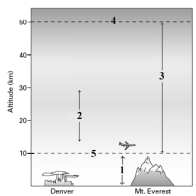 Complete the following statements with the numbers given in the image.
The troposphere is labeled with the number______.
Complete the following statements with the numbers given in the image.The troposphere is labeled with the number______.
Question
Consider the image show below. Complete the following statements with the numbers given in the image.
The stratosphere is labeled with the number______.
Complete the following statements with the numbers given in the image.The stratosphere is labeled with the number______.
Question
Consider the image show below. Complete the following statements with the numbers given in the image.
A temperature of -60 °C would most likely be found near the number______.
Complete the following statements with the numbers given in the image.A temperature of -60 °C would most likely be found near the number______.
Question
Consider the image show below. Complete the following statements with the numbers given in the image.
The ozone layer is labeled with the number ______.
Complete the following statements with the numbers given in the image.The ozone layer is labeled with the number ______.
Question
Question
Question
The image below shows the atmosphere during a thermal inversion. 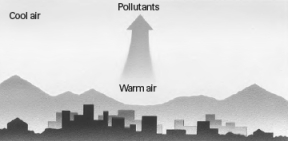

Unlock Deck
Sign up to unlock the cards in this deck!
Unlock Deck
Unlock Deck
1/48

Play

Full screen (f)
Deck 4: The Air We Breathe
1
Which of the following is not necessary for a thermal inversion?
A) an enclosed section of land where lateral movement of air is hindered
B) an abundant supply of SO2
C) a layer of colder air beneath a layer of warmer air
D) an absence of rain or other precipitation
A) an enclosed section of land where lateral movement of air is hindered
B) an abundant supply of SO2
C) a layer of colder air beneath a layer of warmer air
D) an absence of rain or other precipitation
an abundant supply of SO2
2
The atmospheric layer in which is found the air we breathe is
A) troposphere.
B) mesophere.
C) stratosphere.
D) thermosphere.
A) troposphere.
B) mesophere.
C) stratosphere.
D) thermosphere.
troposphere.
3
Which pollutant is related to the following sources: sea salt, automobile and truck exhaust, volcanoes, electric power plants?
A) lead
B) sulfur dioxide
C) carbon monoxide
D) particulates
A) lead
B) sulfur dioxide
C) carbon monoxide
D) particulates
particulates
4
Which is not a method for removing particulates and aerosol pollutants from the atmosphere?
A) rain and snow
B) electrostatic precipitation
C) scrubbing
D) distillation
A) rain and snow
B) electrostatic precipitation
C) scrubbing
D) distillation
Unlock Deck
Unlock for access to all 48 flashcards in this deck.
Unlock Deck
k this deck
5
Aerosols enhance smog by
A) concentrating pollutants.
B) producing the fog part of smog.
C) providing a reaction medium for the production of secondary pollutants such as H2SO4.
D) all of the above
A) concentrating pollutants.
B) producing the fog part of smog.
C) providing a reaction medium for the production of secondary pollutants such as H2SO4.
D) all of the above
Unlock Deck
Unlock for access to all 48 flashcards in this deck.
Unlock Deck
k this deck
6
Which is not a practical way to control hydrocarbon emissions?
A) design spouts on gasoline pumps to prevent gasoline leaks
B) use catalytic converters in automobiles
C) install an oxygen sensor in car engines
D) cut down trees emitting hydrocarbons in the atmosphere
A) design spouts on gasoline pumps to prevent gasoline leaks
B) use catalytic converters in automobiles
C) install an oxygen sensor in car engines
D) cut down trees emitting hydrocarbons in the atmosphere
Unlock Deck
Unlock for access to all 48 flashcards in this deck.
Unlock Deck
k this deck
7
Major particulate emissions come from
A) volcanic eruptions.
B) nitrogen fixation.
C) acid rain.
D) home heating.
A) volcanic eruptions.
B) nitrogen fixation.
C) acid rain.
D) home heating.
Unlock Deck
Unlock for access to all 48 flashcards in this deck.
Unlock Deck
k this deck
8
A polynuclear aromatic hydrocarbon capable of causing cancer is
A) HCFC-134a.
B) perchloroethylene.
C) asbestos.
D) benzo(alpha)pyrene.
A) HCFC-134a.
B) perchloroethylene.
C) asbestos.
D) benzo(alpha)pyrene.
Unlock Deck
Unlock for access to all 48 flashcards in this deck.
Unlock Deck
k this deck
9
What type of very reactive chemical species participates in the formation of photochemical smog?
A) free radicals
B) strong acids
C) weakly bonded materials such as those that contain hydrogen bonds
D) substances that contain coordinate-covalent bonds
A) free radicals
B) strong acids
C) weakly bonded materials such as those that contain hydrogen bonds
D) substances that contain coordinate-covalent bonds
Unlock Deck
Unlock for access to all 48 flashcards in this deck.
Unlock Deck
k this deck
10
Which is not necessary for photochemical smog?
A) sulfur dioxide
B) sunlight
C) free radicals
D) nitrogen dioxide
A) sulfur dioxide
B) sunlight
C) free radicals
D) nitrogen dioxide
Unlock Deck
Unlock for access to all 48 flashcards in this deck.
Unlock Deck
k this deck
11
Sulfur dioxide is given off by burning
A) some coal.
B) some petroleum.
C) some wood.
D) all of the above
A) some coal.
B) some petroleum.
C) some wood.
D) all of the above
Unlock Deck
Unlock for access to all 48 flashcards in this deck.
Unlock Deck
k this deck
12
Which of the following is not considered an air pollutant?
A) water vapor
B) ozone
C) nitric oxide
D) sulfur dioxide
A) water vapor
B) ozone
C) nitric oxide
D) sulfur dioxide
Unlock Deck
Unlock for access to all 48 flashcards in this deck.
Unlock Deck
k this deck
13
The primary source of carbon monoxide (CO) is
A) the automobile.
B) any burning process in the presence of a plentiful supply of air.
C) from carbon dioxide.
D) electrical power plants.
A) the automobile.
B) any burning process in the presence of a plentiful supply of air.
C) from carbon dioxide.
D) electrical power plants.
Unlock Deck
Unlock for access to all 48 flashcards in this deck.
Unlock Deck
k this deck
14
When coal and fuel oil are burned, what two primary pollutants are formed?
A) SO2 and CO2
B) HNO3 and H2SO4
C) CO and O3
D) hydrocarbons and NO2
A) SO2 and CO2
B) HNO3 and H2SO4
C) CO and O3
D) hydrocarbons and NO2
Unlock Deck
Unlock for access to all 48 flashcards in this deck.
Unlock Deck
k this deck
15
The primary source of global SO2 in the atmosphere is believed to be
A) forest fires.
B) human activity.
C) volcanoes.
D) forests.
A) forest fires.
B) human activity.
C) volcanoes.
D) forests.
Unlock Deck
Unlock for access to all 48 flashcards in this deck.
Unlock Deck
k this deck
16
Which is the secondary pollutant in photochemical smog?
A) ozone
B) nitrogen
C) hydrocarbon
D) nitrogen dioxide
A) ozone
B) nitrogen
C) hydrocarbon
D) nitrogen dioxide
Unlock Deck
Unlock for access to all 48 flashcards in this deck.
Unlock Deck
k this deck
17
Which substance would be present in the greatest concentration during the morning rush hour on a smoggy day in Los Angeles?
A) NO
B) O3
C) NO2
D) SO3
A) NO
B) O3
C) NO2
D) SO3
Unlock Deck
Unlock for access to all 48 flashcards in this deck.
Unlock Deck
k this deck
18
Which source is responsible for the greatest NOx emissions in the United States?
A) lightning
B) biomass burning
C) fossil fuel combustion
D) microbial activity in soil
A) lightning
B) biomass burning
C) fossil fuel combustion
D) microbial activity in soil
Unlock Deck
Unlock for access to all 48 flashcards in this deck.
Unlock Deck
k this deck
19
A secondary pollutant
A) is less destructive than a primary pollutant.
B) causes destruction on buildings but not on human beings.
C) is produced by chemical reactions in the air.
D) has a shorter lifetime in the atmosphere than that of a primary pollutant.
A) is less destructive than a primary pollutant.
B) causes destruction on buildings but not on human beings.
C) is produced by chemical reactions in the air.
D) has a shorter lifetime in the atmosphere than that of a primary pollutant.
Unlock Deck
Unlock for access to all 48 flashcards in this deck.
Unlock Deck
k this deck
20
Which chemical would be most likely to react with sulfur dioxide and remove it from combustion gases?
A) NO, nitric oxide
B) NaCl, salt
C) CaO, lime
D) HNO3, nitric acid
A) NO, nitric oxide
B) NaCl, salt
C) CaO, lime
D) HNO3, nitric acid
Unlock Deck
Unlock for access to all 48 flashcards in this deck.
Unlock Deck
k this deck
21
Concerning the Clean Air Act enacted into law in 1970,
A) every industrial plant in the U. S. is in compliance with the law.
B) discharges of pollutants have tended downward since the law was enacted.
C) the law was rescinded in 1980.
D) no industrial plant in the U.S. is in compliance with the law.
A) every industrial plant in the U. S. is in compliance with the law.
B) discharges of pollutants have tended downward since the law was enacted.
C) the law was rescinded in 1980.
D) no industrial plant in the U.S. is in compliance with the law.
Unlock Deck
Unlock for access to all 48 flashcards in this deck.
Unlock Deck
k this deck
22
The actual pressure in an automobile tire is 49.2 lbs/in2. This is a little over three times atmospheric pressure at sea level.
Unlock Deck
Unlock for access to all 48 flashcards in this deck.
Unlock Deck
k this deck
23
Why are small particulates in the atmosphere dangerous to human beings?
A) They can enter into and lodge in very small crevices of the lungs and cause concentrated abrasive injury.
B) They grind the enamel off of teeth.
C) They absorb and concentrate other pollutants.
D) They dissolve in rivers and lakes and fill them up.
A) They can enter into and lodge in very small crevices of the lungs and cause concentrated abrasive injury.
B) They grind the enamel off of teeth.
C) They absorb and concentrate other pollutants.
D) They dissolve in rivers and lakes and fill them up.
Unlock Deck
Unlock for access to all 48 flashcards in this deck.
Unlock Deck
k this deck
24
Nitrogen and oxygen are the most abundant gases in the atmosphere.
Unlock Deck
Unlock for access to all 48 flashcards in this deck.
Unlock Deck
k this deck
25
Convert 0.000053% to ppb.
A) 53 ppb
B) 530 ppb
C) 5300 ppb
D) 5.3 ppb
A) 53 ppb
B) 530 ppb
C) 5300 ppb
D) 5.3 ppb
Unlock Deck
Unlock for access to all 48 flashcards in this deck.
Unlock Deck
k this deck
26
Which atmospheric region contains the protective ozone layer?
A) troposphere
B) mesophere
C) stratosphere
D) thermosphere
A) troposphere
B) mesophere
C) stratosphere
D) thermosphere
Unlock Deck
Unlock for access to all 48 flashcards in this deck.
Unlock Deck
k this deck
27
Why is carbon monoxide toxic to mammals?
A) acts as a neurotoxin
B) inhibits oxygen binding to hemoglobin
C) causes restriction of the airway
D) is very addictive
A) acts as a neurotoxin
B) inhibits oxygen binding to hemoglobin
C) causes restriction of the airway
D) is very addictive
Unlock Deck
Unlock for access to all 48 flashcards in this deck.
Unlock Deck
k this deck
28
In air pollution abatement
A) all pollutants are necessarily eradicated.
B) the amounts of pollutants are decreased.
C) some pollutants are eradicated necessarily.
D) all of the above
A) all pollutants are necessarily eradicated.
B) the amounts of pollutants are decreased.
C) some pollutants are eradicated necessarily.
D) all of the above
Unlock Deck
Unlock for access to all 48 flashcards in this deck.
Unlock Deck
k this deck
29
What brown oxide of nitrogen is a necessary component of photochemical smog?
A) NO
B) NO2
C) NO3
D) N2O5
A) NO
B) NO2
C) NO3
D) N2O5
Unlock Deck
Unlock for access to all 48 flashcards in this deck.
Unlock Deck
k this deck
30
Where do sulfur dioxide and sulfuric acid cause the greatest harm?
A) on the skin
B) in the stomach
C) in the respiratory tract
D) in the intestines
A) on the skin
B) in the stomach
C) in the respiratory tract
D) in the intestines
Unlock Deck
Unlock for access to all 48 flashcards in this deck.
Unlock Deck
k this deck
31
Identify the pair that are allotropes.
A) pencil lead and a diamond
B) oxygen gas and nitrogen gas
C) gold and silver
D) mercury and bromine
A) pencil lead and a diamond
B) oxygen gas and nitrogen gas
C) gold and silver
D) mercury and bromine
Unlock Deck
Unlock for access to all 48 flashcards in this deck.
Unlock Deck
k this deck
32
What effect will exposure to an ozone concentration of 0.400 ppm have on an individual?
A) none
B) healthy
C) unhealthy
D) cannot be determined
A) none
B) healthy
C) unhealthy
D) cannot be determined
Unlock Deck
Unlock for access to all 48 flashcards in this deck.
Unlock Deck
k this deck
33
Air with a ozone concentration of 0.0545 ppm has an air quality descriptor of "Good".
Unlock Deck
Unlock for access to all 48 flashcards in this deck.
Unlock Deck
k this deck
34
Abatement or eradication of air pollution necessarily requires
A) an extra expenditure of energy.
B) taller stacks.
C) less industrial production.
D) movement of industrial plants to less populated parts of the country.
A) an extra expenditure of energy.
B) taller stacks.
C) less industrial production.
D) movement of industrial plants to less populated parts of the country.
Unlock Deck
Unlock for access to all 48 flashcards in this deck.
Unlock Deck
k this deck
35
Which pollutant can be removed by centrifuged separations?
A) particulates
B) sulfur dioxide
C) carbon dioxide
D) ozone
A) particulates
B) sulfur dioxide
C) carbon dioxide
D) ozone
Unlock Deck
Unlock for access to all 48 flashcards in this deck.
Unlock Deck
k this deck
36
Identify the type of pollution that is referred to as anthropogenic pollution.
A) volcanic eruption
B) forest fire
C) nuclear reactor
D) vents in Yellowstone
A) volcanic eruption
B) forest fire
C) nuclear reactor
D) vents in Yellowstone
Unlock Deck
Unlock for access to all 48 flashcards in this deck.
Unlock Deck
k this deck
37
Nitrogen dioxide in the air is involved in the production of which of the following air pollutants?
A) ozone
B) nitric acid
C) nitrous acid.
D) all of the above
A) ozone
B) nitric acid
C) nitrous acid.
D) all of the above
Unlock Deck
Unlock for access to all 48 flashcards in this deck.
Unlock Deck
k this deck
38
Using fractionation of air to produce pure samples of atmospheric gases, which of the following gases is isolated first during the warm up phase?
A) nitrogen
B) oxygen
C) argon
D) xenon
A) nitrogen
B) oxygen
C) argon
D) xenon
Unlock Deck
Unlock for access to all 48 flashcards in this deck.
Unlock Deck
k this deck
39
Commercial nitrogen is produced from the air by
A) reducing the oxygen with carbon.
B) reacting the nitrogen with hydrogen to form ammonia.
C) dissolving nitrogen into a fused salt medium.
D) refrigeration of air and fractional distillation.
A) reducing the oxygen with carbon.
B) reacting the nitrogen with hydrogen to form ammonia.
C) dissolving nitrogen into a fused salt medium.
D) refrigeration of air and fractional distillation.
Unlock Deck
Unlock for access to all 48 flashcards in this deck.
Unlock Deck
k this deck
40
Convert 0.284 ppb to a percent and express the answer in scientific notation.
A) 2.84 10-8 %
B) 2.84 10-10 %
C) 2.84 10-9 %
D) 2.84 1010 %
A) 2.84 10-8 %
B) 2.84 10-10 %
C) 2.84 10-9 %
D) 2.84 1010 %
Unlock Deck
Unlock for access to all 48 flashcards in this deck.
Unlock Deck
k this deck
41
Industrial smog contains ________________but normally photochemical smog does not.
Unlock Deck
Unlock for access to all 48 flashcards in this deck.
Unlock Deck
k this deck
42
Consider the image show below. Complete the following statements with the numbers given in the image.
The troposphere is labeled with the number______.
Complete the following statements with the numbers given in the image.The troposphere is labeled with the number______.
Unlock Deck
Unlock for access to all 48 flashcards in this deck.
Unlock Deck
k this deck
43
Consider the image show below. Complete the following statements with the numbers given in the image.
The stratosphere is labeled with the number______.
Complete the following statements with the numbers given in the image.The stratosphere is labeled with the number______.
Unlock Deck
Unlock for access to all 48 flashcards in this deck.
Unlock Deck
k this deck
44
Consider the image show below. Complete the following statements with the numbers given in the image.
A temperature of -60 °C would most likely be found near the number______.
Complete the following statements with the numbers given in the image.A temperature of -60 °C would most likely be found near the number______.
Unlock Deck
Unlock for access to all 48 flashcards in this deck.
Unlock Deck
k this deck
45
Consider the image show below. Complete the following statements with the numbers given in the image.
The ozone layer is labeled with the number ______.
Complete the following statements with the numbers given in the image.The ozone layer is labeled with the number ______.
Unlock Deck
Unlock for access to all 48 flashcards in this deck.
Unlock Deck
k this deck
46
The formula for the oxide of nitrogen produced by lightening, forest fires, and internal combustion engines is ________.
Unlock Deck
Unlock for access to all 48 flashcards in this deck.
Unlock Deck
k this deck
47
If the concentration of NO2 during rush hour peak in an urban area is 0.405 ppm, the percent concentration is_________%.
Unlock Deck
Unlock for access to all 48 flashcards in this deck.
Unlock Deck
k this deck
48
The image below shows the atmosphere during a thermal inversion.
Unlock Deck
Unlock for access to all 48 flashcards in this deck.
Unlock Deck
k this deck
Unlock Deck
Unlock for access to all 48 flashcards in this deck.







