Deck 27: Reactions Involving Free Radicals

Full screen (f)
exit full mode
Question
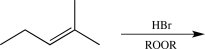
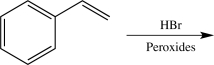
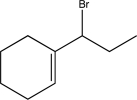
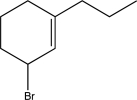
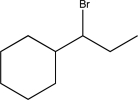
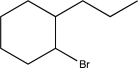
Which of the following reactions will not result in a racemic mixture of products?

A) <strong>Which of the following reactions will not result in a racemic mixture of products?</strong> A)   B)   C)   D)   E)   <div style=padding-top: 35px>
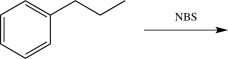
B) <strong>Which of the following reactions will not result in a racemic mixture of products?</strong> A)   B)   C)   D)   E)   <div style=padding-top: 35px>
C) <strong>Which of the following reactions will not result in a racemic mixture of products?</strong> A)   B)   C)   D)   E)   <div style=padding-top: 35px>
D) <strong>Which of the following reactions will not result in a racemic mixture of products?</strong> A)   B)   C)   D)   E)   <div style=padding-top: 35px>
E) <strong>Which of the following reactions will not result in a racemic mixture of products?</strong> A)   B)   C)   D)   E)   <div style=padding-top: 35px>
Use Space or
up arrow
down arrow
to flip the card.
Question
Which of the following is a propagation step that would lead to the product shown in the reaction below? <strong>Which of the following is a propagation step that would lead to the product shown in the reaction below?  </strong> A)   B)   C)   D)   E)   <div style=padding-top: 35px>

A) <strong>Which of the following is a propagation step that would lead to the product shown in the reaction below?  </strong> A)   B)   C)   D)   E)   <div style=padding-top: 35px>
B) <strong>Which of the following is a propagation step that would lead to the product shown in the reaction below?  </strong> A)   B)   C)   D)   E)   <div style=padding-top: 35px>
C) <strong>Which of the following is a propagation step that would lead to the product shown in the reaction below?  </strong> A)   B)   C)   D)   E)   <div style=padding-top: 35px>
D) <strong>Which of the following is a propagation step that would lead to the product shown in the reaction below?  </strong> A)   B)   C)   D)   E)   <div style=padding-top: 35px>
E) <strong>Which of the following is a propagation step that would lead to the product shown in the reaction below?  </strong> A)   B)   C)   D)   E)   <div style=padding-top: 35px>
Question
Which of the following reactions would not result in a racemic mixture of products?

A) <strong>Which of the following reactions would not result in a racemic mixture of products?</strong> A)   B)   C)   D)   E)   <div style=padding-top: 35px>
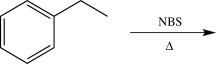
B) <strong>Which of the following reactions would not result in a racemic mixture of products?</strong> A)   B)   C)   D)   E)   <div style=padding-top: 35px>
C) <strong>Which of the following reactions would not result in a racemic mixture of products?</strong> A)   B)   C)   D)   E)   <div style=padding-top: 35px>
D) <strong>Which of the following reactions would not result in a racemic mixture of products?</strong> A)   B)   C)   D)   E)   <div style=padding-top: 35px>
E) <strong>Which of the following reactions would not result in a racemic mixture of products?</strong> A)   B)   C)   D)   E)   <div style=padding-top: 35px>
Question
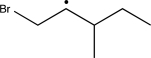
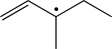
Which of the following is an intermediate in the reaction below? <strong>Which of the following is an intermediate in the reaction below?  </strong> A)   B)   C)   D)   E)   <div style=padding-top: 35px>

A) <strong>Which of the following is an intermediate in the reaction below?  </strong> A)   B)   C)   D)   E)   <div style=padding-top: 35px>
B) <strong>Which of the following is an intermediate in the reaction below?  </strong> A)   B)   C)   D)   E)   <div style=padding-top: 35px>
C) <strong>Which of the following is an intermediate in the reaction below?  </strong> A)   B)   C)   D)   E)   <div style=padding-top: 35px>
D) <strong>Which of the following is an intermediate in the reaction below?  </strong> A)   B)   C)   D)   E)   <div style=padding-top: 35px>
E) <strong>Which of the following is an intermediate in the reaction below?  </strong> A)   B)   C)   D)   E)   <div style=padding-top: 35px>
Question
Which of the following does not contain a carbon atom that is sp2 hybridized?

A) <strong>Which of the following does not contain a carbon atom that is sp<sup>2</sup> hybridized?</strong> A)   B)   C)   D)   E)   <div style=padding-top: 35px>
B) <strong>Which of the following does not contain a carbon atom that is sp<sup>2</sup> hybridized?</strong> A)   B)   C)   D)   E)   <div style=padding-top: 35px>
C) <strong>Which of the following does not contain a carbon atom that is sp<sup>2</sup> hybridized?</strong> A)   B)   C)   D)   E)   <div style=padding-top: 35px>
D) <strong>Which of the following does not contain a carbon atom that is sp<sup>2</sup> hybridized?</strong> A)   B)   C)   D)   E)   <div style=padding-top: 35px>
E) <strong>Which of the following does not contain a carbon atom that is sp<sup>2</sup> hybridized?</strong> A)   B)   C)   D)   E)   <div style=padding-top: 35px>
Question
What is the rate-determining step in the reaction below? <strong>What is the rate-determining step in the reaction below?  </strong> A)Proton transfer B)Electrophilic addition C)Radical coupling D)Radical addition E)Bimolecular homolytic substitution <div style=padding-top: 35px>
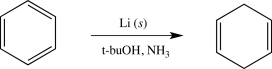
A)Proton transfer
B)Electrophilic addition
C)Radical coupling
D)Radical addition
E)Bimolecular homolytic substitution
Question
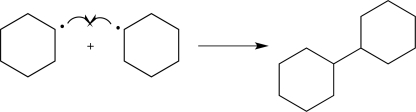
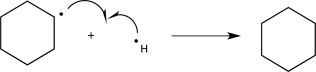
What type of elementary step is shown below? <strong>What type of elementary step is shown below?  </strong> A)Radical coupling B)Homolytic bond cleavage C)Bimolecular homolytic substitution D)Radical addition E)Radical halogenation <div style=padding-top: 35px>

A)Radical coupling
B)Homolytic bond cleavage
C)Bimolecular homolytic substitution
D)Radical addition
E)Radical halogenation
Question
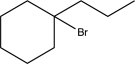
Which of the following would result in the most stable product after homolytic cleavage of the C-Br bond?

A) <strong>Which of the following would result in the most stable product after homolytic cleavage of the C-Br bond?</strong> A)   B)   C)   D)   E)   <div style=padding-top: 35px>
B) <strong>Which of the following would result in the most stable product after homolytic cleavage of the C-Br bond?</strong> A)   B)   C)   D)   E)   <div style=padding-top: 35px>
C) <strong>Which of the following would result in the most stable product after homolytic cleavage of the C-Br bond?</strong> A)   B)   C)   D)   E)   <div style=padding-top: 35px>
D) <strong>Which of the following would result in the most stable product after homolytic cleavage of the C-Br bond?</strong> A)   B)   C)   D)   E)   <div style=padding-top: 35px>
E) <strong>Which of the following would result in the most stable product after homolytic cleavage of the C-Br bond?</strong> A)   B)   C)   D)   E)   <div style=padding-top: 35px>
Question
How many different radical species could be produced from homolysis of a C-H bond in the molecule below? <strong>How many different radical species could be produced from homolysis of a C-H bond in the molecule below?  </strong> A)Two B)Three C)Four D)Five E)Six <div style=padding-top: 35px>

A)Two
B)Three
C)Four
D)Five
E)Six
Question
Which of the following will undergo C-Cl bond homolysis at the highest rate?

A) <strong>Which of the following will undergo C-Cl bond homolysis at the highest rate?</strong> A)   B)   C)   D)   E)   <div style=padding-top: 35px>
B) <strong>Which of the following will undergo C-Cl bond homolysis at the highest rate?</strong> A)   B)   C)   D)   E)   <div style=padding-top: 35px>
C) <strong>Which of the following will undergo C-Cl bond homolysis at the highest rate?</strong> A)   B)   C)   D)   E)   <div style=padding-top: 35px>
D) <strong>Which of the following will undergo C-Cl bond homolysis at the highest rate?</strong> A)   B)   C)   D)   E)   <div style=padding-top: 35px>
E) <strong>Which of the following will undergo C-Cl bond homolysis at the highest rate?</strong> A)   B)   C)   D)   E)   <div style=padding-top: 35px>
Question
Which of the following elementary steps does not occur in the reaction below? <strong>Which of the following elementary steps does not occur in the reaction below?  </strong> A)Bond homolysis B)Electrophilic addition C)Radical addition D)Bimolecular homolytic substitution E)All of these steps occur in the reaction shown. <div style=padding-top: 35px>
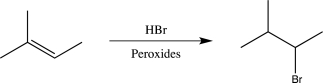
A)Bond homolysis
B)Electrophilic addition
C)Radical addition
D)Bimolecular homolytic substitution
E)All of these steps occur in the reaction shown.
Question
Which of the following is true regarding the reaction shown below? <strong>Which of the following is true regarding the reaction shown below?  </strong> A)When X = Cl, the reaction will occur at a higher rate and will result in a lower ratio of Product A to Product B than when X = Br. B)When X = Br, the reaction will occur at a higher rate and will result in a higher ratio of Product A to Product B than when X = Cl. C)When X = Cl, the reaction will occur at a lower rate and will result in a lower ratio of Product A to Product B than when X = Br. D)When X = Br, the reaction will occur at a lower rate and will result in a lower ratio of Product A to Product B than when X = Cl. E)When X = Cl, the reaction will occur at a lower rate and will result in a higher ratio of Product A to Product B than when X = Br. <div style=padding-top: 35px>

A)When X = Cl, the reaction will occur at a higher rate and will result in a lower ratio of Product A to Product B than when X = Br.
B)When X = Br, the reaction will occur at a higher rate and will result in a higher ratio of Product A to Product B than when X = Cl.
C)When X = Cl, the reaction will occur at a lower rate and will result in a lower ratio of Product A to Product B than when X = Br.
D)When X = Br, the reaction will occur at a lower rate and will result in a lower ratio of Product A to Product B than when X = Cl.
E)When X = Cl, the reaction will occur at a lower rate and will result in a higher ratio of Product A to Product B than when X = Br.
Question
Which of the following steps is most endothermic?

A) <strong>Which of the following steps is most endothermic?</strong> A)   B)   C)   D)   E)All of these steps are equally endothermic. <div style=padding-top: 35px>

B) <strong>Which of the following steps is most endothermic?</strong> A)   B)   C)   D)   E)All of these steps are equally endothermic. <div style=padding-top: 35px>
C) <strong>Which of the following steps is most endothermic?</strong> A)   B)   C)   D)   E)All of these steps are equally endothermic. <div style=padding-top: 35px>
D) <strong>Which of the following steps is most endothermic?</strong> A)   B)   C)   D)   E)All of these steps are equally endothermic. <div style=padding-top: 35px>
E)All of these steps are equally endothermic.
Question
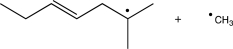
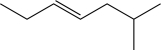
Predict the major products of homolytic C-C bond cleavage in the molecule below. <strong>Predict the major products of homolytic C-C bond cleavage in the molecule below.  </strong> A)   B)   C)   D)   E)   <div style=padding-top: 35px>
A) <strong>Predict the major products of homolytic C-C bond cleavage in the molecule below.  </strong> A)   B)   C)   D)   E)   <div style=padding-top: 35px>
B) <strong>Predict the major products of homolytic C-C bond cleavage in the molecule below.  </strong> A)   B)   C)   D)   E)   <div style=padding-top: 35px>
C) <strong>Predict the major products of homolytic C-C bond cleavage in the molecule below.  </strong> A)   B)   C)   D)   E)   <div style=padding-top: 35px>
D) <strong>Predict the major products of homolytic C-C bond cleavage in the molecule below.  </strong> A)   B)   C)   D)   E)   <div style=padding-top: 35px>
E) <strong>Predict the major products of homolytic C-C bond cleavage in the molecule below.  </strong> A)   B)   C)   D)   E)   <div style=padding-top: 35px>
Question
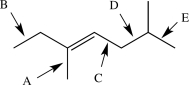
Which of the following C-C bonds is the weakest? <strong>Which of the following C-C bonds is the weakest?  </strong> A)A B)B C)C D)D E)E <div style=padding-top: 35px>
A)A
B)B
C)C
D)D
E)E
Question
Which of the following is a termination step that could occur in the reaction below? <strong>Which of the following is a termination step that could occur in the reaction below?  </strong> A)   B)   C)   D)   E)   <div style=padding-top: 35px>

A) <strong>Which of the following is a termination step that could occur in the reaction below?  </strong> A)   B)   C)   D)   E)   <div style=padding-top: 35px>
B) <strong>Which of the following is a termination step that could occur in the reaction below?  </strong> A)   B)   C)   D)   E)   <div style=padding-top: 35px>
C) <strong>Which of the following is a termination step that could occur in the reaction below?  </strong> A)   B)   C)   D)   E)   <div style=padding-top: 35px>
D) <strong>Which of the following is a termination step that could occur in the reaction below?  </strong> A)   B)   C)   D)   E)   <div style=padding-top: 35px>
E) <strong>Which of the following is a termination step that could occur in the reaction below?  </strong> A)   B)   C)   D)   E)   <div style=padding-top: 35px>
Question
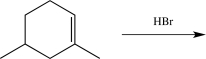
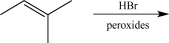
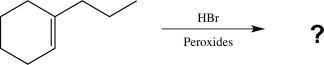
Predict the major product of the reaction below. <strong>Predict the major product of the reaction below.  </strong> A)   B)   C)   D)   E)   <div style=padding-top: 35px>
A) <strong>Predict the major product of the reaction below.  </strong> A)   B)   C)   D)   E)   <div style=padding-top: 35px>
B) <strong>Predict the major product of the reaction below.  </strong> A)   B)   C)   D)   E)   <div style=padding-top: 35px>
C) <strong>Predict the major product of the reaction below.  </strong> A)   B)   C)   D)   E)   <div style=padding-top: 35px>
D) <strong>Predict the major product of the reaction below.  </strong> A)   B)   C)   D)   E)   <div style=padding-top: 35px>
E) <strong>Predict the major product of the reaction below.  </strong> A)   B)   C)   D)   E)   <div style=padding-top: 35px>
Question
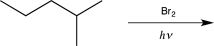
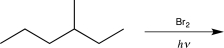
What product other than the ones shown could be formed in the radical halogenation reaction below? <strong>What product other than the ones shown could be formed in the radical halogenation reaction below?  </strong> A)   B)   C)   D)   E)   <div style=padding-top: 35px>

A) <strong>What product other than the ones shown could be formed in the radical halogenation reaction below?  </strong> A)   B)   C)   D)   E)   <div style=padding-top: 35px>
B) <strong>What product other than the ones shown could be formed in the radical halogenation reaction below?  </strong> A)   B)   C)   D)   E)   <div style=padding-top: 35px>
C) <strong>What product other than the ones shown could be formed in the radical halogenation reaction below?  </strong> A)   B)   C)   D)   E)   <div style=padding-top: 35px>
D) <strong>What product other than the ones shown could be formed in the radical halogenation reaction below?  </strong> A)   B)   C)   D)   E)   <div style=padding-top: 35px>
E) <strong>What product other than the ones shown could be formed in the radical halogenation reaction below?  </strong> A)   B)   C)   D)   E)   <div style=padding-top: 35px>
Question
What is the first elementary step that occurs in the mechanism of the reaction shown below? <strong>What is the first elementary step that occurs in the mechanism of the reaction shown below?  </strong> A)Radical halogenation B)Radical addition C)Bimolecular homolytic substitution D)Bond homolysis E)Radical coupling <div style=padding-top: 35px>

A)Radical halogenation
B)Radical addition
C)Bimolecular homolytic substitution
D)Bond homolysis
E)Radical coupling
Question
Which of the following free radicals is the least stable?

A) <strong>Which of the following free radicals is the least stable?</strong> A)   B)   C)   D)   E)   <div style=padding-top: 35px>
B) <strong>Which of the following free radicals is the least stable?</strong> A)   B)   C)   D)   E)   <div style=padding-top: 35px>
C) <strong>Which of the following free radicals is the least stable?</strong> A)   B)   C)   D)   E)   <div style=padding-top: 35px>
D) <strong>Which of the following free radicals is the least stable?</strong> A)   B)   C)   D)   E)   <div style=padding-top: 35px>
E) <strong>Which of the following free radicals is the least stable?</strong> A)   B)   C)   D)   E)   <div style=padding-top: 35px>
Question
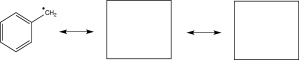
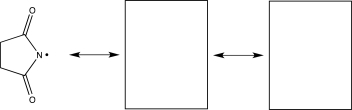
Draw two additional resonance structures for the species shown below,and draw arrows to show the conversion between resonance structures. Draw two additional resonance structures for the species shown below,and draw arrows to show the conversion between resonance structures.  <div style=padding-top: 35px>
Question
Draw two resonance structures of the radical species below.Include curved arrows. Draw two resonance structures of the radical species below.Include curved arrows.  <div style=padding-top: 35px>
Question
Draw the two products most likely to result from C-C bond homolysis of the molecule below,and draw single-barbed arrows showing the formation of these products. Draw the two products most likely to result from C-C bond homolysis of the molecule below,and draw single-barbed arrows showing the formation of these products.  <div style=padding-top: 35px>

Question
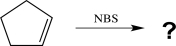
Predict the major product of the reaction below,and draw a detailed mechanism for the production of Br2 from NBS as it would occur in this reaction. Predict the major product of the reaction below,and draw a detailed mechanism for the production of Br<sub>2</sub> from NBS as it would occur in this reaction.  <div style=padding-top: 35px>
Question
Draw two products that could be formed in the following radical addition step. Draw two products that could be formed in the following radical addition step.  <div style=padding-top: 35px>

Question
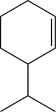
Indicate where the weakest C-H bond is in the molecule below. Indicate where the weakest C-H bond is in the molecule below.  <div style=padding-top: 35px>
Question
Draw the product of the radical addition below,and add curved arrows to show the movement of electrons. Draw the product of the radical addition below,and add curved arrows to show the movement of electrons.  <div style=padding-top: 35px>

Question
Predict the product of the following reaction. <strong>Predict the product of the following reaction.  </strong> A)   B)   C)   D)   E)   <div style=padding-top: 35px>

A) <strong>Predict the product of the following reaction.  </strong> A)   B)   C)   D)   E)   <div style=padding-top: 35px>
B) <strong>Predict the product of the following reaction.  </strong> A)   B)   C)   D)   E)   <div style=padding-top: 35px>
C) <strong>Predict the product of the following reaction.  </strong> A)   B)   C)   D)   E)   <div style=padding-top: 35px>
D) <strong>Predict the product of the following reaction.  </strong> A)   B)   C)   D)   E)   <div style=padding-top: 35px>
E) <strong>Predict the product of the following reaction.  </strong> A)   B)   C)   D)   E)   <div style=padding-top: 35px>
Question
Predict the major product of the reaction below,and draw complete mechanisms for the initiation and propagation steps. Predict the major product of the reaction below,and draw complete mechanisms for the initiation and propagation steps.  <div style=padding-top: 35px>

Question
Draw a reasonable mechanism for the fragmentation reaction shown below. Draw a reasonable mechanism for the fragmentation reaction shown below.  <div style=padding-top: 35px>

Question
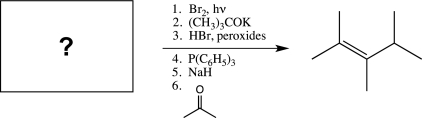
What is the missing starting material for the following reaction sequence? <strong>What is the missing starting material for the following reaction sequence?  </strong> A)   B)   C)   D)   E)   <div style=padding-top: 35px>
A) <strong>What is the missing starting material for the following reaction sequence?  </strong> A)   B)   C)   D)   E)   <div style=padding-top: 35px>
B) <strong>What is the missing starting material for the following reaction sequence?  </strong> A)   B)   C)   D)   E)   <div style=padding-top: 35px>
C) <strong>What is the missing starting material for the following reaction sequence?  </strong> A)   B)   C)   D)   E)   <div style=padding-top: 35px>
D) <strong>What is the missing starting material for the following reaction sequence?  </strong> A)   B)   C)   D)   E)   <div style=padding-top: 35px>
E) <strong>What is the missing starting material for the following reaction sequence?  </strong> A)   B)   C)   D)   E)   <div style=padding-top: 35px>
Question
Draw the mechanism for the reaction below.Label the initiation step and the propagation steps,and include two plausible termination steps. Draw the mechanism for the reaction below.Label the initiation step and the propagation steps,and include two plausible termination steps.  <div style=padding-top: 35px>

Question
What starting material is missing from the reaction scheme below? <strong>What starting material is missing from the reaction scheme below?  </strong> A)   B)   C)   D)   E)   <div style=padding-top: 35px>

A) <strong>What starting material is missing from the reaction scheme below?  </strong> A)   B)   C)   D)   E)   <div style=padding-top: 35px>
B) <strong>What starting material is missing from the reaction scheme below?  </strong> A)   B)   C)   D)   E)   <div style=padding-top: 35px>
C) <strong>What starting material is missing from the reaction scheme below?  </strong> A)   B)   C)   D)   E)   <div style=padding-top: 35px>
D) <strong>What starting material is missing from the reaction scheme below?  </strong> A)   B)   C)   D)   E)   <div style=padding-top: 35px>
E) <strong>What starting material is missing from the reaction scheme below?  </strong> A)   B)   C)   D)   E)   <div style=padding-top: 35px>
Question
The following intermediate undergoes an intramolecular radical addition reaction,yielding a product that contains a secondary alkyl radical.Draw a mechanism for this reaction,and predict the structure of the product. The following intermediate undergoes an intramolecular radical addition reaction,yielding a product that contains a secondary alkyl radical.Draw a mechanism for this reaction,and predict the structure of the product.  <div style=padding-top: 35px>

Question
Fill in the missing product and draw single-barbed arrows to show the movement of electrons in the reaction below. Fill in the missing product and draw single-barbed arrows to show the movement of electrons in the reaction below.  <div style=padding-top: 35px>

Question
Draw all possible products from homolytic C-H bond cleavage in the molecule below,and indicate which product would be most stable. Draw all possible products from homolytic C-H bond cleavage in the molecule below,and indicate which product would be most stable.  <div style=padding-top: 35px>
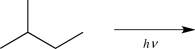
Question
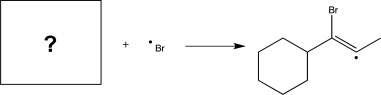
Fill in the missing reactant in the following mechanism step. Fill in the missing reactant in the following mechanism step.  <div style=padding-top: 35px>
Question
Which of the following will undergo a Birch reduction at the highest rate?

A) <strong>Which of the following will undergo a Birch reduction at the highest rate?</strong> A)   B)   C)   D)   E)   <div style=padding-top: 35px>
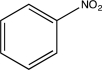
B) <strong>Which of the following will undergo a Birch reduction at the highest rate?</strong> A)   B)   C)   D)   E)   <div style=padding-top: 35px>
C) <strong>Which of the following will undergo a Birch reduction at the highest rate?</strong> A)   B)   C)   D)   E)   <div style=padding-top: 35px>
D) <strong>Which of the following will undergo a Birch reduction at the highest rate?</strong> A)   B)   C)   D)   E)   <div style=padding-top: 35px>
E) <strong>Which of the following will undergo a Birch reduction at the highest rate?</strong> A)   B)   C)   D)   E)   <div style=padding-top: 35px>
Question
Predict the major product of the reaction sequence shown below. <strong>Predict the major product of the reaction sequence shown below.  </strong> A)   B)   C)   D)   E)   <div style=padding-top: 35px>
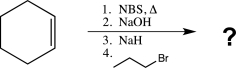
A) <strong>Predict the major product of the reaction sequence shown below.  </strong> A)   B)   C)   D)   E)   <div style=padding-top: 35px>
B) <strong>Predict the major product of the reaction sequence shown below.  </strong> A)   B)   C)   D)   E)   <div style=padding-top: 35px>
C) <strong>Predict the major product of the reaction sequence shown below.  </strong> A)   B)   C)   D)   E)   <div style=padding-top: 35px>
D) <strong>Predict the major product of the reaction sequence shown below.  </strong> A)   B)   C)   D)   E)   <div style=padding-top: 35px>
E) <strong>Predict the major product of the reaction sequence shown below.  </strong> A)   B)   C)   D)   E)   <div style=padding-top: 35px>
Question
Draw single-barbed arrows to show homolytic bond cleavage in Br2,shown below.Fill in the products of the reaction. Draw single-barbed arrows to show homolytic bond cleavage in Br<sub>2</sub>,shown below.Fill in the products of the reaction.  <div style=padding-top: 35px>

Question
Design a synthetic route to accomplish the transformation shown below,using any reagents necessary. Design a synthetic route to accomplish the transformation shown below,using any reagents necessary.  <div style=padding-top: 35px>

Question
Draw a complete,detailed mechanism for the reaction below,and predict the major product. Draw a complete,detailed mechanism for the reaction below,and predict the major product.  <div style=padding-top: 35px>

Question
Draw the propagation steps that occur in the reaction below,and label the type of elementary step for each. Draw the propagation steps that occur in the reaction below,and label the type of elementary step for each.  <div style=padding-top: 35px>

Question
Fill in the missing reactants needed to carry out the reaction below. Fill in the missing reactants needed to carry out the reaction below.  <div style=padding-top: 35px>

Question
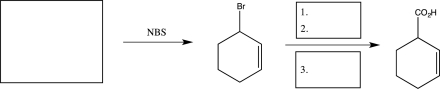
Fill in the starting material and reagents to complete the synthetic scheme below. Fill in the starting material and reagents to complete the synthetic scheme below.  <div style=padding-top: 35px>
Question
The chlorine radical abstracts a hydrogen atom from a secondary carbon in preference to a hydrogen atom on a primary carbon in a 4.5:1 ratio.Draw the two possible products that could be obtained from the reaction below,and compute the expected percentage of each product,taking into account the number of each type of hydrogen and the selectivity of chlorine. The chlorine radical abstracts a hydrogen atom from a secondary carbon in preference to a hydrogen atom on a primary carbon in a 4.5:1 ratio.Draw the two possible products that could be obtained from the reaction below,and compute the expected percentage of each product,taking into account the number of each type of hydrogen and the selectivity of chlorine.  <div style=padding-top: 35px>

Question
Devise a synthesis to carry out the following transformation,using any reagents necessary. Devise a synthesis to carry out the following transformation,using any reagents necessary.  <div style=padding-top: 35px>

Question
Predict the major product of the reaction below,and draw a mechanism for the radical addition step. Predict the major product of the reaction below,and draw a mechanism for the radical addition step.  <div style=padding-top: 35px>

Question
Predict the major product of the reaction below.Draw all possible stereoisomers. Predict the major product of the reaction below.Draw all possible stereoisomers.  <div style=padding-top: 35px>

Question
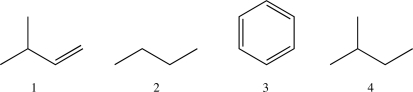
Arrange the compounds below in order of increasing rate of halogenation. Arrange the compounds below in order of increasing rate of halogenation.  <div style=padding-top: 35px>
Unlock Deck
Sign up to unlock the cards in this deck!
Unlock Deck
Unlock Deck
1/50
auto play flashcards
Play
simple tutorial
Full screen (f)
exit full mode
Deck 27: Reactions Involving Free Radicals
1
Which of the following reactions will not result in a racemic mixture of products?

A) <strong>Which of the following reactions will not result in a racemic mixture of products?</strong> A)   B)   C)   D)   E)
B) <strong>Which of the following reactions will not result in a racemic mixture of products?</strong> A)   B)   C)   D)   E)
C) <strong>Which of the following reactions will not result in a racemic mixture of products?</strong> A)   B)   C)   D)   E)
D) <strong>Which of the following reactions will not result in a racemic mixture of products?</strong> A)   B)   C)   D)   E)
E) <strong>Which of the following reactions will not result in a racemic mixture of products?</strong> A)   B)   C)   D)   E)
2
Which of the following is a propagation step that would lead to the product shown in the reaction below? <strong>Which of the following is a propagation step that would lead to the product shown in the reaction below?  </strong> A)   B)   C)   D)   E)

A) <strong>Which of the following is a propagation step that would lead to the product shown in the reaction below?  </strong> A)   B)   C)   D)   E)
B) <strong>Which of the following is a propagation step that would lead to the product shown in the reaction below?  </strong> A)   B)   C)   D)   E)
C) <strong>Which of the following is a propagation step that would lead to the product shown in the reaction below?  </strong> A)   B)   C)   D)   E)
D) <strong>Which of the following is a propagation step that would lead to the product shown in the reaction below?  </strong> A)   B)   C)   D)   E)
E) <strong>Which of the following is a propagation step that would lead to the product shown in the reaction below?  </strong> A)   B)   C)   D)   E)
3
Which of the following reactions would not result in a racemic mixture of products?

A) <strong>Which of the following reactions would not result in a racemic mixture of products?</strong> A)   B)   C)   D)   E)
B) <strong>Which of the following reactions would not result in a racemic mixture of products?</strong> A)   B)   C)   D)   E)
C) <strong>Which of the following reactions would not result in a racemic mixture of products?</strong> A)   B)   C)   D)   E)
D) <strong>Which of the following reactions would not result in a racemic mixture of products?</strong> A)   B)   C)   D)   E)
E) <strong>Which of the following reactions would not result in a racemic mixture of products?</strong> A)   B)   C)   D)   E)
4
Which of the following is an intermediate in the reaction below? <strong>Which of the following is an intermediate in the reaction below?  </strong> A)   B)   C)   D)   E)

A) <strong>Which of the following is an intermediate in the reaction below?  </strong> A)   B)   C)   D)   E)
B) <strong>Which of the following is an intermediate in the reaction below?  </strong> A)   B)   C)   D)   E)
C) <strong>Which of the following is an intermediate in the reaction below?  </strong> A)   B)   C)   D)   E)
D) <strong>Which of the following is an intermediate in the reaction below?  </strong> A)   B)   C)   D)   E)
E) <strong>Which of the following is an intermediate in the reaction below?  </strong> A)   B)   C)   D)   E)
Unlock Deck
Unlock for access to all 50 flashcards in this deck.
Unlock Deck
k this deck
5
Which of the following does not contain a carbon atom that is sp2 hybridized?

A) <strong>Which of the following does not contain a carbon atom that is sp<sup>2</sup> hybridized?</strong> A)   B)   C)   D)   E)
B) <strong>Which of the following does not contain a carbon atom that is sp<sup>2</sup> hybridized?</strong> A)   B)   C)   D)   E)
C) <strong>Which of the following does not contain a carbon atom that is sp<sup>2</sup> hybridized?</strong> A)   B)   C)   D)   E)
D) <strong>Which of the following does not contain a carbon atom that is sp<sup>2</sup> hybridized?</strong> A)   B)   C)   D)   E)
E) <strong>Which of the following does not contain a carbon atom that is sp<sup>2</sup> hybridized?</strong> A)   B)   C)   D)   E)
Unlock Deck
Unlock for access to all 50 flashcards in this deck.

Unlock Deck
k this deck
6
What is the rate-determining step in the reaction below? <strong>What is the rate-determining step in the reaction below?  </strong> A)Proton transfer B)Electrophilic addition C)Radical coupling D)Radical addition E)Bimolecular homolytic substitution

A)Proton transfer
B)Electrophilic addition
C)Radical coupling
D)Radical addition
E)Bimolecular homolytic substitution
Unlock Deck
Unlock for access to all 50 flashcards in this deck.

Unlock Deck
k this deck
7
What type of elementary step is shown below? <strong>What type of elementary step is shown below?  </strong> A)Radical coupling B)Homolytic bond cleavage C)Bimolecular homolytic substitution D)Radical addition E)Radical halogenation

A)Radical coupling
B)Homolytic bond cleavage
C)Bimolecular homolytic substitution
D)Radical addition
E)Radical halogenation
Unlock Deck
Unlock for access to all 50 flashcards in this deck.

Unlock Deck
k this deck
8
Which of the following would result in the most stable product after homolytic cleavage of the C-Br bond?

A) <strong>Which of the following would result in the most stable product after homolytic cleavage of the C-Br bond?</strong> A)   B)   C)   D)   E)
B) <strong>Which of the following would result in the most stable product after homolytic cleavage of the C-Br bond?</strong> A)   B)   C)   D)   E)
C) <strong>Which of the following would result in the most stable product after homolytic cleavage of the C-Br bond?</strong> A)   B)   C)   D)   E)
D) <strong>Which of the following would result in the most stable product after homolytic cleavage of the C-Br bond?</strong> A)   B)   C)   D)   E)
E) <strong>Which of the following would result in the most stable product after homolytic cleavage of the C-Br bond?</strong> A)   B)   C)   D)   E)
Unlock Deck
Unlock for access to all 50 flashcards in this deck.

Unlock Deck
k this deck
9
How many different radical species could be produced from homolysis of a C-H bond in the molecule below? <strong>How many different radical species could be produced from homolysis of a C-H bond in the molecule below?  </strong> A)Two B)Three C)Four D)Five E)Six

A)Two
B)Three
C)Four
D)Five
E)Six
Unlock Deck
Unlock for access to all 50 flashcards in this deck.
Unlock Deck
k this deck
10
Which of the following will undergo C-Cl bond homolysis at the highest rate?

A) <strong>Which of the following will undergo C-Cl bond homolysis at the highest rate?</strong> A)   B)   C)   D)   E)
B) <strong>Which of the following will undergo C-Cl bond homolysis at the highest rate?</strong> A)   B)   C)   D)   E)
C) <strong>Which of the following will undergo C-Cl bond homolysis at the highest rate?</strong> A)   B)   C)   D)   E)
D) <strong>Which of the following will undergo C-Cl bond homolysis at the highest rate?</strong> A)   B)   C)   D)   E)
E) <strong>Which of the following will undergo C-Cl bond homolysis at the highest rate?</strong> A)   B)   C)   D)   E)
Unlock Deck
Unlock for access to all 50 flashcards in this deck.
Unlock Deck
k this deck
11
Which of the following elementary steps does not occur in the reaction below? <strong>Which of the following elementary steps does not occur in the reaction below?  </strong> A)Bond homolysis B)Electrophilic addition C)Radical addition D)Bimolecular homolytic substitution E)All of these steps occur in the reaction shown.

A)Bond homolysis
B)Electrophilic addition
C)Radical addition
D)Bimolecular homolytic substitution
E)All of these steps occur in the reaction shown.
Unlock Deck
Unlock for access to all 50 flashcards in this deck.
Unlock Deck
k this deck
12
Which of the following is true regarding the reaction shown below? <strong>Which of the following is true regarding the reaction shown below?  </strong> A)When X = Cl, the reaction will occur at a higher rate and will result in a lower ratio of Product A to Product B than when X = Br. B)When X = Br, the reaction will occur at a higher rate and will result in a higher ratio of Product A to Product B than when X = Cl. C)When X = Cl, the reaction will occur at a lower rate and will result in a lower ratio of Product A to Product B than when X = Br. D)When X = Br, the reaction will occur at a lower rate and will result in a lower ratio of Product A to Product B than when X = Cl. E)When X = Cl, the reaction will occur at a lower rate and will result in a higher ratio of Product A to Product B than when X = Br.

A)When X = Cl, the reaction will occur at a higher rate and will result in a lower ratio of Product A to Product B than when X = Br.
B)When X = Br, the reaction will occur at a higher rate and will result in a higher ratio of Product A to Product B than when X = Cl.
C)When X = Cl, the reaction will occur at a lower rate and will result in a lower ratio of Product A to Product B than when X = Br.
D)When X = Br, the reaction will occur at a lower rate and will result in a lower ratio of Product A to Product B than when X = Cl.
E)When X = Cl, the reaction will occur at a lower rate and will result in a higher ratio of Product A to Product B than when X = Br.
Unlock Deck
Unlock for access to all 50 flashcards in this deck.
Unlock Deck
k this deck
13
Which of the following steps is most endothermic?

A) <strong>Which of the following steps is most endothermic?</strong> A)   B)   C)   D)   E)All of these steps are equally endothermic.
B) <strong>Which of the following steps is most endothermic?</strong> A)   B)   C)   D)   E)All of these steps are equally endothermic.
C) <strong>Which of the following steps is most endothermic?</strong> A)   B)   C)   D)   E)All of these steps are equally endothermic.
D) <strong>Which of the following steps is most endothermic?</strong> A)   B)   C)   D)   E)All of these steps are equally endothermic.
E)All of these steps are equally endothermic.
Unlock Deck
Unlock for access to all 50 flashcards in this deck.
Unlock Deck
k this deck
14
Predict the major products of homolytic C-C bond cleavage in the molecule below. <strong>Predict the major products of homolytic C-C bond cleavage in the molecule below.  </strong> A)   B)   C)   D)   E)

A) <strong>Predict the major products of homolytic C-C bond cleavage in the molecule below.  </strong> A)   B)   C)   D)   E)
B) <strong>Predict the major products of homolytic C-C bond cleavage in the molecule below.  </strong> A)   B)   C)   D)   E)
C) <strong>Predict the major products of homolytic C-C bond cleavage in the molecule below.  </strong> A)   B)   C)   D)   E)
D) <strong>Predict the major products of homolytic C-C bond cleavage in the molecule below.  </strong> A)   B)   C)   D)   E)
E) <strong>Predict the major products of homolytic C-C bond cleavage in the molecule below.  </strong> A)   B)   C)   D)   E)
Unlock Deck
Unlock for access to all 50 flashcards in this deck.
Unlock Deck
k this deck
15
Which of the following C-C bonds is the weakest? <strong>Which of the following C-C bonds is the weakest?  </strong> A)A B)B C)C D)D E)E

A)A
B)B
C)C
D)D
E)E
Unlock Deck
Unlock for access to all 50 flashcards in this deck.
Unlock Deck
k this deck
16
Which of the following is a termination step that could occur in the reaction below? <strong>Which of the following is a termination step that could occur in the reaction below?  </strong> A)   B)   C)   D)   E)

A) <strong>Which of the following is a termination step that could occur in the reaction below?  </strong> A)   B)   C)   D)   E)
B) <strong>Which of the following is a termination step that could occur in the reaction below?  </strong> A)   B)   C)   D)   E)
C) <strong>Which of the following is a termination step that could occur in the reaction below?  </strong> A)   B)   C)   D)   E)
D) <strong>Which of the following is a termination step that could occur in the reaction below?  </strong> A)   B)   C)   D)   E)
E) <strong>Which of the following is a termination step that could occur in the reaction below?  </strong> A)   B)   C)   D)   E)
Unlock Deck
Unlock for access to all 50 flashcards in this deck.
Unlock Deck
k this deck
17
Predict the major product of the reaction below. <strong>Predict the major product of the reaction below.  </strong> A)   B)   C)   D)   E)

A) <strong>Predict the major product of the reaction below.  </strong> A)   B)   C)   D)   E)
B) <strong>Predict the major product of the reaction below.  </strong> A)   B)   C)   D)   E)
C) <strong>Predict the major product of the reaction below.  </strong> A)   B)   C)   D)   E)
D) <strong>Predict the major product of the reaction below.  </strong> A)   B)   C)   D)   E)
E) <strong>Predict the major product of the reaction below.  </strong> A)   B)   C)   D)   E)
Unlock Deck
Unlock for access to all 50 flashcards in this deck.
Unlock Deck
k this deck
18
What product other than the ones shown could be formed in the radical halogenation reaction below? <strong>What product other than the ones shown could be formed in the radical halogenation reaction below?  </strong> A)   B)   C)   D)   E)

A) <strong>What product other than the ones shown could be formed in the radical halogenation reaction below?  </strong> A)   B)   C)   D)   E)
B) <strong>What product other than the ones shown could be formed in the radical halogenation reaction below?  </strong> A)   B)   C)   D)   E)
C) <strong>What product other than the ones shown could be formed in the radical halogenation reaction below?  </strong> A)   B)   C)   D)   E)
D) <strong>What product other than the ones shown could be formed in the radical halogenation reaction below?  </strong> A)   B)   C)   D)   E)
E) <strong>What product other than the ones shown could be formed in the radical halogenation reaction below?  </strong> A)   B)   C)   D)   E)
Unlock Deck
Unlock for access to all 50 flashcards in this deck.
Unlock Deck
k this deck
19
What is the first elementary step that occurs in the mechanism of the reaction shown below? <strong>What is the first elementary step that occurs in the mechanism of the reaction shown below?  </strong> A)Radical halogenation B)Radical addition C)Bimolecular homolytic substitution D)Bond homolysis E)Radical coupling

A)Radical halogenation
B)Radical addition
C)Bimolecular homolytic substitution
D)Bond homolysis
E)Radical coupling
Unlock Deck
Unlock for access to all 50 flashcards in this deck.
Unlock Deck
k this deck
20
Which of the following free radicals is the least stable?

A) <strong>Which of the following free radicals is the least stable?</strong> A)   B)   C)   D)   E)
B) <strong>Which of the following free radicals is the least stable?</strong> A)   B)   C)   D)   E)
C) <strong>Which of the following free radicals is the least stable?</strong> A)   B)   C)   D)   E)
D) <strong>Which of the following free radicals is the least stable?</strong> A)   B)   C)   D)   E)
E) <strong>Which of the following free radicals is the least stable?</strong> A)   B)   C)   D)   E)
Unlock Deck
Unlock for access to all 50 flashcards in this deck.
Unlock Deck
k this deck
21
Draw two additional resonance structures for the species shown below,and draw arrows to show the conversion between resonance structures. Draw two additional resonance structures for the species shown below,and draw arrows to show the conversion between resonance structures.
Unlock Deck
Unlock for access to all 50 flashcards in this deck.
Unlock Deck
k this deck
22
Draw two resonance structures of the radical species below.Include curved arrows. Draw two resonance structures of the radical species below.Include curved arrows.
Unlock Deck
Unlock for access to all 50 flashcards in this deck.
Unlock Deck
k this deck
23
Draw the two products most likely to result from C-C bond homolysis of the molecule below,and draw single-barbed arrows showing the formation of these products. Draw the two products most likely to result from C-C bond homolysis of the molecule below,and draw single-barbed arrows showing the formation of these products.
Unlock Deck
Unlock for access to all 50 flashcards in this deck.
Unlock Deck
k this deck
24
Predict the major product of the reaction below,and draw a detailed mechanism for the production of Br2 from NBS as it would occur in this reaction. Predict the major product of the reaction below,and draw a detailed mechanism for the production of Br<sub>2</sub> from NBS as it would occur in this reaction.
Unlock Deck
Unlock for access to all 50 flashcards in this deck.
Unlock Deck
k this deck
25
Draw two products that could be formed in the following radical addition step. Draw two products that could be formed in the following radical addition step.
Unlock Deck
Unlock for access to all 50 flashcards in this deck.
Unlock Deck
k this deck
26
Indicate where the weakest C-H bond is in the molecule below. Indicate where the weakest C-H bond is in the molecule below.
Unlock Deck
Unlock for access to all 50 flashcards in this deck.
Unlock Deck
k this deck
27
Draw the product of the radical addition below,and add curved arrows to show the movement of electrons. Draw the product of the radical addition below,and add curved arrows to show the movement of electrons.
Unlock Deck
Unlock for access to all 50 flashcards in this deck.
Unlock Deck
k this deck
28
Predict the product of the following reaction. <strong>Predict the product of the following reaction.  </strong> A)   B)   C)   D)   E)

A) <strong>Predict the product of the following reaction.  </strong> A)   B)   C)   D)   E)
B) <strong>Predict the product of the following reaction.  </strong> A)   B)   C)   D)   E)
C) <strong>Predict the product of the following reaction.  </strong> A)   B)   C)   D)   E)
D) <strong>Predict the product of the following reaction.  </strong> A)   B)   C)   D)   E)
E) <strong>Predict the product of the following reaction.  </strong> A)   B)   C)   D)   E)
Unlock Deck
Unlock for access to all 50 flashcards in this deck.
Unlock Deck
k this deck
29
Predict the major product of the reaction below,and draw complete mechanisms for the initiation and propagation steps. Predict the major product of the reaction below,and draw complete mechanisms for the initiation and propagation steps.
Unlock Deck
Unlock for access to all 50 flashcards in this deck.
Unlock Deck
k this deck
30
Draw a reasonable mechanism for the fragmentation reaction shown below. Draw a reasonable mechanism for the fragmentation reaction shown below.
Unlock Deck
Unlock for access to all 50 flashcards in this deck.
Unlock Deck
k this deck
31
What is the missing starting material for the following reaction sequence? <strong>What is the missing starting material for the following reaction sequence?  </strong> A)   B)   C)   D)   E)

A) <strong>What is the missing starting material for the following reaction sequence?  </strong> A)   B)   C)   D)   E)
B) <strong>What is the missing starting material for the following reaction sequence?  </strong> A)   B)   C)   D)   E)
C) <strong>What is the missing starting material for the following reaction sequence?  </strong> A)   B)   C)   D)   E)
D) <strong>What is the missing starting material for the following reaction sequence?  </strong> A)   B)   C)   D)   E)
E) <strong>What is the missing starting material for the following reaction sequence?  </strong> A)   B)   C)   D)   E)
Unlock Deck
Unlock for access to all 50 flashcards in this deck.
Unlock Deck
k this deck
32
Draw the mechanism for the reaction below.Label the initiation step and the propagation steps,and include two plausible termination steps. Draw the mechanism for the reaction below.Label the initiation step and the propagation steps,and include two plausible termination steps.
Unlock Deck
Unlock for access to all 50 flashcards in this deck.
Unlock Deck
k this deck
33
What starting material is missing from the reaction scheme below? <strong>What starting material is missing from the reaction scheme below?  </strong> A)   B)   C)   D)   E)

A) <strong>What starting material is missing from the reaction scheme below?  </strong> A)   B)   C)   D)   E)
B) <strong>What starting material is missing from the reaction scheme below?  </strong> A)   B)   C)   D)   E)
C) <strong>What starting material is missing from the reaction scheme below?  </strong> A)   B)   C)   D)   E)
D) <strong>What starting material is missing from the reaction scheme below?  </strong> A)   B)   C)   D)   E)
E) <strong>What starting material is missing from the reaction scheme below?  </strong> A)   B)   C)   D)   E)
Unlock Deck
Unlock for access to all 50 flashcards in this deck.
Unlock Deck
k this deck
34
The following intermediate undergoes an intramolecular radical addition reaction,yielding a product that contains a secondary alkyl radical.Draw a mechanism for this reaction,and predict the structure of the product. The following intermediate undergoes an intramolecular radical addition reaction,yielding a product that contains a secondary alkyl radical.Draw a mechanism for this reaction,and predict the structure of the product.
Unlock Deck
Unlock for access to all 50 flashcards in this deck.
Unlock Deck
k this deck
35
Fill in the missing product and draw single-barbed arrows to show the movement of electrons in the reaction below. Fill in the missing product and draw single-barbed arrows to show the movement of electrons in the reaction below.
Unlock Deck
Unlock for access to all 50 flashcards in this deck.
Unlock Deck
k this deck
36
Draw all possible products from homolytic C-H bond cleavage in the molecule below,and indicate which product would be most stable. Draw all possible products from homolytic C-H bond cleavage in the molecule below,and indicate which product would be most stable.
Unlock Deck
Unlock for access to all 50 flashcards in this deck.
Unlock Deck
k this deck
37
Fill in the missing reactant in the following mechanism step. Fill in the missing reactant in the following mechanism step.
Unlock Deck
Unlock for access to all 50 flashcards in this deck.
Unlock Deck
k this deck
38
Which of the following will undergo a Birch reduction at the highest rate?

A) <strong>Which of the following will undergo a Birch reduction at the highest rate?</strong> A)   B)   C)   D)   E)
B) <strong>Which of the following will undergo a Birch reduction at the highest rate?</strong> A)   B)   C)   D)   E)
C) <strong>Which of the following will undergo a Birch reduction at the highest rate?</strong> A)   B)   C)   D)   E)
D) <strong>Which of the following will undergo a Birch reduction at the highest rate?</strong> A)   B)   C)   D)   E)
E) <strong>Which of the following will undergo a Birch reduction at the highest rate?</strong> A)   B)   C)   D)   E)
Unlock Deck
Unlock for access to all 50 flashcards in this deck.
Unlock Deck
k this deck
39
Predict the major product of the reaction sequence shown below. <strong>Predict the major product of the reaction sequence shown below.  </strong> A)   B)   C)   D)   E)

A) <strong>Predict the major product of the reaction sequence shown below.  </strong> A)   B)   C)   D)   E)
B) <strong>Predict the major product of the reaction sequence shown below.  </strong> A)   B)   C)   D)   E)
C) <strong>Predict the major product of the reaction sequence shown below.  </strong> A)   B)   C)   D)   E)
D) <strong>Predict the major product of the reaction sequence shown below.  </strong> A)   B)   C)   D)   E)
E) <strong>Predict the major product of the reaction sequence shown below.  </strong> A)   B)   C)   D)   E)
Unlock Deck
Unlock for access to all 50 flashcards in this deck.
Unlock Deck
k this deck
40
Draw single-barbed arrows to show homolytic bond cleavage in Br2,shown below.Fill in the products of the reaction. Draw single-barbed arrows to show homolytic bond cleavage in Br<sub>2</sub>,shown below.Fill in the products of the reaction.
Unlock Deck
Unlock for access to all 50 flashcards in this deck.
Unlock Deck
k this deck
41
Design a synthetic route to accomplish the transformation shown below,using any reagents necessary. Design a synthetic route to accomplish the transformation shown below,using any reagents necessary.
Unlock Deck
Unlock for access to all 50 flashcards in this deck.
Unlock Deck
k this deck
42
Draw a complete,detailed mechanism for the reaction below,and predict the major product. Draw a complete,detailed mechanism for the reaction below,and predict the major product.
Unlock Deck
Unlock for access to all 50 flashcards in this deck.
Unlock Deck
k this deck
43
Draw the propagation steps that occur in the reaction below,and label the type of elementary step for each. Draw the propagation steps that occur in the reaction below,and label the type of elementary step for each.
Unlock Deck
Unlock for access to all 50 flashcards in this deck.
Unlock Deck
k this deck
44
Fill in the missing reactants needed to carry out the reaction below. Fill in the missing reactants needed to carry out the reaction below.
Unlock Deck
Unlock for access to all 50 flashcards in this deck.
Unlock Deck
k this deck
45
Fill in the starting material and reagents to complete the synthetic scheme below. Fill in the starting material and reagents to complete the synthetic scheme below.
Unlock Deck
Unlock for access to all 50 flashcards in this deck.
Unlock Deck
k this deck
46
The chlorine radical abstracts a hydrogen atom from a secondary carbon in preference to a hydrogen atom on a primary carbon in a 4.5:1 ratio.Draw the two possible products that could be obtained from the reaction below,and compute the expected percentage of each product,taking into account the number of each type of hydrogen and the selectivity of chlorine. The chlorine radical abstracts a hydrogen atom from a secondary carbon in preference to a hydrogen atom on a primary carbon in a 4.5:1 ratio.Draw the two possible products that could be obtained from the reaction below,and compute the expected percentage of each product,taking into account the number of each type of hydrogen and the selectivity of chlorine.
Unlock Deck
Unlock for access to all 50 flashcards in this deck.
Unlock Deck
k this deck
47
Devise a synthesis to carry out the following transformation,using any reagents necessary. Devise a synthesis to carry out the following transformation,using any reagents necessary.
Unlock Deck
Unlock for access to all 50 flashcards in this deck.
Unlock Deck
k this deck
48
Predict the major product of the reaction below,and draw a mechanism for the radical addition step. Predict the major product of the reaction below,and draw a mechanism for the radical addition step.
Unlock Deck
Unlock for access to all 50 flashcards in this deck.
Unlock Deck
k this deck
49
Predict the major product of the reaction below.Draw all possible stereoisomers. Predict the major product of the reaction below.Draw all possible stereoisomers.
Unlock Deck
Unlock for access to all 50 flashcards in this deck.
Unlock Deck
k this deck
50
Arrange the compounds below in order of increasing rate of halogenation. Arrange the compounds below in order of increasing rate of halogenation.
Unlock Deck
Unlock for access to all 50 flashcards in this deck.
Unlock Deck
k this deck
locked card icon
Unlock Deck
Unlock for access to all 50 flashcards in this deck.