





 Chat with AI

Deck 9: The Health Care Market
Full screen (f)

Question

Question
In the figure below,the value of insurance is $7,000. 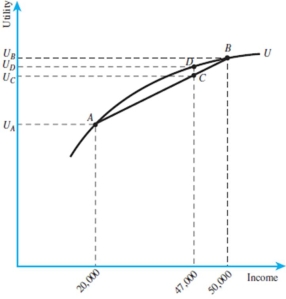
A) True
B) False
C) Uncertain
A) True
B) False
C) Uncertain
Question
Question
Question
Question
Question
Question
Question
Question
Question
Question
Question
Question
Question
In the figure below,$40,000 for certain is as desirable as $47,000 with risk. 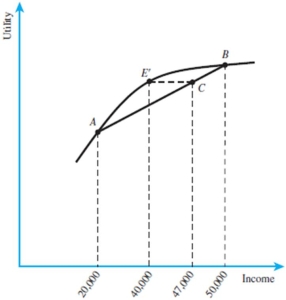
A) True
B) False
C) Uncertain
A) True
B) False
C) Uncertain
Question
Question
Question
Question
Question
Question
Question
Question
Question
In Table 9.2,Emily will lose no income if she becomes sick. 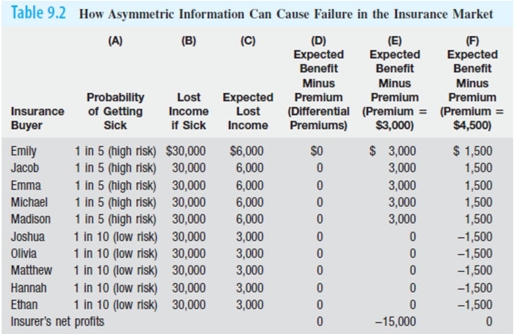
A) True
B) False
C) Uncertain
A) True
B) False
C) Uncertain
Question
Question
Question
Question
Question
Question
Question
Question

Unlock Deck
Sign up to unlock the cards in this deck!
Unlock Deck
Unlock Deck
1/32

Play

Full screen (f)
Deck 9: The Health Care Market
1
What percentage of African Americans are uninsured?
A) 80
B) 3
C) 37
D) 21
A) 80
B) 3
C) 37
D) 21
21
2
In the figure below,the value of insurance is $7,000.
A) True
B) False
C) Uncertain
A) True
B) False
C) Uncertain
False
3
At any given time in the U.S.,16 percent of the population lacks health insurance.
A) True
B) False
C) Uncertain
A) True
B) False
C) Uncertain
True
4
In 2013,the percentage of health care expenditures paid out-of-pocket was
A) 6.9.
B) 8.3.
C) 12.
D) 1.5.
A) 6.9.
B) 8.3.
C) 12.
D) 1.5.
Unlock Deck
Unlock for access to all 32 flashcards in this deck.
Unlock Deck
k this deck
5
Which one of these conditions is not a part of asymmetric information?
A) parties are engaged in and economic transaction.
B) information is not uniform.
C) the government usually intercedes to fix the problem.
D) all of these answer options are correct.
A) parties are engaged in and economic transaction.
B) information is not uniform.
C) the government usually intercedes to fix the problem.
D) all of these answer options are correct.
Unlock Deck
Unlock for access to all 32 flashcards in this deck.
Unlock Deck
k this deck
6
A third-party payment is
A) made by three people.
B) a payment that requires three signatures.
C) is made by someone other than the consumer.
D) is not used in the U.S.health system.
A) made by three people.
B) a payment that requires three signatures.
C) is made by someone other than the consumer.
D) is not used in the U.S.health system.
Unlock Deck
Unlock for access to all 32 flashcards in this deck.
Unlock Deck
k this deck
7
When people behave in ways that involve increased risk because they have insurance,this is known as
A) adverse selection.
B) moral hazard.
C) asymmetric information.
D) a HMO.
A) adverse selection.
B) moral hazard.
C) asymmetric information.
D) a HMO.
Unlock Deck
Unlock for access to all 32 flashcards in this deck.
Unlock Deck
k this deck
8
The U.S.is the leader in health care.
A) True
B) False
C) Uncertain
A) True
B) False
C) Uncertain
Unlock Deck
Unlock for access to all 32 flashcards in this deck.
Unlock Deck
k this deck
9
Health care costs have been increasing dramatically in the U.S.
A) True
B) False
C) Uncertain
A) True
B) False
C) Uncertain
Unlock Deck
Unlock for access to all 32 flashcards in this deck.
Unlock Deck
k this deck
10
Paying money in order to guarantee a certain level of compensation should an adverse event occur is
A) risk aversion.
B) risk smoothing.
C) risk pooling.
D) risk rating.
A) risk aversion.
B) risk smoothing.
C) risk pooling.
D) risk rating.
Unlock Deck
Unlock for access to all 32 flashcards in this deck.
Unlock Deck
k this deck
11
Expected values
A) are calculated as the average value.
B) are calculated over all possible outcomes.
C) are weighted by the probability of an even occurring.
D) all of these answer options are correct.
A) are calculated as the average value.
B) are calculated over all possible outcomes.
C) are weighted by the probability of an even occurring.
D) all of these answer options are correct.
Unlock Deck
Unlock for access to all 32 flashcards in this deck.
Unlock Deck
k this deck
12
Marginal benefit and marginal cost must _______ to avoid a deadweight loss.
A) equal
B) never equal
C) decrease at an increasing rate
D) increase at an increasing rate
A) equal
B) never equal
C) decrease at an increasing rate
D) increase at an increasing rate
Unlock Deck
Unlock for access to all 32 flashcards in this deck.
Unlock Deck
k this deck
13
People will take better care of their health if there is more health care available.
A) True
B) False
C) Uncertain
A) True
B) False
C) Uncertain
Unlock Deck
Unlock for access to all 32 flashcards in this deck.
Unlock Deck
k this deck
14
Which country had the highest per capita expenditures on health care in 2009?
A) Australia
B) Japan
C) Norway
D) United States
A) Australia
B) Japan
C) Norway
D) United States
Unlock Deck
Unlock for access to all 32 flashcards in this deck.
Unlock Deck
k this deck
15
In the figure below,$40,000 for certain is as desirable as $47,000 with risk.
A) True
B) False
C) Uncertain
A) True
B) False
C) Uncertain
Unlock Deck
Unlock for access to all 32 flashcards in this deck.
Unlock Deck
k this deck
16
Pooling individuals allow insurance companies to _______ risk from a societal point of view.
A) increase
B) decrease
C) do nothing regarding
D) none of these answer options are correct.
A) increase
B) decrease
C) do nothing regarding
D) none of these answer options are correct.
Unlock Deck
Unlock for access to all 32 flashcards in this deck.
Unlock Deck
k this deck
17
When the average buyer of an insurance policy is likely to have higher risk than others in his class,this is known as
A) adverse selection.
B) moral hazard.
C) asymmetric information.
D) an HMO.
A) adverse selection.
B) moral hazard.
C) asymmetric information.
D) an HMO.
Unlock Deck
Unlock for access to all 32 flashcards in this deck.
Unlock Deck
k this deck
18
The current percentage of Americans over the age of 65 is
A) 18.2%.
B) 19.0%.
C) 13.0%.
D) 10.5%.
A) 18.2%.
B) 19.0%.
C) 13.0%.
D) 10.5%.
Unlock Deck
Unlock for access to all 32 flashcards in this deck.
Unlock Deck
k this deck
19
Health care markets may be inefficient because of
A) poor information.
B) adverse selection.
C) moral hazard.
D) all of these answer options are correct.
A) poor information.
B) adverse selection.
C) moral hazard.
D) all of these answer options are correct.
Unlock Deck
Unlock for access to all 32 flashcards in this deck.
Unlock Deck
k this deck
20
The government can address __________ by providing universal health insurance coverage and charging uniform premiums.
A) expected utility
B) asymmetric information
C) commodity egalitarianism
D) adverse selection
A) expected utility
B) asymmetric information
C) commodity egalitarianism
D) adverse selection
Unlock Deck
Unlock for access to all 32 flashcards in this deck.
Unlock Deck
k this deck
21
Suppose that the demand for medical services can be characterized by the equation X = 500 - P/3.Suppose further that the supply of health services can be characterized by the equation X = P - 100.
(a)What is the equilibrium quantity and price in the market for health services?
(b)In an effort to make health services more affordable,the government restricts the price of health services to be no greater than $250.What will happen to the quantity of health services in the market?
(a)What is the equilibrium quantity and price in the market for health services?
(b)In an effort to make health services more affordable,the government restricts the price of health services to be no greater than $250.What will happen to the quantity of health services in the market?
Unlock Deck
Unlock for access to all 32 flashcards in this deck.
Unlock Deck
k this deck
22
Suppose that the quantity demanded of visits to a doctor per year is given by X = 12 - 0.05P,where X is the number of visits and P is the price the patient pays for a visit.
(a)How many visits would the patient make if he or she had to pay the full price of a visit,$100?
(b)How many visits would a patient make if he or she was insured and had to pay only a 15% co-insurance payment per visit?
(c)How many visits would the patient make if medical services were free?
(a)How many visits would the patient make if he or she had to pay the full price of a visit,$100?
(b)How many visits would a patient make if he or she was insured and had to pay only a 15% co-insurance payment per visit?
(c)How many visits would the patient make if medical services were free?
Unlock Deck
Unlock for access to all 32 flashcards in this deck.
Unlock Deck
k this deck
23
We have read that the uninsured and the insured behave differently in regard to medical services.Suppose that the insured have a demand curve that can be written as Q = 100 - P,where Q is the quantity of medical services and P is the price.Suppose further that the uninsured have a demand curve that can be written as Q = 100 - 2P.
(a)At a price of $10 of medical services,how much will each demand?
(b)At a quantity of 50 units,how much will the price be for the insured and uninsured?
(a)At a price of $10 of medical services,how much will each demand?
(b)At a quantity of 50 units,how much will the price be for the insured and uninsured?
Unlock Deck
Unlock for access to all 32 flashcards in this deck.
Unlock Deck
k this deck
24
In Table 9.2,Emily will lose no income if she becomes sick.
A) True
B) False
C) Uncertain
A) True
B) False
C) Uncertain
Unlock Deck
Unlock for access to all 32 flashcards in this deck.
Unlock Deck
k this deck
25
We have read in this chapter that people with insurance may be more likely to engage in risky behavior because they are insured.Does it make sense then that there should be an "insurance tax" on people that engage in these types of activities?
Unlock Deck
Unlock for access to all 32 flashcards in this deck.
Unlock Deck
k this deck
26
A co-payment and coinsurance are the same thing.
A) True
B) False
C) Uncertain
A) True
B) False
C) Uncertain
Unlock Deck
Unlock for access to all 32 flashcards in this deck.
Unlock Deck
k this deck
27
President Obama has suggested some form or universal health coverage for all Americans.How do you feel about this?
Unlock Deck
Unlock for access to all 32 flashcards in this deck.
Unlock Deck
k this deck
28
Suppose that the demand for medical services can be characterized by the equation P = 100 - Q.Suppose further that the supply of health services can be characterized by the equation P = Q + 50.
(a)What is the equilibrium quantity and price in the market for health services?
(b)In an effort to make health services more affordable,the government restricts the price of health services to be no greater than $65.What will happen to the quantity of health services in the market?
(a)What is the equilibrium quantity and price in the market for health services?
(b)In an effort to make health services more affordable,the government restricts the price of health services to be no greater than $65.What will happen to the quantity of health services in the market?
Unlock Deck
Unlock for access to all 32 flashcards in this deck.
Unlock Deck
k this deck
29
One reason for the recent increases in health care costs is the aging of the American population.
A) True
B) False
C) Uncertain
A) True
B) False
C) Uncertain
Unlock Deck
Unlock for access to all 32 flashcards in this deck.
Unlock Deck
k this deck
30
Suppose there are two drivers,Jermaine and Janet.Jermaine is not a very safe driver.In fact,there is a 7.5% chance that he will have an accident within the next year.Janet is a relatively safe driver.Her chances of having an accident in the next year are only 1%.If Jermaine is involved in an accident,he will cost the insurance company $1,000,000.If Janet is involved in an accident,she will only cost the company $500,000.What is the expected pay-out that the company can expect from insuring these two?
Unlock Deck
Unlock for access to all 32 flashcards in this deck.
Unlock Deck
k this deck
31
Suppose that the demand curve Dm for medical services can be characterized by the equation M = 2000 - P,where M is the amount of medical services received per year and P is the price.Suppose further that P0 is constant at 800.
(a)Find the equilibrium quantity of services at P0.
(b)Find the equilibrium quantity of services when there is only a co-payment of 20% required such that the price is 0.2P0.
(c)How much additional expenditures induced by insurance are created?
(a)Find the equilibrium quantity of services at P0.
(b)Find the equilibrium quantity of services when there is only a co-payment of 20% required such that the price is 0.2P0.
(c)How much additional expenditures induced by insurance are created?
Unlock Deck
Unlock for access to all 32 flashcards in this deck.
Unlock Deck
k this deck
32
Since nearly a third of all people between the ages of 18 and 24 are uninsured,does it make sense to impose a surcharge for medical services to this cohort?
Unlock Deck
Unlock for access to all 32 flashcards in this deck.
Unlock Deck
k this deck
Unlock Deck
Unlock for access to all 32 flashcards in this deck.







