





 Chat with AI

Deck 22: Amino Acids, Peptides, and Proteins
Full screen (f)

Question
Name the following compound. 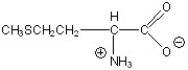
A)cysteine
B)threonine
C)methionine
D)serine
E)asparagine
A)cysteine
B)threonine
C)methionine
D)serine
E)asparagine

Question
Question
Which of the following molecules is the skeletal structure of an amino acid?
A)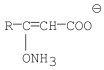
B)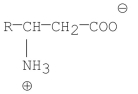
C)
D)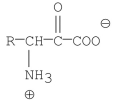
E)
A)
B)
C)
D)
E)
Question
Question
Question
Question
Question
Question
Question
Which of the following is an L-amino acid? 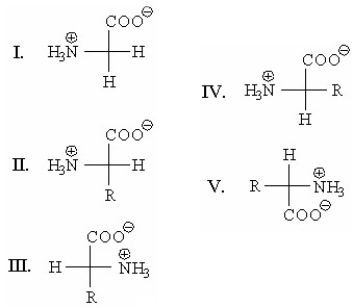
A)I
B)II
C)III
D)IV
E)V
A)I
B)II
C)III
D)IV
E)V
Question
Name the following compound. 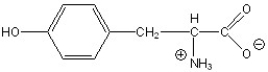
A)tyrosine
B)lysine
C)arginine
D)histidine
E)phenylalanine
A)tyrosine
B)lysine
C)arginine
D)histidine
E)phenylalanine
Question
Question
Name the following compound. 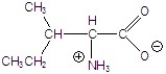
A)alanine
B)leucine
C)valine
D)glycine
E)isoleucine
A)alanine
B)leucine
C)valine
D)glycine
E)isoleucine
Question
Question
Question
Question
Question
Question
Question
Question
Question
Which of the following amino acids has a side chain with an ionizable proton and can exist in four different forms, depending on the pH of the solution? 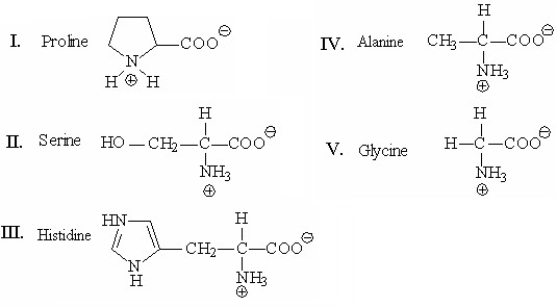
A)I
B)II
C)III
D)IV
E)V
A)I
B)II
C)III
D)IV
E)V
Question
What is the pI of glycine? The structure and pKa values are shown below. 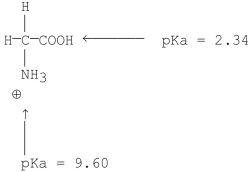
A)7)26
B)5)97
C)3)63
D)7)50
E)11.94
A)7)26
B)5)97
C)3)63
D)7)50
E)11.94
Question
Question
Question
Question
Question
Question
What is the pI of arginine? The structure and pKa values are shown below. 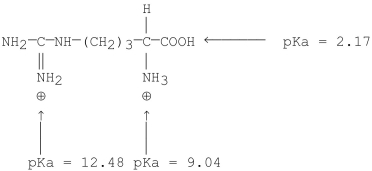
A)10.76
B)7)90
C)5)61
D)7)33
E)9)67
A)10.76
B)7)90
C)5)61
D)7)33
E)9)67
Question
Which of the following amino acids will be retained longest in the column when separated by cation-exchange chromatography? 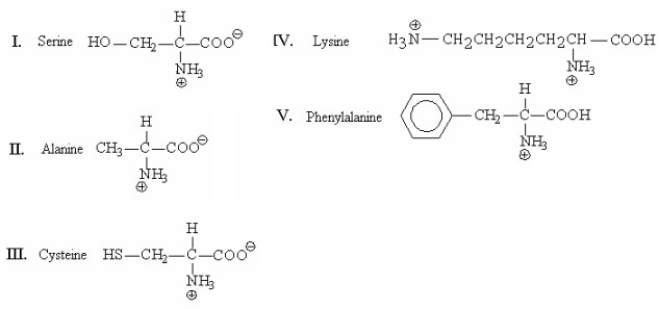
A)I
B)II
C)III
D)IV
E)V
A)I
B)II
C)III
D)IV
E)V
Question
Give the pH at which histidine exists in the following form. 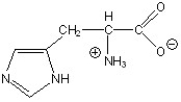
A)0
B)4
C)8
D)12
E)14
A)0
B)4
C)8
D)12
E)14
Question
Question
Which of the following is a zwitterion?
A)
B)
C)
D)
E)
A)
B)
C)
D)
E)
Question
Question
Calculate the isoelectric point for the following compound. 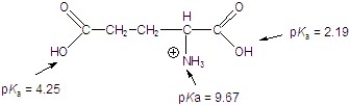
A)3)22
B)5)34
C)5)93
D)6)91
E)9)67
A)3)22
B)5)34
C)5)93
D)6)91
E)9)67
Question
Which of the following amino acids will be closest to the origin when separated by thin-layer chromatography? 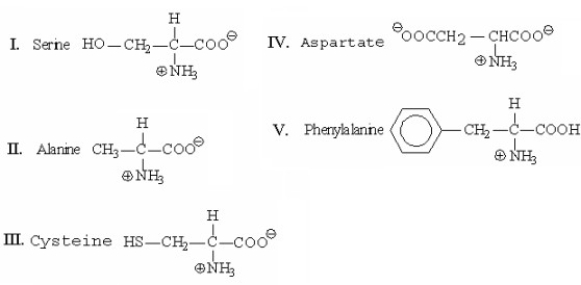
A)I
B)II
C)III
D)IV
E)V
A)I
B)II
C)III
D)IV
E)V
Question
Which of the following best represents the structure of an amino acid in basic solution (pH = 11)?
A)
B)
C)
D)
E)
A)
B)
C)
D)
E)
Question
Question
Question
Question
Question
What is the major organic product of the following reaction? 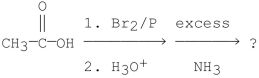
A)
B)
C)
D)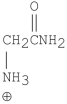
E)
A)
B)
C)
D)
E)
Question
Question
Provide the major organic product(s)of the reaction below. 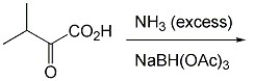
Question
Question
Question
Give the product for the following reaction. 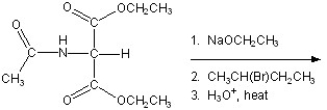
A)alanine
B)leucine
C)valine
D)isoleucine
E)glycine
A)alanine
B)leucine
C)valine
D)isoleucine
E)glycine
Question
Question
Provide the major organic product(s)of the reaction below. 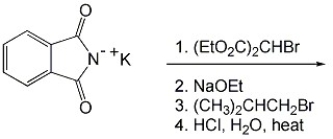
Question
Give the product for the following reaction. 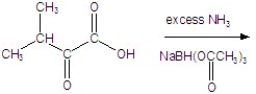
A)alanine
B)leucine
C)valine
D)isoleucine
E)glycine
A)alanine
B)leucine
C)valine
D)isoleucine
E)glycine
Question
Question
Give the product for the following reaction. 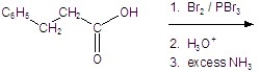
Question
Give the product for the following reaction. 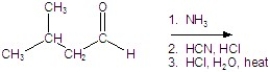
A)alanine
B)leucine
C)valine
D)isoleucine
E)glycine
A)alanine
B)leucine
C)valine
D)isoleucine
E)glycine
Question
Give the product for the following reaction. 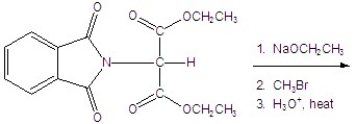
A)alanine
B)leucine
C)valine
D)isoleucine
E)glycine
A)alanine
B)leucine
C)valine
D)isoleucine
E)glycine
Question
Question
What is the product obtained from the mild oxidation of the thiol shown below? mild
2 R-SH
A)R-S-R
B)R-OH
C)R-S-S-R
D)R-OO-R
E)R-S-OH
2 R-SH
A)R-S-R
B)R-OH
C)R-S-S-R
D)R-OO-R
E)R-S-OH
Question
Question
Provide the major organic product(s)of the reaction below. 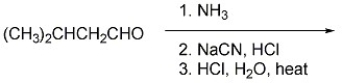
Question
Which labeled bond in the following molecule is known as the peptide bond? 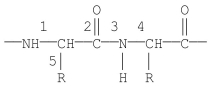
A)1
B)2
C)3
D)4
E)5
A)1
B)2
C)3
D)4
E)5
Question
Question
Question
Question
Question
Question
Question
Question
Give the product for the following reaction. 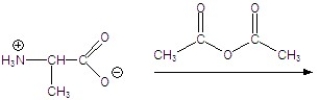
A)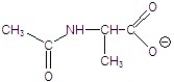
B)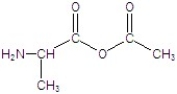
C)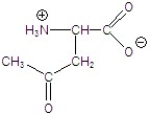
D)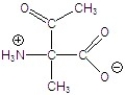
E)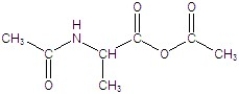
A)
B)
C)
D)
E)
Question
Question
Question
Question
Question
Question
Question
Question
Question
Question
Question
Question
Question

Unlock Deck
Sign up to unlock the cards in this deck!
Unlock Deck
Unlock Deck
1/105

Play

Full screen (f)
Deck 22: Amino Acids, Peptides, and Proteins
1
Name the following compound.
A)cysteine
B)threonine
C)methionine
D)serine
E)asparagine
A)cysteine
B)threonine
C)methionine
D)serine
E)asparagine
methionine
2
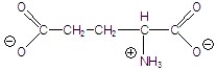
Draw glutamate.
3
Which of the following molecules is the skeletal structure of an amino acid?
A)
B)
C)
D)
E)
A)
B)
C)
D)
E)
4
Which of the following amino acids is not an aromatic compound?
A)phenylalanine
B)threonine
C)histidine
D)tryptophan
E)tyrosine
A)phenylalanine
B)threonine
C)histidine
D)tryptophan
E)tyrosine
Unlock Deck
Unlock for access to all 105 flashcards in this deck.
Unlock Deck
k this deck
5
Which of the following amino acids has an aliphatic R group?
A)serine
B)cysteine
C)asparagine
D)tyrosine
E)leucine
A)serine
B)cysteine
C)asparagine
D)tyrosine
E)leucine
Unlock Deck
Unlock for access to all 105 flashcards in this deck.
Unlock Deck
k this deck
6
Provide the Fischer projection of L-aspartic acid.
Unlock Deck
Unlock for access to all 105 flashcards in this deck.
Unlock Deck
k this deck
7
What is the net charge of arginine in a solution of pH 1.0?
Unlock Deck
Unlock for access to all 105 flashcards in this deck.
Unlock Deck
k this deck
8
Draw the form of L-tryptophan which is present at biological pH.
Unlock Deck
Unlock for access to all 105 flashcards in this deck.
Unlock Deck
k this deck
9
Which of the following amino acids has a sulfur in the R group?
A)serine
B)cysteine
C)asparagine
D)tyrosine
E)leucine
A)serine
B)cysteine
C)asparagine
D)tyrosine
E)leucine
Unlock Deck
Unlock for access to all 105 flashcards in this deck.
Unlock Deck
k this deck
10
Which of the following is an L-amino acid?
A)I
B)II
C)III
D)IV
E)V
A)I
B)II
C)III
D)IV
E)V
Unlock Deck
Unlock for access to all 105 flashcards in this deck.
Unlock Deck
k this deck
11
Name the following compound.
A)tyrosine
B)lysine
C)arginine
D)histidine
E)phenylalanine
A)tyrosine
B)lysine
C)arginine
D)histidine
E)phenylalanine
Unlock Deck
Unlock for access to all 105 flashcards in this deck.
Unlock Deck
k this deck
12
Draw and name the amino acids which may be described as heterocyclic.
Unlock Deck
Unlock for access to all 105 flashcards in this deck.
Unlock Deck
k this deck
13
Name the following compound.
A)alanine
B)leucine
C)valine
D)glycine
E)isoleucine
A)alanine
B)leucine
C)valine
D)glycine
E)isoleucine
Unlock Deck
Unlock for access to all 105 flashcards in this deck.
Unlock Deck
k this deck
14
Which of the following amino acids has an aromatic R group?
A)serine
B)cysteine
C)asparagine
D)tyrosine
E)leucine
A)serine
B)cysteine
C)asparagine
D)tyrosine
E)leucine
Unlock Deck
Unlock for access to all 105 flashcards in this deck.
Unlock Deck
k this deck
15
In nature, which is the most commonly found isomer, L-amino acids or D-amino acids?
Unlock Deck
Unlock for access to all 105 flashcards in this deck.
Unlock Deck
k this deck
16
Draw the form of L-lysine which is present at biological pH.
Unlock Deck
Unlock for access to all 105 flashcards in this deck.
Unlock Deck
k this deck
17
Which of the following terms best describes the side chain of valine?
A)acidic
B)basic
C)charged, polar
D)uncharged, polar
E)nonpolar
A)acidic
B)basic
C)charged, polar
D)uncharged, polar
E)nonpolar
Unlock Deck
Unlock for access to all 105 flashcards in this deck.
Unlock Deck
k this deck
18
Which of the following amino acids has a heterocyclic R group?
A)glycine
B)threonine
C)proline
D)aspartic acid
E)arginine
A)glycine
B)threonine
C)proline
D)aspartic acid
E)arginine
Unlock Deck
Unlock for access to all 105 flashcards in this deck.
Unlock Deck
k this deck
19
The α-carbon of all the amino acids is a chirality center except for ________.
A)glycine
B)threonine
C)proline
D)aspartic acid
E)arginine
A)glycine
B)threonine
C)proline
D)aspartic acid
E)arginine
Unlock Deck
Unlock for access to all 105 flashcards in this deck.
Unlock Deck
k this deck
20
Explain what essential amino acids are and list all of them.
Unlock Deck
Unlock for access to all 105 flashcards in this deck.
Unlock Deck
k this deck
21
Which of the following amino acids has the highest isoelectric point?
A)arginine
B)aspartic acid
C)glycine
D)proline
E)phenylalanine
A)arginine
B)aspartic acid
C)glycine
D)proline
E)phenylalanine
Unlock Deck
Unlock for access to all 105 flashcards in this deck.
Unlock Deck
k this deck
22
Which of the following amino acids has a side chain with an ionizable proton and can exist in four different forms, depending on the pH of the solution?
A)I
B)II
C)III
D)IV
E)V
A)I
B)II
C)III
D)IV
E)V
Unlock Deck
Unlock for access to all 105 flashcards in this deck.
Unlock Deck
k this deck
23
What is the pI of glycine? The structure and pKa values are shown below.
A)7)26
B)5)97
C)3)63
D)7)50
E)11.94
A)7)26
B)5)97
C)3)63
D)7)50
E)11.94
Unlock Deck
Unlock for access to all 105 flashcards in this deck.
Unlock Deck
k this deck
24
Which of the following best describes the side chain of arginine at a pH of 11?
A)hydrophobic
B)nonpolar
C)charged and polar
D)uncharged but polar
E)aprotic
A)hydrophobic
B)nonpolar
C)charged and polar
D)uncharged but polar
E)aprotic
Unlock Deck
Unlock for access to all 105 flashcards in this deck.
Unlock Deck
k this deck
25
Draw the predominant form of histidine at pH=0.
Unlock Deck
Unlock for access to all 105 flashcards in this deck.
Unlock Deck
k this deck
26
What is thin-layer chromatography?
A)a technique that separates amino acids on the basis of their polarity
B)a technique that separates amino acids on the basis of their solubility in water
C)a technique that separates amino acids on the basis of their pI values
D)a technique that separates amino acids on the basis of pKa of α-COOH values
E)a technique that separates amino acids on the basis of pKa of α-+NH3 values
A)a technique that separates amino acids on the basis of their polarity
B)a technique that separates amino acids on the basis of their solubility in water
C)a technique that separates amino acids on the basis of their pI values
D)a technique that separates amino acids on the basis of pKa of α-COOH values
E)a technique that separates amino acids on the basis of pKa of α-+NH3 values
Unlock Deck
Unlock for access to all 105 flashcards in this deck.
Unlock Deck
k this deck
27
Which of the following amino acids has its isoelectric point at the lowest pH?
A)glutamic acid
B)lysine
C)valine
D)glycine
E)methionine
A)glutamic acid
B)lysine
C)valine
D)glycine
E)methionine
Unlock Deck
Unlock for access to all 105 flashcards in this deck.
Unlock Deck
k this deck
28
Draw the predominant form of proline at pH=12.
Unlock Deck
Unlock for access to all 105 flashcards in this deck.
Unlock Deck
k this deck
29
What is the pI of arginine? The structure and pKa values are shown below.
A)10.76
B)7)90
C)5)61
D)7)33
E)9)67
A)10.76
B)7)90
C)5)61
D)7)33
E)9)67
Unlock Deck
Unlock for access to all 105 flashcards in this deck.
Unlock Deck
k this deck
30
Which of the following amino acids will be retained longest in the column when separated by cation-exchange chromatography?
A)I
B)II
C)III
D)IV
E)V
A)I
B)II
C)III
D)IV
E)V
Unlock Deck
Unlock for access to all 105 flashcards in this deck.
Unlock Deck
k this deck
31
Give the pH at which histidine exists in the following form.
A)0
B)4
C)8
D)12
E)14
A)0
B)4
C)8
D)12
E)14
Unlock Deck
Unlock for access to all 105 flashcards in this deck.
Unlock Deck
k this deck
32
Define what is meant by isoelectric point (pI)and give an example.
Unlock Deck
Unlock for access to all 105 flashcards in this deck.
Unlock Deck
k this deck
33
Which of the following is a zwitterion?
A)
B)
C)
D)
E)
A)
B)
C)
D)
E)
Unlock Deck
Unlock for access to all 105 flashcards in this deck.
Unlock Deck
k this deck
34
Draw the predominant form of aspartate at physiological pH.
Unlock Deck
Unlock for access to all 105 flashcards in this deck.
Unlock Deck
k this deck
35
Calculate the isoelectric point for the following compound.
A)3)22
B)5)34
C)5)93
D)6)91
E)9)67
A)3)22
B)5)34
C)5)93
D)6)91
E)9)67
Unlock Deck
Unlock for access to all 105 flashcards in this deck.
Unlock Deck
k this deck
36
Which of the following amino acids will be closest to the origin when separated by thin-layer chromatography?
A)I
B)II
C)III
D)IV
E)V
A)I
B)II
C)III
D)IV
E)V
Unlock Deck
Unlock for access to all 105 flashcards in this deck.
Unlock Deck
k this deck
37
Which of the following best represents the structure of an amino acid in basic solution (pH = 11)?
A)
B)
C)
D)
E)
A)
B)
C)
D)
E)
Unlock Deck
Unlock for access to all 105 flashcards in this deck.
Unlock Deck
k this deck
38
What is electrophoresis?
A)a technique that separates amino acids on the basis of their polarity
B)a technique that separates amino acids on the basis of their solubility in water
C)a technique that separates amino acids on the basis of their pI values
D)a technique that separates amino acids on the basis of pKa of α-COOH values
E)a technique that separates amino acids on the basis of pKa of α-+NH3 values
A)a technique that separates amino acids on the basis of their polarity
B)a technique that separates amino acids on the basis of their solubility in water
C)a technique that separates amino acids on the basis of their pI values
D)a technique that separates amino acids on the basis of pKa of α-COOH values
E)a technique that separates amino acids on the basis of pKa of α-+NH3 values
Unlock Deck
Unlock for access to all 105 flashcards in this deck.
Unlock Deck
k this deck
39
Draw the form in which glutamate exists at pH = 0.
Unlock Deck
Unlock for access to all 105 flashcards in this deck.
Unlock Deck
k this deck
40
Draw structures for the forms of glycine present in basic, neutral, and acidic solutions.
Unlock Deck
Unlock for access to all 105 flashcards in this deck.
Unlock Deck
k this deck
41
You are given a mixture that contains glutamic acid (pI = 3.2), arginine (pI = 10.8), and valine (pI = 6.0), and you subject the mixture to electrophoresis.
a) Which amino acids migrate toward the cathode when the electrophoresis is carried out at a pH of 7.1?
b) Which amino acids migrate toward the anode when the electrophoresis is carried out at a pH of 7.1?
c) Which amino acid migrates farthest toward the anode at a pH of 7.1?
d) Since amino acids themselves are colorless, how is the separation of amino acids after electrophoresis detected?
a) Which amino acids migrate toward the cathode when the electrophoresis is carried out at a pH of 7.1?
b) Which amino acids migrate toward the anode when the electrophoresis is carried out at a pH of 7.1?
c) Which amino acid migrates farthest toward the anode at a pH of 7.1?
d) Since amino acids themselves are colorless, how is the separation of amino acids after electrophoresis detected?
Unlock Deck
Unlock for access to all 105 flashcards in this deck.
Unlock Deck
k this deck
42
What is the major organic product of the following reaction?
A)
B)
C)
D)
E)
A)
B)
C)
D)
E)
Unlock Deck
Unlock for access to all 105 flashcards in this deck.
Unlock Deck
k this deck
43
Describe how electrophoresis works.
Unlock Deck
Unlock for access to all 105 flashcards in this deck.
Unlock Deck
k this deck
44
Provide the major organic product(s)of the reaction below.
Unlock Deck
Unlock for access to all 105 flashcards in this deck.
Unlock Deck
k this deck
45
What is the name of the amino acid produced when propanoic acid is subjected to the following sequence of reagents:? 1. PBr3, Br2;
2) H2O;
3) NH3, Δ?
A)alanine
B)aspartic acid
C)glutamic acid
D)valine
E)asparagine
2) H2O;
3) NH3, Δ?
A)alanine
B)aspartic acid
C)glutamic acid
D)valine
E)asparagine
Unlock Deck
Unlock for access to all 105 flashcards in this deck.
Unlock Deck
k this deck
46
What is an amino acid analyzer?
Unlock Deck
Unlock for access to all 105 flashcards in this deck.
Unlock Deck
k this deck
47
Give the product for the following reaction.
A)alanine
B)leucine
C)valine
D)isoleucine
E)glycine
A)alanine
B)leucine
C)valine
D)isoleucine
E)glycine
Unlock Deck
Unlock for access to all 105 flashcards in this deck.
Unlock Deck
k this deck
48
Explain what is meant by kinetic resolution and give an example.
Unlock Deck
Unlock for access to all 105 flashcards in this deck.
Unlock Deck
k this deck
49
Provide the major organic product(s)of the reaction below.
Unlock Deck
Unlock for access to all 105 flashcards in this deck.
Unlock Deck
k this deck
50
Give the product for the following reaction.
A)alanine
B)leucine
C)valine
D)isoleucine
E)glycine
A)alanine
B)leucine
C)valine
D)isoleucine
E)glycine
Unlock Deck
Unlock for access to all 105 flashcards in this deck.
Unlock Deck
k this deck
51
Rate the following amino acids in decreasing order of migration towards the cathode (negative electrode)when separated by electrophoresis in a solution of pH= 7.3.
I. lysine: pI= 9.87
II. alanine: pI= 6.02
III. aspartate: pI= 5.95
I. lysine: pI= 9.87
II. alanine: pI= 6.02
III. aspartate: pI= 5.95
Unlock Deck
Unlock for access to all 105 flashcards in this deck.
Unlock Deck
k this deck
52
Give the product for the following reaction.
Unlock Deck
Unlock for access to all 105 flashcards in this deck.
Unlock Deck
k this deck
53
Give the product for the following reaction.
A)alanine
B)leucine
C)valine
D)isoleucine
E)glycine
A)alanine
B)leucine
C)valine
D)isoleucine
E)glycine
Unlock Deck
Unlock for access to all 105 flashcards in this deck.
Unlock Deck
k this deck
54
Give the product for the following reaction.
A)alanine
B)leucine
C)valine
D)isoleucine
E)glycine
A)alanine
B)leucine
C)valine
D)isoleucine
E)glycine
Unlock Deck
Unlock for access to all 105 flashcards in this deck.
Unlock Deck
k this deck
55
Which of the following is an acceptable name for the peptide sequence shown below? Glu-Glu-His-Val-Cys
A)1,2-diglutamylhistidylvalylcysteine
B)glutamylglutamylhistidylvalylcysteine
C)1-glutamyl-2-glutamylhistidylvalylcysteine
D)diglutamylhistidylvalylcysteine
E)biglutamylhistidylvalylcysteine
A)1,2-diglutamylhistidylvalylcysteine
B)glutamylglutamylhistidylvalylcysteine
C)1-glutamyl-2-glutamylhistidylvalylcysteine
D)diglutamylhistidylvalylcysteine
E)biglutamylhistidylvalylcysteine
Unlock Deck
Unlock for access to all 105 flashcards in this deck.
Unlock Deck
k this deck
56
What is the product obtained from the mild oxidation of the thiol shown below? mild
2 R-SH
A)R-S-R
B)R-OH
C)R-S-S-R
D)R-OO-R
E)R-S-OH
2 R-SH
A)R-S-R
B)R-OH
C)R-S-S-R
D)R-OO-R
E)R-S-OH
Unlock Deck
Unlock for access to all 105 flashcards in this deck.
Unlock Deck
k this deck
57
What amino acid can be obtained by the reductive amination of γ-ketoglutaric acid, HO2CCH2CH2COCO2H?
A)glycine
B)serine
C)lysine
D)aspartic acid
E)glutamic acid
A)glycine
B)serine
C)lysine
D)aspartic acid
E)glutamic acid
Unlock Deck
Unlock for access to all 105 flashcards in this deck.
Unlock Deck
k this deck
58
Provide the major organic product(s)of the reaction below.
Unlock Deck
Unlock for access to all 105 flashcards in this deck.
Unlock Deck
k this deck
59
Which labeled bond in the following molecule is known as the peptide bond?
A)1
B)2
C)3
D)4
E)5
A)1
B)2
C)3
D)4
E)5
Unlock Deck
Unlock for access to all 105 flashcards in this deck.
Unlock Deck
k this deck
60
Rank the following amino acids in order of time of elution from a cation-exchange resin and a buffer pH of 4.0: aspartic acid, phenylalanine, arginine, and alanine.
Unlock Deck
Unlock for access to all 105 flashcards in this deck.
Unlock Deck
k this deck
61
Explain the importance of the Merrifield method in peptide synthesis.
Unlock Deck
Unlock for access to all 105 flashcards in this deck.
Unlock Deck
k this deck
62
Draw the dipeptide Val-Tyr at pH 7.0.
Unlock Deck
Unlock for access to all 105 flashcards in this deck.
Unlock Deck
k this deck
63
Provide the structure of the tripeptide val-gly-ser at pH 2.
Unlock Deck
Unlock for access to all 105 flashcards in this deck.
Unlock Deck
k this deck
64
In peptide synthesis, give the use of trifluoroacetic acid.
A)activates the carboxyl group of an amino acid
B)protects the carboxyl group of an amino acid
C)protects the amino group of an amino acid
D)activates the amino group of an amino acid
E)removes the protecting group on the N-terminal amino acid
A)activates the carboxyl group of an amino acid
B)protects the carboxyl group of an amino acid
C)protects the amino group of an amino acid
D)activates the amino group of an amino acid
E)removes the protecting group on the N-terminal amino acid
Unlock Deck
Unlock for access to all 105 flashcards in this deck.
Unlock Deck
k this deck
65
Which of the following structures can polypeptides have?
A)primary structure
B)secondary structure
C)tertiary structure
D)quaternary structure
E)all of the above
A)primary structure
B)secondary structure
C)tertiary structure
D)quaternary structure
E)all of the above
Unlock Deck
Unlock for access to all 105 flashcards in this deck.
Unlock Deck
k this deck
66
Provide the structure of the tripeptide val-gly-ser at biological pH.
Unlock Deck
Unlock for access to all 105 flashcards in this deck.
Unlock Deck
k this deck
67
Give the product for the following reaction.
A)
B)
C)
D)
E)
A)
B)
C)
D)
E)
Unlock Deck
Unlock for access to all 105 flashcards in this deck.
Unlock Deck
k this deck
68
Which type of protein, globular or fibrous, tends to function primarily as structural parts of an organism?
Unlock Deck
Unlock for access to all 105 flashcards in this deck.
Unlock Deck
k this deck
69
In peptide synthesis, give the use of di-tert-butyl dicarbonate.
A)activates the carboxyl group of an amino acid
B)protects the carboxyl group of an amino acid
C)protects the amino group of an amino acid
D)activates the amino group of an amino acid
E)removes the protecting group on the N-terminal amino acid
A)activates the carboxyl group of an amino acid
B)protects the carboxyl group of an amino acid
C)protects the amino group of an amino acid
D)activates the amino group of an amino acid
E)removes the protecting group on the N-terminal amino acid
Unlock Deck
Unlock for access to all 105 flashcards in this deck.
Unlock Deck
k this deck
70
Provide the structure of the tripeptide glu-ser-ala at pH 2.
Unlock Deck
Unlock for access to all 105 flashcards in this deck.
Unlock Deck
k this deck
71
Provide the structure of Thr-Gln-Met at pH 7.0.
Unlock Deck
Unlock for access to all 105 flashcards in this deck.
Unlock Deck
k this deck
72
Draw the structure of the tetrapeptide Ser-Leu-Phe-Pro at pH 7.0.
Unlock Deck
Unlock for access to all 105 flashcards in this deck.
Unlock Deck
k this deck
73
Provide the structure of Ala-Ser-Gly at biological pH.
Unlock Deck
Unlock for access to all 105 flashcards in this deck.
Unlock Deck
k this deck
74
In conventional peptide synthesis, the nitrogen of a given amino acid must be deactivated or blocked while the carboxyl group is activated. Which of the following reagents is used to protect the amino group of an amino acid?
A)di-tert-butyl dicarbonate
B)dicyclohexylcarbodiimide
C)ninhydrin
D)trifluoroacetic acid
E)phenylisothiocyanate
A)di-tert-butyl dicarbonate
B)dicyclohexylcarbodiimide
C)ninhydrin
D)trifluoroacetic acid
E)phenylisothiocyanate
Unlock Deck
Unlock for access to all 105 flashcards in this deck.
Unlock Deck
k this deck
75
When a disulfide linkage is formed, the compound containing this new linkage has been ________.
A)hydrolyzed
B)dehydrated
C)electrolyzed
D)oxidized
E)reduced
A)hydrolyzed
B)dehydrated
C)electrolyzed
D)oxidized
E)reduced
Unlock Deck
Unlock for access to all 105 flashcards in this deck.
Unlock Deck
k this deck
76
Provide the structure of the tripeptide glu-ser-ala at pH 12.
Unlock Deck
Unlock for access to all 105 flashcards in this deck.
Unlock Deck
k this deck
77
In peptide synthesis, give the use of dicyclohexylcarbodiimide.
A)activates the carboxyl group of an amino acid
B)protects the carboxyl group of an amino acid
C)protects the amino group of an amino acid
D)activates the amino group of an amino acid
E)removes the protecting group on the N-terminal amino acid
A)activates the carboxyl group of an amino acid
B)protects the carboxyl group of an amino acid
C)protects the amino group of an amino acid
D)activates the amino group of an amino acid
E)removes the protecting group on the N-terminal amino acid
Unlock Deck
Unlock for access to all 105 flashcards in this deck.
Unlock Deck
k this deck
78
Provide the structure of the tripeptide val-gly-ser at pH 12.
Unlock Deck
Unlock for access to all 105 flashcards in this deck.
Unlock Deck
k this deck
79
Explain the chemistry behind giving a "permanent" to a head of hair.
Unlock Deck
Unlock for access to all 105 flashcards in this deck.
Unlock Deck
k this deck
80
Give a detailed, stepwise mechanism for the formation of the activated acyl derivative from the reaction of an amino acid with N,N'-dicyclohexylcarbodiimide.
Unlock Deck
Unlock for access to all 105 flashcards in this deck.
Unlock Deck
k this deck
Unlock Deck
Unlock for access to all 105 flashcards in this deck.







