





 Chat with AI

Deck 18: Selectivity and Reactivity in Enolate Reactions
Full screen (f)

Question
What is the product of the reaction shown below? 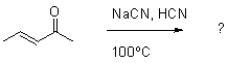
A)
B)
C)
D)
A)
B)
C)
D)

Question
Which of the following best describes the transition state structures shown below? 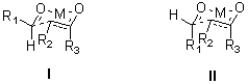
A)I is favoured because R1 and R3 are trans.
B)I is favoured because R1 and R3 are cis.
C)II is favoured because R1 and R3 are trans.
D)II is favoured because R1 and R3 are cis.
A)I is favoured because R1 and R3 are trans.
B)I is favoured because R1 and R3 are cis.
C)II is favoured because R1 and R3 are trans.
D)II is favoured because R1 and R3 are cis.
Question
Which of the following best categorizes sites (a)and (b)in the aldehyde shown below? 
A)(a)and (b)are both nucleophilic sites.
B)(a)and (b)are both electrophilic sites.
C)(a)is a nucleophilic site,and (b)is an electrophilic site.
D)(a)is an electrophilic site,and (b)is a nucleophilic site.
A)(a)and (b)are both nucleophilic sites.
B)(a)and (b)are both electrophilic sites.
C)(a)is a nucleophilic site,and (b)is an electrophilic site.
D)(a)is an electrophilic site,and (b)is a nucleophilic site.
Question
What is the product of the transformation shown below? 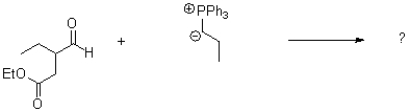
A)
B)
C)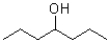
D)
A)
B)
C)
D)
Question
What is the role of titanium chloride in the Mukaiyama reaction shown below? 
A)Titanium activates the aldehyde electrophile,and a chloride ion removes the sialyl-containing TMS group.
B)Titanium activates the alkene electrophile,and a chloride ion removes the sialyl-containing TMS group.
C)Titanium activates the aldehyde electrophile,and a chloride ion forms an ion pair with the carbocation intermediate.
D)Titanium removes the sialyl-containing TMS group,and the chloride ion activates the aldehyde nucleophile.
A)Titanium activates the aldehyde electrophile,and a chloride ion removes the sialyl-containing TMS group.
B)Titanium activates the alkene electrophile,and a chloride ion removes the sialyl-containing TMS group.
C)Titanium activates the aldehyde electrophile,and a chloride ion forms an ion pair with the carbocation intermediate.
D)Titanium removes the sialyl-containing TMS group,and the chloride ion activates the aldehyde nucleophile.
Question
Which of the following represents an umpolung electrophile?
A)
B)
C)
D)
A)
B)
C)
D)
Question
Which of the following best describes the product of the reaction shown below? 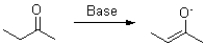
A)It is the kinetic product,which is favoured under low temperatures.
B)It is the thermodynamic product,which is favoured under low temperatures.
C)It is the kinetic product,which is favoured under high temperatures.
D)It is the thermodynamic product,which is favoured under high temperatures.
A)It is the kinetic product,which is favoured under low temperatures.
B)It is the thermodynamic product,which is favoured under low temperatures.
C)It is the kinetic product,which is favoured under high temperatures.
D)It is the thermodynamic product,which is favoured under high temperatures.
Question
Question
Question
Question
Question
What is the role of titanium chloride in the reaction shown below? 
A)Lewis acid
B)Lewis base
C)Brønsted acid
D)Brønsted base
A)Lewis acid
B)Lewis base
C)Brønsted acid
D)Brønsted base
Question
Which of the following represents an umpolung nucleophile?
A)
B)
C)
D)
A)
B)
C)
D)
Question
What is the product of the transformation shown below? 
A)
B)
C)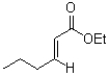
D)
A)
B)
C)
D)
Question
Which of the following is considered the 1,4 conjugate addition product of the reaction shown below? 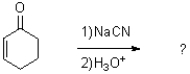
A)
B)
C)
D)
A)
B)
C)
D)
Question
Which of the following best describes the relationship of the enolates shown below? 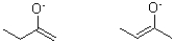
A)They are stereoisomers.
B)They are regioisomers.
C)They are identical molecules.
D)They are tautomers.
A)They are stereoisomers.
B)They are regioisomers.
C)They are identical molecules.
D)They are tautomers.
Question
Which of the following best describes the transition state shown below? 
A)The aldehyde substituent is pseudo-equatorial,and it will lead to an anti-aldol.
B)The aldehyde substituent is pseudo-axial,and it will lead to an anti-aldol.
C)The aldehyde substituent is pseudo-equatorial,and it will lead to a syn-aldol.
D)The aldehyde substituent is pseudo-axial,and it will lead to a syn-aldol.
A)The aldehyde substituent is pseudo-equatorial,and it will lead to an anti-aldol.
B)The aldehyde substituent is pseudo-axial,and it will lead to an anti-aldol.
C)The aldehyde substituent is pseudo-equatorial,and it will lead to a syn-aldol.
D)The aldehyde substituent is pseudo-axial,and it will lead to a syn-aldol.
Question
Question
Question
Which of the following best describes the relationship between the reactant and product in the reaction shown below? 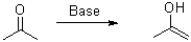
A)They are stereoisomers.
B)They are regioisomers.
C)They are constitutional isomers.
D)They are tautomers.
A)They are stereoisomers.
B)They are regioisomers.
C)They are constitutional isomers.
D)They are tautomers.
Question
What is the product of the transformation shown below? 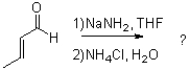
A)
B)
C)
D)
A)
B)
C)
D)
Question
What is the product of the reaction shown below? 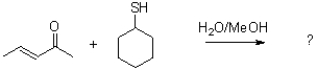
A)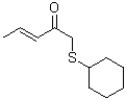
B)
C)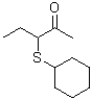
D)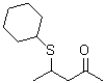
A)
B)
C)
D)
Question
Which set of conditions will accomplish the following transformation? 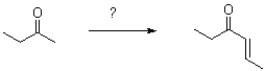
A)1)1.05 eq.LDA,inverse addition -78°C 2)Ethanal 3)H3O+/heat
B)1)0.98 eq.LDA -78°C to 0°C 2)Ethanal 3)H3O+/heat
C)1)1 eq.NaOMe -78°C 2)Ethanal 3)H3O+/heat
D)1)1 eq.NaOMe 20°C 2)Ethanal 3)H3O+/heat
A)1)1.05 eq.LDA,inverse addition -78°C 2)Ethanal 3)H3O+/heat
B)1)0.98 eq.LDA -78°C to 0°C 2)Ethanal 3)H3O+/heat
C)1)1 eq.NaOMe -78°C 2)Ethanal 3)H3O+/heat
D)1)1 eq.NaOMe 20°C 2)Ethanal 3)H3O+/heat
Question
Which of the following is NOT a possible product of the reaction scheme shown below? 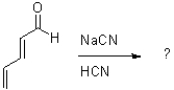
A)
B)
C)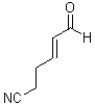
D)
A)
B)
C)
D)
Question
What would be the major product of the reaction shown below? 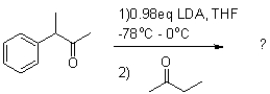
A)
B)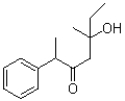
C)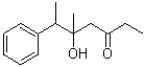
D)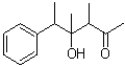
A)
B)
C)
D)
Question
Which of the following represents the kinetic enolate of the diketone compound shown below? 
A)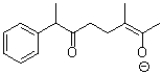
B)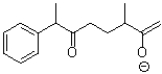
C)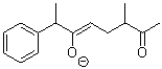
D)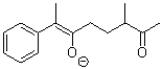
A)
B)
C)
D)
Question
Which of the following represents the thermodynamic enolate of the diketone compound shown below? 
A)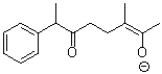
B)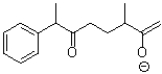
C)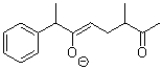
D)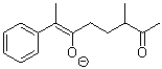
A)
B)
C)
D)
Question
Which of the following is the major product of the reaction shown below? 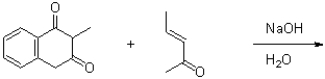
A)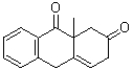
B)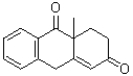
C)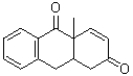
D)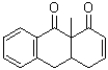
A)
B)
C)
D)
Question
What would be the major product of the reaction shown below? 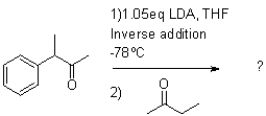
A)
B)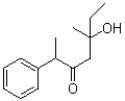
C)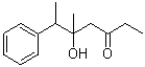
D)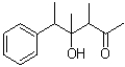
A)
B)
C)
D)
Question
What is the role of diamine in the reaction shown below? 
A)nucleophilic catalyst
B)electrophilic catalyst
C)acid catalyst
D)base catalyst
A)nucleophilic catalyst
B)electrophilic catalyst
C)acid catalyst
D)base catalyst
Question
Which of the following is an intermediate of the reaction shown below? 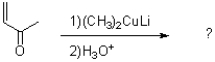
A)
B)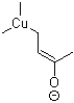
C)
D)
A)
B)
C)
D)
Question
What set of conditions would result in the E-enolate of the ketone shown below? 
A)BCy2Cl,NEt3
B)BBu2Cl,i-Pr2NEt
C)LDA,-78°C
D)NaOH
A)BCy2Cl,NEt3
B)BBu2Cl,i-Pr2NEt
C)LDA,-78°C
D)NaOH
Question
What is the product of the reaction shown below? 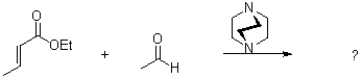
A)
B)
C)
D)
A)
B)
C)
D)
Question
Question
Which set of conditions will accomplish the following transformation? 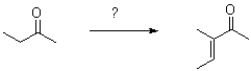
A)1)1.05 eq.LDA,inverse addition -78 °C 2)Ethanal 3)H3O+/heat
B)1)0.98 eq.LDA -78°C to 0°C 2)Ethanal 3)H3O+/heat
C)1)1 eq.NaOMe -78°C 2)Ethanal 3)H3O+/heat
D)1)1 eq.NaOMe 20°C 2)Ethanal 3)H3O+/heat
A)1)1.05 eq.LDA,inverse addition -78 °C 2)Ethanal 3)H3O+/heat
B)1)0.98 eq.LDA -78°C to 0°C 2)Ethanal 3)H3O+/heat
C)1)1 eq.NaOMe -78°C 2)Ethanal 3)H3O+/heat
D)1)1 eq.NaOMe 20°C 2)Ethanal 3)H3O+/heat
Question
Which of the following is an appropriate synthon for the compound shown below? 
A)
B)
C)
D)
A)
B)
C)
D)
Question
Question
What is the major product of the reaction scheme shown below? 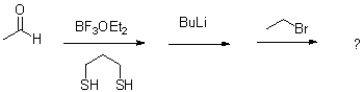
A)
B)
C)
D)
A)
B)
C)
D)
Question
What is the major product of the reaction scheme shown below? 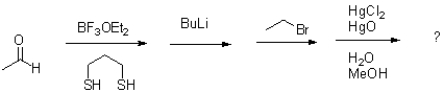
A)
B)
C)
D)
A)
B)
C)
D)
Question
Which of the following represents a Umpolong synthon?
A)
B)
C)
D)
A)
B)
C)
D)
Question
Question
Question
Question
Question
Question
Question
Question
Question
Question
Question
Question
Question
Question
Question
Question
Question
Question
Question
Question
Question
Predict the structure of the product shown below. 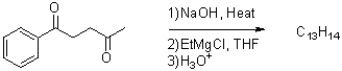
Question
Question
Question
Question
The following reaction results in two enantiomers,with one of the enantiomers existing in excess.Predict which enantiomer will be the major product,and show an intermediate that influences this result. 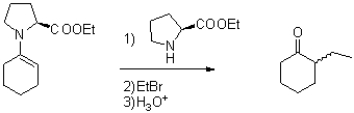
Question
Question
Draw a mechanism of the following transformation. 
Question
Question
Question
Draw the mechanism of the following transformation. 
Question
What are the reactants of the Robinson annulation product shown below? 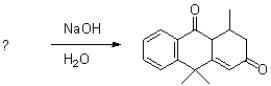
Question
Question
Question
Question
What is the product of the following reaction scheme? 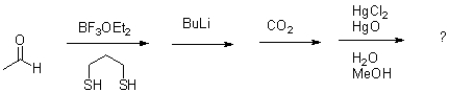
Question
The following reaction results in a cyclic product.What is the product,and show a mechanism for the following reaction. 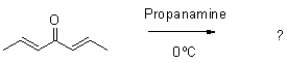

Unlock Deck
Sign up to unlock the cards in this deck!
Unlock Deck
Unlock Deck
1/76

Play

Full screen (f)
Deck 18: Selectivity and Reactivity in Enolate Reactions
1
What is the product of the reaction shown below?
A)
B)
C)
D)
A)
B)
C)
D)
2
Which of the following best describes the transition state structures shown below?
A)I is favoured because R1 and R3 are trans.
B)I is favoured because R1 and R3 are cis.
C)II is favoured because R1 and R3 are trans.
D)II is favoured because R1 and R3 are cis.
A)I is favoured because R1 and R3 are trans.
B)I is favoured because R1 and R3 are cis.
C)II is favoured because R1 and R3 are trans.
D)II is favoured because R1 and R3 are cis.
I is favoured because R1 and R3 are trans.
3
Which of the following best categorizes sites (a)and (b)in the aldehyde shown below?
A)(a)and (b)are both nucleophilic sites.
B)(a)and (b)are both electrophilic sites.
C)(a)is a nucleophilic site,and (b)is an electrophilic site.
D)(a)is an electrophilic site,and (b)is a nucleophilic site.
A)(a)and (b)are both nucleophilic sites.
B)(a)and (b)are both electrophilic sites.
C)(a)is a nucleophilic site,and (b)is an electrophilic site.
D)(a)is an electrophilic site,and (b)is a nucleophilic site.
(a)is a nucleophilic site,and (b)is an electrophilic site.
4
What is the product of the transformation shown below?
A)
B)
C)
D)
A)
B)
C)
D)
Unlock Deck
Unlock for access to all 76 flashcards in this deck.
Unlock Deck
k this deck
5
What is the role of titanium chloride in the Mukaiyama reaction shown below?
A)Titanium activates the aldehyde electrophile,and a chloride ion removes the sialyl-containing TMS group.
B)Titanium activates the alkene electrophile,and a chloride ion removes the sialyl-containing TMS group.
C)Titanium activates the aldehyde electrophile,and a chloride ion forms an ion pair with the carbocation intermediate.
D)Titanium removes the sialyl-containing TMS group,and the chloride ion activates the aldehyde nucleophile.
A)Titanium activates the aldehyde electrophile,and a chloride ion removes the sialyl-containing TMS group.
B)Titanium activates the alkene electrophile,and a chloride ion removes the sialyl-containing TMS group.
C)Titanium activates the aldehyde electrophile,and a chloride ion forms an ion pair with the carbocation intermediate.
D)Titanium removes the sialyl-containing TMS group,and the chloride ion activates the aldehyde nucleophile.
Unlock Deck
Unlock for access to all 76 flashcards in this deck.
Unlock Deck
k this deck
6
Which of the following represents an umpolung electrophile?
A)
B)
C)
D)
A)
B)
C)
D)
Unlock Deck
Unlock for access to all 76 flashcards in this deck.
Unlock Deck
k this deck
7
Which of the following best describes the product of the reaction shown below?
A)It is the kinetic product,which is favoured under low temperatures.
B)It is the thermodynamic product,which is favoured under low temperatures.
C)It is the kinetic product,which is favoured under high temperatures.
D)It is the thermodynamic product,which is favoured under high temperatures.
A)It is the kinetic product,which is favoured under low temperatures.
B)It is the thermodynamic product,which is favoured under low temperatures.
C)It is the kinetic product,which is favoured under high temperatures.
D)It is the thermodynamic product,which is favoured under high temperatures.
Unlock Deck
Unlock for access to all 76 flashcards in this deck.
Unlock Deck
k this deck
8
Which of the following best describes the stereochemistry of the products in an aldol reaction?
A)E and Z enolates favour syn-aldols.
B)Z and Z enolates favour anti-aldols.
C)E enolates favour syn-aldols,and Z enolates favour anti-aldols.
D)E enolates favour anti-aldols,and Z enolates favour syn-aldols.
A)E and Z enolates favour syn-aldols.
B)Z and Z enolates favour anti-aldols.
C)E enolates favour syn-aldols,and Z enolates favour anti-aldols.
D)E enolates favour anti-aldols,and Z enolates favour syn-aldols.
Unlock Deck
Unlock for access to all 76 flashcards in this deck.
Unlock Deck
k this deck
9
Which of the following best describes an enolate and an á,â unsaturated carbonyl in a Michaels addition?
A)The enolate and the á,â unsaturated carbonyl are both Michaels donors.
B)The enolate and the á,â unsaturated carbonyl are both Michaels acceptors.
C)The enolate is a Michaels acceptor and the á,â unsaturated carbonyl is Michaels donor.
D)The enolate is a Michaels donor and the á,â unsaturated carbonyl is Michaels acceptor.
A)The enolate and the á,â unsaturated carbonyl are both Michaels donors.
B)The enolate and the á,â unsaturated carbonyl are both Michaels acceptors.
C)The enolate is a Michaels acceptor and the á,â unsaturated carbonyl is Michaels donor.
D)The enolate is a Michaels donor and the á,â unsaturated carbonyl is Michaels acceptor.
Unlock Deck
Unlock for access to all 76 flashcards in this deck.
Unlock Deck
k this deck
10
Which of the following best describes á,â unsaturated carbonyls?
A)They are nucleophilic and conjugated.
B)They are nucleophilic and unconjugated.
C)They are electrophilic and conjugated.
D)They are electrophilic and unconjugated.
A)They are nucleophilic and conjugated.
B)They are nucleophilic and unconjugated.
C)They are electrophilic and conjugated.
D)They are electrophilic and unconjugated.
Unlock Deck
Unlock for access to all 76 flashcards in this deck.
Unlock Deck
k this deck
11
Which of the following best describes cuprate reagents?
A)They are less nucleophilic than Grignard reagents and promote 1,4-addition of á,â-unsaturated carbonyls.
B)They are more nucleophilic than Grignard reagents and promote 1,4-addition of á,â-unsaturated carbonyls.
C)They are less nucleophilic than Grignard reagents and promote 1,2-addition of á,â-unsaturated carbonyls.
D)They are more nucleophilic than Grignard reagents and promote 1,2-addition of á,â-unsaturated carbonyls.
A)They are less nucleophilic than Grignard reagents and promote 1,4-addition of á,â-unsaturated carbonyls.
B)They are more nucleophilic than Grignard reagents and promote 1,4-addition of á,â-unsaturated carbonyls.
C)They are less nucleophilic than Grignard reagents and promote 1,2-addition of á,â-unsaturated carbonyls.
D)They are more nucleophilic than Grignard reagents and promote 1,2-addition of á,â-unsaturated carbonyls.
Unlock Deck
Unlock for access to all 76 flashcards in this deck.
Unlock Deck
k this deck
12
What is the role of titanium chloride in the reaction shown below?
A)Lewis acid
B)Lewis base
C)Brønsted acid
D)Brønsted base
A)Lewis acid
B)Lewis base
C)Brønsted acid
D)Brønsted base
Unlock Deck
Unlock for access to all 76 flashcards in this deck.
Unlock Deck
k this deck
13
Which of the following represents an umpolung nucleophile?
A)
B)
C)
D)
A)
B)
C)
D)
Unlock Deck
Unlock for access to all 76 flashcards in this deck.
Unlock Deck
k this deck
14
What is the product of the transformation shown below?
A)
B)
C)
D)
A)
B)
C)
D)
Unlock Deck
Unlock for access to all 76 flashcards in this deck.
Unlock Deck
k this deck
15
Which of the following is considered the 1,4 conjugate addition product of the reaction shown below?
A)
B)
C)
D)
A)
B)
C)
D)
Unlock Deck
Unlock for access to all 76 flashcards in this deck.
Unlock Deck
k this deck
16
Which of the following best describes the relationship of the enolates shown below?
A)They are stereoisomers.
B)They are regioisomers.
C)They are identical molecules.
D)They are tautomers.
A)They are stereoisomers.
B)They are regioisomers.
C)They are identical molecules.
D)They are tautomers.
Unlock Deck
Unlock for access to all 76 flashcards in this deck.
Unlock Deck
k this deck
17
Which of the following best describes the transition state shown below?
A)The aldehyde substituent is pseudo-equatorial,and it will lead to an anti-aldol.
B)The aldehyde substituent is pseudo-axial,and it will lead to an anti-aldol.
C)The aldehyde substituent is pseudo-equatorial,and it will lead to a syn-aldol.
D)The aldehyde substituent is pseudo-axial,and it will lead to a syn-aldol.
A)The aldehyde substituent is pseudo-equatorial,and it will lead to an anti-aldol.
B)The aldehyde substituent is pseudo-axial,and it will lead to an anti-aldol.
C)The aldehyde substituent is pseudo-equatorial,and it will lead to a syn-aldol.
D)The aldehyde substituent is pseudo-axial,and it will lead to a syn-aldol.
Unlock Deck
Unlock for access to all 76 flashcards in this deck.
Unlock Deck
k this deck
18
Which of the following conditions best promotes 1,2-addition of an á,â-unsaturated carbonyl?
A)NH3,0°
B)NH3,100°
C)NaNH2,0°
D)NaNH2,100°
A)NH3,0°
B)NH3,100°
C)NaNH2,0°
D)NaNH2,100°
Unlock Deck
Unlock for access to all 76 flashcards in this deck.
Unlock Deck
k this deck
19
What is the product of an á,â-unsaturated carbonyl with organometallic reagents?
A)Grignard and cuprate reagents lead to 1,2 direct addition.
B)Grignard and cuprate reagents lead to 1,4 conjugate addition.
C)Grignard reagents lead to 1,2 direct addition,and cuprate reagents lead to 1,4 conjugate addition.
D)Grignard reagents lead to 1,4 conjugate addition,and cuprate reagents lead to 1,2 direct addition
A)Grignard and cuprate reagents lead to 1,2 direct addition.
B)Grignard and cuprate reagents lead to 1,4 conjugate addition.
C)Grignard reagents lead to 1,2 direct addition,and cuprate reagents lead to 1,4 conjugate addition.
D)Grignard reagents lead to 1,4 conjugate addition,and cuprate reagents lead to 1,2 direct addition
Unlock Deck
Unlock for access to all 76 flashcards in this deck.
Unlock Deck
k this deck
20
Which of the following best describes the relationship between the reactant and product in the reaction shown below?
A)They are stereoisomers.
B)They are regioisomers.
C)They are constitutional isomers.
D)They are tautomers.
A)They are stereoisomers.
B)They are regioisomers.
C)They are constitutional isomers.
D)They are tautomers.
Unlock Deck
Unlock for access to all 76 flashcards in this deck.
Unlock Deck
k this deck
21
What is the product of the transformation shown below?
A)
B)
C)
D)
A)
B)
C)
D)
Unlock Deck
Unlock for access to all 76 flashcards in this deck.
Unlock Deck
k this deck
22
What is the product of the reaction shown below?
A)
B)
C)
D)
A)
B)
C)
D)
Unlock Deck
Unlock for access to all 76 flashcards in this deck.
Unlock Deck
k this deck
23
Which set of conditions will accomplish the following transformation?
A)1)1.05 eq.LDA,inverse addition -78°C 2)Ethanal 3)H3O+/heat
B)1)0.98 eq.LDA -78°C to 0°C 2)Ethanal 3)H3O+/heat
C)1)1 eq.NaOMe -78°C 2)Ethanal 3)H3O+/heat
D)1)1 eq.NaOMe 20°C 2)Ethanal 3)H3O+/heat
A)1)1.05 eq.LDA,inverse addition -78°C 2)Ethanal 3)H3O+/heat
B)1)0.98 eq.LDA -78°C to 0°C 2)Ethanal 3)H3O+/heat
C)1)1 eq.NaOMe -78°C 2)Ethanal 3)H3O+/heat
D)1)1 eq.NaOMe 20°C 2)Ethanal 3)H3O+/heat
Unlock Deck
Unlock for access to all 76 flashcards in this deck.
Unlock Deck
k this deck
24
Which of the following is NOT a possible product of the reaction scheme shown below?
A)
B)
C)
D)
A)
B)
C)
D)
Unlock Deck
Unlock for access to all 76 flashcards in this deck.
Unlock Deck
k this deck
25
What would be the major product of the reaction shown below?
A)
B)
C)
D)
A)
B)
C)
D)
Unlock Deck
Unlock for access to all 76 flashcards in this deck.
Unlock Deck
k this deck
26
Which of the following represents the kinetic enolate of the diketone compound shown below?
A)
B)
C)
D)
A)
B)
C)
D)
Unlock Deck
Unlock for access to all 76 flashcards in this deck.
Unlock Deck
k this deck
27
Which of the following represents the thermodynamic enolate of the diketone compound shown below?
A)
B)
C)
D)
A)
B)
C)
D)
Unlock Deck
Unlock for access to all 76 flashcards in this deck.
Unlock Deck
k this deck
28
Which of the following is the major product of the reaction shown below?
A)
B)
C)
D)
A)
B)
C)
D)
Unlock Deck
Unlock for access to all 76 flashcards in this deck.
Unlock Deck
k this deck
29
What would be the major product of the reaction shown below?
A)
B)
C)
D)
A)
B)
C)
D)
Unlock Deck
Unlock for access to all 76 flashcards in this deck.
Unlock Deck
k this deck
30
What is the role of diamine in the reaction shown below?
A)nucleophilic catalyst
B)electrophilic catalyst
C)acid catalyst
D)base catalyst
A)nucleophilic catalyst
B)electrophilic catalyst
C)acid catalyst
D)base catalyst
Unlock Deck
Unlock for access to all 76 flashcards in this deck.
Unlock Deck
k this deck
31
Which of the following is an intermediate of the reaction shown below?
A)
B)
C)
D)
A)
B)
C)
D)
Unlock Deck
Unlock for access to all 76 flashcards in this deck.
Unlock Deck
k this deck
32
What set of conditions would result in the E-enolate of the ketone shown below?
A)BCy2Cl,NEt3
B)BBu2Cl,i-Pr2NEt
C)LDA,-78°C
D)NaOH
A)BCy2Cl,NEt3
B)BBu2Cl,i-Pr2NEt
C)LDA,-78°C
D)NaOH
Unlock Deck
Unlock for access to all 76 flashcards in this deck.
Unlock Deck
k this deck
33
What is the product of the reaction shown below?
A)
B)
C)
D)
A)
B)
C)
D)
Unlock Deck
Unlock for access to all 76 flashcards in this deck.
Unlock Deck
k this deck
34
Which of the following best explains the regioselectivity of cuprate and Grignard reactions with á,â-unsaturated carbonyls?
A)Grignards are more nucleophilic than cuprates and attack the most positive carbonyl carbon.
B)Grignards are less nucleophilic than cuprates and attack the most positive carbonyl carbon.
C)Grignards are more nucleophilic than cuprates and attack the most positive vinylic carbon.
D)Grignards are less nucleophilic than cuprates and attack the most positive vinylic carbon.
A)Grignards are more nucleophilic than cuprates and attack the most positive carbonyl carbon.
B)Grignards are less nucleophilic than cuprates and attack the most positive carbonyl carbon.
C)Grignards are more nucleophilic than cuprates and attack the most positive vinylic carbon.
D)Grignards are less nucleophilic than cuprates and attack the most positive vinylic carbon.
Unlock Deck
Unlock for access to all 76 flashcards in this deck.
Unlock Deck
k this deck
35
Which set of conditions will accomplish the following transformation?
A)1)1.05 eq.LDA,inverse addition -78 °C 2)Ethanal 3)H3O+/heat
B)1)0.98 eq.LDA -78°C to 0°C 2)Ethanal 3)H3O+/heat
C)1)1 eq.NaOMe -78°C 2)Ethanal 3)H3O+/heat
D)1)1 eq.NaOMe 20°C 2)Ethanal 3)H3O+/heat
A)1)1.05 eq.LDA,inverse addition -78 °C 2)Ethanal 3)H3O+/heat
B)1)0.98 eq.LDA -78°C to 0°C 2)Ethanal 3)H3O+/heat
C)1)1 eq.NaOMe -78°C 2)Ethanal 3)H3O+/heat
D)1)1 eq.NaOMe 20°C 2)Ethanal 3)H3O+/heat
Unlock Deck
Unlock for access to all 76 flashcards in this deck.
Unlock Deck
k this deck
36
Which of the following is an appropriate synthon for the compound shown below?
A)
B)
C)
D)
A)
B)
C)
D)
Unlock Deck
Unlock for access to all 76 flashcards in this deck.
Unlock Deck
k this deck
37
1,2 conjugate addition of an enone is considered the thermodynamic product.
Unlock Deck
Unlock for access to all 76 flashcards in this deck.
Unlock Deck
k this deck
38
What is the major product of the reaction scheme shown below?
A)
B)
C)
D)
A)
B)
C)
D)
Unlock Deck
Unlock for access to all 76 flashcards in this deck.
Unlock Deck
k this deck
39
What is the major product of the reaction scheme shown below?
A)
B)
C)
D)
A)
B)
C)
D)
Unlock Deck
Unlock for access to all 76 flashcards in this deck.
Unlock Deck
k this deck
40
Which of the following represents a Umpolong synthon?
A)
B)
C)
D)
A)
B)
C)
D)
Unlock Deck
Unlock for access to all 76 flashcards in this deck.
Unlock Deck
k this deck
41
The addition of BCy3 to a carbonyl deprotonation reaction results in the Z enolate being favoured.
Unlock Deck
Unlock for access to all 76 flashcards in this deck.
Unlock Deck
k this deck
42
The thermodynamic product is a result of a reaction under reversible conditions.
Unlock Deck
Unlock for access to all 76 flashcards in this deck.
Unlock Deck
k this deck
43
Cyanohydrins can act as umpolung electrophiles.
Unlock Deck
Unlock for access to all 76 flashcards in this deck.
Unlock Deck
k this deck
44
Strong amide bases like LDA favour the formation of Z enolates.
Unlock Deck
Unlock for access to all 76 flashcards in this deck.
Unlock Deck
k this deck
45
Allowing a system to equilibrate promotes formation of the kinetic enolate.
Unlock Deck
Unlock for access to all 76 flashcards in this deck.
Unlock Deck
k this deck
46
Umpolung represents the change in the reactivity of an atom.
Unlock Deck
Unlock for access to all 76 flashcards in this deck.
Unlock Deck
k this deck
47
Consonant reactivity is the alternating reactivity pattern of consecutive atoms in a chain.
Unlock Deck
Unlock for access to all 76 flashcards in this deck.
Unlock Deck
k this deck
48
An aldol reaction is an example of an umpolung reaction.
Unlock Deck
Unlock for access to all 76 flashcards in this deck.
Unlock Deck
k this deck
49
E enolates favour the formation of cis aldols.
Unlock Deck
Unlock for access to all 76 flashcards in this deck.
Unlock Deck
k this deck
50
Use of a bulky base like LDA promotes formation of the thermodynamic enolate.
Unlock Deck
Unlock for access to all 76 flashcards in this deck.
Unlock Deck
k this deck
51
Use of LDA to depronate the á proton of an amide results in the Z enolate exclusively.
Unlock Deck
Unlock for access to all 76 flashcards in this deck.
Unlock Deck
k this deck
52
Grignard reagents react with á,â unsaturated carbonyls to form the thermodynamic product.
Unlock Deck
Unlock for access to all 76 flashcards in this deck.
Unlock Deck
k this deck
53
Grignard and cuprate reagents are said to have _______________ reactivity.
Unlock Deck
Unlock for access to all 76 flashcards in this deck.
Unlock Deck
k this deck
54
The Wittig reaction favours cis stereochemistry of the resultant alkene product.
Unlock Deck
Unlock for access to all 76 flashcards in this deck.
Unlock Deck
k this deck
55
The Grignard reagent is an example of an umpolung nucleophile.
Unlock Deck
Unlock for access to all 76 flashcards in this deck.
Unlock Deck
k this deck
56
A stabilized ylide contains a neighbouring electron donating group.
Unlock Deck
Unlock for access to all 76 flashcards in this deck.
Unlock Deck
k this deck
57
The thermodynamic enolate contains the more substituted alkene.
Unlock Deck
Unlock for access to all 76 flashcards in this deck.
Unlock Deck
k this deck
58
Strong nucleophiles promote 1,2-addition over 1,4-addition.
Unlock Deck
Unlock for access to all 76 flashcards in this deck.
Unlock Deck
k this deck
59
A ylide with an electron drawing group will result in trans geometry of the product alkene.
Unlock Deck
Unlock for access to all 76 flashcards in this deck.
Unlock Deck
k this deck
60
A cuprate is an example of an umpolung reagent.
Unlock Deck
Unlock for access to all 76 flashcards in this deck.
Unlock Deck
k this deck
61
Predict the structure of the product shown below.
Unlock Deck
Unlock for access to all 76 flashcards in this deck.
Unlock Deck
k this deck
62
1,4-addition to an á,â-unsaturated carbonyl is also referred to as _______________ addition.
Unlock Deck
Unlock for access to all 76 flashcards in this deck.
Unlock Deck
k this deck
63
A Z-enolate will form a(n)_______________ aldol product when reacted with a carbonyl.
Unlock Deck
Unlock for access to all 76 flashcards in this deck.
Unlock Deck
k this deck
64
Molecules with oxy substituents separated by an even number of atoms display _______________ reactivity.
Unlock Deck
Unlock for access to all 76 flashcards in this deck.
Unlock Deck
k this deck
65
The following reaction results in two enantiomers,with one of the enantiomers existing in excess.Predict which enantiomer will be the major product,and show an intermediate that influences this result.
Unlock Deck
Unlock for access to all 76 flashcards in this deck.
Unlock Deck
k this deck
66
The kinetic enolate has the _______________ substituted double bond.
Unlock Deck
Unlock for access to all 76 flashcards in this deck.
Unlock Deck
k this deck
67
Draw a mechanism of the following transformation.
Unlock Deck
Unlock for access to all 76 flashcards in this deck.
Unlock Deck
k this deck
68
The alternating reactivity pattern of consecutive carbons on a chain attached to a carbonyl is known as a(n)_______________ reactivity pattern.
Unlock Deck
Unlock for access to all 76 flashcards in this deck.
Unlock Deck
k this deck
69
Stabilized ylides contain a neighbouring _______________ group.
Unlock Deck
Unlock for access to all 76 flashcards in this deck.
Unlock Deck
k this deck
70
Draw the mechanism of the following transformation.
Unlock Deck
Unlock for access to all 76 flashcards in this deck.
Unlock Deck
k this deck
71
What are the reactants of the Robinson annulation product shown below?
Unlock Deck
Unlock for access to all 76 flashcards in this deck.
Unlock Deck
k this deck
72
The reaction of a cuprate with an á,â unsaturated carbonyl results in_______________ addition.
Unlock Deck
Unlock for access to all 76 flashcards in this deck.
Unlock Deck
k this deck
73
Deprotonation of the á proton of an amide results in the _______________.
Unlock Deck
Unlock for access to all 76 flashcards in this deck.
Unlock Deck
k this deck
74
Inversion of the expected reactivity of an atom is known as _______________ reactivity.
Unlock Deck
Unlock for access to all 76 flashcards in this deck.
Unlock Deck
k this deck
75
What is the product of the following reaction scheme?
Unlock Deck
Unlock for access to all 76 flashcards in this deck.
Unlock Deck
k this deck
76
The following reaction results in a cyclic product.What is the product,and show a mechanism for the following reaction.
Unlock Deck
Unlock for access to all 76 flashcards in this deck.
Unlock Deck
k this deck
Unlock Deck
Unlock for access to all 76 flashcards in this deck.







