





 Chat with AI

Deck 11: Our Star: the Sun
Full screen (f)

Question

Question
Question
Question
Question
Question
Question
Question
Question
Question
Question
Examine the figure below.By studying how the surface of the Sun vibrates like a struck bell,we can determine its: 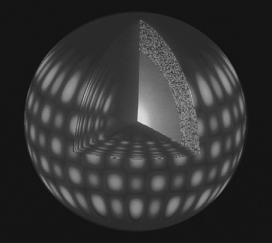
A) age.
B) interior density.
C) total mass.
D) size.
A) age.
B) interior density.
C) total mass.
D) size.
Question
Question
Question
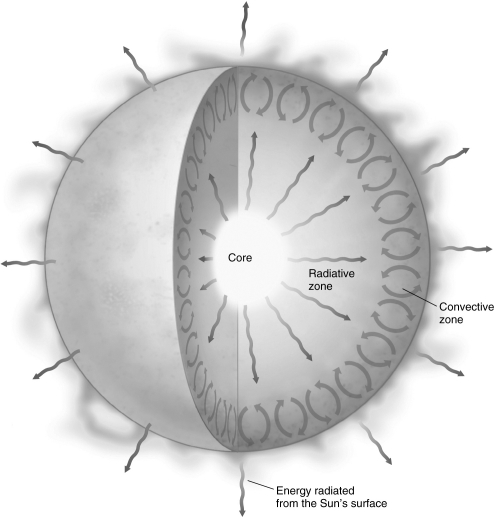
Examine the figure below.The interior zones of the Sun are distinguished by: 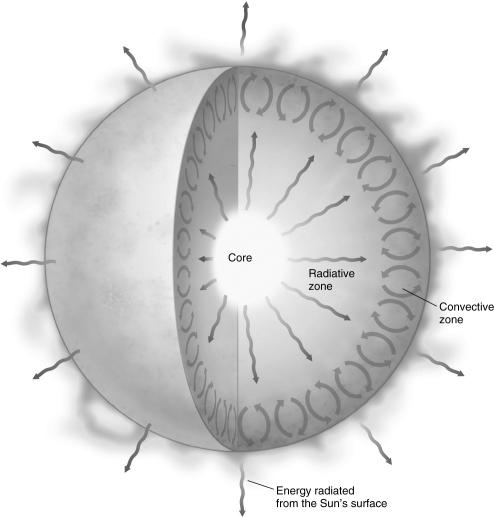
A) jumps in density between zones.
B) their temperature profiles.
C) their modes of energy transport.
D) all of the above
A) jumps in density between zones.
B) their temperature profiles.
C) their modes of energy transport.
D) all of the above
Question
Question
Question
Question
Question
Question
Question
Question
Question
Question
Question
Question
Question
Question
Question
Question
Question
Question
Question
Question
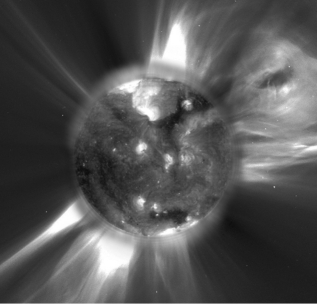
Examine the figure below.The corona of the Sun has a temperature of approximately 1 million K.At what wavelength and in what part of the electromagnetic spectrum does its radiation peak? 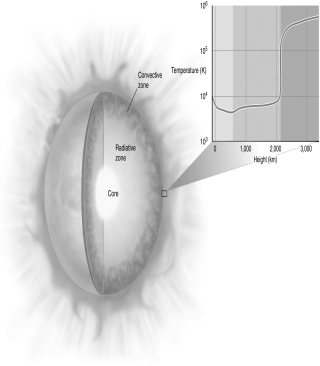
A) 5.5 × 10⁻⁷ meter, visible
B) 2 × 10⁻⁵ meter, infrared
C) 4 × 10⁻⁷ meter, ultraviolet
D) 3 × 10⁻⁹ meter, X-rays
A) 5.5 × 10⁻⁷ meter, visible
B) 2 × 10⁻⁵ meter, infrared
C) 4 × 10⁻⁷ meter, ultraviolet
D) 3 × 10⁻⁹ meter, X-rays
Question
The solar spectrum (see the image below)is an example of a(n)________ spectrum. 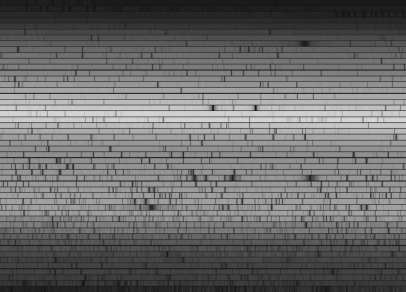
A) emission
B) absorption
C) continuum
D) blackbody
A) emission
B) absorption
C) continuum
D) blackbody
Question
Question
Question
Examine the figure below.In a sunspot,the ________ is cooler than the ________. 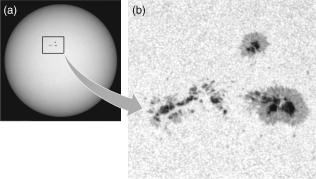
A) umbra; penumbra
B) limb; center
C) penumbra; umbra
D) lighter; darker
A) umbra; penumbra
B) limb; center
C) penumbra; umbra
D) lighter; darker
Question
Question
Question
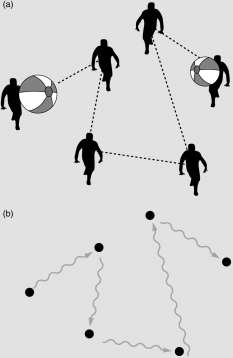
Examine the figure below.Explain why it takes so long for gamma-ray energy to find its way to the outer layers of the Sun.
Question
Question
Examine the figure below.Show where in the Sun nuclear fusion occurs,and explain why fusion occurs there.
Question
Question
Question
If a coronal mass ejection occurred on the Sun and ejected particles toward Earth that traveled at the speed of 1,000 km/s,how long would it take them to reach Earth?
Question
Question
Question
Question
Question
Question
Question
Question
Question
Question
Question
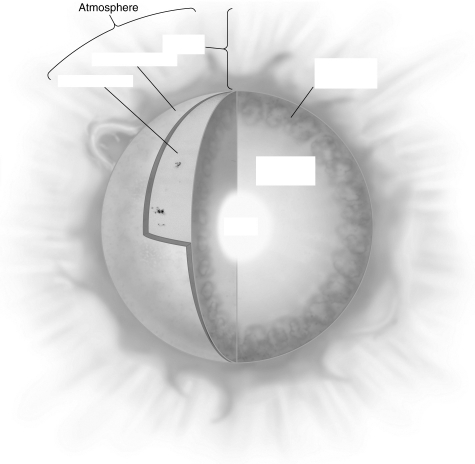
In the figure below,label the regions of the Sun.
Question

Unlock Deck
Sign up to unlock the cards in this deck!
Unlock Deck
Unlock Deck
1/58

Play

Full screen (f)
Deck 11: Our Star: the Sun
1
Why is hydrogen burning the main energy source for main-sequence stars?
A) Hydrogen is the most common element in stars.
B) Hydrogen nuclei have the smallest positive charge.
C) Hydrogen burning is the most efficient of all fusion or fission reactions.
D) All the above are valid reasons.
A) Hydrogen is the most common element in stars.
B) Hydrogen nuclei have the smallest positive charge.
C) Hydrogen burning is the most efficient of all fusion or fission reactions.
D) All the above are valid reasons.
All the above are valid reasons.
2
The energy that fuels the Sun is generated:
A) only on its surface.
B) only in its core.
C) both in its core and on its surface.
D) in its core, on the surface, and in the solar wind.
A) only on its surface.
B) only in its core.
C) both in its core and on its surface.
D) in its core, on the surface, and in the solar wind.
only in its core.
3
Detection of solar neutrinos confirms that:
A) the Sun's core is powered by proton-proton fusion.
B) transport by radiation occurs throughout much of the solar interior.
C) magnetic fields are responsible for surface activity on the Sun.
D) convection churns the base of the solar atmosphere.
A) the Sun's core is powered by proton-proton fusion.
B) transport by radiation occurs throughout much of the solar interior.
C) magnetic fields are responsible for surface activity on the Sun.
D) convection churns the base of the solar atmosphere.
the Sun's core is powered by proton-proton fusion.
4
Density,temperature,and pressure ________ as you move inward in the interior of the Sun.
A) increase
B) decrease
C) stay the same
D) There is not enough information provided.
A) increase
B) decrease
C) stay the same
D) There is not enough information provided.
Unlock Deck
Unlock for access to all 58 flashcards in this deck.
Unlock Deck
k this deck
5
Which of the following layers of the Sun makes up the majority of its interior?
A) the core
B) the radiative zone
C) the convective zone
D) the photosphere
A) the core
B) the radiative zone
C) the convective zone
D) the photosphere
Unlock Deck
Unlock for access to all 58 flashcards in this deck.
Unlock Deck
k this deck
6
Hydrostatic equilibrium is a balance between:
A) heat and rotation.
B) core temperature and surface temperature.
C) pressure and gravity.
D) radiation and heat.
A) heat and rotation.
B) core temperature and surface temperature.
C) pressure and gravity.
D) radiation and heat.
Unlock Deck
Unlock for access to all 58 flashcards in this deck.
Unlock Deck
k this deck
7
We can determine how the density changes with radius in the Sun using:
A) radar observations.
B) neutrino detections.
C) high-energy (gamma ray) observations.
D) helioseismology.
A) radar observations.
B) neutrino detections.
C) high-energy (gamma ray) observations.
D) helioseismology.
Unlock Deck
Unlock for access to all 58 flashcards in this deck.
Unlock Deck
k this deck
8
The solar neutrino problem was solved by:
A) adjusting the rates of hydrogen burning in solar models.
B) improving detector efficiencies so more neutrinos were observed.
C) postulating that neutrinos had mass and oscillated between three different types.
D) lowering the percentage of helium in models of solar composition.
A) adjusting the rates of hydrogen burning in solar models.
B) improving detector efficiencies so more neutrinos were observed.
C) postulating that neutrinos had mass and oscillated between three different types.
D) lowering the percentage of helium in models of solar composition.
Unlock Deck
Unlock for access to all 58 flashcards in this deck.
Unlock Deck
k this deck
9
When two atomic nuclei come together to form a new species of atom,it is called:
A) nuclear fission.
B) nuclear fusion.
C) nuclear splitting.
D) nuclear recombination.
A) nuclear fission.
B) nuclear fusion.
C) nuclear splitting.
D) nuclear recombination.
Unlock Deck
Unlock for access to all 58 flashcards in this deck.
Unlock Deck
k this deck
10
Approximately how long does it take the photons released in nuclear reactions in the core of the Sun to exit the photosphere?
A) 8 minutes
B) 16 hours
C) 1,000 years
D) 100,000 years
A) 8 minutes
B) 16 hours
C) 1,000 years
D) 100,000 years
Unlock Deck
Unlock for access to all 58 flashcards in this deck.
Unlock Deck
k this deck
11
Examine the figure below.By studying how the surface of the Sun vibrates like a struck bell,we can determine its:
A) age.
B) interior density.
C) total mass.
D) size.
A) age.
B) interior density.
C) total mass.
D) size.
Unlock Deck
Unlock for access to all 58 flashcards in this deck.
Unlock Deck
k this deck
12
Balance of energy in the solar interior means that:
A) the energy production rate in the core equals the rate of radiation escaping the Sun's surface.
B) the source of energy in the core is stable and will sustain the Sun for billions of years.
C) the outer layers of the Sun absorb and reemit the radiation from the core at increasingly longer wavelengths.
D) radiation pressure balances the weight of the overlying solar layers.
A) the energy production rate in the core equals the rate of radiation escaping the Sun's surface.
B) the source of energy in the core is stable and will sustain the Sun for billions of years.
C) the outer layers of the Sun absorb and reemit the radiation from the core at increasingly longer wavelengths.
D) radiation pressure balances the weight of the overlying solar layers.
Unlock Deck
Unlock for access to all 58 flashcards in this deck.
Unlock Deck
k this deck
13
In the proton-proton chain,the net reaction is that four hydrogen nuclei are converted to one helium nucleus and ________ are released.
A) visible wavelength photons
B) gamma-ray photons, positrons, and neutrinos
C) ultraviolet photons and neutrinos
D) X-ray photons, electrons, and neutrinos
A) visible wavelength photons
B) gamma-ray photons, positrons, and neutrinos
C) ultraviolet photons and neutrinos
D) X-ray photons, electrons, and neutrinos
Unlock Deck
Unlock for access to all 58 flashcards in this deck.
Unlock Deck
k this deck
14
Examine the figure below.The interior zones of the Sun are distinguished by:
A) jumps in density between zones.
B) their temperature profiles.
C) their modes of energy transport.
D) all of the above
A) jumps in density between zones.
B) their temperature profiles.
C) their modes of energy transport.
D) all of the above
Unlock Deck
Unlock for access to all 58 flashcards in this deck.
Unlock Deck
k this deck
15
Approximately what is the temperature at the center of the Sun?
A) 1500 K
B) 15,000 K
C) 15 million K
D) 15 billion K
A) 1500 K
B) 15,000 K
C) 15 million K
D) 15 billion K
Unlock Deck
Unlock for access to all 58 flashcards in this deck.
Unlock Deck
k this deck
16
The bulk of the Sun's energy generation is contained within a region of:
A) 0.2 solar radii.
B) 0.5 solar radii.
C) 0.75 solar radii.
D) 1.0 solar radii.
A) 0.2 solar radii.
B) 0.5 solar radii.
C) 0.75 solar radii.
D) 1.0 solar radii.
Unlock Deck
Unlock for access to all 58 flashcards in this deck.
Unlock Deck
k this deck
17
The majority of the Sun's energy comes from:
A) gravitational contraction.
B) its rapid rotation.
C) hydrogen fusion.
D) helium burning.
A) gravitational contraction.
B) its rapid rotation.
C) hydrogen fusion.
D) helium burning.
Unlock Deck
Unlock for access to all 58 flashcards in this deck.
Unlock Deck
k this deck
18
If neutrinos oscillated between four different types of neutrino during their transit from the Sun to Earth,then how many neutrinos would we have detected compared to what was emitted by the Sun?
A) one-third as many
B) one-fourth as many
C) one-fifth as many
D) We would detect no neutrinos.
A) one-third as many
B) one-fourth as many
C) one-fifth as many
D) We would detect no neutrinos.
Unlock Deck
Unlock for access to all 58 flashcards in this deck.
Unlock Deck
k this deck
19
The Sun has a mass of:
A) 2 × 1030 kg.
B) 2 × 10¹⁰ kg.
C) 2 × 10²⁰ kg.
D) 2 × 1040 kg.
A) 2 × 1030 kg.
B) 2 × 10¹⁰ kg.
C) 2 × 10²⁰ kg.
D) 2 × 1040 kg.
Unlock Deck
Unlock for access to all 58 flashcards in this deck.
Unlock Deck
k this deck
20
Which of the following methods is NOT used to transport energy from the core to the surface of the Sun?
A) radiation
B) convection
C) conduction
D) All of the above are important in the solar interior.
A) radiation
B) convection
C) conduction
D) All of the above are important in the solar interior.
Unlock Deck
Unlock for access to all 58 flashcards in this deck.
Unlock Deck
k this deck
21
Which of the following is NOT a result of an increase in solar activity?
A) The height of orbiting satellites decreases.
B) Airplanes have trouble navigating.
C) Stronger auroras are seen.
D) All of the above can be caused by increased solar activity.
A) The height of orbiting satellites decreases.
B) Airplanes have trouble navigating.
C) Stronger auroras are seen.
D) All of the above can be caused by increased solar activity.
Unlock Deck
Unlock for access to all 58 flashcards in this deck.
Unlock Deck
k this deck
22
If a sunspot appears one-third as bright as the surrounding photosphere,and the average temperature of the photosphere is 5800 K,what is the temperature of the gas in this sunspot?
A) 4100 K
B) 4400 K
C) 5200 K
D) 5500 K
A) 4100 K
B) 4400 K
C) 5200 K
D) 5500 K
Unlock Deck
Unlock for access to all 58 flashcards in this deck.
Unlock Deck
k this deck
23
We know the corona of the Sun is very hot because:
A) we observe it emitting large amounts of radio emission.
B) the chromosphere and the photosphere are so hot.
C) we observe it emitting X-rays that ionize atoms there.
D) all of the above
A) we observe it emitting large amounts of radio emission.
B) the chromosphere and the photosphere are so hot.
C) we observe it emitting X-rays that ionize atoms there.
D) all of the above
Unlock Deck
Unlock for access to all 58 flashcards in this deck.
Unlock Deck
k this deck
24
If a coronal mass ejection occurs on the Sun that expels material at a speed of 800 km/s,how long will it take these charged particles to reach Earth?
A) 0.7 day
B) 1.4 days
C) 1.8 days
D) 2.1 days
A) 0.7 day
B) 1.4 days
C) 1.8 days
D) 2.1 days
Unlock Deck
Unlock for access to all 58 flashcards in this deck.
Unlock Deck
k this deck
25
The Maunder Minimum was a 60-year period when:
A) debris thrown up in a comet collision blanketed out the Sun.
B) almost no sunspots occurred on the Sun.
C) the Voyager 2 spacecraft traversed the heliopause.
D) no dust storms occurred on Mars.
A) debris thrown up in a comet collision blanketed out the Sun.
B) almost no sunspots occurred on the Sun.
C) the Voyager 2 spacecraft traversed the heliopause.
D) no dust storms occurred on Mars.
Unlock Deck
Unlock for access to all 58 flashcards in this deck.
Unlock Deck
k this deck
26
The Sun's magnetic field reverses direction every:
A) 27 days.
B) 12 months.
C) 11 years.
D) 22 years.
A) 27 days.
B) 12 months.
C) 11 years.
D) 22 years.
Unlock Deck
Unlock for access to all 58 flashcards in this deck.
Unlock Deck
k this deck
27
The best wavelength to use to observe a solar prominence or flare is:
A) 550 nm, green visible light.
B) 656 nm, a red hydrogen emission line.
C) 16 mm, an ultraviolet emission line.
D) 21 cm, microwave emission.
A) 550 nm, green visible light.
B) 656 nm, a red hydrogen emission line.
C) 16 mm, an ultraviolet emission line.
D) 21 cm, microwave emission.
Unlock Deck
Unlock for access to all 58 flashcards in this deck.
Unlock Deck
k this deck
28
When solar activity is very high,Earth's atmosphere will:
A) expand.
B) contract.
C) remain approximately the same.
D) repel charged particles.
A) expand.
B) contract.
C) remain approximately the same.
D) repel charged particles.
Unlock Deck
Unlock for access to all 58 flashcards in this deck.
Unlock Deck
k this deck
29
If the Sun converts 5 × 10¹¹ kg of H to He per second,and 10 percent of the Sun's total mass is available for nuclear burning,how long might we expect the Sun to live?
A) 104 years
B) 108 years
C) 1010 years
D) 1014 years
A) 104 years
B) 108 years
C) 1010 years
D) 1014 years
Unlock Deck
Unlock for access to all 58 flashcards in this deck.
Unlock Deck
k this deck
30
Light from the photosphere of the Sun reaches Earth approximately ________ times faster than photons released by fusion in the Sun's core.
A) 1,000
B) 600,000
C) 1 million
D) 6 billion
A) 1,000
B) 600,000
C) 1 million
D) 6 billion
Unlock Deck
Unlock for access to all 58 flashcards in this deck.
Unlock Deck
k this deck
31
The variations in the Sun's luminosity by solar activity accounts for a change in Earth's average temperature by 0.1 K,which is:
A) much less than what is attributed to greenhouse gases in Earth's atmosphere.
B) equal to the current trends in Earth's global warming.
C) much more than what is attributed to greenhouse gases in Earth's atmosphere.
D) This is a trick question, there is no global warming.
A) much less than what is attributed to greenhouse gases in Earth's atmosphere.
B) equal to the current trends in Earth's global warming.
C) much more than what is attributed to greenhouse gases in Earth's atmosphere.
D) This is a trick question, there is no global warming.
Unlock Deck
Unlock for access to all 58 flashcards in this deck.
Unlock Deck
k this deck
32
Observations of sunspots led to the discovery of the Sun's:
A) coronal holes.
B) coronal mass ejections.
C) differential rotation.
D) all of the above
A) coronal holes.
B) coronal mass ejections.
C) differential rotation.
D) all of the above
Unlock Deck
Unlock for access to all 58 flashcards in this deck.
Unlock Deck
k this deck
33
Which of the following are manifestations of solar magnetic activity?
A) sunspots
B) prominences
C) flares
D) all of the above
A) sunspots
B) prominences
C) flares
D) all of the above
Unlock Deck
Unlock for access to all 58 flashcards in this deck.
Unlock Deck
k this deck
34
Examine the figure below.The corona of the Sun has a temperature of approximately 1 million K.At what wavelength and in what part of the electromagnetic spectrum does its radiation peak?
A) 5.5 × 10⁻⁷ meter, visible
B) 2 × 10⁻⁵ meter, infrared
C) 4 × 10⁻⁷ meter, ultraviolet
D) 3 × 10⁻⁹ meter, X-rays
A) 5.5 × 10⁻⁷ meter, visible
B) 2 × 10⁻⁵ meter, infrared
C) 4 × 10⁻⁷ meter, ultraviolet
D) 3 × 10⁻⁹ meter, X-rays
Unlock Deck
Unlock for access to all 58 flashcards in this deck.
Unlock Deck
k this deck
35
The solar spectrum (see the image below)is an example of a(n)________ spectrum.
A) emission
B) absorption
C) continuum
D) blackbody
A) emission
B) absorption
C) continuum
D) blackbody
Unlock Deck
Unlock for access to all 58 flashcards in this deck.
Unlock Deck
k this deck
36
Sunspots appear dark because:
A) they have lower densities.
B) they have lower rotation rates.
C) they have lower temperatures.
D) they are storm systems like those on the giant planets.
A) they have lower densities.
B) they have lower rotation rates.
C) they have lower temperatures.
D) they are storm systems like those on the giant planets.
Unlock Deck
Unlock for access to all 58 flashcards in this deck.
Unlock Deck
k this deck
37
The surface of the Sun appears sharp because the photosphere is:
A) cooler than the layers below it.
B) thin compared to the other layers in the Sun.
C) much less dense than the convection zone.
D) transparent to radiation.
A) cooler than the layers below it.
B) thin compared to the other layers in the Sun.
C) much less dense than the convection zone.
D) transparent to radiation.
Unlock Deck
Unlock for access to all 58 flashcards in this deck.
Unlock Deck
k this deck
38
Examine the figure below.In a sunspot,the ________ is cooler than the ________.
A) umbra; penumbra
B) limb; center
C) penumbra; umbra
D) lighter; darker
A) umbra; penumbra
B) limb; center
C) penumbra; umbra
D) lighter; darker
Unlock Deck
Unlock for access to all 58 flashcards in this deck.
Unlock Deck
k this deck
39
If the Sun converts 5 × 10¹¹ kg of H to He per second,and the mass of a single hydrogen nucleus is 1.7 × 10⁻²⁷ kg,how many net proton-proton reactions go on per second in the Sun? What is the luminosity produced if the mass difference between a single helium nucleus and four hydrogen nuclei is 4 × 10⁻²⁹ kg? Note that 1 watt (W)= 1 m² kg/s³.
A) 7 × 1037 reactions per second; 3 × 1026 W
B) 3 × 1038 reactions per second; 1027 W
C) 3 × 1038 reactions per second; 4 × 1026 W
D) 7 × 1037 reactions per second; 5 × 1025 W
A) 7 × 1037 reactions per second; 3 × 1026 W
B) 3 × 1038 reactions per second; 1027 W
C) 3 × 1038 reactions per second; 4 × 1026 W
D) 7 × 1037 reactions per second; 5 × 1025 W
Unlock Deck
Unlock for access to all 58 flashcards in this deck.
Unlock Deck
k this deck
40
The chromosphere appears red because:
A) it is hotter than the photosphere.
B) as the Sun rotates, the chromosphere appears to move away from us radially.
C) it has a higher concentration of heavy metals.
D) its spectrum is dominated by Ha emission.
A) it is hotter than the photosphere.
B) as the Sun rotates, the chromosphere appears to move away from us radially.
C) it has a higher concentration of heavy metals.
D) its spectrum is dominated by Ha emission.
Unlock Deck
Unlock for access to all 58 flashcards in this deck.
Unlock Deck
k this deck
41
Examine the figure below.Explain why it takes so long for gamma-ray energy to find its way to the outer layers of the Sun.
Unlock Deck
Unlock for access to all 58 flashcards in this deck.
Unlock Deck
k this deck
42
What is "limb darkening"? Explain why limb darkening occurs in the Sun.
Unlock Deck
Unlock for access to all 58 flashcards in this deck.
Unlock Deck
k this deck
43
Examine the figure below.Show where in the Sun nuclear fusion occurs,and explain why fusion occurs there.
Unlock Deck
Unlock for access to all 58 flashcards in this deck.
Unlock Deck
k this deck
44
When,during its 11-year cycle,is the Sun most luminous? What might this have to do with the Maunder Minimum?
Unlock Deck
Unlock for access to all 58 flashcards in this deck.
Unlock Deck
k this deck
45
What are the three ways in which energy could be transported within a star (or to your fingers)? Explain your answer.
Unlock Deck
Unlock for access to all 58 flashcards in this deck.
Unlock Deck
k this deck
46
If a coronal mass ejection occurred on the Sun and ejected particles toward Earth that traveled at the speed of 1,000 km/s,how long would it take them to reach Earth?
Unlock Deck
Unlock for access to all 58 flashcards in this deck.
Unlock Deck
k this deck
47
Calculate the amount of energy released by converting four hydrogen atoms into one helium atom.The mass of a hydrogen atom is 1.67 × 10⁻²⁴ kg; the mass of a helium atom is 6.65 × 10-²⁴
g. The speed of light is 3 × 10⁸ m/s.
g. The speed of light is 3 × 10⁸ m/s.
Unlock Deck
Unlock for access to all 58 flashcards in this deck.
Unlock Deck
k this deck
48
Illustrate the steps by which hydrogen is fused into helium in the Sun in the proton-proton chain.
Unlock Deck
Unlock for access to all 58 flashcards in this deck.
Unlock Deck
k this deck
49
Explain why the solution to the solar neutrino problem is an excellent example of how observations drive the evolution of science.
Unlock Deck
Unlock for access to all 58 flashcards in this deck.
Unlock Deck
k this deck
50
Through hydrogen fusion,the Sun loses approximately 4 million tons of mass each second.If it burns hydrogen at this rate for 10 billion years,what percentage of its original mass will it lose in all? (Note: The mass of the Sun is 1.99 × 10³⁰ kg,and 1 ton = 1,000 kg.)
Unlock Deck
Unlock for access to all 58 flashcards in this deck.
Unlock Deck
k this deck
51
Show that a star with the same mass,composition,radius,and luminosity as the Sun,but with a higher temperature (that is,a "too-hot" Sun),leads to a contradiction.
Unlock Deck
Unlock for access to all 58 flashcards in this deck.
Unlock Deck
k this deck
52
If a sunspot is half as bright as the surrounding photosphere of the Sun,what is the approximate temperature of the gas in the sunspot if the photosphere's average temperature is 5800 K?
Unlock Deck
Unlock for access to all 58 flashcards in this deck.
Unlock Deck
k this deck
53
Explain why magnetic fields trap coronal gas over much of the solar surface but allow it to escape in coronal holes.
Unlock Deck
Unlock for access to all 58 flashcards in this deck.
Unlock Deck
k this deck
54
Why is hydrogen burning the main energy source for main-sequence stars? Give at least two reasons.
Unlock Deck
Unlock for access to all 58 flashcards in this deck.
Unlock Deck
k this deck
55
Explain why hydrostatic equilibrium results in the center of the Sun having the highest pressure and temperature.
Unlock Deck
Unlock for access to all 58 flashcards in this deck.
Unlock Deck
k this deck
56
In the proton-proton chain,the net reaction is that four protons are converted into one helium nucleus.What other by-products are released in this reaction,and why?
Unlock Deck
Unlock for access to all 58 flashcards in this deck.
Unlock Deck
k this deck
57
In the figure below,label the regions of the Sun.
Unlock Deck
Unlock for access to all 58 flashcards in this deck.
Unlock Deck
k this deck
58
How do periods of strong solar activity affect near-Earth orbiting spacecraft?
Unlock Deck
Unlock for access to all 58 flashcards in this deck.
Unlock Deck
k this deck
Unlock Deck
Unlock for access to all 58 flashcards in this deck.







