





 Chat with AI

Deck 14: Forging the National Economy,1790-1860
Full screen (f)

Question

Question
Question
Question
Question
Question
Question
Question
Question
Question
Question
Question
Question
Question
Question
Question
Question
Question
Question
Question
Question
Question
Question
COMPLETION
Locate the following places by reference number on the map:
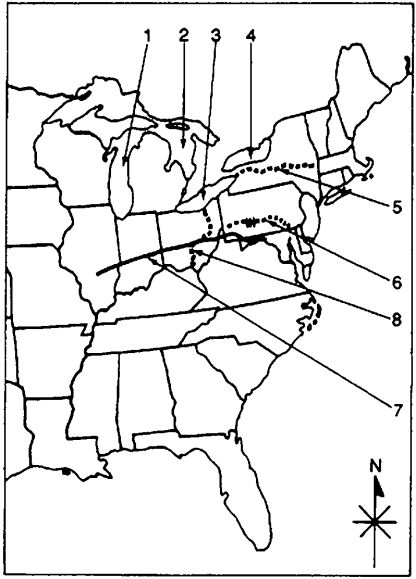
____ Erie Canal
Locate the following places by reference number on the map:
____ Erie Canal
Question
COMPLETION
Locate the following places by reference number on the map:
____ Lake Michigan
Locate the following places by reference number on the map:
____ Lake Michigan
Question
Question
Question
Question
Question
Question
Question
Question
COMPLETION
Locate the following places by reference number on the map:
____ Pennsylvania Canal
Locate the following places by reference number on the map:
____ Pennsylvania Canal
Question
Question
Question
Question
Question
Question
Question
Question
Question
Question
COMPLETION
Locate the following places by reference number on the map:
____ Ohio and Erie Canal
Locate the following places by reference number on the map:
____ Ohio and Erie Canal
Question
Question
Question
Question
Question
Question
COMPLETION
Locate the following places by reference number on the map:
____ Lake Erie
Locate the following places by reference number on the map:
____ Lake Erie
Question
Question
Question
Question
Question
Question
COMPLETION
Locate the following places by reference number on the map:
____ Lake Huron
Locate the following places by reference number on the map:
____ Lake Huron
Question
COMPLETION
Locate the following places by reference number on the map:
____ Cumberland Road
Locate the following places by reference number on the map:
____ Cumberland Road
Question
COMPLETION
Locate the following places by reference number on the map:
____ Lake Ontario
Locate the following places by reference number on the map:
____ Lake Ontario
Question
Question
Question
Question
Question
Match each individual below with the correct invention. 
A) A-3, B-1, C-4, D-2
B) A-1, B-2, C-4, D-3
C) A-1, B-4, C-2, D-3
D) A-4, B-2, C-3, D-1
E) A-2, B-1, C-4, D-3
A) A-3, B-1, C-4, D-2
B) A-1, B-2, C-4, D-3
C) A-1, B-4, C-2, D-3
D) A-4, B-2, C-3, D-1
E) A-2, B-1, C-4, D-3
Question
Question
Question
Question
Question
Question
Question
Question
Question
Question
Question
Question
Question
Question
Question
Question
Question
Question
Question

Unlock Deck
Sign up to unlock the cards in this deck!
Unlock Deck
Unlock Deck
1/133

Play

Full screen (f)
Deck 14: Forging the National Economy,1790-1860
1
Identify and state the historical significance of the following:
domestic feminism
domestic feminism
Student answers will vary.
2
Identify and state the historical significance of the following:
Carl Schurz
Carl Schurz
Student answers will vary.
3
Identify and state the historical significance of the following:
ecological imperialism
ecological imperialism
Student answers will vary.
4
Identify and state the historical significance of the following:
cult of domesticity
cult of domesticity
Unlock Deck
Unlock for access to all 133 flashcards in this deck.
Unlock Deck
k this deck
5
Identify and state the historical significance of the following:
Samuel F.B.Morse
Samuel F.B.Morse
Unlock Deck
Unlock for access to all 133 flashcards in this deck.
Unlock Deck
k this deck
6
Identify and state the historical significance of the following:
limited liability
limited liability
Unlock Deck
Unlock for access to all 133 flashcards in this deck.
Unlock Deck
k this deck
7
Identify and state the historical significance of the following:
market revolution
market revolution
Unlock Deck
Unlock for access to all 133 flashcards in this deck.
Unlock Deck
k this deck
8
Identify and state the historical significance of the following:
DeWitt Clinton
DeWitt Clinton
Unlock Deck
Unlock for access to all 133 flashcards in this deck.
Unlock Deck
k this deck
9
Identify and state the historical significance of the following:
nativism
nativism
Unlock Deck
Unlock for access to all 133 flashcards in this deck.
Unlock Deck
k this deck
10
Identify and state the historical significance of the following:
transportation revolution
transportation revolution
Unlock Deck
Unlock for access to all 133 flashcards in this deck.
Unlock Deck
k this deck
11
Identify and state the historical significance of the following:
homesteaders
homesteaders
Unlock Deck
Unlock for access to all 133 flashcards in this deck.
Unlock Deck
k this deck
12
Identify and state the historical significance of the following:
Cyrus McCormick
Cyrus McCormick
Unlock Deck
Unlock for access to all 133 flashcards in this deck.
Unlock Deck
k this deck
13
Identify and state the historical significance of the following:
factory system
factory system
Unlock Deck
Unlock for access to all 133 flashcards in this deck.
Unlock Deck
k this deck
14
Identify and state the historical significance of the following:
George Catlin
George Catlin
Unlock Deck
Unlock for access to all 133 flashcards in this deck.
Unlock Deck
k this deck
15
Identify and state the historical significance of the following:
Samuel Slater
Samuel Slater
Unlock Deck
Unlock for access to all 133 flashcards in this deck.
Unlock Deck
k this deck
16
Identify and state the historical significance of the following:
industrial revolution
industrial revolution
Unlock Deck
Unlock for access to all 133 flashcards in this deck.
Unlock Deck
k this deck
17
Identify and state the historical significance of the following:
Eli Whitney
Eli Whitney
Unlock Deck
Unlock for access to all 133 flashcards in this deck.
Unlock Deck
k this deck
18
Identify and state the historical significance of the following:
scabs
scabs
Unlock Deck
Unlock for access to all 133 flashcards in this deck.
Unlock Deck
k this deck
19
Identify and state the historical significance of the following:
Robert Fulton
Robert Fulton
Unlock Deck
Unlock for access to all 133 flashcards in this deck.
Unlock Deck
k this deck
20
Identify and state the historical significance of the following:
Catharine Beecher
Catharine Beecher
Unlock Deck
Unlock for access to all 133 flashcards in this deck.
Unlock Deck
k this deck
21
Identify and state the historical significance of the following:
rugged individualism
rugged individualism
Unlock Deck
Unlock for access to all 133 flashcards in this deck.
Unlock Deck
k this deck
22
Identify and state the historical significance of the following:
cotton gin
cotton gin
Unlock Deck
Unlock for access to all 133 flashcards in this deck.
Unlock Deck
k this deck
23
COMPLETION
Locate the following places by reference number on the map:
____ Erie Canal
Locate the following places by reference number on the map:
____ Erie Canal
Unlock Deck
Unlock for access to all 133 flashcards in this deck.
Unlock Deck
k this deck
24
COMPLETION
Locate the following places by reference number on the map:
____ Lake Michigan
Locate the following places by reference number on the map:
____ Lake Michigan
Unlock Deck
Unlock for access to all 133 flashcards in this deck.
Unlock Deck
k this deck
25
Identify and state the historical significance of the following:
Know Nothing Party
Know Nothing Party
Unlock Deck
Unlock for access to all 133 flashcards in this deck.
Unlock Deck
k this deck
26
Identify and state the historical significance of the following:
sewing machine
sewing machine
Unlock Deck
Unlock for access to all 133 flashcards in this deck.
Unlock Deck
k this deck
27
Identify and state the historical significance of the following:
interchangeable parts
interchangeable parts
Unlock Deck
Unlock for access to all 133 flashcards in this deck.
Unlock Deck
k this deck
28
Identify and state the historical significance of the following:
Kentucky bluegrass
Kentucky bluegrass
Unlock Deck
Unlock for access to all 133 flashcards in this deck.
Unlock Deck
k this deck
29
Identify and state the historical significance of the following:
"twisting the lion's tail"
"twisting the lion's tail"
Unlock Deck
Unlock for access to all 133 flashcards in this deck.
Unlock Deck
k this deck
30
Identify and state the historical significance of the following:
Commonwealth v.Hunt
Commonwealth v.Hunt
Unlock Deck
Unlock for access to all 133 flashcards in this deck.
Unlock Deck
k this deck
31
Identify and state the historical significance of the following:
clipper ships
clipper ships
Unlock Deck
Unlock for access to all 133 flashcards in this deck.
Unlock Deck
k this deck
32
COMPLETION
Locate the following places by reference number on the map:
____ Pennsylvania Canal
Locate the following places by reference number on the map:
____ Pennsylvania Canal
Unlock Deck
Unlock for access to all 133 flashcards in this deck.
Unlock Deck
k this deck
33
Identify and state the historical significance of the following:
Tammany Hall
Tammany Hall
Unlock Deck
Unlock for access to all 133 flashcards in this deck.
Unlock Deck
k this deck
34
Identify and state the historical significance of the following:
Order of the Star-Spangled Banner
Order of the Star-Spangled Banner
Unlock Deck
Unlock for access to all 133 flashcards in this deck.
Unlock Deck
k this deck
35
Identify and state the historical significance of the following:
General Incorporation Law
General Incorporation Law
Unlock Deck
Unlock for access to all 133 flashcards in this deck.
Unlock Deck
k this deck
36
Identify and state the historical significance of the following:
Pony Express
Pony Express
Unlock Deck
Unlock for access to all 133 flashcards in this deck.
Unlock Deck
k this deck
37
Identify and state the historical significance of the following:
Clermont
Clermont
Unlock Deck
Unlock for access to all 133 flashcards in this deck.
Unlock Deck
k this deck
38
Identify and state the historical significance of the following:
Boston Associates
Boston Associates
Unlock Deck
Unlock for access to all 133 flashcards in this deck.
Unlock Deck
k this deck
39
Identify and state the historical significance of the following:
Ancient Order of Hibernians
Ancient Order of Hibernians
Unlock Deck
Unlock for access to all 133 flashcards in this deck.
Unlock Deck
k this deck
40
Identify and state the historical significance of the following:
"Molly Maguires"
"Molly Maguires"
Unlock Deck
Unlock for access to all 133 flashcards in this deck.
Unlock Deck
k this deck
41
When the Irish flocked to the United States in the 1840s,they stayed in the larger seaboard cities because they
A) preferred urban life.
B) were offered high-paying jobs.
C) were welcomed by the people living there.
D) were too poor to move west and buy land.
E) had experience in urban politics.
A) preferred urban life.
B) were offered high-paying jobs.
C) were welcomed by the people living there.
D) were too poor to move west and buy land.
E) had experience in urban politics.
Unlock Deck
Unlock for access to all 133 flashcards in this deck.
Unlock Deck
k this deck
42
COMPLETION
Locate the following places by reference number on the map:
____ Ohio and Erie Canal
Locate the following places by reference number on the map:
____ Ohio and Erie Canal
Unlock Deck
Unlock for access to all 133 flashcards in this deck.
Unlock Deck
k this deck
43
The influx of immigrants to the United States tripled,then quadrupled,in the
A) 1810s and 1820s.
B) 1820s and 1830s.
C) 1830s and 1840s.
D) 1840s and 1850s.
E) 1860s and 1870s.
A) 1810s and 1820s.
B) 1820s and 1830s.
C) 1830s and 1840s.
D) 1840s and 1850s.
E) 1860s and 1870s.
Unlock Deck
Unlock for access to all 133 flashcards in this deck.
Unlock Deck
k this deck
44
Life on the frontier was
A) fairly comfortable for women but not for men.
B) downright grim for most pioneer families.
C) free of disease and premature death.
D) rarely portrayed in popular literature.
E) based on tight-knit communities.
A) fairly comfortable for women but not for men.
B) downright grim for most pioneer families.
C) free of disease and premature death.
D) rarely portrayed in popular literature.
E) based on tight-knit communities.
Unlock Deck
Unlock for access to all 133 flashcards in this deck.
Unlock Deck
k this deck
45
All of the following gave rise to a more dynamic,market-oriented,national economy in early nineteenth-century America except
A) the push west in search of cheap land.
B) government regulation of all major economic activity.
C) a vast number of European immigrants settling in the cities.
D) newly invented machinery.
E) better roads, faster steamboats, further-reaching canals, and tentacle-stretching railroads.
A) the push west in search of cheap land.
B) government regulation of all major economic activity.
C) a vast number of European immigrants settling in the cities.
D) newly invented machinery.
E) better roads, faster steamboats, further-reaching canals, and tentacle-stretching railroads.
Unlock Deck
Unlock for access to all 133 flashcards in this deck.
Unlock Deck
k this deck
46
German immigrants in the early nineteenth century tended to
A) settle in eastern industrial cities.
B) assimilate themselves well into American culture.
C) become slave-owners.
D) join the temperance movement.
E) preserve their own language and culture.
A) settle in eastern industrial cities.
B) assimilate themselves well into American culture.
C) become slave-owners.
D) join the temperance movement.
E) preserve their own language and culture.
Unlock Deck
Unlock for access to all 133 flashcards in this deck.
Unlock Deck
k this deck
47
The overwhelming event for Ireland in the 1840s was
A) the rebellion against British rule and potato famine.
B) influx of immigrants from mostly Eastern European countries.
C) the legalization of the Roman Catholic Church.
D) the migration from the countryside to the city.
E) the increasing use of English instead of Gaelic.
A) the rebellion against British rule and potato famine.
B) influx of immigrants from mostly Eastern European countries.
C) the legalization of the Roman Catholic Church.
D) the migration from the countryside to the city.
E) the increasing use of English instead of Gaelic.
Unlock Deck
Unlock for access to all 133 flashcards in this deck.
Unlock Deck
k this deck
48
COMPLETION
Locate the following places by reference number on the map:
____ Lake Erie
Locate the following places by reference number on the map:
____ Lake Erie
Unlock Deck
Unlock for access to all 133 flashcards in this deck.
Unlock Deck
k this deck
49
Ireland's great export in the 1840s was
A) people.
B) potatoes.
C) wool.
D) whiskey.
E) music.
A) people.
B) potatoes.
C) wool.
D) whiskey.
E) music.
Unlock Deck
Unlock for access to all 133 flashcards in this deck.
Unlock Deck
k this deck
50
For women,life on the frontier was especially difficult because they
A) were more susceptible to disease and premature death than men.
B) experienced extreme loneliness, and could go weeks without seeing another person.
C) had to live in three-sided lean-to homes made of sticks.
D) were required to help clear the land and do the housework.
E) None of these
A) were more susceptible to disease and premature death than men.
B) experienced extreme loneliness, and could go weeks without seeing another person.
C) had to live in three-sided lean-to homes made of sticks.
D) were required to help clear the land and do the housework.
E) None of these
Unlock Deck
Unlock for access to all 133 flashcards in this deck.
Unlock Deck
k this deck
51
George Catlin advocated
A) placing Indians on reservations.
B) efforts to protect America's endangered species.
C) continuing the rendezvous system.
D) keeping white settlers out of the West.
E) the preservation of nature as a national policy.
A) placing Indians on reservations.
B) efforts to protect America's endangered species.
C) continuing the rendezvous system.
D) keeping white settlers out of the West.
E) the preservation of nature as a national policy.
Unlock Deck
Unlock for access to all 133 flashcards in this deck.
Unlock Deck
k this deck
52
Pioneering Americans marooned by geography
A) never took the time to explore the beauty of the natural landscape.
B) grew to depend on other people for most of their basic needs.
C) abandoned the rugged individualism of colonial Americans.
D) never looked for any help beyond their immediate family.
E) were often ill informed, superstitious, provincial, and fiercely individualistic.
A) never took the time to explore the beauty of the natural landscape.
B) grew to depend on other people for most of their basic needs.
C) abandoned the rugged individualism of colonial Americans.
D) never looked for any help beyond their immediate family.
E) were often ill informed, superstitious, provincial, and fiercely individualistic.
Unlock Deck
Unlock for access to all 133 flashcards in this deck.
Unlock Deck
k this deck
53
Ecological imperialism can best be described as
A) the efforts of white settlers to take land from Native Americans.
B) the aggressive exploitation of the West's bounty.
C) humans' domination over the animal kingdom.
D) the spread of technology and industry.
E) the practice of using spectacular natural settings as symbols of America.
A) the efforts of white settlers to take land from Native Americans.
B) the aggressive exploitation of the West's bounty.
C) humans' domination over the animal kingdom.
D) the spread of technology and industry.
E) the practice of using spectacular natural settings as symbols of America.
Unlock Deck
Unlock for access to all 133 flashcards in this deck.
Unlock Deck
k this deck
54
COMPLETION
Locate the following places by reference number on the map:
____ Lake Huron
Locate the following places by reference number on the map:
____ Lake Huron
Unlock Deck
Unlock for access to all 133 flashcards in this deck.
Unlock Deck
k this deck
55
COMPLETION
Locate the following places by reference number on the map:
____ Cumberland Road
Locate the following places by reference number on the map:
____ Cumberland Road
Unlock Deck
Unlock for access to all 133 flashcards in this deck.
Unlock Deck
k this deck
56
COMPLETION
Locate the following places by reference number on the map:
____ Lake Ontario
Locate the following places by reference number on the map:
____ Lake Ontario
Unlock Deck
Unlock for access to all 133 flashcards in this deck.
Unlock Deck
k this deck
57
The dramatic growth of American cities between 1800 and 1860
A) led to a lower death rate.
B) contributed to a decline in the birthrate.
C) resulted in unsanitary conditions in many communities.
D) forced the federal government to slow immigration.
E) created sharp political conflict between farmers and urbanites.
A) led to a lower death rate.
B) contributed to a decline in the birthrate.
C) resulted in unsanitary conditions in many communities.
D) forced the federal government to slow immigration.
E) created sharp political conflict between farmers and urbanites.
Unlock Deck
Unlock for access to all 133 flashcards in this deck.
Unlock Deck
k this deck
58
Native-born Protestant Americans distrusted and resented the Irish mostly because these immigrants
A) were poor.
B) were thought to love alcohol.
C) were Roman Catholic.
D) frequently became police officers.
E) were slow to learn English.
A) were poor.
B) were thought to love alcohol.
C) were Roman Catholic.
D) frequently became police officers.
E) were slow to learn English.
Unlock Deck
Unlock for access to all 133 flashcards in this deck.
Unlock Deck
k this deck
59
Whether they were propertied or landless,immigrants were often enticed to leave their homelands by
A) letters from family or friends in the U.S., bragging about easy opportunities for wealth
B) advertisements from companies promising big salaries to those who emigrate.
C) greater prospects of finding a suitable husband or wife.
D) word that there was free land available in the West.
E) None of these
A) letters from family or friends in the U.S., bragging about easy opportunities for wealth
B) advertisements from companies promising big salaries to those who emigrate.
C) greater prospects of finding a suitable husband or wife.
D) word that there was free land available in the West.
E) None of these
Unlock Deck
Unlock for access to all 133 flashcards in this deck.
Unlock Deck
k this deck
60
In early-nineteenth-century America,the
A) annual population growth rate was much higher than in colonial days.
B) urban population was growing at an unprecedented rate.
C) birthrate was rapidly declining.
D) death rate was increasing.
E) center of population moved northward.
A) annual population growth rate was much higher than in colonial days.
B) urban population was growing at an unprecedented rate.
C) birthrate was rapidly declining.
D) death rate was increasing.
E) center of population moved northward.
Unlock Deck
Unlock for access to all 133 flashcards in this deck.
Unlock Deck
k this deck
61
Match each individual below with the correct invention.
A) A-3, B-1, C-4, D-2
B) A-1, B-2, C-4, D-3
C) A-1, B-4, C-2, D-3
D) A-4, B-2, C-3, D-1
E) A-2, B-1, C-4, D-3
A) A-3, B-1, C-4, D-2
B) A-1, B-2, C-4, D-3
C) A-1, B-4, C-2, D-3
D) A-4, B-2, C-3, D-1
E) A-2, B-1, C-4, D-3
Unlock Deck
Unlock for access to all 133 flashcards in this deck.
Unlock Deck
k this deck
62
Eli Whitney was instrumental in the invention of the
A) steamboat.
B) cotton gin.
C) railroad locomotive.
D) telegraph.
E) repeating revolver.
A) steamboat.
B) cotton gin.
C) railroad locomotive.
D) telegraph.
E) repeating revolver.
Unlock Deck
Unlock for access to all 133 flashcards in this deck.
Unlock Deck
k this deck
63
The early factory system distributed its benefits
A) mostly to the owners.
B) evenly to all.
C) primarily in the South.
D) to workers represented by unions.
E) to overseas investors.
A) mostly to the owners.
B) evenly to all.
C) primarily in the South.
D) to workers represented by unions.
E) to overseas investors.
Unlock Deck
Unlock for access to all 133 flashcards in this deck.
Unlock Deck
k this deck
64
All of the following are true statements about German immigrants except
A) they typically settled in Northeast coastal cities.
B) they tended to be better educated than mainstream Americans.
C) they supported public schools, the arts, and music.
D) they championed freedom and fought to end slavery.
E) they settled in compact colonies to preserve their language and culture.
A) they typically settled in Northeast coastal cities.
B) they tended to be better educated than mainstream Americans.
C) they supported public schools, the arts, and music.
D) they championed freedom and fought to end slavery.
E) they settled in compact colonies to preserve their language and culture.
Unlock Deck
Unlock for access to all 133 flashcards in this deck.
Unlock Deck
k this deck
65
The underlying basis for modern mass production was
A) unionized labor.
B) Supreme Court rulings that favored laissez-faire.
C) the use of interchangeable parts.
D) the principle of limited liability.
E) the passing of protective tariffs.
A) unionized labor.
B) Supreme Court rulings that favored laissez-faire.
C) the use of interchangeable parts.
D) the principle of limited liability.
E) the passing of protective tariffs.
Unlock Deck
Unlock for access to all 133 flashcards in this deck.
Unlock Deck
k this deck
66
Identify the following statement that is false.
A) Land was cheap in America; this helped fuel the immigration flux.
B) Money for capital investment was not plentiful in pioneering America.
C) Foreign capital was dependent upon security in property rights, sufficient infrastructure, an adequate work force, and political stability.
D) Even though capital was lacking, raw materials were widely developed and discovered in America.
E) The country had a difficult time producing goods of high quality and cheap cost to compete with mass-produced European products.
A) Land was cheap in America; this helped fuel the immigration flux.
B) Money for capital investment was not plentiful in pioneering America.
C) Foreign capital was dependent upon security in property rights, sufficient infrastructure, an adequate work force, and political stability.
D) Even though capital was lacking, raw materials were widely developed and discovered in America.
E) The country had a difficult time producing goods of high quality and cheap cost to compete with mass-produced European products.
Unlock Deck
Unlock for access to all 133 flashcards in this deck.
Unlock Deck
k this deck
67
All of the following are true statements about the relationship between Irish immigrants and U.S.citizens except
A) the Irish were seen as wage-depressing competitors for jobs.
B) native workers hated the Irish.
C) the Irish often saw signs on factory gates that said "No Irish Need Apply."
D) race riots between blacks and Irish were common.
E) Irish immigrants became fiercely supportive of the abolitionist cause.
A) the Irish were seen as wage-depressing competitors for jobs.
B) native workers hated the Irish.
C) the Irish often saw signs on factory gates that said "No Irish Need Apply."
D) race riots between blacks and Irish were common.
E) Irish immigrants became fiercely supportive of the abolitionist cause.
Unlock Deck
Unlock for access to all 133 flashcards in this deck.
Unlock Deck
k this deck
68
Most of the cotton produced in the American South after the invention of the cotton gin was
A) produced by free labor.
B) sold to England.
C) grown on the tidewater plains.
D) consumed by the southern textile industry.
E) of the long-staple variety.
A) produced by free labor.
B) sold to England.
C) grown on the tidewater plains.
D) consumed by the southern textile industry.
E) of the long-staple variety.
Unlock Deck
Unlock for access to all 133 flashcards in this deck.
Unlock Deck
k this deck
69
When German immigrants came to the United States,they
A) often became Baptist or Methodists.
B) mixed well with other Americans.
C) remained mostly in the Northeast.
D) prospered with astonishing ease.
E) dropped most of their German customs.
A) often became Baptist or Methodists.
B) mixed well with other Americans.
C) remained mostly in the Northeast.
D) prospered with astonishing ease.
E) dropped most of their German customs.
Unlock Deck
Unlock for access to all 133 flashcards in this deck.
Unlock Deck
k this deck
70
Immigrants coming to the United States before 1860
A) depressed the economy due to their poverty.
B) found themselves involved in few cultural conflicts.
C) had little impact on society until after the Civil War.
D) settled mostly in the South.
E) helped to fuel economic expansion.
A) depressed the economy due to their poverty.
B) found themselves involved in few cultural conflicts.
C) had little impact on society until after the Civil War.
D) settled mostly in the South.
E) helped to fuel economic expansion.
Unlock Deck
Unlock for access to all 133 flashcards in this deck.
Unlock Deck
k this deck
71
Between 1830 and 1860,nearly ____ million Irish arrived in America.
A) 1
B) 2
C) 5
D) 8
E) 10
A) 1
B) 2
C) 5
D) 8
E) 10
Unlock Deck
Unlock for access to all 133 flashcards in this deck.
Unlock Deck
k this deck
72
Irish immigrants typically worked in all of the following occupations except
A) domestic servants.
B) construction workers.
C) day laborers.
D) silversmiths.
E) saloon owners.
A) domestic servants.
B) construction workers.
C) day laborers.
D) silversmiths.
E) saloon owners.
Unlock Deck
Unlock for access to all 133 flashcards in this deck.
Unlock Deck
k this deck
73
As a result of the development of the cotton gin
A) slavery revived and expanded.
B) American industry bought more southern cotton than did British manufacturers.
C) a nationwide depression ensued.
D) the South diversified its economy.
E) the textile industry moved to the South.
A) slavery revived and expanded.
B) American industry bought more southern cotton than did British manufacturers.
C) a nationwide depression ensued.
D) the South diversified its economy.
E) the textile industry moved to the South.
Unlock Deck
Unlock for access to all 133 flashcards in this deck.
Unlock Deck
k this deck
74
The sentiment of fear and opposition to open immigration was called
A) the cult of domesticity.
B) nativism.
C) racism.
D) rugged individualism.
E) patriotism.
A) the cult of domesticity.
B) nativism.
C) racism.
D) rugged individualism.
E) patriotism.
Unlock Deck
Unlock for access to all 133 flashcards in this deck.
Unlock Deck
k this deck
75
The "Father of the Factory System" in the United States was
A) Robert Fulton.
B) Samuel F. B. Morse.
C) Eli Whitney.
D) Samuel Slater.
E) Thomas Edison.
A) Robert Fulton.
B) Samuel F. B. Morse.
C) Eli Whitney.
D) Samuel Slater.
E) Thomas Edison.
Unlock Deck
Unlock for access to all 133 flashcards in this deck.
Unlock Deck
k this deck
76
A great deal of the cotton produced in the American South in the early nineteenth century was
A) produced by free labor.
B) sold to New England textile mills.
C) grown on the Atlantic tidewater plains.
D) consumed by the southern textile industry.
E) combined with wool to make linsey-woolsey fabrics.
A) produced by free labor.
B) sold to New England textile mills.
C) grown on the Atlantic tidewater plains.
D) consumed by the southern textile industry.
E) combined with wool to make linsey-woolsey fabrics.
Unlock Deck
Unlock for access to all 133 flashcards in this deck.
Unlock Deck
k this deck
77
Native-born Americans feared that Catholic immigrants to the United States would
A) want to attend school with Protestants.
B) overwhelm the native-born Catholics and control the church.
C) establish the Catholic Church at the expense of Protestantism.
D) assume control of the Know-Nothing party.
E) establish monasteries and convents in the West.
A) want to attend school with Protestants.
B) overwhelm the native-born Catholics and control the church.
C) establish the Catholic Church at the expense of Protestantism.
D) assume control of the Know-Nothing party.
E) establish monasteries and convents in the West.
Unlock Deck
Unlock for access to all 133 flashcards in this deck.
Unlock Deck
k this deck
78
Those who were frightened by the rapid influx of Irish immigrants organized
A) the Order of the Star-Spangled Banner.
B) the "Molly Maguires."
C) Tammany Hall.
D) the Ancient Order of Hibernians.
E) the Ku Klux Klan.
A) the Order of the Star-Spangled Banner.
B) the "Molly Maguires."
C) Tammany Hall.
D) the Ancient Order of Hibernians.
E) the Ku Klux Klan.
Unlock Deck
Unlock for access to all 133 flashcards in this deck.
Unlock Deck
k this deck
79
The American phase of the industrial revolution first blossomed
A) on southern plantations.
B) in the New England textile industry.
C) in rapidly growing Chicago.
D) in railroads and ship building.
E) in coal and iron mining regions.
A) on southern plantations.
B) in the New England textile industry.
C) in rapidly growing Chicago.
D) in railroads and ship building.
E) in coal and iron mining regions.
Unlock Deck
Unlock for access to all 133 flashcards in this deck.
Unlock Deck
k this deck
80
German immigrants to the United States
A) quickly became a powerful political force.
B) came to escape economic hardships and autocratic government.
C) were as poor as the Irish.
D) contributed little to American life.
E) were almost all Roman Catholics.
A) quickly became a powerful political force.
B) came to escape economic hardships and autocratic government.
C) were as poor as the Irish.
D) contributed little to American life.
E) were almost all Roman Catholics.
Unlock Deck
Unlock for access to all 133 flashcards in this deck.
Unlock Deck
k this deck
Unlock Deck
Unlock for access to all 133 flashcards in this deck.







