





 Chat with AI

Deck 8: Assessing the Skin, Hair, and Nails
Full screen (f)

Question

Question
Question
Question
Question
Question
Question
Question
Question
Question
Question
Question
Question
Question
Question
Question
Question
Question
Question
Question
Question
Question
Question
Question
Question
Question
Question
Question
Question
Question
Question
Question
Question
Question
Question
Question
Question
Question
Question
Question
Question
Question
Question
Question
Question
Question
Question
Question
Question
Question
Question
Question
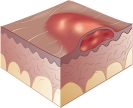 A college student comes to Student Health Services stating that he thinks he is having an allergic reaction. He states that these lesions are itchy and getting worse. You inspect his skin and see the skin lesion in the accompanying figure. This lesion is called a ____________________.
 Question
 The patient reports that he has been under a lot of stress since he lost his job last month. He wants the health-care provider to look at the above lesions that are on his bottom lip. The configuration of the lesions in the picture is ____________________.
 Question
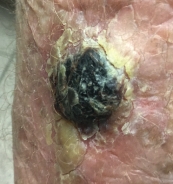 A patient is at his dermatologist's office to have a skin lesion on his face evaluated. The health-care provider tells that patient that she is going to do a biopsy to rule out ___________________ cell carcinoma, a malignant cutaneous malignancy arising from keratinocytes of the skin.
 Question

Unlock Deck
Sign up to unlock the cards in this deck!
Unlock Deck
Unlock Deck
1/55

Play

Full screen (f)
Deck 8: Assessing the Skin, Hair, and Nails
1
The layer of the skin that adds strength and elasticity, and gives individuals the ability to feel is the:
A) Epidermis.
B) Dermis.
C) Subcutaneous.
D) Stratum corneum.
A) Epidermis.
B) Dermis.
C) Subcutaneous.
D) Stratum corneum.
Dermis.
2
A decrease in the number of functioning melanocytes results in:
A) Melanomas.
B) Thinning of the skin.
C) Graying of hair.
D) Darkening of the skin.
A) Melanomas.
B) Thinning of the skin.
C) Graying of hair.
D) Darkening of the skin.
Graying of hair.
3
The pink color of the nail beds is due to:
A) Pigment from melanocytes.
B) Vascularity of epithelial cells.
C) Genetic predisposition.
D) Inflammation of the epidermis.
A) Pigment from melanocytes.
B) Vascularity of epithelial cells.
C) Genetic predisposition.
D) Inflammation of the epidermis.
Vascularity of epithelial cells.
4
Apocrine sweat glands differ from eccrine sweat glands in that they:
A) Produce body odor when reacting to bacterial decomposition.
B) Decrease in response to emotional stress.
C) Maintain body temperature.
D) Are located only on the palms, soles, and forehead.
A) Produce body odor when reacting to bacterial decomposition.
B) Decrease in response to emotional stress.
C) Maintain body temperature.
D) Are located only on the palms, soles, and forehead.
Unlock Deck
Unlock for access to all 55 flashcards in this deck.
Unlock Deck
k this deck
5
During your assessment of a 17-year-old female, you determine that she uses tanning beds on a regular basis. You should inform her that:
A) Tanning beds should not be used by persons under 18 years of age.
B) Tanning beds increase the risk of melanoma by 75%.
C) Tanning beds are less dangerous than sun exposure.
D) 1 and 2
E) 1, 2, and 3
A) Tanning beds should not be used by persons under 18 years of age.
B) Tanning beds increase the risk of melanoma by 75%.
C) Tanning beds are less dangerous than sun exposure.
D) 1 and 2
E) 1, 2, and 3
Unlock Deck
Unlock for access to all 55 flashcards in this deck.
Unlock Deck
k this deck
6
Keloid formation is commonly seen in:
A) Overexposure to the sun.
B) Allergic reactions.
C) Dark-skinned individuals.
D) Individuals with poor skin hygiene.
A) Overexposure to the sun.
B) Allergic reactions.
C) Dark-skinned individuals.
D) Individuals with poor skin hygiene.
Unlock Deck
Unlock for access to all 55 flashcards in this deck.
Unlock Deck
k this deck
7
The nurse pinches the patient's skin over the clavicle between two fingers and lets it go. The skin remains tented and slowly returns to the flat position. The nurse knows this is a sign of:
A) Dehydration.
B) A large amount of recent weight gain.
C) Inflammation.
D) Poor peripheral circulation.
A) Dehydration.
B) A large amount of recent weight gain.
C) Inflammation.
D) Poor peripheral circulation.
Unlock Deck
Unlock for access to all 55 flashcards in this deck.
Unlock Deck
k this deck
8
The nurse assesses excessive moisture of the skin, called hyperhidrosis, which can indicate a(n):
A) Cardiac condition.
B) Endocrine disorder.
C) Renal disorder.
D) Neurological condition.
A) Cardiac condition.
B) Endocrine disorder.
C) Renal disorder.
D) Neurological condition.
Unlock Deck
Unlock for access to all 55 flashcards in this deck.
Unlock Deck
k this deck
9
A bruise caused by bleeding under the skin or mucous membranes after a local trauma is called:
A) Ecchymosis.
B) Hematoma.
C) Purpura.
D) Petechiae.
A) Ecchymosis.
B) Hematoma.
C) Purpura.
D) Petechiae.
Unlock Deck
Unlock for access to all 55 flashcards in this deck.
Unlock Deck
k this deck
10
The most common form of cutaneous malignancy is:
A) Malignant melanoma.
B) Squamous cell carcinoma.
C) Basal cell carcinoma.
D) Skin cancer.
A) Malignant melanoma.
B) Squamous cell carcinoma.
C) Basal cell carcinoma.
D) Skin cancer.
Unlock Deck
Unlock for access to all 55 flashcards in this deck.
Unlock Deck
k this deck
11
If lice are found during an inspection of the hair, the best way to pick them up is with a:
A) Hemostat.
B) Tongue blade.
C) Piece of clear tape.
D) Gloved hand.
A) Hemostat.
B) Tongue blade.
C) Piece of clear tape.
D) Gloved hand.
Unlock Deck
Unlock for access to all 55 flashcards in this deck.
Unlock Deck
k this deck
12
An inflammation of a hair follicle with white pustules is called:
A) Alopecia.
B) Folliculitis.
C) Seborrhea dermatitis.
D) Tinea capitis.
A) Alopecia.
B) Folliculitis.
C) Seborrhea dermatitis.
D) Tinea capitis.
Unlock Deck
Unlock for access to all 55 flashcards in this deck.
Unlock Deck
k this deck
13
While assessing the patient's fingernails, the nurse notices a thickening, yellow discoloration and scaling of the nail bed. The nurse would suspect:
A) Onychomycosis.
B) Paronychia.
C) Spoon nails.
D) Pitting.
A) Onychomycosis.
B) Paronychia.
C) Spoon nails.
D) Pitting.
Unlock Deck
Unlock for access to all 55 flashcards in this deck.
Unlock Deck
k this deck
14
The nurse is assessing a wound on a patient's buttocks. The wound depth would be measured with a:
A) Tape measure.
B) Sterile cotton-tipped applicator.
C) Gloved finger.
D) Sterile hemostat.
A) Tape measure.
B) Sterile cotton-tipped applicator.
C) Gloved finger.
D) Sterile hemostat.
Unlock Deck
Unlock for access to all 55 flashcards in this deck.
Unlock Deck
k this deck
15
While assessing a pressure ulcer, the nurse notes that the exudate is light red or pink in color. The term for correct documentation of this exudate is:
A) Serous.
B) Serosanguineous.
C) Sanguinous.
D) Purulent.
A) Serous.
B) Serosanguineous.
C) Sanguinous.
D) Purulent.
Unlock Deck
Unlock for access to all 55 flashcards in this deck.
Unlock Deck
k this deck
16
When changing a dressing on a pressure ulcer, the nurse notes maceration around the area and teaches the patient and his family that this is caused by a dressing that is:
A) Dry.
B) Left on too long.
C) Not covering the wound adequately.
D) Taped too tightly.
A) Dry.
B) Left on too long.
C) Not covering the wound adequately.
D) Taped too tightly.
Unlock Deck
Unlock for access to all 55 flashcards in this deck.
Unlock Deck
k this deck
17
A patient comes to the health-care provider's office complaining of a red, raised rash. The nurse assesses lesions distributed over the entire body and documents this distribution as:
A) Localized.
B) Scattered.
C) Regional.
D) Diffuse/generalized.
A) Localized.
B) Scattered.
C) Regional.
D) Diffuse/generalized.
Unlock Deck
Unlock for access to all 55 flashcards in this deck.
Unlock Deck
k this deck
18
During an assessment, the nurse notices a lesion on the patient's leg that is round with central clearing. This would be documented as a(n):
A) Discrete lesion.
B) Confluent lesion.
C) Iris lesion.
D) Circular lesion.
A) Discrete lesion.
B) Confluent lesion.
C) Iris lesion.
D) Circular lesion.
Unlock Deck
Unlock for access to all 55 flashcards in this deck.
Unlock Deck
k this deck
19
Moles (nevi) are examples of which type of lesion pattern?
A) Round/oval
B) Discrete
C) Linear
D) Reticula
A) Round/oval
B) Discrete
C) Linear
D) Reticula
Unlock Deck
Unlock for access to all 55 flashcards in this deck.
Unlock Deck
k this deck
20
The patient in the emergency room is assessed as having scrapes of the superficial layers of the skin of his arms and legs following a motorcycle accident. This would be documented as:
A) Contusions.
B) Lacerations.
C) Abscesses.
D) Abrasions.
A) Contusions.
B) Lacerations.
C) Abscesses.
D) Abrasions.
Unlock Deck
Unlock for access to all 55 flashcards in this deck.
Unlock Deck
k this deck
21
A child presents at the urgent care center after falling through a glass window. A large shard of glass is still lodged in his leg. This type of wound would be documented as a:
A) Puncture wound.
B) Penetrating wound.
C) Tunnel wound.
D) Crushing wound.
A) Puncture wound.
B) Penetrating wound.
C) Tunnel wound.
D) Crushing wound.
Unlock Deck
Unlock for access to all 55 flashcards in this deck.
Unlock Deck
k this deck
22
Upon admission, the patient is assessed using the Braden Scale for Predicting Pressure Sore Risk. The patient responds to verbal commands, but cannot communicate discomfort or the need to be turned. His skin is moist, requiring extra linen changes daily. His ability to walk is severely limited and he must be assisted into a wheelchair. He requires maximum assistance in moving and frequently slides down in bed. When in bed, he makes occasional slight changes in body or extremity positions. He eats over half of most meals, including at least four servings of meat and dairy products. His Braden Scale Score is 14 and translates to:
A) No risk.
B) Low risk.
C) Moderate risk.
D) High risk.
A) No risk.
B) Low risk.
C) Moderate risk.
D) High risk.
Unlock Deck
Unlock for access to all 55 flashcards in this deck.
Unlock Deck
k this deck
23
The nurse would implement the pressure ulcer prevention protocol if he or she assesses a Braden Scale for Predicting Pressure Sore Risk of:
A) 24 or less.
B) 20 or less.
C) 18 or less.
D) 16 or less.
A) 24 or less.
B) 20 or less.
C) 18 or less.
D) 16 or less.
Unlock Deck
Unlock for access to all 55 flashcards in this deck.
Unlock Deck
k this deck
24
The nurse assesses a patient with a chronic skin disorder that causes the skin to be scaly, itchy, inflamed, and irritated. The patient states that her mother and sister have the same condition. The nurse recognizes this as:
A) Acne.
B) Eczema.
C) Psoriasis.
D) Seborrhea dermatitis.
A) Acne.
B) Eczema.
C) Psoriasis.
D) Seborrhea dermatitis.
Unlock Deck
Unlock for access to all 55 flashcards in this deck.
Unlock Deck
k this deck
25
During an assessment, the nurse notices smooth white patches all over the skin. She documents this as possible:
A) Hypopigmentation.
B) Albinism.
C) Hyperpigmentation.
D) Vitiligo.
A) Hypopigmentation.
B) Albinism.
C) Hyperpigmentation.
D) Vitiligo.
Unlock Deck
Unlock for access to all 55 flashcards in this deck.
Unlock Deck
k this deck
26
In the recovery room, the nurse assesses a bluish discoloration of the patient's oral mucosa and conjunctiva of the eyes, lips, and tongue. These changes in color could indicate:
A) Jaundice.
B) Pallor.
C) Peripheral cyanosis.
D) Central cyanosis.
A) Jaundice.
B) Pallor.
C) Peripheral cyanosis.
D) Central cyanosis.
Unlock Deck
Unlock for access to all 55 flashcards in this deck.
Unlock Deck
k this deck
27
While changing a surgical dressing, the nurse explains to the patient that the pink skin color surrounding his wound indicates:
A) Infection.
B) Increased blood flow.
C) Delayed healing.
D) Imminent wound separation.
A) Infection.
B) Increased blood flow.
C) Delayed healing.
D) Imminent wound separation.
Unlock Deck
Unlock for access to all 55 flashcards in this deck.
Unlock Deck
k this deck
28
Yellowing of the skin without yellowing of the sclera of the eye might indicate:
A) Jaundice.
B) Hyperpigmentation.
C) Carotenemia.
D) Erythema.
A) Jaundice.
B) Hyperpigmentation.
C) Carotenemia.
D) Erythema.
Unlock Deck
Unlock for access to all 55 flashcards in this deck.
Unlock Deck
k this deck
29
A patient presents with concern about yellowing of her skin. The nurse assesses that there is no yellowing of the sclera of the eye and inquires about the patient's:
A) Exposure to the sun.
B) Dietary intake.
C) Exposure to chemicals.
D) Allergies.
A) Exposure to the sun.
B) Dietary intake.
C) Exposure to chemicals.
D) Allergies.
Unlock Deck
Unlock for access to all 55 flashcards in this deck.
Unlock Deck
k this deck
30
The patient presents with redness, swelling, and spider-like blood vessels on the middle of the face. The nurse suspects this is a condition called:
A) Rosacea.
B) Acne vulgaris.
C) Eczema.
D) Erythema.
A) Rosacea.
B) Acne vulgaris.
C) Eczema.
D) Erythema.
Unlock Deck
Unlock for access to all 55 flashcards in this deck.
Unlock Deck
k this deck
31
You are performing a skin assessment on a patient's face and inspect many freckles on both sides. A freckle is a:
A) Macule.
B) Papule.
C) Vesicle.
D) Nodule.
A) Macule.
B) Papule.
C) Vesicle.
D) Nodule.
Unlock Deck
Unlock for access to all 55 flashcards in this deck.
Unlock Deck
k this deck
32
A patient comes to the clinic to have an elevated brown mole removed. You measure the mole and it is 0.9 mm. The nurse knows that this is a:
A) Macule.
B) Papule.
C) Vesicle.
D) Nodule.
A) Macule.
B) Papule.
C) Vesicle.
D) Nodule.
Unlock Deck
Unlock for access to all 55 flashcards in this deck.
Unlock Deck
k this deck
33
The nurse assesses a skin lesion that is elevated, encapsulated, and filled with fluid. The nurse knows that this is a:
A) Nodule.
B) Wheal.
C) Cyst.
D) Pustule.
A) Nodule.
B) Wheal.
C) Cyst.
D) Pustule.
Unlock Deck
Unlock for access to all 55 flashcards in this deck.
Unlock Deck
k this deck
34
The dried collection of blood, serum, or pus that is part of the normal healing process is called a:
A) Fissure.
B) Scar.
C) Scale.
D) Crust.
A) Fissure.
B) Scar.
C) Scale.
D) Crust.
Unlock Deck
Unlock for access to all 55 flashcards in this deck.
Unlock Deck
k this deck
35
A postoperative patient exhibits thick and raised tissue extending beyond the original boundaries of the incision. The nurse recognizes this as:
A) A scar.
B) Erosion.
C) A keloid.
D) Excoriation.
A) A scar.
B) Erosion.
C) A keloid.
D) Excoriation.
Unlock Deck
Unlock for access to all 55 flashcards in this deck.
Unlock Deck
k this deck
36
Dysplastic nevi or Clark's nevi, which have a greater potential for developing into melanoma, are characterized by:
A) Irregular, poorly defined borders.
B) No variations in color.
C) Being smaller in size than typical nevi.
D) Maintaining a consistent size.
A) Irregular, poorly defined borders.
B) No variations in color.
C) Being smaller in size than typical nevi.
D) Maintaining a consistent size.
Unlock Deck
Unlock for access to all 55 flashcards in this deck.
Unlock Deck
k this deck
37
The nurse is assessing and staging a pressure ulcer. She determines that there is full thickness loss involving subcutaneous tissue. The ulcer extends to but not through fascia. A deep crater undermines adjacent tissues. The nurse assesses this pressure ulcer to be:
A) Stage 1.
B) Stage 2.
C) Stage 3.
D) Stage 4.
E) Unstageable.
A) Stage 1.
B) Stage 2.
C) Stage 3.
D) Stage 4.
E) Unstageable.
Unlock Deck
Unlock for access to all 55 flashcards in this deck.
Unlock Deck
k this deck
38
Nail growth can be affected by which of the following? Select all that apply.
A) Seasons
B) Stress
C) Disease
D) Hormone deficiency
E) Weight
A) Seasons
B) Stress
C) Disease
D) Hormone deficiency
E) Weight
Unlock Deck
Unlock for access to all 55 flashcards in this deck.
Unlock Deck
k this deck
39
The integumentary system comprises skin, hair, and nails but also includes which of the following? Select all that apply.
A) Glands
B) Tendons
C) Mucous membranes
D) Capillaries
E) Cartilage
A) Glands
B) Tendons
C) Mucous membranes
D) Capillaries
E) Cartilage
Unlock Deck
Unlock for access to all 55 flashcards in this deck.
Unlock Deck
k this deck
40
The nurse explains to the patient's family that persons at risk for developing pressure ulcers include which of the following? Select all that apply.
A) Those who are immobile or have decreased mobility
B) Those who have poor nutrition
C) Those who are confined to a bed or wheelchair
D) Those who have decreased blood circulation
E) Those who are hydrated
A) Those who are immobile or have decreased mobility
B) Those who have poor nutrition
C) Those who are confined to a bed or wheelchair
D) Those who have decreased blood circulation
E) Those who are hydrated
Unlock Deck
Unlock for access to all 55 flashcards in this deck.
Unlock Deck
k this deck
41
Which skin diseases tend to be familial? Select all that apply.
A) Basal cell carcinoma
B) Eczema
C) Psoriasis
D) Herpes simplex
E) HPV
A) Basal cell carcinoma
B) Eczema
C) Psoriasis
D) Herpes simplex
E) HPV
Unlock Deck
Unlock for access to all 55 flashcards in this deck.
Unlock Deck
k this deck
42
Using the Braden Scale for Predicting Pressure Sore Risk, the nurse assesses several factors. Select all that apply.
A) Sensory perception
B) Moisture
C) Activity
D) Mobility
E) Nutrition
F) Friction and shear
A) Sensory perception
B) Moisture
C) Activity
D) Mobility
E) Nutrition
F) Friction and shear
Unlock Deck
Unlock for access to all 55 flashcards in this deck.
Unlock Deck
k this deck
43
In assessing a pressure ulcer, the nurse notes areas of eschar and areas of slough. Which of the following statements are true of these findings? Select all that apply.
A) Eschar is dry, leathery, indurated, and black.
B) Slough is yellow, moist, and stringy.
C) Eschar is hydrated necrotic tissue.
D) Slough is dehydrated necrotic tissue.
A) Eschar is dry, leathery, indurated, and black.
B) Slough is yellow, moist, and stringy.
C) Eschar is hydrated necrotic tissue.
D) Slough is dehydrated necrotic tissue.
Unlock Deck
Unlock for access to all 55 flashcards in this deck.
Unlock Deck
k this deck
44
The skin assessment indicates a mole on the patient's back. The nurse will assess it for which of the following? Select all that apply.
A) Asymmetry
B) Border
C) Color
D) Diameter
E) Evolving characteristics
A) Asymmetry
B) Border
C) Color
D) Diameter
E) Evolving characteristics
Unlock Deck
Unlock for access to all 55 flashcards in this deck.
Unlock Deck
k this deck
45
In assessing for cyanosis, the nurse would inspect which of the following? Select all that apply.
A) Lips
B) Oral mucosa
C) Extremities
D) Sclera of the eyes
E) Neck
A) Lips
B) Oral mucosa
C) Extremities
D) Sclera of the eyes
E) Neck
Unlock Deck
Unlock for access to all 55 flashcards in this deck.
Unlock Deck
k this deck
46
Intertriginous areas trap moisture and can easily become infected. These areas include which of the following? Select all that apply.
A) Under the breasts
B) Under the arms
C) Under stomach folds of obese individuals
D) Groin areas
E) Behind the ears
A) Under the breasts
B) Under the arms
C) Under stomach folds of obese individuals
D) Groin areas
E) Behind the ears
Unlock Deck
Unlock for access to all 55 flashcards in this deck.
Unlock Deck
k this deck
47
To protect the skin from sun damage, what does the nurse teach about sunblock? Select all that apply.
A) It should have an SPF of at least 15.
B) It should be water resistant.
C) It should be reapplied after the user has been in the water.
D) It should be applied immediately before sun exposure.
A) It should have an SPF of at least 15.
B) It should be water resistant.
C) It should be reapplied after the user has been in the water.
D) It should be applied immediately before sun exposure.
Unlock Deck
Unlock for access to all 55 flashcards in this deck.
Unlock Deck
k this deck
48
The skin is involved in several functions of the body, including which of the following? Select all that apply.
A) Sensation and perception
B) Thermoregulation
C) Fluid balance
D) Synthesis of vitamin K
E) Excretion
F) Immunity
A) Sensation and perception
B) Thermoregulation
C) Fluid balance
D) Synthesis of vitamin K
E) Excretion
F) Immunity
Unlock Deck
Unlock for access to all 55 flashcards in this deck.
Unlock Deck
k this deck
49
Sebum is secreted through hair follicles in which areas of the body? Select all that apply.
A) Soles of the feet
B) Palms of the hand
C) Axilla
D) Face
A) Soles of the feet
B) Palms of the hand
C) Axilla
D) Face
Unlock Deck
Unlock for access to all 55 flashcards in this deck.
Unlock Deck
k this deck
50
Your adult patient presents with a severe, red rash over both arms and hands. There are no other symptoms. In taking a health history you would assess which of the following? Select all that apply.
A) Onset of the rash
B) Associated or alleviating factors
C) History/family history of skin disorders
D) Effects on body image
E) Age of patient
A) Onset of the rash
B) Associated or alleviating factors
C) History/family history of skin disorders
D) Effects on body image
E) Age of patient
Unlock Deck
Unlock for access to all 55 flashcards in this deck.
Unlock Deck
k this deck
51
The nurse is staging the patient's pressure ulcer and determines full thickness loss with extensive involvement of muscle. This ulcer is almost completely covered in eschar. The nurse determines this ulcer to be ____________________.
Unlock Deck
Unlock for access to all 55 flashcards in this deck.
Unlock Deck
k this deck
52
A college student comes to Student Health Services stating that he thinks he is having an allergic reaction. He states that these lesions are itchy and getting worse. You inspect his skin and see the skin lesion in the accompanying figure. This lesion is called a ____________________. Unlock Deck
Unlock for access to all 55 flashcards in this deck.
Unlock Deck
k this deck
53
The patient reports that he has been under a lot of stress since he lost his job last month. He wants the health-care provider to look at the above lesions that are on his bottom lip. The configuration of the lesions in the picture is ____________________. Unlock Deck
Unlock for access to all 55 flashcards in this deck.
Unlock Deck
k this deck
54
A patient is at his dermatologist's office to have a skin lesion on his face evaluated. The health-care provider tells that patient that she is going to do a biopsy to rule out ___________________ cell carcinoma, a malignant cutaneous malignancy arising from keratinocytes of the skin. Unlock Deck
Unlock for access to all 55 flashcards in this deck.
Unlock Deck
k this deck
55
You are inspecting and palpating a patient's fingernails. The patient has chronic obstructive pulmonary disease related to smoking for the past 30 years. You look at his nails and note an increased nail base angle. You know that the normal nail base angle is __________ degrees.
Unlock Deck
Unlock for access to all 55 flashcards in this deck.
Unlock Deck
k this deck
Unlock Deck
Unlock for access to all 55 flashcards in this deck.







