





 Chat with AI

Deck 5: Embryology
Full screen (f)

Question
A 45-year-old woman is brought to the emergency department after a generalized tonic-clonic seizure. She reports no prior history of seizures, but she has noticed right arm weakness over the last week. Her family history is significant for her mother's death from skin cancer. Physical examination shows a skin lesion measuring 13 mm on her back, as shown in the image below. 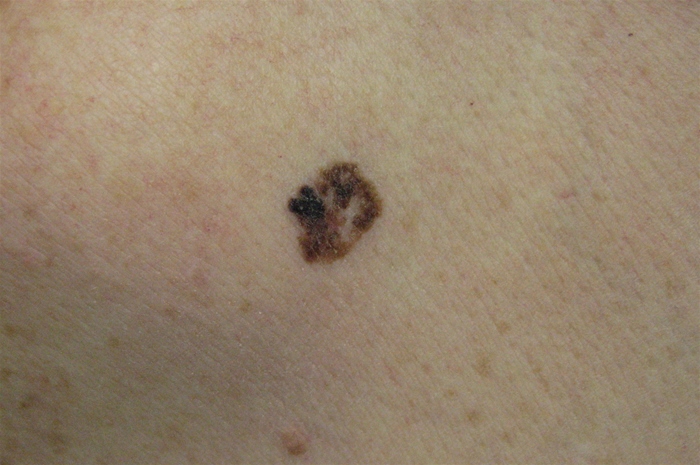 This lesion most likely originated from which of the following embryologic derivatives?
A)Endoderm
B)Mesoderm
C)Neural crest
D)Neuroectoderm
E)Surface ectoderm
This lesion most likely originated from which of the following embryologic derivatives?A)Endoderm
B)Mesoderm
C)Neural crest
D)Neuroectoderm
E)Surface ectoderm

Question
Question
A 32-year-old woman, gravida 4 para 0, comes to the office for evaluation of recurrent pregnancy loss. She has had 4 consecutive spontaneous abortions with the same partner. The patient has menstrual cycles approximately 28 days apart, with light bleeding for 2-3 days. She has no chronic medical conditions and takes no daily medications. The patient does not use tobacco, alcohol, or illicit drugs. Results of her hysterosalpingogram are shown in the exhibit. 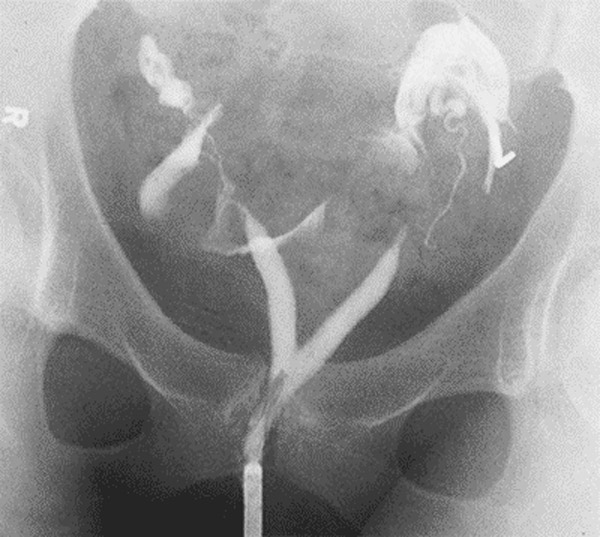
Failure of which of the following processes is the most likely underlying mechanism of this patient's condition?
A)Development of the paramesonephric ducts
B)Differentiation of the mesonephric tubules
C)Fusion of the mesonephric ducts
D)Lateral fusion of the paramesonephric ducts
E)Vertical fusion of the paramesonephric ducts with the urogenital sinus
Failure of which of the following processes is the most likely underlying mechanism of this patient's condition?
A)Development of the paramesonephric ducts
B)Differentiation of the mesonephric tubules
C)Fusion of the mesonephric ducts
D)Lateral fusion of the paramesonephric ducts
E)Vertical fusion of the paramesonephric ducts with the urogenital sinus
Question
Question
Question
A 23-year-old man comes to the office with a 2-week history of malaise, loss of appetite, and vague abdominal pain. The patient has had no nausea, vomiting, changes in his bowel habits, dysuria, urinary frequency, or hematuria. He had an appendectomy for acute appendicitis at age 15; his medical history is otherwise unremarkable. He does not use tobacco or alcohol and has had no recent travel. His father was diagnosed with colon cancer at age 60. Physical examination reveals normal bowel sounds and no guarding or rebound tenderness. Abdominal CT scan obtained as part of this patient's evaluation is shown in the image below. 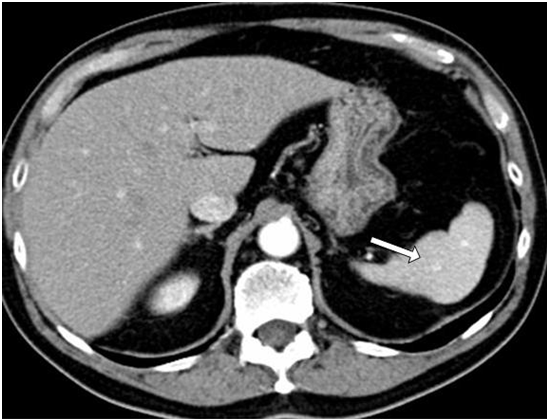 The anatomical structure indicated by the arrow originates from which of the following embryologic divisions?
A)Ectoderm
B)Endoderm
C)Mesoderm
D)Neural crest
E)Notochord
The anatomical structure indicated by the arrow originates from which of the following embryologic divisions?A)Ectoderm
B)Endoderm
C)Mesoderm
D)Neural crest
E)Notochord
Question
Question
Question
Question
Question
Question
Question
Question
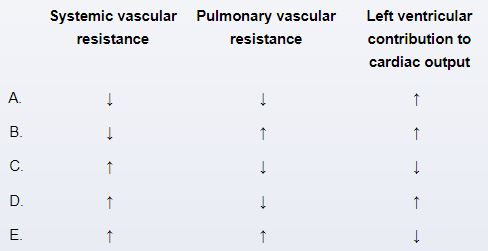
A 1-hour-old newborn girl is evaluated in the delivery room. The infant was born at term via spontaneous vaginal delivery following an uncomplicated pregnancy. The mother is gravida 2, para 2 with no significant medical history. Apgar scores were 9 and 9 at 1 and 5 minutes. The patient has been skin-to-skin with her mother and breastfed once without difficulty. Physical examination shows a pink, alert infant. Cardiac auscultation reveals a normal S1 and S2 with no murmurs, and femoral pulses are normal. Which of the following hemodynamic changes are most likely to be seen in this newborn as compared to before birth?
Question
Question
Question
Question
Question
A 13-year-old boy is brought to the clinic due to progressive difficulty with breathing, hoarseness, and dysphagia. The symptoms began insidiously 6 months ago but have rapidly become worse in the last 4 weeks. The patient has no associated skin rash, pharyngeal pain, fever, weight loss, or loss of appetite. Medical history is unremarkable and the patient takes no medications. He is up to date on scheduled vaccinations. The patient's parents and siblings have no history of significant health problems. Vital signs are normal, and he is at 70th percentile for height and weight. Oropharyngeal examination reveals a large, red lingual mass. The patient subsequently undergoes excision of the mass; histopathologic preparation of the recovered tissue is shown in the image below. 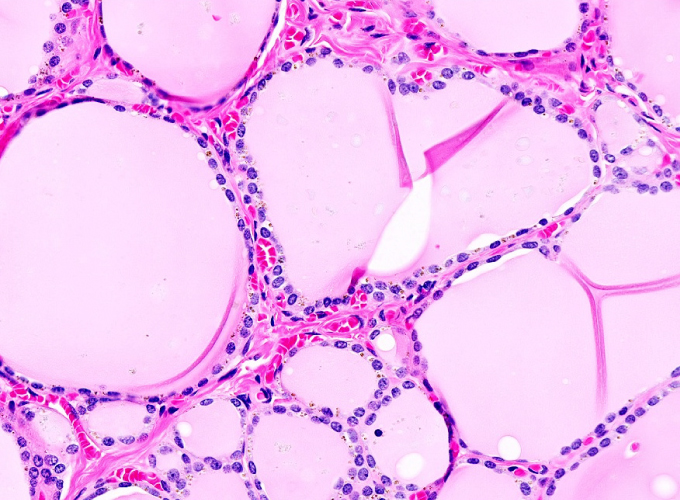 Failure of which of the following embryologic processes is most likely responsible for this patient's lesion?
A)Apoptosis
B)Differentiation
C)Fusion
D)Migration
E)Proliferation
Failure of which of the following embryologic processes is most likely responsible for this patient's lesion?A)Apoptosis
B)Differentiation
C)Fusion
D)Migration
E)Proliferation
Question
Question
Question
Question
Question
Question
Question
Question
A 38-year-old woman is brought to the emergency department after a motor vehicle collision. She sustained no injuries in the collision but is adamant that she did not see the car that hit her along the front side of her vehicle. The patient also reports that she has been having daily headaches and has not menstruated in 4 months. On physical examination, there is bitemporal hemianopsia but no other abnormalities. MRI of the brain is shown below. 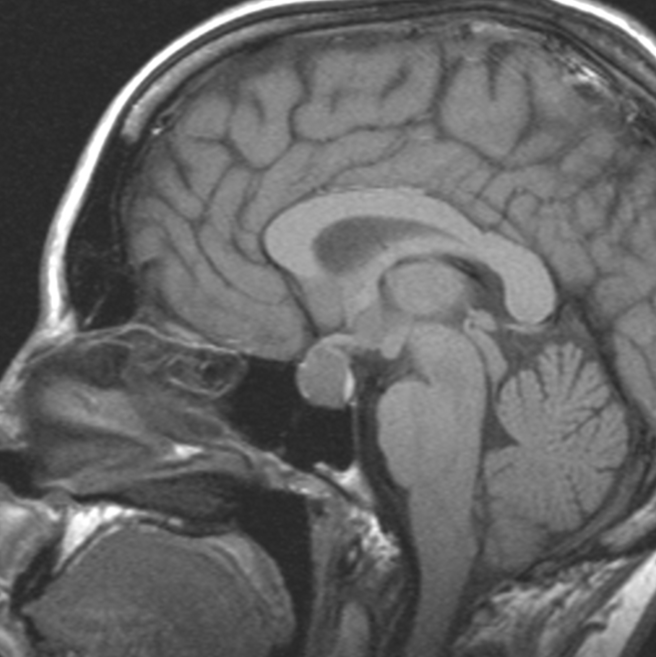 This patient's lesion most likely originates from which of the following embryologic layers?
A)Endoderm
B)Mesoderm
C)Neural crest
D)Neural tube
E)Notochord
F)Surface ectoderm
This patient's lesion most likely originates from which of the following embryologic layers?A)Endoderm
B)Mesoderm
C)Neural crest
D)Neural tube
E)Notochord
F)Surface ectoderm
Question
Question
Question
Question
Question
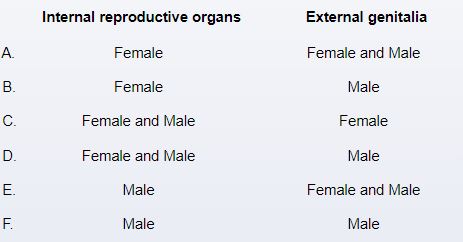
A 32-year-old woman, gravida 2 para 1, with an uncomplicated prenatal course delivered a 4.1-kg (9-lb) newborn at 39 weeks gestation via spontaneous vaginal delivery. Apgar scores were 8 and 10 at 1 and 5 minutes, respectively. Further evaluation in the newborn nursery shows abnormal sexual differentiation. Karyotype analysis shows a 46,XY genotype. Biopsy of gonadal tissue shows a lack of Sertoli cells but normally functioning Leydig cells. Which of the following phenotypes is most likely to be present?
Question
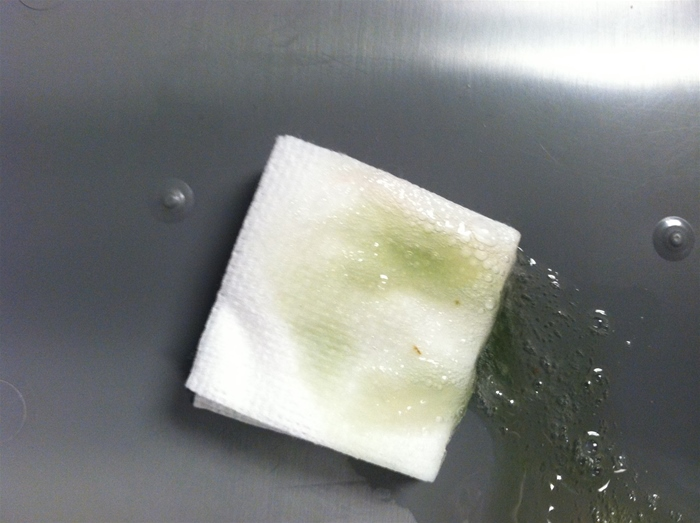
A 3-day-old boy is brought to the emergency department due to poor feeding, emesis, and lethargy over the last 24 hours. The patient was born via uncomplicated spontaneous vaginal delivery to a 30-year-old woman who had a normal pregnancy. The boy was discharged from the newborn nursery yesterday and was breastfeeding exclusively until the onset of symptoms. Stool and urine output were normal while he was in the newborn nursery. The patient is afebrile and normotensive but tachycardic and tachypneic. He appears dehydrated, and the abdomen is distended. The patient vomits during the examination, and the vomitus is shown in the exhibit.
On laparotomy, fibrous bands are seen extending from the cecum and right colon to the retroperitoneum, causing extrinsic compression of the duodenum. Which of the following embryologic processes most likely failed in this patient?
A)Failure of gut recanalization
B)Fusion of the ventral and dorsal pancreatic buds
C)Midgut rotation around the superior mesenteric artery
D)Neural crest cell migration into the bowel wall
E)Obliteration of the omphalomesenteric duct
On laparotomy, fibrous bands are seen extending from the cecum and right colon to the retroperitoneum, causing extrinsic compression of the duodenum. Which of the following embryologic processes most likely failed in this patient?
A)Failure of gut recanalization
B)Fusion of the ventral and dorsal pancreatic buds
C)Midgut rotation around the superior mesenteric artery
D)Neural crest cell migration into the bowel wall
E)Obliteration of the omphalomesenteric duct
Question
Question
A 35-year-old man comes to the emergency department due to persistent abdominal pain. Yesterday, during a soccer game, he suffered a full-speed collision with another player. He had diffuse abdominal pain at the time but did not seek care until this morning, when the pain seemed to worsen. As part of the patient's evaluation, a CT scan of the abdomen is obtained and shown in the image below. It is determined that his injury involves an organ that is supplied mainly by an artery of the foregut even though the organ itself is not a foregut derivative. Which of the following organs is most likely to be injured in this patient? 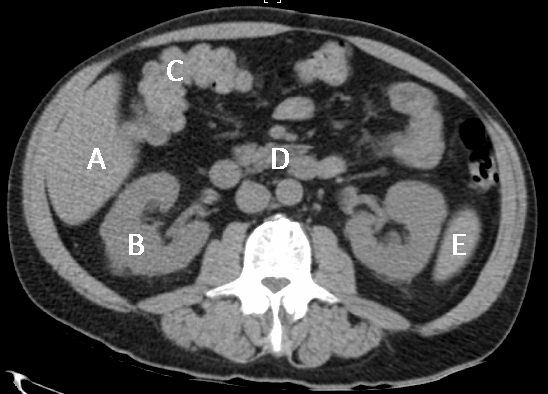
A)A
B)B
C)C
D)D
E)E
A)A
B)B
C)C
D)D
E)E
Question
Question
Question
Question
A 32-year-old woman, gravida 1 para 0, at 35 weeks gestation comes to the emergency department due to absent fetal movement for the past 24 hours. The patient has had no prenatal care. Fetal ultrasonography confirms an intrauterine fetal demise. Autopsy examination of the fetus reveals incomplete separation of the cerebral hemispheres with a single ventricle, as shown in the image below: 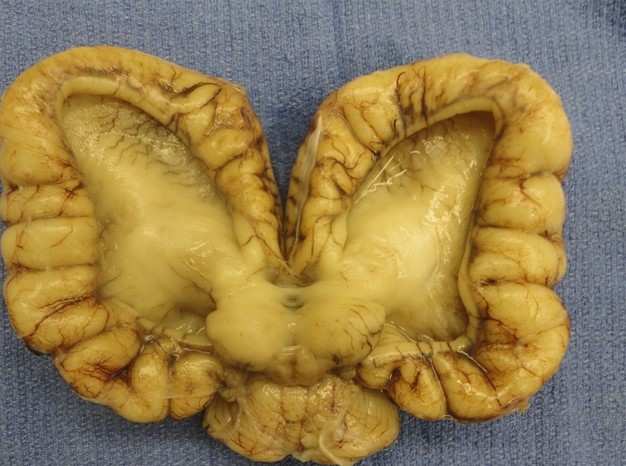 Which of the following is most closely associated with this fetal condition?
A)Congenital rubella syndrome
B)Intrauterine Zika virus infection
C)Maternal lithium use
D)Trisomy 13
E)Trisomy 21
Which of the following is most closely associated with this fetal condition?A)Congenital rubella syndrome
B)Intrauterine Zika virus infection
C)Maternal lithium use
D)Trisomy 13
E)Trisomy 21
Question
Question
Question
Question
Question
A 3-week-old boy with discharge from the umbilicus is brought to the clinic by his parents. His postnatal course was uncomplicated, with shriveling of the cord around 14 days of life. Vital signs are normal. Examination of the area reveals a small reducible umbilical hernia, minimal clear to straw-colored discharge from the umbilicus, and erythema around the area. Laboratory results are as follows: 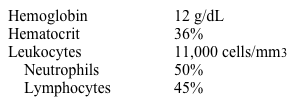 Which of the following is the most likely cause of this child's condition?
A)Absence of neutrophil migration
B)Duplication of the ureter
C)Incomplete closure of anterior abdominal wall
D)Persistence of allantois remnant
E)Persistence of omphalomesenteric duct
Which of the following is the most likely cause of this child's condition?A)Absence of neutrophil migration
B)Duplication of the ureter
C)Incomplete closure of anterior abdominal wall
D)Persistence of allantois remnant
E)Persistence of omphalomesenteric duct
Question
Question
Question
Question
The concentrations of 2 substances in the amniotic fluid of pregnant women are graphed below. 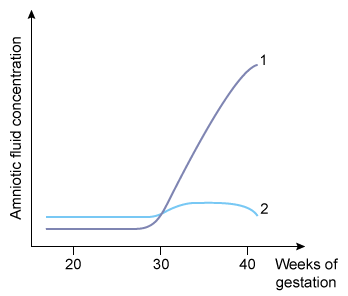 The two curves most likely correspond to which of the following?
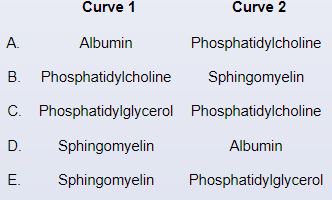
The two curves most likely correspond to which of the following? Question
Question
Question
A 23-year-old woman, gravida 2 para 1, with poorly controlled type 1 diabetes and hypothyroidism comes to the hospital with preterm, premature rupture of membrane at 30 weeks' gestation. Her medications include prenatal vitamins and insulin. Vital signs are normal and examination shows clear vaginal discharge. The patient's cervix is closed and she has no uterine contractions. Laboratory results are as follows: 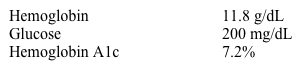 Which of the following medications has the greatest positive impact on fetal survival?
A)Dexamethasone
B)Insulin
C)Magnesium
D)Nifedipine
E)Terbutaline
Which of the following medications has the greatest positive impact on fetal survival?A)Dexamethasone
B)Insulin
C)Magnesium
D)Nifedipine
E)Terbutaline
Question
A neonate at 38 weeks gestation is delivered vaginally following an uncomplicated pregnancy. Immediately after delivery, the neonate has respiratory distress. Examination shows cyanosis, tachypnea, and poor perfusion. The patient is emergently intubated, and mechanical ventilation is initiated. A nasogastric tube is also inserted. On auscultation, asymmetric aeration with decreased left-sided breath sounds are noted. The abdomen is scaphoid. A chest x-ray is shown in the exhibit. 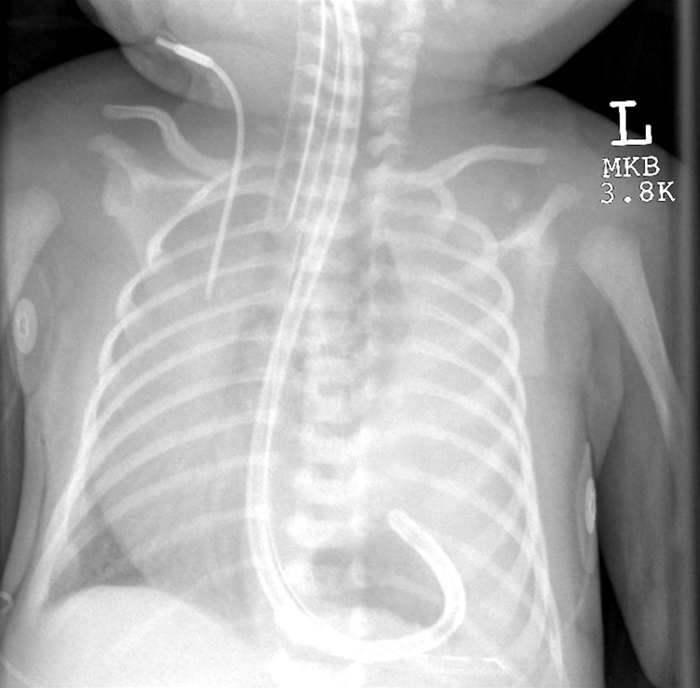
Which of the following is the most likely cause of this patient's respiratory distress?
A)Dilated airspaces with bronchiolar metaplasia
B)Increased pulmonary capillary wedge pressure
C)Loss of negative intrapleural pressure
D)Pulmonary surfactant deficiency
E)Underdevelopment of pulmonary tissue
Which of the following is the most likely cause of this patient's respiratory distress?
A)Dilated airspaces with bronchiolar metaplasia
B)Increased pulmonary capillary wedge pressure
C)Loss of negative intrapleural pressure
D)Pulmonary surfactant deficiency
E)Underdevelopment of pulmonary tissue

Unlock Deck
Sign up to unlock the cards in this deck!
Unlock Deck
Unlock Deck
1/52

Play

Full screen (f)
Deck 5: Embryology
1
A 45-year-old woman is brought to the emergency department after a generalized tonic-clonic seizure. She reports no prior history of seizures, but she has noticed right arm weakness over the last week. Her family history is significant for her mother's death from skin cancer. Physical examination shows a skin lesion measuring 13 mm on her back, as shown in the image below. This lesion most likely originated from which of the following embryologic derivatives?
A)Endoderm
B)Mesoderm
C)Neural crest
D)Neuroectoderm
E)Surface ectoderm
This lesion most likely originated from which of the following embryologic derivatives?A)Endoderm
B)Mesoderm
C)Neural crest
D)Neuroectoderm
E)Surface ectoderm
C
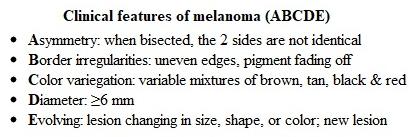
This patient's family history of skin cancer, the melanocytic lesion seen on skin examination, and her 1-week history of focal neurologic deficit suggest that her seizure results from malignant melanoma metastatic to the central nervous system. Melanoma commonly metastasizes to the brain, gastrointestinal tract, bone, liver, and lungs. It is a malignancy of melanocytes, which are of neural crest origin.
(Choice A) The endoderm gives rise to all structures derived from the inner lining of the primitive gut tube. These include the thyroid follicular cells; epithelial surfaces of the trachea, bronchi, and lungs; liver and biliary tree; pancreas; and gastrointestinal and bladder epithelium.
(Choice B) The mesoderm gives rise to the dermis as well as most bones, muscles, blood vessels, and visceral tissue.
(Choice D) The neuroectoderm gives rise to the central nervous system, preganglionic autonomic neurons, retina, and posterior pituitary.
(Choice E) The surface ectoderm gives rise to the epidermis and its appendages, mammary glands (modified sweat glands), lens of the eye, and adenohypophysis.
Educational objective:
The most common metastatic tumors to the brain are lung cancer, renal cancer, and melanoma. Melanoma is a malignancy of melanocytes, which are embryologically derived from neural crest cells.
__________
References:
Incidence of brain metastases in a cohort of patients with carcinoma of the breast, colon, kidney, and lung and melanoma.
(http://www.ncbi.nlm.nih.gov/pubmed/12173339)
Incidence proportions of brain metastases in patients diagnosed (1973 to 2001) in the Metropolitan Detroit Cancer Surveillance System.
(http://www.ncbi.nlm.nih.gov/pubmed/15254054)
This patient's family history of skin cancer, the melanocytic lesion seen on skin examination, and her 1-week history of focal neurologic deficit suggest that her seizure results from malignant melanoma metastatic to the central nervous system. Melanoma commonly metastasizes to the brain, gastrointestinal tract, bone, liver, and lungs. It is a malignancy of melanocytes, which are of neural crest origin.
(Choice A) The endoderm gives rise to all structures derived from the inner lining of the primitive gut tube. These include the thyroid follicular cells; epithelial surfaces of the trachea, bronchi, and lungs; liver and biliary tree; pancreas; and gastrointestinal and bladder epithelium.
(Choice B) The mesoderm gives rise to the dermis as well as most bones, muscles, blood vessels, and visceral tissue.
(Choice D) The neuroectoderm gives rise to the central nervous system, preganglionic autonomic neurons, retina, and posterior pituitary.
(Choice E) The surface ectoderm gives rise to the epidermis and its appendages, mammary glands (modified sweat glands), lens of the eye, and adenohypophysis.
Educational objective:
The most common metastatic tumors to the brain are lung cancer, renal cancer, and melanoma. Melanoma is a malignancy of melanocytes, which are embryologically derived from neural crest cells.
__________
References:
Incidence of brain metastases in a cohort of patients with carcinoma of the breast, colon, kidney, and lung and melanoma.
(http://www.ncbi.nlm.nih.gov/pubmed/12173339)
Incidence proportions of brain metastases in patients diagnosed (1973 to 2001) in the Metropolitan Detroit Cancer Surveillance System.
(http://www.ncbi.nlm.nih.gov/pubmed/15254054)
2
A term newborn boy is evaluated in the neonatal intensive care unit for respiratory distress. Apgar scores are 2 and 5 at 1 and 5 minutes, respectively. Respirations are 84/min. On examination, the patient has a barrel chest with a scaphoid abdomen and mild cyanosis of his extremities. Auscultation shows absent breath sounds on the left; right lung aeration is normal. Chest x-ray reveals multiple fluid-containing cystic areas on the left and a mediastinal shift to the right. Which of the following embryologic events most likely failed to occur in this patient?
A)Closure of the pleuroperitoneal fold
B)Closure of the ventral body wall
C)Formation of the pleuropericardial membrane
D)Rotation of the midgut
E)Separation of the dorsal and ventral foregut
A)Closure of the pleuroperitoneal fold
B)Closure of the ventral body wall
C)Formation of the pleuropericardial membrane
D)Rotation of the midgut
E)Separation of the dorsal and ventral foregut
A
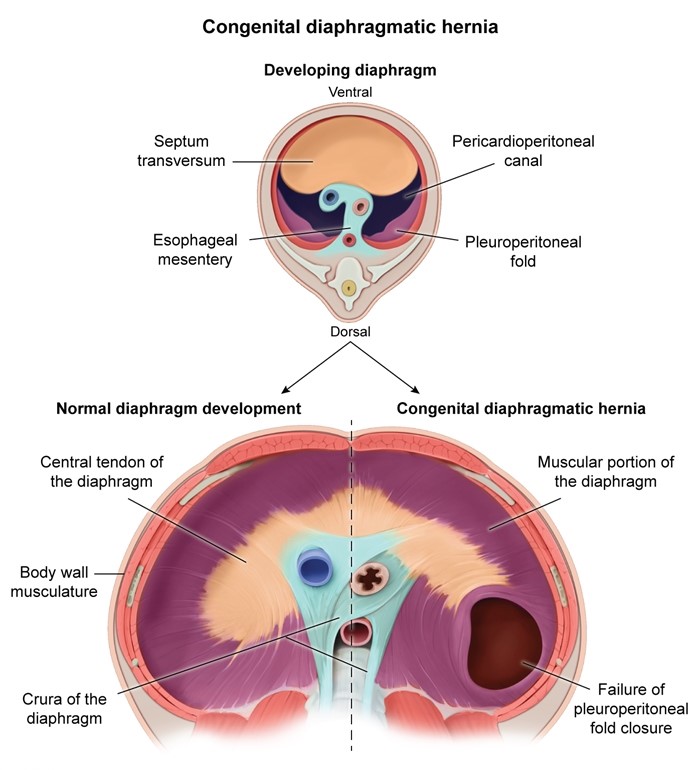
This newborn with respiratory distress and unilateral decreased breath sounds has a scaphoid abdomen and chest x-ray revealing cystic structures. These findings are consistent with a congenital diaphragmatic hernia (CDH), a congenital malformation caused by failure of the pleuroperitoneal folds to close.
In general, the diaphragm forms from 4 distinct tissues: the septum transversum, esophageal mesentery, musculature from the body wall, and pleuroperitoneal folds. Extension of the pleuroperitoneal folds to these other structures ultimately leads to division of the pericardioperitoneal canal into the peritoneal cavity and thoracic cavity. Failure of closure results in an abnormal communication between the thorax and abdomen. This defect is usually located on the left posterolateral side, allowing bowel, stomach, spleen, and/or liver to herniate into the thorax. Because this malformation occurs during organogenesis in the first trimester, compression of the developing lung leads to pulmonary hypoplasia.
Affected newborns have respiratory distress at birth. Displacement of abdominal organs into the thorax causes the abdomen to appear scaphoid and the chest barrel shaped. Ipsilateral breath sounds are decreased or absent. Chest x-ray findings supportive of CDH include mediastinal shift and thoracic bowel loops, which may appear as cystic, fluid-filled structures.
(Choice B) Failure of ventral body wall closure results in gastroschisis, which is characterized by bowel evisceration without a protective membrane. A full-thickness abdominal wall defect is apparent on examination.
(Choice C) The pleuropericardial membranes, which become the fibrous pericardium, fuse to separate the pericardial and pleural cavities. Fusion defects are rare, often asymptomatic, and result in communication between these two thoracic cavities, not between the thorax and abdomen.
(Choice D) Malrotation, characterized by incomplete physiologic rotation of the bowel in utero, usually presents with bilious emesis in infancy due to duodenal obstruction from abnormally positioned peritoneal bands. Respiratory distress and thoracic bowel loops would not be seen.
(Choice E) Abnormal separation of the dorsal (gastrointestinal tract) and ventral (respiratory tract) foregut results in esophageal atresia with or without a tracheoesophageal fistula. Symptoms include respiratory distress and choking with feeds; chest x-ray would not show cystic thoracic structures.
Educational objective:
Congenital diaphragmatic hernia is caused by failure of the pleuroperitoneal folds to close. Immediately after birth, newborns have respiratory distress, unilateral decreased breath sounds, and a scaphoid abdomen, with imaging revealing thoracic bowel loops and mediastinal shift.
__________
References:
Congenital diaphragmatic hernia.
(http://www.ncbi.nlm.nih.gov/pubmed/32310536)
Congenital diaphragmatic hernia-a review.
(http://www.ncbi.nlm.nih.gov/pubmed/28331629)
This newborn with respiratory distress and unilateral decreased breath sounds has a scaphoid abdomen and chest x-ray revealing cystic structures. These findings are consistent with a congenital diaphragmatic hernia (CDH), a congenital malformation caused by failure of the pleuroperitoneal folds to close.
In general, the diaphragm forms from 4 distinct tissues: the septum transversum, esophageal mesentery, musculature from the body wall, and pleuroperitoneal folds. Extension of the pleuroperitoneal folds to these other structures ultimately leads to division of the pericardioperitoneal canal into the peritoneal cavity and thoracic cavity. Failure of closure results in an abnormal communication between the thorax and abdomen. This defect is usually located on the left posterolateral side, allowing bowel, stomach, spleen, and/or liver to herniate into the thorax. Because this malformation occurs during organogenesis in the first trimester, compression of the developing lung leads to pulmonary hypoplasia.
Affected newborns have respiratory distress at birth. Displacement of abdominal organs into the thorax causes the abdomen to appear scaphoid and the chest barrel shaped. Ipsilateral breath sounds are decreased or absent. Chest x-ray findings supportive of CDH include mediastinal shift and thoracic bowel loops, which may appear as cystic, fluid-filled structures.
(Choice B) Failure of ventral body wall closure results in gastroschisis, which is characterized by bowel evisceration without a protective membrane. A full-thickness abdominal wall defect is apparent on examination.
(Choice C) The pleuropericardial membranes, which become the fibrous pericardium, fuse to separate the pericardial and pleural cavities. Fusion defects are rare, often asymptomatic, and result in communication between these two thoracic cavities, not between the thorax and abdomen.
(Choice D) Malrotation, characterized by incomplete physiologic rotation of the bowel in utero, usually presents with bilious emesis in infancy due to duodenal obstruction from abnormally positioned peritoneal bands. Respiratory distress and thoracic bowel loops would not be seen.
(Choice E) Abnormal separation of the dorsal (gastrointestinal tract) and ventral (respiratory tract) foregut results in esophageal atresia with or without a tracheoesophageal fistula. Symptoms include respiratory distress and choking with feeds; chest x-ray would not show cystic thoracic structures.
Educational objective:
Congenital diaphragmatic hernia is caused by failure of the pleuroperitoneal folds to close. Immediately after birth, newborns have respiratory distress, unilateral decreased breath sounds, and a scaphoid abdomen, with imaging revealing thoracic bowel loops and mediastinal shift.
__________
References:
Congenital diaphragmatic hernia.
(http://www.ncbi.nlm.nih.gov/pubmed/32310536)
Congenital diaphragmatic hernia-a review.
(http://www.ncbi.nlm.nih.gov/pubmed/28331629)
3
A 32-year-old woman, gravida 4 para 0, comes to the office for evaluation of recurrent pregnancy loss. She has had 4 consecutive spontaneous abortions with the same partner. The patient has menstrual cycles approximately 28 days apart, with light bleeding for 2-3 days. She has no chronic medical conditions and takes no daily medications. The patient does not use tobacco, alcohol, or illicit drugs. Results of her hysterosalpingogram are shown in the exhibit.
Failure of which of the following processes is the most likely underlying mechanism of this patient's condition?
A)Development of the paramesonephric ducts
B)Differentiation of the mesonephric tubules
C)Fusion of the mesonephric ducts
D)Lateral fusion of the paramesonephric ducts
E)Vertical fusion of the paramesonephric ducts with the urogenital sinus
Failure of which of the following processes is the most likely underlying mechanism of this patient's condition?
A)Development of the paramesonephric ducts
B)Differentiation of the mesonephric tubules
C)Fusion of the mesonephric ducts
D)Lateral fusion of the paramesonephric ducts
E)Vertical fusion of the paramesonephric ducts with the urogenital sinus
Lateral fusion of the paramesonephric ducts
4
A 7-year-old boy is brought to the office for evaluation of a neck mass. A week ago, the patient was taken to an urgent care clinic for nasal congestion and sore throat. The symptoms resolved after a few days, but his parents noticed a persistent neck swelling. The patient has no prior medical conditions, and his immunizations are up to date. On physical examination, he appears well and is well nourished. Neck examination shows a mildly tender, 2-cm, midline mass that moves up when the patient swallows. Which of the following is the most likely cause of this patient's lesion?
A)Abnormal migration of neural crest cells
B)Cervical implantation of thymic tissue
C)Dilation of cervical lymphatic channels
D)Incomplete obliteration of a duct
E)Persistence of second branchial arch structures
F)Trapping of skin structures along embryonic fusion lines
A)Abnormal migration of neural crest cells
B)Cervical implantation of thymic tissue
C)Dilation of cervical lymphatic channels
D)Incomplete obliteration of a duct
E)Persistence of second branchial arch structures
F)Trapping of skin structures along embryonic fusion lines
Unlock Deck
Unlock for access to all 52 flashcards in this deck.
Unlock Deck
k this deck
5
A 33-year-old man comes to the office due to episodic headaches for several months accompanied by sweating and feelings of anxiety that spontaneously resolve after 15-30 minutes. He has no other medical conditions and takes no medications. His brother recently had surgery to treat hyperparathyroidism. Blood pressure is 180/110 mm Hg, and pulse is 102/min. Laboratory results show normal serum electrolytes and renal function. CT scan of the abdomen reveals a mass in the right adrenal gland. Which of the following cells have the same embryological origin as the tissue responsible for this patient's current condition?
A)Capillary endothelial cells
B)Cardiac myocytes
C)Interstitial fibroblasts
D)Melanin-producing cells
E)Thyroid follicular cells
A)Capillary endothelial cells
B)Cardiac myocytes
C)Interstitial fibroblasts
D)Melanin-producing cells
E)Thyroid follicular cells
Unlock Deck
Unlock for access to all 52 flashcards in this deck.
Unlock Deck
k this deck
6
A 23-year-old man comes to the office with a 2-week history of malaise, loss of appetite, and vague abdominal pain. The patient has had no nausea, vomiting, changes in his bowel habits, dysuria, urinary frequency, or hematuria. He had an appendectomy for acute appendicitis at age 15; his medical history is otherwise unremarkable. He does not use tobacco or alcohol and has had no recent travel. His father was diagnosed with colon cancer at age 60. Physical examination reveals normal bowel sounds and no guarding or rebound tenderness. Abdominal CT scan obtained as part of this patient's evaluation is shown in the image below. The anatomical structure indicated by the arrow originates from which of the following embryologic divisions?
A)Ectoderm
B)Endoderm
C)Mesoderm
D)Neural crest
E)Notochord
The anatomical structure indicated by the arrow originates from which of the following embryologic divisions?A)Ectoderm
B)Endoderm
C)Mesoderm
D)Neural crest
E)Notochord
Unlock Deck
Unlock for access to all 52 flashcards in this deck.
Unlock Deck
k this deck
7
A newborn girl is evaluated in the neonatal intensive care unit for difficulty breathing. The patient was born at term via spontaneous vaginal delivery. Since birth, she has had difficulty breathing with loud snoring sounds and intermittent oxygen desaturations. She has been unable to breastfeed due to her breathing problems. Breathing improves significantly when the patient is placed in a prone position. On examination, there is a small mandible, posteriorly displaced tongue, and U-shaped cleft palate. The abnormalities described represent an example of which of the following?
A)Association
B)Disruption
C)Imprinting
D)Sequence
E)Syndrome
A)Association
B)Disruption
C)Imprinting
D)Sequence
E)Syndrome
Unlock Deck
Unlock for access to all 52 flashcards in this deck.
Unlock Deck
k this deck
8
A 1-week-old boy is brought to the emergency department with poor feeding, lethargy, and unusual "muscle movements" involving the left thumb and hand over the last 2 days. The patient's mother had appropriate prenatal care, a normal pregnancy, and took no medications other than prenatal vitamins. The infant's vital signs are normal, but unusual flexion of the left wrist and thumb and extension of the fingers are observed with cuff blood pressure measurement. Physical examination reveals a hypoplastic mandible, low-set ears, bifid uvula, and cleft palate. A chest x-ray reveals decreased soft-tissue attenuation in the right anterior mediastinum. These findings most likely suggest impaired development of which of the following embryonic structures?
A)Anterior neuropore
B)Foramen cecum
C)Rathke pouch
D)Second pharyngeal cleft
E)Third pharyngeal pouch
A)Anterior neuropore
B)Foramen cecum
C)Rathke pouch
D)Second pharyngeal cleft
E)Third pharyngeal pouch
Unlock Deck
Unlock for access to all 52 flashcards in this deck.
Unlock Deck
k this deck
9
A 2-day-old infant is dusky and irritable. He was born to a 22-year-old primigravida with sporadic prenatal care. Delivery was uncomplicated, and Apgar scores were 7 and 8 at 1 and 5 minutes, respectively. His temperature is 36.7 C (98 F), blood pressure is 70/30 mm Hg, pulse is 148/min, and respiratory rate is 68/min. Physical examination shows a cyanotic and irritable newborn with mild-to-moderate respiratory distress. Auscultation reveals a continuous, machine-like murmur appreciated between the scapulae. Serum lactate is elevated. Echocardiogram shows the aorta lying anterior, inferior, and to the right of the pulmonary artery. Failure of which of the following embryologic processes is most likely responsible for this patient's condition?
A)Apoptosis
B)Fusion
C)Obliteration
D)Proliferation
E)Septation
F)Spiraling
A)Apoptosis
B)Fusion
C)Obliteration
D)Proliferation
E)Septation
F)Spiraling
Unlock Deck
Unlock for access to all 52 flashcards in this deck.
Unlock Deck
k this deck
10
A 4-week-old boy is hospitalized with persistent vomiting, fussiness, and feeding intolerance. The emesis was initially clear but became bilious in the last few hours. The infant had been breastfeeding exclusively. His temperature is 37.2 C (99.0 F). Blood pressure and pulse are normal. Physical examination shows a normal abdomen with no rebound or guarding. An upper gastrointestinal series is obtained urgently to evaluate for malrotation and volvulus and shows normal rotation but constriction of the duodenum. An abdominal CT scan reveals pancreatic tissue encircling the duodenum. Which of the following is the most likely cause of this patient's condition?
A)Aberrant differentiation of the midgut structures
B)Abnormal migration of the ventral pancreatic bud
C)Ectopic rests not connected to the pancreas
D)Failure of apoptosis in the dorsal pancreatic bud
E)Failure of the ventral and dorsal pancreatic bud to fuse
A)Aberrant differentiation of the midgut structures
B)Abnormal migration of the ventral pancreatic bud
C)Ectopic rests not connected to the pancreas
D)Failure of apoptosis in the dorsal pancreatic bud
E)Failure of the ventral and dorsal pancreatic bud to fuse
Unlock Deck
Unlock for access to all 52 flashcards in this deck.
Unlock Deck
k this deck
11
A 15-year-old girl is brought to the office due to amenorrhea. She has never menstruated, but her mother underwent menarche at age 14. The patient has no chronic medical conditions and takes no medications. She does not use tobacco, alcohol, or illicit drugs. The patient plays violin for her high school orchestra and is the captain of her junior varsity tennis team. She is not sexually active. Height is 175.3 cm (5 ft 9 in) and weight is 65 kg (143.3 lb). BMI is 21.2 kg/m2. Examination shows fully developed secondary sexual characteristics. Pelvic ultrasound shows a shortened vaginal canal with a rudimentary uterus. Which of the following is the most likely diagnosis?
A)21-hydroxylase deficiency
B)Androgen insensitivity syndrome
C)Kallmann syndrome
D)Klinefelter syndrome
E)Müllerian agenesis
A)21-hydroxylase deficiency
B)Androgen insensitivity syndrome
C)Kallmann syndrome
D)Klinefelter syndrome
E)Müllerian agenesis
Unlock Deck
Unlock for access to all 52 flashcards in this deck.
Unlock Deck
k this deck
12
A 5-year-old boy is brought to the office by his parents for evaluation of cyanosis with minimal exertion. The boy has had occasional episodes of "turning blue" that first began during infancy and are now occurring more frequently. During the episodes, the boy assumes a squatting position as it makes him "feel better." The family recently immigrated to the United States; the boy has never had a medical checkup prior to this visit. Physical examination reveals a prominent right ventricular impulse and a harsh systolic murmur. Which of the following embryological events is the most likely mechanism that caused this patient's condition?
A)Anomalous pulmonary venous return
B)Aortic arch constriction
C)Deviation of the infundibular septum
D)Endocardial cushion defect
E)Linear development of the aorticopulmonary septum
A)Anomalous pulmonary venous return
B)Aortic arch constriction
C)Deviation of the infundibular septum
D)Endocardial cushion defect
E)Linear development of the aorticopulmonary septum
Unlock Deck
Unlock for access to all 52 flashcards in this deck.
Unlock Deck
k this deck
13
A 37-year-old woman is brought to the emergency department after developing sudden-onset right arm weakness and difficulty speaking. She has no significant medical history but takes oral contraceptives. Examination shows decreased right upper extremity strength and expressive aphasia. Cardiac auscultation is normal. MRI of the brain reveals acute infarction in the left frontal lobe. Further evaluation to determine an etiology is performed. During echocardiogram, agitated normal saline is injected into a peripheral vein and bubbles are seen passing into the left side of the heart. Which of the following is the most likely cause of the observed finding in this patient?
A)Aplasia of the atrial septum secundum
B)Failure of the aorticopulmonary septum to develop
C)Incomplete closure of the interventricular foramen
D)Incomplete fusion of atrial septum primum and secundum
E)Persistent channel between aorta and pulmonary artery
A)Aplasia of the atrial septum secundum
B)Failure of the aorticopulmonary septum to develop
C)Incomplete closure of the interventricular foramen
D)Incomplete fusion of atrial septum primum and secundum
E)Persistent channel between aorta and pulmonary artery
Unlock Deck
Unlock for access to all 52 flashcards in this deck.
Unlock Deck
k this deck
14
A 1-hour-old newborn girl is evaluated in the delivery room. The infant was born at term via spontaneous vaginal delivery following an uncomplicated pregnancy. The mother is gravida 2, para 2 with no significant medical history. Apgar scores were 9 and 9 at 1 and 5 minutes. The patient has been skin-to-skin with her mother and breastfed once without difficulty. Physical examination shows a pink, alert infant. Cardiac auscultation reveals a normal S1 and S2 with no murmurs, and femoral pulses are normal. Which of the following hemodynamic changes are most likely to be seen in this newborn as compared to before birth?
Unlock Deck
Unlock for access to all 52 flashcards in this deck.
Unlock Deck
k this deck
15
A 4-hour-old girl with a cleft lip is breastfeeding without difficulty. The infant was born vaginally after an uncomplicated pregnancy and delivery. Routine antenatal sonography at 20 weeks gestation showed no abnormalities. Physical examination shows an intact palate and a unilateral cleft lip on the left side. No other abnormalities are seen. This child's cleft lip resulted from failure of which of the following intrauterine processes?
A)Fusion of the 2 medial nasal prominences
B)Fusion of the maxillary prominence and intermaxillary segment
C)Fusion of the palatal processes
D)Hyperplasia of the frontonasal prominence
E)Hypoplasia of the mandibular prominence
A)Fusion of the 2 medial nasal prominences
B)Fusion of the maxillary prominence and intermaxillary segment
C)Fusion of the palatal processes
D)Hyperplasia of the frontonasal prominence
E)Hypoplasia of the mandibular prominence
Unlock Deck
Unlock for access to all 52 flashcards in this deck.
Unlock Deck
k this deck
16
Five measurements of blood oxygen saturation taken in a fetus are: 67, 61, 56, 52 and 31%. The highest value is most likely recorded in which of the following vessels?
A)Ductus arteriosus
B)Superior vena cava
C)Inferior vena cava
D)Pulmonary trunk
E)Descending aorta
F)Umbilical artery
A)Ductus arteriosus
B)Superior vena cava
C)Inferior vena cava
D)Pulmonary trunk
E)Descending aorta
F)Umbilical artery
Unlock Deck
Unlock for access to all 52 flashcards in this deck.
Unlock Deck
k this deck
17
A 64-year-old man loses consciousness near the entrance to an emergency room. A physician rushes to the patient and palpates a strong pulse along the inner side of the left sternocleidomastoid muscle. The vessel palpated by the doctor is a derivative of which of the following aortic arches?
A)First
B)Second
C)Third
D)Fourth
E)Sixth
A)First
B)Second
C)Third
D)Fourth
E)Sixth
Unlock Deck
Unlock for access to all 52 flashcards in this deck.
Unlock Deck
k this deck
18
Researchers studying neural crest cell migration in a human fetus observe normal activity beginning at the 8th week of embryogenesis with interruption during the 12th week, when migration is typically completed. Which of the following structures is most likely to lack innervation as a result of this disruption?
A)Esophagus
B)Duodenum
C)Jejunum
D)Ileum
E)Cecum
F)Transverse colon
G)Rectum
A)Esophagus
B)Duodenum
C)Jejunum
D)Ileum
E)Cecum
F)Transverse colon
G)Rectum
Unlock Deck
Unlock for access to all 52 flashcards in this deck.
Unlock Deck
k this deck
19
A 13-year-old boy is brought to the clinic due to progressive difficulty with breathing, hoarseness, and dysphagia. The symptoms began insidiously 6 months ago but have rapidly become worse in the last 4 weeks. The patient has no associated skin rash, pharyngeal pain, fever, weight loss, or loss of appetite. Medical history is unremarkable and the patient takes no medications. He is up to date on scheduled vaccinations. The patient's parents and siblings have no history of significant health problems. Vital signs are normal, and he is at 70th percentile for height and weight. Oropharyngeal examination reveals a large, red lingual mass. The patient subsequently undergoes excision of the mass; histopathologic preparation of the recovered tissue is shown in the image below. Failure of which of the following embryologic processes is most likely responsible for this patient's lesion?
A)Apoptosis
B)Differentiation
C)Fusion
D)Migration
E)Proliferation
Failure of which of the following embryologic processes is most likely responsible for this patient's lesion?A)Apoptosis
B)Differentiation
C)Fusion
D)Migration
E)Proliferation
Unlock Deck
Unlock for access to all 52 flashcards in this deck.
Unlock Deck
k this deck
20
A 32-year-old man presents to the emergency department with a one-day history of severe abdominal pain along with nausea and vomiting. His pain is constant and radiates to his back. He admits to "drinking a few beers" with some friends a couple days ago. Laboratory studies reveal significantly elevated amylase and lipase. An abdominal CT shows pancreas divisum, a common congenital anomaly that results from failure of the pancreatic ductal systems of the ventral and dorsal pancreatic primordia to fuse during embryogenesis. Which of the following pancreatic structures is derived from the ventral pancreatic primordium?
A)Tail
B)Body
C)Superior aspect of the head
D)Accessory pancreatic duct
E)Main pancreatic duct
A)Tail
B)Body
C)Superior aspect of the head
D)Accessory pancreatic duct
E)Main pancreatic duct
Unlock Deck
Unlock for access to all 52 flashcards in this deck.
Unlock Deck
k this deck
21
A 22-year-old man comes to the office due to occasional dull headaches that awaken him from sleep. The patient has no associated neurologic deficits. There is no history of migraines in the family. His temperature is 37.2 C (99 F), blood pressure is 140/80 mm Hg, pulse is 60/min, and respirations are 12/min. On physical examination, there are several 3- to 5-cm flat, pigmented spots on his trunk. There are also multiple, subcentimeter, soft, fleshy, cutaneous tumors located on his trunk and neck. The predominant cells forming these skin tumors most likely originated from which of the following structures?
A)Endoderm
B)Mesoderm
C)Neural crest
D)Neural tube
E)Notochord
F)Surface ectoderm
A)Endoderm
B)Mesoderm
C)Neural crest
D)Neural tube
E)Notochord
F)Surface ectoderm
Unlock Deck
Unlock for access to all 52 flashcards in this deck.
Unlock Deck
k this deck
22
A 4-year-old girl is brought to the office after her parents noticed dark red blood on her toilet tissue after a bowel movement. She has had no abdominal pain, dysuria, or discomfort with defecation. The girl has no known medical conditions and takes no medications. Temperature is 36.7 C (98.1 F), blood pressure is 100/40 mm Hg, and pulse is 112/min. Examination shows a soft and nontender abdomen, and bowel sounds are present. Hemoglobin is 8 g/dL, and platelet count is 215,000/mm3. Coagulation studies are normal. Sequential imaging using 99mTc-pertechnetate scintigraphy demonstrates focal radiotracer accumulation in the right lower quadrant. Which of the following embryologic processes most likely resulted in this patient's condition?
A)Arrested hindgut descent along the inferior mesenteric artery
B)Defective neural crest cell migration into the bowel wall
C)Disrupted vascular flow to the ileum
D)Failed obliteration of the vitelline duct
E)Partial midgut rotation around the superior mesenteric artery
A)Arrested hindgut descent along the inferior mesenteric artery
B)Defective neural crest cell migration into the bowel wall
C)Disrupted vascular flow to the ileum
D)Failed obliteration of the vitelline duct
E)Partial midgut rotation around the superior mesenteric artery
Unlock Deck
Unlock for access to all 52 flashcards in this deck.
Unlock Deck
k this deck
23
A 3-day-old girl is brought to the emergency department by her parents due to persistent vomiting and refusal to feed. The vomiting began early in the morning and has been a greenish-yellow color. The emesis does not contain blood. The infant appears dehydrated. Her heart rate is 175/min and blood pressure is within normal limits. After initial evaluation is complete, the infant undergoes laparotomy. Findings include a normal-appearing duodenum, the absence of a large segment of jejunum and ileum, and the remainder of the distal ileum winding around a thin vascular stalk. Which of the following intrauterine processes is most likely responsible for this patient's condition?
A)Abnormal rotation
B)Cell migration failure
C)Failure of partitioning
D)Recanalization failure
E)Vascular occlusion
A)Abnormal rotation
B)Cell migration failure
C)Failure of partitioning
D)Recanalization failure
E)Vascular occlusion
Unlock Deck
Unlock for access to all 52 flashcards in this deck.
Unlock Deck
k this deck
24
In normal female development, non-fusion of the urethral folds forms the labia minora and the vestibule of the vagina. In males, non-fusion of the urethral folds would most likely result in which of the following?
A)Bifid scrotum
B)Cryptorchidism
C)Epispadias
D)Hydrocele of the testis
E)Hypospadias
A)Bifid scrotum
B)Cryptorchidism
C)Epispadias
D)Hydrocele of the testis
E)Hypospadias
Unlock Deck
Unlock for access to all 52 flashcards in this deck.
Unlock Deck
k this deck
25
A 35-year-old woman, gravida 2 para 1, comes to the office for a routine prenatal visit. Her first child was born with a hydrocele and syndactyly of the first and second toes. The patient has no significant medical problems and takes no medications except for a multivitamin. Examination reveals clear lungs and normal first and second heart sounds. The abdomen is soft and nontender. Uterine size, fetal movements, and fetal cardiac activity are all within appropriate limits. The patient undergoes amniocentesis during the 18th week of pregnancy. Amniotic fluid analysis shows an increased level of acetylcholinesterase. This patient's amniocentesis results most likely suggest failure of which of the following processes?
A)Epithelial cell apoptosis in the embryonic duodenum
B)Fusion of the edges of the neural plate
C)Involution of the thyroglossal duct
D)Meiotic disjunction of chromosome 21
E)Migration of neural crest cells
F)Obliteration of the processus vaginalis
A)Epithelial cell apoptosis in the embryonic duodenum
B)Fusion of the edges of the neural plate
C)Involution of the thyroglossal duct
D)Meiotic disjunction of chromosome 21
E)Migration of neural crest cells
F)Obliteration of the processus vaginalis
Unlock Deck
Unlock for access to all 52 flashcards in this deck.
Unlock Deck
k this deck
26
A newborn boy is being evaluated in the nursery. The patient was born at 39 weeks gestation via cesarean delivery to a 30-year-old primigravida. Head circumference, weight, and length are at the 75th to 90th percentiles. The anterior fontanelle is open and soft. The neck is supple. Cardiopulmonary examination is unremarkable, and the abdomen is soft. The back appears unremarkable. Hip examination shows no hip clicks. Both feet are plantar flexed and adducted with the soles pointing medially. There is resistance to range of motion assessment in both feet. Muscle tone is normal and newborn reflexes are intact. The abnormal findings on this patient's physical examination most likely represent which of the following types of congenital anomalies?
A)Deformation
B)Disruption
C)Dysplasia
D)Malformation
E)Sequence
A)Deformation
B)Disruption
C)Dysplasia
D)Malformation
E)Sequence
Unlock Deck
Unlock for access to all 52 flashcards in this deck.
Unlock Deck
k this deck
27
A 38-year-old woman is brought to the emergency department after a motor vehicle collision. She sustained no injuries in the collision but is adamant that she did not see the car that hit her along the front side of her vehicle. The patient also reports that she has been having daily headaches and has not menstruated in 4 months. On physical examination, there is bitemporal hemianopsia but no other abnormalities. MRI of the brain is shown below. This patient's lesion most likely originates from which of the following embryologic layers?
A)Endoderm
B)Mesoderm
C)Neural crest
D)Neural tube
E)Notochord
F)Surface ectoderm
This patient's lesion most likely originates from which of the following embryologic layers?A)Endoderm
B)Mesoderm
C)Neural crest
D)Neural tube
E)Notochord
F)Surface ectoderm
Unlock Deck
Unlock for access to all 52 flashcards in this deck.
Unlock Deck
k this deck
28
A 35-year-old woman, gravida 2 para 1, comes to the office for prenatal evaluation. The patient says she had been using condoms for birth control and unintentionally became pregnant. Her last menstrual period was 2 months ago, and home pregnancy tests are positive. She has not been taking prenatal vitamins. The patient has a healthy, 5-year-old daughter who was born after an uneventful pregnancy. She has a history of rheumatoid arthritis, and her joint symptoms are controlled with methotrexate therapy. The patient has no other medical conditions and takes no other medications. She does not use tobacco, alcohol, or illicit drugs. Vital signs are within normal limits, and physical examination shows no abnormalities. Serum β-hCG is elevated, and transvaginal ultrasonography shows a normal gestational sac and embryo. This patient's unborn child is at the greatest risk for which of the following congenital defects?
A)Branchial arch anomalies
B)Neural tube defects
C)Renal dysplasia
D)Sacral agenesis
E)Skeletal lesions
F)Thyroid hypoplasia
A)Branchial arch anomalies
B)Neural tube defects
C)Renal dysplasia
D)Sacral agenesis
E)Skeletal lesions
F)Thyroid hypoplasia
Unlock Deck
Unlock for access to all 52 flashcards in this deck.
Unlock Deck
k this deck
29
A newborn is taken to the neonatal intensive care unit after delivery due to respiratory distress. The neonate was born full-term, and there were no significant complications during pregnancy or delivery. Once the patient is stabilized, a detailed physical examination is performed. The neonate has an underdeveloped mandible and hypoplastic zygomatic bones. Genetic testing confirms a gene mutation that results in abnormal development of the first and second pharyngeal arches. Which of the following structures is also likely abnormal in this patient?
A)Cricoid cartilage
B)Glossopharyngeal nerve
C)Greater horn of hyoid
D)Stapes
E)Thyroid cartilage
F)Vagus nerve
A)Cricoid cartilage
B)Glossopharyngeal nerve
C)Greater horn of hyoid
D)Stapes
E)Thyroid cartilage
F)Vagus nerve
Unlock Deck
Unlock for access to all 52 flashcards in this deck.
Unlock Deck
k this deck
30
A newborn is examined in the delivery room shortly after being born vaginally to a 38-year-old woman. The mother had intermittent prenatal care, and the pregnancy was complicated by bipolar disorder and chronic hypertension. Interview of the mother reveals pressured and tangential speech. She states, "I take my prescribed meds when I remember," and then adds, "I have a good memory, and I took the meds most of the time throughout the pregnancy." She claims to have smoked cigarettes occasionally but then changes the subject when asked if other substances were used during pregnancy. Examination of the neonate shows a nondysmorphic face and a mass overlying the lower spine that is covered with a patch of hair. Which of the following maternal interventions could have most likely prevented this neonate's abnormalities?
A)Antenatal steroid therapy
B)Avoiding alcohol consumption
C)Increasing dose of mood stabilizer
D)Lowering dose of antihypertensive drug
E)Smoking cessation
F)Vitamin supplementation
A)Antenatal steroid therapy
B)Avoiding alcohol consumption
C)Increasing dose of mood stabilizer
D)Lowering dose of antihypertensive drug
E)Smoking cessation
F)Vitamin supplementation
Unlock Deck
Unlock for access to all 52 flashcards in this deck.
Unlock Deck
k this deck
31
A 3-year-old boy is brought to the emergency department by his parents after he develops acute abdominal pain and vomiting. Examination shows diffuse tenderness to palpation, and abdominal imaging reveals a foreign body lodged within the intestine, causing a small bowel obstruction. Laparotomy is performed to remove the foreign body; during the procedure, an incidental cyst is discovered. The cyst is connected by a fibrous band to the ileum and the umbilicus. The embryologic defect underlying the formation of this patient's cyst is also associated with which of the following?
A)Gastroschisis
B)Malrotation
C)Meckel diverticulum
D)Omphalocele
E)Patent urachus
F)Umbilical hernia
A)Gastroschisis
B)Malrotation
C)Meckel diverticulum
D)Omphalocele
E)Patent urachus
F)Umbilical hernia
Unlock Deck
Unlock for access to all 52 flashcards in this deck.
Unlock Deck
k this deck
32
A 32-year-old woman, gravida 2 para 1, with an uncomplicated prenatal course delivered a 4.1-kg (9-lb) newborn at 39 weeks gestation via spontaneous vaginal delivery. Apgar scores were 8 and 10 at 1 and 5 minutes, respectively. Further evaluation in the newborn nursery shows abnormal sexual differentiation. Karyotype analysis shows a 46,XY genotype. Biopsy of gonadal tissue shows a lack of Sertoli cells but normally functioning Leydig cells. Which of the following phenotypes is most likely to be present?
Unlock Deck
Unlock for access to all 52 flashcards in this deck.
Unlock Deck
k this deck
33
A 3-day-old boy is brought to the emergency department due to poor feeding, emesis, and lethargy over the last 24 hours. The patient was born via uncomplicated spontaneous vaginal delivery to a 30-year-old woman who had a normal pregnancy. The boy was discharged from the newborn nursery yesterday and was breastfeeding exclusively until the onset of symptoms. Stool and urine output were normal while he was in the newborn nursery. The patient is afebrile and normotensive but tachycardic and tachypneic. He appears dehydrated, and the abdomen is distended. The patient vomits during the examination, and the vomitus is shown in the exhibit.
On laparotomy, fibrous bands are seen extending from the cecum and right colon to the retroperitoneum, causing extrinsic compression of the duodenum. Which of the following embryologic processes most likely failed in this patient?
A)Failure of gut recanalization
B)Fusion of the ventral and dorsal pancreatic buds
C)Midgut rotation around the superior mesenteric artery
D)Neural crest cell migration into the bowel wall
E)Obliteration of the omphalomesenteric duct
On laparotomy, fibrous bands are seen extending from the cecum and right colon to the retroperitoneum, causing extrinsic compression of the duodenum. Which of the following embryologic processes most likely failed in this patient?
A)Failure of gut recanalization
B)Fusion of the ventral and dorsal pancreatic buds
C)Midgut rotation around the superior mesenteric artery
D)Neural crest cell migration into the bowel wall
E)Obliteration of the omphalomesenteric duct
Unlock Deck
Unlock for access to all 52 flashcards in this deck.
Unlock Deck
k this deck
34
A 5-month-old boy is brought to the office for right-sided scrotal enlargement. The enlargement has been present since birth and increases when he cries or strains to pass a bowel movement. There is no history of trauma or infection. The boy's parents do not believe he is in pain and have not noted discoloration of the area. On ultrasonography, the enlargement is found to be a fluid collection around the right testis. The specific embryologic defect giving rise to this patient's condition can also lead directly to which of the following?
A)Direct inguinal hernia
B)Femoral hernia
C)Hypospadias
D)Indirect inguinal hernia
E)Orchitis
F)Testicular torsion
A)Direct inguinal hernia
B)Femoral hernia
C)Hypospadias
D)Indirect inguinal hernia
E)Orchitis
F)Testicular torsion
Unlock Deck
Unlock for access to all 52 flashcards in this deck.
Unlock Deck
k this deck
35
A 35-year-old man comes to the emergency department due to persistent abdominal pain. Yesterday, during a soccer game, he suffered a full-speed collision with another player. He had diffuse abdominal pain at the time but did not seek care until this morning, when the pain seemed to worsen. As part of the patient's evaluation, a CT scan of the abdomen is obtained and shown in the image below. It is determined that his injury involves an organ that is supplied mainly by an artery of the foregut even though the organ itself is not a foregut derivative. Which of the following organs is most likely to be injured in this patient?
A)A
B)B
C)C
D)D
E)E
A)A
B)B
C)C
D)D
E)E
Unlock Deck
Unlock for access to all 52 flashcards in this deck.
Unlock Deck
k this deck
36
A 16-year-old obese primigravida girl comes to the emergency department in active labor. In an attempt to conceal the pregnancy from her family, the patient did not receive prenatal care or take prenatal vitamins. A fetal heartbeat is undetectable, and she delivers a stillborn boy via vaginal delivery. Examination of the stillborn shows several dysmorphic features including closely set eyes and a midline mass consistent with a proboscis. A fetal autopsy reveals fused cerebral hemispheres with an absent forebrain fissure and a single intracranial ventricle. Which of the following is the most likely mechanism for these findings?
A)Agenesis
B)Association
C)Deformation
D)Dysplasia
E)Field defect
A)Agenesis
B)Association
C)Deformation
D)Dysplasia
E)Field defect
Unlock Deck
Unlock for access to all 52 flashcards in this deck.
Unlock Deck
k this deck
37
A 6-hour-old boy is in the newborn nursery with feeding difficulties. The patient was born at 39 weeks gestation to a 33-year-old primigravida via cesarean delivery due to failure to progress and late decelerations seen on fetal heart tracing. Apgar scores were 8 and 9, but examination shows an infant with excessive drooling and coughing. Cardiac, respiratory, and abdominal examinations are otherwise normal at rest. When the infant attempts to breastfeed, however, several bouts of coughing and perioral cyanosis develop with oxygen saturation of 85% on room air. Which of the following is the most likely cause of this patient's condition?
A)Atresia of small intestine
B)Collapse of supraglottic structures during respiration
C)Failure of primitive foregut to separate from airway
D)Obstruction of posterior nasal passages
E)Thoracic herniation of abdominal viscera
A)Atresia of small intestine
B)Collapse of supraglottic structures during respiration
C)Failure of primitive foregut to separate from airway
D)Obstruction of posterior nasal passages
E)Thoracic herniation of abdominal viscera
Unlock Deck
Unlock for access to all 52 flashcards in this deck.
Unlock Deck
k this deck
38
A 30-year-old man comes to the emergency department due to severe abdominal pain. The patient first developed the pain yesterday, and it has become increasingly worse. Over the last few hours, he has also developed bilious emesis. The patient has had no previous surgeries. Temperature is 37.8 C (100 F) and pulse is 110/min. Physical examination shows diffuse abdominal tenderness with guarding during palpation. Abdominal imaging reveals bowel wall thickening within a blind pouch connected to the ileum. A laparotomy is performed. During the procedure, a fibrous band is seen attaching the end of the pouch to the umbilicus. The walls of this pouch are most likely composed of which of the following?
A)Fibrous scar tissue
B)Granulation tissue and peritoneum
C)Mucosa and submucosa layers
D)Omentum and adipose tissue
E)Submucosa, mucosa, and muscular layers
A)Fibrous scar tissue
B)Granulation tissue and peritoneum
C)Mucosa and submucosa layers
D)Omentum and adipose tissue
E)Submucosa, mucosa, and muscular layers
Unlock Deck
Unlock for access to all 52 flashcards in this deck.
Unlock Deck
k this deck
39
A 32-year-old woman, gravida 1 para 0, at 35 weeks gestation comes to the emergency department due to absent fetal movement for the past 24 hours. The patient has had no prenatal care. Fetal ultrasonography confirms an intrauterine fetal demise. Autopsy examination of the fetus reveals incomplete separation of the cerebral hemispheres with a single ventricle, as shown in the image below: Which of the following is most closely associated with this fetal condition?
A)Congenital rubella syndrome
B)Intrauterine Zika virus infection
C)Maternal lithium use
D)Trisomy 13
E)Trisomy 21
Which of the following is most closely associated with this fetal condition?A)Congenital rubella syndrome
B)Intrauterine Zika virus infection
C)Maternal lithium use
D)Trisomy 13
E)Trisomy 21
Unlock Deck
Unlock for access to all 52 flashcards in this deck.
Unlock Deck
k this deck
40
A boy is examined in the newborn nursery shortly after birth. He was born full term by vaginal delivery to a 40-year-old woman who did not receive prenatal care. His temperature is 36.7 C (98 F), pulse is 132/min, and respirations are 38/min. Examination shows slanted palpebral fissures, epicanthal folds, thick nuchal folds, and a single palmar crease. The patient has a large, reducible midline abdominal protrusion covered by skin that is more pronounced when he cries. The umbilical stump is at the center of the protrusion. Which of the following is the most likely cause of this patient's abdominal finding?
A)Failure of the extraembryonic gut to return to the abdominal cavity
B)Incomplete closure of the umbilical ring
C)Incomplete recanalization of the fetal intestinal tract
D)Incomplete rotation of the midgut in utero
E)Persistent processus vaginalis
A)Failure of the extraembryonic gut to return to the abdominal cavity
B)Incomplete closure of the umbilical ring
C)Incomplete recanalization of the fetal intestinal tract
D)Incomplete rotation of the midgut in utero
E)Persistent processus vaginalis
Unlock Deck
Unlock for access to all 52 flashcards in this deck.
Unlock Deck
k this deck
41
A 22-year-old woman at 14 weeks gestation comes to the physician for a prenatal visit. She reports feeling well with the exception of some mild fatigue. Her pregnancy has been uncomplicated to date. On physical examination, the patient's abdomen appears larger than would be expected at 14 weeks. An obstetrical ultrasound reveals twins, a male and a female. Which of the following describes the most likely type of twin placentation in this patient?
A)Dichorionic/diamniotic
B)Dichorionic/monoamniotic
C)Monochorionic/diamniotic
D)Monochorionic/monoamniotic
E)Monochorionic/monoamniotic conjoined
A)Dichorionic/diamniotic
B)Dichorionic/monoamniotic
C)Monochorionic/diamniotic
D)Monochorionic/monoamniotic
E)Monochorionic/monoamniotic conjoined
Unlock Deck
Unlock for access to all 52 flashcards in this deck.
Unlock Deck
k this deck
42
A 1-hour-old boy is in the neonatal intensive care unit due to tachypnea and hypoxia. The infant was born at 39 weeks gestation via cesarean delivery due to recurrent variable decelerations. The pregnancy was complicated by lack of prenatal care. The infant weighs 3.2 kg (7 lb 1 oz). Physical examination shows a flattened nose and bilateral club feet. Breath sounds are markedly diminished bilaterally. The infant is intubated and mechanically ventilated, but oxygen levels do not improve. He dies an hour later. Which of the following is most likely to be found during autopsy of this infant?
A)Congenital diaphragmatic hernia
B)Duodenal atresia
C)Renal agenesis
D)Surfactant deficiency
E)Tracheoesophageal fistula
A)Congenital diaphragmatic hernia
B)Duodenal atresia
C)Renal agenesis
D)Surfactant deficiency
E)Tracheoesophageal fistula
Unlock Deck
Unlock for access to all 52 flashcards in this deck.
Unlock Deck
k this deck
43
A 32-year-old woman complains of weakness in her hands and "heaviness" in her eyelids at the end of each day. Chest imaging shows an anterior mediastinal mass. The organ from which this mass most likely originated shares its embryologic origin with:
A)Thyroid gland
B)Superior parathyroid glands
C)Inferior parathyroid glands
D)Larynx
E)Palatine tonsils
A)Thyroid gland
B)Superior parathyroid glands
C)Inferior parathyroid glands
D)Larynx
E)Palatine tonsils
Unlock Deck
Unlock for access to all 52 flashcards in this deck.
Unlock Deck
k this deck
44
A 3-week-old boy with discharge from the umbilicus is brought to the clinic by his parents. His postnatal course was uncomplicated, with shriveling of the cord around 14 days of life. Vital signs are normal. Examination of the area reveals a small reducible umbilical hernia, minimal clear to straw-colored discharge from the umbilicus, and erythema around the area. Laboratory results are as follows: Which of the following is the most likely cause of this child's condition?
A)Absence of neutrophil migration
B)Duplication of the ureter
C)Incomplete closure of anterior abdominal wall
D)Persistence of allantois remnant
E)Persistence of omphalomesenteric duct
Which of the following is the most likely cause of this child's condition?A)Absence of neutrophil migration
B)Duplication of the ureter
C)Incomplete closure of anterior abdominal wall
D)Persistence of allantois remnant
E)Persistence of omphalomesenteric duct
Unlock Deck
Unlock for access to all 52 flashcards in this deck.
Unlock Deck
k this deck
45
A 41-year-old woman, gravida 0, comes to the office for evaluation of pregnancy. Menarche was at age 12, and her menses recur every 30 days and last 5 days. The patient and her husband have been trying to conceive for the past year and plan intercourse during her fertile window according to the ovulation predictor kit. She has no medical problems, takes no medications, and has no allergies. BMI is 23 kg/m2. Vital signs and physical examination are normal. If fertilization and implantation occurred this cycle, when would the β-hCG level first be detectable in the serum?
A)1 day after fertilization
B)3 days after fertilization
C)8 days after fertilization
D)14 days after fertilization
E)On the day of fertilization
A)1 day after fertilization
B)3 days after fertilization
C)8 days after fertilization
D)14 days after fertilization
E)On the day of fertilization
Unlock Deck
Unlock for access to all 52 flashcards in this deck.
Unlock Deck
k this deck
46
A 32-year-old woman comes to the office at 28 weeks gestation due to dyspnea. She has been feeling short of breath when she is supine but has no other symptoms. The patient has had no prenatal care during her pregnancy. She has a history of epilepsy that is well-controlled with medication. She lives with her husband and does not use tobacco, alcohol, or illicit drugs. Her immunizations are up to date, and she has no allergies. Physical examination shows a uterine size that is larger than expected for gestational age. Sonographic assessment shows markedly elevated amniotic fluid levels. Which of the following fetal anomalies would most likely account for this patient's polyhydramnios?
A)Anencephaly
B)Atrial septal defect
C)Posterior urethral valves
D)Pulmonary hypoplasia
E)Renal agenesis
F)Spina bifida occulta
A)Anencephaly
B)Atrial septal defect
C)Posterior urethral valves
D)Pulmonary hypoplasia
E)Renal agenesis
F)Spina bifida occulta
Unlock Deck
Unlock for access to all 52 flashcards in this deck.
Unlock Deck
k this deck
47
A 34-year-old primigravida at 18 weeks gestation comes to the office for a routine prenatal examination. The patient's pregnancy has been uncomplicated. She takes a daily prenatal vitamin, and her laboratory results have been normal to date. The patient's personal and family medical histories are unremarkable. During the visit, a detailed fetal ultrasound reveals unilateral hydronephrosis. Male external genitalia are also visible. If the fetal hydronephrosis is caused by obstruction, which of the following is the most likely site?
A)Spinal cord
B)Ureteropelvic junction
C)Urethra
D)Urinary meatus
E)Vesicoureteral junction
A)Spinal cord
B)Ureteropelvic junction
C)Urethra
D)Urinary meatus
E)Vesicoureteral junction
Unlock Deck
Unlock for access to all 52 flashcards in this deck.
Unlock Deck
k this deck
48
The concentrations of 2 substances in the amniotic fluid of pregnant women are graphed below. The two curves most likely correspond to which of the following?
The two curves most likely correspond to which of the following? Unlock Deck
Unlock for access to all 52 flashcards in this deck.
Unlock Deck
k this deck
49
Researchers working at a national foundation for prematurity and birth defects are investigating the pathological changes that can occur during embryonic kidney development. Their research focuses on the inductive signals exchanged between the metanephric diverticulum and metanephric blastema that drive their differentiation into tissues forming the mature kidney. If a toxic insult occurs during early fetal development that selectively inhibits the renal structures formed by the metanephric blastema, which of the following adult derivatives will fail to develop?
A)Collecting ducts
B)Distal convoluted tubules
C)Major calyces
D)Minor calyces
E)Renal pelvis
A)Collecting ducts
B)Distal convoluted tubules
C)Major calyces
D)Minor calyces
E)Renal pelvis
Unlock Deck
Unlock for access to all 52 flashcards in this deck.
Unlock Deck
k this deck
50
A 24-year-old woman comes to the office for a routine antenatal ultrasound. She is 19 weeks pregnant by her last menstrual period. This is the patient's third pregnancy, and there have been no complications. Her family history is unremarkable, and both of her children are healthy. The ultrasound reveals a male fetus with bilaterally enlarged fetal kidneys with diffuse small cysts. The amniotic fluid volume is very low. No other anomalies are seen. Which of the following will most likely be present in the newborn after delivery?
A)Bladder distension
B)Cerebral aneurysm
C)Hypertension
D)Respiratory distress
E)Vertebral anomalies
A)Bladder distension
B)Cerebral aneurysm
C)Hypertension
D)Respiratory distress
E)Vertebral anomalies
Unlock Deck
Unlock for access to all 52 flashcards in this deck.
Unlock Deck
k this deck
51
A 23-year-old woman, gravida 2 para 1, with poorly controlled type 1 diabetes and hypothyroidism comes to the hospital with preterm, premature rupture of membrane at 30 weeks' gestation. Her medications include prenatal vitamins and insulin. Vital signs are normal and examination shows clear vaginal discharge. The patient's cervix is closed and she has no uterine contractions. Laboratory results are as follows: Which of the following medications has the greatest positive impact on fetal survival?
A)Dexamethasone
B)Insulin
C)Magnesium
D)Nifedipine
E)Terbutaline
Which of the following medications has the greatest positive impact on fetal survival?A)Dexamethasone
B)Insulin
C)Magnesium
D)Nifedipine
E)Terbutaline
Unlock Deck
Unlock for access to all 52 flashcards in this deck.
Unlock Deck
k this deck
52
A neonate at 38 weeks gestation is delivered vaginally following an uncomplicated pregnancy. Immediately after delivery, the neonate has respiratory distress. Examination shows cyanosis, tachypnea, and poor perfusion. The patient is emergently intubated, and mechanical ventilation is initiated. A nasogastric tube is also inserted. On auscultation, asymmetric aeration with decreased left-sided breath sounds are noted. The abdomen is scaphoid. A chest x-ray is shown in the exhibit.
Which of the following is the most likely cause of this patient's respiratory distress?
A)Dilated airspaces with bronchiolar metaplasia
B)Increased pulmonary capillary wedge pressure
C)Loss of negative intrapleural pressure
D)Pulmonary surfactant deficiency
E)Underdevelopment of pulmonary tissue
Which of the following is the most likely cause of this patient's respiratory distress?
A)Dilated airspaces with bronchiolar metaplasia
B)Increased pulmonary capillary wedge pressure
C)Loss of negative intrapleural pressure
D)Pulmonary surfactant deficiency
E)Underdevelopment of pulmonary tissue
Unlock Deck
Unlock for access to all 52 flashcards in this deck.
Unlock Deck
k this deck
Unlock Deck
Unlock for access to all 52 flashcards in this deck.







