





 Chat with AI

Deck 26: Microbial Diseases
Full screen (f)

Question
Using the figure below, what does RML stand for? 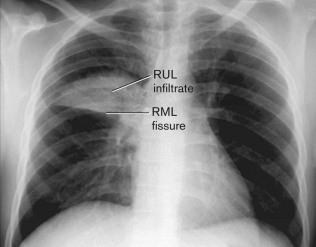
A) right mediastinum lobe
B) right lower lobe
C) right middle lobe
D) right upper lobe
E) right middle lung
A) right mediastinum lobe
B) right lower lobe
C) right middle lobe
D) right upper lobe
E) right middle lung

Question
Question
Using the figure below, which organism is an incidental host for Lyme disease? 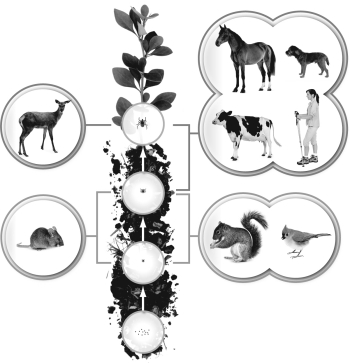
A) deer
B) horse
C) mouse
D) squirrel
E) dog
A) deer
B) horse
C) mouse
D) squirrel
E) dog
Question
Question
Question
Question
Question
Question
Question
Question
Question
Question
Question
Question
Question
Question
Question
Question
Question
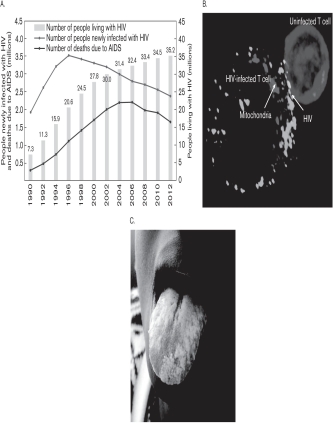
What virus is shown in the figure below? 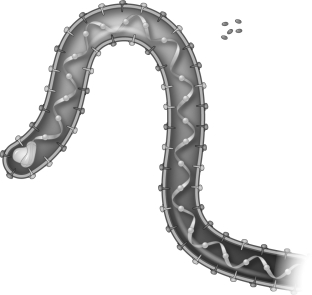
A) HIV
B) MRSA
C) Ebola
D) influenza
E) rhinovirus
A) HIV
B) MRSA
C) Ebola
D) influenza
E) rhinovirus
Question
Question
Question
Question
Question
Question
Question
Question
Question
Question
Question
Question
Question
Question
Question
Question
Question
Question
Question
Question
Question
Question
Question
Question
Question
Question
Question
Question
Question
Question
Question
Question
Question
Question
Question
Question
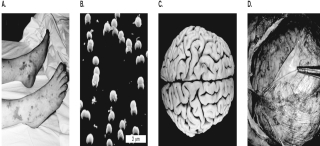
Using the following figures, interpret what is occurring in Figure A.
Question
Question
Question
Question
Question
Using the following figures, interpret what is occurring in Figure C.
Question
Question
Question
Question
Question
Question
Question
Question
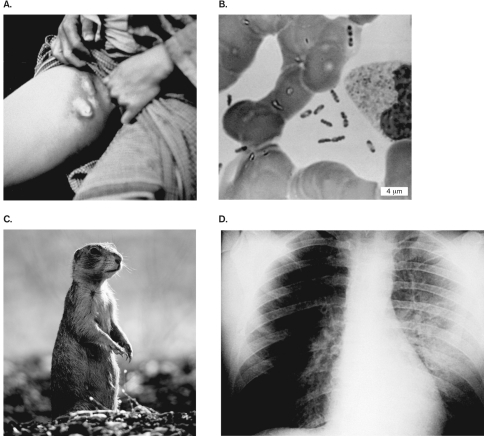
Using the figures below, summarize what is occurring at D.

Unlock Deck
Sign up to unlock the cards in this deck!
Unlock Deck
Unlock Deck
1/69

Play

Full screen (f)
Deck 26: Microbial Diseases
1
Using the figure below, what does RML stand for?
A) right mediastinum lobe
B) right lower lobe
C) right middle lobe
D) right upper lobe
E) right middle lung
A) right mediastinum lobe
B) right lower lobe
C) right middle lobe
D) right upper lobe
E) right middle lung
C
2
German measles and ________ are different names describing the same disease.
A) shingles
B) rubeola
C) rubella
D) varicella
E) smallpox
A) shingles
B) rubeola
C) rubella
D) varicella
E) smallpox
C
3
Using the figure below, which organism is an incidental host for Lyme disease?
A) deer
B) horse
C) mouse
D) squirrel
E) dog
A) deer
B) horse
C) mouse
D) squirrel
E) dog
D
4
Rubeola measles is caused by ________ virus.
A) hepatitis B
B) varicella
C) paramyxovirus
D) rhinovirus
E) adenovirus
A) hepatitis B
B) varicella
C) paramyxovirus
D) rhinovirus
E) adenovirus
Unlock Deck
Unlock for access to all 69 flashcards in this deck.
Unlock Deck
k this deck
5
Which of the following is NOT a symptom of influenza?
A) fever
B) runny nose
C) muscle aches
D) sore throat
E) headache
A) fever
B) runny nose
C) muscle aches
D) sore throat
E) headache
Unlock Deck
Unlock for access to all 69 flashcards in this deck.
Unlock Deck
k this deck
6
A 15-year-old female was said to have Koplik's spots after a doctor's examination. This suggests that
A) she has measles caused by the rubeola virus.
B) no antibiotic is useful because it's a mixed infection.
C) she has a toxin-encoding phage that also encodes antibiotic-degrading enzymes.
D) the causative agent is a MRSA.
E) rapid necrosis of infected tissue has limited access to the antibiotic.
A) she has measles caused by the rubeola virus.
B) no antibiotic is useful because it's a mixed infection.
C) she has a toxin-encoding phage that also encodes antibiotic-degrading enzymes.
D) the causative agent is a MRSA.
E) rapid necrosis of infected tissue has limited access to the antibiotic.
Unlock Deck
Unlock for access to all 69 flashcards in this deck.
Unlock Deck
k this deck
7
E. coli can cause which of the following infections?
A) MRSA
B) encephalitis
C) German measles
D) Rocky Mountain spotted fever
E) meningitis
A) MRSA
B) encephalitis
C) German measles
D) Rocky Mountain spotted fever
E) meningitis
Unlock Deck
Unlock for access to all 69 flashcards in this deck.
Unlock Deck
k this deck
8
A clinician would most likely treat MRSA with
A) penicillin G.
B) tetracycline.
C) vancomycin.
D) ciprofloxacin.
E) amoxicillin.
A) penicillin G.
B) tetracycline.
C) vancomycin.
D) ciprofloxacin.
E) amoxicillin.
Unlock Deck
Unlock for access to all 69 flashcards in this deck.
Unlock Deck
k this deck
9
Which of the following respiratory infections is caused by a viral pathogen?
A) diphtheria
B) whooping cough
C) tuberculosis
D) Legionnaires' disease
E) severe acute respiratory syndrome
A) diphtheria
B) whooping cough
C) tuberculosis
D) Legionnaires' disease
E) severe acute respiratory syndrome
Unlock Deck
Unlock for access to all 69 flashcards in this deck.
Unlock Deck
k this deck
10
Which disease below is caused without an infection?
A) giardiasis
B) tetanus
C) staphylococcal food poisoning
D) candidiasis
E) psittacosis
A) giardiasis
B) tetanus
C) staphylococcal food poisoning
D) candidiasis
E) psittacosis
Unlock Deck
Unlock for access to all 69 flashcards in this deck.
Unlock Deck
k this deck
11
A tuberculin skin test on a patient with an active tuberculosis disease will result in
A) a negative result.
B) a positive result.
C) profuse bleeding.
D) an ulcerating lesion.
E) severe bruising.
A) a negative result.
B) a positive result.
C) profuse bleeding.
D) an ulcerating lesion.
E) severe bruising.
Unlock Deck
Unlock for access to all 69 flashcards in this deck.
Unlock Deck
k this deck
12
The causative agent of pseudomembranous enterocolitis is
A) Vibrio cholerae.
B) Vibrio parahaemolyticus.
C) Clostridium perfringens.
D) Clostridium difficile.
E) Helicobacter pylori.
A) Vibrio cholerae.
B) Vibrio parahaemolyticus.
C) Clostridium perfringens.
D) Clostridium difficile.
E) Helicobacter pylori.
Unlock Deck
Unlock for access to all 69 flashcards in this deck.
Unlock Deck
k this deck
13
What type of disease is an infection that normally affects animals but can be transmitted to humans?
A) zoonotic
B) herd
C) fulminating
D) recurrent or cyclic
E) community acquired
A) zoonotic
B) herd
C) fulminating
D) recurrent or cyclic
E) community acquired
Unlock Deck
Unlock for access to all 69 flashcards in this deck.
Unlock Deck
k this deck
14
Many infectious diseases display similar ________, making diagnosis difficult.
A) syndromes
B) symptoms
C) vectors
D) disease mechanisms
E) modes of transmission
A) syndromes
B) symptoms
C) vectors
D) disease mechanisms
E) modes of transmission
Unlock Deck
Unlock for access to all 69 flashcards in this deck.
Unlock Deck
k this deck
15
Bacterial infections of the lung that arise secondary to viral disease are attributable in part to
A) the high virulence of the bacterial pathogen.
B) viruses providing attachment receptors for the bacteria.
C) the host's phagocytes mutating.
D) an impaired mucociliary escalator due to dehydration of the host.
E) the low virulence of the viral disease.
A) the high virulence of the bacterial pathogen.
B) viruses providing attachment receptors for the bacteria.
C) the host's phagocytes mutating.
D) an impaired mucociliary escalator due to dehydration of the host.
E) the low virulence of the viral disease.
Unlock Deck
Unlock for access to all 69 flashcards in this deck.
Unlock Deck
k this deck
16
The major challenge with treating flesh-eating disease caused by Streptococcus pyogenes is that
A) the bacterium is a multidrug-resistant pathogen.
B) no antibiotic is useful, because it's a mixed infection.
C) toxin-encoding phage also encode antibiotic-degrading enzymes.
D) the causative agent is an MRSA.
E) rapid necrosis of infected tissue limits treatment access.
A) the bacterium is a multidrug-resistant pathogen.
B) no antibiotic is useful, because it's a mixed infection.
C) toxin-encoding phage also encode antibiotic-degrading enzymes.
D) the causative agent is an MRSA.
E) rapid necrosis of infected tissue limits treatment access.
Unlock Deck
Unlock for access to all 69 flashcards in this deck.
Unlock Deck
k this deck
17
All of the following are true for a positive tuberculin skin test EXCEPT that
A) latent tuberculosis is indicated.
B) it signifies active disease in all patients.
C) a delayed-type hypersensitivity reaction occurred.
D) the purified protein derivative is the antigen.
E) redness and some swelling was observed.
A) latent tuberculosis is indicated.
B) it signifies active disease in all patients.
C) a delayed-type hypersensitivity reaction occurred.
D) the purified protein derivative is the antigen.
E) redness and some swelling was observed.
Unlock Deck
Unlock for access to all 69 flashcards in this deck.
Unlock Deck
k this deck
18
Most diarrheal diseases are of what origin?
A) viral
B) bacterial
C) fungal
D) archaeal
E) They can be of any origin.
A) viral
B) bacterial
C) fungal
D) archaeal
E) They can be of any origin.
Unlock Deck
Unlock for access to all 69 flashcards in this deck.
Unlock Deck
k this deck
19
Streptococcus pneumoniae causes all of the following EXCEPT
A) meningitis.
B) lobar pneumonia.
C) bronchopneumonia.
D) necrotizing fasciitis.
E) bacteremia.
A) meningitis.
B) lobar pneumonia.
C) bronchopneumonia.
D) necrotizing fasciitis.
E) bacteremia.
Unlock Deck
Unlock for access to all 69 flashcards in this deck.
Unlock Deck
k this deck
20
What virus is shown in the figure below?
A) HIV
B) MRSA
C) Ebola
D) influenza
E) rhinovirus
A) HIV
B) MRSA
C) Ebola
D) influenza
E) rhinovirus
Unlock Deck
Unlock for access to all 69 flashcards in this deck.
Unlock Deck
k this deck
21
A chancre is the initial symptom of
A) gonorrhea.
B) chlamydia.
C) syphilis.
D) chancroid.
E) genital warts.
A) gonorrhea.
B) chlamydia.
C) syphilis.
D) chancroid.
E) genital warts.
Unlock Deck
Unlock for access to all 69 flashcards in this deck.
Unlock Deck
k this deck
22
Giardia lamblia enters a human or other host in what form?
A) spore
B) endospore
C) cyst
D) worm
E) trophozoite
A) spore
B) endospore
C) cyst
D) worm
E) trophozoite
Unlock Deck
Unlock for access to all 69 flashcards in this deck.
Unlock Deck
k this deck
23
Which of the following pathogens is an intracellular agent?
A) chlamydia
B) rickettsia
C) prion
D) chlamydia and rickettsia
E) None of these pathogens is an intracellular agent.
A) chlamydia
B) rickettsia
C) prion
D) chlamydia and rickettsia
E) None of these pathogens is an intracellular agent.
Unlock Deck
Unlock for access to all 69 flashcards in this deck.
Unlock Deck
k this deck
24
A nationwide recall of spinach in 2006 was due to contamination by cattle water containing
A) Neisseria meningitidis.
B) E. coli O157:H7.
C) Vibrio cholerae.
D) Shigella species.
E) hepatitis A virus.
A) Neisseria meningitidis.
B) E. coli O157:H7.
C) Vibrio cholerae.
D) Shigella species.
E) hepatitis A virus.
Unlock Deck
Unlock for access to all 69 flashcards in this deck.
Unlock Deck
k this deck
25
In urinary tract infections (UTIs), what is the implication of the ability of bacteria to actually hide urinary tract epithelial cells and form biofilms?
A) UTIs can never be cured.
B) A reservoir for reinfection is created.
C) The kidney will invariably be infected.
D) Intracellular pathogens are the etiologies for UTI.
E) The ureter is the usual route for bladder infection.
A) UTIs can never be cured.
B) A reservoir for reinfection is created.
C) The kidney will invariably be infected.
D) Intracellular pathogens are the etiologies for UTI.
E) The ureter is the usual route for bladder infection.
Unlock Deck
Unlock for access to all 69 flashcards in this deck.
Unlock Deck
k this deck
26
Helicobacter pylori is thought to cause cancer through
A) toxin production.
B) inducing superantigens.
C) neutralizing acid pH, which allows anaerobes to grow.
D) injecting the CagA protein into gastric epithelial cells.
E) adhering with pili to the oropharygeal epithelium.
A) toxin production.
B) inducing superantigens.
C) neutralizing acid pH, which allows anaerobes to grow.
D) injecting the CagA protein into gastric epithelial cells.
E) adhering with pili to the oropharygeal epithelium.
Unlock Deck
Unlock for access to all 69 flashcards in this deck.
Unlock Deck
k this deck
27
Why is antibiotic treatment NOT typically prescribed for staphylococcal food poisoning?
A) The bacterium is a multidrug-resistant pathogen.
B) No antibiotic is useful because it's a mixed infection.
C) No living cells are involved in the disease.
D) The causative agent is MRSA.
E) Some antibiotics will trigger gastrointestinal disease.
A) The bacterium is a multidrug-resistant pathogen.
B) No antibiotic is useful because it's a mixed infection.
C) No living cells are involved in the disease.
D) The causative agent is MRSA.
E) Some antibiotics will trigger gastrointestinal disease.
Unlock Deck
Unlock for access to all 69 flashcards in this deck.
Unlock Deck
k this deck
28
Strains of Escherichia coli that cause about 75% of all urinary tract infections use ________ to latch on to proteins coating the urinary tract epithelium.
A) sex pili
B) P pili
C) fimbrae
D) adhesins
E) glycocalyx
A) sex pili
B) P pili
C) fimbrae
D) adhesins
E) glycocalyx
Unlock Deck
Unlock for access to all 69 flashcards in this deck.
Unlock Deck
k this deck
29
Which of the following STDs is most likely to lead to sterility?
A) gonorrhea
B) syphilis
C) trichomoniasis
D) chancroid
E) genital herpes
A) gonorrhea
B) syphilis
C) trichomoniasis
D) chancroid
E) genital herpes
Unlock Deck
Unlock for access to all 69 flashcards in this deck.
Unlock Deck
k this deck
30
During secondary syphilis, the spirochetes spread to the nervous and cardiovascular system. Consequently
A) secondary syphilis is a latent form of the disease.
B) it cannot be cured.
C) the host remains infectious and has a characteristic rash.
D) serology is negative.
E) there is no transplacental transmission.
A) secondary syphilis is a latent form of the disease.
B) it cannot be cured.
C) the host remains infectious and has a characteristic rash.
D) serology is negative.
E) there is no transplacental transmission.
Unlock Deck
Unlock for access to all 69 flashcards in this deck.
Unlock Deck
k this deck
31
The most common route of infection in a urinary tract infection is the ________ to the ________.
A) gallbladder; urethra
B) bladder; kidney
C) kidney; bladder
D) urethra; bladder
E) kidney; urethra
A) gallbladder; urethra
B) bladder; kidney
C) kidney; bladder
D) urethra; bladder
E) kidney; urethra
Unlock Deck
Unlock for access to all 69 flashcards in this deck.
Unlock Deck
k this deck
32
The presence of leukocytes in a fecal smear would best indicate ________ infection.
A) hepatitis B
B) varicella
C) enteroinvasive
D) meningococcal
E) tuberculosis
A) hepatitis B
B) varicella
C) enteroinvasive
D) meningococcal
E) tuberculosis
Unlock Deck
Unlock for access to all 69 flashcards in this deck.
Unlock Deck
k this deck
33
Which of the following is correctly paired?
A) Koplik's spot-HIV-induced cancer
B) herd immunity-immunity of animals
C) acetylcholine blocker- botulism toxin
D) Lyme disease-enteric disorder
E) enteric fever-elevated white blood cell counts
A) Koplik's spot-HIV-induced cancer
B) herd immunity-immunity of animals
C) acetylcholine blocker- botulism toxin
D) Lyme disease-enteric disorder
E) enteric fever-elevated white blood cell counts
Unlock Deck
Unlock for access to all 69 flashcards in this deck.
Unlock Deck
k this deck
34
What diseases are often called spongiform encephalopathies?
A) meningitis
B) cytotoxin
C) neurotoxin
D) prion
E) virus
A) meningitis
B) cytotoxin
C) neurotoxin
D) prion
E) virus
Unlock Deck
Unlock for access to all 69 flashcards in this deck.
Unlock Deck
k this deck
35
By the age of three, all children are believed to have had a rotavirus infection, which is spread by what route?
A) food
B) fecal-oral
C) air
D) blood
E) water
A) food
B) fecal-oral
C) air
D) blood
E) water
Unlock Deck
Unlock for access to all 69 flashcards in this deck.
Unlock Deck
k this deck
36
Diarrhea associated with the intake of nonabsorbable substrates is categorized as
A) osmotic diarrhea.
B) motility-related diarrhea.
C) secretory diarrhea.
D) inflammatory diarrhea.
E) gastroenteritis.
A) osmotic diarrhea.
B) motility-related diarrhea.
C) secretory diarrhea.
D) inflammatory diarrhea.
E) gastroenteritis.
Unlock Deck
Unlock for access to all 69 flashcards in this deck.
Unlock Deck
k this deck
37
Colitis is classified by inflammation in the
A) small intestine.
B) stomach lining.
C) colon.
D) large intestine.
E) small and large intestines, stomach lining, and colon.
A) small intestine.
B) stomach lining.
C) colon.
D) large intestine.
E) small and large intestines, stomach lining, and colon.
Unlock Deck
Unlock for access to all 69 flashcards in this deck.
Unlock Deck
k this deck
38
Chlamydia employs ________ for spreading within and between hosts.
A) elementary body
B) rapidly replicating reticulate body
C) microspore
D) conidia
E) actin polymer
A) elementary body
B) rapidly replicating reticulate body
C) microspore
D) conidia
E) actin polymer
Unlock Deck
Unlock for access to all 69 flashcards in this deck.
Unlock Deck
k this deck
39
Which of the following STDs is caused by a protozoan infection?
A) Treponema pallidum
B) Trichomonas vaginalis
C) Chlamydophila pneumoniae
D) HIV
E) Neisseria gonorrhoeae
A) Treponema pallidum
B) Trichomonas vaginalis
C) Chlamydophila pneumoniae
D) HIV
E) Neisseria gonorrhoeae
Unlock Deck
Unlock for access to all 69 flashcards in this deck.
Unlock Deck
k this deck
40
Osteomyelitis is a bone infection caused by bacteria with accompanying inflammation and bone destruction. The bones most often affected are in the
A) arm.
B) fingers.
C) neck.
D) nose.
E) lower extremities.
A) arm.
B) fingers.
C) neck.
D) nose.
E) lower extremities.
Unlock Deck
Unlock for access to all 69 flashcards in this deck.
Unlock Deck
k this deck
41
A hunter who presents with flu-like symptoms and lives in Boston, Massachusetts, has a "bull's-eye" rash on his leg. The appropriate diagnosis is
A) Lyme disease
B) tuleremia
C) meningitis
D) malaria
E) measles
A) Lyme disease
B) tuleremia
C) meningitis
D) malaria
E) measles
Unlock Deck
Unlock for access to all 69 flashcards in this deck.
Unlock Deck
k this deck
42
Compare and contrast the characteristic symptoms of the common cold and the flu.
Unlock Deck
Unlock for access to all 69 flashcards in this deck.
Unlock Deck
k this deck
43
Why is Yersinia pestis, the causative agent of bubonic plague, considered a potential biowarfare agent?
A) The bacteria is readily available in Europe.
B) There is no effective antibiotic against it.
C) It is readily introduced into the human population by mosquitoes.
D) Pneumonic plague is highly communicable with a high mortality rate.
E) The bacterium forms long-lasting endospores.
A) The bacteria is readily available in Europe.
B) There is no effective antibiotic against it.
C) It is readily introduced into the human population by mosquitoes.
D) Pneumonic plague is highly communicable with a high mortality rate.
E) The bacterium forms long-lasting endospores.
Unlock Deck
Unlock for access to all 69 flashcards in this deck.
Unlock Deck
k this deck
44
The ________ vaccine is recommended for administration when one becomes an adolescent (11-12 years).
A) hepatitis B
B) varicella
C) pneumococcal
D) meningococcal
E) tuberculosis
A) hepatitis B
B) varicella
C) pneumococcal
D) meningococcal
E) tuberculosis
Unlock Deck
Unlock for access to all 69 flashcards in this deck.
Unlock Deck
k this deck
45
What evidence suggests that Columbus did not bring syphilis back from the New World, but instead brought it from Europe to the New World?
Unlock Deck
Unlock for access to all 69 flashcards in this deck.
Unlock Deck
k this deck
46
Which of the following is NOT correct about malaria?
A) It infects over 300 million people worldwide each year.
B) It is highly communicable from host to host.
C) Plasmodium species are the causative agents.
D) Free-iron toxicity is the mode of action of chloroquine.
E) Drug resistance is a challenge.
A) It infects over 300 million people worldwide each year.
B) It is highly communicable from host to host.
C) Plasmodium species are the causative agents.
D) Free-iron toxicity is the mode of action of chloroquine.
E) Drug resistance is a challenge.
Unlock Deck
Unlock for access to all 69 flashcards in this deck.
Unlock Deck
k this deck
47
Giardia causes more diarrhea than any other protozoan globally. Interpret the reasons for its success in causing disease.
Unlock Deck
Unlock for access to all 69 flashcards in this deck.
Unlock Deck
k this deck
48
Which of the following diseases is likely to increase in incidence if global warming continues unabated?
A) Streptococcal pharyngitis
B) Lyme disease
C) syphilis
D) gonorrhea
E) hepatitis B
A) Streptococcal pharyngitis
B) Lyme disease
C) syphilis
D) gonorrhea
E) hepatitis B
Unlock Deck
Unlock for access to all 69 flashcards in this deck.
Unlock Deck
k this deck
49
Predict how a chest X-ray and blood counts differ for a fungal versus bacterial lung infection in children and adults.
Unlock Deck
Unlock for access to all 69 flashcards in this deck.
Unlock Deck
k this deck
50
How can prescribing an antibiotic for a sick patient actually lead to triggering gastrointestinal illness? Explain and give an example.
Unlock Deck
Unlock for access to all 69 flashcards in this deck.
Unlock Deck
k this deck
51
Why is antibiotic treatment NOT recommended for the enterohemorrhagic E. coli O157:H7, or EHEC?
Unlock Deck
Unlock for access to all 69 flashcards in this deck.
Unlock Deck
k this deck
52
Regarding the neurotoxigenic disease caused by Clostridium tetani, which of the following is NOT correct?
A) The tetanospasmin toxoid is an effective vaccine.
B) It is a spasmic paralytic disease.
C) The causative agent produces endospores.
D) Herd immunity can decrease the risk of acquiring it.
E) It inhibits neurotransmitters.
A) The tetanospasmin toxoid is an effective vaccine.
B) It is a spasmic paralytic disease.
C) The causative agent produces endospores.
D) Herd immunity can decrease the risk of acquiring it.
E) It inhibits neurotransmitters.
Unlock Deck
Unlock for access to all 69 flashcards in this deck.
Unlock Deck
k this deck
53
Which of the following is NOT matched correctly?
A) erythema migrans-Neisseria gonorrhoeae
B) Borrelia burgdorferi-Lyme disease
C) salvanic cycle-wild rodent and flea cycling of plague
D) pelvic inflammatory disease-antigen phase variation
E) multidrug resistance-emerging Mycobacterium tuberculosis
A) erythema migrans-Neisseria gonorrhoeae
B) Borrelia burgdorferi-Lyme disease
C) salvanic cycle-wild rodent and flea cycling of plague
D) pelvic inflammatory disease-antigen phase variation
E) multidrug resistance-emerging Mycobacterium tuberculosis
Unlock Deck
Unlock for access to all 69 flashcards in this deck.
Unlock Deck
k this deck
54
Why do urinary tract infections (UTIs) often occur in women?
Unlock Deck
Unlock for access to all 69 flashcards in this deck.
Unlock Deck
k this deck
55
Why is anthrax primarily, though uncommonly, found in people who work with sheep and sheep-related products?
Unlock Deck
Unlock for access to all 69 flashcards in this deck.
Unlock Deck
k this deck
56
Using the following figures, interpret what is occurring in Figure A.
Unlock Deck
Unlock for access to all 69 flashcards in this deck.
Unlock Deck
k this deck
57
One major source of Clostridium botulinum infection in infants is
A) any honey-based meal.
B) endospore-contaminated honey.
C) contaminated drinking water.
D) fomites in the house.
E) breast milk.
A) any honey-based meal.
B) endospore-contaminated honey.
C) contaminated drinking water.
D) fomites in the house.
E) breast milk.
Unlock Deck
Unlock for access to all 69 flashcards in this deck.
Unlock Deck
k this deck
58
A commonly implicated causative agent of subacute endocarditis (SBE) is
A) Pseudomonas aeruginosa.
B) Staphylococcus epidermidis.
C) Viridans streptococci.
D) Streptococcus pyogenes.
E) Borrelia burgdorferi.
A) Pseudomonas aeruginosa.
B) Staphylococcus epidermidis.
C) Viridans streptococci.
D) Streptococcus pyogenes.
E) Borrelia burgdorferi.
Unlock Deck
Unlock for access to all 69 flashcards in this deck.
Unlock Deck
k this deck
59
Hepatitis A and B viruses both
A) are RNA viruses.
B) infect the liver.
C) can be transmitted by blood products.
D) have vaccines.
E) infect the liver and are vaccines for both viral diseases.
A) are RNA viruses.
B) infect the liver.
C) can be transmitted by blood products.
D) have vaccines.
E) infect the liver and are vaccines for both viral diseases.
Unlock Deck
Unlock for access to all 69 flashcards in this deck.
Unlock Deck
k this deck
60
What makes uropathogenic Escherichia coli different from the other E. coli?
Unlock Deck
Unlock for access to all 69 flashcards in this deck.
Unlock Deck
k this deck
61
Using the following figures, interpret what is occurring in Figure C.
Unlock Deck
Unlock for access to all 69 flashcards in this deck.
Unlock Deck
k this deck
62
Describe the replication cycle of Chlamydia.
Unlock Deck
Unlock for access to all 69 flashcards in this deck.
Unlock Deck
k this deck
63
Explain the mechanism by which meningococci get to the brain and spinal fluid to cause disease.
Unlock Deck
Unlock for access to all 69 flashcards in this deck.
Unlock Deck
k this deck
64
Name and describe the role of the three domains found in tetanus and botulism neurotoxins.
Unlock Deck
Unlock for access to all 69 flashcards in this deck.
Unlock Deck
k this deck
65
People who come down with STDs and do not get treated, frequently end up with co-STD infections. Why is this? Explain.
Unlock Deck
Unlock for access to all 69 flashcards in this deck.
Unlock Deck
k this deck
66
Describe epigenetic silencing and the role it plays in malaria.
Unlock Deck
Unlock for access to all 69 flashcards in this deck.
Unlock Deck
k this deck
67
How does Clostridium botulinum, an obligate anaerobe, secrete its potent toxins in food?
Unlock Deck
Unlock for access to all 69 flashcards in this deck.
Unlock Deck
k this deck
68
What is the reservoir for Trichomonas vaginalis? Explain how it causes disease in the acidic vagina of females.
Unlock Deck
Unlock for access to all 69 flashcards in this deck.
Unlock Deck
k this deck
69
Using the figures below, summarize what is occurring at D.
Unlock Deck
Unlock for access to all 69 flashcards in this deck.
Unlock Deck
k this deck
Unlock Deck
Unlock for access to all 69 flashcards in this deck.







