





 Chat with AI

Deck 52: Population Ecology
Full screen (f)

Question

Question
Question
Question
Question
Question
Question
Question
Question
Question
Question
Question
Question
Question
Question
Question
Question
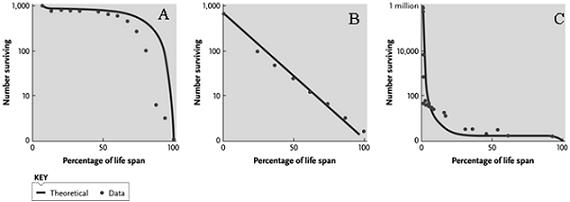 Answer the question using the accompanying figure. Sea turtles are likely to die when they are young but have a good chance of surviving once they reach large size. Which survivorship curve best fits this species?
A) Type I, which is graph A
B) Type II, which is graph B
C) Type I, which is graph C
D) Type III, which is graph C
E) Type III, which is graph A
Question
Question
Question
Question
Question
Question
Question
Question
Question
Question
Question
Question
Question
Question
Question
Question
Question
Question
Question
Question
Question
Question
Question
Question
Question
Question
Question
Question
Question
Question
Question
Question
Question
Question
Question
Question
Question
Question
Question
Question
Question
Question
Question
Question
Question
Question
Match between columns
Premises:
long life span
long life span
short maturation time
short maturation time
Responses:
r -selected
K -selected
r -selected
K -selected
r -selected
K -selected
r -selected
K -selected
r -selected
K -selected
Question
Match between columns
Question
Match between columns
Question
Match between columns
Question
Question
Match between columns
Question
Question
Question
Question
Question
Question
Question
Question
Question
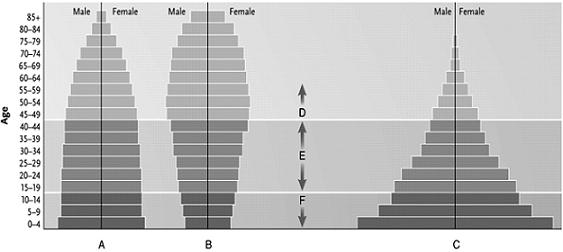 Answer the question using the accompanying figure. Rapid population growth is represented by the letter ____.
A) A
B) B
C) C
D) D
E) E
Question
Question
Question

Unlock Deck
Sign up to unlock the cards in this deck!
Unlock Deck
Unlock Deck
1/92

Play

Full screen (f)
Deck 52: Population Ecology
1
Population dispersion is the ____.
A) statistical description of the relative numbers of individuals in each age class
B) number of individuals per unit area
C) number of individuals in a population
D) average time between the birth of an organism and the birth of its offspring
E) spatial distribution of individuals within a geographical range
A) statistical description of the relative numbers of individuals in each age class
B) number of individuals per unit area
C) number of individuals in a population
D) average time between the birth of an organism and the birth of its offspring
E) spatial distribution of individuals within a geographical range
E
2
Population growth of rabbits in Australia can best be described as ____.
A) fast
B) exponential
C) virulent
D) stable
E) epidemic
A) fast
B) exponential
C) virulent
D) stable
E) epidemic
B
3
A population's ____ is the number of individuals in the population at a specific time.
A) growth rate
B) geographical range
C) size
D) habitat
E) dynamics
A) growth rate
B) geographical range
C) size
D) habitat
E) dynamics
C
4
Rabbits introduced to Australia overpopulated because in their new habitat, ____.
A) people rarely hunted them
B) they had no natural diseases
C) they had no natural predators
D) their food supply was larger
E) there were few herbivorous competitors
A) people rarely hunted them
B) they had no natural diseases
C) they had no natural predators
D) their food supply was larger
E) there were few herbivorous competitors
Unlock Deck
Unlock for access to all 92 flashcards in this deck.
Unlock Deck
k this deck
5
The ____ method is often used to estimate the population size of mobile animals that live within a restricted geographic range.
A) mark-release-recapture
B) direct count
C) extrapolation of counts from quadrants to entire population
D) plot
E) indirect count
A) mark-release-recapture
B) direct count
C) extrapolation of counts from quadrants to entire population
D) plot
E) indirect count
Unlock Deck
Unlock for access to all 92 flashcards in this deck.
Unlock Deck
k this deck
6
Males have little influence on population growth in populations with ____.
A) more males than females
B) more females than males
C) equal numbers of females and males
D) one male
E) animals that form lifelong pairs
A) more males than females
B) more females than males
C) equal numbers of females and males
D) one male
E) animals that form lifelong pairs
Unlock Deck
Unlock for access to all 92 flashcards in this deck.
Unlock Deck
k this deck
7
What was the long-term effect of the introduction of myxoma virus to control rabbits in Australia?
A) The rabbits were all killed.
B) Most rabbits became immune to the virus.
C) The virus killed off some of the rabbit population but also infected kangaroos and wallabies.
D) The virus became less virulent and the rabbits gained some immunity.
E) The virus had no effect.
A) The rabbits were all killed.
B) Most rabbits became immune to the virus.
C) The virus killed off some of the rabbit population but also infected kangaroos and wallabies.
D) The virus became less virulent and the rabbits gained some immunity.
E) The virus had no effect.
Unlock Deck
Unlock for access to all 92 flashcards in this deck.
Unlock Deck
k this deck
8
Why do species with large body sizes typically have lower population densities?
A) each large organism consumes more available resources
B) there are not enough individuals to grow the population
C) genetic diversity is low
D) small organisms have more potential mates
E) large organisms do not like living near one another
A) each large organism consumes more available resources
B) there are not enough individuals to grow the population
C) genetic diversity is low
D) small organisms have more potential mates
E) large organisms do not like living near one another
Unlock Deck
Unlock for access to all 92 flashcards in this deck.
Unlock Deck
k this deck
9
Which population dispersion is the most common in nature?
A) random
B) clumped
C) uniform
D) dynamic
E) unpredictable
A) random
B) clumped
C) uniform
D) dynamic
E) unpredictable
Unlock Deck
Unlock for access to all 92 flashcards in this deck.
Unlock Deck
k this deck
10
Which statement describes the general relationship between population density and body size?
A) Population density increases with increasing body size.
B) Population density is equal to body size.
C) Population density decreases with increasing body size.
D) Population density is not related to body size.
E) Population density first decreases then increases with increasing body size.
A) Population density increases with increasing body size.
B) Population density is equal to body size.
C) Population density decreases with increasing body size.
D) Population density is not related to body size.
E) Population density first decreases then increases with increasing body size.
Unlock Deck
Unlock for access to all 92 flashcards in this deck.
Unlock Deck
k this deck
11
An increase in generation time with increasing body size is least likely in ____.
A) bacteria
B) plants
C) animals
D) protists
E) fungi
A) bacteria
B) plants
C) animals
D) protists
E) fungi
Unlock Deck
Unlock for access to all 92 flashcards in this deck.
Unlock Deck
k this deck
12
Which of these species' population growth rate is least affected by the number of males?
A) northern elephant seals
B) trumpeter swans
C) Canadian geese
D) European rabbits
E) Norwegian rats
A) northern elephant seals
B) trumpeter swans
C) Canadian geese
D) European rabbits
E) Norwegian rats
Unlock Deck
Unlock for access to all 92 flashcards in this deck.
Unlock Deck
k this deck
13
To estimate population size using the mark-release-recapture method, ____ samples must be captured.
A) 1
B) 2
C) 3
D) 4
E) 5
A) 1
B) 2
C) 3
D) 4
E) 5
Unlock Deck
Unlock for access to all 92 flashcards in this deck.
Unlock Deck
k this deck
14
Populations in which individuals repel each other because resources are in short supply tend to have ____ dispersion.
A) random
B) clumped
C) uniform
D) dynamic
E) unpredictable
A) random
B) clumped
C) uniform
D) dynamic
E) unpredictable
Unlock Deck
Unlock for access to all 92 flashcards in this deck.
Unlock Deck
k this deck
15
A population of mostly ____ individuals with a ____ generation time and a ____ proportion of females is expected to show the most growth in the future.
A) prereproductive; short; high
B) reproductive; short; low
C) reproductive; long; low
D) postreproductive; long; low
E) prereproductive; short; low
A) prereproductive; short; high
B) reproductive; short; low
C) reproductive; long; low
D) postreproductive; long; low
E) prereproductive; short; low
Unlock Deck
Unlock for access to all 92 flashcards in this deck.
Unlock Deck
k this deck
16
Which group exhibits the longest generation time?
A) bacteria
B) plants
C) animals
D) protists
E) fungi
A) bacteria
B) plants
C) animals
D) protists
E) fungi
Unlock Deck
Unlock for access to all 92 flashcards in this deck.
Unlock Deck
k this deck
17
Answer the question using the accompanying figure. Sea turtles are likely to die when they are young but have a good chance of surviving once they reach large size. Which survivorship curve best fits this species?A) Type I, which is graph A
B) Type II, which is graph B
C) Type I, which is graph C
D) Type III, which is graph C
E) Type III, which is graph A
Unlock Deck
Unlock for access to all 92 flashcards in this deck.
Unlock Deck
k this deck
18
Populations in which environmental conditions don't vary much within a habitat tend to have ____ dispersion.
A) random
B) clumped
C) uniform
D) dynamic
E) unpredictable
A) random
B) clumped
C) uniform
D) dynamic
E) unpredictable
Unlock Deck
Unlock for access to all 92 flashcards in this deck.
Unlock Deck
k this deck
19
The density of a population is defined as the ____.
A) number of individuals in a population at a specified time
B) number of individuals in a population at a specified place
C) number of individuals per unit area or per unit volume of habitat
D) size of the individual organisms per unit area
E) number of individual organisms per family unit
A) number of individuals in a population at a specified time
B) number of individuals in a population at a specified place
C) number of individuals per unit area or per unit volume of habitat
D) size of the individual organisms per unit area
E) number of individual organisms per family unit
Unlock Deck
Unlock for access to all 92 flashcards in this deck.
Unlock Deck
k this deck
20
Marine biologists tagged and released 50 marlin. Later, fishermen caught 300 marlin, 15 of which had tags. What is the estimate for the number of marlin in the population?
A) 5,000
B) 315
C) 365
D) 2,500
E) 1,000
A) 5,000
B) 315
C) 365
D) 2,500
E) 1,000
Unlock Deck
Unlock for access to all 92 flashcards in this deck.
Unlock Deck
k this deck
21
Type III survivorship curves reflect ____.
A) high juvenile mortality
B) low juvenile mortality
C) high survivorship
D) relatively constant mortality
E) high adult mortality
A) high juvenile mortality
B) low juvenile mortality
C) high survivorship
D) relatively constant mortality
E) high adult mortality
Unlock Deck
Unlock for access to all 92 flashcards in this deck.
Unlock Deck
k this deck
22
Answer the question using the accompanying figure. A species with a relatively constant rate of mortality in all age classes would most likely exhibit which survivorship curve?
A) Type I, which is graph A
B) Type II, which is graph B
C) Type I, which is graph C
D) Type III, which is graph C
E) Type III, which is graph A
A) Type I, which is graph A
B) Type II, which is graph B
C) Type I, which is graph C
D) Type III, which is graph C
E) Type III, which is graph A
Unlock Deck
Unlock for access to all 92 flashcards in this deck.
Unlock Deck
k this deck
23
An example of passive parental care is ____.
A) nutrients that cross the placenta
B) nursing
C) nurturing
D) the nest environment
E) protection from predators
A) nutrients that cross the placenta
B) nursing
C) nurturing
D) the nest environment
E) protection from predators
Unlock Deck
Unlock for access to all 92 flashcards in this deck.
Unlock Deck
k this deck
24
Life history patterns of guppies in Trinidad are a result of which natural selection force?
A) Competition differences in different streams.
B) Predation differences in different streams.
C) Temperature differences in different streams.
D) Pollution differences in different streams.
E) Salt concentration differences in different streams.
A) Competition differences in different streams.
B) Predation differences in different streams.
C) Temperature differences in different streams.
D) Pollution differences in different streams.
E) Salt concentration differences in different streams.
Unlock Deck
Unlock for access to all 92 flashcards in this deck.
Unlock Deck
k this deck
25
The lifetime patterns of growth, maturation, and reproduction determine the ____ of a species.
A) survivorship curve
B) life history
C) specific mortality
D) age-specific fecundity
E) dispersion
A) survivorship curve
B) life history
C) specific mortality
D) age-specific fecundity
E) dispersion
Unlock Deck
Unlock for access to all 92 flashcards in this deck.
Unlock Deck
k this deck
26
In the case of the red harvester ant, colonies that survive to ____ years of age are likely to contribute to the next generation of colonies.
A) one
B) three
C) four
D) seven
E) ten
A) one
B) three
C) four
D) seven
E) ten
Unlock Deck
Unlock for access to all 92 flashcards in this deck.
Unlock Deck
k this deck
27
Organisms use ____ for maintenance, growth, and reproduction.
A) survivorship
B) predation
C) energy
D) parental care
E) dispersion
A) survivorship
B) predation
C) energy
D) parental care
E) dispersion
Unlock Deck
Unlock for access to all 92 flashcards in this deck.
Unlock Deck
k this deck
28
Organisms store energy as ____.
A) starch only
B) glycogen only
C) fat only
D) sugar
E) starch, glycogen or fat
A) starch only
B) glycogen only
C) fat only
D) sugar
E) starch, glycogen or fat
Unlock Deck
Unlock for access to all 92 flashcards in this deck.
Unlock Deck
k this deck
29
In the construction of a life table for colonial species in which most organisms do not reproduce, ____ is/are considered as a reproductive individual.
A) each individual
B) clusters of individuals
C) the entire population in a geographical area
D) the entire population on Earth
E) each separate colony
A) each individual
B) clusters of individuals
C) the entire population in a geographical area
D) the entire population on Earth
E) each separate colony
Unlock Deck
Unlock for access to all 92 flashcards in this deck.
Unlock Deck
k this deck
30
Which factor is responsible for reductions in population size?
A) immigration
B) death
C) birth
D) reproduction
E) dispersion
A) immigration
B) death
C) birth
D) reproduction
E) dispersion
Unlock Deck
Unlock for access to all 92 flashcards in this deck.
Unlock Deck
k this deck
31
In the equation ΔN/Δt = B - D, expressing deaths and births as per capita rates allows ecologists to _____.
A) apply the model to a population of any size
B) accurately measure births
C) accurately measure deaths
D) find the population growth rate
E) model geometric growth
A) apply the model to a population of any size
B) accurately measure births
C) accurately measure deaths
D) find the population growth rate
E) model geometric growth
Unlock Deck
Unlock for access to all 92 flashcards in this deck.
Unlock Deck
k this deck
32
What is true of most deciduous trees in the temperate zone?
A) they spend all of their energy on reproduction
B) growth and reproduction occur simultaneously
C) they only produce one or two offspring annually
D) they produce thousands of seeds for one or two years
E) they only begin to breed after reaching adulthood
A) they spend all of their energy on reproduction
B) growth and reproduction occur simultaneously
C) they only produce one or two offspring annually
D) they produce thousands of seeds for one or two years
E) they only begin to breed after reaching adulthood
Unlock Deck
Unlock for access to all 92 flashcards in this deck.
Unlock Deck
k this deck
33
Which characteristic is descriptive of a population experiencing geometric population growth?
A) population doubles in size after each generation
B) graph of the population growth produces a "J" shaped curve
C) per capita growth rate remains constant
D) ΔN/Δt is increasing
E) population increases at an increasing rate
A) population doubles in size after each generation
B) graph of the population growth produces a "J" shaped curve
C) per capita growth rate remains constant
D) ΔN/Δt is increasing
E) population increases at an increasing rate
Unlock Deck
Unlock for access to all 92 flashcards in this deck.
Unlock Deck
k this deck
34
A population of 100 animals undergoing logistic growth has rmax= 0.4 and K = 102. Given that r = rmax(K - N)/K, calculate the value of r.
A) 0.0078
B) 0.792
C) - 0 . 5 80
D) 0.078
E) 0.99
A) 0.0078
B) 0.792
C) - 0 . 5 80
D) 0.078
E) 0.99
Unlock Deck
Unlock for access to all 92 flashcards in this deck.
Unlock Deck
k this deck
35
In the equation ΔN/Δt = B - D, B represents ____.
A) change in population size
B) time period
C) total births
D) total deaths
E) change in population size over time
A) change in population size
B) time period
C) total births
D) total deaths
E) change in population size over time
Unlock Deck
Unlock for access to all 92 flashcards in this deck.
Unlock Deck
k this deck
36
Answer the question using the accompanying figure. Humans living in environments with access to good medical care are most likely to exhibit which of the following survivorship curves?
A) Type I, which is graph A
B) Type II, which is graph B
C) Type I, which is graph C
D) Type III, which is graph C
E) Type III, which is graph A
A) Type I, which is graph A
B) Type II, which is graph B
C) Type I, which is graph C
D) Type III, which is graph C
E) Type III, which is graph A
Unlock Deck
Unlock for access to all 92 flashcards in this deck.
Unlock Deck
k this deck
37
Fecundity is ____.
A) a summary of the demographic characteristics of a population
B) a group of individuals of similar age
C) the average number of offspring produced
D) the proportion of individuals alive at the start of an interval that die during that interval
E) the proportion of individuals alive at the start of an interval that survive to the start of the next interval
A) a summary of the demographic characteristics of a population
B) a group of individuals of similar age
C) the average number of offspring produced
D) the proportion of individuals alive at the start of an interval that die during that interval
E) the proportion of individuals alive at the start of an interval that survive to the start of the next interval
Unlock Deck
Unlock for access to all 92 flashcards in this deck.
Unlock Deck
k this deck
38
What is the relationship between age-specific mortality and age-specific survivorship?
A) age-specific mortality is the proportion of individuals alive at the start of an age interval; age-specific survivorship is the proportion that die before the start of the next interval
B) age-specific survivorship is the proportion of individuals alive at the start of an age interval that die during the age interval; age-specific mortality is the proportion that survive until the start of the next interval
C) the sum of age-specific mortality and age-specific survivorship always equals 1
D) the sum of age-specific mortality and age-specific survivorship is always less than 1
E) age-specific survivorship is always greater than 1
A) age-specific mortality is the proportion of individuals alive at the start of an age interval; age-specific survivorship is the proportion that die before the start of the next interval
B) age-specific survivorship is the proportion of individuals alive at the start of an age interval that die during the age interval; age-specific mortality is the proportion that survive until the start of the next interval
C) the sum of age-specific mortality and age-specific survivorship always equals 1
D) the sum of age-specific mortality and age-specific survivorship is always less than 1
E) age-specific survivorship is always greater than 1
Unlock Deck
Unlock for access to all 92 flashcards in this deck.
Unlock Deck
k this deck
39
Mathematical models suggest that ____ will be favored by natural selection if organisms grow larger as they age.
A) fecundity
B) iteroparity
C) delayed reproduction
D) early reproduction
E) semelparity
A) fecundity
B) iteroparity
C) delayed reproduction
D) early reproduction
E) semelparity
Unlock Deck
Unlock for access to all 92 flashcards in this deck.
Unlock Deck
k this deck
40
Which organism's reproductive pattern exhibits semelparity?
A) grizzly bear
B) oak tree
C) red deer
D) salmon
E) maple tree
A) grizzly bear
B) oak tree
C) red deer
D) salmon
E) maple tree
Unlock Deck
Unlock for access to all 92 flashcards in this deck.
Unlock Deck
k this deck
41
Lizards can control spider populations on Caribbean islands by which density-dependent mechanism(s)?
A) predation only
B) competition only
C) predation on a common predator only
D) predation and competition
E) predation, competition, and predation on a common predator
A) predation only
B) competition only
C) predation on a common predator only
D) predation and competition
E) predation, competition, and predation on a common predator
Unlock Deck
Unlock for access to all 92 flashcards in this deck.
Unlock Deck
k this deck
42
A(n) ____ is a group of neighboring populations that exchange individuals.
A) K -selected species
B) Type I species
C) r -selected species
D) sink population
E) metapopulation
A) K -selected species
B) Type I species
C) r -selected species
D) sink population
E) metapopulation
Unlock Deck
Unlock for access to all 92 flashcards in this deck.
Unlock Deck
k this deck
43
Crowding ____.
A) has a positive effect on reproduction
B) decreases the growth rate of individuals
C) only occurs in plant species
D) causes immigration
E) stimulates developmental and behavioral changes
A) has a positive effect on reproduction
B) decreases the growth rate of individuals
C) only occurs in plant species
D) causes immigration
E) stimulates developmental and behavioral changes
Unlock Deck
Unlock for access to all 92 flashcards in this deck.
Unlock Deck
k this deck
44
A time lag in the response of survivorship and fecundity to a population's density can occur because ____ is usually determined by the availability of resources at some time in the past.
A) death
B) immigration
C) fecundity
D) competition
E) population growth
A) death
B) immigration
C) fecundity
D) competition
E) population growth
Unlock Deck
Unlock for access to all 92 flashcards in this deck.
Unlock Deck
k this deck
45
Carrying capacity is ____.
A) determined by the individuals of a species
B) defined for each population, and varies from one habitat to another
C) the same across all environments
D) the same in one habitat through time
E) the same across all populations
A) determined by the individuals of a species
B) defined for each population, and varies from one habitat to another
C) the same across all environments
D) the same in one habitat through time
E) the same across all populations
Unlock Deck
Unlock for access to all 92 flashcards in this deck.
Unlock Deck
k this deck
46
The logistic model assumes that ____ will become increasingly limited as population grows larger.
A) deaths
B) births
C) immigration
D) competition
E) vital resources
A) deaths
B) births
C) immigration
D) competition
E) vital resources
Unlock Deck
Unlock for access to all 92 flashcards in this deck.
Unlock Deck
k this deck
47
The transformation of humans from hunter-gatherer societies to agriculturally based ones occurred approximately ____.
A) 14,000 years ago
B) 11,000 years ago
C) 7,000 years ago
D) 1,500 years ago
E) 200 years ago
A) 14,000 years ago
B) 11,000 years ago
C) 7,000 years ago
D) 1,500 years ago
E) 200 years ago
Unlock Deck
Unlock for access to all 92 flashcards in this deck.
Unlock Deck
k this deck
48
What is an example of an extrinsic control of cycles in population size?
A) the relationship between a species and its predators
B) hormonal changes
C) dispersal
D) population density
E) a single reproductive event
A) the relationship between a species and its predators
B) hormonal changes
C) dispersal
D) population density
E) a single reproductive event
Unlock Deck
Unlock for access to all 92 flashcards in this deck.
Unlock Deck
k this deck
49
Intraspecific competition and predation are ____ factors.
A) crowding
B) density-dependent
C) reproductive
D) population
E) logistic
A) crowding
B) density-dependent
C) reproductive
D) population
E) logistic
Unlock Deck
Unlock for access to all 92 flashcards in this deck.
Unlock Deck
k this deck
50
Which statement characterizes human population growth?
A) The rate of human population growth appears to be declining.
B) The rate of human population growth appears to be increasing.
C) The rate of human population growth is exponential.
D) Human birth rates are higher than death rates.
E) Human death rates are higher than birth rates.
A) The rate of human population growth appears to be declining.
B) The rate of human population growth appears to be increasing.
C) The rate of human population growth is exponential.
D) Human birth rates are higher than death rates.
E) Human death rates are higher than birth rates.
Unlock Deck
Unlock for access to all 92 flashcards in this deck.
Unlock Deck
k this deck
51
A population's ____ occurs under ideal, unrealistic conditions.
A) per capita growth rate
B) per capita population curve
C) intrinsic rate of increase
D) geometric population curve
E) exponential population curve
A) per capita growth rate
B) per capita population curve
C) intrinsic rate of increase
D) geometric population curve
E) exponential population curve
Unlock Deck
Unlock for access to all 92 flashcards in this deck.
Unlock Deck
k this deck
52
Studies have determined that ____ is not responsible for the cyclical rise and fall of arctic hare and lynx populations.
A) predation
B) a limited food supply for hares
C) predation by other mammals
D) intraspecies competition
E) disease
A) predation
B) a limited food supply for hares
C) predation by other mammals
D) intraspecies competition
E) disease
Unlock Deck
Unlock for access to all 92 flashcards in this deck.
Unlock Deck
k this deck
53
For the bay checkerspot butterfly, a poor flyer, to recolonize small patch habitats, the new habitats must be ____.
A) high quality
B) low quality
C) close to a source population
D) far from a source population
E) above a certain number of individuals
A) high quality
B) low quality
C) close to a source population
D) far from a source population
E) above a certain number of individuals
Unlock Deck
Unlock for access to all 92 flashcards in this deck.
Unlock Deck
k this deck
54
The increased mortality of coniferous trees in the Pacific Northwest between 1955 and 2007 is an example of a reaction to ____.
A) density-independent factors
B) density-dependent factors
C) predation
D) crowding
E) population growth
A) density-independent factors
B) density-dependent factors
C) predation
D) crowding
E) population growth
Unlock Deck
Unlock for access to all 92 flashcards in this deck.
Unlock Deck
k this deck
55
The intrinsic rate of increase is ____ for bacteria, protists, and animals with short generation times and ____ for those with long generation time.
A) high; low
B) high; constant
C) low; high
D) low; constant
E) constant; low
A) high; low
B) high; constant
C) low; high
D) low; constant
E) constant; low
Unlock Deck
Unlock for access to all 92 flashcards in this deck.
Unlock Deck
k this deck
56
The success of human populations resulted from ____.
A) their ability to solve ecological problems
B) a stable climate
C) their society
D) their hunting ability
E) absence of predators
A) their ability to solve ecological problems
B) a stable climate
C) their society
D) their hunting ability
E) absence of predators
Unlock Deck
Unlock for access to all 92 flashcards in this deck.
Unlock Deck
k this deck
57
The beginning of the industrial and scientific revolution occurred ____.
A) when human population size was approximately one billion
B) when human population size was approximately one million
C) when human population size was approximately five million
D) approximately 500 years ago
E) approximately 100 years ago
A) when human population size was approximately one billion
B) when human population size was approximately one million
C) when human population size was approximately five million
D) approximately 500 years ago
E) approximately 100 years ago
Unlock Deck
Unlock for access to all 92 flashcards in this deck.
Unlock Deck
k this deck
58
Which trait is characteristic of a K -selected species?
A) adapted to rapidly changing environments
B) small body size
C) short generation time
D) provide substantial parental care to offspring
E) single reproductive event
A) adapted to rapidly changing environments
B) small body size
C) short generation time
D) provide substantial parental care to offspring
E) single reproductive event
Unlock Deck
Unlock for access to all 92 flashcards in this deck.
Unlock Deck
k this deck
59
In the logistic model of population growth, what is expected to happen to r when N = K? r will approach 1
A) r will approach rmax
B) r will approach 1
C) r becomes negative
D) r = 0
E) r>0
A) r will approach rmax
B) r will approach 1
C) r becomes negative
D) r = 0
E) r>0
Unlock Deck
Unlock for access to all 92 flashcards in this deck.
Unlock Deck
k this deck
60
The difference between the per capita birth rate and the per capita death rate is the ____.
A) per capita growth rate
B) per capita population curve
C) intrinsic rate of increase
D) geometric population curve
E) exponential population curve
A) per capita growth rate
B) per capita population curve
C) intrinsic rate of increase
D) geometric population curve
E) exponential population curve
Unlock Deck
Unlock for access to all 92 flashcards in this deck.
Unlock Deck
k this deck
61
The sum total of all the resources we use is called the ____.
A) demographic transition model
B) age-structure diagram
C) habitat
D) ecological footprint
E) transitional age
A) demographic transition model
B) age-structure diagram
C) habitat
D) ecological footprint
E) transitional age
Unlock Deck
Unlock for access to all 92 flashcards in this deck.
Unlock Deck
k this deck
62
A human population with an age structure diagram that is narrower at the base than at the top would have ____.
A) zero population growth
B) r
C) r>0
D) been affected by density independent factors
E) (K - N)/K
A) zero population growth
B) r
C) r>0
D) been affected by density independent factors
E) (K - N)/K
Unlock Deck
Unlock for access to all 92 flashcards in this deck.
Unlock Deck
k this deck
63
Match between columns
Premises:
long life span
long life span
short maturation time
short maturation time
Responses:
r -selected
K -selected
r -selected
K -selected
r -selected
K -selected
r -selected
K -selected
r -selected
K -selected
Unlock Deck
Unlock for access to all 92 flashcards in this deck.
Unlock Deck
k this deck
64
Match between columns
Unlock Deck
Unlock for access to all 92 flashcards in this deck.
Unlock Deck
k this deck
65
Match between columns
Unlock Deck
Unlock for access to all 92 flashcards in this deck.
Unlock Deck
k this deck
66
Match between columns
Unlock Deck
Unlock for access to all 92 flashcards in this deck.
Unlock Deck
k this deck
67
The postindustrial age is defined by ____.
A) high birth and death rates
B) zero population growth
C) dramatic slowing in population growth
D) declining death rate
E) declining birth rate
A) high birth and death rates
B) zero population growth
C) dramatic slowing in population growth
D) declining death rate
E) declining birth rate
Unlock Deck
Unlock for access to all 92 flashcards in this deck.
Unlock Deck
k this deck
68
Match between columns
Unlock Deck
Unlock for access to all 92 flashcards in this deck.
Unlock Deck
k this deck
69
What are some density-dependent factors that affect humans at higher population densities? How have these been addressed in industrial societies?
Unlock Deck
Unlock for access to all 92 flashcards in this deck.
Unlock Deck
k this deck
70
A human population living without medical care in a developing country would probably have ____.
A) a rectangle-shaped age structure diagram
B) an r value
C) a pyramid-shaped age structure diagram
D) per capita birth and death rates consistent with those of a stage 4 society
E) no density-dependent factors operating
A) a rectangle-shaped age structure diagram
B) an r value
C) a pyramid-shaped age structure diagram
D) per capita birth and death rates consistent with those of a stage 4 society
E) no density-dependent factors operating
Unlock Deck
Unlock for access to all 92 flashcards in this deck.
Unlock Deck
k this deck
71
According to the text, humans have two options for limiting population growth: 1) make a global effort to limit our own population, or 2) can wait until the environment does it for us. Briefly address each scenario. Which methods would result in a successful global decline in birthrate? Which environmental events are the alternatives?
Unlock Deck
Unlock for access to all 92 flashcards in this deck.
Unlock Deck
k this deck
72
Answer the question using the accompanying figure. The letter "A" represents ____.
A) rapid growth
B) negative growth
C) prereproductive populations
D) postreproductive populations
E) zero growth
A) rapid growth
B) negative growth
C) prereproductive populations
D) postreproductive populations
E) zero growth
Unlock Deck
Unlock for access to all 92 flashcards in this deck.
Unlock Deck
k this deck
73
Birth rates generally reach their highest point in which stage of a country's demographic transition?
A) preindustrial
B) transitional
C) industrial
D) postindustrial
E) stage 1
A) preindustrial
B) transitional
C) industrial
D) postindustrial
E) stage 1
Unlock Deck
Unlock for access to all 92 flashcards in this deck.
Unlock Deck
k this deck
74
Recent studies have demonstrated evolution in some populations over a span of time as short as ____.
A) single years
B) decades
C) centuries
D) thousands of years
E) millions of years
A) single years
B) decades
C) centuries
D) thousands of years
E) millions of years
Unlock Deck
Unlock for access to all 92 flashcards in this deck.
Unlock Deck
k this deck
75
Uniform dispersion usually results from individuals of a species repelling each other.
Unlock Deck
Unlock for access to all 92 flashcards in this deck.
Unlock Deck
k this deck
76
Which phenotypic effects does crowding have on the migratory locust? How are these changes adaptive?
Unlock Deck
Unlock for access to all 92 flashcards in this deck.
Unlock Deck
k this deck
77
Answer the question using the accompanying figure. Rapid population growth is represented by the letter ____.A) A
B) B
C) C
D) D
E) E
Unlock Deck
Unlock for access to all 92 flashcards in this deck.
Unlock Deck
k this deck
78
How are an organism's lifetime energy use and economics analogous?
Unlock Deck
Unlock for access to all 92 flashcards in this deck.
Unlock Deck
k this deck
79
Research has shown that commercial fisheries place selective pressure on fish populations by harvesting mostly the ____ fish, resulting in ____.
A) young; aging populations
B) larger; maturity at smaller sizes
C) smaller; maturity at larger sizes
D) prereproductive; declining birth rates
E) postreproductive; no change in population size
A) young; aging populations
B) larger; maturity at smaller sizes
C) smaller; maturity at larger sizes
D) prereproductive; declining birth rates
E) postreproductive; no change in population size
Unlock Deck
Unlock for access to all 92 flashcards in this deck.
Unlock Deck
k this deck
80
A stage 3 society, based on the demographic transition model, would not be characterized by ____.
A) an r value>0
B) industrialization
C) a clumped population distribution
D) (K - N)/K approaching 1
E) an r value approaching 1
A) an r value>0
B) industrialization
C) a clumped population distribution
D) (K - N)/K approaching 1
E) an r value approaching 1
Unlock Deck
Unlock for access to all 92 flashcards in this deck.
Unlock Deck
k this deck
Unlock Deck
Unlock for access to all 92 flashcards in this deck.







