





 Chat with AI

Deck 15: Lean Accounting and Productivity Measurement
Full screen (f)

Question
Bottleneck Operation: Improving Production Flow
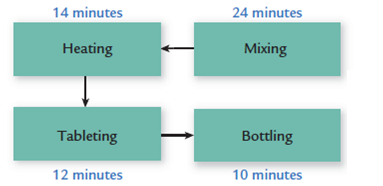
Bienestar, Inc., implemented cellular manufacturing as recommended by a consultant. The production flow improved dramatically. However, the company was still faced with the competitive need to improve its cycle time so that the production rate is one bottle every four minutes (15 bottles per hour). The cell structure is shown below; the times above the process represent the time required to process one unit.
Required:
1. How many units can the cell produce per hour (on a continuous running basis)?
2. How long does it take the cell to produce one unit, assuming the cell is producing on a continuous basis?
3. What must happen so that the cell can produce one bottle every four minutes or 15 per hour, assuming the cell produces on a continuous basis?
Bienestar, Inc., implemented cellular manufacturing as recommended by a consultant. The production flow improved dramatically. However, the company was still faced with the competitive need to improve its cycle time so that the production rate is one bottle every four minutes (15 bottles per hour). The cell structure is shown below; the times above the process represent the time required to process one unit.
Required:
1. How many units can the cell produce per hour (on a continuous running basis)?
2. How long does it take the cell to produce one unit, assuming the cell is producing on a continuous basis?
3. What must happen so that the cell can produce one bottle every four minutes or 15 per hour, assuming the cell produces on a continuous basis?

Question
Interperiod Measurement of Productivity, Profit-Linked Measurement
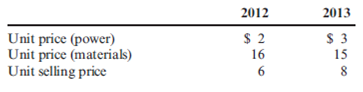
Refer to Exercise 15.14. Suppose the following input prices are provided for each year:
Required:
1. Compute the profit-linked productivity measure. By how much did profits increase due to productivity?
2. Calculate the price-recovery component for 2013. Explain its meaning.
Refer to Exercise 15.14. Suppose the following input prices are provided for each year:
Required:
1. Compute the profit-linked productivity measure. By how much did profits increase due to productivity?
2. Calculate the price-recovery component for 2013. Explain its meaning.
Question
Question
Question
Question
Box Scorecard, Special Order Decision
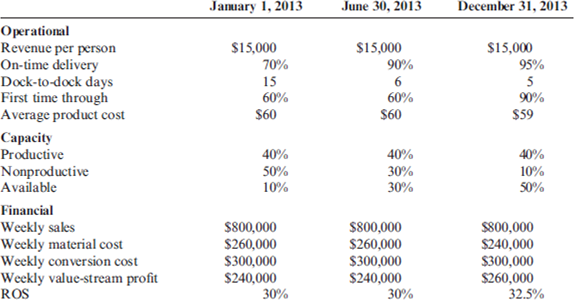
Bradford Company, a manufacturer of small tools, implemented lean manufacturing at the end of 2012. The company's goal for the year was to increase the ROS to 40 percent of sales. A valuestream team was established and began to work on lean improvements. During the year, the team was able to achieve significant results on several fronts. The Box Scorecard below reflects the performance measures at the beginning of the year, midyear, and end of year. Although the team members were pleased with their progress, they were disappointed in the financial results. They were still far from the targeted ROS of 40 percent. They were also puzzled as to why the improvements made did not translate into significantly improved financial performance.
Required:
1. From the scorecard, what was the focus of the value-stream team for the first six months? The second six months? What are the implications of these changes?
2. Using information from the scorecard, offer an explanation for why the financial results were not as good as expected.
3. Suppose that on December 31, 2013, a potential customer offered to purchase an order of goods that would increase weekly revenues in January by $100,000 and material cost by $30,000. Using the old standard cost system, the projected conversion cost of the order would be $60,000. Would you recommend that the order be accepted or rejected? Explain.
Bradford Company, a manufacturer of small tools, implemented lean manufacturing at the end of 2012. The company's goal for the year was to increase the ROS to 40 percent of sales. A valuestream team was established and began to work on lean improvements. During the year, the team was able to achieve significant results on several fronts. The Box Scorecard below reflects the performance measures at the beginning of the year, midyear, and end of year. Although the team members were pleased with their progress, they were disappointed in the financial results. They were still far from the targeted ROS of 40 percent. They were also puzzled as to why the improvements made did not translate into significantly improved financial performance.
Required:
1. From the scorecard, what was the focus of the value-stream team for the first six months? The second six months? What are the implications of these changes?
2. Using information from the scorecard, offer an explanation for why the financial results were not as good as expected.
3. Suppose that on December 31, 2013, a potential customer offered to purchase an order of goods that would increase weekly revenues in January by $100,000 and material cost by $30,000. Using the old standard cost system, the projected conversion cost of the order would be $60,000. Would you recommend that the order be accepted or rejected? Explain.
Question
Question
Basics of Productivity Measurement
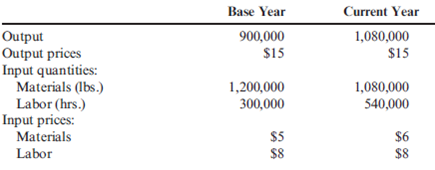
Holbrook Company gathered the following data for the past two years:
Required:
1. Prepare a productivity profile for each year.
2. Prepare partial income statements for each year. Calculate the total change in income.
3. Calculate the change in profits attributable to productivity changes.
4. Calculate the price-recovery component. Explain its meaning.
Holbrook Company gathered the following data for the past two years:
Required:
1. Prepare a productivity profile for each year.
2. Prepare partial income statements for each year. Calculate the total change in income.
3. Calculate the change in profits attributable to productivity changes.
4. Calculate the price-recovery component. Explain its meaning.
Question
Question
Continuous Flow vs. Departmental Flow Manufacturing
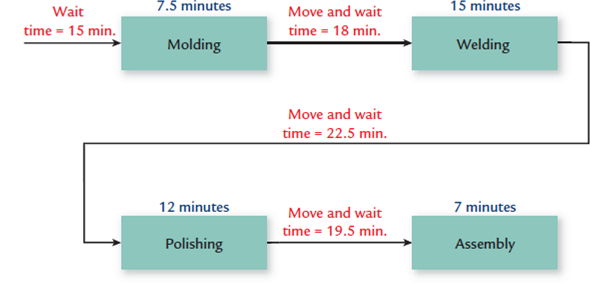
Anderson Company has the following departmental manufacturing structure for one of its products:
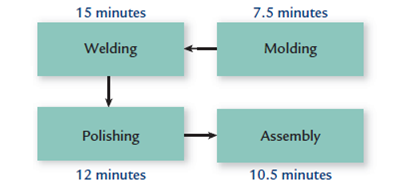
After some study, the production manager of Anderson recommended the following revised cellular manufacturing approach:
Required:
1. Calculate the total time it takes to produce a batch of 20 units using Anderson's traditional departmental structure.
2. Using cellular manufacturing, how much time is saved producing the same batch of 20 units? Assuming the cell operates continuously, what is the production rate? Which process controls this production rate?
3. What if the processing times of molding, welding, and assembly are all reduced to six minutes each? What is the production rate now, and how long will it take to produce a batch of 20 units?
Anderson Company has the following departmental manufacturing structure for one of its products:
After some study, the production manager of Anderson recommended the following revised cellular manufacturing approach:
Required:
1. Calculate the total time it takes to produce a batch of 20 units using Anderson's traditional departmental structure.
2. Using cellular manufacturing, how much time is saved producing the same batch of 20 units? Assuming the cell operates continuously, what is the production rate? Which process controls this production rate?
3. What if the processing times of molding, welding, and assembly are all reduced to six minutes each? What is the production rate now, and how long will it take to produce a batch of 20 units?
Question
Question
Question
Productivity and Quality: Prospective Analysis
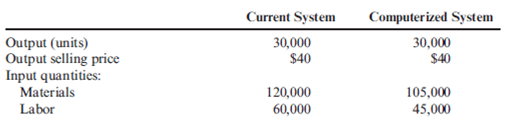
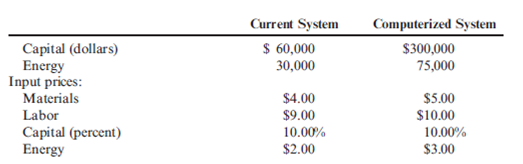
Analytic Company is considering the acquisition of a computerized manufacturing system. The new system has a built-in quality function that increases the control over product specifications. An alarm sounds whenever the product falls outside the programmed specifications. An operator can then make some adjustments on the spot to restore the desired product quality. The system is expected to decrease the number of units scrapped because of poor quality. The system is also expected to decrease the amount of labor inputs needed. The production manager is pushing for the acquisition because he believes that productivity will be greatly enhanced-particularly when it comes to labor and material inputs. Output and input data follow. The data for the computerized system are projections.
Required:
1. Compute the partial operational ratios for materials and labor under each alternative. Is the production manager right in thinking that materials and labor productivity increase with the automated system?
2. Compute the productivity profiles for each system. Does the computerized system improve productivity?
3. Determine the amount by which profits will change if the computerized system is adopted. Are the trade-offs among the inputs favorable? Comment on the system's ability to improve productivity.
Analytic Company is considering the acquisition of a computerized manufacturing system. The new system has a built-in quality function that increases the control over product specifications. An alarm sounds whenever the product falls outside the programmed specifications. An operator can then make some adjustments on the spot to restore the desired product quality. The system is expected to decrease the number of units scrapped because of poor quality. The system is also expected to decrease the amount of labor inputs needed. The production manager is pushing for the acquisition because he believes that productivity will be greatly enhanced-particularly when it comes to labor and material inputs. Output and input data follow. The data for the computerized system are projections.
Required:
1. Compute the partial operational ratios for materials and labor under each alternative. Is the production manager right in thinking that materials and labor productivity increase with the automated system?
2. Compute the productivity profiles for each system. Does the computerized system improve productivity?
3. Determine the amount by which profits will change if the computerized system is adopted. Are the trade-offs among the inputs favorable? Comment on the system's ability to improve productivity.
Question
Question
Value-Stream Average Costing, ABC Costs as Benchmarks
A value stream has three activities and two products. The units produced and shipped per week are 50 of the deluxe model (Model A) and 150 of the basic model (Model B). The resource consumption patterns are shown as follows:

Required:
1. Calculate the ABC product cost for Models A and B.
2. Calculate the value-stream average product cost. Assuming reasonable stability in the consumption patterns of the products and product mix, assess how well the products are grouped based on similarity.
A value stream has three activities and two products. The units produced and shipped per week are 50 of the deluxe model (Model A) and 150 of the basic model (Model B). The resource consumption patterns are shown as follows:
Required:
1. Calculate the ABC product cost for Models A and B.
2. Calculate the value-stream average product cost. Assuming reasonable stability in the consumption patterns of the products and product mix, assess how well the products are grouped based on similarity.
Question
Question
Productivity Measurement, Basics
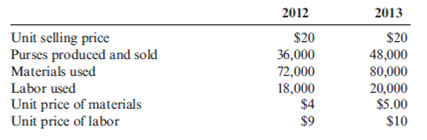
Jadlow Company produces handcrafted leather purses. Virtually all of the manufacturing cost consists of materials and labor. Over the past several years, profits have been declining because the cost of the two major inputs has been increasing. Janice Jadlow, the president of the company, has indicated that the price of the purses cannot be increased; thus, the only way to improve or at least stabilize profits is to increase overall productivity. At the beginning of 2013, Janice implemented a new cutting and assembly process that promised less materials waste and a faster production time. At the end of 2013, Janice wants to know how much profits have changed from the prior year because of the new process. In order to provide this information to Janice, the controller of the company gathered the following data:
Required:
1. Compute the productivity profile for each year. Comment on the effectiveness of the new production process.
2. Compute the increase in profits attributable to increased productivity.
3. Calculate the price-recovery component, and comment on its meaning.
Jadlow Company produces handcrafted leather purses. Virtually all of the manufacturing cost consists of materials and labor. Over the past several years, profits have been declining because the cost of the two major inputs has been increasing. Janice Jadlow, the president of the company, has indicated that the price of the purses cannot be increased; thus, the only way to improve or at least stabilize profits is to increase overall productivity. At the beginning of 2013, Janice implemented a new cutting and assembly process that promised less materials waste and a faster production time. At the end of 2013, Janice wants to know how much profits have changed from the prior year because of the new process. In order to provide this information to Janice, the controller of the company gathered the following data:
Required:
1. Compute the productivity profile for each year. Comment on the effectiveness of the new production process.
2. Compute the increase in profits attributable to increased productivity.
3. Calculate the price-recovery component, and comment on its meaning.
Question
Value-Stream Costing Objective
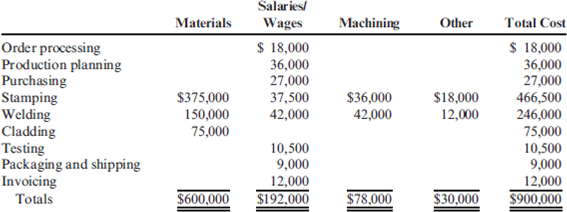
During the week of June 12, Harrison Manufacturing produced and shipped 15,000 units of its aluminum wheels: 3,000 units of Model A and 12,000 units of Model B. The following costs were incurred:
Required:
1. Assume initially that the value-stream costs and total units shipped apply only to one model (a single-product value stream). Calculate the unit cost, and comment on its accuracy.
2. Calculate the unit cost for Models A and B, and comment on its accuracy. Explain the rationale for using units shipped instead of units produced in the calculation.
3. What if Model A is responsible for 40 percent of the materials cost? Show how the unit cost would be adjusted for this condition.
During the week of June 12, Harrison Manufacturing produced and shipped 15,000 units of its aluminum wheels: 3,000 units of Model A and 12,000 units of Model B. The following costs were incurred:
Required:
1. Assume initially that the value-stream costs and total units shipped apply only to one model (a single-product value stream). Calculate the unit cost, and comment on its accuracy.
2. Calculate the unit cost for Models A and B, and comment on its accuracy. Explain the rationale for using units shipped instead of units produced in the calculation.
3. What if Model A is responsible for 40 percent of the materials cost? Show how the unit cost would be adjusted for this condition.
Question
Question
Question
Productivity Measurement, Technical and Price Efficiency
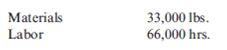
In 2012, Fleming Chemicals used the following input combination to produce 55,000 gallons of an industrial solvent:
In 2013, Fleming again planned to produce 55,000 gallons of solvent and was considering two different changes in process, both of which would be able to produce the desired output. The following input combinations are associated with each process change:

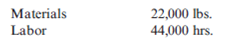
The following combination is optimal for an output of 55,000 units. However, this optimal input combination is unknown to Fleming.
The cost of materials is $60 per pound, and the cost of labor is $15 per hour. These input prices hold for 2012 and 2013.
Required:
1. Compute the productivity profiles for each of the following:
a. The actual inputs used in 2012
b. The inputs for each proposed 2013 process change
c. The optimal input combination. Will productivity increase in 2013, regardless of which change is used? Which process change would you recommend based on the prospective productivity profiles?
2. Compute the cost of 2012's productive inefficiency relative to the optimal input combination. Repeat for 2013 proposed input changes. Will productivity improve from 2012 to 2013 for each process change? If so, by how much? Explain. Include in your explanation a discussion of changes in technical and allocative efficiency.
3. Since the optimal input combination is not known by Fleming, suggest a way to measure productivity improvement. Use this method to measure the productivity improvement achieved from 2012 to 2013. How does this measure compare with the productivity improvement measure computed using the optimal input combination?
In 2012, Fleming Chemicals used the following input combination to produce 55,000 gallons of an industrial solvent:
In 2013, Fleming again planned to produce 55,000 gallons of solvent and was considering two different changes in process, both of which would be able to produce the desired output. The following input combinations are associated with each process change:
The following combination is optimal for an output of 55,000 units. However, this optimal input combination is unknown to Fleming.
The cost of materials is $60 per pound, and the cost of labor is $15 per hour. These input prices hold for 2012 and 2013.
Required:
1. Compute the productivity profiles for each of the following:
a. The actual inputs used in 2012
b. The inputs for each proposed 2013 process change
c. The optimal input combination. Will productivity increase in 2013, regardless of which change is used? Which process change would you recommend based on the prospective productivity profiles?
2. Compute the cost of 2012's productive inefficiency relative to the optimal input combination. Repeat for 2013 proposed input changes. Will productivity improve from 2012 to 2013 for each process change? If so, by how much? Explain. Include in your explanation a discussion of changes in technical and allocative efficiency.
3. Since the optimal input combination is not known by Fleming, suggest a way to measure productivity improvement. Use this method to measure the productivity improvement achieved from 2012 to 2013. How does this measure compare with the productivity improvement measure computed using the optimal input combination?
Question
Question
Value-Stream Reporting with Inventory Decrease
Shorts Manufacturing, Inc., has implemented lean manufacturing in its Kansas City plant as a pilot program. One of its value streams produces a family of small electric tools. The value- stream team managers were quite excited about the results, as some of their efforts to eliminate waste were proving to be effective. During the most recent three weeks, the following data pertaining to the electric tool value stream were collected:
Week l:

Week 2:

Week 3:

Required:
1. Prepare a traditional income statement for each week.
2. Calculate the average value-stream product cost for each week. What does this cost signal, if anything?
3. Prepare a value-stream income statement for each week. Assume that any increase in inventory is valued at average cost. Comment on the financial performance of the value stream and its relationship to traditional income measurement.
Shorts Manufacturing, Inc., has implemented lean manufacturing in its Kansas City plant as a pilot program. One of its value streams produces a family of small electric tools. The value- stream team managers were quite excited about the results, as some of their efforts to eliminate waste were proving to be effective. During the most recent three weeks, the following data pertaining to the electric tool value stream were collected:
Week l:
Week 2:
Week 3:
Required:
1. Prepare a traditional income statement for each week.
2. Calculate the average value-stream product cost for each week. What does this cost signal, if anything?
3. Prepare a value-stream income statement for each week. Assume that any increase in inventory is valued at average cost. Comment on the financial performance of the value stream and its relationship to traditional income measurement.
Question
Question
Profile Productivity Measurement Objective
In 2013, Choctaw Company implements a new process affecting labor and materials. The following reported data are provided to evaluate the effect on the company's productivity:

Required:
1. Calculate the productivity profile for 2012.
2. Calculate the productivity profile for 2013, and comment on the effect of the new production and assembly process.
3. What if the labor hours used in 2013 were 112,500? What does comparison of the 2012 and 2013 profiles now communicate?
In 2013, Choctaw Company implements a new process affecting labor and materials. The following reported data are provided to evaluate the effect on the company's productivity:
Required:
1. Calculate the productivity profile for 2012.
2. Calculate the productivity profile for 2013, and comment on the effect of the new production and assembly process.
3. What if the labor hours used in 2013 were 112,500? What does comparison of the 2012 and 2013 profiles now communicate?
Question
Question
Question
Question
Box Scorecard
The following Box Scorecard was prepared for a value stream:
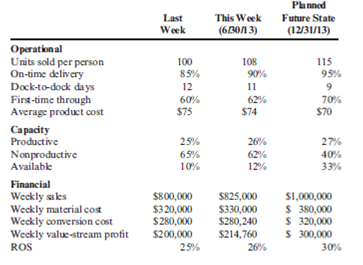
Required:
1. How many nonfinancial measures are used to evaluate performance? Why are nonfinancial measures used?
2. Classify the operational measures as time-based, quality-based, or efficiency-based. Discuss the significance of each category for lean manufacturing.
3. What is the role of the Planned Future State column?
4. Discuss the capacity category and explain the meaning of each measure and its significance.
5. Discuss the relationship between the financial measures and the measures in the operational and capacity categories.
The following Box Scorecard was prepared for a value stream:
Required:
1. How many nonfinancial measures are used to evaluate performance? Why are nonfinancial measures used?
2. Classify the operational measures as time-based, quality-based, or efficiency-based. Discuss the significance of each category for lean manufacturing.
3. What is the role of the Planned Future State column?
4. Discuss the capacity category and explain the meaning of each measure and its significance.
5. Discuss the relationship between the financial measures and the measures in the operational and capacity categories.
Question
Question
Profit-Linked Productivity Measurement
Refer to Cornerstone Exercise 15.3. Choctaw Company provides the following additional information so that total productivity can be valued:
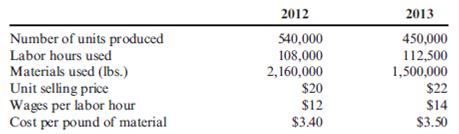
Required:
1. Calculate the cost of inputs in 2013, assuming no productivity change from 2012 to 2013.
2. Calculate the actual cost of inputs for 2013. What is the net value of the productivity changes? How much profit change is attributable to each input's productivity change?
3. What if a manager wants to know how much of the total profit change from 2012 to 2013 is attributable to price recovery? Calculate the price-recovery component, and comment on its meaning.
Refer to Cornerstone Exercise 15.3. Choctaw Company provides the following additional information so that total productivity can be valued:
Required:
1. Calculate the cost of inputs in 2013, assuming no productivity change from 2012 to 2013.
2. Calculate the actual cost of inputs for 2013. What is the net value of the productivity changes? How much profit change is attributable to each input's productivity change?
3. What if a manager wants to know how much of the total profit change from 2012 to 2013 is attributable to price recovery? Calculate the price-recovery component, and comment on its meaning.
Question
Question
Question
Question
Technical and Price Efficiency
Listed below are several possible input combinations for producing 7,500 units of a pocket PC.
Two of the input combinations are technically efficient.
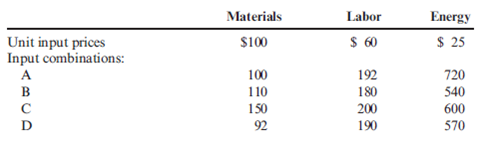
Required:
1. Identify the technically efficient input combinations. Explain your choices.
2. Which of the two technically efficient input combinations should be used? Explain.
Listed below are several possible input combinations for producing 7,500 units of a pocket PC.
Two of the input combinations are technically efficient.
Required:
1. Identify the technically efficient input combinations. Explain your choices.
2. Which of the two technically efficient input combinations should be used? Explain.
Question
Question
Question
Question
The following information is given for a manufacturing firm:
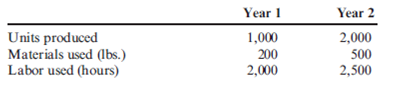
Which of the following correctly describes the change in productive efficiency from Year 1 to Year 2?
A) Material and labor productivity both increased.
B) Material and labor productivity both decreased.
C) Material productivity decreased and labor productivity increased.
D) Material productivity increased and labor productivity decreased.
Which of the following correctly describes the change in productive efficiency from Year 1 to Year 2?
A) Material and labor productivity both increased.
B) Material and labor productivity both decreased.
C) Material productivity decreased and labor productivity increased.
D) Material productivity increased and labor productivity decreased.
Question
Value-Stream Identification
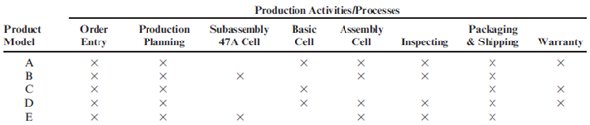
Helix, Inc., formed the following matrix for its five products:
Required:
Using the information in the matrix, identify the value streams.
Helix, Inc., formed the following matrix for its five products:
Required:
Using the information in the matrix, identify the value streams.
Question
Productivity Measurement, Technical and Allocative Efficiency, Partial Measures
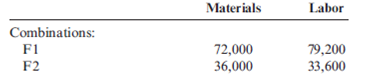
Carsen Company produces handcrafted pottery that uses two inputs: materials and labor. During the past quarter, 24,000 units were produced, requiring 96,000 pounds of materials and 48,000 hours of labor. An engineering efficiency study commissioned by the local university revealed that Carsen can produce the same 24,000 units of output using either of the following two combinations of inputs:
The cost of materials is $8 per pound; the cost of labor is $12 per hour.
Required:
1. Compute the output-input ratio for each input of Combination F1. Does this represent a productivity improvement over the current use of inputs? What is the total dollar value of the improvement? Classify this as a technical or an allocative efficiency improvement.
2. Compute the output-input ratio for each input of Combination F2. Does this represent a productivity improvement over the current use of inputs? Now, compare these ratios to those of Combination F1. What has happened?
3. Compute the cost of producing 24,000 units of output using Combination F1. Compare this cost to the cost using Combination F2. Does moving from Combination F1 to Combination F2 represent a productivity improvement? Explain.
Carsen Company produces handcrafted pottery that uses two inputs: materials and labor. During the past quarter, 24,000 units were produced, requiring 96,000 pounds of materials and 48,000 hours of labor. An engineering efficiency study commissioned by the local university revealed that Carsen can produce the same 24,000 units of output using either of the following two combinations of inputs:
The cost of materials is $8 per pound; the cost of labor is $12 per hour.
Required:
1. Compute the output-input ratio for each input of Combination F1. Does this represent a productivity improvement over the current use of inputs? What is the total dollar value of the improvement? Classify this as a technical or an allocative efficiency improvement.
2. Compute the output-input ratio for each input of Combination F2. Does this represent a productivity improvement over the current use of inputs? Now, compare these ratios to those of Combination F1. What has happened?
3. Compute the cost of producing 24,000 units of output using Combination F1. Compare this cost to the cost using Combination F2. Does moving from Combination F1 to Combination F2 represent a productivity improvement? Explain.
Question
Question
Question
Question
Question
Continuous Flow versus Departmental Flow Manufacturing
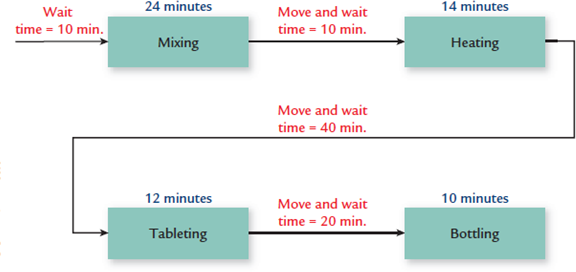
Bienestar Inc., has the following departmental structure for producing a well-known multivitamin:
A consultant designed the following cellular manufacturing structure for the same product:
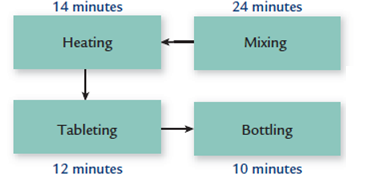
The times above the processes represent the time required to process one unit of product.
Required:
1. Calculate the time required to produce a batch of 15 bottles using a batch-processing departmental structure.
2. Calculate the time to process 15 units using cellular manufacturing.
3. How much manufacturing time will the cellular manufacturing structure save for a batch of 15 units?
Bienestar Inc., has the following departmental structure for producing a well-known multivitamin:
A consultant designed the following cellular manufacturing structure for the same product:
The times above the processes represent the time required to process one unit of product.
Required:
1. Calculate the time required to produce a batch of 15 bottles using a batch-processing departmental structure.
2. Calculate the time to process 15 units using cellular manufacturing.
3. How much manufacturing time will the cellular manufacturing structure save for a batch of 15 units?
Question
Interperiod Measurement of Productivity Profiles
Helena Company needs to increase its profits and so has embarked on a program to increase its overall productivity. After one year of operation, Kent Olson, manager of the Columbus plant, reported the following results for the base period and its most recent year of operations:
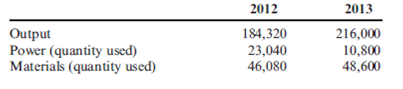
Required:
Compute the productivity profiles for each year. Did productivity improve? Explain.
Helena Company needs to increase its profits and so has embarked on a program to increase its overall productivity. After one year of operation, Kent Olson, manager of the Columbus plant, reported the following results for the base period and its most recent year of operations:
Required:
Compute the productivity profiles for each year. Did productivity improve? Explain.
Question
Question
Question
Question

Unlock Deck
Sign up to unlock the cards in this deck!
Unlock Deck
Unlock Deck
1/51

Play

Full screen (f)
Deck 15: Lean Accounting and Productivity Measurement
1
Bottleneck Operation: Improving Production Flow
Bienestar, Inc., implemented cellular manufacturing as recommended by a consultant. The production flow improved dramatically. However, the company was still faced with the competitive need to improve its cycle time so that the production rate is one bottle every four minutes (15 bottles per hour). The cell structure is shown below; the times above the process represent the time required to process one unit.
Required:
1. How many units can the cell produce per hour (on a continuous running basis)?
2. How long does it take the cell to produce one unit, assuming the cell is producing on a continuous basis?
3. What must happen so that the cell can produce one bottle every four minutes or 15 per hour, assuming the cell produces on a continuous basis?
Bienestar, Inc., implemented cellular manufacturing as recommended by a consultant. The production flow improved dramatically. However, the company was still faced with the competitive need to improve its cycle time so that the production rate is one bottle every four minutes (15 bottles per hour). The cell structure is shown below; the times above the process represent the time required to process one unit.
Required:
1. How many units can the cell produce per hour (on a continuous running basis)?
2. How long does it take the cell to produce one unit, assuming the cell is producing on a continuous basis?
3. What must happen so that the cell can produce one bottle every four minutes or 15 per hour, assuming the cell produces on a continuous basis?
1.If the cell is processing continuously, then a unit is produced every 24 minutes after the start-up unit as it is a bottleneck time.
Calculate units can cell produce per hour:
 Hence, the production rate per hour will be 2.5 units per hour.
2.If the cell is processing continuously, then the time taken to produce one unit will be 24 minutes
 as bottleneck sets the production rate.
3.Explanation:
To produce one bottle every four minutes or 15 per hour, the maximum unit production time for any process must be 4 minutes. Thus, the ways should be identified for reducing time of Mixing, Heating, Tableting and Bottling to 4 minutes.
Calculate units can cell produce per hour:
Hence, the production rate per hour will be 2.5 units per hour. 2.If the cell is processing continuously, then the time taken to produce one unit will be 24 minutes
as bottleneck sets the production rate.3.Explanation:
To produce one bottle every four minutes or 15 per hour, the maximum unit production time for any process must be 4 minutes. Thus, the ways should be identified for reducing time of Mixing, Heating, Tableting and Bottling to 4 minutes.
2
Interperiod Measurement of Productivity, Profit-Linked Measurement
Refer to Exercise 15.14. Suppose the following input prices are provided for each year:
Required:
1. Compute the profit-linked productivity measure. By how much did profits increase due to productivity?
2. Calculate the price-recovery component for 2013. Explain its meaning.
Refer to Exercise 15.14. Suppose the following input prices are provided for each year:
Required:
1. Compute the profit-linked productivity measure. By how much did profits increase due to productivity?
2. Calculate the price-recovery component for 2013. Explain its meaning.
1.Computation of profit-linked productivity measure is as follows:
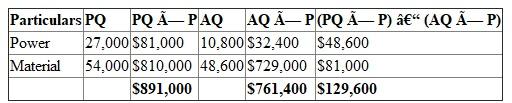 The values obtained in the above table are clearly explained below:
In the above table, the PQ values are obtained by,
PQ
The PQ (Power) is obtained by dividing the base-period productivity ratio of power with the output in the 2013. That is,
 The PQ (Material) is obtained by dividing the base-period productivity ratio of power with the output in the 2013. That is,

 Cost of Power (
 ) is obtained by multiplying the number of hours of power with the unit price of the power (2013). That is,
 Similarly, Cost of Material (
 ) is obtained by multiplying the number of pounds of material with the cost per pound (2013). That is,


 The cost of Power (
 ) is obtained by multiplying the number of hours of power with the unit price of the power (2013). That is,
 The cost of Material (
 ) is obtained by multiplying the number of pounds of material with the cost per pound (2013). That is,
 (PQ × P) - (AQ × P)The results obtained in the column (PQ × P) is deducted from the results obtained in the (AQ × P ). That is,
 Hence, the Profits increased by $129,600 due to productivity changes.
2.Calculation of price recovery for 2103 is as follows:
 Calculation of Total Profit Change:
 2012:
2012:
 2013:
2013:
 Hence, Total Profit change is $644,040

 Price recovery is the change in profit which realizes without any change in productivity. Hence, without increasing the productivity, the company would have shown increased profits of $514,440.
The values obtained in the above table are clearly explained below:In the above table, the PQ values are obtained by,
PQ
The PQ (Power) is obtained by dividing the base-period productivity ratio of power with the output in the 2013. That is,
The PQ (Material) is obtained by dividing the base-period productivity ratio of power with the output in the 2013. That is, Cost of Power ( ) is obtained by multiplying the number of hours of power with the unit price of the power (2013). That is, Similarly, Cost of Material ( ) is obtained by multiplying the number of pounds of material with the cost per pound (2013). That is, The cost of Power ( ) is obtained by multiplying the number of hours of power with the unit price of the power (2013). That is, The cost of Material ( ) is obtained by multiplying the number of pounds of material with the cost per pound (2013). That is, (PQ × P) - (AQ × P)The results obtained in the column (PQ × P) is deducted from the results obtained in the (AQ × P ). That is, Hence, the Profits increased by $129,600 due to productivity changes. 2.Calculation of price recovery for 2103 is as follows:
Calculation of Total Profit Change: 2012: 2013: Hence, Total Profit change is $644,040 Price recovery is the change in profit which realizes without any change in productivity. Hence, without increasing the productivity, the company would have shown increased profits of $514,440. 3
Multiple-Product Value Streams, Product Costing, Creating Available Capacity
Refer to Problem 15.22.
After some detailed polling among the 60, four types of eaters were identified: two types of light eaters and two types of heavy eaters. The consumption patterns for each group are given (slices of pizza, glasses of root beer, and bowls of salad): Light Eaters (Group A): A1 = (2,2,1) and A2 = (3,3,1); Heavy Eaters (Group B): B1 = (6,3,1) and B2 = (7,2,1). There are an equal number of CPAs in each of the four groups.
Required:
1. Calculate the average lunch cost for each CPA in each of the two groups, A and B. Compare this to the ABC cost assignments. Discuss the merits of grouping based on similarity. Discuss the analogy to multiple-product value streams.
2. Suppose that members of the heavy-eating group (Group B) decided that they were eating more than necessary for their health and well-being and decided to reduce their total calories. They therefore agreed to reduce consumption of pizza by one slice and consumption of root beer by one glass for each member of the group. Relative to the original order, how much extra capacity exists? If the excess capacity is eliminated by reducing the order, what is the new average cost? Suppose that the decision is to use the extra capacity to invite four guests (two of Type B1 and two of Type B2) to lunch (at the cost of the CPAs). If the original order is used as the benchmark cost, what is the extra cost of the guest program? Comment on the conceptual significance of this for manufacturing firms.
Refer to Problem 15.22.
After some detailed polling among the 60, four types of eaters were identified: two types of light eaters and two types of heavy eaters. The consumption patterns for each group are given (slices of pizza, glasses of root beer, and bowls of salad): Light Eaters (Group A): A1 = (2,2,1) and A2 = (3,3,1); Heavy Eaters (Group B): B1 = (6,3,1) and B2 = (7,2,1). There are an equal number of CPAs in each of the four groups.
Required:
1. Calculate the average lunch cost for each CPA in each of the two groups, A and B. Compare this to the ABC cost assignments. Discuss the merits of grouping based on similarity. Discuss the analogy to multiple-product value streams.
2. Suppose that members of the heavy-eating group (Group B) decided that they were eating more than necessary for their health and well-being and decided to reduce their total calories. They therefore agreed to reduce consumption of pizza by one slice and consumption of root beer by one glass for each member of the group. Relative to the original order, how much extra capacity exists? If the excess capacity is eliminated by reducing the order, what is the new average cost? Suppose that the decision is to use the extra capacity to invite four guests (two of Type B1 and two of Type B2) to lunch (at the cost of the CPAs). If the original order is used as the benchmark cost, what is the extra cost of the guest program? Comment on the conceptual significance of this for manufacturing firms.
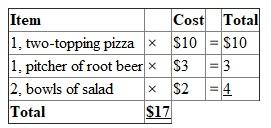
1.Determination of the average amount to be paid by each CPA for the lunch:
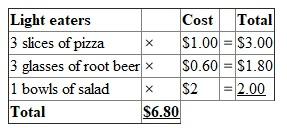
 2.Calculation of cost on group bases:

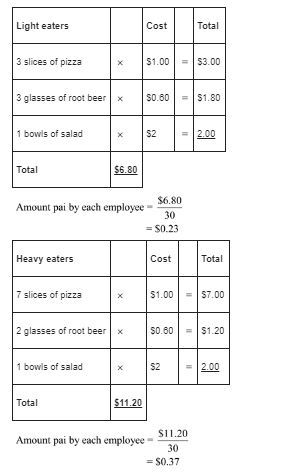

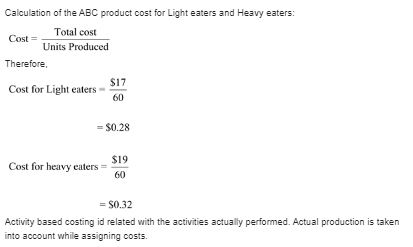
2.Calculation of cost on group bases: 4
What is a focused value stream?
Unlock Deck
Unlock for access to all 51 flashcards in this deck.
Unlock Deck
k this deck
5
Explain the difference between partial and total measures of productivity.
Unlock Deck
Unlock for access to all 51 flashcards in this deck.
Unlock Deck
k this deck
6
Box Scorecard, Special Order Decision
Bradford Company, a manufacturer of small tools, implemented lean manufacturing at the end of 2012. The company's goal for the year was to increase the ROS to 40 percent of sales. A valuestream team was established and began to work on lean improvements. During the year, the team was able to achieve significant results on several fronts. The Box Scorecard below reflects the performance measures at the beginning of the year, midyear, and end of year. Although the team members were pleased with their progress, they were disappointed in the financial results. They were still far from the targeted ROS of 40 percent. They were also puzzled as to why the improvements made did not translate into significantly improved financial performance.
Required:
1. From the scorecard, what was the focus of the value-stream team for the first six months? The second six months? What are the implications of these changes?
2. Using information from the scorecard, offer an explanation for why the financial results were not as good as expected.
3. Suppose that on December 31, 2013, a potential customer offered to purchase an order of goods that would increase weekly revenues in January by $100,000 and material cost by $30,000. Using the old standard cost system, the projected conversion cost of the order would be $60,000. Would you recommend that the order be accepted or rejected? Explain.
Bradford Company, a manufacturer of small tools, implemented lean manufacturing at the end of 2012. The company's goal for the year was to increase the ROS to 40 percent of sales. A valuestream team was established and began to work on lean improvements. During the year, the team was able to achieve significant results on several fronts. The Box Scorecard below reflects the performance measures at the beginning of the year, midyear, and end of year. Although the team members were pleased with their progress, they were disappointed in the financial results. They were still far from the targeted ROS of 40 percent. They were also puzzled as to why the improvements made did not translate into significantly improved financial performance.
Required:
1. From the scorecard, what was the focus of the value-stream team for the first six months? The second six months? What are the implications of these changes?
2. Using information from the scorecard, offer an explanation for why the financial results were not as good as expected.
3. Suppose that on December 31, 2013, a potential customer offered to purchase an order of goods that would increase weekly revenues in January by $100,000 and material cost by $30,000. Using the old standard cost system, the projected conversion cost of the order would be $60,000. Would you recommend that the order be accepted or rejected? Explain.
Unlock Deck
Unlock for access to all 51 flashcards in this deck.
Unlock Deck
k this deck
7
Value-Stream Costing
Henderson, Inc., has just created five order fulfillment value streams, two focused and three that produce multiple products. The size of the plant in which the value streams are located is 100,000 square feet. The facility costs total $1,000,000 per year. One of the focused value streams produces a basic MP3 product. The MP3 value stream occupies 20,000 square feet. Not counting facility costs, the MP3 value-stream costs total $1,800,000. There are 25,000 MP3 units produced annually. There were not sufficient quality personnel for each value stream; thus, the MP3 stream had to share a quality engineer who spends 40 percent of his time with the MP3 value stream and the other 60 percent with two other value streams. While 40 percent of the time is not sufficient time for the value streams, the contribution will be workable until other arrangements can be made. His salary is $75,000 per year. Vivian Olsen, an industrial engineer, is one of two employees assigned completely to the value stream from production planning. Vivian has not been with the company as long as the other production engineer. Because of the demand- pull nature of the new value stream, only one production planner is needed.
Required:
1. Explain how the value-stream costs of $1,800,000 were most likely assigned to the MP3 value stream. Explain how facility costs will be treated and why.
2. How many employees are likely to be located within the MP3 value stream?
3. Given that only one production planner is needed, what should the company do with its extra engineer (Vivian Olsen)?
4. Calculate the unit product cost for the MP3 value stream. Comment on the accuracy of this cost and its value for monitoring value-stream performance.
Henderson, Inc., has just created five order fulfillment value streams, two focused and three that produce multiple products. The size of the plant in which the value streams are located is 100,000 square feet. The facility costs total $1,000,000 per year. One of the focused value streams produces a basic MP3 product. The MP3 value stream occupies 20,000 square feet. Not counting facility costs, the MP3 value-stream costs total $1,800,000. There are 25,000 MP3 units produced annually. There were not sufficient quality personnel for each value stream; thus, the MP3 stream had to share a quality engineer who spends 40 percent of his time with the MP3 value stream and the other 60 percent with two other value streams. While 40 percent of the time is not sufficient time for the value streams, the contribution will be workable until other arrangements can be made. His salary is $75,000 per year. Vivian Olsen, an industrial engineer, is one of two employees assigned completely to the value stream from production planning. Vivian has not been with the company as long as the other production engineer. Because of the demand- pull nature of the new value stream, only one production planner is needed.
Required:
1. Explain how the value-stream costs of $1,800,000 were most likely assigned to the MP3 value stream. Explain how facility costs will be treated and why.
2. How many employees are likely to be located within the MP3 value stream?
3. Given that only one production planner is needed, what should the company do with its extra engineer (Vivian Olsen)?
4. Calculate the unit product cost for the MP3 value stream. Comment on the accuracy of this cost and its value for monitoring value-stream performance.
Unlock Deck
Unlock for access to all 51 flashcards in this deck.
Unlock Deck
k this deck
8
Basics of Productivity Measurement
Holbrook Company gathered the following data for the past two years:
Required:
1. Prepare a productivity profile for each year.
2. Prepare partial income statements for each year. Calculate the total change in income.
3. Calculate the change in profits attributable to productivity changes.
4. Calculate the price-recovery component. Explain its meaning.
Holbrook Company gathered the following data for the past two years:
Required:
1. Prepare a productivity profile for each year.
2. Prepare partial income statements for each year. Calculate the total change in income.
3. Calculate the change in profits attributable to productivity changes.
4. Calculate the price-recovery component. Explain its meaning.
Unlock Deck
Unlock for access to all 51 flashcards in this deck.
Unlock Deck
k this deck
9
Lean versus Standard-Costing-Based Measures
Continuous improvement is the governing principle of a lean accounting system. Following are several performance measures. Some of these measures would be associated with a traditional standard-costing accounting system, and some would be associated with a lean accounting system.
a. Materials price variances
b. Cycle time
c. Comparison of actual product costs with target costs
d. Materials quantity or efficiency variances
e. Comparison of actual product costs over time (trend reports)
f. Comparison of actual overhead costs, item by item, with the corresponding budgeted costs
g. Comparison of product costs with competitors' product costs
h. Percentage of on-time deliveries
i. First-time through
j. Reports of value- and non-value-added costs
k. Labor efficiency variances
l. Days of inventory
m. Downtime
n. Manufacturing cycle efficiency (MCE)
j. Unused (available) capacity variance
p. Labor rate variance
q. Using a sister plant's best practices as a performance standard
Required:
1. Classify each measure as lean or traditional (standard costing). If traditional, discuss the measure's limitations for a lean environment. If it is a lean measure, describe how the measure supports the objectives of lean manufacturing.
2. Classify the measures into operational (nonfinancial) and financial categories. Explain why operational measures are better for control at the shop level (production floor) than financial measures. Should any financial measures be used at the operational level?
3. Suggest some additional measures that you would like to see added to the list that would be supportive of lean objectives.
Continuous improvement is the governing principle of a lean accounting system. Following are several performance measures. Some of these measures would be associated with a traditional standard-costing accounting system, and some would be associated with a lean accounting system.
a. Materials price variances
b. Cycle time
c. Comparison of actual product costs with target costs
d. Materials quantity or efficiency variances
e. Comparison of actual product costs over time (trend reports)
f. Comparison of actual overhead costs, item by item, with the corresponding budgeted costs
g. Comparison of product costs with competitors' product costs
h. Percentage of on-time deliveries
i. First-time through
j. Reports of value- and non-value-added costs
k. Labor efficiency variances
l. Days of inventory
m. Downtime
n. Manufacturing cycle efficiency (MCE)
j. Unused (available) capacity variance
p. Labor rate variance
q. Using a sister plant's best practices as a performance standard
Required:
1. Classify each measure as lean or traditional (standard costing). If traditional, discuss the measure's limitations for a lean environment. If it is a lean measure, describe how the measure supports the objectives of lean manufacturing.
2. Classify the measures into operational (nonfinancial) and financial categories. Explain why operational measures are better for control at the shop level (production floor) than financial measures. Should any financial measures be used at the operational level?
3. Suggest some additional measures that you would like to see added to the list that would be supportive of lean objectives.
Unlock Deck
Unlock for access to all 51 flashcards in this deck.
Unlock Deck
k this deck
10
Continuous Flow vs. Departmental Flow Manufacturing
Anderson Company has the following departmental manufacturing structure for one of its products:
After some study, the production manager of Anderson recommended the following revised cellular manufacturing approach:
Required:
1. Calculate the total time it takes to produce a batch of 20 units using Anderson's traditional departmental structure.
2. Using cellular manufacturing, how much time is saved producing the same batch of 20 units? Assuming the cell operates continuously, what is the production rate? Which process controls this production rate?
3. What if the processing times of molding, welding, and assembly are all reduced to six minutes each? What is the production rate now, and how long will it take to produce a batch of 20 units?
Anderson Company has the following departmental manufacturing structure for one of its products:
After some study, the production manager of Anderson recommended the following revised cellular manufacturing approach:
Required:
1. Calculate the total time it takes to produce a batch of 20 units using Anderson's traditional departmental structure.
2. Using cellular manufacturing, how much time is saved producing the same batch of 20 units? Assuming the cell operates continuously, what is the production rate? Which process controls this production rate?
3. What if the processing times of molding, welding, and assembly are all reduced to six minutes each? What is the production rate now, and how long will it take to produce a batch of 20 units?
Unlock Deck
Unlock for access to all 51 flashcards in this deck.
Unlock Deck
k this deck
11
What is the purpose of assigning facility costs to value streams, using a fixed price?
Unlock Deck
Unlock for access to all 51 flashcards in this deck.
Unlock Deck
k this deck
12
Lean manufacturing is characterized by all but one of the following: a. Employee empowerment
B) Total quality management
C) Inventories of goods awaiting further processing or consumption
D) Elimination of waste
B) Total quality management
C) Inventories of goods awaiting further processing or consumption
D) Elimination of waste
Unlock Deck
Unlock for access to all 51 flashcards in this deck.
Unlock Deck
k this deck
13
Productivity and Quality: Prospective Analysis
Analytic Company is considering the acquisition of a computerized manufacturing system. The new system has a built-in quality function that increases the control over product specifications. An alarm sounds whenever the product falls outside the programmed specifications. An operator can then make some adjustments on the spot to restore the desired product quality. The system is expected to decrease the number of units scrapped because of poor quality. The system is also expected to decrease the amount of labor inputs needed. The production manager is pushing for the acquisition because he believes that productivity will be greatly enhanced-particularly when it comes to labor and material inputs. Output and input data follow. The data for the computerized system are projections.
Required:
1. Compute the partial operational ratios for materials and labor under each alternative. Is the production manager right in thinking that materials and labor productivity increase with the automated system?
2. Compute the productivity profiles for each system. Does the computerized system improve productivity?
3. Determine the amount by which profits will change if the computerized system is adopted. Are the trade-offs among the inputs favorable? Comment on the system's ability to improve productivity.
Analytic Company is considering the acquisition of a computerized manufacturing system. The new system has a built-in quality function that increases the control over product specifications. An alarm sounds whenever the product falls outside the programmed specifications. An operator can then make some adjustments on the spot to restore the desired product quality. The system is expected to decrease the number of units scrapped because of poor quality. The system is also expected to decrease the amount of labor inputs needed. The production manager is pushing for the acquisition because he believes that productivity will be greatly enhanced-particularly when it comes to labor and material inputs. Output and input data follow. The data for the computerized system are projections.
Required:
1. Compute the partial operational ratios for materials and labor under each alternative. Is the production manager right in thinking that materials and labor productivity increase with the automated system?
2. Compute the productivity profiles for each system. Does the computerized system improve productivity?
3. Determine the amount by which profits will change if the computerized system is adopted. Are the trade-offs among the inputs favorable? Comment on the system's ability to improve productivity.
Unlock Deck
Unlock for access to all 51 flashcards in this deck.
Unlock Deck
k this deck
14
What is lean manufacturing?
Unlock Deck
Unlock for access to all 51 flashcards in this deck.
Unlock Deck
k this deck
15
Value-Stream Average Costing, ABC Costs as Benchmarks
A value stream has three activities and two products. The units produced and shipped per week are 50 of the deluxe model (Model A) and 150 of the basic model (Model B). The resource consumption patterns are shown as follows:
Required:
1. Calculate the ABC product cost for Models A and B.
2. Calculate the value-stream average product cost. Assuming reasonable stability in the consumption patterns of the products and product mix, assess how well the products are grouped based on similarity.
A value stream has three activities and two products. The units produced and shipped per week are 50 of the deluxe model (Model A) and 150 of the basic model (Model B). The resource consumption patterns are shown as follows:
Required:
1. Calculate the ABC product cost for Models A and B.
2. Calculate the value-stream average product cost. Assuming reasonable stability in the consumption patterns of the products and product mix, assess how well the products are grouped based on similarity.
Unlock Deck
Unlock for access to all 51 flashcards in this deck.
Unlock Deck
k this deck
16
What is an operational productivity measure? A financial measure?
Unlock Deck
Unlock for access to all 51 flashcards in this deck.
Unlock Deck
k this deck
17
Productivity Measurement, Basics
Jadlow Company produces handcrafted leather purses. Virtually all of the manufacturing cost consists of materials and labor. Over the past several years, profits have been declining because the cost of the two major inputs has been increasing. Janice Jadlow, the president of the company, has indicated that the price of the purses cannot be increased; thus, the only way to improve or at least stabilize profits is to increase overall productivity. At the beginning of 2013, Janice implemented a new cutting and assembly process that promised less materials waste and a faster production time. At the end of 2013, Janice wants to know how much profits have changed from the prior year because of the new process. In order to provide this information to Janice, the controller of the company gathered the following data:
Required:
1. Compute the productivity profile for each year. Comment on the effectiveness of the new production process.
2. Compute the increase in profits attributable to increased productivity.
3. Calculate the price-recovery component, and comment on its meaning.
Jadlow Company produces handcrafted leather purses. Virtually all of the manufacturing cost consists of materials and labor. Over the past several years, profits have been declining because the cost of the two major inputs has been increasing. Janice Jadlow, the president of the company, has indicated that the price of the purses cannot be increased; thus, the only way to improve or at least stabilize profits is to increase overall productivity. At the beginning of 2013, Janice implemented a new cutting and assembly process that promised less materials waste and a faster production time. At the end of 2013, Janice wants to know how much profits have changed from the prior year because of the new process. In order to provide this information to Janice, the controller of the company gathered the following data:
Required:
1. Compute the productivity profile for each year. Comment on the effectiveness of the new production process.
2. Compute the increase in profits attributable to increased productivity.
3. Calculate the price-recovery component, and comment on its meaning.
Unlock Deck
Unlock for access to all 51 flashcards in this deck.
Unlock Deck
k this deck
18
Value-Stream Costing Objective
During the week of June 12, Harrison Manufacturing produced and shipped 15,000 units of its aluminum wheels: 3,000 units of Model A and 12,000 units of Model B. The following costs were incurred:
Required:
1. Assume initially that the value-stream costs and total units shipped apply only to one model (a single-product value stream). Calculate the unit cost, and comment on its accuracy.
2. Calculate the unit cost for Models A and B, and comment on its accuracy. Explain the rationale for using units shipped instead of units produced in the calculation.
3. What if Model A is responsible for 40 percent of the materials cost? Show how the unit cost would be adjusted for this condition.
During the week of June 12, Harrison Manufacturing produced and shipped 15,000 units of its aluminum wheels: 3,000 units of Model A and 12,000 units of Model B. The following costs were incurred:
Required:
1. Assume initially that the value-stream costs and total units shipped apply only to one model (a single-product value stream). Calculate the unit cost, and comment on its accuracy.
2. Calculate the unit cost for Models A and B, and comment on its accuracy. Explain the rationale for using units shipped instead of units produced in the calculation.
3. What if Model A is responsible for 40 percent of the materials cost? Show how the unit cost would be adjusted for this condition.
Unlock Deck
Unlock for access to all 51 flashcards in this deck.
Unlock Deck
k this deck
19
Why are units shipped used to calculate the value-stream product cost?
Unlock Deck
Unlock for access to all 51 flashcards in this deck.
Unlock Deck
k this deck
20
Lean manufacturing uses value streams to produce a family of products that require the same manufacturing sequence. Value-stream costing is an approach often used to determine the unit product costs in a lean manufacturing environment. Which of the following best describes how unit costs are calculated using value-stream costing? a. Value stream costs divided by units shipped
B) Value stream costs divided by units produced
C) (Total prime costs + overhead costs assigned to the value stream using a plantwide rate) divided by units produced
D) Activity-based costing assignments within the value stream
B) Value stream costs divided by units produced
C) (Total prime costs + overhead costs assigned to the value stream using a plantwide rate) divided by units produced
D) Activity-based costing assignments within the value stream
Unlock Deck
Unlock for access to all 51 flashcards in this deck.
Unlock Deck
k this deck
21
Productivity Measurement, Technical and Price Efficiency
In 2012, Fleming Chemicals used the following input combination to produce 55,000 gallons of an industrial solvent:
In 2013, Fleming again planned to produce 55,000 gallons of solvent and was considering two different changes in process, both of which would be able to produce the desired output. The following input combinations are associated with each process change:
The following combination is optimal for an output of 55,000 units. However, this optimal input combination is unknown to Fleming.
The cost of materials is $60 per pound, and the cost of labor is $15 per hour. These input prices hold for 2012 and 2013.
Required:
1. Compute the productivity profiles for each of the following:
a. The actual inputs used in 2012
b. The inputs for each proposed 2013 process change
c. The optimal input combination. Will productivity increase in 2013, regardless of which change is used? Which process change would you recommend based on the prospective productivity profiles?
2. Compute the cost of 2012's productive inefficiency relative to the optimal input combination. Repeat for 2013 proposed input changes. Will productivity improve from 2012 to 2013 for each process change? If so, by how much? Explain. Include in your explanation a discussion of changes in technical and allocative efficiency.
3. Since the optimal input combination is not known by Fleming, suggest a way to measure productivity improvement. Use this method to measure the productivity improvement achieved from 2012 to 2013. How does this measure compare with the productivity improvement measure computed using the optimal input combination?
In 2012, Fleming Chemicals used the following input combination to produce 55,000 gallons of an industrial solvent:
In 2013, Fleming again planned to produce 55,000 gallons of solvent and was considering two different changes in process, both of which would be able to produce the desired output. The following input combinations are associated with each process change:
The following combination is optimal for an output of 55,000 units. However, this optimal input combination is unknown to Fleming.
The cost of materials is $60 per pound, and the cost of labor is $15 per hour. These input prices hold for 2012 and 2013.
Required:
1. Compute the productivity profiles for each of the following:
a. The actual inputs used in 2012
b. The inputs for each proposed 2013 process change
c. The optimal input combination. Will productivity increase in 2013, regardless of which change is used? Which process change would you recommend based on the prospective productivity profiles?
2. Compute the cost of 2012's productive inefficiency relative to the optimal input combination. Repeat for 2013 proposed input changes. Will productivity improve from 2012 to 2013 for each process change? If so, by how much? Explain. Include in your explanation a discussion of changes in technical and allocative efficiency.
3. Since the optimal input combination is not known by Fleming, suggest a way to measure productivity improvement. Use this method to measure the productivity improvement achieved from 2012 to 2013. How does this measure compare with the productivity improvement measure computed using the optimal input combination?
Unlock Deck
Unlock for access to all 51 flashcards in this deck.
Unlock Deck
k this deck
22
What are the five principles of lean thinking?
Unlock Deck
Unlock for access to all 51 flashcards in this deck.
Unlock Deck
k this deck
23
Value-Stream Reporting with Inventory Decrease
Shorts Manufacturing, Inc., has implemented lean manufacturing in its Kansas City plant as a pilot program. One of its value streams produces a family of small electric tools. The value- stream team managers were quite excited about the results, as some of their efforts to eliminate waste were proving to be effective. During the most recent three weeks, the following data pertaining to the electric tool value stream were collected:
Week l:
Week 2:
Week 3:
Required:
1. Prepare a traditional income statement for each week.
2. Calculate the average value-stream product cost for each week. What does this cost signal, if anything?
3. Prepare a value-stream income statement for each week. Assume that any increase in inventory is valued at average cost. Comment on the financial performance of the value stream and its relationship to traditional income measurement.
Shorts Manufacturing, Inc., has implemented lean manufacturing in its Kansas City plant as a pilot program. One of its value streams produces a family of small electric tools. The value- stream team managers were quite excited about the results, as some of their efforts to eliminate waste were proving to be effective. During the most recent three weeks, the following data pertaining to the electric tool value stream were collected:
Week l:
Week 2:
Week 3:
Required:
1. Prepare a traditional income statement for each week.
2. Calculate the average value-stream product cost for each week. What does this cost signal, if anything?
3. Prepare a value-stream income statement for each week. Assume that any increase in inventory is valued at average cost. Comment on the financial performance of the value stream and its relationship to traditional income measurement.
Unlock Deck
Unlock for access to all 51 flashcards in this deck.
Unlock Deck
k this deck
24
Discuss the advantages and disadvantages of partial measures of productivity.
Unlock Deck
Unlock for access to all 51 flashcards in this deck.
Unlock Deck
k this deck
25
Profile Productivity Measurement Objective
In 2013, Choctaw Company implements a new process affecting labor and materials. The following reported data are provided to evaluate the effect on the company's productivity:
Required:
1. Calculate the productivity profile for 2012.
2. Calculate the productivity profile for 2013, and comment on the effect of the new production and assembly process.
3. What if the labor hours used in 2013 were 112,500? What does comparison of the 2012 and 2013 profiles now communicate?
In 2013, Choctaw Company implements a new process affecting labor and materials. The following reported data are provided to evaluate the effect on the company's productivity:
Required:
1. Calculate the productivity profile for 2012.
2. Calculate the productivity profile for 2013, and comment on the effect of the new production and assembly process.
3. What if the labor hours used in 2013 were 112,500? What does comparison of the 2012 and 2013 profiles now communicate?
Unlock Deck
Unlock for access to all 51 flashcards in this deck.
Unlock Deck
k this deck
26
When will the average unit cost be useful for value streams?
Unlock Deck
Unlock for access to all 51 flashcards in this deck.
Unlock Deck
k this deck
27
A manufacturing cell within a value stream is structured with four processes and associated processing times (for one unit):
Molding: 6 minutes
Grinding: 5 minutes
Polishing: 5 minutes
Finishing: 4 minutes
How many units can the cell produce per hour (on a continuous running basis)?
a. 3 units per hour
b. 12 units per hour
c. 15 units per hour
d. 10 units per hour
Molding: 6 minutes
Grinding: 5 minutes
Polishing: 5 minutes
Finishing: 4 minutes
How many units can the cell produce per hour (on a continuous running basis)?
a. 3 units per hour
b. 12 units per hour
c. 15 units per hour
d. 10 units per hour
Unlock Deck
Unlock for access to all 51 flashcards in this deck.
Unlock Deck
k this deck
28
Identify two types of value streams and explain how they differ.
Unlock Deck
Unlock for access to all 51 flashcards in this deck.
Unlock Deck
k this deck
29
Box Scorecard
The following Box Scorecard was prepared for a value stream:
Required:
1. How many nonfinancial measures are used to evaluate performance? Why are nonfinancial measures used?
2. Classify the operational measures as time-based, quality-based, or efficiency-based. Discuss the significance of each category for lean manufacturing.
3. What is the role of the Planned Future State column?
4. Discuss the capacity category and explain the meaning of each measure and its significance.
5. Discuss the relationship between the financial measures and the measures in the operational and capacity categories.
The following Box Scorecard was prepared for a value stream:
Required:
1. How many nonfinancial measures are used to evaluate performance? Why are nonfinancial measures used?
2. Classify the operational measures as time-based, quality-based, or efficiency-based. Discuss the significance of each category for lean manufacturing.
3. What is the role of the Planned Future State column?
4. Discuss the capacity category and explain the meaning of each measure and its significance.
5. Discuss the relationship between the financial measures and the measures in the operational and capacity categories.
Unlock Deck
Unlock for access to all 51 flashcards in this deck.
Unlock Deck
k this deck
30
What is the purpose of a base period?
Unlock Deck
Unlock for access to all 51 flashcards in this deck.
Unlock Deck
k this deck
31
Profit-Linked Productivity Measurement
Refer to Cornerstone Exercise 15.3. Choctaw Company provides the following additional information so that total productivity can be valued:
Required:
1. Calculate the cost of inputs in 2013, assuming no productivity change from 2012 to 2013.
2. Calculate the actual cost of inputs for 2013. What is the net value of the productivity changes? How much profit change is attributable to each input's productivity change?
3. What if a manager wants to know how much of the total profit change from 2012 to 2013 is attributable to price recovery? Calculate the price-recovery component, and comment on its meaning.
Refer to Cornerstone Exercise 15.3. Choctaw Company provides the following additional information so that total productivity can be valued:
Required:
1. Calculate the cost of inputs in 2013, assuming no productivity change from 2012 to 2013.
2. Calculate the actual cost of inputs for 2013. What is the net value of the productivity changes? How much profit change is attributable to each input's productivity change?
3. What if a manager wants to know how much of the total profit change from 2012 to 2013 is attributable to price recovery? Calculate the price-recovery component, and comment on its meaning.
Unlock Deck
Unlock for access to all 51 flashcards in this deck.
Unlock Deck
k this deck
32
Explain why changes in value-stream profitability may be better information than individual product cost for certain decisions.
Unlock Deck
Unlock for access to all 51 flashcards in this deck.
Unlock Deck
k this deck
33
Total productive efficiency is achieved when both technical efficiency and allocative efficiency are achieved. For a given mix of inputs that produce a given output, which of the following is consistent with improving technical efficiency (using the given input-output mix as the benchmark)? a. More output is produced using more inputs.
B) More output is produced with the same inputs.
C) More inputs are used to produce the same output.
D) The least costly technically efficient input combination is chosen.
B) More output is produced with the same inputs.
C) More inputs are used to produce the same output.
D) The least costly technically efficient input combination is chosen.
Unlock Deck
Unlock for access to all 51 flashcards in this deck.
Unlock Deck
k this deck
34
How are value streams identified and created?
Unlock Deck
Unlock for access to all 51 flashcards in this deck.
Unlock Deck
k this deck
35
Technical and Price Efficiency
Listed below are several possible input combinations for producing 7,500 units of a pocket PC.
Two of the input combinations are technically efficient.
Required:
1. Identify the technically efficient input combinations. Explain your choices.
2. Which of the two technically efficient input combinations should be used? Explain.
Listed below are several possible input combinations for producing 7,500 units of a pocket PC.
Two of the input combinations are technically efficient.
Required:
1. Identify the technically efficient input combinations. Explain your choices.
2. Which of the two technically efficient input combinations should be used? Explain.
Unlock Deck
Unlock for access to all 51 flashcards in this deck.
Unlock Deck
k this deck
36
What is profile measurement and analysis? What are the limitations of this approach?
Unlock Deck
Unlock for access to all 51 flashcards in this deck.
Unlock Deck
k this deck
37
Explain how lean manufacturing is able to produce small batches (low-volume products) of differing products (high variety).
Unlock Deck
Unlock for access to all 51 flashcards in this deck.
Unlock Deck
k this deck
38
Define total productive efficiency.
Unlock Deck
Unlock for access to all 51 flashcards in this deck.
Unlock Deck
k this deck
39
The following information is given for a manufacturing firm:
Which of the following correctly describes the change in productive efficiency from Year 1 to Year 2?
A) Material and labor productivity both increased.
B) Material and labor productivity both decreased.
C) Material productivity decreased and labor productivity increased.
D) Material productivity increased and labor productivity decreased.
Which of the following correctly describes the change in productive efficiency from Year 1 to Year 2?
A) Material and labor productivity both increased.
B) Material and labor productivity both decreased.
C) Material productivity decreased and labor productivity increased.
D) Material productivity increased and labor productivity decreased.
Unlock Deck
Unlock for access to all 51 flashcards in this deck.
Unlock Deck
k this deck
40
Value-Stream Identification
Helix, Inc., formed the following matrix for its five products:
Required:
Using the information in the matrix, identify the value streams.
Helix, Inc., formed the following matrix for its five products:
Required:
Using the information in the matrix, identify the value streams.
Unlock Deck
Unlock for access to all 51 flashcards in this deck.
Unlock Deck
k this deck
41
Productivity Measurement, Technical and Allocative Efficiency, Partial Measures
Carsen Company produces handcrafted pottery that uses two inputs: materials and labor. During the past quarter, 24,000 units were produced, requiring 96,000 pounds of materials and 48,000 hours of labor. An engineering efficiency study commissioned by the local university revealed that Carsen can produce the same 24,000 units of output using either of the following two combinations of inputs:
The cost of materials is $8 per pound; the cost of labor is $12 per hour.
Required:
1. Compute the output-input ratio for each input of Combination F1. Does this represent a productivity improvement over the current use of inputs? What is the total dollar value of the improvement? Classify this as a technical or an allocative efficiency improvement.
2. Compute the output-input ratio for each input of Combination F2. Does this represent a productivity improvement over the current use of inputs? Now, compare these ratios to those of Combination F1. What has happened?
3. Compute the cost of producing 24,000 units of output using Combination F1. Compare this cost to the cost using Combination F2. Does moving from Combination F1 to Combination F2 represent a productivity improvement? Explain.
Carsen Company produces handcrafted pottery that uses two inputs: materials and labor. During the past quarter, 24,000 units were produced, requiring 96,000 pounds of materials and 48,000 hours of labor. An engineering efficiency study commissioned by the local university revealed that Carsen can produce the same 24,000 units of output using either of the following two combinations of inputs:
The cost of materials is $8 per pound; the cost of labor is $12 per hour.
Required:
1. Compute the output-input ratio for each input of Combination F1. Does this represent a productivity improvement over the current use of inputs? What is the total dollar value of the improvement? Classify this as a technical or an allocative efficiency improvement.
2. Compute the output-input ratio for each input of Combination F2. Does this represent a productivity improvement over the current use of inputs? Now, compare these ratios to those of Combination F1. What has happened?
3. Compute the cost of producing 24,000 units of output using Combination F1. Compare this cost to the cost using Combination F2. Does moving from Combination F1 to Combination F2 represent a productivity improvement? Explain.
Unlock Deck
Unlock for access to all 51 flashcards in this deck.
Unlock Deck
k this deck
42
What is profit-linked productivity measurement and analysis?
Unlock Deck
Unlock for access to all 51 flashcards in this deck.
Unlock Deck
k this deck
43
What role does a demand-pull system have on lean manufacturing?
Unlock Deck
Unlock for access to all 51 flashcards in this deck.
Unlock Deck
k this deck
44
Explain the difference between technical and allocative efficiency.
Unlock Deck
Unlock for access to all 51 flashcards in this deck.
Unlock Deck
k this deck
45
Explain why profit-linked productivity measurement is important.
Unlock Deck
Unlock for access to all 51 flashcards in this deck.
Unlock Deck
k this deck
46
Continuous Flow versus Departmental Flow Manufacturing
Bienestar Inc., has the following departmental structure for producing a well-known multivitamin:
A consultant designed the following cellular manufacturing structure for the same product:
The times above the processes represent the time required to process one unit of product.
Required:
1. Calculate the time required to produce a batch of 15 bottles using a batch-processing departmental structure.
2. Calculate the time to process 15 units using cellular manufacturing.
3. How much manufacturing time will the cellular manufacturing structure save for a batch of 15 units?
Bienestar Inc., has the following departmental structure for producing a well-known multivitamin:
A consultant designed the following cellular manufacturing structure for the same product:
The times above the processes represent the time required to process one unit of product.
Required:
1. Calculate the time required to produce a batch of 15 bottles using a batch-processing departmental structure.
2. Calculate the time to process 15 units using cellular manufacturing.
3. How much manufacturing time will the cellular manufacturing structure save for a batch of 15 units?
Unlock Deck
Unlock for access to all 51 flashcards in this deck.
Unlock Deck
k this deck
47
Interperiod Measurement of Productivity Profiles
Helena Company needs to increase its profits and so has embarked on a program to increase its overall productivity. After one year of operation, Kent Olson, manager of the Columbus plant, reported the following results for the base period and its most recent year of operations:
Required:
Compute the productivity profiles for each year. Did productivity improve? Explain.
Helena Company needs to increase its profits and so has embarked on a program to increase its overall productivity. After one year of operation, Kent Olson, manager of the Columbus plant, reported the following results for the base period and its most recent year of operations:
Required:
Compute the productivity profiles for each year. Did productivity improve? Explain.
Unlock Deck
Unlock for access to all 51 flashcards in this deck.
Unlock Deck
k this deck
48
Focused Value Streams, Product Costing
Sixty employees (all CPAs) of a local public accounting firm eat lunch at least twice weekly at a very popular pizza restaurant. The pizza restaurant recently began offering discounts for groups of 15 or more. Groups would be seated in a separate room, served individual bowls of salad costing $2 each, pitchers of root beer costing $3 each (each pitcher has a five-glass capacity), and medium, two-topping pizzas for $10 (10 slices each). The food would have to be ordered in advance.
Thirty of the CPAs commit to eating three slices of pizza, three glasses of root beer, and one bowl of salad [a consumption pattern of (3,3,1)]. The other 30 are more hearty eaters and commit to seven slices of pizza, two glasses of root beer, and one bowl of salad [a consumption pattern of (7,2,1)]. Each member of the group must pay an assessed amount for the lunch.
1. Determine the total number of pizzas, pitchers of root beer, and salads that must be ordered for the 60 employees.
2. One of the CPAs offered to determine the amount that each should pay. He suggested that the easiest way is to assign the average cost to each person eating in the group. Based on this suggestion, how much would each CPA pay for lunch?
3. One CPA objected to using average cost, noting that half of the CPAs are much lighter eaters than the other half. Based on the large differences in consumption behaviors, he suggested forming two groups: one for the light eaters and one for the heavier eaters. Calculate the lunch cost for each CPA for each group. Discuss the analogy to formation of focused value streams in a manufacturing environment. Calculate the cost that would be assigned using ABC. What does this tell you?
Sixty employees (all CPAs) of a local public accounting firm eat lunch at least twice weekly at a very popular pizza restaurant. The pizza restaurant recently began offering discounts for groups of 15 or more. Groups would be seated in a separate room, served individual bowls of salad costing $2 each, pitchers of root beer costing $3 each (each pitcher has a five-glass capacity), and medium, two-topping pizzas for $10 (10 slices each). The food would have to be ordered in advance.
Thirty of the CPAs commit to eating three slices of pizza, three glasses of root beer, and one bowl of salad [a consumption pattern of (3,3,1)]. The other 30 are more hearty eaters and commit to seven slices of pizza, two glasses of root beer, and one bowl of salad [a consumption pattern of (7,2,1)]. Each member of the group must pay an assessed amount for the lunch.
1. Determine the total number of pizzas, pitchers of root beer, and salads that must be ordered for the 60 employees.
2. One of the CPAs offered to determine the amount that each should pay. He suggested that the easiest way is to assign the average cost to each person eating in the group. Based on this suggestion, how much would each CPA pay for lunch?
3. One CPA objected to using average cost, noting that half of the CPAs are much lighter eaters than the other half. Based on the large differences in consumption behaviors, he suggested forming two groups: one for the light eaters and one for the heavier eaters. Calculate the lunch cost for each CPA for each group. Discuss the analogy to formation of focused value streams in a manufacturing environment. Calculate the cost that would be assigned using ABC. What does this tell you?
Unlock Deck
Unlock for access to all 51 flashcards in this deck.
Unlock Deck
k this deck
49
Identify eight forms and sources of waste.
Unlock Deck
Unlock for access to all 51 flashcards in this deck.
Unlock Deck
k this deck
50
What is productivity measurement?
Unlock Deck
Unlock for access to all 51 flashcards in this deck.
Unlock Deck
k this deck
51
What is the price-recovery component?
Unlock Deck
Unlock for access to all 51 flashcards in this deck.
Unlock Deck
k this deck
Unlock Deck
Unlock for access to all 51 flashcards in this deck.







