





 Chat with AI

Deck 31: Unemployment and Labor Force Participation
Full screen (f)

Question

Question
Question
Question
Question
Question
Question
Question
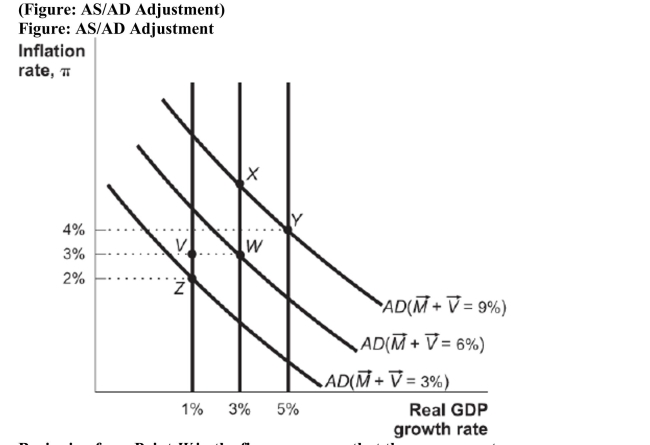 Beginning from Point W in the figure, suppose that the government engages in a large increase in government expenditure. If workers react by displaying intertemporal substitution, and enter the workforce, the economy should move to point ___ in the short run.
A) W
B) X
C) Y
D) Z
Question
Question
Question
Question
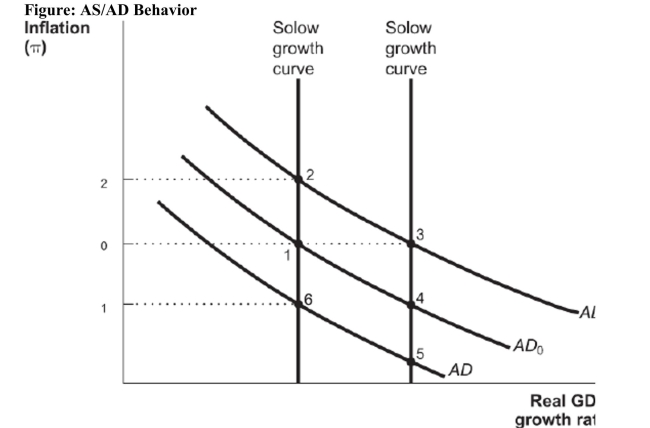 Reference: Ref 14-1 (Figure: AS/AD Behavior) Assume that an economy begins at Point 1 in the figure. In the presence of an expansionary fiscal policy and the absence of intertemporal substitution, the economy moves to point ____ in the short run.
A) 1
B) 2
C) 3
D) 4
Question
Question
Question
Figure: AS/AD Behavior Reference: Ref 14-1 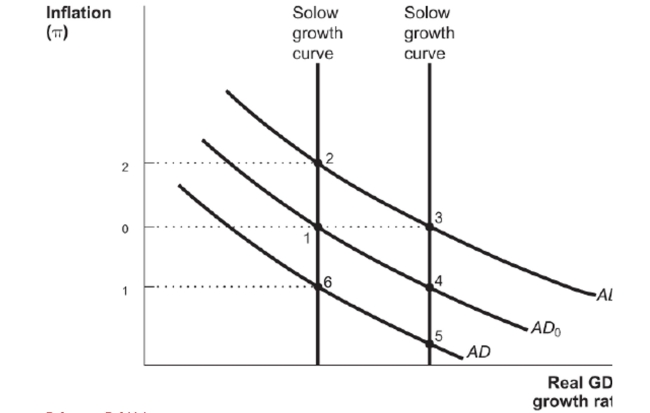 (Figure: AS/AD Behavior) Assume that an economy begins initially at Point 1 in the figure. In the presence of expansionary fiscal policy and intertemporal substitution, the economy moves to point ____ in the short run.
A) 1
B) 2
C) 3
D) 4
(Figure: AS/AD Behavior) Assume that an economy begins initially at Point 1 in the figure. In the presence of expansionary fiscal policy and intertemporal substitution, the economy moves to point ____ in the short run.A) 1
B) 2
C) 3
D) 4
Question
Question
Question
Question
Question
Question
Question
Question
Question
Question
Question
Question
Question
Question
Question
Question
Question
Question
Question
Question
Question
Question
Question
Question
Question
Question
Question
Question
Question
Question
Question
Question
Question
Question
Question
Question
Question
Question
Question
Question
Question
Question
Question
Question
Question
Question
Question
Question
Question
Question
Question
Question
Question
Question
Question
Question
Question
Question
Question
Question
Question
Question
Question
Question
Question

Unlock Deck
Sign up to unlock the cards in this deck!
Unlock Deck
Unlock Deck
1/96

Play

Full screen (f)
Deck 31: Unemployment and Labor Force Participation
1
An economy with a 1 percent Solow growth curve experiences a positive economic shock that brings the real GDP growth rate to 2 percent. If intertemporal substitution takes place, what will the new GDP growth rate be?
A) 0 percent
B) 1 percent
C) 2 percent
D) 3 percent
A) 0 percent
B) 1 percent
C) 2 percent
D) 3 percent
D
2
Transmission mechanisms include I. time bunching. II. intertemporal substitution. III. labor adjustment costs.
A) I and II only
B) II and III only
C) I and III only
D) I, II, and III
A) I and II only
B) II and III only
C) I and III only
D) I, II, and III
D
3
The economic forces that amplify shocks by spreading them across time and sectors of the economy are called
A) irreversible investments.
B) intertemporal substitutions.
C) transmission mechanisms.
D) aggregate demand conveyances.
A) irreversible investments.
B) intertemporal substitutions.
C) transmission mechanisms.
D) aggregate demand conveyances.
C
4
When a drought (negative rainfall shock) occurs, farmers tend to put in less effort than they did before to till their farms because
A) agricultural output falls and even though farmers put in the same level of effort, the effort per hour falls.
B) extra hours of extra labor and capital usage do not yield much extra output.
C) people work hardest when their hard work yields lower returns.
D) they switch to crops that use less water.
A) agricultural output falls and even though farmers put in the same level of effort, the effort per hour falls.
B) extra hours of extra labor and capital usage do not yield much extra output.
C) people work hardest when their hard work yields lower returns.
D) they switch to crops that use less water.
Unlock Deck
Unlock for access to all 96 flashcards in this deck.
Unlock Deck
k this deck
5
Which of the following individuals is practicing intertemporal substitution?
A) Sharona decides to stop being a stay-at-home mother and enters the workforce to get extra money for future college expenses.
B) Malika decides to stop being a stay-at-home mother and enters the workforce because the economy is booming.
C) Anneliese studies continuously throughout the semester for her final exams.
D) The United States enters a recession and Tashika loses her job.
A) Sharona decides to stop being a stay-at-home mother and enters the workforce to get extra money for future college expenses.
B) Malika decides to stop being a stay-at-home mother and enters the workforce because the economy is booming.
C) Anneliese studies continuously throughout the semester for her final exams.
D) The United States enters a recession and Tashika loses her job.
Unlock Deck
Unlock for access to all 96 flashcards in this deck.
Unlock Deck
k this deck
6
If students decide to stay in college until a recession is over, they are practicing
A) intertemporal substitution.
B) time bunching.
C) labor adjustment costs.
D) replacement wages.
A) intertemporal substitution.
B) time bunching.
C) labor adjustment costs.
D) replacement wages.
Unlock Deck
Unlock for access to all 96 flashcards in this deck.
Unlock Deck
k this deck
7
People engage in intertemporal substitution because they I. wish to reduce the overall number of hours they work. II. seek to maximize their well-being. III. are irrational.
A) I and II only
B) II only
C) III only
D) I, II, and III
A) I and II only
B) II only
C) III only
D) I, II, and III
Unlock Deck
Unlock for access to all 96 flashcards in this deck.
Unlock Deck
k this deck
8
Beginning from Point W in the figure, suppose that the government engages in a large increase in government expenditure. If workers react by displaying intertemporal substitution, and enter the workforce, the economy should move to point ___ in the short run.A) W
B) X
C) Y
D) Z
Unlock Deck
Unlock for access to all 96 flashcards in this deck.
Unlock Deck
k this deck
9
Transmission mechanisms
A) can amplify positive shocks.
B) can amplify negative shocks.
C) are pathways for shocks to affect real GDP.
D) Each of these answers is correct.
A) can amplify positive shocks.
B) can amplify negative shocks.
C) are pathways for shocks to affect real GDP.
D) Each of these answers is correct.
Unlock Deck
Unlock for access to all 96 flashcards in this deck.
Unlock Deck
k this deck
10
What is taking place when an economy experiences quick changes that have large effects on productivity?
A) economic shocks
B) geographic capital fluctuations
C) decreases in aggregate demand
D) time bunching
A) economic shocks
B) geographic capital fluctuations
C) decreases in aggregate demand
D) time bunching
Unlock Deck
Unlock for access to all 96 flashcards in this deck.
Unlock Deck
k this deck
11
When an increase in government purchases increases aggregate demand, what happens to the Solow growth curve in the long run?
A) It has a lower GDP growth rate than before the government purchases.
B) It has the same GDP growth rate as before the government purchases.
C) It has a higher GDP growth rate than it had before the government purchases.
D) It has a GDP growth rate that continues to grow.
A) It has a lower GDP growth rate than before the government purchases.
B) It has the same GDP growth rate as before the government purchases.
C) It has a higher GDP growth rate than it had before the government purchases.
D) It has a GDP growth rate that continues to grow.
Unlock Deck
Unlock for access to all 96 flashcards in this deck.
Unlock Deck
k this deck
12
Reference: Ref 14-1 (Figure: AS/AD Behavior) Assume that an economy begins at Point 1 in the figure. In the presence of an expansionary fiscal policy and the absence of intertemporal substitution, the economy moves to point ____ in the short run.A) 1
B) 2
C) 3
D) 4
Unlock Deck
Unlock for access to all 96 flashcards in this deck.
Unlock Deck
k this deck
13
Economic forces that can amplify shocks across time and sectors of the economy are called
A) business cycles.
B) cyclical recessions.
C) shock magnifiers.
D) transmission mechanisms.
A) business cycles.
B) cyclical recessions.
C) shock magnifiers.
D) transmission mechanisms.
Unlock Deck
Unlock for access to all 96 flashcards in this deck.
Unlock Deck
k this deck
14
Rapid changes in economic conditions that have large effects on the productivity of capital and labor are called
A) business cycles.
B) recessions.
C) shocks.
D) transmission mechanisms.
A) business cycles.
B) recessions.
C) shocks.
D) transmission mechanisms.
Unlock Deck
Unlock for access to all 96 flashcards in this deck.
Unlock Deck
k this deck
15
Figure: AS/AD Behavior Reference: Ref 14-1 (Figure: AS/AD Behavior) Assume that an economy begins initially at Point 1 in the figure. In the presence of expansionary fiscal policy and intertemporal substitution, the economy moves to point ____ in the short run.
A) 1
B) 2
C) 3
D) 4
(Figure: AS/AD Behavior) Assume that an economy begins initially at Point 1 in the figure. In the presence of expansionary fiscal policy and intertemporal substitution, the economy moves to point ____ in the short run.A) 1
B) 2
C) 3
D) 4
Unlock Deck
Unlock for access to all 96 flashcards in this deck.
Unlock Deck
k this deck
16
Which of the following is a transmission mechanism?
A) intertemporal substitution
B) irreversible employment
C) labor bunching
D) time substitution
A) intertemporal substitution
B) irreversible employment
C) labor bunching
D) time substitution
Unlock Deck
Unlock for access to all 96 flashcards in this deck.
Unlock Deck
k this deck
17
What economic effect has people allocating consumption across time to bring the greatest return?
A) sticky wage benefits
B) irreversible investment
C) intertemporal substitution
D) labor adjustment cost
A) sticky wage benefits
B) irreversible investment
C) intertemporal substitution
D) labor adjustment cost
Unlock Deck
Unlock for access to all 96 flashcards in this deck.
Unlock Deck
k this deck
18
People engage in intertemporal substitution because they
A) are required to work longer hours when economies are expanding.
B) are rational.
C) wish to enjoy consumption smoothing.
D) wish to cause fluctuations in their incomes.
A) are required to work longer hours when economies are expanding.
B) are rational.
C) wish to enjoy consumption smoothing.
D) wish to cause fluctuations in their incomes.
Unlock Deck
Unlock for access to all 96 flashcards in this deck.
Unlock Deck
k this deck
19
All of the following are transmission mechanisms EXCEPT
A) time bunching.
B) sticky wages.
C) reversible investments.
D) labor adjustment costs.
A) time bunching.
B) sticky wages.
C) reversible investments.
D) labor adjustment costs.
Unlock Deck
Unlock for access to all 96 flashcards in this deck.
Unlock Deck
k this deck
20
A transmission mechanism
A) mitigates shocks by spreading them across time and through sectors of the economy.
B) amplifies shocks by spreading them across time and through sectors of the economy.
C) causes shocks to have and equal impact across time and sectors of the economy.
D) turns negative shocks into positive shocks over time.
A) mitigates shocks by spreading them across time and through sectors of the economy.
B) amplifies shocks by spreading them across time and through sectors of the economy.
C) causes shocks to have and equal impact across time and sectors of the economy.
D) turns negative shocks into positive shocks over time.
Unlock Deck
Unlock for access to all 96 flashcards in this deck.
Unlock Deck
k this deck
21
For a given increase in government spending growth, intertemporal substitution is more widespread when
A) the impact of AD growth on both inflation and real GDP growth is stronger.
B) the impact of AD growth on both inflation and real GDP growth is weaker.
C) the impact of AD growth on inflation is stronger and the impact of the AD growth on real GDP growth is weaker.
D) the impact of AD growth on inflation is weaker and the impact of AD growth on real GDP growth is stronger.
A) the impact of AD growth on both inflation and real GDP growth is stronger.
B) the impact of AD growth on both inflation and real GDP growth is weaker.
C) the impact of AD growth on inflation is stronger and the impact of the AD growth on real GDP growth is weaker.
D) the impact of AD growth on inflation is weaker and the impact of AD growth on real GDP growth is stronger.
Unlock Deck
Unlock for access to all 96 flashcards in this deck.
Unlock Deck
k this deck
22
Uncertainty magnifies negative shocks by
A) keeping resources in unproductive areas.
B) slowing the speed of transmission of the negative shocks.
C) providing clear investment signals.
D) increasing the number of irreversible investments.
A) keeping resources in unproductive areas.
B) slowing the speed of transmission of the negative shocks.
C) providing clear investment signals.
D) increasing the number of irreversible investments.
Unlock Deck
Unlock for access to all 96 flashcards in this deck.
Unlock Deck
k this deck
23
Because of intertemporal substitution, the supply of labor is likely to
A) decrease when the economy grows more rapidly.
B) increase when the economy grows more rapidly.
C) remain constant regardless of how fast the economy grows.
D) become unpredictable when a shock occurs in an economy.
A) decrease when the economy grows more rapidly.
B) increase when the economy grows more rapidly.
C) remain constant regardless of how fast the economy grows.
D) become unpredictable when a shock occurs in an economy.
Unlock Deck
Unlock for access to all 96 flashcards in this deck.
Unlock Deck
k this deck
24
Which of the following scenarios explains why uncertainty can lead to increased volatility in economic fluctuations from investment?
A) You are not sure whether your fiancé will retain his job in the uncertain economic environment, and so you decide not to purchase a home with him.
B) Your firm starts laying off workers and you are not sure whether you will keep your job, so you reduce your spending by half.
C) Your friend warns you that your bank is about to collapse, so you withdraw your savings from that bank.
D) All of the answers are correct.
A) You are not sure whether your fiancé will retain his job in the uncertain economic environment, and so you decide not to purchase a home with him.
B) Your firm starts laying off workers and you are not sure whether you will keep your job, so you reduce your spending by half.
C) Your friend warns you that your bank is about to collapse, so you withdraw your savings from that bank.
D) All of the answers are correct.
Unlock Deck
Unlock for access to all 96 flashcards in this deck.
Unlock Deck
k this deck
25
Labor adjustment costs refer to the costs of
A) moving workers from declining industries to growth industries.
B) firing unproductive workers.
C) pay raises for productive workers.
D) hiring and training workers.
A) moving workers from declining industries to growth industries.
B) firing unproductive workers.
C) pay raises for productive workers.
D) hiring and training workers.
Unlock Deck
Unlock for access to all 96 flashcards in this deck.
Unlock Deck
k this deck
26
In an economy with intertemporal substitution, an increase in government purchases
A) has no temporary or permanent effect on real growth.
B) decreases real growth temporarily.
C) increases real growth permanently.
D) increases real growth temporarily.
A) has no temporary or permanent effect on real growth.
B) decreases real growth temporarily.
C) increases real growth permanently.
D) increases real growth temporarily.
Unlock Deck
Unlock for access to all 96 flashcards in this deck.
Unlock Deck
k this deck
27
Workers may display irrationality in labor adjustments to shocks if
A) union actions caused their pre-layoff wages to exceed market clearing wages.
B) they practice intertemporal substitution.
C) they voluntarily quit their jobs.
D) they find new jobs that are higher paying.
A) union actions caused their pre-layoff wages to exceed market clearing wages.
B) they practice intertemporal substitution.
C) they voluntarily quit their jobs.
D) they find new jobs that are higher paying.
Unlock Deck
Unlock for access to all 96 flashcards in this deck.
Unlock Deck
k this deck
28
After 9/11, why were many investors unwilling to engage in new construction in New York City?
A) Construction companies were unwilling to work in New York City.
B) Uncertainty regarding future terrorist attacks left investors unsure about the demand for new offices.
C) The cost of steel had skyrocketed and building new construction became very expensive.
D) The Mayor of New York abolished new construction for a period of six months.
A) Construction companies were unwilling to work in New York City.
B) Uncertainty regarding future terrorist attacks left investors unsure about the demand for new offices.
C) The cost of steel had skyrocketed and building new construction became very expensive.
D) The Mayor of New York abolished new construction for a period of six months.
Unlock Deck
Unlock for access to all 96 flashcards in this deck.
Unlock Deck
k this deck
29
Labor supply tends to
A) remain constant during recessions.
B) remain constant during booms.
C) increase during recessions.
D) increase during booms.
A) remain constant during recessions.
B) remain constant during booms.
C) increase during recessions.
D) increase during booms.
Unlock Deck
Unlock for access to all 96 flashcards in this deck.
Unlock Deck
k this deck
30
Intertemporal substitution tends to
A) reduce the impact of positive shocks and increase the impact of negative shocks.
B) reduce the impact of negative shocks and increase the impact of positive shocks.
C) reduce the impact of positive shocks and negative shocks.
D) increase the impact of positive and negative shocks.
A) reduce the impact of positive shocks and increase the impact of negative shocks.
B) reduce the impact of negative shocks and increase the impact of positive shocks.
C) reduce the impact of positive shocks and negative shocks.
D) increase the impact of positive and negative shocks.
Unlock Deck
Unlock for access to all 96 flashcards in this deck.
Unlock Deck
k this deck
31
Waiting to open a factory in a country that has just had a government coup, exaggerates that economic shock due to
A) uncertainty.
B) labor adjustment costs.
C) time bunching.
D) flexible investing.
A) uncertainty.
B) labor adjustment costs.
C) time bunching.
D) flexible investing.
Unlock Deck
Unlock for access to all 96 flashcards in this deck.
Unlock Deck
k this deck
32
______ have high value only under specific conditions.
A) Intertemporal reserves
B) Permanent assets
C) Irreversible investments
D) High-growth prices
A) Intertemporal reserves
B) Permanent assets
C) Irreversible investments
D) High-growth prices
Unlock Deck
Unlock for access to all 96 flashcards in this deck.
Unlock Deck
k this deck
33
Because of intertemporal substitution, an increase in government spending growth results in
A) a leftward shift of both the Solow growth curve and the AD curve.
B) a leftward shift of the Solow growth curve but a rightward shift of the AD curve.
C) a rightward shift of both the Solow growth curve and the AD curve.
D) a rightward shift of the Solow growth curve but a leftward shift of the AD curve.
A) a leftward shift of both the Solow growth curve and the AD curve.
B) a leftward shift of the Solow growth curve but a rightward shift of the AD curve.
C) a rightward shift of both the Solow growth curve and the AD curve.
D) a rightward shift of the Solow growth curve but a leftward shift of the AD curve.
Unlock Deck
Unlock for access to all 96 flashcards in this deck.
Unlock Deck
k this deck
34
Choosing how to allocate the consumption of goods, work, and leisure across time to maximize well-being is called
A) irreversible consumption.
B) consumption adjustment costs.
C) consumption bunching.
D) intertemporal substitution.
A) irreversible consumption.
B) consumption adjustment costs.
C) consumption bunching.
D) intertemporal substitution.
Unlock Deck
Unlock for access to all 96 flashcards in this deck.
Unlock Deck
k this deck
35
Because of intertemporal substitution, real GDP growth tends to be
A) positively related to the employment-population ratio.
B) negatively related to the employment-population ratio.
C) unrelated to the employment-population ratio.
D) positively or negatively related to the employment- population ratio, depending on the stage of the business cycle.
A) positively related to the employment-population ratio.
B) negatively related to the employment-population ratio.
C) unrelated to the employment-population ratio.
D) positively or negatively related to the employment- population ratio, depending on the stage of the business cycle.
Unlock Deck
Unlock for access to all 96 flashcards in this deck.
Unlock Deck
k this deck
36
Jamie has a fixed amount of saving and is planning to invest in one of two different projects with the same expected return on investment. Other things being equal, Jamie will most likely invest in
A) the project that is more easily reversed.
B) the project that is less easily reversed.
C) either of the two projects regardless of how reversible they are.
D) neither of the two projects because there is always uncertainty in their returns.
A) the project that is more easily reversed.
B) the project that is less easily reversed.
C) either of the two projects regardless of how reversible they are.
D) neither of the two projects because there is always uncertainty in their returns.
Unlock Deck
Unlock for access to all 96 flashcards in this deck.
Unlock Deck
k this deck
37
Capital goods that cannot be easily moved, adjusted, or reversed are called a(n):
A) irreversible investment.
B) fixed investment.
C) bunched investment.
D) intertemporal investment.
A) irreversible investment.
B) fixed investment.
C) bunched investment.
D) intertemporal investment.
Unlock Deck
Unlock for access to all 96 flashcards in this deck.
Unlock Deck
k this deck
38
Because of intertemporal substitution, a negative shock to aggregate demand results in
A) a shift of the Solow growth curve to the right.
B) a shift of the Solow growth curve to the left.
C) an upward movement along the Solow growth curve.
D) a downward movement along the Solow growth curve.
A) a shift of the Solow growth curve to the right.
B) a shift of the Solow growth curve to the left.
C) an upward movement along the Solow growth curve.
D) a downward movement along the Solow growth curve.
Unlock Deck
Unlock for access to all 96 flashcards in this deck.
Unlock Deck
k this deck
39
The way people choose to allocate their consumption of goods, work, and leisure across time is called
A) time bunching.
B) a shock.
C) intertemporal substitution.
D) an irreversible investment.
A) time bunching.
B) a shock.
C) intertemporal substitution.
D) an irreversible investment.
Unlock Deck
Unlock for access to all 96 flashcards in this deck.
Unlock Deck
k this deck
40
When there is high uncertainty, investors are more likely to hold off on potential investment projects that
A) are irreversible.
B) are reversible.
C) have many substitutes.
D) have low adjustment costs.
A) are irreversible.
B) are reversible.
C) have many substitutes.
D) have low adjustment costs.
Unlock Deck
Unlock for access to all 96 flashcards in this deck.
Unlock Deck
k this deck
41
Suppose a restaurant moves to another city and its manager asks the restaurant's two cooks to move there as well. Cook A is single and has no children to support. Cook B has a family with five children in grades K-8. Which of the following is the most likely outcome?
A) Cook A is more likely to move because of a lower labor adjustment cost.
B) Cook B is more likely to move because of a lower labor adjustment cost.
C) Cook A is more likely to move because of a higher labor adjustment cost.
D) Cook B is more likely to move because of a higher labor adjustment cost.
A) Cook A is more likely to move because of a lower labor adjustment cost.
B) Cook B is more likely to move because of a lower labor adjustment cost.
C) Cook A is more likely to move because of a higher labor adjustment cost.
D) Cook B is more likely to move because of a higher labor adjustment cost.
Unlock Deck
Unlock for access to all 96 flashcards in this deck.
Unlock Deck
k this deck
42
When car dealers offer to do tax returns for customers in February and March, what are they practicing?
A) positive shock inertia
B) sticky price clustering
C) irreversible investing
D) time bunching
A) positive shock inertia
B) sticky price clustering
C) irreversible investing
D) time bunching
Unlock Deck
Unlock for access to all 96 flashcards in this deck.
Unlock Deck
k this deck
43
In most advanced economies, economic activity is highest in the
A) first quarter.
B) second quarter.
C) third quarter.
D) fourth quarter.
A) first quarter.
B) second quarter.
C) third quarter.
D) fourth quarter.
Unlock Deck
Unlock for access to all 96 flashcards in this deck.
Unlock Deck
k this deck
44
When a U.S. air conditioner factory relocates to Mexico, the U.S. community experiences an initial negative shock, plus
A) time bunching.
B) intertemporal substitutions.
C) irreversible investment uncertainty.
D) labor adjustment costs.
A) time bunching.
B) intertemporal substitutions.
C) irreversible investment uncertainty.
D) labor adjustment costs.
Unlock Deck
Unlock for access to all 96 flashcards in this deck.
Unlock Deck
k this deck
45
Labor adjustment costs help amplify the initial negative shock by
A) keeping the unemployment rate high.
B) discouraging irreversible investments.
C) sending inflation higher.
D) blocking employment search efforts.
A) keeping the unemployment rate high.
B) discouraging irreversible investments.
C) sending inflation higher.
D) blocking employment search efforts.
Unlock Deck
Unlock for access to all 96 flashcards in this deck.
Unlock Deck
k this deck
46
In what quarter of the year does GDP consistently spike downward in the United States?
A) first
B) second
C) third
D) fourth
A) first
B) second
C) third
D) fourth
Unlock Deck
Unlock for access to all 96 flashcards in this deck.
Unlock Deck
k this deck
47
The tendency for economic activities to be coordinated at common points in time is called
A) irreversible investment.
B) intertemporal coordination.
C) time bunching.
D) intertemporal substitution.
A) irreversible investment.
B) intertemporal coordination.
C) time bunching.
D) intertemporal substitution.
Unlock Deck
Unlock for access to all 96 flashcards in this deck.
Unlock Deck
k this deck
48
When more people shop during weekends instead of weekdays it is called
A) time bunching.
B) a shock.
C) intertemporal substitution.
D) an irreversible investment.
A) time bunching.
B) a shock.
C) intertemporal substitution.
D) an irreversible investment.
Unlock Deck
Unlock for access to all 96 flashcards in this deck.
Unlock Deck
k this deck
49
A reason why fourth-quarter economic fluctuations occur is
A) spending on Christmas.
B) spending on vacations.
C) spending on renovation projects.
D) post-Christmas spending declines.
A) spending on Christmas.
B) spending on vacations.
C) spending on renovation projects.
D) post-Christmas spending declines.
Unlock Deck
Unlock for access to all 96 flashcards in this deck.
Unlock Deck
k this deck
50
What best explains the increases in economic activity that coincides with spring?
A) Consumers purchase items for home improvement and landscaping projects that they will engage in over the spring.
B) The resources that become unemployed over the January post-Christmas bust are being put to use again.
C) States no longer have to spend on snow removal programs.
D) Each of these answers is correct.
A) Consumers purchase items for home improvement and landscaping projects that they will engage in over the spring.
B) The resources that become unemployed over the January post-Christmas bust are being put to use again.
C) States no longer have to spend on snow removal programs.
D) Each of these answers is correct.
Unlock Deck
Unlock for access to all 96 flashcards in this deck.
Unlock Deck
k this deck
51
Time bunching is
A) the supply of capital that investors contribute on a quarterly basis.
B) the cost of shifting workers from declining sectors of the economy to growing sectors.
C) the tendency for economic activities to be coordinated at common points in time.
D) the allocation of consumption, work, and leisure across time to maximize well-being.
A) the supply of capital that investors contribute on a quarterly basis.
B) the cost of shifting workers from declining sectors of the economy to growing sectors.
C) the tendency for economic activities to be coordinated at common points in time.
D) the allocation of consumption, work, and leisure across time to maximize well-being.
Unlock Deck
Unlock for access to all 96 flashcards in this deck.
Unlock Deck
k this deck
52
Labor adjustment costs lead to
A) intertemporal substitution.
B) time bunching.
C) higher unemployment.
D) higher employment.
A) intertemporal substitution.
B) time bunching.
C) higher unemployment.
D) higher employment.
Unlock Deck
Unlock for access to all 96 flashcards in this deck.
Unlock Deck
k this deck
53
When people like going to Walmart right after work because it has the most employees working at the check-out counters at that time, they are contributing to the practice known as
A) time bunching.
B) intertemporal substitution.
C) labor adjustment.
D) Each of these answers is correct.
A) time bunching.
B) intertemporal substitution.
C) labor adjustment.
D) Each of these answers is correct.
Unlock Deck
Unlock for access to all 96 flashcards in this deck.
Unlock Deck
k this deck
54
Time bunching results in I. seasonal cycles of business activity. II. a smooth trend in real GDP over time. III. shocks having a smaller effect on the economy.
A) I only
B) II only
C) I and III only
D) II and III only
A) I only
B) II only
C) I and III only
D) II and III only
Unlock Deck
Unlock for access to all 96 flashcards in this deck.
Unlock Deck
k this deck
55
The cost of shifting workers from declining sectors of the economy to growing sectors is known as
A) irreversible employment.
B) a labor adjustment cost.
C) labor bunching.
D) intertemporal substitution.
A) irreversible employment.
B) a labor adjustment cost.
C) labor bunching.
D) intertemporal substitution.
Unlock Deck
Unlock for access to all 96 flashcards in this deck.
Unlock Deck
k this deck
56
A negative shock to aggregate demand will lead to a higher unemployment rate if
A) time bunching in economic activity is lower.
B) intertemporal substitution in labor supply is lower.
C) investments are more easily reversible.
D) labor adjustment costs are higher.
A) time bunching in economic activity is lower.
B) intertemporal substitution in labor supply is lower.
C) investments are more easily reversible.
D) labor adjustment costs are higher.
Unlock Deck
Unlock for access to all 96 flashcards in this deck.
Unlock Deck
k this deck
57
Labor adjustment costs tend to be higher when I. market wages rise. II. the declining industries are unionized. III. moving costs are high.
A) II only
B) I and II only
C) II and III only
D) I, II, and III
A) II only
B) I and II only
C) II and III only
D) I, II, and III
Unlock Deck
Unlock for access to all 96 flashcards in this deck.
Unlock Deck
k this deck
58
If labor adjustment costs are higher for a negative real shock, then we can expect to see a
A) larger increase in the real GDP growth rate.
B) smaller increase in the real GDP growth rate.
C) larger decrease in the real GDP growth rate.
D) smaller decrease in the real GDP growth rate.
A) larger increase in the real GDP growth rate.
B) smaller increase in the real GDP growth rate.
C) larger decrease in the real GDP growth rate.
D) smaller decrease in the real GDP growth rate.
Unlock Deck
Unlock for access to all 96 flashcards in this deck.
Unlock Deck
k this deck
59
The observation of high business activity in the Christmas season and low business activity immediately after Christmas is an example of
A) irreversible investments.
B) high labor adjustment costs.
C) time bunching.
D) intertemporal substitution.
A) irreversible investments.
B) high labor adjustment costs.
C) time bunching.
D) intertemporal substitution.
Unlock Deck
Unlock for access to all 96 flashcards in this deck.
Unlock Deck
k this deck
60
Which ranking of quarters, from the highest GDP growth rate to the lowest, is correct?
A) first, third, fourth, and second
B) third, fourth, second, and first
C) fourth, second, third, and first
D) second, fourth, first, and third
A) first, third, fourth, and second
B) third, fourth, second, and first
C) fourth, second, third, and first
D) second, fourth, first, and third
Unlock Deck
Unlock for access to all 96 flashcards in this deck.
Unlock Deck
k this deck
61
Uncertainty can cause investors to wait for strong and certain signals that will give them assurance of a profitable outcome.
Unlock Deck
Unlock for access to all 96 flashcards in this deck.
Unlock Deck
k this deck
62
Firms are most likely to experience collateral damage during a(n) ______ and ______ it as a consequence of their borrowing and investment activities.
A) expansion; further contribute to
B) expansion; help to counter
C) recession; further contribute to
D) recession; help to counter
A) expansion; further contribute to
B) expansion; help to counter
C) recession; further contribute to
D) recession; help to counter
Unlock Deck
Unlock for access to all 96 flashcards in this deck.
Unlock Deck
k this deck
63
Higher labor adjustment costs increase the effect of a real shock on real GDP growth.
Unlock Deck
Unlock for access to all 96 flashcards in this deck.
Unlock Deck
k this deck
64
Collateral damage occurs more frequently during
A) expansions when real assets need to be redeployed.
B) recessions when discouraged workers neglect the capital stock.
C) expansions when capital stock becomes outdated and useless.
D) recessions when capital stock loses value through market forces.
A) expansions when real assets need to be redeployed.
B) recessions when discouraged workers neglect the capital stock.
C) expansions when capital stock becomes outdated and useless.
D) recessions when capital stock loses value through market forces.
Unlock Deck
Unlock for access to all 96 flashcards in this deck.
Unlock Deck
k this deck
65
When the economy is in recession, we tend to see few people entering college.
Unlock Deck
Unlock for access to all 96 flashcards in this deck.
Unlock Deck
k this deck
66
A medium-sized negative shock
A) always produces a medium-sized economic downturn.
B) will not have a great impact on GDP.
C) can cause a large economic downturn.
D) will always cause a large economic downturn.
A) always produces a medium-sized economic downturn.
B) will not have a great impact on GDP.
C) can cause a large economic downturn.
D) will always cause a large economic downturn.
Unlock Deck
Unlock for access to all 96 flashcards in this deck.
Unlock Deck
k this deck
67
Marriage is a kind of irreversible investment.
Unlock Deck
Unlock for access to all 96 flashcards in this deck.
Unlock Deck
k this deck
68
Because of transmission mechanisms, a real shock takes a shorter time to affect real GDP growth.
Unlock Deck
Unlock for access to all 96 flashcards in this deck.
Unlock Deck
k this deck
69
If you work an extra hour when your boss offers to pay you double, you are time bunching.
Unlock Deck
Unlock for access to all 96 flashcards in this deck.
Unlock Deck
k this deck
70
When banks make loans to firms, which of the following is least likely to be of concern to them?
A) the amount of cash on hand
B) the strength of the firms other assets
C) the size of the firm's net worth
D) the firm's intended use of the money
A) the amount of cash on hand
B) the strength of the firms other assets
C) the size of the firm's net worth
D) the firm's intended use of the money
Unlock Deck
Unlock for access to all 96 flashcards in this deck.
Unlock Deck
k this deck
71
A positive real shock will increase real GDP growth more if there are more irreversible investments.
Unlock Deck
Unlock for access to all 96 flashcards in this deck.
Unlock Deck
k this deck
72
The construction of a home is an irreversible investment.
Unlock Deck
Unlock for access to all 96 flashcards in this deck.
Unlock Deck
k this deck
73
Economists disagree on the importance of intertemporal substitution in generating real effects from fiscal policy.
Unlock Deck
Unlock for access to all 96 flashcards in this deck.
Unlock Deck
k this deck
74
The larger a given sector's contribution to a country's GDP, the larger the impact of a shock to that sector on GDP.
Unlock Deck
Unlock for access to all 96 flashcards in this deck.
Unlock Deck
k this deck
75
Because of intertemporal substitution, a real shock has more of an effect on real GDP growth but less of an effect on inflation.
Unlock Deck
Unlock for access to all 96 flashcards in this deck.
Unlock Deck
k this deck
76
During a recession, a homeowner becomes significantly underwater. Which of these entities generally escapes harm?
A) the homeowner
B) the homeowner's bank
C) the homeowner's neighbors
D) None of them. No one escapes harm.
A) the homeowner
B) the homeowner's bank
C) the homeowner's neighbors
D) None of them. No one escapes harm.
Unlock Deck
Unlock for access to all 96 flashcards in this deck.
Unlock Deck
k this deck
77
In most advanced economies, economic activity is lowest in the
A) first quarter.
B) second quarter.
C) third quarter.
D) fourth quarter.
A) first quarter.
B) second quarter.
C) third quarter.
D) fourth quarter.
Unlock Deck
Unlock for access to all 96 flashcards in this deck.
Unlock Deck
k this deck
78
Firms are willing to supply greater numbers of goods when prices rise. This decision is very similar to the intertemporal substitution decision by a working individual.
Unlock Deck
Unlock for access to all 96 flashcards in this deck.
Unlock Deck
k this deck
79
Which of the following is NOT a transmission mechanism?
A) reductions in the money supply
B) intertemporal substitution
C) uncertainty
D) sticky wages and prices
A) reductions in the money supply
B) intertemporal substitution
C) uncertainty
D) sticky wages and prices
Unlock Deck
Unlock for access to all 96 flashcards in this deck.
Unlock Deck
k this deck
80
A homeowner's home that was purchased before the housing crisis for $125,000 is most likely experiencing collateral damage from the recession for which of the following appraisal values?
A) $150,000
B) $125,000
C) $115,000
D) $90,000
A) $150,000
B) $125,000
C) $115,000
D) $90,000
Unlock Deck
Unlock for access to all 96 flashcards in this deck.
Unlock Deck
k this deck
Unlock Deck
Unlock for access to all 96 flashcards in this deck.







