





 Chat with AI

Deck 3: Mendelian Genetics
Full screen (f)

Question

Question
Question
Question
Question
Question
Question
Question
Question
Question
Question
Question
Question
Question
In a cross between a black and a white guinea pig, all members of the F, generation are black. The F2 generation is made up of approximately 3/4 black and 1/4 white guinea pigs.
(a) Diagram this cross, showing the genotypes and phenotypes.
(b) What will the offspring be like if two F2 white guinea pigs are mated?
(c) Two different matings were made between black members of the F2 generation, with the following results.
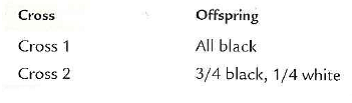
Diagram each of crosses.
(a) Diagram this cross, showing the genotypes and phenotypes.
(b) What will the offspring be like if two F2 white guinea pigs are mated?
(c) Two different matings were made between black members of the F2 generation, with the following results.
Diagram each of crosses.
Question
Question
Question
Question
Question
Question
Question
Question
When working out genetics problems in this and succeeding chapters, always assume that members of the P 1 generation are homozygous, unless the information or data you are given require you to do otherwise.
The following are F 2 results of two of Mendel's monohybrid crosses.
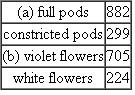 For each cross, state a null hypothesis to be tested using ? 2 analysis. Calculate the ? 2 value and determine the p value for both. Interpret the p values. Can the deviation in each case be attributed to chance or not? Which of the two crosses shows a greater amount of deviation?
The following are F 2 results of two of Mendel's monohybrid crosses.
For each cross, state a null hypothesis to be tested using ? 2 analysis. Calculate the ? 2 value and determine the p value for both. Interpret the p values. Can the deviation in each case be attributed to chance or not? Which of the two crosses shows a greater amount of deviation? Question
Question
Question
When working out genetics problems in this and succeeding chapters, always assume that members of the P 1 generation are homozygous, unless the information or data you are given require you to do otherwise.
Consider the following pedigree.
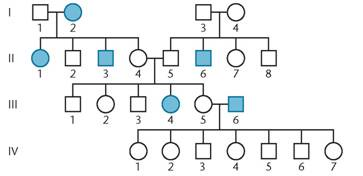
Predict the mode of inheritance of the trait of interest and the most probable genotype of each individual. Assume that the alleles A and a control the expression.
Consider the following pedigree.
Predict the mode of inheritance of the trait of interest and the most probable genotype of each individual. Assume that the alleles A and a control the expression.
Question
When working out genetics problems in this and succeeding chapters, always assume that members of the P 1 generation are homozygous, unless the information or data you are given require you to do otherwise.
Draw all possible conclusions concerning the mode of inheritance of the trait portrayed in each of the following limited pedigrees. (Each of the four cases is based on a different trait.)
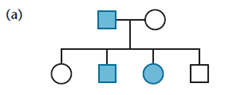
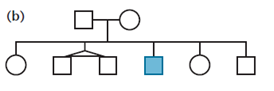
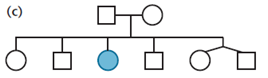
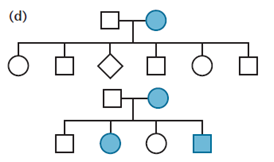
Draw all possible conclusions concerning the mode of inheritance of the trait portrayed in each of the following limited pedigrees. (Each of the four cases is based on a different trait.)
Question
Question
Question
Question
Question
Question
Question
Datura stramonium (the Jimsonweed) expresses flower colors of purple and white and pod textures of smooth and spiny. The results of two crosses in which the parents were not necessarily true breeding are shown at the top of the next column.
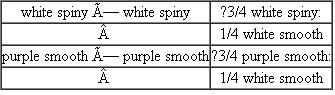 (a) Based on these results, put forward a hypothesis for the inheritance of the purple/white and smooth/spiny traits.
(b) Assuming that true-breeding strains of all combinations of traits are available, what single cross could you execute and carry to an F 2 generation that will prove or disprove your hypothesis? Assuming your hypothesis is correct, what results of this cross will support it?
(a) Based on these results, put forward a hypothesis for the inheritance of the purple/white and smooth/spiny traits.(b) Assuming that true-breeding strains of all combinations of traits are available, what single cross could you execute and carry to an F 2 generation that will prove or disprove your hypothesis? Assuming your hypothesis is correct, what results of this cross will support it?
Question
Question
An alternative to using the expanded binomial equation and Pascal's triangle in determining probabilities of phenotypes in a subsequent generation when the parents' genotypes are known is to use the following equation:
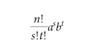
where n is the total number of offspring, s is the number of offspring in one phenotypic category, t is the number of offspring in the other phenotypic category, a is the probability of occurrence of the first phenotype, and b is the probability of the second phenotype. Using this equation, determine the probability of a family of 5 offspring having exactly 2 children afflicted with sickle-cell anemia (an autosomal recessive disease) when both parents are heterozygous for the sickle-cell allele.

where n is the total number of offspring, s is the number of offspring in one phenotypic category, t is the number of offspring in the other phenotypic category, a is the probability of occurrence of the first phenotype, and b is the probability of the second phenotype. Using this equation, determine the probability of a family of 5 offspring having exactly 2 children afflicted with sickle-cell anemia (an autosomal recessive disease) when both parents are heterozygous for the sickle-cell allele.
Question
To assess Mendel's law of segregation using tomatoes, a true- breeding tall variety ( SS ) is crossed with a true-breeding short variety ( ss ). The heterozygous F 1 tall plants ( Ss ) were crossed to produce two sets of F 2 data, as follows.
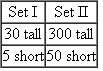 (a) Using the ? 2 test, analyze the results for both datasets. Calculate ? 2 values and estimate the p values in both cases.
(b) From the above analysis, what can you conclude about the importance of generating large datasets in experimental conditions?
(a) Using the ? 2 test, analyze the results for both datasets. Calculate ? 2 values and estimate the p values in both cases.(b) From the above analysis, what can you conclude about the importance of generating large datasets in experimental conditions?
Question
Question
Question
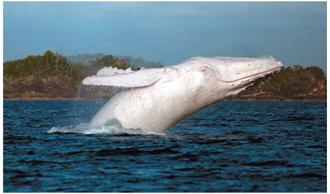
Assume that Migaloo's albinism is caused by a rare recessive gene.
(a) In a mating of two heterozygous, normally pigmented whales, what is the probability that the first three offspring will all have normal pigmentation?
(b) What is the probability that the first female offspring is normally pigmented?
(c) What is the probability that the first offspring is a normally pigmented female?
(a) In a mating of two heterozygous, normally pigmented whales, what is the probability that the first three offspring will all have normal pigmentation?
(b) What is the probability that the first female offspring is normally pigmented?
(c) What is the probability that the first offspring is a normally pigmented female?
Question

Unlock Deck
Sign up to unlock the cards in this deck!
Unlock Deck
Unlock Deck
1/40

Play

Full screen (f)
Deck 3: Mendelian Genetics
1
Thomas first discovered a potentially devastating piece of family history when he learned the medical diagnosis for his brother's increasing dementia, muscular rigidity, and frequency of seizures. His brother, at age 49, was diagnosed with Huntington disease (HD), a dominantly inherited condition that typically begins with such symptoms around the age of 45 and leads to death in one's early 60s. As depressing as the news was to Thomas, it helped explain his father's suicide. Thomas, 38, now wonders what his chances are of carrying the gene for HD, leading him and his wife to discuss the pros and cons of him undergoing genetic testing. Thomas and his wife have two teenage children, a boy and a girl.
What role might a genetic counselor play in this real-life scenario?
What role might a genetic counselor play in this real-life scenario?
Huntington disease (HD) is an inherited dominant disorder. An affected individual might be either homozygous dominant or heterozygous dominant.
T's brother is diagnosed with HD. The disease is late-onset at an age of about 60 years old. T. is 39 years old. There is a probability that T might inherit HD from his father. T. might be homozygous or heterozygous for the HD.
▪genetic counselor might do genetic testing of HD for T. He or she would advise T. more information about the disease, what T. needs to expect, and what aspects of his living conditions might be affected.
▪genetic counselor might help T. make plans for his future. He or she might provide him with contact information where T. could receive services and treatments.
▪genetic counselor might advise that T.'s two children might inherit HD. The genetic counselor and T. could discuss the pros and cons of doing genetic testing. The result of the genetic testing will affect T., his children, and his wife.
If the genetic test reveals T. has HD, a genetic counselor is T.'s first source of help. If T. agrees to do genetic testing, his genetic counselor would gather information from members of his families. The occurrence of HD in his family members across generations would make up T.'s pedigree.
The pedigree may be used to deduce which individuals in the pedigree would inherit HD. The pedigree might reveal the likelihood T. and his two children might have the disease.
T's brother is diagnosed with HD. The disease is late-onset at an age of about 60 years old. T. is 39 years old. There is a probability that T might inherit HD from his father. T. might be homozygous or heterozygous for the HD.
▪genetic counselor might do genetic testing of HD for T. He or she would advise T. more information about the disease, what T. needs to expect, and what aspects of his living conditions might be affected.
▪genetic counselor might help T. make plans for his future. He or she might provide him with contact information where T. could receive services and treatments.
▪genetic counselor might advise that T.'s two children might inherit HD. The genetic counselor and T. could discuss the pros and cons of doing genetic testing. The result of the genetic testing will affect T., his children, and his wife.
If the genetic test reveals T. has HD, a genetic counselor is T.'s first source of help. If T. agrees to do genetic testing, his genetic counselor would gather information from members of his families. The occurrence of HD in his family members across generations would make up T.'s pedigree.
The pedigree may be used to deduce which individuals in the pedigree would inherit HD. The pedigree might reveal the likelihood T. and his two children might have the disease.
2
When working out genetics problems in this and succeeding chapters, always assume that members of the P 1 generation are homozygous, unless the information or data you are given require you to do otherwise.
In this chapter, we focused on the Mendelian postulates, probability, and pedigree analysis. We also considered some of the methods and reasoning by which these ideas, concepts, and techniques were developed. On the basis of these discussions, what answers would you propose to the following questions:
(a) How was Mendel able to derive postulates concerning the behavior of "unit factors" during gamete formation, when he could not directly observe them?
(b) How do we know whether an organism expressing a dominant trait is homozygous or heterozygous?
(c) In analyzing genetic data, how do we know whether deviation from the expected ratio is due to chance rather than to another, independent factor?
(d) Since experimental crosses are not performed in humans, how do we know how traits are inherited?
In this chapter, we focused on the Mendelian postulates, probability, and pedigree analysis. We also considered some of the methods and reasoning by which these ideas, concepts, and techniques were developed. On the basis of these discussions, what answers would you propose to the following questions:
(a) How was Mendel able to derive postulates concerning the behavior of "unit factors" during gamete formation, when he could not directly observe them?
(b) How do we know whether an organism expressing a dominant trait is homozygous or heterozygous?
(c) In analyzing genetic data, how do we know whether deviation from the expected ratio is due to chance rather than to another, independent factor?
(d) Since experimental crosses are not performed in humans, how do we know how traits are inherited?

















 8
8 3
Thomas first discovered a potentially devastating piece of family history when he learned the medical diagnosis for his brother's increasing dementia, muscular rigidity, and frequency of seizures. His brother, at age 49, was diagnosed with Huntington disease (HD), a dominantly inherited condition that typically begins with such symptoms around the age of 45 and leads to death in one's early 60s. As depressing as the news was to Thomas, it helped explain his father's suicide. Thomas, 38, now wonders what his chances are of carrying the gene for HD, leading him and his wife to discuss the pros and cons of him undergoing genetic testing. Thomas and his wife have two teenage children, a boy and a girl.
How might the preparation and analysis of a pedigree help explain the dilemma facing Thomas and his family?
How might the preparation and analysis of a pedigree help explain the dilemma facing Thomas and his family?
A pedigree is like a map that reveals affected individuals, which are suffering with Huntington disease (HD). It consists of individuals from several generations. It includes members of a nuclear family and extended families. In T.'s case, his pedigree will include his father, brother, siblings, and other relatives from his side and his wife's side of the family.
The preparation of the pedigree requires T. to gather information from his family members and other more distant relatives. T. and his genetic counselor would have to work together to create the pedigree.
The pedigree might have missing information if T. and his genetic counselor could not obtain the information for several relatives. The missing information might affect the accuracy of the pedigree analysis.
The analysis of the pedigree reveals the probability that T. and his children inherit Huntington disease (HD). The dilemma in knowing this probability is that there is a chance they have HD. There is a chance they do not have HD.
They might not have time to prepare for the effects of HD if they do not know they inherit the disease. On the other hand, they might not have the disease.
The plan based solely on life with HD may be entirely different than life with HD. T.'s children might decide not to have children of their own because they do not want to pass on the disease to their children.
However, T.'s children may not get the disease when they are in their 60s. On the other hand, not knowing the probability of inheriting HD may lead T. and his children to be unprepared for life with HD.
T.'s children may have the disease and have children of their own. Consequently, T.'s children may have HD.
There are pros and cons in knowing and not knowing the probability of inheriting HD. Each individual's life choice may be based solely on the effects of HD or it may be based on other factors too.
T. and his family must make choices based on the science information, their plans for the future, the supports they would have, and other factors in life.
The preparation of the pedigree requires T. to gather information from his family members and other more distant relatives. T. and his genetic counselor would have to work together to create the pedigree.
The pedigree might have missing information if T. and his genetic counselor could not obtain the information for several relatives. The missing information might affect the accuracy of the pedigree analysis.
The analysis of the pedigree reveals the probability that T. and his children inherit Huntington disease (HD). The dilemma in knowing this probability is that there is a chance they have HD. There is a chance they do not have HD.
They might not have time to prepare for the effects of HD if they do not know they inherit the disease. On the other hand, they might not have the disease.
The plan based solely on life with HD may be entirely different than life with HD. T.'s children might decide not to have children of their own because they do not want to pass on the disease to their children.
However, T.'s children may not get the disease when they are in their 60s. On the other hand, not knowing the probability of inheriting HD may lead T. and his children to be unprepared for life with HD.
T.'s children may have the disease and have children of their own. Consequently, T.'s children may have HD.
There are pros and cons in knowing and not knowing the probability of inheriting HD. Each individual's life choice may be based solely on the effects of HD or it may be based on other factors too.
T. and his family must make choices based on the science information, their plans for the future, the supports they would have, and other factors in life.
4
When working out genetics problems in this and succeeding chapters, always assume that members of the P 1 generation are homozygous, unless the information or data you are given require you to do otherwise.
Review the Chapter Concepts list. The first five concepts provide a modern interpretation of Mendelian postulates. Based on these concepts, write a short essay that correlates Mendel's four postulates with what is now known about genes, alleles, and homologous chromosomes.
CHAPTER CONCEPTS
▪Inheritance is governed by information stored in discrete factors called genes.
▪Genes are transmitted from generation to generation on vehicles called chromosomes.
▪Chromosomes, which exist in pairs in diploid organisms, provide the basis of biparental inheritance.
▪During gamete formation, chromosomes are distributed according to postulates first described by Gregor Mendel, based on his nineteenth-century research with the garden pea.
▪Mendelian postulates prescribe that homologous chromosomes segregate from one another and assort independently with other segregating homologs during gamete formation.
▪Genetic ratios, expressed as probabilities, are subject to chance deviation and may be evaluated statistically.
▪The analysis of pedigrees allows predictions concerning the genetic nature of human traits.
Review the Chapter Concepts list. The first five concepts provide a modern interpretation of Mendelian postulates. Based on these concepts, write a short essay that correlates Mendel's four postulates with what is now known about genes, alleles, and homologous chromosomes.
CHAPTER CONCEPTS
▪Inheritance is governed by information stored in discrete factors called genes.
▪Genes are transmitted from generation to generation on vehicles called chromosomes.
▪Chromosomes, which exist in pairs in diploid organisms, provide the basis of biparental inheritance.
▪During gamete formation, chromosomes are distributed according to postulates first described by Gregor Mendel, based on his nineteenth-century research with the garden pea.
▪Mendelian postulates prescribe that homologous chromosomes segregate from one another and assort independently with other segregating homologs during gamete formation.
▪Genetic ratios, expressed as probabilities, are subject to chance deviation and may be evaluated statistically.
▪The analysis of pedigrees allows predictions concerning the genetic nature of human traits.
Unlock Deck
Unlock for access to all 40 flashcards in this deck.
Unlock Deck
k this deck
5
Thomas first discovered a potentially devastating piece of family history when he learned the medical diagnosis for his brother's increasing dementia, muscular rigidity, and frequency of seizures. His brother, at age 49, was diagnosed with Huntington disease (HD), a dominantly inherited condition that typically begins with such symptoms around the age of 45 and leads to death in one's early 60s. As depressing as the news was to Thomas, it helped explain his father's suicide. Thomas, 38, now wonders what his chances are of carrying the gene for HD, leading him and his wife to discuss the pros and cons of him undergoing genetic testing. Thomas and his wife have two teenage children, a boy and a girl.
If Thomas decides to go ahead with the genetic test, what should be the role of the health insurance industry in such cases?
If Thomas decides to go ahead with the genetic test, what should be the role of the health insurance industry in such cases?
Unlock Deck
Unlock for access to all 40 flashcards in this deck.
Unlock Deck
k this deck
6
When working out genetics problems in this and succeeding chapters, always assume that members of the P 1 generation are homozygous, unless the information or data you are given require you to do otherwise.
Albinism in humans is inherited as a simple recessive trait. For the following families, determine the genotypes of the parents and offspring. (When two alternative genotypes are possible, list both.)(a) Two normal parents have five children, four normal and one albino.
(b) A normal male and an albino female have six children, all normal.
(c) A normal male and an albino female have six children, three normal and three albino.
(d) Construct a pedigree of the families in (b) and (c). Assume that one of the normal children in (b) and one of the albino children in (c) become the parents of eight children. Add these children to the pedigree, predicting their phenotypes (normal or albino).
Albinism in humans is inherited as a simple recessive trait. For the following families, determine the genotypes of the parents and offspring. (When two alternative genotypes are possible, list both.)(a) Two normal parents have five children, four normal and one albino.
(b) A normal male and an albino female have six children, all normal.
(c) A normal male and an albino female have six children, three normal and three albino.
(d) Construct a pedigree of the families in (b) and (c). Assume that one of the normal children in (b) and one of the albino children in (c) become the parents of eight children. Add these children to the pedigree, predicting their phenotypes (normal or albino).
Unlock Deck
Unlock for access to all 40 flashcards in this deck.
Unlock Deck
k this deck
7
Thomas first discovered a potentially devastating piece of family history when he learned the medical diagnosis for his brother's increasing dementia, muscular rigidity, and frequency of seizures. His brother, at age 49, was diagnosed with Huntington disease (HD), a dominantly inherited condition that typically begins with such symptoms around the age of 45 and leads to death in one's early 60s. As depressing as the news was to Thomas, it helped explain his father's suicide. Thomas, 38, now wonders what his chances are of carrying the gene for HD, leading him and his wife to discuss the pros and cons of him undergoing genetic testing. Thomas and his wife have two teenage children, a boy and a girl.
If Thomas tests positive for HD, and you were one of his children, would you want to be tested?
If Thomas tests positive for HD, and you were one of his children, would you want to be tested?
Unlock Deck
Unlock for access to all 40 flashcards in this deck.
Unlock Deck
k this deck
8
When working out genetics problems in this and succeeding chapters, always assume that members of the P 1 generation are homozygous, unless the information or data you are given require you to do otherwise.
Which of Mendel's postulates are illustrated by the pedigree that you constructed in Problem? List and define these postulates.
Albinism in humans is inherited as a simple recessive trait. For the following families, determine the genotypes of the parents and offspring. (When two alternative genotypes are possible, list both.)(a) Two normal parents have five children, four normal and one albino.
(b) A normal male and an albino female have six children, all normal.
(c) A normal male and an albino female have six children, three normal and three albino.
(d) Construct a pedigree of the families in (b) and (c). Assume that one of the normal children in (b) and one of the albino children in (c) become the parents of eight children. Add these children to the pedigree, predicting their phenotypes (normal or albino).
Which of Mendel's postulates are illustrated by the pedigree that you constructed in Problem? List and define these postulates.
Albinism in humans is inherited as a simple recessive trait. For the following families, determine the genotypes of the parents and offspring. (When two alternative genotypes are possible, list both.)(a) Two normal parents have five children, four normal and one albino.
(b) A normal male and an albino female have six children, all normal.
(c) A normal male and an albino female have six children, three normal and three albino.
(d) Construct a pedigree of the families in (b) and (c). Assume that one of the normal children in (b) and one of the albino children in (c) become the parents of eight children. Add these children to the pedigree, predicting their phenotypes (normal or albino).
Unlock Deck
Unlock for access to all 40 flashcards in this deck.
Unlock Deck
k this deck
9
When working out genetics problems in this and succeeding chapters, always assume that members of the P 1 generation are homozygous, unless the information or data you are given require you to do otherwise.
Discuss how Mendel's monohybrid results served as the basis for all but one of his postulates. Which postulate was not based on these results? Why?
Discuss how Mendel's monohybrid results served as the basis for all but one of his postulates. Which postulate was not based on these results? Why?
Unlock Deck
Unlock for access to all 40 flashcards in this deck.
Unlock Deck
k this deck
10
When working out genetics problems in this and succeeding chapters, always assume that members of the P 1 generation are homozygous, unless the information or data you are given require you to do otherwise.
What advantages were provided by Mendel's choice of the garden pea in his experiments?
What advantages were provided by Mendel's choice of the garden pea in his experiments?
Unlock Deck
Unlock for access to all 40 flashcards in this deck.
Unlock Deck
k this deck
11
When working out genetics problems in this and succeeding chapters, always assume that members of the P 1 generation are homozygous, unless the information or data you are given require you to do otherwise.
Mendel crossed peas having round seeds and yellow cotyledons (seed leaves) with peas having wrinkled seeds and green cotyledons. All the F 1 plants had round seeds with yellow cotyledons. Diagram this cross through the F 2 generation, using both the Punnett square and forked-line, or branch diagram, methods.
Mendel crossed peas having round seeds and yellow cotyledons (seed leaves) with peas having wrinkled seeds and green cotyledons. All the F 1 plants had round seeds with yellow cotyledons. Diagram this cross through the F 2 generation, using both the Punnett square and forked-line, or branch diagram, methods.
Unlock Deck
Unlock for access to all 40 flashcards in this deck.
Unlock Deck
k this deck
12
When working out genetics problems in this and succeeding chapters, always assume that members of the P 1 generation are homozygous, unless the information or data you are given require you to do otherwise.
Based on the preceding cross, what is the probability that an organism in the F 2 generation will have round seeds and green cotyledons and be true breeding?
Based on the preceding cross, what is the probability that an organism in the F 2 generation will have round seeds and green cotyledons and be true breeding?
Unlock Deck
Unlock for access to all 40 flashcards in this deck.
Unlock Deck
k this deck
13
When working out genetics problems in this and succeeding chapters, always assume that members of the P 1 generation are homozygous, unless the information or data you are given require you to do otherwise.
Which of Mendel's postulates can only be demonstrated in crosses involving at least two pairs of traits? State the postulate.
Which of Mendel's postulates can only be demonstrated in crosses involving at least two pairs of traits? State the postulate.
Unlock Deck
Unlock for access to all 40 flashcards in this deck.
Unlock Deck
k this deck
14
In a cross between a black and a white guinea pig, all members of the F, generation are black. The F2 generation is made up of approximately 3/4 black and 1/4 white guinea pigs.
(a) Diagram this cross, showing the genotypes and phenotypes.
(b) What will the offspring be like if two F2 white guinea pigs are mated?
(c) Two different matings were made between black members of the F2 generation, with the following results.
Diagram each of crosses.
(a) Diagram this cross, showing the genotypes and phenotypes.
(b) What will the offspring be like if two F2 white guinea pigs are mated?
(c) Two different matings were made between black members of the F2 generation, with the following results.
Diagram each of crosses.
Unlock Deck
Unlock for access to all 40 flashcards in this deck.
Unlock Deck
k this deck
15
When working out genetics problems in this and succeeding chapters, always assume that members of the P 1 generation are homozygous, unless the information or data you are given require you to do otherwise.
What is the basis for homology among chromosomes?
What is the basis for homology among chromosomes?
Unlock Deck
Unlock for access to all 40 flashcards in this deck.
Unlock Deck
k this deck
16
When working out genetics problems in this and succeeding chapters, always assume that members of the P 1 generation are homozygous, unless the information or data you are given require you to do otherwise.
In Drosophila , gray body color is dominant to ebony body color, while long wings are dominant to vestigial wings. Assuming that the P 1 individuals are homozygous, work the following crosses through the F 2 generation, and determine the genotypic and phenotypic ratios for each generation.
(a) gray, long × ebony, vestigial
(b) gray, vestigial × ebony, long
(c) gray, long × gray, vestigial
In Drosophila , gray body color is dominant to ebony body color, while long wings are dominant to vestigial wings. Assuming that the P 1 individuals are homozygous, work the following crosses through the F 2 generation, and determine the genotypic and phenotypic ratios for each generation.
(a) gray, long × ebony, vestigial
(b) gray, vestigial × ebony, long
(c) gray, long × gray, vestigial
Unlock Deck
Unlock for access to all 40 flashcards in this deck.
Unlock Deck
k this deck
17
When working out genetics problems in this and succeeding chapters, always assume that members of the P 1 generation are homozygous, unless the information or data you are given require you to do otherwise.
How many different types of gametes can be formed by individuals of the following genotypes: (a) AaBb , (b) AaBB , (c) AaBbCc , (d) AaBBcc , (e) AaBbcc , and (f) AaBbCcDdEe ? What are the gametes in each case?
How many different types of gametes can be formed by individuals of the following genotypes: (a) AaBb , (b) AaBB , (c) AaBbCc , (d) AaBBcc , (e) AaBbcc , and (f) AaBbCcDdEe ? What are the gametes in each case?
Unlock Deck
Unlock for access to all 40 flashcards in this deck.
Unlock Deck
k this deck
18
When working out genetics problems in this and succeeding chapters, always assume that members of the P 1 generation are homozygous, unless the information or data you are given require you to do otherwise.
Mendel crossed peas having green seeds with peas having yellow seeds. The F 1 generation produced only yellow seeds. In the F 2 , the progeny consisted of 6022 plants with yellow seeds and 2001 plants with green seeds. Of the F 2 yellow-seeded plants, 519 were self-fertilized with the following results: 166 bred true for yellow and 353 produced an F 3 ratio of 3/4 yellow: 1/4 green. Explain these results by diagramming the crosses.
Mendel crossed peas having green seeds with peas having yellow seeds. The F 1 generation produced only yellow seeds. In the F 2 , the progeny consisted of 6022 plants with yellow seeds and 2001 plants with green seeds. Of the F 2 yellow-seeded plants, 519 were self-fertilized with the following results: 166 bred true for yellow and 353 produced an F 3 ratio of 3/4 yellow: 1/4 green. Explain these results by diagramming the crosses.
Unlock Deck
Unlock for access to all 40 flashcards in this deck.
Unlock Deck
k this deck
19
When working out genetics problems in this and succeeding chapters, always assume that members of the P 1 generation are homozygous, unless the information or data you are given require you to do otherwise.
In a study of black guinea pigs and white guinea pigs, 100 black animals were crossed with 100 white animals, and each cross was carried to an F 2 generation. In 94 of the crosses, all the F 1 offspring were black and an F 2 ratio of 3 black:1 white was obtained. In the other 6 cases, half of the F 1 animals were black and the other half were white. Why? Predict the results of crossing the black and white F 1 guinea pigs from the 6 exceptional cases.
In a study of black guinea pigs and white guinea pigs, 100 black animals were crossed with 100 white animals, and each cross was carried to an F 2 generation. In 94 of the crosses, all the F 1 offspring were black and an F 2 ratio of 3 black:1 white was obtained. In the other 6 cases, half of the F 1 animals were black and the other half were white. Why? Predict the results of crossing the black and white F 1 guinea pigs from the 6 exceptional cases.
Unlock Deck
Unlock for access to all 40 flashcards in this deck.
Unlock Deck
k this deck
20
When working out genetics problems in this and succeeding chapters, always assume that members of the P 1 generation are homozygous, unless the information or data you are given require you to do otherwise.
Mendel crossed peas having round green seeds with peas having wrinkled yellow seeds. All F 1 plants had seeds that were round and yellow. Predict the results of testcrossing these F 1 plants.
Mendel crossed peas having round green seeds with peas having wrinkled yellow seeds. All F 1 plants had seeds that were round and yellow. Predict the results of testcrossing these F 1 plants.
Unlock Deck
Unlock for access to all 40 flashcards in this deck.
Unlock Deck
k this deck
21
When working out genetics problems in this and succeeding chapters, always assume that members of the P 1 generation are homozygous, unless the information or data you are given require you to do otherwise.
Thalassemia is an inherited anemic disorder in humans. Affected individuals exhibit either a minor anemia or a major anemia. Assuming that only a single gene pair and two alleles are involved in the inheritance of these conditions, is thalassemia a dominant or recessive disorder?
Thalassemia is an inherited anemic disorder in humans. Affected individuals exhibit either a minor anemia or a major anemia. Assuming that only a single gene pair and two alleles are involved in the inheritance of these conditions, is thalassemia a dominant or recessive disorder?
Unlock Deck
Unlock for access to all 40 flashcards in this deck.
Unlock Deck
k this deck
22
When working out genetics problems in this and succeeding chapters, always assume that members of the P 1 generation are homozygous, unless the information or data you are given require you to do otherwise.
The following are F 2 results of two of Mendel's monohybrid crosses.
For each cross, state a null hypothesis to be tested using ? 2 analysis. Calculate the ? 2 value and determine the p value for both. Interpret the p values. Can the deviation in each case be attributed to chance or not? Which of the two crosses shows a greater amount of deviation?
The following are F 2 results of two of Mendel's monohybrid crosses.
For each cross, state a null hypothesis to be tested using ? 2 analysis. Calculate the ? 2 value and determine the p value for both. Interpret the p values. Can the deviation in each case be attributed to chance or not? Which of the two crosses shows a greater amount of deviation? Unlock Deck
Unlock for access to all 40 flashcards in this deck.
Unlock Deck
k this deck
23
When working out genetics problems in this and succeeding chapters, always assume that members of the P 1 generation are homozygous, unless the information or data you are given require you to do otherwise.
In assessing data that fell into two phenotypic classes, a geneticist observed values of 250:150. She decided to perform a ? 2 analysis by using the following two different null hypotheses: (a) the data fit a 3:1 ratio, and (b) the data fit a 1:1 ratio. Calculate the ? 2 values for each hypothesis. What can be concluded about each hypothesis?
In assessing data that fell into two phenotypic classes, a geneticist observed values of 250:150. She decided to perform a ? 2 analysis by using the following two different null hypotheses: (a) the data fit a 3:1 ratio, and (b) the data fit a 1:1 ratio. Calculate the ? 2 values for each hypothesis. What can be concluded about each hypothesis?
Unlock Deck
Unlock for access to all 40 flashcards in this deck.
Unlock Deck
k this deck
24
When working out genetics problems in this and succeeding chapters, always assume that members of the P 1 generation are homozygous, unless the information or data you are given require you to do otherwise.
The basis for rejecting any null hypothesis is arbitrary. The researcher can set more or less stringent standards by deciding to raise or lower the p value used to reject or not reject the hypothesis. In the case of the chi-square analysis of genetic crosses, would the use of a standard of p = 0.10 be more or less stringent about not rejecting the null hypothesis? Explain.
The basis for rejecting any null hypothesis is arbitrary. The researcher can set more or less stringent standards by deciding to raise or lower the p value used to reject or not reject the hypothesis. In the case of the chi-square analysis of genetic crosses, would the use of a standard of p = 0.10 be more or less stringent about not rejecting the null hypothesis? Explain.
Unlock Deck
Unlock for access to all 40 flashcards in this deck.
Unlock Deck
k this deck
25
When working out genetics problems in this and succeeding chapters, always assume that members of the P 1 generation are homozygous, unless the information or data you are given require you to do otherwise.
Consider the following pedigree.
Predict the mode of inheritance of the trait of interest and the most probable genotype of each individual. Assume that the alleles A and a control the expression.
Consider the following pedigree.
Predict the mode of inheritance of the trait of interest and the most probable genotype of each individual. Assume that the alleles A and a control the expression.
Unlock Deck
Unlock for access to all 40 flashcards in this deck.
Unlock Deck
k this deck
26
When working out genetics problems in this and succeeding chapters, always assume that members of the P 1 generation are homozygous, unless the information or data you are given require you to do otherwise.
Draw all possible conclusions concerning the mode of inheritance of the trait portrayed in each of the following limited pedigrees. (Each of the four cases is based on a different trait.)
Draw all possible conclusions concerning the mode of inheritance of the trait portrayed in each of the following limited pedigrees. (Each of the four cases is based on a different trait.)
Unlock Deck
Unlock for access to all 40 flashcards in this deck.
Unlock Deck
k this deck
27
When working out genetics problems in this and succeeding chapters, always assume that members of the P 1 generation are homozygous, unless the information or data you are given require you to do otherwise.
In a family of five children, what is the probability that
(a) all are males?
(b) three are males and two are females?
(c) two are males and three are females?
(d) all are the same sex?
Assume that the probability of a male child is equal to the probability of a female child ( p = 1 / 2).
In a family of five children, what is the probability that
(a) all are males?
(b) three are males and two are females?
(c) two are males and three are females?
(d) all are the same sex?
Assume that the probability of a male child is equal to the probability of a female child ( p = 1 / 2).
Unlock Deck
Unlock for access to all 40 flashcards in this deck.
Unlock Deck
k this deck
28
When working out genetics problems in this and succeeding chapters, always assume that members of the P 1 generation are homozygous, unless the information or data you are given require you to do otherwise.
In a family of eight children, where both parents are heterozygous for albinism, what mathematical expression predicts the probability that six are normal and two are albinos?
In a family of eight children, where both parents are heterozygous for albinism, what mathematical expression predicts the probability that six are normal and two are albinos?
Unlock Deck
Unlock for access to all 40 flashcards in this deck.
Unlock Deck
k this deck
29
When working out genetics problems in this and succeeding chapters, always assume that members of the P 1 generation are homozygous, unless the information or data you are given require you to do otherwise.
For decades scientists have been perplexed by different circumstances surrounding families with rare, early-onset auditory neuropathy (deafness). In some families, parents and grandparents of the proband have normal hearing, while in other families, a number of affected (deaf) family members are scattered throughout the pedigree, appearing in every generation. Assuming a genetic cause for each case, offer a reasonable explanation for the genetic origin of such deafness in the two types of families.
For decades scientists have been perplexed by different circumstances surrounding families with rare, early-onset auditory neuropathy (deafness). In some families, parents and grandparents of the proband have normal hearing, while in other families, a number of affected (deaf) family members are scattered throughout the pedigree, appearing in every generation. Assuming a genetic cause for each case, offer a reasonable explanation for the genetic origin of such deafness in the two types of families.
Unlock Deck
Unlock for access to all 40 flashcards in this deck.
Unlock Deck
k this deck
30
When working out genetics problems in this and succeeding chapters, always assume that members of the P 1 generation are homozygous, unless the information or data you are given require you to do otherwise.
▪"wrongful birth" case was recently brought before a court in which a child with Smith?Lemli?Opitz syndrome was born to apparently healthy parents. This syndrome is characterized by a cluster of birth defects including cleft palate, and an array of problems with the reproductive and urinary organs. Originally considered by their physician as having a nongenetic basis, the parents decided to have another child, who was also born with Smith?Lemli?Opitz syndrome. In the role of a genetic counselor, instruct the court about what occurred, including the probability of the parents having two affected offspring, knowing that the disorder is inherited as a recessive trait.
▪"wrongful birth" case was recently brought before a court in which a child with Smith?Lemli?Opitz syndrome was born to apparently healthy parents. This syndrome is characterized by a cluster of birth defects including cleft palate, and an array of problems with the reproductive and urinary organs. Originally considered by their physician as having a nongenetic basis, the parents decided to have another child, who was also born with Smith?Lemli?Opitz syndrome. In the role of a genetic counselor, instruct the court about what occurred, including the probability of the parents having two affected offspring, knowing that the disorder is inherited as a recessive trait.
Unlock Deck
Unlock for access to all 40 flashcards in this deck.
Unlock Deck
k this deck
31
Two true-breeding pea plants were crossed. One parent is round, terminal, violet, constricted, while the other expresses the respective contrasting phenotypes of wrinkled, axial, white, full. The four pairs of contrasting traits are controlled by four genes, each located on a separate chromosome. In the F 1 only round, axial, violet, and full were expressed. In the F 2 , all possible combinations of these traits were expressed in ratios consistent with Mendelian inheritance.
(a) What conclusion about the inheritance of the traits can be drawn based on the Fj results?
(b) In the F 2 results, which phenotype appeared most frequently? Write a mathematical expression that predicts the probability of occurrence of this phenotype.
(c) Which F 2 phenotype is expected to occur least frequently? Write a mathematical expression that predicts this probability.
(d) In the F 2 generation, how often is either of the P 1 phenotypes likely to occur?
(e) If the F 1 plants were testcrossed, how many different phenotypes would be produced? How does this number compare with the number of different phenotypes in the F 2 generation just discussed?
(a) What conclusion about the inheritance of the traits can be drawn based on the Fj results?
(b) In the F 2 results, which phenotype appeared most frequently? Write a mathematical expression that predicts the probability of occurrence of this phenotype.
(c) Which F 2 phenotype is expected to occur least frequently? Write a mathematical expression that predicts this probability.
(d) In the F 2 generation, how often is either of the P 1 phenotypes likely to occur?
(e) If the F 1 plants were testcrossed, how many different phenotypes would be produced? How does this number compare with the number of different phenotypes in the F 2 generation just discussed?
Unlock Deck
Unlock for access to all 40 flashcards in this deck.
Unlock Deck
k this deck
32
Tay-Sachs disease (TSD) is an inborn error of metabolism that results in death, often by the age of 2. You are a genetic counselor interviewing a phenotypically normal couple who tell you the male had a female first cousin (on his father's side) who died from TSD and the female had a maternal uncle with TSD. There are no other known cases in either of the families, and none of the matings have been between related individuals. Assume that this trait is very rare.
(a) Draw a pedigree of the families of this couple, showing the relevant individuals.
(b) Calculate the probability that both the male and female are carriers for TSD.
(c) What is the probability that neither of them is a carrier?
(d) What is the probability that one of them is a carrier and the other is not? [ Hint : The p values in (b), (c), and (d) should equal 1.]
(a) Draw a pedigree of the families of this couple, showing the relevant individuals.
(b) Calculate the probability that both the male and female are carriers for TSD.
(c) What is the probability that neither of them is a carrier?
(d) What is the probability that one of them is a carrier and the other is not? [ Hint : The p values in (b), (c), and (d) should equal 1.]
Unlock Deck
Unlock for access to all 40 flashcards in this deck.
Unlock Deck
k this deck
33
Datura stramonium (the Jimsonweed) expresses flower colors of purple and white and pod textures of smooth and spiny. The results of two crosses in which the parents were not necessarily true breeding are shown at the top of the next column.
(a) Based on these results, put forward a hypothesis for the inheritance of the purple/white and smooth/spiny traits.
(b) Assuming that true-breeding strains of all combinations of traits are available, what single cross could you execute and carry to an F 2 generation that will prove or disprove your hypothesis? Assuming your hypothesis is correct, what results of this cross will support it?
(a) Based on these results, put forward a hypothesis for the inheritance of the purple/white and smooth/spiny traits.(b) Assuming that true-breeding strains of all combinations of traits are available, what single cross could you execute and carry to an F 2 generation that will prove or disprove your hypothesis? Assuming your hypothesis is correct, what results of this cross will support it?
Unlock Deck
Unlock for access to all 40 flashcards in this deck.
Unlock Deck
k this deck
34
The wild-type (normal) fruit fly, Drosophila melanogaster , has straight wings and long bristles. Mutant strains have been isolated that have either curled wings or short bristles. The genes representing these two mutant traits are located on separate chromosomes. Carefully examine the data from the five crosses shown on the top of the following page (running across both columns).
(a) Identify each mutation as either dominant or recessive. In each case, indicate which crosses support your answer.
(b) Assign gene symbols and, for each cross, determine the genotypes of the parents.
(a) Identify each mutation as either dominant or recessive. In each case, indicate which crosses support your answer.
(b) Assign gene symbols and, for each cross, determine the genotypes of the parents.
Unlock Deck
Unlock for access to all 40 flashcards in this deck.
Unlock Deck
k this deck
35
An alternative to using the expanded binomial equation and Pascal's triangle in determining probabilities of phenotypes in a subsequent generation when the parents' genotypes are known is to use the following equation:
where n is the total number of offspring, s is the number of offspring in one phenotypic category, t is the number of offspring in the other phenotypic category, a is the probability of occurrence of the first phenotype, and b is the probability of the second phenotype. Using this equation, determine the probability of a family of 5 offspring having exactly 2 children afflicted with sickle-cell anemia (an autosomal recessive disease) when both parents are heterozygous for the sickle-cell allele.
where n is the total number of offspring, s is the number of offspring in one phenotypic category, t is the number of offspring in the other phenotypic category, a is the probability of occurrence of the first phenotype, and b is the probability of the second phenotype. Using this equation, determine the probability of a family of 5 offspring having exactly 2 children afflicted with sickle-cell anemia (an autosomal recessive disease) when both parents are heterozygous for the sickle-cell allele.
Unlock Deck
Unlock for access to all 40 flashcards in this deck.
Unlock Deck
k this deck
36
To assess Mendel's law of segregation using tomatoes, a true- breeding tall variety ( SS ) is crossed with a true-breeding short variety ( ss ). The heterozygous F 1 tall plants ( Ss ) were crossed to produce two sets of F 2 data, as follows.
(a) Using the ? 2 test, analyze the results for both datasets. Calculate ? 2 values and estimate the p values in both cases.
(b) From the above analysis, what can you conclude about the importance of generating large datasets in experimental conditions?
(a) Using the ? 2 test, analyze the results for both datasets. Calculate ? 2 values and estimate the p values in both cases.(b) From the above analysis, what can you conclude about the importance of generating large datasets in experimental conditions?
Unlock Deck
Unlock for access to all 40 flashcards in this deck.
Unlock Deck
k this deck
37
Albinism, caused by a mutational disruption in melanin (skin pigment) production, has been observed in many species, including humans. In 1991, the only documented observation of an albino humpback whale (named "Migaloo") was observed near New South Wales. Recently, Polanowski and coworkers (Polanowski, A., S. Robinson-Laverick, and D. Paton. 2012. Journal of Heredity 103: 130-133) studied the genetics of humpback whales from the east coast of Australia, including Migaloo.
(a) Do you think that Migaloo's albinism is more likely caused by a dominant or recessive mutation? Explain your reasoning.
(b) What data would be helpful in determining the answer to part (a)?
(a) Do you think that Migaloo's albinism is more likely caused by a dominant or recessive mutation? Explain your reasoning.
(b) What data would be helpful in determining the answer to part (a)?
Unlock Deck
Unlock for access to all 40 flashcards in this deck.
Unlock Deck
k this deck
38
Assuming that Migaloo's albinism is caused by a rare recessive gene, what would be the likelihood of the establishment of a natural robust subpopulation of albino white humpback whales in this population?
(b) Assuming that Migaloo's albinism is caused by a rare dominant gene, what would be the likelihood of the establishment of a natural robust subpopulation of albino white humpback whales in this population?
(b) Assuming that Migaloo's albinism is caused by a rare dominant gene, what would be the likelihood of the establishment of a natural robust subpopulation of albino white humpback whales in this population?
Unlock Deck
Unlock for access to all 40 flashcards in this deck.
Unlock Deck
k this deck
39
Assume that Migaloo's albinism is caused by a rare recessive gene.
(a) In a mating of two heterozygous, normally pigmented whales, what is the probability that the first three offspring will all have normal pigmentation?
(b) What is the probability that the first female offspring is normally pigmented?
(c) What is the probability that the first offspring is a normally pigmented female?
(a) In a mating of two heterozygous, normally pigmented whales, what is the probability that the first three offspring will all have normal pigmentation?
(b) What is the probability that the first female offspring is normally pigmented?
(c) What is the probability that the first offspring is a normally pigmented female?
Unlock Deck
Unlock for access to all 40 flashcards in this deck.
Unlock Deck
k this deck
40
Dentinogenesis imperfecta is a tooth disorder involving the production of dentin sialophosphoprotein, a bone-like component of the protective middle layer of teeth. The trait is inherited as an autosomal dominant allele located on chromosome 4 in humans and occurs in about 1 in 6000 to 8000 people. Assume that a man with dentinogenesis imperfecta , whose father had the disease but whose mother had normal teeth, married a woman with normal teeth. They have six children. What is the probability that their first child will be a male with dentinogenesis imperfecta ? What is the probability that three of their six children will have the disease?
Unlock Deck
Unlock for access to all 40 flashcards in this deck.
Unlock Deck
k this deck
Unlock Deck
Unlock for access to all 40 flashcards in this deck.







