





 Chat with AI

Deck 30: Special Topics 6 Gene Therapy
Full screen (f)

Question

Question
Question
Question
Question
Question
Question
Question
Question
Question
Question
Question
Question

Unlock Deck
Sign up to unlock the cards in this deck!
Unlock Deck
Unlock Deck
1/13

Play

Full screen (f)
Deck 30: Special Topics 6 Gene Therapy
1
Discuss the challenges scientists face in making gene therapy a safe, reliable, and effective technique for treating human disease conditions.
Gene therapy is a therapeutic technique where gene is introduced into a patients' cell to treat a genetic disease. Gene therapy is not highly successful inspite of the hard work of researchers. It presents many technical challenges in the field of modern medicine.
Scientists, all around the world, face challenges to implement gene therapy successfully.
Genetic integration will only function if the desired gene is integrated in a host cell that is in the mode of active replication. Very small percentage of cells is in undifferentiated state in a tissue which makes it difficult to target specific tissue cells.
Host cells shut down genes which are highly active and which shows atypical behaviours. This may cause the integrated gene to stop encoding the specific protein required for the therapeutic treatment of the disease.
Gene therapy requires targeting a gene to the specific cells. If a gene is delivered to the wrong tissue then, it might result in serious health issues. For example, if a therapeutic gene is introduced in germline of a patient, then, the patient will transfer the therapeutic gene to his progeny. The consequences of this inheritance will differ, based on the gene transferred.
Gene-delivery vectors must have the ability to avoid the immune system. Activation of immune response will cause serious health problems or even death in some cases.
Jesse Gelsinger who was suffering from an unusual liver disorder, volunteered in a clinical trial for gene therapy in the year of 1999. He died due to major immune reactions triggered by the adenovirus vector used in the trail. All gene therapy trials were stopped in U.S for the time being after his death.
Integration of viral genomes can sometimes mutate or activate other genes on the chromosome. Viral integrase is an enzyme required for integration of viral genome into host genome. It integrates with chromatin associated proteins and sometimes causes transcription of undesired genes.
This occured in a gene therapy trial aimed to treat children with X-linked Severe Combined Immune Deficiency (SCID) in the year 2000. Five children developed leukemia in that trial. This was because integration caused insertional mutagenesis which activated the LMO2 gene responsible for leukemia.
The size of human genes is generally larger than 5-10kb. Most vectors are not able to carry such large inserts. The capacity of AAV vectors to carry genes is limited to the size of about 5kb. DNA larger than 10kb cannot be carried by retrovirus. Thus, selecting a suitable vector for gene therapy is a challenge for the scientists. An inactivated vector carrying the desired gene can recombine with any active vector that is already present in the host system causing a serious infection. This is another setback in the development of gene therapy and a challenge for the scientist working in this field.
Scientists, all around the world, face challenges to implement gene therapy successfully.
Genetic integration will only function if the desired gene is integrated in a host cell that is in the mode of active replication. Very small percentage of cells is in undifferentiated state in a tissue which makes it difficult to target specific tissue cells.
Host cells shut down genes which are highly active and which shows atypical behaviours. This may cause the integrated gene to stop encoding the specific protein required for the therapeutic treatment of the disease.
Gene therapy requires targeting a gene to the specific cells. If a gene is delivered to the wrong tissue then, it might result in serious health issues. For example, if a therapeutic gene is introduced in germline of a patient, then, the patient will transfer the therapeutic gene to his progeny. The consequences of this inheritance will differ, based on the gene transferred.
Gene-delivery vectors must have the ability to avoid the immune system. Activation of immune response will cause serious health problems or even death in some cases.
Jesse Gelsinger who was suffering from an unusual liver disorder, volunteered in a clinical trial for gene therapy in the year of 1999. He died due to major immune reactions triggered by the adenovirus vector used in the trail. All gene therapy trials were stopped in U.S for the time being after his death.
Integration of viral genomes can sometimes mutate or activate other genes on the chromosome. Viral integrase is an enzyme required for integration of viral genome into host genome. It integrates with chromatin associated proteins and sometimes causes transcription of undesired genes.
This occured in a gene therapy trial aimed to treat children with X-linked Severe Combined Immune Deficiency (SCID) in the year 2000. Five children developed leukemia in that trial. This was because integration caused insertional mutagenesis which activated the LMO2 gene responsible for leukemia.
The size of human genes is generally larger than 5-10kb. Most vectors are not able to carry such large inserts. The capacity of AAV vectors to carry genes is limited to the size of about 5kb. DNA larger than 10kb cannot be carried by retrovirus. Thus, selecting a suitable vector for gene therapy is a challenge for the scientists. An inactivated vector carrying the desired gene can recombine with any active vector that is already present in the host system causing a serious infection. This is another setback in the development of gene therapy and a challenge for the scientist working in this field.
2
What is gene therapy?
Gene therapy is the usage of genes as therapeutic agents to alleviate or cure disease symptoms. It is a method in which attaining an ideal outcome is the goal. This cannot be done by drug treatments alone, which only control the symptoms of genetic disorders. The gene containing the correct sequence of DNA for a particular protein; called therapeutic gene, is inserted into a patient's cells to correct genetic disease conditions caused by faulty or missing genes.
This method tries to achieve the goal of being the best method of translational medicine by first identifying a disease causing gene found by a scientific discovery, then translating the finding to an effective therapy and thus finally moving to a patient's bedside from the laboratory bench in order to treat a disease.
Two main essential criteria for gene therapy are:
▪Identification of the gene or genes which are involved in causing the disease.
▪Cloning or synthesis of the gene in the laboratory.
In the past, major targets of gene therapy were blood disorders like hemophilia, leukemia, etc. as it is relatively easy to make changes to blood cells outside the body and then return them back rather than treating cells of the cardiac or skeletal muscle or other organs with heterogenous cell populations. Currently, gene therapy approaches are being investigated for treatment of neurodegenerative diseases including Parkinson and Alzheimer disease, hereditary blindness, a variety of cancers, drug and alcohol addiction, depression, etc.
There are two broad ways of treating a patient with gene therapy:
1. Ex vivo gene therapy
In this therapy, some cells from the person with a particular genetic condition are removed. These cells are then treated in the laboratory in such a way that the newly inserted normal copy of therapeutic gene or DNA or RNA sequence inhibits the expression of protein secreted by the defective gene. After analyzing the expression of therapeutic gene in the laboratory, these cells are transplanted back into the person where the therapeutic gene expresses normal copies of the protein which is required by the body. No fear of immune system rejecting the altered cells is there, as the cells were initially derived from the person itself.
2. In vivo gene therapy
In this therapy, therapeutic gene is directly introduced into the cells having faulty or missing genes without removing them from the patient's body. One of its major challenges is that it gets difficult to restrict the delivery of the therapeutic genes to only the planned tissues and not to all tissues in the body.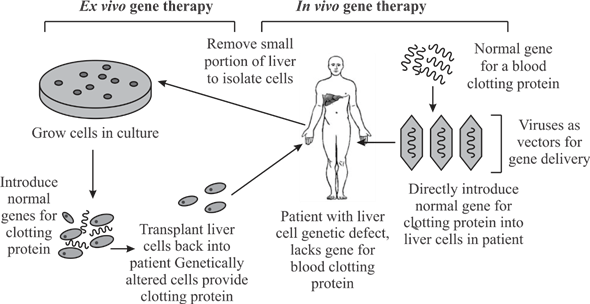 Fig. 1: ex vivo and in vivo gene therapy for a person suffering with a liver disorder.
This method tries to achieve the goal of being the best method of translational medicine by first identifying a disease causing gene found by a scientific discovery, then translating the finding to an effective therapy and thus finally moving to a patient's bedside from the laboratory bench in order to treat a disease.
Two main essential criteria for gene therapy are:
▪Identification of the gene or genes which are involved in causing the disease.
▪Cloning or synthesis of the gene in the laboratory.
In the past, major targets of gene therapy were blood disorders like hemophilia, leukemia, etc. as it is relatively easy to make changes to blood cells outside the body and then return them back rather than treating cells of the cardiac or skeletal muscle or other organs with heterogenous cell populations. Currently, gene therapy approaches are being investigated for treatment of neurodegenerative diseases including Parkinson and Alzheimer disease, hereditary blindness, a variety of cancers, drug and alcohol addiction, depression, etc.
There are two broad ways of treating a patient with gene therapy:
1. Ex vivo gene therapy
In this therapy, some cells from the person with a particular genetic condition are removed. These cells are then treated in the laboratory in such a way that the newly inserted normal copy of therapeutic gene or DNA or RNA sequence inhibits the expression of protein secreted by the defective gene. After analyzing the expression of therapeutic gene in the laboratory, these cells are transplanted back into the person where the therapeutic gene expresses normal copies of the protein which is required by the body. No fear of immune system rejecting the altered cells is there, as the cells were initially derived from the person itself.
2. In vivo gene therapy
In this therapy, therapeutic gene is directly introduced into the cells having faulty or missing genes without removing them from the patient's body. One of its major challenges is that it gets difficult to restrict the delivery of the therapeutic genes to only the planned tissues and not to all tissues in the body.
Fig. 1: ex vivo and in vivo gene therapy for a person suffering with a liver disorder. 3
Who should be treated by gene therapy? What criteria are used to determine if a person is a candidate for gene therapy? Should gene therapy be used for cosmetic purposes or to improve athletic performance?
Gene therapy is an approach of treatment of genetic disorders where the expression of a faulty gene is altered. It is the usage of genes as therapeutic agents to alleviate or cure disease symptoms. The gene containing the correct sequence of DNA for a particular protein; called therapeutic gene, is inserted into a patient's cells to correct genetic disease conditions caused by faulty or missing genes. Research is still going on for this mode of therapy to make it safe and reliable.
People suffering from terminal genetic diseases for which drug or medicine doesn't work should be treated with genetic therapy. Patients of SCID, cancer, hemophilia, Chronic Granulomatus Disorder (CGD) should receive gene therapeutic treatments. Scientist should use gene therapy only when no other form of therapy can help the patient.
There are two important criteria to determine whether a person is a candidate for gene therapy. The first criterion is that the gene responsible for the genetic disorder should be identified. Secondly, researchers should be able to clone the identified gene successfully in laboratory. In addition to these criteria, some other factors are involved in selection of candidates for gene therapy. Patients having genetic disorders caused by mutations in single genes tend to be good candidates for gene therapy. Monogenic diseases are preferred in treatments by gene therapy because it is much easier to target a single mutant gene and then replace it with a normal gene carried by vectors. Affected organs having cells that are easily accessed are the easy targets for gene therapy treatments. It is also required to know the precise function and molecular associations of the target gene.
The use of gene therapy for cosmetic or athletic performance enhancement purposes is a debatable issue. It raises moral and ethical conflicts. In genetic experiments, mouse models were used, where addition of gene IGF -1 or genetically enhanced expression of PPAR- ? increased the muscle function and enhanced endurance of physical stress. This research was followed by genetic experiments to enhance performance in athletes.
However, World Anti Doping Agency (WADA) had prohibited gene doping for performance enhancements. Most sport organizers do not support this issue and it is considered to be a criterion that results in disqualification of suspected candidates. Synthetic form of EPO was banned in Olympics as it increases the oxygen carrying capacity of blood and hence, results in increase physical endurance.
Furthermore, it has several side effects like immune reaction, or mutation of genes in the body, causing complicated health issues. Gene therapy should be used only for legitimate medical purposes.
People suffering from terminal genetic diseases for which drug or medicine doesn't work should be treated with genetic therapy. Patients of SCID, cancer, hemophilia, Chronic Granulomatus Disorder (CGD) should receive gene therapeutic treatments. Scientist should use gene therapy only when no other form of therapy can help the patient.
There are two important criteria to determine whether a person is a candidate for gene therapy. The first criterion is that the gene responsible for the genetic disorder should be identified. Secondly, researchers should be able to clone the identified gene successfully in laboratory. In addition to these criteria, some other factors are involved in selection of candidates for gene therapy. Patients having genetic disorders caused by mutations in single genes tend to be good candidates for gene therapy. Monogenic diseases are preferred in treatments by gene therapy because it is much easier to target a single mutant gene and then replace it with a normal gene carried by vectors. Affected organs having cells that are easily accessed are the easy targets for gene therapy treatments. It is also required to know the precise function and molecular associations of the target gene.
The use of gene therapy for cosmetic or athletic performance enhancement purposes is a debatable issue. It raises moral and ethical conflicts. In genetic experiments, mouse models were used, where addition of gene IGF -1 or genetically enhanced expression of PPAR- ? increased the muscle function and enhanced endurance of physical stress. This research was followed by genetic experiments to enhance performance in athletes.
However, World Anti Doping Agency (WADA) had prohibited gene doping for performance enhancements. Most sport organizers do not support this issue and it is considered to be a criterion that results in disqualification of suspected candidates. Synthetic form of EPO was banned in Olympics as it increases the oxygen carrying capacity of blood and hence, results in increase physical endurance.
Furthermore, it has several side effects like immune reaction, or mutation of genes in the body, causing complicated health issues. Gene therapy should be used only for legitimate medical purposes.
4
Compare and contrast ex vivo and in vivo gene therapy as approaches for delivering therapeutic genes.
Unlock Deck
Unlock for access to all 13 flashcards in this deck.
Unlock Deck
k this deck
5
Describe future challenges and ethical issues associated with gene therapy.
Unlock Deck
Unlock for access to all 13 flashcards in this deck.
Unlock Deck
k this deck
6
When treating a person by gene therapy, is it necessary that the therapeutic gene becomes part of a chromosome (integration) when inserted into cells? Explain your answer.
Unlock Deck
Unlock for access to all 13 flashcards in this deck.
Unlock Deck
k this deck
7
Describe two ways that therapeutic genes can be delivered into cells.
Unlock Deck
Unlock for access to all 13 flashcards in this deck.
Unlock Deck
k this deck
8
Explain how viral vectors can be used for gene therapy and provide two examples of commonly used viral vectors. What are some of the major challenges that must be overcome to develop safer and more effective viral vectors for gene therapy?
Unlock Deck
Unlock for access to all 13 flashcards in this deck.
Unlock Deck
k this deck
9
During the first successful gene therapy trial in which Ashanti DeSilva was treated for SCID, did the therapeutic gene delivered to Ashanti replace the defective copy of the ADA gene? Why were white blood cells chosen as the targets for the therapeutic gene?
Unlock Deck
Unlock for access to all 13 flashcards in this deck.
Unlock Deck
k this deck
10
Explain an example of successful gene therapy trial. In your answer be sure to consider: a description of the disease condition that was treated, the mutation or disease gene affected, the therapeutic gene delivered, and the method of delivery use for the therapy.
Unlock Deck
Unlock for access to all 13 flashcards in this deck.
Unlock Deck
k this deck
11
What is targeted gene therapy or gene editing, and how does this approach differ from traditional gene therapy approaches?
Unlock Deck
Unlock for access to all 13 flashcards in this deck.
Unlock Deck
k this deck
12
How do ZFNs work?
Unlock Deck
Unlock for access to all 13 flashcards in this deck.
Unlock Deck
k this deck
13
Describe two gene-silencing techniques and explain how they may be used for gene therapy.
Unlock Deck
Unlock for access to all 13 flashcards in this deck.
Unlock Deck
k this deck
Unlock Deck
Unlock for access to all 13 flashcards in this deck.







