





 Chat with AI

Deck 31: Plant Growth and Development
Full screen (f)

Question

Question
Question
Question
Question
Question
Question
Question
Question
Use the figure above to answer questions
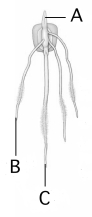
This young seedling
A)is a monocot.
B)is a eudicot.
C)is a magnoliid.
D)could be either a monocot or a dicot.
E)is none of these.
This young seedling
A)is a monocot.
B)is a eudicot.
C)is a magnoliid.
D)could be either a monocot or a dicot.
E)is none of these.
Question
Use the figure above to answer questions
The function of "A" is to
A)digest the endosperm.
B)protect new leaves as the seedling grows through soil.
C)secrete hormones that cause flowering.
D)absorb pheromones secreted by other seedlings.
E)do none of these.
The function of "A" is to
A)digest the endosperm.
B)protect new leaves as the seedling grows through soil.
C)secrete hormones that cause flowering.
D)absorb pheromones secreted by other seedlings.
E)do none of these.
Question
Question
Question
Question
Question
Question
Use the figure above to answer questions
An adventitious root is indicated by
A)A.
B)B.
C)C.
D)B and C.
E)none of these.
An adventitious root is indicated by
A)A.
B)B.
C)C.
D)B and C.
E)none of these.
Question
Question
Question
Use the above figure to answer questions
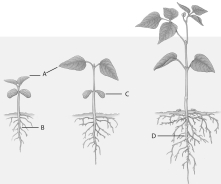
The letter "B" in the above figure represents
A)the root nodules.
B)the primary root.
C)the primary leaf.
D)the cotyledons.
E)none of these.
The letter "B" in the above figure represents
A)the root nodules.
B)the primary root.
C)the primary leaf.
D)the cotyledons.
E)none of these.
Question
Use the figure above to answer questions
The first portion of the seedling to emerge from the seed coat is indicated by
A)A.
B)B.
C)C.
D)one of these, but it is impossible to predict which one.
E)none of these.
The first portion of the seedling to emerge from the seed coat is indicated by
A)A.
B)B.
C)C.
D)one of these, but it is impossible to predict which one.
E)none of these.
Question
Question
Question
Question
Question
Question
Question
Question
Question
Question
Question
Question
Question
Use the above figure to answer questions
The letter "D" in the above figure represents
A)the root nodules.
B)the primary root.
C)the primary leaf.
D)the cotyledons.
E)none of these.
The letter "D" in the above figure represents
A)the root nodules.
B)the primary root.
C)the primary leaf.
D)the cotyledons.
E)none of these.
Question
Use the above figure to answer questions
The letter "A" in the above figure represents
A)the root nodules.
B)the primary root.
C)the primary leaf.
D)the cotyledons.
E)none of these.
The letter "A" in the above figure represents
A)the root nodules.
B)the primary root.
C)the primary leaf.
D)the cotyledons.
E)none of these.
Question
Use the above figure to answer questions
The letter __________ in the above figure represents the branch roots.
A)A
B)B
C)C
D)D
E)none of these
The letter __________ in the above figure represents the branch roots.
A)A
B)B
C)C
D)D
E)none of these
Question
Question
Question
Question
Use the above figure to answer questions
The letter "C" in the above figure represents
A)the root nodules.
B)the primary root.
C)the primary leaf.
D)the cotyledons.
E)none of these.
The letter "C" in the above figure represents
A)the root nodules.
B)the primary root.
C)the primary leaf.
D)the cotyledons.
E)none of these.
Question
Question
Which plant hormone listed below is responsible for the symbiotic relationship shown in the above figure? 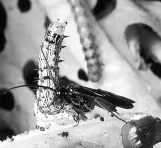
A)auxin
B)gibberellin
C)cytokinin
D)jasmonates
E)ethylene
A)auxin
B)gibberellin
C)cytokinin
D)jasmonates
E)ethylene
Question
The polar transport of auxin in a seedling
A)occurs in parenchyma cells.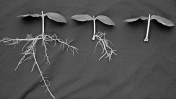
B)uses passive membrane transporters to move auxin in and out of cells.
C)uses membrane pumps to move hydrogen ions out of the cytoplasm into the primary cell wall.
D)activates enzymes that loosen cross-links between cellulose microfibrils.
E)does all of these.
A)occurs in parenchyma cells.
B)uses passive membrane transporters to move auxin in and out of cells.
C)uses membrane pumps to move hydrogen ions out of the cytoplasm into the primary cell wall.
D)activates enzymes that loosen cross-links between cellulose microfibrils.
E)does all of these.
Question
Question
Question
Question
Question
Question
Question
Question
Question
Question
Question
Question
Question
Question
Question
Question
Question
Question
Question
Question
Question
Question
Question
Question
Question
Question
Question
Question
Question
Question
Question
Question
Question
Question
Question

Unlock Deck
Sign up to unlock the cards in this deck!
Unlock Deck
Unlock Deck
1/77

Play

Full screen (f)
Deck 31: Plant Growth and Development
1
Application of synthetic gibberellins improves the quality and marketability of
A)oranges.
B)grapes.
C)celery.
D)cabbage.
E)all of these.
A)oranges.
B)grapes.
C)celery.
D)cabbage.
E)all of these.
E
2
Which of the following is false regarding plant hormones?
A)They are signaling molecules that travel to target cells.
B)They stimulate or inhibit gene activity.
C)They bind to receptors on their target cells.
D)Target cells are always adjacent to the secreting cell.
E)All of these are false.
A)They are signaling molecules that travel to target cells.
B)They stimulate or inhibit gene activity.
C)They bind to receptors on their target cells.
D)Target cells are always adjacent to the secreting cell.
E)All of these are false.
D
3
Chemicals produced by one group of cells that affect other target cells are called
A)secretions.
B)signaling molecules.
C)steroids.
D)polymers.
E)enzymes.
A)secretions.
B)signaling molecules.
C)steroids.
D)polymers.
E)enzymes.
B
4
All EXCEPT which of the following has an effect on seed germination?
A)moisture
B)temperature
C)carbon dioxide
D)number of daylight hours
E)oxygen
A)moisture
B)temperature
C)carbon dioxide
D)number of daylight hours
E)oxygen
Unlock Deck
Unlock for access to all 77 flashcards in this deck.
Unlock Deck
k this deck
5
Application of synthetic gibberellins to grape plants is commercially beneficial because it results in
A)elongation of young grape cells.
B)longer stem internodes.
C)more space between individual grapes.
D)less likelihood of fungal damage to the fruits.
E)all of these.
A)elongation of young grape cells.
B)longer stem internodes.
C)more space between individual grapes.
D)less likelihood of fungal damage to the fruits.
E)all of these.
Unlock Deck
Unlock for access to all 77 flashcards in this deck.
Unlock Deck
k this deck
6
When a cell begins to enlarge after cell division, the primary cell wall
A)is rather elastic and can be stretched.
B)allows water uptake.
C)becomes thicker due to the addition of polysaccharides.
D)is rather elastic and can be stretched and allows water uptake.
E)is rather elastic and can be stretched and becomes thicker due to the addition of polysaccharides.
A)is rather elastic and can be stretched.
B)allows water uptake.
C)becomes thicker due to the addition of polysaccharides.
D)is rather elastic and can be stretched and allows water uptake.
E)is rather elastic and can be stretched and becomes thicker due to the addition of polysaccharides.
Unlock Deck
Unlock for access to all 77 flashcards in this deck.
Unlock Deck
k this deck
7
The hormone gibberellin reduces the damage caused by fungal infections because of which of the following?
A)Increased space between individual grapes increases air circulation and reduces fungi.
B)It shrinks the internodes to reduce the number of clusters that touch.
C)It increases the immune response of the plant.
D)It stimulates a type of signaling molecule that shuts down all fungal growth.
E)None of these are true.
A)Increased space between individual grapes increases air circulation and reduces fungi.
B)It shrinks the internodes to reduce the number of clusters that touch.
C)It increases the immune response of the plant.
D)It stimulates a type of signaling molecule that shuts down all fungal growth.
E)None of these are true.
Unlock Deck
Unlock for access to all 77 flashcards in this deck.
Unlock Deck
k this deck
8
The target cells for hormones
A)have special receptor sites.
B)are not located in roots.
C)are no different from any other cells.
D)are located in the interior of the plant.
E)include all of these descriptions.
A)have special receptor sites.
B)are not located in roots.
C)are no different from any other cells.
D)are located in the interior of the plant.
E)include all of these descriptions.
Unlock Deck
Unlock for access to all 77 flashcards in this deck.
Unlock Deck
k this deck
9
Use the figure above to answer questions
This young seedling
A)is a monocot.
B)is a eudicot.
C)is a magnoliid.
D)could be either a monocot or a dicot.
E)is none of these.
This young seedling
A)is a monocot.
B)is a eudicot.
C)is a magnoliid.
D)could be either a monocot or a dicot.
E)is none of these.
Unlock Deck
Unlock for access to all 77 flashcards in this deck.
Unlock Deck
k this deck
10
Use the figure above to answer questions
The function of "A" is to
A)digest the endosperm.
B)protect new leaves as the seedling grows through soil.
C)secrete hormones that cause flowering.
D)absorb pheromones secreted by other seedlings.
E)do none of these.
The function of "A" is to
A)digest the endosperm.
B)protect new leaves as the seedling grows through soil.
C)secrete hormones that cause flowering.
D)absorb pheromones secreted by other seedlings.
E)do none of these.
Unlock Deck
Unlock for access to all 77 flashcards in this deck.
Unlock Deck
k this deck
11
Gibberellins
A)were first isolated by a Japanese researcher working with "foolish seedling" rice plants.
B)were first isolated from a fungus.
C)are represented by more than 80 different types.
D)promote stem elongation.
E)include all of these descriptions.
A)were first isolated by a Japanese researcher working with "foolish seedling" rice plants.
B)were first isolated from a fungus.
C)are represented by more than 80 different types.
D)promote stem elongation.
E)include all of these descriptions.
Unlock Deck
Unlock for access to all 77 flashcards in this deck.
Unlock Deck
k this deck
12
Which of the following statements is false?
A)The movement of water into a seed is known as imbibition.
B)Water is attracted to hydrophilic proteins in the seed.
C)The shoot system is the first part of a cotyledon to grow.
D)A germinating seed starts aerobic respiration when the seed coat splits.
E)Germination is completed once the primary root extends outside the seed.
A)The movement of water into a seed is known as imbibition.
B)Water is attracted to hydrophilic proteins in the seed.
C)The shoot system is the first part of a cotyledon to grow.
D)A germinating seed starts aerobic respiration when the seed coat splits.
E)Germination is completed once the primary root extends outside the seed.
Unlock Deck
Unlock for access to all 77 flashcards in this deck.
Unlock Deck
k this deck
13
Plant growth and development is guided by
A)hormones.
B)other signaling molecules.
C)water availability.
D)day length.
E)all of these.
A)hormones.
B)other signaling molecules.
C)water availability.
D)day length.
E)all of these.
Unlock Deck
Unlock for access to all 77 flashcards in this deck.
Unlock Deck
k this deck
14
Which of the following is NOT accurate in describing a hormone?
A)Hormones produced by a particular species affect only that species.
B)Only those cells that have specific receptors for a hormone can respond to it.
C)Hormones in general are produced by one cell and cause their effects in another cell.
D)Hormones are a type of signaling molecule.
E)Hormones stimulate or inhibit gene activity.
A)Hormones produced by a particular species affect only that species.
B)Only those cells that have specific receptors for a hormone can respond to it.
C)Hormones in general are produced by one cell and cause their effects in another cell.
D)Hormones are a type of signaling molecule.
E)Hormones stimulate or inhibit gene activity.
Unlock Deck
Unlock for access to all 77 flashcards in this deck.
Unlock Deck
k this deck
15
In the early growth stages of a seedling, what is responsible for cell enlargement?
A)mitosis
B)cytoplasmic divisions
C)soil minerals
D)water uptake
E)mitosis and cytoplasmic divisions
A)mitosis
B)cytoplasmic divisions
C)soil minerals
D)water uptake
E)mitosis and cytoplasmic divisions
Unlock Deck
Unlock for access to all 77 flashcards in this deck.
Unlock Deck
k this deck
16
Use the figure above to answer questions
An adventitious root is indicated by
A)A.
B)B.
C)C.
D)B and C.
E)none of these.
An adventitious root is indicated by
A)A.
B)B.
C)C.
D)B and C.
E)none of these.
Unlock Deck
Unlock for access to all 77 flashcards in this deck.
Unlock Deck
k this deck
17
Growth refers to an increase in the __________ of cells.
A)size
B)number
C)differentiation
D)volume
E)all EXCEPT "differentiation"
A)size
B)number
C)differentiation
D)volume
E)all EXCEPT "differentiation"
Unlock Deck
Unlock for access to all 77 flashcards in this deck.
Unlock Deck
k this deck
18
Cells that actively divide during germination are called __________ cells.
A)parenchyma
B)meristematic
C)ground
D)epidermal
E)mesophyll
A)parenchyma
B)meristematic
C)ground
D)epidermal
E)mesophyll
Unlock Deck
Unlock for access to all 77 flashcards in this deck.
Unlock Deck
k this deck
19
Use the above figure to answer questions
The letter "B" in the above figure represents
A)the root nodules.
B)the primary root.
C)the primary leaf.
D)the cotyledons.
E)none of these.
The letter "B" in the above figure represents
A)the root nodules.
B)the primary root.
C)the primary leaf.
D)the cotyledons.
E)none of these.
Unlock Deck
Unlock for access to all 77 flashcards in this deck.
Unlock Deck
k this deck
20
Use the figure above to answer questions
The first portion of the seedling to emerge from the seed coat is indicated by
A)A.
B)B.
C)C.
D)one of these, but it is impossible to predict which one.
E)none of these.
The first portion of the seedling to emerge from the seed coat is indicated by
A)A.
B)B.
C)C.
D)one of these, but it is impossible to predict which one.
E)none of these.
Unlock Deck
Unlock for access to all 77 flashcards in this deck.
Unlock Deck
k this deck
21
Which plant hormone has mostly inhibitory effects?
A)auxin
B)gibberellin
C)cytokinin
D)abscisic acid
E)ethylene
A)auxin
B)gibberellin
C)cytokinin
D)abscisic acid
E)ethylene
Unlock Deck
Unlock for access to all 77 flashcards in this deck.
Unlock Deck
k this deck
22
Monocots, but NOT eudicots, have
A)nodes.
B)cotyledons.
C)coleoptiles.
D)hypocotyl hooks.
E)flowers.
A)nodes.
B)cotyledons.
C)coleoptiles.
D)hypocotyl hooks.
E)flowers.
Unlock Deck
Unlock for access to all 77 flashcards in this deck.
Unlock Deck
k this deck
23
Which of the following is NOT one of the plant growth regulators?
A)salicylic acid
B)systemin
C)brassinosteroids
D)mineralocorticoids
E)jasmonates
A)salicylic acid
B)systemin
C)brassinosteroids
D)mineralocorticoids
E)jasmonates
Unlock Deck
Unlock for access to all 77 flashcards in this deck.
Unlock Deck
k this deck
24
The plant hormone that promotes dormancy in some plants and seeds is
A)abscisic acid.
B)auxin.
C)gibberellin.
D)ethylene.
E)none of these.
A)abscisic acid.
B)auxin.
C)gibberellin.
D)ethylene.
E)none of these.
Unlock Deck
Unlock for access to all 77 flashcards in this deck.
Unlock Deck
k this deck
25
Auxins are secreted by
A)most tissues undergoing ripening.
B)apical meristems of shoots, coleoptiles, and roots.
C)vascular tissues of stems and leaves.
D)root caps.
E)root cells in response to water stress.
A)most tissues undergoing ripening.
B)apical meristems of shoots, coleoptiles, and roots.
C)vascular tissues of stems and leaves.
D)root caps.
E)root cells in response to water stress.
Unlock Deck
Unlock for access to all 77 flashcards in this deck.
Unlock Deck
k this deck
26
What hormone(s) can be used commercially to prolong the shelf life of cut flowers?
A)abscisic acid
B)cytokinins
C)auxins
D)ABA
E)ethylene
A)abscisic acid
B)cytokinins
C)auxins
D)ABA
E)ethylene
Unlock Deck
Unlock for access to all 77 flashcards in this deck.
Unlock Deck
k this deck
27
The plant hormone that promotes fruit ripening is
A)auxin.
B)gibberellin.
C)cytokinin.
D)abscisic acid.
E)ethylene.
A)auxin.
B)gibberellin.
C)cytokinin.
D)abscisic acid.
E)ethylene.
Unlock Deck
Unlock for access to all 77 flashcards in this deck.
Unlock Deck
k this deck
28
The gaseous plant hormone is
A)auxin.
B)gibberellin.
C)cytokinin.
D)abscisic acid.
E)ethylene.
A)auxin.
B)gibberellin.
C)cytokinin.
D)abscisic acid.
E)ethylene.
Unlock Deck
Unlock for access to all 77 flashcards in this deck.
Unlock Deck
k this deck
29
Which of the following matches of plant hormone to agricultural application is INCORRECT?
A)abscisic acid; induces dormancy in nursery stock before shipment
B)ethylene; permits unripe fruit to be shipped without damage for later ripening at distribution centers
C)synthetic auxins; induce production of seedless fruit
D)cytokinins; promote root formation in cuttings
E)gibberellins; increase fruit size
A)abscisic acid; induces dormancy in nursery stock before shipment
B)ethylene; permits unripe fruit to be shipped without damage for later ripening at distribution centers
C)synthetic auxins; induce production of seedless fruit
D)cytokinins; promote root formation in cuttings
E)gibberellins; increase fruit size
Unlock Deck
Unlock for access to all 77 flashcards in this deck.
Unlock Deck
k this deck
30
The plant hormone that promotes cell division in roots and shoots is
A)auxin.
B)gibberellin.
C)cytokinin.
D)abscisic acid.
E)ethylene.
A)auxin.
B)gibberellin.
C)cytokinin.
D)abscisic acid.
E)ethylene.
Unlock Deck
Unlock for access to all 77 flashcards in this deck.
Unlock Deck
k this deck
31
2,4-D, a potent eudicot weed killer, is most likely a synthetic
A)auxin.
B)gibberellin.
C)cytokinin.
D)phytochrome.
E)none of these.
A)auxin.
B)gibberellin.
C)cytokinin.
D)phytochrome.
E)none of these.
Unlock Deck
Unlock for access to all 77 flashcards in this deck.
Unlock Deck
k this deck
32
Which of the following is mismatched?
A)cytokinin; retards aging
B)auxin; promotes cell elongation
C)gibberellin; involved in phototropism and gravitropism
D)abscisic acid; promotes stomatal closure
E)ethylene; promotes leaf abscission
A)cytokinin; retards aging
B)auxin; promotes cell elongation
C)gibberellin; involved in phototropism and gravitropism
D)abscisic acid; promotes stomatal closure
E)ethylene; promotes leaf abscission
Unlock Deck
Unlock for access to all 77 flashcards in this deck.
Unlock Deck
k this deck
33
Use the above figure to answer questions
The letter "D" in the above figure represents
A)the root nodules.
B)the primary root.
C)the primary leaf.
D)the cotyledons.
E)none of these.
The letter "D" in the above figure represents
A)the root nodules.
B)the primary root.
C)the primary leaf.
D)the cotyledons.
E)none of these.
Unlock Deck
Unlock for access to all 77 flashcards in this deck.
Unlock Deck
k this deck
34
Use the above figure to answer questions
The letter "A" in the above figure represents
A)the root nodules.
B)the primary root.
C)the primary leaf.
D)the cotyledons.
E)none of these.
The letter "A" in the above figure represents
A)the root nodules.
B)the primary root.
C)the primary leaf.
D)the cotyledons.
E)none of these.
Unlock Deck
Unlock for access to all 77 flashcards in this deck.
Unlock Deck
k this deck
35
Use the above figure to answer questions
The letter __________ in the above figure represents the branch roots.
A)A
B)B
C)C
D)D
E)none of these
The letter __________ in the above figure represents the branch roots.
A)A
B)B
C)C
D)D
E)none of these
Unlock Deck
Unlock for access to all 77 flashcards in this deck.
Unlock Deck
k this deck
36
Root formation in stem cuttings can be improved by the application of
A)synthetic auxins.
B)abscisic acid.
C)salicylic acid.
D)citric acid.
E)nitric acid.
A)synthetic auxins.
B)abscisic acid.
C)salicylic acid.
D)citric acid.
E)nitric acid.
Unlock Deck
Unlock for access to all 77 flashcards in this deck.
Unlock Deck
k this deck
37
Synthetic auxins are used as
A)pesticides.
B)herbicides.
C)fungicides.
D)insecticides.
E)all of these.
A)pesticides.
B)herbicides.
C)fungicides.
D)insecticides.
E)all of these.
Unlock Deck
Unlock for access to all 77 flashcards in this deck.
Unlock Deck
k this deck
38
Gibberellins have their most dramatic effects
A)on leaves.
B)in promoting abscission.
C)on fruit ripening.
D)on stem lengthening.
E)on flowers.
A)on leaves.
B)in promoting abscission.
C)on fruit ripening.
D)on stem lengthening.
E)on flowers.
Unlock Deck
Unlock for access to all 77 flashcards in this deck.
Unlock Deck
k this deck
39
Use the above figure to answer questions
The letter "C" in the above figure represents
A)the root nodules.
B)the primary root.
C)the primary leaf.
D)the cotyledons.
E)none of these.
The letter "C" in the above figure represents
A)the root nodules.
B)the primary root.
C)the primary leaf.
D)the cotyledons.
E)none of these.
Unlock Deck
Unlock for access to all 77 flashcards in this deck.
Unlock Deck
k this deck
40
Which of the following is mismatched?
A)cytokinin; promotes cell division
B)abscisic acid; triggers bud and seed dormancy
C)ethylene; breaks dormancy of seeds and buds
D)auxin; involved in phototropism and gravitropism
E)nitric oxide; involved in plant defense responses
A)cytokinin; promotes cell division
B)abscisic acid; triggers bud and seed dormancy
C)ethylene; breaks dormancy of seeds and buds
D)auxin; involved in phototropism and gravitropism
E)nitric oxide; involved in plant defense responses
Unlock Deck
Unlock for access to all 77 flashcards in this deck.
Unlock Deck
k this deck
41
Which plant hormone listed below is responsible for the symbiotic relationship shown in the above figure?
A)auxin
B)gibberellin
C)cytokinin
D)jasmonates
E)ethylene
A)auxin
B)gibberellin
C)cytokinin
D)jasmonates
E)ethylene
Unlock Deck
Unlock for access to all 77 flashcards in this deck.
Unlock Deck
k this deck
42
The polar transport of auxin in a seedling
A)occurs in parenchyma cells.
B)uses passive membrane transporters to move auxin in and out of cells.
C)uses membrane pumps to move hydrogen ions out of the cytoplasm into the primary cell wall.
D)activates enzymes that loosen cross-links between cellulose microfibrils.
E)does all of these.
A)occurs in parenchyma cells.
B)uses passive membrane transporters to move auxin in and out of cells.
C)uses membrane pumps to move hydrogen ions out of the cytoplasm into the primary cell wall.
D)activates enzymes that loosen cross-links between cellulose microfibrils.
E)does all of these.
Unlock Deck
Unlock for access to all 77 flashcards in this deck.
Unlock Deck
k this deck
43
Compared with young trees growing out in the open, young trees growing in a darker forest understory tend to have longer, thinner trunks with less branching.This developmental pattern is principally caused by
A)phototropism.
B)thigmotropism.
C)activated phytochrome being converted to inactive phytochrome.
D)inactive phytochrome being converted to active phytochrome.
E)none of these.
A)phototropism.
B)thigmotropism.
C)activated phytochrome being converted to inactive phytochrome.
D)inactive phytochrome being converted to active phytochrome.
E)none of these.
Unlock Deck
Unlock for access to all 77 flashcards in this deck.
Unlock Deck
k this deck
44
The effect of directional growth shown in the above figure is known to be caused by
A)thigmotropism.
B)gravitropism.
C)abscisic acid.
D)salicylic acid.
E)all of these.
A)thigmotropism.
B)gravitropism.
C)abscisic acid.
D)salicylic acid.
E)all of these.
Unlock Deck
Unlock for access to all 77 flashcards in this deck.
Unlock Deck
k this deck
45
Which of the following responses is NOT controlled by plant hormones?
A)the growth form of the plant (apical dominance)
B)the beginning and ending of dormancy
C)the bending of an oat coleoptile toward light
D)the production of glucose by the chloroplast
E)the formation of abscission zones
A)the growth form of the plant (apical dominance)
B)the beginning and ending of dormancy
C)the bending of an oat coleoptile toward light
D)the production of glucose by the chloroplast
E)the formation of abscission zones
Unlock Deck
Unlock for access to all 77 flashcards in this deck.
Unlock Deck
k this deck
46
The primary root of a seedling grows down
A)to avoid light.
B)in response to gravity.
C)because the cells on the upper surface of the root elongate more rapidly than those on the lower surface of the root.
D)in response to different concentrations of auxin.
E)because of all of these except "to avoid light."
A)to avoid light.
B)in response to gravity.
C)because the cells on the upper surface of the root elongate more rapidly than those on the lower surface of the root.
D)in response to different concentrations of auxin.
E)because of all of these except "to avoid light."
Unlock Deck
Unlock for access to all 77 flashcards in this deck.
Unlock Deck
k this deck
47
Which of the following is NOT promoted by the active form of phytochrome?
A)seed germination
B)root growth
C)leaf expansion
D)stem branching
E)none of these
A)seed germination
B)root growth
C)leaf expansion
D)stem branching
E)none of these
Unlock Deck
Unlock for access to all 77 flashcards in this deck.
Unlock Deck
k this deck
48
Auxin concentration gradients
A)appear once germination begins.
B)cause regional differences in gene transcription.
C)allow formation of plant parts in expected patterns.
D)help young cells elongate so that shoots and roots lengthen.
E)are described by all EXCEPT "appear once germination begins."
A)appear once germination begins.
B)cause regional differences in gene transcription.
C)allow formation of plant parts in expected patterns.
D)help young cells elongate so that shoots and roots lengthen.
E)are described by all EXCEPT "appear once germination begins."
Unlock Deck
Unlock for access to all 77 flashcards in this deck.
Unlock Deck
k this deck
49
The active form of phytochrome is known as
A)Pp.
B)Pr.
C)Pfr.
D)Pl.
E)Pst.
A)Pp.
B)Pr.
C)Pfr.
D)Pl.
E)Pst.
Unlock Deck
Unlock for access to all 77 flashcards in this deck.
Unlock Deck
k this deck
50
Rhythms that are repeated every 24 hours are
A)sleep movements.
B)tropisms.
C)physiological requirements.
D)circadian rhythms.
E)biological clocks.
A)sleep movements.
B)tropisms.
C)physiological requirements.
D)circadian rhythms.
E)biological clocks.
Unlock Deck
Unlock for access to all 77 flashcards in this deck.
Unlock Deck
k this deck
51
Perhaps a plant's greatest liability is its inability to
A)produce growth hormones.
B)use aerobic respiration.
C)move when conditions around it deteriorate.
D)produce its own lipids and proteins.
E)respond to dwindling supplies of nutrients and water.
A)produce growth hormones.
B)use aerobic respiration.
C)move when conditions around it deteriorate.
D)produce its own lipids and proteins.
E)respond to dwindling supplies of nutrients and water.
Unlock Deck
Unlock for access to all 77 flashcards in this deck.
Unlock Deck
k this deck
52
The plant movement in the above figure is caused by
A)auxin differences in two sides of the coleoptile.
B)gibberellin released in one side of the leaf.
C)abscisic acid in two sides of the stems.
D)salicylic acid in two sides of the roots.
E)none of these.
A)auxin differences in two sides of the coleoptile.
B)gibberellin released in one side of the leaf.
C)abscisic acid in two sides of the stems.
D)salicylic acid in two sides of the roots.
E)none of these.
Unlock Deck
Unlock for access to all 77 flashcards in this deck.
Unlock Deck
k this deck
53
The absence of which of the following pigments prevents a plant from responding to the duration of light and darkness?
A)chlorophyll
B)xanthophyll
C)carotene
D)phytochrome
E)flavoproteins
A)chlorophyll
B)xanthophyll
C)carotene
D)phytochrome
E)flavoproteins
Unlock Deck
Unlock for access to all 77 flashcards in this deck.
Unlock Deck
k this deck
54
The pigment responsible for photoperiodism is
A)chlorophyll.
B)xanthophyll.
C)anthocyanin.
D)phytochrome.
E)phytoerythrin.
A)chlorophyll.
B)xanthophyll.
C)anthocyanin.
D)phytochrome.
E)phytoerythrin.
Unlock Deck
Unlock for access to all 77 flashcards in this deck.
Unlock Deck
k this deck
55
Which of the following inhibits stem lengthening in plants?
A)windswept location
B)repeated contact by grazing animals
C)greenhouse growth
D)mechanical stress
E)all EXCEPT "greenhouse growth"
A)windswept location
B)repeated contact by grazing animals
C)greenhouse growth
D)mechanical stress
E)all EXCEPT "greenhouse growth"
Unlock Deck
Unlock for access to all 77 flashcards in this deck.
Unlock Deck
k this deck
56
Photoperiodism is the
A)duration of flowering in a plant.
B)amount of light needed by a plant to exhibit normal growth.
C)response of a plant to the duration of light and darkness.
D)light phase of photosynthesis during which photolysis of water occurs.
E)opposite of photorespiration.
A)duration of flowering in a plant.
B)amount of light needed by a plant to exhibit normal growth.
C)response of a plant to the duration of light and darkness.
D)light phase of photosynthesis during which photolysis of water occurs.
E)opposite of photorespiration.
Unlock Deck
Unlock for access to all 77 flashcards in this deck.
Unlock Deck
k this deck
57
Active phytochrome controls
A)flowering and seed set.
B)seed germination.
C)stem branching and elongation.
D)expansion of leaves.
E)all of these.
A)flowering and seed set.
B)seed germination.
C)stem branching and elongation.
D)expansion of leaves.
E)all of these.
Unlock Deck
Unlock for access to all 77 flashcards in this deck.
Unlock Deck
k this deck
58
Which is (are) the principal substance(s) that regulate(s) thigmotropism?
A)auxin and ethylene
B)gibberellin
C)abscisic acid
D)salicylic acid
E)none of these
A)auxin and ethylene
B)gibberellin
C)abscisic acid
D)salicylic acid
E)none of these
Unlock Deck
Unlock for access to all 77 flashcards in this deck.
Unlock Deck
k this deck
59
Which of the following terms refers to the change in relative day length?
A)phytoerythrin
B)phototropism
C)photorhythmic
D)photochrome
E)photoperiodism
A)phytoerythrin
B)phototropism
C)photorhythmic
D)photochrome
E)photoperiodism
Unlock Deck
Unlock for access to all 77 flashcards in this deck.
Unlock Deck
k this deck
60
Which color of light is most effective in producing phototropism?
A)red
B)blue
C)yellow
D)white
E)green
A)red
B)blue
C)yellow
D)white
E)green
Unlock Deck
Unlock for access to all 77 flashcards in this deck.
Unlock Deck
k this deck
61
Abscission affects
A)leaves.
B)fruits.
C)flowers.
D)all of these.
E)none of these.
A)leaves.
B)fruits.
C)flowers.
D)all of these.
E)none of these.
Unlock Deck
Unlock for access to all 77 flashcards in this deck.
Unlock Deck
k this deck
62
The aging of a plant is
A)senescence.
B)vernalization.
C)abscission.
D)dormancy.
E)chlorosis.
A)senescence.
B)vernalization.
C)abscission.
D)dormancy.
E)chlorosis.
Unlock Deck
Unlock for access to all 77 flashcards in this deck.
Unlock Deck
k this deck
63
Every choice below EXCEPT __________ is a plant hormone.
A)IAA
B)abscisic acid
C)phytochrome
D)cytokinin
E)all are hormones
A)IAA
B)abscisic acid
C)phytochrome
D)cytokinin
E)all are hormones
Unlock Deck
Unlock for access to all 77 flashcards in this deck.
Unlock Deck
k this deck
64
Short-day plants
A)flower in early spring.
B)will not bloom until they have been exposed to a dark period longer than a critical length.
C)flower in the fall.
D)will not bloom if their dark period is interrupted by a short pulse of intense red light.
E)do all of these.
A)flower in early spring.
B)will not bloom until they have been exposed to a dark period longer than a critical length.
C)flower in the fall.
D)will not bloom if their dark period is interrupted by a short pulse of intense red light.
E)do all of these.
Unlock Deck
Unlock for access to all 77 flashcards in this deck.
Unlock Deck
k this deck
65
All the processes that lead to the death of a plant or any of its organs are
A)dormancy.
B)vernalization.
C)abscission.
D)senescence.
E)none of these.
A)dormancy.
B)vernalization.
C)abscission.
D)senescence.
E)none of these.
Unlock Deck
Unlock for access to all 77 flashcards in this deck.
Unlock Deck
k this deck
66
Even though the autumn may be unusually warm, the leaves from deciduous trees begin to drop during September.Which of the following is the best explanation?
A)The trees are responding to shorter days.
B)The autumn months are usually drier because the summer rains have tapered off.
C)The effects of phototropism are operating "right on schedule."
D)There is not enough sunlight to carry on photosynthesis any longer.
E)None of these are the best explanation.
A)The trees are responding to shorter days.
B)The autumn months are usually drier because the summer rains have tapered off.
C)The effects of phototropism are operating "right on schedule."
D)There is not enough sunlight to carry on photosynthesis any longer.
E)None of these are the best explanation.
Unlock Deck
Unlock for access to all 77 flashcards in this deck.
Unlock Deck
k this deck
67
Which of the following statements is false?
A)Long-day plants bloom in the summer.
B)Short-day plants bloom at noon.
C)Short-day plants bloom in late summer and early fall.
D)Chrysanthemums and cockleburs are short-day plants.
E)Day-neutral plants flower when mature enough to do so.
A)Long-day plants bloom in the summer.
B)Short-day plants bloom at noon.
C)Short-day plants bloom in late summer and early fall.
D)Chrysanthemums and cockleburs are short-day plants.
E)Day-neutral plants flower when mature enough to do so.
Unlock Deck
Unlock for access to all 77 flashcards in this deck.
Unlock Deck
k this deck
68
For some seeds to germinate,
A)they must first be exposed to a critical low temperature for a certain length of time.
B)they must be exposed to proper environmental conditions of temperature and moisture.
C)something must remove the restrictive seed coat.
D)something must remove the hormones that promote dormancy.
E)all of these must occur.
A)they must first be exposed to a critical low temperature for a certain length of time.
B)they must be exposed to proper environmental conditions of temperature and moisture.
C)something must remove the restrictive seed coat.
D)something must remove the hormones that promote dormancy.
E)all of these must occur.
Unlock Deck
Unlock for access to all 77 flashcards in this deck.
Unlock Deck
k this deck
69
Dormancy can be triggered by
A)low Pfr levels.
B)the production of abscisic acid.
C)nitrogen deficiency and low soil moisture.
D)cold nights.
E)all of these.
A)low Pfr levels.
B)the production of abscisic acid.
C)nitrogen deficiency and low soil moisture.
D)cold nights.
E)all of these.
Unlock Deck
Unlock for access to all 77 flashcards in this deck.
Unlock Deck
k this deck
70
The requirement of cold weather before a particular plant process occurs (e.g., germination) is known as
A)the biological clock.
B)vernalization.
C)photoperiodism.
D)biennial life cycle.
E)biorhythm.
A)the biological clock.
B)vernalization.
C)photoperiodism.
D)biennial life cycle.
E)biorhythm.
Unlock Deck
Unlock for access to all 77 flashcards in this deck.
Unlock Deck
k this deck
71
If peach trees growing in specific mild climates of the southern United States do not receive about 850 hours of temperatures below 40 degrees, they will not produce flowers in the spring.This effect is explained by which of the following terms?
A)photoperiodism
B)phototropism
C)senescence
D)vernalization
E)dormancy
A)photoperiodism
B)phototropism
C)senescence
D)vernalization
E)dormancy
Unlock Deck
Unlock for access to all 77 flashcards in this deck.
Unlock Deck
k this deck
72
Phytochrome is converted from the inactive to the active form by being exposed to light of what color?
A)far red
B)red
C)yellow
D)blue
E)none of these
A)far red
B)red
C)yellow
D)blue
E)none of these
Unlock Deck
Unlock for access to all 77 flashcards in this deck.
Unlock Deck
k this deck
73
A signaling molecule that interacts with phytochrome to influence flowering is produced in
A)roots.
B)leaves.
C)the stem.
D)flowers.
E)petioles.
A)roots.
B)leaves.
C)the stem.
D)flowers.
E)petioles.
Unlock Deck
Unlock for access to all 77 flashcards in this deck.
Unlock Deck
k this deck
74
Day-neutral plants are
A)short-day plants.
B)able to bloom when they are mature enough.
C)night-blooming plants.
D)triggered to bloom by cold weather.
E)none of these.
A)short-day plants.
B)able to bloom when they are mature enough.
C)night-blooming plants.
D)triggered to bloom by cold weather.
E)none of these.
Unlock Deck
Unlock for access to all 77 flashcards in this deck.
Unlock Deck
k this deck
75
Which factor has NOT been implicated in breaking dormancy?
A)cytokinin movement from leaves to buds in late summer
B)action of abscisic acid in the spring
C)gibberellin accumulation in buds in late autumn and winter
D)an exposure to low temperatures for hundreds of hours
E)all of these
A)cytokinin movement from leaves to buds in late summer
B)action of abscisic acid in the spring
C)gibberellin accumulation in buds in late autumn and winter
D)an exposure to low temperatures for hundreds of hours
E)all of these
Unlock Deck
Unlock for access to all 77 flashcards in this deck.
Unlock Deck
k this deck
76
Senescence may be counteracted by
A)removal of old flowers.
B)removal of seed pods.
C)inhibiting nutrient diversion to fruits.
D)all of these.
E)none of these.
A)removal of old flowers.
B)removal of seed pods.
C)inhibiting nutrient diversion to fruits.
D)all of these.
E)none of these.
Unlock Deck
Unlock for access to all 77 flashcards in this deck.
Unlock Deck
k this deck
77
Plants cannot __________ in the dark.
A)grow
B)respire
C)move
D)utilize chlorophyll
E)sense light
A)grow
B)respire
C)move
D)utilize chlorophyll
E)sense light
Unlock Deck
Unlock for access to all 77 flashcards in this deck.
Unlock Deck
k this deck
Unlock Deck
Unlock for access to all 77 flashcards in this deck.







