





 Chat with AI

Deck 15: Lipids and Detergents
Full screen (f)

Question

Question
Question
Which of the following triglycerides is glyceryl palmitostearoarachidate? 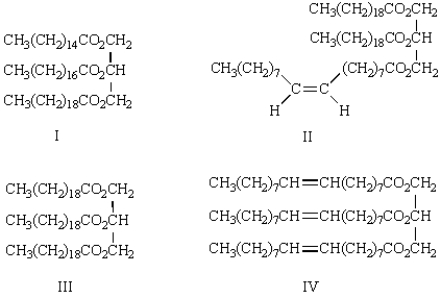
A) I
B) II
C) III
D) IV
E) none of these
A) I
B) II
C) III
D) IV
E) none of these
Question
Consider squalene.How many head-to-tail linkages of isoprene units are present in this triterpene? 
A) 1
B) 4
C) 5
D) 6
E) 8
A) 1
B) 4
C) 5
D) 6
E) 8
Question
Question
Question
Question
The correct formula for a fat or oil is
A)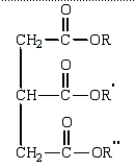
B)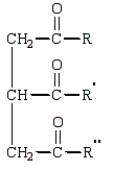
C)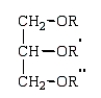
D)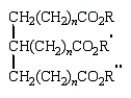
E)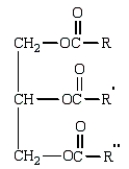
A)
B)
C)
D)
E)
Question
Which of the following molecules is the monoterpene, myrcene? 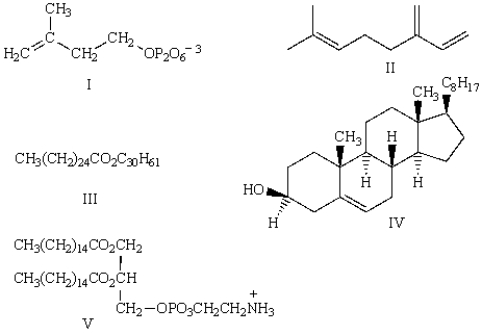
A) I
B) II
C) III
D) IV
E) V
A) I
B) II
C) III
D) IV
E) V
Question
Which of the following molecules can be classified as a wax? 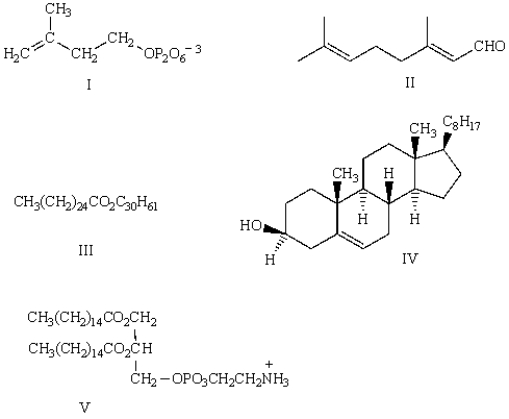
A) I
B) II
C) III
D) IV
E) V
A) I
B) II
C) III
D) IV
E) V
Question
Question
Which one of the following structures is glycerol?
A)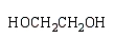
B)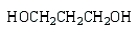
C)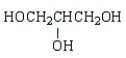
D)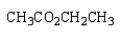
E)
A)
B)
C)
D)
E)
Question
Which of the following molecules is isopentenyl pyrophosphate? 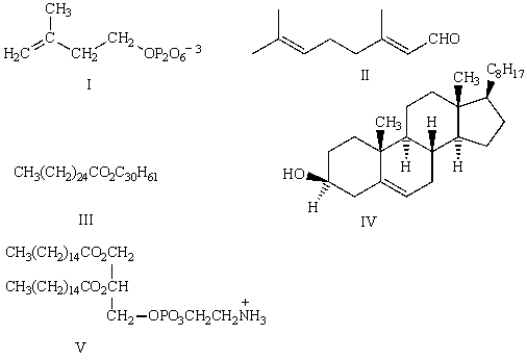
A) I
B) II
C) III
D) IV
E) V
A) I
B) II
C) III
D) IV
E) V
Question
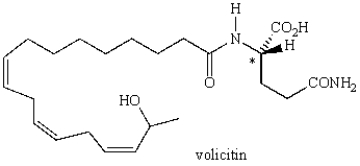
Volicitin has three carbon-carbon double bonds and two chiral carbon atoms.What is the configuration about each double bond and what is the absolute configuration at the starred stereogenic carbon?
A) E, E, E, R
B) Z, Z, Z, R
C) E, E, Z, R
D) E, E, E, S
E) Z, Z, Z, S
A) E, E, E, R
B) Z, Z, Z, R
C) E, E, Z, R
D) E, E, E, S
E) Z, Z, Z, S
Question
Linolenic acid, below, is a fatty acid that has 18 carbons and three double bonds.What is the geometry around each double bond? 
A) all trans
B) all cis
C) two trans, one cis
D) two cis, one trans
E) no geometry
A) all trans
B) all cis
C) two trans, one cis
D) two cis, one trans
E) no geometry
Question
To what family of lipids does the following compound belong? 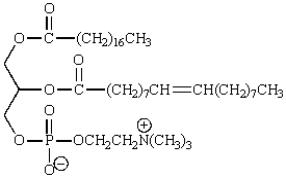
A) fatty acids
B) steroids
C) phospholipids
D) prostaglandins
E) soaps
A) fatty acids
B) steroids
C) phospholipids
D) prostaglandins
E) soaps
Question
Cholesterol has how many stereogenic centers? 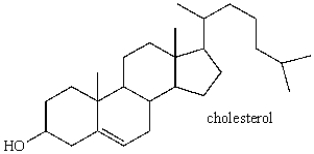
A) 1
B) 4
C) 5
D) 8
E) 13
A) 1
B) 4
C) 5
D) 8
E) 13
Question
Question
What structural feature is common to all steroids?
A) all contain an alcohol functionality
B) all contain a ketone functionality
C) all have unsaturation
D) all have the following carbon skeleton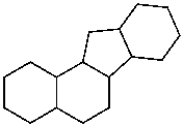
E) all have the following carbon skeleton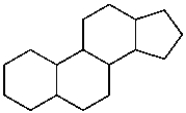
A) all contain an alcohol functionality
B) all contain a ketone functionality
C) all have unsaturation
D) all have the following carbon skeleton
E) all have the following carbon skeleton
Question
The isoprene units in menthol are correctly marked with dashed lines in which of the following structures?
A)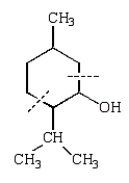
B)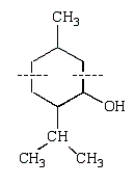
C)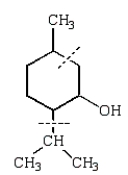
D)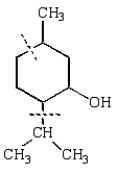
E)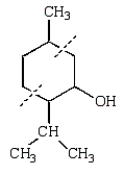
A)
B)
C)
D)
E)
Question
Which of the following molecules would be classified as a syndet? 
A) I
B) II
C) III
D) IV
E) V
A) I
B) II
C) III
D) IV
E) V
Question
On saponification with sodium hydroxide, which fat or oil will yield two moles of the sodium salt of stearic acid and one mole of the salt of oleic acid? 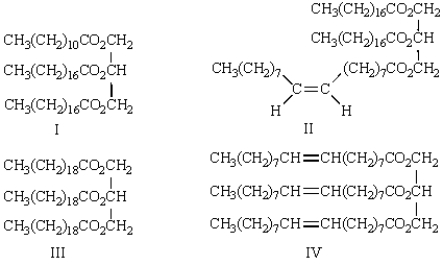
A) I
B) II
C) III
D) IV
E) V
A) I
B) II
C) III
D) IV
E) V
Question
Question
Which of the following molecules would be classified as an ordinary soap? 
A) I
B) II
C) III
D) IV
E) V
A) I
B) II
C) III
D) IV
E) V
Question
An example of a cationic detergent is
A)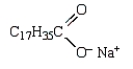
B)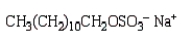
C)
D)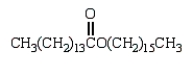
E)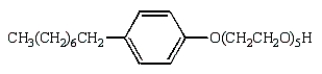
A)
B)
C)
D)
E)
Question
Question
Which of the following molecules can be classified as an amphoteric detergent? 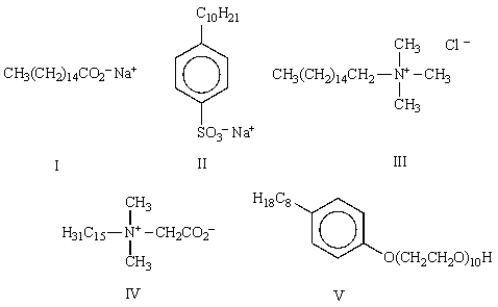
A) I
B) II
C) III
D) IV
E) V
A) I
B) II
C) III
D) IV
E) V
Question
Question
The last step in the following isomerization is: 
A) protonation at C-3 or C-6.
B) protonation at C-2 or C-7.
C) loss of a proton from C-3 or C-6.
D) loss of a proton from C-2 or C-7.
E) formation of a bond between C-6 and C-2.
A) protonation at C-3 or C-6.
B) protonation at C-2 or C-7.
C) loss of a proton from C-3 or C-6.
D) loss of a proton from C-2 or C-7.
E) formation of a bond between C-6 and C-2.
Question
Question
What reagent can be used to reduce testosterone to a secondary alcohol? 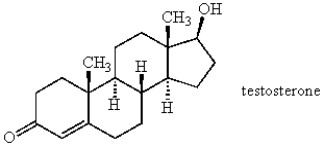
A) HCl
B) NH3
C) CH3CO3H
D) NaBH4
E) Ag2O
A) HCl
B) NH3
C) CH3CO3H
D) NaBH4
E) Ag2O
Question
Which of the following triglycerides affords three moles of the same saturated fatty acid upon saponification followed by protonation? 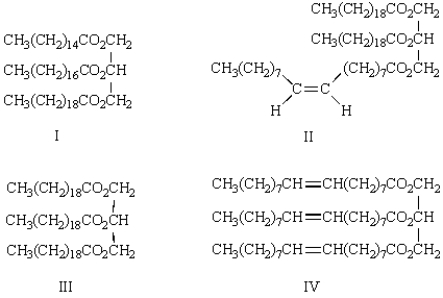
A) I
B) II
C) III
D) IV
E) II and IV
A) I
B) II
C) III
D) IV
E) II and IV
Question
What class of compound is produced when acetic anhydride reacts with cholesterol? 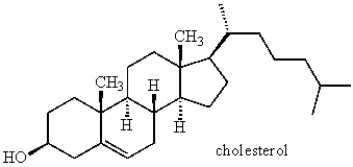
A) amide
B) ester
C) ketone
D) amine
E) ether
A) amide
B) ester
C) ketone
D) amine
E) ether
Question
The first step in the following reaction is: 
A) protonation at C-3 or C-6.
B) protonation at C-2 or C-7.
C) loss of a proton from C-3 or C-6.
D) loss of a proton from C-2 or C-7.
E) formation of a bond between C-6 and C-2.
A) protonation at C-3 or C-6.
B) protonation at C-2 or C-7.
C) loss of a proton from C-3 or C-6.
D) loss of a proton from C-2 or C-7.
E) formation of a bond between C-6 and C-2.
Question
Which one of the following molecules is classified as an anionic synthetic detergent? 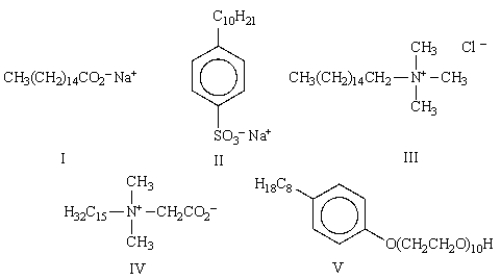
A) I
B) II
C) III
D) IV
E) V
A) I
B) II
C) III
D) IV
E) V
Question
Which of the following fatty acids has the lowest melting point?
A)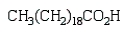
B)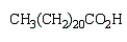
C)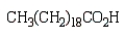
D)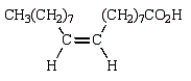
E)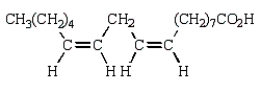
A)
B)
C)
D)
E)
Question
Which of the following would not make a good detergent?
A)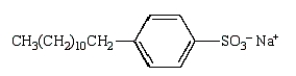
B)
C)
D)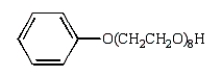
E)
A)
B)
C)
D)
E)
Question
Question
What mechanism is involved in the formation of a cationic detergent shown below? 
A) SN1
B) SN2
C) nucleophilic acyl substitution
D) nucleophilic acyl addition
E) free radical addition
A) SN1
B) SN2
C) nucleophilic acyl substitution
D) nucleophilic acyl addition
E) free radical addition
Question
Prostaglandin E2 has how many stereogenic centers? 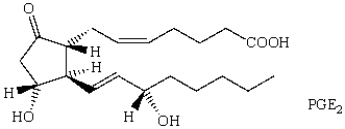
A) 2
B) 3
C) 4
D) 5
E) 6
A) 2
B) 3
C) 4
D) 5
E) 6
Question
Question
Question
Which of the following fatty acids has the highest melting point?
A)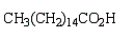
B)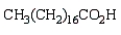
C)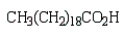
D)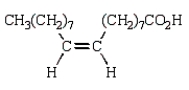
E)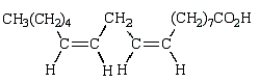
A)
B)
C)
D)
E)
Question

Unlock Deck
Sign up to unlock the cards in this deck!
Unlock Deck
Unlock Deck
1/44

Play

Full screen (f)
Deck 15: Lipids and Detergents
1
How many isoprene units are present in a diterpene?
A) 1
B) 2
C) 3
D) 4
E) more than 4
A) 1
B) 2
C) 3
D) 4
E) more than 4
4
2
Many times you can predict the functionality in a molecule by its name.With that in mind, what functionality should be present in the sex hormone testosterone?
A) alcohol
B) acid
C) aldehyde
D) ketone
E) ether
A) alcohol
B) acid
C) aldehyde
D) ketone
E) ether
ketone
3
Which of the following triglycerides is glyceryl palmitostearoarachidate?
A) I
B) II
C) III
D) IV
E) none of these
A) I
B) II
C) III
D) IV
E) none of these
I
4
Consider squalene.How many head-to-tail linkages of isoprene units are present in this triterpene?
A) 1
B) 4
C) 5
D) 6
E) 8
A) 1
B) 4
C) 5
D) 6
E) 8
Unlock Deck
Unlock for access to all 44 flashcards in this deck.
Unlock Deck
k this deck
5
How many ester groups of an oil or fat have to be replaced by phosphatidylamine to produce a phospholipid?
A) 1
B) 2
C) 3
D) 4
E) none have been replaced
A) 1
B) 2
C) 3
D) 4
E) none have been replaced
Unlock Deck
Unlock for access to all 44 flashcards in this deck.
Unlock Deck
k this deck
6
Prostaglandins are derived from an unsaturated fatty acid containing how many carbon atoms?
A) 12
B) 14
C) 16
D) 18
E) 20
A) 12
B) 14
C) 16
D) 18
E) 20
Unlock Deck
Unlock for access to all 44 flashcards in this deck.
Unlock Deck
k this deck
7
The five-carbon isoprene unit is the basic building block of
A) fats.
B) terpenes.
C) oils.
D) detergents.
E) waxes.
A) fats.
B) terpenes.
C) oils.
D) detergents.
E) waxes.
Unlock Deck
Unlock for access to all 44 flashcards in this deck.
Unlock Deck
k this deck
8
The correct formula for a fat or oil is
A)
B)
C)
D)
E)
A)
B)
C)
D)
E)
Unlock Deck
Unlock for access to all 44 flashcards in this deck.
Unlock Deck
k this deck
9
Which of the following molecules is the monoterpene, myrcene?
A) I
B) II
C) III
D) IV
E) V
A) I
B) II
C) III
D) IV
E) V
Unlock Deck
Unlock for access to all 44 flashcards in this deck.
Unlock Deck
k this deck
10
Which of the following molecules can be classified as a wax?
A) I
B) II
C) III
D) IV
E) V
A) I
B) II
C) III
D) IV
E) V
Unlock Deck
Unlock for access to all 44 flashcards in this deck.
Unlock Deck
k this deck
11
All of the following are considered to be lipids except
A) fats.
B) oils.
C) phospholipids.
D) proteins.
E) waxes.
A) fats.
B) oils.
C) phospholipids.
D) proteins.
E) waxes.
Unlock Deck
Unlock for access to all 44 flashcards in this deck.
Unlock Deck
k this deck
12
Which one of the following structures is glycerol?
A)
B)
C)
D)
E)
A)
B)
C)
D)
E)
Unlock Deck
Unlock for access to all 44 flashcards in this deck.
Unlock Deck
k this deck
13
Which of the following molecules is isopentenyl pyrophosphate?
A) I
B) II
C) III
D) IV
E) V
A) I
B) II
C) III
D) IV
E) V
Unlock Deck
Unlock for access to all 44 flashcards in this deck.
Unlock Deck
k this deck
14
Volicitin has three carbon-carbon double bonds and two chiral carbon atoms.What is the configuration about each double bond and what is the absolute configuration at the starred stereogenic carbon?
A) E, E, E, R
B) Z, Z, Z, R
C) E, E, Z, R
D) E, E, E, S
E) Z, Z, Z, S
A) E, E, E, R
B) Z, Z, Z, R
C) E, E, Z, R
D) E, E, E, S
E) Z, Z, Z, S
Unlock Deck
Unlock for access to all 44 flashcards in this deck.
Unlock Deck
k this deck
15
Linolenic acid, below, is a fatty acid that has 18 carbons and three double bonds.What is the geometry around each double bond?
A) all trans
B) all cis
C) two trans, one cis
D) two cis, one trans
E) no geometry
A) all trans
B) all cis
C) two trans, one cis
D) two cis, one trans
E) no geometry
Unlock Deck
Unlock for access to all 44 flashcards in this deck.
Unlock Deck
k this deck
16
To what family of lipids does the following compound belong?
A) fatty acids
B) steroids
C) phospholipids
D) prostaglandins
E) soaps
A) fatty acids
B) steroids
C) phospholipids
D) prostaglandins
E) soaps
Unlock Deck
Unlock for access to all 44 flashcards in this deck.
Unlock Deck
k this deck
17
Cholesterol has how many stereogenic centers?
A) 1
B) 4
C) 5
D) 8
E) 13
A) 1
B) 4
C) 5
D) 8
E) 13
Unlock Deck
Unlock for access to all 44 flashcards in this deck.
Unlock Deck
k this deck
18
Which of the following fatty acids is unsaturated?
A) palmitic acid
B) lauric acid
C) oleic acid
D) myristic acid
E) stearic acid
A) palmitic acid
B) lauric acid
C) oleic acid
D) myristic acid
E) stearic acid
Unlock Deck
Unlock for access to all 44 flashcards in this deck.
Unlock Deck
k this deck
19
What structural feature is common to all steroids?
A) all contain an alcohol functionality
B) all contain a ketone functionality
C) all have unsaturation
D) all have the following carbon skeleton
E) all have the following carbon skeleton
A) all contain an alcohol functionality
B) all contain a ketone functionality
C) all have unsaturation
D) all have the following carbon skeleton
E) all have the following carbon skeleton
Unlock Deck
Unlock for access to all 44 flashcards in this deck.
Unlock Deck
k this deck
20
The isoprene units in menthol are correctly marked with dashed lines in which of the following structures?
A)
B)
C)
D)
E)
A)
B)
C)
D)
E)
Unlock Deck
Unlock for access to all 44 flashcards in this deck.
Unlock Deck
k this deck
21
Which of the following molecules would be classified as a syndet?
A) I
B) II
C) III
D) IV
E) V
A) I
B) II
C) III
D) IV
E) V
Unlock Deck
Unlock for access to all 44 flashcards in this deck.
Unlock Deck
k this deck
22
On saponification with sodium hydroxide, which fat or oil will yield two moles of the sodium salt of stearic acid and one mole of the salt of oleic acid?
A) I
B) II
C) III
D) IV
E) V
A) I
B) II
C) III
D) IV
E) V
Unlock Deck
Unlock for access to all 44 flashcards in this deck.
Unlock Deck
k this deck
23
Salts of long chain fatty acids are called:
A) oils
B) fats
C) glycerol
D) soaps
E) esters
A) oils
B) fats
C) glycerol
D) soaps
E) esters
Unlock Deck
Unlock for access to all 44 flashcards in this deck.
Unlock Deck
k this deck
24
Which of the following molecules would be classified as an ordinary soap?
A) I
B) II
C) III
D) IV
E) V
A) I
B) II
C) III
D) IV
E) V
Unlock Deck
Unlock for access to all 44 flashcards in this deck.
Unlock Deck
k this deck
25
An example of a cationic detergent is
A)
B)
C)
D)
E)
A)
B)
C)
D)
E)
Unlock Deck
Unlock for access to all 44 flashcards in this deck.
Unlock Deck
k this deck
26
What reagent will convert an unsaturated glyceride to a saturated glyceride?
A) Zn/H
B) LiNH2
C) NH3
D) H2, Ni
E) NaOBr
A) Zn/H
B) LiNH2
C) NH3
D) H2, Ni
E) NaOBr
Unlock Deck
Unlock for access to all 44 flashcards in this deck.
Unlock Deck
k this deck
27
Which of the following molecules can be classified as an amphoteric detergent?
A) I
B) II
C) III
D) IV
E) V
A) I
B) II
C) III
D) IV
E) V
Unlock Deck
Unlock for access to all 44 flashcards in this deck.
Unlock Deck
k this deck
28
When unsaturated fatty acids are hydrogenated they become:
A) saturated
B) more unsaturated
C) saponified
D) oils
E) supersaturated
A) saturated
B) more unsaturated
C) saponified
D) oils
E) supersaturated
Unlock Deck
Unlock for access to all 44 flashcards in this deck.
Unlock Deck
k this deck
29
The last step in the following isomerization is:
A) protonation at C-3 or C-6.
B) protonation at C-2 or C-7.
C) loss of a proton from C-3 or C-6.
D) loss of a proton from C-2 or C-7.
E) formation of a bond between C-6 and C-2.
A) protonation at C-3 or C-6.
B) protonation at C-2 or C-7.
C) loss of a proton from C-3 or C-6.
D) loss of a proton from C-2 or C-7.
E) formation of a bond between C-6 and C-2.
Unlock Deck
Unlock for access to all 44 flashcards in this deck.
Unlock Deck
k this deck
30
What type of soap will be produced by the reaction between lauryldimethylamine and methyl iodide?
A) ordinary soap
B) cationic detergent
C) anionic detergent
D) amphoteric detergent
E) a benzene sulfonate
A) ordinary soap
B) cationic detergent
C) anionic detergent
D) amphoteric detergent
E) a benzene sulfonate
Unlock Deck
Unlock for access to all 44 flashcards in this deck.
Unlock Deck
k this deck
31
What reagent can be used to reduce testosterone to a secondary alcohol?
A) HCl
B) NH3
C) CH3CO3H
D) NaBH4
E) Ag2O
A) HCl
B) NH3
C) CH3CO3H
D) NaBH4
E) Ag2O
Unlock Deck
Unlock for access to all 44 flashcards in this deck.
Unlock Deck
k this deck
32
Which of the following triglycerides affords three moles of the same saturated fatty acid upon saponification followed by protonation?
A) I
B) II
C) III
D) IV
E) II and IV
A) I
B) II
C) III
D) IV
E) II and IV
Unlock Deck
Unlock for access to all 44 flashcards in this deck.
Unlock Deck
k this deck
33
What class of compound is produced when acetic anhydride reacts with cholesterol?
A) amide
B) ester
C) ketone
D) amine
E) ether
A) amide
B) ester
C) ketone
D) amine
E) ether
Unlock Deck
Unlock for access to all 44 flashcards in this deck.
Unlock Deck
k this deck
34
The first step in the following reaction is:
A) protonation at C-3 or C-6.
B) protonation at C-2 or C-7.
C) loss of a proton from C-3 or C-6.
D) loss of a proton from C-2 or C-7.
E) formation of a bond between C-6 and C-2.
A) protonation at C-3 or C-6.
B) protonation at C-2 or C-7.
C) loss of a proton from C-3 or C-6.
D) loss of a proton from C-2 or C-7.
E) formation of a bond between C-6 and C-2.
Unlock Deck
Unlock for access to all 44 flashcards in this deck.
Unlock Deck
k this deck
35
Which one of the following molecules is classified as an anionic synthetic detergent?
A) I
B) II
C) III
D) IV
E) V
A) I
B) II
C) III
D) IV
E) V
Unlock Deck
Unlock for access to all 44 flashcards in this deck.
Unlock Deck
k this deck
36
Which of the following fatty acids has the lowest melting point?
A)
B)
C)
D)
E)
A)
B)
C)
D)
E)
Unlock Deck
Unlock for access to all 44 flashcards in this deck.
Unlock Deck
k this deck
37
Which of the following would not make a good detergent?
A)
B)
C)
D)
E)
A)
B)
C)
D)
E)
Unlock Deck
Unlock for access to all 44 flashcards in this deck.
Unlock Deck
k this deck
38
Compounds that are obtained from the saponification of glycerides are
A) glycerol and glycerides.
B) fatty acid salts and ethylene glycol.
C) glycerol and anionic soaps.
D) ethylene glycol and anionic soaps.
E) glycerol and cationic soaps.
A) glycerol and glycerides.
B) fatty acid salts and ethylene glycol.
C) glycerol and anionic soaps.
D) ethylene glycol and anionic soaps.
E) glycerol and cationic soaps.
Unlock Deck
Unlock for access to all 44 flashcards in this deck.
Unlock Deck
k this deck
39
What mechanism is involved in the formation of a cationic detergent shown below?
A) SN1
B) SN2
C) nucleophilic acyl substitution
D) nucleophilic acyl addition
E) free radical addition
A) SN1
B) SN2
C) nucleophilic acyl substitution
D) nucleophilic acyl addition
E) free radical addition
Unlock Deck
Unlock for access to all 44 flashcards in this deck.
Unlock Deck
k this deck
40
Prostaglandin E2 has how many stereogenic centers?
A) 2
B) 3
C) 4
D) 5
E) 6
A) 2
B) 3
C) 4
D) 5
E) 6
Unlock Deck
Unlock for access to all 44 flashcards in this deck.
Unlock Deck
k this deck
41
The main difference between fats and oils is that
A) fats can be hydrogenated more easily than oils.
B) the double bonds are cis in fats and trans in oils.
C) oils contain a higher percentage of unsaturated alkyl chains.
D) fats are found in animals whereas oils are found in plants.
E) oils can be more easily emulsified by soaps.
A) fats can be hydrogenated more easily than oils.
B) the double bonds are cis in fats and trans in oils.
C) oils contain a higher percentage of unsaturated alkyl chains.
D) fats are found in animals whereas oils are found in plants.
E) oils can be more easily emulsified by soaps.
Unlock Deck
Unlock for access to all 44 flashcards in this deck.
Unlock Deck
k this deck
42
Lipids are substances that are in water and in nonpolar organic solvents.
A) soluble, soluble
B) insoluble, insoluble
C) soluble, insoluble
D) insoluble, soluble
E) slightly soluble, slightly soluble
A) soluble, soluble
B) insoluble, insoluble
C) soluble, insoluble
D) insoluble, soluble
E) slightly soluble, slightly soluble
Unlock Deck
Unlock for access to all 44 flashcards in this deck.
Unlock Deck
k this deck
43
Which of the following fatty acids has the highest melting point?
A)
B)
C)
D)
E)
A)
B)
C)
D)
E)
Unlock Deck
Unlock for access to all 44 flashcards in this deck.
Unlock Deck
k this deck
44
Which ion(s) are responsible for water being classified as "hard"?
A) Ca+2
B) Fe+3
C) Mg+2
D) all of these
E) none of these
A) Ca+2
B) Fe+3
C) Mg+2
D) all of these
E) none of these
Unlock Deck
Unlock for access to all 44 flashcards in this deck.
Unlock Deck
k this deck
Unlock Deck
Unlock for access to all 44 flashcards in this deck.







