





 Chat with AI

Deck 34: Special Senses
Full screen (f)

Question

Question
Question
Question
Question
Question
Question
Question
Question
Question
Question
Question
Question
Question
Question
Question
Question
Question
Question
Question
Question
Question
Question
Question
Question
Question
Question
Question
Question
Question
Question
Question
Question
Question
Question
Question
Question
Question
Question
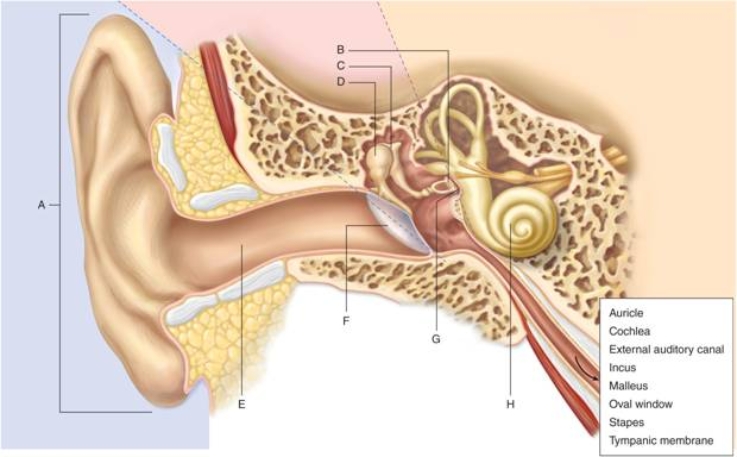
The ________, shown at letter H in the figure, contains hearing receptors, including the organ of Corti.
Question
Question
Question
Question
Question
Question
Question
Question
Question
Question
Question
Question
Question
Question
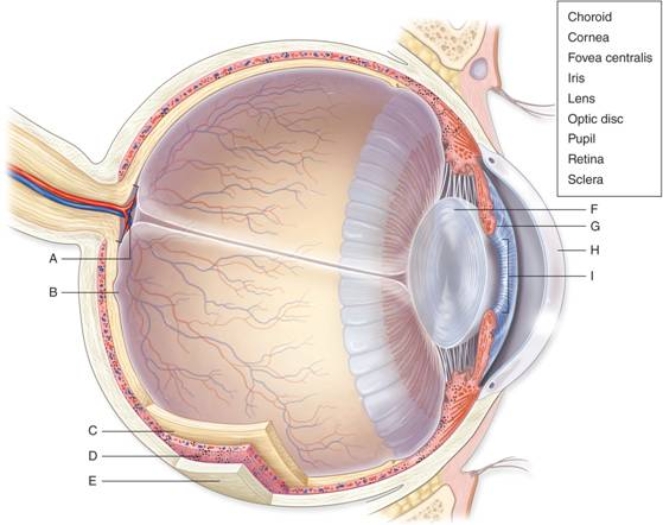
Letter H in the figure indicates the ________, a transparent area on the front of the eye that lets light into the eye.
Question
The tough, outermost layer of the eye, indicated by the letter E in the figure, is the ________.
Question
Question
Question
Question
Question
Question
Question
Question
Question
Question
Question
Question
Question
Question
Question
Question
Question
Question
Question
Question
Question
Question
Question
Question
Question
Question

Unlock Deck
Sign up to unlock the cards in this deck!
Unlock Deck
Unlock Deck
1/92

Play

Full screen (f)
Deck 34: Special Senses
1
The ____ is a transparent area on the front of the eye that allows light to enter the eye.
A) pupil
B) cornea
C) lens
D) retina
E) iris
A) pupil
B) cornea
C) lens
D) retina
E) iris
cornea
2
When educating a patient on maintaining eye safety in the home, patients should be reminded to ____.
A) never mix cleaning solutions
B) keep older children from playing with younger ones
C) avoid wearing eye glasses while cleaning
D) control the time children spend in the sun
E) keep dangerous chemicals on shelves in the garage
A) never mix cleaning solutions
B) keep older children from playing with younger ones
C) avoid wearing eye glasses while cleaning
D) control the time children spend in the sun
E) keep dangerous chemicals on shelves in the garage
never mix cleaning solutions
3
The ____ is the middle layer of the eye, which contains most of the eye's blood vessels.
A) choroid
B) ciliary body
C) sclera
D) pupil
E) cornea
A) choroid
B) ciliary body
C) sclera
D) pupil
E) cornea
choroid
4
Which of these is the tough, outermost layer of the eye, also called the "white of the eye"?
A) Pupil
B) Lens
C) Retina
D) Sclera
E) Fovea centralis
A) Pupil
B) Lens
C) Retina
D) Sclera
E) Fovea centralis
Unlock Deck
Unlock for access to all 92 flashcards in this deck.
Unlock Deck
k this deck
5
Which parts of the eye are highly sensitive to light and function best in dim light but do not provide a sharp image and detect only black, white, and shades of gray?
A) Retinas
B) Ciliary bodies
C) Rods
D) Cones
E) Conjunctivas
A) Retinas
B) Ciliary bodies
C) Rods
D) Cones
E) Conjunctivas
Unlock Deck
Unlock for access to all 92 flashcards in this deck.
Unlock Deck
k this deck
6
The ____ is a wedge-shaped thickening in the middle layer of the eyeball that controls the shape of the lens.
A) sclera
B) iris
C) choroid
D) ciliary body
E) retina
A) sclera
B) iris
C) choroid
D) ciliary body
E) retina
Unlock Deck
Unlock for access to all 92 flashcards in this deck.
Unlock Deck
k this deck
7
The ____ is the area between the semicircular canals and the cochlea that helps detect balance of the body.
A) ear ossicle
B) auditory tube
C) oval window
D) vestibule
E) auricle
A) ear ossicle
B) auditory tube
C) oval window
D) vestibule
E) auricle
Unlock Deck
Unlock for access to all 92 flashcards in this deck.
Unlock Deck
k this deck
8
Which of these produce tears and secrete enzymes to destroy bacteria and viruses in the eye?
A) Extrinsic eye muscles
B) Lacrimal glands
C) Nasolacrimal ducts
D) Orbicularis oculi
E) Conjunctivas
A) Extrinsic eye muscles
B) Lacrimal glands
C) Nasolacrimal ducts
D) Orbicularis oculi
E) Conjunctivas
Unlock Deck
Unlock for access to all 92 flashcards in this deck.
Unlock Deck
k this deck
9
There are six ____ that function together to move the eyeball.
A) extrinsic eye muscles
B) lacrimal glands
C) nasolacrimal ducts
D) orbicularis oculi
E) suspensory ligaments
A) extrinsic eye muscles
B) lacrimal glands
C) nasolacrimal ducts
D) orbicularis oculi
E) suspensory ligaments
Unlock Deck
Unlock for access to all 92 flashcards in this deck.
Unlock Deck
k this deck
10
The ______ are responsible for blinking and squinting.
A) extrinsic eye muscles
B) lacrimal glands
C) nasolacrimal ducts
D) lateral rectus muscles
E) orbicularis oculi
A) extrinsic eye muscles
B) lacrimal glands
C) nasolacrimal ducts
D) lateral rectus muscles
E) orbicularis oculi
Unlock Deck
Unlock for access to all 92 flashcards in this deck.
Unlock Deck
k this deck
11
Which of the following is the inner layer of the eye, which contains rods and cones?
A) Pupil
B) Cornea
C) Lens
D) Retina
E) Conjunctiva
A) Pupil
B) Cornea
C) Lens
D) Retina
E) Conjunctiva
Unlock Deck
Unlock for access to all 92 flashcards in this deck.
Unlock Deck
k this deck
12
As the iris contracts and relaxes, an opening at its center, the ____, grows larger or smaller.
A) pupil
B) cornea
C) lens
D) retina
E) limbus
A) pupil
B) cornea
C) lens
D) retina
E) limbus
Unlock Deck
Unlock for access to all 92 flashcards in this deck.
Unlock Deck
k this deck
13
Which of these is found in the anterior chamber of the eye?
A) Optic disc
B) Fovea centralis
C) Aqueous humor
D) Vitreous humor
E) Retina
A) Optic disc
B) Fovea centralis
C) Aqueous humor
D) Vitreous humor
E) Retina
Unlock Deck
Unlock for access to all 92 flashcards in this deck.
Unlock Deck
k this deck
14
Which of the following are mucous membranes that line the inner surfaces of the eyelids?
A) Lacrimal glands
B) Nasolacrimal ducts
C) Orbicularis oculi
D) Conjunctivas
E) Sclera
A) Lacrimal glands
B) Nasolacrimal ducts
C) Orbicularis oculi
D) Conjunctivas
E) Sclera
Unlock Deck
Unlock for access to all 92 flashcards in this deck.
Unlock Deck
k this deck
15
When spicy foods are eaten, which receptors on the tongue are activated?
A) Bitter
B) Sour
C) Pain
D) Hot
E) Umami
A) Bitter
B) Sour
C) Pain
D) Hot
E) Umami
Unlock Deck
Unlock for access to all 92 flashcards in this deck.
Unlock Deck
k this deck
16
Which of the following structures is on the medial aspect of each eye and drains tears into the nose?
A) Extrinsic eye muscles
B) Lacrimal glands
C) Nasolacrimal ducts
D) Conjunctivas
E) Scleral venous sinuses
A) Extrinsic eye muscles
B) Lacrimal glands
C) Nasolacrimal ducts
D) Conjunctivas
E) Scleral venous sinuses
Unlock Deck
Unlock for access to all 92 flashcards in this deck.
Unlock Deck
k this deck
17
Which of the following allow vision in bright light, are sensitive to color, and provide detailed images?
A) Ciliary bodies
B) Pupils
C) Rods
D) Cones
E) Irises
A) Ciliary bodies
B) Pupils
C) Rods
D) Cones
E) Irises
Unlock Deck
Unlock for access to all 92 flashcards in this deck.
Unlock Deck
k this deck
18
Which of the following allows the eye to focus on images?
A) Pupil
B) Cornea
C) Lens
D) Retina
E) Iris
A) Pupil
B) Cornea
C) Lens
D) Retina
E) Iris
Unlock Deck
Unlock for access to all 92 flashcards in this deck.
Unlock Deck
k this deck
19
Which of these is in the posterior chamber of the eye?
A) Choroid
B) Ciliary body
C) Lens
D) Aqueous humor
E) Vitreous humor
A) Choroid
B) Ciliary body
C) Lens
D) Aqueous humor
E) Vitreous humor
Unlock Deck
Unlock for access to all 92 flashcards in this deck.
Unlock Deck
k this deck
20
The ____ controls the amount of light entering the eye.
A) choroid
B) retina
C) cornea
D) lens
E) iris
A) choroid
B) retina
C) cornea
D) lens
E) iris
Unlock Deck
Unlock for access to all 92 flashcards in this deck.
Unlock Deck
k this deck
21
Mrs. Whitley, a 61-year-old patient, calls the office this morning. She says she is afraid to drive to the office, because when she woke up this morning, her vision was "funny, like everything is wavering in front of my eyes." She is also seeing flashes of light and floaters. Which of the following statements is your best response to Mrs. Whitley?
A) "I can fit you in at 3:00 this afternoon. Please find a friend or relative to drive you here."
B) "Don't worry, Mrs. Whitley. It sounds like a visual migraine. It will go away soon."
C) "Mrs. Whitley, please have someone drive you to the hospital immediately, or call 911."
D) "It's probably stress. Lie down and rest for a while, and if it doesn't improve, call me back."
E) "We all have episodes like this, Mrs. Whitley. It is just a part of growing older."
A) "I can fit you in at 3:00 this afternoon. Please find a friend or relative to drive you here."
B) "Don't worry, Mrs. Whitley. It sounds like a visual migraine. It will go away soon."
C) "Mrs. Whitley, please have someone drive you to the hospital immediately, or call 911."
D) "It's probably stress. Lie down and rest for a while, and if it doesn't improve, call me back."
E) "We all have episodes like this, Mrs. Whitley. It is just a part of growing older."
Unlock Deck
Unlock for access to all 92 flashcards in this deck.
Unlock Deck
k this deck
22
The ________, or hammer, is one of the smallest bones in the body and is indicated by letter D in the figure.
Unlock Deck
Unlock for access to all 92 flashcards in this deck.
Unlock Deck
k this deck
23
At which age should infants be startled by loud noises and recognize their mother's voice better than others?
A) Up to 4 months of age.
B) 4 to 8 months of age.
C) 8 to 12 months of age.
D) 12 to 18 months of age.
E) 18 to 24 months of age.
A) Up to 4 months of age.
B) 4 to 8 months of age.
C) 8 to 12 months of age.
D) 12 to 18 months of age.
E) 18 to 24 months of age.
Unlock Deck
Unlock for access to all 92 flashcards in this deck.
Unlock Deck
k this deck
24
The ____ maintains equal pressure on both sides of the eardrum.
A) ear ossicle
B) eustachian tube
C) oval window
D) vestibule
E) tympanic cavity
A) ear ossicle
B) eustachian tube
C) oval window
D) vestibule
E) tympanic cavity
Unlock Deck
Unlock for access to all 92 flashcards in this deck.
Unlock Deck
k this deck
25
One of the smallest bones in the body, the ________ shown at letter B, is shaped like a stirrup.
Unlock Deck
Unlock for access to all 92 flashcards in this deck.
Unlock Deck
k this deck
26
Mrs. Danieri is a 54-year-old computer analyst. She is in the office today because her eyes have been giving her so much trouble recently. She says her eyes have started burning and itching in the last few months. You can see that her eyes are red. Mrs. Danieri says she knows it can't just be dry eyes, because she has been a computer analyst for 30 years and has worn contacts all that time. If she were going to have a problem with dry eyes, it would have happened before now. She thinks she may have become allergic to something in the environment. Which of the following questions might you ask to obtain pertinent information from Mrs. Danieri?
A) "How much alcohol do you drink each day?"
B) "Does your vision seem to be affected by the eye irritation?"
C) "How much exercise do you get in an average week?"
D) "Are you in menopause, or do you think you might be starting menopause?"
E) "Have you been unusually stressed at your job in the last few months?"
A) "How much alcohol do you drink each day?"
B) "Does your vision seem to be affected by the eye irritation?"
C) "How much exercise do you get in an average week?"
D) "Are you in menopause, or do you think you might be starting menopause?"
E) "Have you been unusually stressed at your job in the last few months?"
Unlock Deck
Unlock for access to all 92 flashcards in this deck.
Unlock Deck
k this deck
27
A common cause of conductive hearing loss is the immobilization of the stapes within the inner ear, called ____.
A) tinnitus
B) otitis
C) otosclerosis
D) presbycusis
E) acoustic neuroma.
A) tinnitus
B) otitis
C) otosclerosis
D) presbycusis
E) acoustic neuroma.
Unlock Deck
Unlock for access to all 92 flashcards in this deck.
Unlock Deck
k this deck
28
At what age should infants begin to babble at people talking to them?
A) Up to 4 months of age
B) 4 to 8 months of age
C) 8 to 12 months of age
D) 12 to 18 months of age
E) 18 to 24 months of age
A) Up to 4 months of age
B) 4 to 8 months of age
C) 8 to 12 months of age
D) 12 to 18 months of age
E) 18 to 24 months of age
Unlock Deck
Unlock for access to all 92 flashcards in this deck.
Unlock Deck
k this deck
29
Letter A in the figure indicates the pinna, or ________, which is part of the external ear.
Unlock Deck
Unlock for access to all 92 flashcards in this deck.
Unlock Deck
k this deck
30
____ is an inflammation of the ear.
A) Cerumen impaction
B) Meniere's disease
C) Otitis
D) Acoustic neuroma
E) Otosclerosis
A) Cerumen impaction
B) Meniere's disease
C) Otitis
D) Acoustic neuroma
E) Otosclerosis
Unlock Deck
Unlock for access to all 92 flashcards in this deck.
Unlock Deck
k this deck
31
Which of the following defines hearing loss?
A) A loss of the ability to hear sounds at normal levels
B) A normal part of the aging process
C) Not caused by cerumen impaction of the ear canal
D) Never the result of nerve damage
E) Usually due to immobilization of the stapes
A) A loss of the ability to hear sounds at normal levels
B) A normal part of the aging process
C) Not caused by cerumen impaction of the ear canal
D) Never the result of nerve damage
E) Usually due to immobilization of the stapes
Unlock Deck
Unlock for access to all 92 flashcards in this deck.
Unlock Deck
k this deck
32
Which of the following is the beginning of the inner ear?
A) Ear ossicle
B) Oval window
C) Vestibule
D) Tympanic membrane
E) Bony labyrinth
A) Ear ossicle
B) Oval window
C) Vestibule
D) Tympanic membrane
E) Bony labyrinth
Unlock Deck
Unlock for access to all 92 flashcards in this deck.
Unlock Deck
k this deck
33
The ________, also called the anvil, is indicated by letter C in the figure.
Unlock Deck
Unlock for access to all 92 flashcards in this deck.
Unlock Deck
k this deck
34
Which of these is hearing loss due to the aging process?
A) Meniere's disease
B) Otitis
C) Otosclerosis
D) Presbycusis
E) Acoustic neuroma
A) Meniere's disease
B) Otitis
C) Otosclerosis
D) Presbycusis
E) Acoustic neuroma
Unlock Deck
Unlock for access to all 92 flashcards in this deck.
Unlock Deck
k this deck
35
The three tiny bones that vibrate in response to sound are called ______.
A) ear ossicles
B) auditory tubes
C) oval windows
D) tympanic membranes
E) semicircular canals
A) ear ossicles
B) auditory tubes
C) oval windows
D) tympanic membranes
E) semicircular canals
Unlock Deck
Unlock for access to all 92 flashcards in this deck.
Unlock Deck
k this deck
36
Janyce is a 19-year-old patient who came to the medical office because she is having trouble with her eyes. They move rapidly side-to-side, and she can't seem to control it. She says it's embarrassing, because her friends are uncomfortable around her and do not want to look at her directly. She denies drug use, but does drink "a lot" of alcohol. She has not had any injuries to the head. Testing rules out a stroke or lesion on the brain. Which of the following would you expect the physician to suggest to treat her nystagmus?
A) Alcohol rehabilitation therapy
B) Physical therapy to gain control over the eye movements
C) A strenuous exercise routine to improve her overall health
D) A low-salt diet to correct an electrolyte imbalance
E) LASIK surgery to remove her astigmatism
A) Alcohol rehabilitation therapy
B) Physical therapy to gain control over the eye movements
C) A strenuous exercise routine to improve her overall health
D) A low-salt diet to correct an electrolyte imbalance
E) LASIK surgery to remove her astigmatism
Unlock Deck
Unlock for access to all 92 flashcards in this deck.
Unlock Deck
k this deck
37
At what age should infants respond to the instruction "No" and quickly turn to the sound of their name?
A) 1 month of age
B) 2 to 4 months of age
C) 4 to 8 months of age
D) 8 to 12 months of age
E) 12 to 18 months of age
A) 1 month of age
B) 2 to 4 months of age
C) 4 to 8 months of age
D) 8 to 12 months of age
E) 12 to 18 months of age
Unlock Deck
Unlock for access to all 92 flashcards in this deck.
Unlock Deck
k this deck
38
Paul Veras is a 24-year-old patient whose physician referred him to the ear specialist for whom you work because he has noticed a gradual loss of hearing in his left ear. The physician runs tests and finds the hearing in Paul's right ear is normal. Further tests reveal that Paul has an acoustic neuroma in the left ear. Paul is distressed at this news. "I am a musician," he says. "I need both of my ears! Would a hearing aid help?" Which of the following responses would you expect the physician to give?
A) "Of course! We can have you fitted for a hearing aid immediately."
B) "A hearing aid can help for a while, but you will eventually be completely deaf in that ear."
C) "We can try a hearing aid first to see if it will help, if you want to."
D) "Okay, but to avoid hearing loss in your right ear, you will need to wear aids in both ears."
E) "No, a hearing aid will not help. We can try radiation, or we can remove the tumor surgically."
A) "Of course! We can have you fitted for a hearing aid immediately."
B) "A hearing aid can help for a while, but you will eventually be completely deaf in that ear."
C) "We can try a hearing aid first to see if it will help, if you want to."
D) "Okay, but to avoid hearing loss in your right ear, you will need to wear aids in both ears."
E) "No, a hearing aid will not help. We can try radiation, or we can remove the tumor surgically."
Unlock Deck
Unlock for access to all 92 flashcards in this deck.
Unlock Deck
k this deck
39
The ________, shown at letter H in the figure, contains hearing receptors, including the organ of Corti.
Unlock Deck
Unlock for access to all 92 flashcards in this deck.
Unlock Deck
k this deck
40
A buildup of earwax within the external auditory canal is ____.
A) cerumen impaction
B) otitis externa
C) otitis interna
D) otitis media
E) otosclerosis
A) cerumen impaction
B) otitis externa
C) otitis interna
D) otitis media
E) otosclerosis
Unlock Deck
Unlock for access to all 92 flashcards in this deck.
Unlock Deck
k this deck
41
Taste buds are found mostly on the ______ or "bumps" on the tongue.
Unlock Deck
Unlock for access to all 92 flashcards in this deck.
Unlock Deck
k this deck
42
The area shown at letter A in the figure is the ________, or blind spot, which contains no sensory receptors.
Unlock Deck
Unlock for access to all 92 flashcards in this deck.
Unlock Deck
k this deck
43
Shown at letter D in the figure, the ________ contains most of the eye's blood vessels.
Unlock Deck
Unlock for access to all 92 flashcards in this deck.
Unlock Deck
k this deck
44
The clear, circular disk located just posterior to the iris that helps the eye focus is the ________, which is shown at letter F in the figure.
Unlock Deck
Unlock for access to all 92 flashcards in this deck.
Unlock Deck
k this deck
45
Receptors that are found on the taste buds are known as taste or ________ receptors.
Unlock Deck
Unlock for access to all 92 flashcards in this deck.
Unlock Deck
k this deck
46
Smell receptors send information to the ________ nerves.
Unlock Deck
Unlock for access to all 92 flashcards in this deck.
Unlock Deck
k this deck
47
The flap of skin and cartilage that hangs off the side of the head and collects sound waves is the ________ or pinna.
Unlock Deck
Unlock for access to all 92 flashcards in this deck.
Unlock Deck
k this deck
48
Smell receptors are called ________ receptors.
Unlock Deck
Unlock for access to all 92 flashcards in this deck.
Unlock Deck
k this deck
49
The ________, shown at letter G in the figure, controls the size of the pupil.
Unlock Deck
Unlock for access to all 92 flashcards in this deck.
Unlock Deck
k this deck
50
The ________, a fibrous partition that separates the external ear from the middle ear, is shown at letter F in the figure.
Unlock Deck
Unlock for access to all 92 flashcards in this deck.
Unlock Deck
k this deck
51
The ________, shown at letter E, is the part of the external ear that carries sound waves to the tympanic membrane.
Unlock Deck
Unlock for access to all 92 flashcards in this deck.
Unlock Deck
k this deck
52
The watery fluid that provides nutrients to and bathes the structures in the anterior chamber of the eyeball is the ________.
Unlock Deck
Unlock for access to all 92 flashcards in this deck.
Unlock Deck
k this deck
53
Letter H in the figure indicates the ________, a transparent area on the front of the eye that lets light into the eye.
Unlock Deck
Unlock for access to all 92 flashcards in this deck.
Unlock Deck
k this deck
54
The tough, outermost layer of the eye, indicated by the letter E in the figure, is the ________.
Unlock Deck
Unlock for access to all 92 flashcards in this deck.
Unlock Deck
k this deck
55
Smell receptors and taste cells are both a special type of receptor called a(n) _____.
Unlock Deck
Unlock for access to all 92 flashcards in this deck.
Unlock Deck
k this deck
56
The innermost layer of the eye, shown at letter C in the figure, is the ________.
Unlock Deck
Unlock for access to all 92 flashcards in this deck.
Unlock Deck
k this deck
57
When the head moves, fluids in the ________ canals move and activate the equilibrium receptors.
Unlock Deck
Unlock for access to all 92 flashcards in this deck.
Unlock Deck
k this deck
58
The process called ________ enables the eye to focus on images of objects that are near or far away.
Unlock Deck
Unlock for access to all 92 flashcards in this deck.
Unlock Deck
k this deck
59
The ________, shown at letter I in the figure, controls the amount of light that enters the eye.
Unlock Deck
Unlock for access to all 92 flashcards in this deck.
Unlock Deck
k this deck
60
The membrane indicated by letter G, which separates the middle ear from the inner ear, is the ________.
Unlock Deck
Unlock for access to all 92 flashcards in this deck.
Unlock Deck
k this deck
61
The muscle in the eyelid called the ________ is responsible for blinking and squinting.
Unlock Deck
Unlock for access to all 92 flashcards in this deck.
Unlock Deck
k this deck
62
The three tiny bones called ear ossicles are the ________, incus, and stapes.
Unlock Deck
Unlock for access to all 92 flashcards in this deck.
Unlock Deck
k this deck
63
When the head moves, fluids known as perilymph and ________ in the semicircular canals and vestibule move, activating equilibrium receptors and hearing receptors.
Unlock Deck
Unlock for access to all 92 flashcards in this deck.
Unlock Deck
k this deck
64
The inner ear is a very complex system of communicating chambers and tubes known as the ________.
Unlock Deck
Unlock for access to all 92 flashcards in this deck.
Unlock Deck
k this deck
65
The condition characterized by eversion of the lower eyelid is ________.
Unlock Deck
Unlock for access to all 92 flashcards in this deck.
Unlock Deck
k this deck
66
The alternative pathway for sound that bypasses the external and middle ears is called bone ________.
Unlock Deck
Unlock for access to all 92 flashcards in this deck.
Unlock Deck
k this deck
67
Muscles in the ________ control the shape of the lens of the eye.
Unlock Deck
Unlock for access to all 92 flashcards in this deck.
Unlock Deck
k this deck
68
The ducts that are located on the medial aspect of each eyeball and drain tears into the nose are the _______ ducts.
Unlock Deck
Unlock for access to all 92 flashcards in this deck.
Unlock Deck
k this deck
69
Rapid, irregular eye movements that may be horizontal, vertical, or rotary, depending on the underlying cause, are symptoms of ________.
Unlock Deck
Unlock for access to all 92 flashcards in this deck.
Unlock Deck
k this deck
70
The three tiny bones called ear ossicles are the malleus, ________, and stapes.
Unlock Deck
Unlock for access to all 92 flashcards in this deck.
Unlock Deck
k this deck
71
Visual accessory organs assist and protect the eyeball and include the orbits, eyebrows, eyelids and eyelashes, conjunctivas, ________ apparatus, and extrinsic eye muscles.
Unlock Deck
Unlock for access to all 92 flashcards in this deck.
Unlock Deck
k this deck
72
The cornea, lens, and fluids help focus the light onto the retina by bending it in a process known as ________.
Unlock Deck
Unlock for access to all 92 flashcards in this deck.
Unlock Deck
k this deck
73
The _______ glands are located on the lateral edge of each eyeball and produce tears.
Unlock Deck
Unlock for access to all 92 flashcards in this deck.
Unlock Deck
k this deck
74
A(n) ________ hearing loss is caused by an interruption in the transmission of sound waves to the inner ear.
Unlock Deck
Unlock for access to all 92 flashcards in this deck.
Unlock Deck
k this deck
75
When the head moves, fluids known as ________ and endolymph in the semicircular canals and vestibule move, activating equilibrium receptors and hearing receptors.
Unlock Deck
Unlock for access to all 92 flashcards in this deck.
Unlock Deck
k this deck
76
The three tiny bones called ear ossicles are the malleus, incus, and ________.
Unlock Deck
Unlock for access to all 92 flashcards in this deck.
Unlock Deck
k this deck
77
When the tympanic membrane vibrates, it causes the ossicles to vibrate and hit a membrane called the ________.
Unlock Deck
Unlock for access to all 92 flashcards in this deck.
Unlock Deck
k this deck
78
As the iris of the eye contracts and relaxes, an opening at its center, called the ________, grows larger or smaller, regulating the amount of light that enters the eye.
Unlock Deck
Unlock for access to all 92 flashcards in this deck.
Unlock Deck
k this deck
79
The eye sockets, or ________, form a protective shell around the eyes.
Unlock Deck
Unlock for access to all 92 flashcards in this deck.
Unlock Deck
k this deck
80
The sclera of the eye gives way to the cornea in an area known as the ________, or corneal-scleral junction.
Unlock Deck
Unlock for access to all 92 flashcards in this deck.
Unlock Deck
k this deck
Unlock Deck
Unlock for access to all 92 flashcards in this deck.







