





 Chat with AI


Medical Insurance 7th Edition by Amy Blochowiak, Joanne Valerius, Nenna Bayes, Cynthia Newby
Edition 7ISBN: 978-1259683077Medical Insurance 7th Edition by Amy Blochowiak, Joanne Valerius, Nenna Bayes, Cynthia Newby
Edition 7ISBN: 978-1259683077 Exercise 13
Commercial RA Analysis
As with a Medicare RA, when a commercial RA is received, before posting payments and preparing secondary claims that may be required you must carefully review it. When analyzing an RA from a commercial carrier, you must be familiar with the guidelines of that carrier's particular plan. The type of services covered and the percentage of the coverage will vary, depending on whether the plan is a fee-for-service plan, a managed care plan, a consumer-driven health plan, or some other type. The allowed amounts for each procedure will also vary with different plans, depending on the fee schedule decided upon in the contract between the payer and the provider. The contract will also specify whether there is a discount on the fees.
In Claim Case Study 16.4, an RA is received from Anthem BCBS that is a fee-for-service plan with an 80-20 coinsurance and a $250 deductible. The first page of the RA shown in Figure 16.4 contains claim information for two patients who have secondary insurance plans through their spouses. (The primary claim for both patients was created in Chapter 15.) Answer the following questions based on the information in the RA before preparing the patients' secondary claims.
1. What is the name of Karen Giroux's secondary insurance plan?
2. Based on the RA, how much has Karen Giroux paid up to now toward her 2016 deductible? How much of her deductible is due with this claim? Once she pays this amount, what percentage of her claims will be covered by her secondary plan?
3. What amount does Karen Giroux owe for procedure 99386?
4. Anthem BCBS has paid Dr. Ronkowski $104 for Karen Giroux's claim. How was this amount calculated?
5. What percentage of the eligible charge has Anthem BCBS paid for Jean Ruff's claim? Based on the RA, has she met her $250 deductible?
6. What amount does Jean Ruff owe for procedure 99202? What percentage of the eligible charge does this equal?
FIGURE 16.4 RA from Payer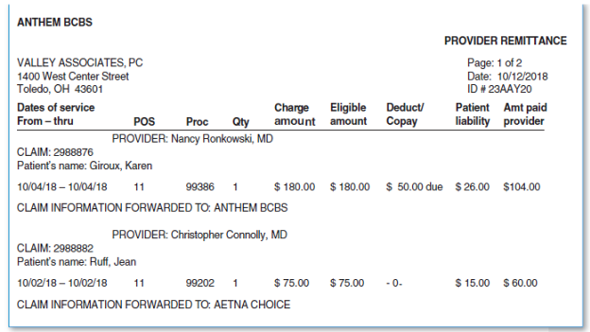
7. Suppose that Jean Ruff had not met any portion of her deductible and was responsible for the full eligible amount of procedure 99202, $75. Would it still be necessary to send a secondary claim?
8. Based on the RA, calculate how much each patient is responsible for on the primary claim. Then estimate how much you think each secondary payer will pay. Note the following: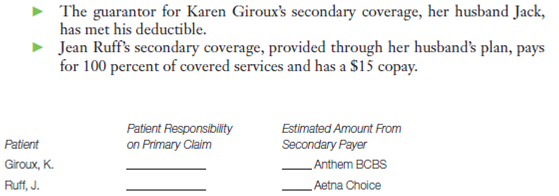
Preparing Secondary Claims
Using the information shown in the Anthem BCBS RA (Figure 16.4), prepare secondary claims for both Anthem BCBS patients. You will need to base the secondary claims on the primary claims you created for each patient in Chapter 15.
After the insurance carrier makes a decision on a claim and the practice receives and posts the payment, the patient's balance must be calculated. The claim case studies in this section provide practice in calculating balances by providing the latest payment information obtained from RAs for each patient in Chapter 15, Claim Cases 15.1 through 15.20. Based on the payment information from the RA, you must calculate each patient's balance.
As with a Medicare RA, when a commercial RA is received, before posting payments and preparing secondary claims that may be required you must carefully review it. When analyzing an RA from a commercial carrier, you must be familiar with the guidelines of that carrier's particular plan. The type of services covered and the percentage of the coverage will vary, depending on whether the plan is a fee-for-service plan, a managed care plan, a consumer-driven health plan, or some other type. The allowed amounts for each procedure will also vary with different plans, depending on the fee schedule decided upon in the contract between the payer and the provider. The contract will also specify whether there is a discount on the fees.
In Claim Case Study 16.4, an RA is received from Anthem BCBS that is a fee-for-service plan with an 80-20 coinsurance and a $250 deductible. The first page of the RA shown in Figure 16.4 contains claim information for two patients who have secondary insurance plans through their spouses. (The primary claim for both patients was created in Chapter 15.) Answer the following questions based on the information in the RA before preparing the patients' secondary claims.
1. What is the name of Karen Giroux's secondary insurance plan?
2. Based on the RA, how much has Karen Giroux paid up to now toward her 2016 deductible? How much of her deductible is due with this claim? Once she pays this amount, what percentage of her claims will be covered by her secondary plan?
3. What amount does Karen Giroux owe for procedure 99386?
4. Anthem BCBS has paid Dr. Ronkowski $104 for Karen Giroux's claim. How was this amount calculated?
5. What percentage of the eligible charge has Anthem BCBS paid for Jean Ruff's claim? Based on the RA, has she met her $250 deductible?
6. What amount does Jean Ruff owe for procedure 99202? What percentage of the eligible charge does this equal?
FIGURE 16.4 RA from Payer
7. Suppose that Jean Ruff had not met any portion of her deductible and was responsible for the full eligible amount of procedure 99202, $75. Would it still be necessary to send a secondary claim?
8. Based on the RA, calculate how much each patient is responsible for on the primary claim. Then estimate how much you think each secondary payer will pay. Note the following:
Preparing Secondary Claims
Using the information shown in the Anthem BCBS RA (Figure 16.4), prepare secondary claims for both Anthem BCBS patients. You will need to base the secondary claims on the primary claims you created for each patient in Chapter 15.
After the insurance carrier makes a decision on a claim and the practice receives and posts the payment, the patient's balance must be calculated. The claim case studies in this section provide practice in calculating balances by providing the latest payment information obtained from RAs for each patient in Chapter 15, Claim Cases 15.1 through 15.20. Based on the payment information from the RA, you must calculate each patient's balance.
Explanation


This question doesn’t have an expert verified answer yet, let Quizplus AI Copilot help.

Medical Insurance 7th Edition by Amy Blochowiak, Joanne Valerius, Nenna Bayes, Cynthia Newby

Why don’t you like this exercise?
Other Minimum 8 character and maximum 255 character
Character 255







