


expand icon
book Introductory Econometrics: A Modern Approach 6th Edition by Jeffrey M Wooldridge cover

Introductory Econometrics: A Modern Approach 6th Edition by Jeffrey M Wooldridge

Edition 6ISBN: 130527010X
book Introductory Econometrics: A Modern Approach 6th Edition by Jeffrey M Wooldridge cover

Introductory Econometrics: A Modern Approach 6th Edition by Jeffrey M Wooldridge

Edition 6ISBN: 130527010X
Exercise 3

Use the data in LOANAPP.RAW for this exercise; see also Computer Exercise

(i) Estimate a probit model of approve on white. Find the estimated probability of loan approval for both whites and nonwhites. How do these compare with the linear probability estimates?

(ii) Now, add the variables hrat, obrat, loanprc, unem, male, married, dep, sch, cosign, chist, pubrec, mortlatl, mortlat2, and vr to the probit model. Is there statistically significant evidence of discrimination against nonwhites?

(iii) Estimate the model from part (ii) by logit. Compare the coefficient on white to the probit estimate.

(iv) Use equation to estimate the sizes of the discrimination effects for probit and logit.

 Use the data in LOANAPP.RAW for this exercise; see also Computer Exercise <blockquote> (i) Estimate a probit model of approve on white. Find the estimated probability of loan approval for both whites and nonwhites. How do these compare with the linear probability estimates? (ii) Now, add the variables hrat, obrat, loanprc, unem, male, married, dep, sch, cosign, chist, pubrec, mortlatl, mortlat2, and vr to the probit model. Is there statistically significant evidence of discrimination against nonwhites? (iii) Estimate the model from part (ii) by logit. Compare the coefficient on white to the probit estimate. (iv) Use equation to estimate the sizes of the discrimination effects for probit and logit.   </blockquote> Use the data in LOANAPP.RAW for this exercise. The binary variable to be explained is approve, which is equal to one if a mortgage loan to an individual was approved. The key explanatory variable is white, a dummy variable equal to one if the applicant was white. The other applicants in the data set are black and Hispanic. To test for discrimination in the mortgage loan market, a linear probability model can be used: approve ?0 +?1white + other factors. <blockquote> (i) If there is discrimination against minorities, and the appropriate factors have been controlled for, what is the sign of ?1? (ii) Regress approve on white and report the results in the usual form. Interpret the coefficient on white. Is it statistically significant? Is it practically large? (iii) As controls, add the variables hrat, obrat, loanprc, unem, male, married, dep, sch, cosign, chist, pubrec, mortlat1, mortlat2, and vr. What happens to the coefficient on white? Is there still evidence of discrimination against nonwhites? (iv) Now, allow the effect of race to interact with the variable measuring other obligations as a percentage of income (obrat). Is the interaction term significant? (v) Using the model from part (iv), what is the effect of being white on the probability of approval when obrat = 32, which is roughly the mean value in the sample? Obtain a 95% confidence interval for this effect. </blockquote>

Use the data in LOANAPP.RAW for this exercise. The binary variable to be explained is approve, which is equal to one if a mortgage loan to an individual was approved. The key explanatory variable is white, a dummy variable equal to one if the applicant was white. The other applicants in the data set are black and Hispanic.

To test for discrimination in the mortgage loan market, a linear probability model can be used: approve ?0 +?1white + other factors.

(i) If there is discrimination against minorities, and the appropriate factors have been controlled for, what is the sign of ?1?

(ii) Regress approve on white and report the results in the usual form. Interpret the coefficient on white. Is it statistically significant? Is it practically large?

(iii) As controls, add the variables hrat, obrat, loanprc, unem, male, married, dep, sch, cosign, chist, pubrec, mortlat1, mortlat2, and vr. What happens to the coefficient on white? Is there still evidence of discrimination against nonwhites?

(iv) Now, allow the effect of race to interact with the variable measuring other obligations as a percentage of income (obrat). Is the interaction term significant?

(v) Using the model from part (iv), what is the effect of being white on the probability of approval when obrat = 32, which is roughly the mean value in the sample? Obtain a 95% confidence interval for this effect.

Step-by-step solution
Verified
like image
like image

Step 1 of 7

(i)

Estimating the Probit model     <div class=answer> (i) Estimating the Probit model   The result is:   When   , the estimated probability of loan approval is:   When   , the estimated probability of loan approval is 0.90875 It shall be noted that, in the probit model   is Z-Score. The probability corresponding to this Z-Score can be fetched using NORMSDIST () function in Excel. When   , the estimated probability of loan approval is:   When   , the estimated probability of loan approval is 0.707792 When estimating the Linear Probability Model (LPM) of approve on white, the result is:   Thus, the LPM model is:   When   , the LPM predicts probability of loan approval is:   When   , the LPM predicts probability of loan approval is:

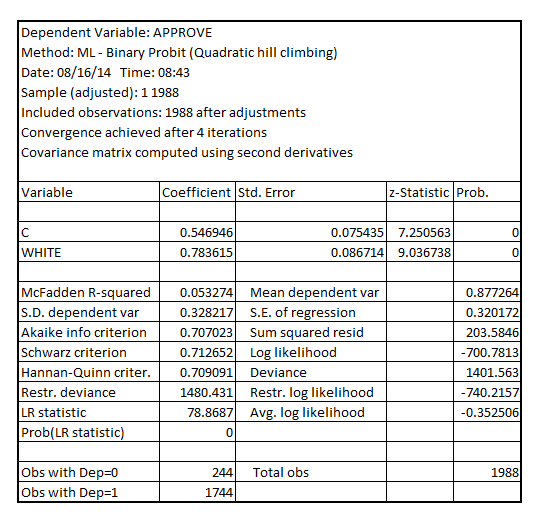



The result is:

    <div class=answer> (i) Estimating the Probit model   The result is:   When   , the estimated probability of loan approval is:   When   , the estimated probability of loan approval is 0.90875 It shall be noted that, in the probit model   is Z-Score. The probability corresponding to this Z-Score can be fetched using NORMSDIST () function in Excel. When   , the estimated probability of loan approval is:   When   , the estimated probability of loan approval is 0.707792 When estimating the Linear Probability Model (LPM) of approve on white, the result is:   Thus, the LPM model is:   When   , the LPM predicts probability of loan approval is:   When   , the LPM predicts probability of loan approval is:

When    <div class=answer> (i) Estimating the Probit model   The result is:   When   , the estimated probability of loan approval is:   When   , the estimated probability of loan approval is 0.90875 It shall be noted that, in the probit model   is Z-Score. The probability corresponding to this Z-Score can be fetched using NORMSDIST () function in Excel. When   , the estimated probability of loan approval is:   When   , the estimated probability of loan approval is 0.707792 When estimating the Linear Probability Model (LPM) of approve on white, the result is:   Thus, the LPM model is:   When   , the LPM predicts probability of loan approval is:   When   , the LPM predicts probability of loan approval is: , the estimated probability of loan approval is:

    <div class=answer> (i) Estimating the Probit model   The result is:   When   , the estimated probability of loan approval is:   When   , the estimated probability of loan approval is 0.90875 It shall be noted that, in the probit model   is Z-Score. The probability corresponding to this Z-Score can be fetched using NORMSDIST () function in Excel. When   , the estimated probability of loan approval is:   When   , the estimated probability of loan approval is 0.707792 When estimating the Linear Probability Model (LPM) of approve on white, the result is:   Thus, the LPM model is:   When   , the LPM predicts probability of loan approval is:   When   , the LPM predicts probability of loan approval is:

When    <div class=answer> (i) Estimating the Probit model   The result is:   When   , the estimated probability of loan approval is:   When   , the estimated probability of loan approval is 0.90875 It shall be noted that, in the probit model   is Z-Score. The probability corresponding to this Z-Score can be fetched using NORMSDIST () function in Excel. When   , the estimated probability of loan approval is:   When   , the estimated probability of loan approval is 0.707792 When estimating the Linear Probability Model (LPM) of approve on white, the result is:   Thus, the LPM model is:   When   , the LPM predicts probability of loan approval is:   When   , the LPM predicts probability of loan approval is: , the estimated probability of loan approval is 0.90875

It shall be noted that, in the probit model     <div class=answer> (i) Estimating the Probit model   The result is:   When   , the estimated probability of loan approval is:   When   , the estimated probability of loan approval is 0.90875 It shall be noted that, in the probit model   is Z-Score. The probability corresponding to this Z-Score can be fetched using NORMSDIST () function in Excel. When   , the estimated probability of loan approval is:   When   , the estimated probability of loan approval is 0.707792 When estimating the Linear Probability Model (LPM) of approve on white, the result is:   Thus, the LPM model is:   When   , the LPM predicts probability of loan approval is:   When   , the LPM predicts probability of loan approval is: is Z-Score. The probability corresponding to this Z-Score can be fetched using NORMSDIST () function in Excel.

When    <div class=answer> (i) Estimating the Probit model   The result is:   When   , the estimated probability of loan approval is:   When   , the estimated probability of loan approval is 0.90875 It shall be noted that, in the probit model   is Z-Score. The probability corresponding to this Z-Score can be fetched using NORMSDIST () function in Excel. When   , the estimated probability of loan approval is:   When   , the estimated probability of loan approval is 0.707792 When estimating the Linear Probability Model (LPM) of approve on white, the result is:   Thus, the LPM model is:   When   , the LPM predicts probability of loan approval is:   When   , the LPM predicts probability of loan approval is: , the estimated probability of loan approval is:

    <div class=answer> (i) Estimating the Probit model   The result is:   When   , the estimated probability of loan approval is:   When   , the estimated probability of loan approval is 0.90875 It shall be noted that, in the probit model   is Z-Score. The probability corresponding to this Z-Score can be fetched using NORMSDIST () function in Excel. When   , the estimated probability of loan approval is:   When   , the estimated probability of loan approval is 0.707792 When estimating the Linear Probability Model (LPM) of approve on white, the result is:   Thus, the LPM model is:   When   , the LPM predicts probability of loan approval is:   When   , the LPM predicts probability of loan approval is:

When    <div class=answer> (i) Estimating the Probit model   The result is:   When   , the estimated probability of loan approval is:   When   , the estimated probability of loan approval is 0.90875 It shall be noted that, in the probit model   is Z-Score. The probability corresponding to this Z-Score can be fetched using NORMSDIST () function in Excel. When   , the estimated probability of loan approval is:   When   , the estimated probability of loan approval is 0.707792 When estimating the Linear Probability Model (LPM) of approve on white, the result is:   Thus, the LPM model is:   When   , the LPM predicts probability of loan approval is:   When   , the LPM predicts probability of loan approval is: , the estimated probability of loan approval is 0.707792

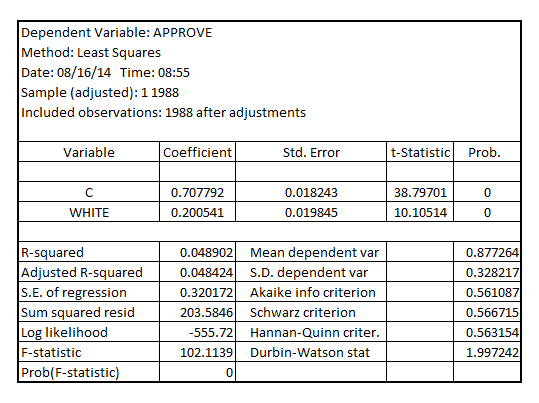
When estimating the Linear Probability Model (LPM) of approve on white, the result is:

    <div class=answer> (i) Estimating the Probit model   The result is:   When   , the estimated probability of loan approval is:   When   , the estimated probability of loan approval is 0.90875 It shall be noted that, in the probit model   is Z-Score. The probability corresponding to this Z-Score can be fetched using NORMSDIST () function in Excel. When   , the estimated probability of loan approval is:   When   , the estimated probability of loan approval is 0.707792 When estimating the Linear Probability Model (LPM) of approve on white, the result is:   Thus, the LPM model is:   When   , the LPM predicts probability of loan approval is:   When   , the LPM predicts probability of loan approval is:

Thus, the LPM model is:

    <div class=answer> (i) Estimating the Probit model   The result is:   When   , the estimated probability of loan approval is:   When   , the estimated probability of loan approval is 0.90875 It shall be noted that, in the probit model   is Z-Score. The probability corresponding to this Z-Score can be fetched using NORMSDIST () function in Excel. When   , the estimated probability of loan approval is:   When   , the estimated probability of loan approval is 0.707792 When estimating the Linear Probability Model (LPM) of approve on white, the result is:   Thus, the LPM model is:   When   , the LPM predicts probability of loan approval is:   When   , the LPM predicts probability of loan approval is:

When    <div class=answer> (i) Estimating the Probit model   The result is:   When   , the estimated probability of loan approval is:   When   , the estimated probability of loan approval is 0.90875 It shall be noted that, in the probit model   is Z-Score. The probability corresponding to this Z-Score can be fetched using NORMSDIST () function in Excel. When   , the estimated probability of loan approval is:   When   , the estimated probability of loan approval is 0.707792 When estimating the Linear Probability Model (LPM) of approve on white, the result is:   Thus, the LPM model is:   When   , the LPM predicts probability of loan approval is:   When   , the LPM predicts probability of loan approval is: , the LPM predicts probability of loan approval is:

    <div class=answer> (i) Estimating the Probit model   The result is:   When   , the estimated probability of loan approval is:   When   , the estimated probability of loan approval is 0.90875 It shall be noted that, in the probit model   is Z-Score. The probability corresponding to this Z-Score can be fetched using NORMSDIST () function in Excel. When   , the estimated probability of loan approval is:   When   , the estimated probability of loan approval is 0.707792 When estimating the Linear Probability Model (LPM) of approve on white, the result is:   Thus, the LPM model is:   When   , the LPM predicts probability of loan approval is:   When   , the LPM predicts probability of loan approval is:

When    <div class=answer> (i) Estimating the Probit model   The result is:   When   , the estimated probability of loan approval is:   When   , the estimated probability of loan approval is 0.90875 It shall be noted that, in the probit model   is Z-Score. The probability corresponding to this Z-Score can be fetched using NORMSDIST () function in Excel. When   , the estimated probability of loan approval is:   When   , the estimated probability of loan approval is 0.707792 When estimating the Linear Probability Model (LPM) of approve on white, the result is:   Thus, the LPM model is:   When   , the LPM predicts probability of loan approval is:   When   , the LPM predicts probability of loan approval is: , the LPM predicts probability of loan approval is:


Step 2 of 7


Step 3 of 7


Step 4 of 7


Step 5 of 7


Step 6 of 7


Step 7 of 7

close menu
Introductory Econometrics: A Modern Approach 6th Edition by Jeffrey M Wooldridge
cross icon



