


expand icon
book Introductory Econometrics: A Modern Approach 6th Edition by Jeffrey M Wooldridge cover

Introductory Econometrics: A Modern Approach 6th Edition by Jeffrey M Wooldridge

Edition 6ISBN: 130527010X
book Introductory Econometrics: A Modern Approach 6th Edition by Jeffrey M Wooldridge cover

Introductory Econometrics: A Modern Approach 6th Edition by Jeffrey M Wooldridge

Edition 6ISBN: 130527010X
Exercise 11

Add the interaction term union.t-t to the equation estimated in Table 14.2 to see if wage growth depends on union status. Estimate the equation by random and fixed effects and compare the results.

Table Three Different Estimators of a Wage Equation
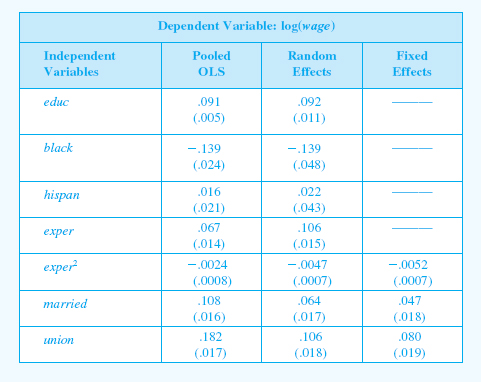
 Add the interaction term union.t-t to the equation estimated in Table 14.2 to see if wage growth depends on union status. Estimate the equation by random and fixed effects and compare the results. Table Three Different Estimators of a Wage Equation

Step-by-step solution
Verified
like image
like image

Step 1 of 2

On adding the interaction term     <div class=answer> On adding the interaction term   in the wage equation model with   as the dependent variable and   , the year dummy variables as the explanatory variables along with   as the other explanatory variables when estimated using random effects , the result is:   The coefficient of   is 0.173912 with the p-value 0.0000 which is less than the critical p-value of 0.05 at 5% level of significance, indicating that   is a significant variable that affect   The coefficient of   is -0.0155 with the p-value 0.0062 which is less than the critical p-value of 0.05 at 5% level of significance, indicating it to be significant in determining   On adding the interaction term   in the wage equation model with   as the dependent variable and   , the year dummy variables as the explanatory variables along with   as the other explanatory variables when estimated using fixed effects , the result is: It shall be noted that the explanatory variables such as   are not time-variant for each individual so they are excluded from the fixed effects estimation. Secondly   , the dummy variable for 1981 is considered as the base year in the fixed effects estimation. in the wage equation model with     <div class=answer> On adding the interaction term   in the wage equation model with   as the dependent variable and   , the year dummy variables as the explanatory variables along with   as the other explanatory variables when estimated using random effects , the result is:   The coefficient of   is 0.173912 with the p-value 0.0000 which is less than the critical p-value of 0.05 at 5% level of significance, indicating that   is a significant variable that affect   The coefficient of   is -0.0155 with the p-value 0.0062 which is less than the critical p-value of 0.05 at 5% level of significance, indicating it to be significant in determining   On adding the interaction term   in the wage equation model with   as the dependent variable and   , the year dummy variables as the explanatory variables along with   as the other explanatory variables when estimated using fixed effects , the result is: It shall be noted that the explanatory variables such as   are not time-variant for each individual so they are excluded from the fixed effects estimation. Secondly   , the dummy variable for 1981 is considered as the base year in the fixed effects estimation. as the dependent variable and    <div class=answer> On adding the interaction term   in the wage equation model with   as the dependent variable and   , the year dummy variables as the explanatory variables along with   as the other explanatory variables when estimated using random effects , the result is:   The coefficient of   is 0.173912 with the p-value 0.0000 which is less than the critical p-value of 0.05 at 5% level of significance, indicating that   is a significant variable that affect   The coefficient of   is -0.0155 with the p-value 0.0062 which is less than the critical p-value of 0.05 at 5% level of significance, indicating it to be significant in determining   On adding the interaction term   in the wage equation model with   as the dependent variable and   , the year dummy variables as the explanatory variables along with   as the other explanatory variables when estimated using fixed effects , the result is: It shall be noted that the explanatory variables such as   are not time-variant for each individual so they are excluded from the fixed effects estimation. Secondly   , the dummy variable for 1981 is considered as the base year in the fixed effects estimation. , the year dummy variables as the explanatory variables along with     <div class=answer> On adding the interaction term   in the wage equation model with   as the dependent variable and   , the year dummy variables as the explanatory variables along with   as the other explanatory variables when estimated using random effects , the result is:   The coefficient of   is 0.173912 with the p-value 0.0000 which is less than the critical p-value of 0.05 at 5% level of significance, indicating that   is a significant variable that affect   The coefficient of   is -0.0155 with the p-value 0.0062 which is less than the critical p-value of 0.05 at 5% level of significance, indicating it to be significant in determining   On adding the interaction term   in the wage equation model with   as the dependent variable and   , the year dummy variables as the explanatory variables along with   as the other explanatory variables when estimated using fixed effects , the result is: It shall be noted that the explanatory variables such as   are not time-variant for each individual so they are excluded from the fixed effects estimation. Secondly   , the dummy variable for 1981 is considered as the base year in the fixed effects estimation. as the other explanatory variables when estimated using random effects, the result is:

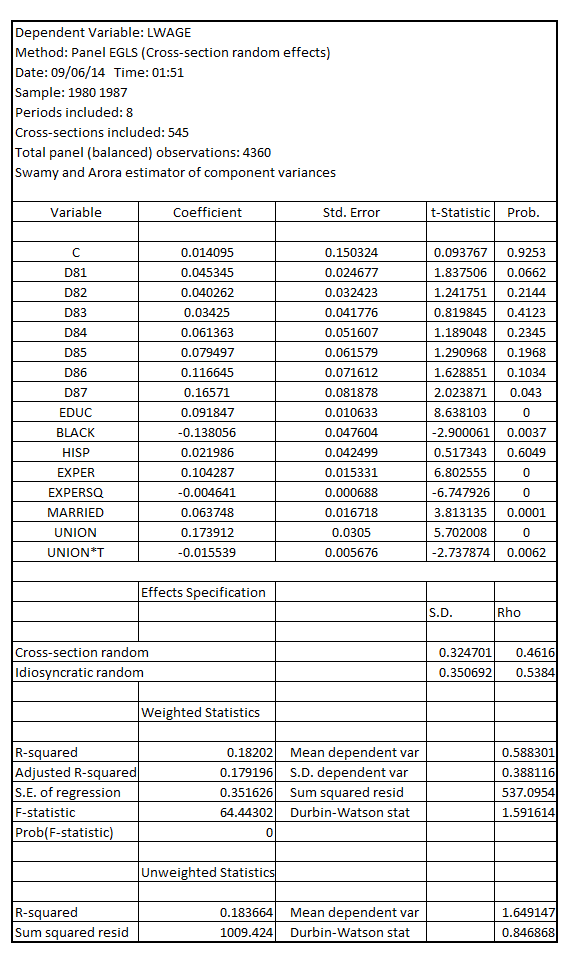
    <div class=answer> On adding the interaction term   in the wage equation model with   as the dependent variable and   , the year dummy variables as the explanatory variables along with   as the other explanatory variables when estimated using random effects , the result is:   The coefficient of   is 0.173912 with the p-value 0.0000 which is less than the critical p-value of 0.05 at 5% level of significance, indicating that   is a significant variable that affect   The coefficient of   is -0.0155 with the p-value 0.0062 which is less than the critical p-value of 0.05 at 5% level of significance, indicating it to be significant in determining   On adding the interaction term   in the wage equation model with   as the dependent variable and   , the year dummy variables as the explanatory variables along with   as the other explanatory variables when estimated using fixed effects , the result is: It shall be noted that the explanatory variables such as   are not time-variant for each individual so they are excluded from the fixed effects estimation. Secondly   , the dummy variable for 1981 is considered as the base year in the fixed effects estimation.

The coefficient of     <div class=answer> On adding the interaction term   in the wage equation model with   as the dependent variable and   , the year dummy variables as the explanatory variables along with   as the other explanatory variables when estimated using random effects , the result is:   The coefficient of   is 0.173912 with the p-value 0.0000 which is less than the critical p-value of 0.05 at 5% level of significance, indicating that   is a significant variable that affect   The coefficient of   is -0.0155 with the p-value 0.0062 which is less than the critical p-value of 0.05 at 5% level of significance, indicating it to be significant in determining   On adding the interaction term   in the wage equation model with   as the dependent variable and   , the year dummy variables as the explanatory variables along with   as the other explanatory variables when estimated using fixed effects , the result is: It shall be noted that the explanatory variables such as   are not time-variant for each individual so they are excluded from the fixed effects estimation. Secondly   , the dummy variable for 1981 is considered as the base year in the fixed effects estimation. is 0.173912 with the p-value 0.0000 which is less than the critical p-value of 0.05 at 5% level of significance, indicating that     <div class=answer> On adding the interaction term   in the wage equation model with   as the dependent variable and   , the year dummy variables as the explanatory variables along with   as the other explanatory variables when estimated using random effects , the result is:   The coefficient of   is 0.173912 with the p-value 0.0000 which is less than the critical p-value of 0.05 at 5% level of significance, indicating that   is a significant variable that affect   The coefficient of   is -0.0155 with the p-value 0.0062 which is less than the critical p-value of 0.05 at 5% level of significance, indicating it to be significant in determining   On adding the interaction term   in the wage equation model with   as the dependent variable and   , the year dummy variables as the explanatory variables along with   as the other explanatory variables when estimated using fixed effects , the result is: It shall be noted that the explanatory variables such as   are not time-variant for each individual so they are excluded from the fixed effects estimation. Secondly   , the dummy variable for 1981 is considered as the base year in the fixed effects estimation. is a significant variable that affect     <div class=answer> On adding the interaction term   in the wage equation model with   as the dependent variable and   , the year dummy variables as the explanatory variables along with   as the other explanatory variables when estimated using random effects , the result is:   The coefficient of   is 0.173912 with the p-value 0.0000 which is less than the critical p-value of 0.05 at 5% level of significance, indicating that   is a significant variable that affect   The coefficient of   is -0.0155 with the p-value 0.0062 which is less than the critical p-value of 0.05 at 5% level of significance, indicating it to be significant in determining   On adding the interaction term   in the wage equation model with   as the dependent variable and   , the year dummy variables as the explanatory variables along with   as the other explanatory variables when estimated using fixed effects , the result is: It shall be noted that the explanatory variables such as   are not time-variant for each individual so they are excluded from the fixed effects estimation. Secondly   , the dummy variable for 1981 is considered as the base year in the fixed effects estimation.

The coefficient of     <div class=answer> On adding the interaction term   in the wage equation model with   as the dependent variable and   , the year dummy variables as the explanatory variables along with   as the other explanatory variables when estimated using random effects , the result is:   The coefficient of   is 0.173912 with the p-value 0.0000 which is less than the critical p-value of 0.05 at 5% level of significance, indicating that   is a significant variable that affect   The coefficient of   is -0.0155 with the p-value 0.0062 which is less than the critical p-value of 0.05 at 5% level of significance, indicating it to be significant in determining   On adding the interaction term   in the wage equation model with   as the dependent variable and   , the year dummy variables as the explanatory variables along with   as the other explanatory variables when estimated using fixed effects , the result is: It shall be noted that the explanatory variables such as   are not time-variant for each individual so they are excluded from the fixed effects estimation. Secondly   , the dummy variable for 1981 is considered as the base year in the fixed effects estimation. is -0.0155 with the p-value 0.0062 which is less than the critical p-value of 0.05 at 5% level of significance, indicating it to be significant in determining     <div class=answer> On adding the interaction term   in the wage equation model with   as the dependent variable and   , the year dummy variables as the explanatory variables along with   as the other explanatory variables when estimated using random effects , the result is:   The coefficient of   is 0.173912 with the p-value 0.0000 which is less than the critical p-value of 0.05 at 5% level of significance, indicating that   is a significant variable that affect   The coefficient of   is -0.0155 with the p-value 0.0062 which is less than the critical p-value of 0.05 at 5% level of significance, indicating it to be significant in determining   On adding the interaction term   in the wage equation model with   as the dependent variable and   , the year dummy variables as the explanatory variables along with   as the other explanatory variables when estimated using fixed effects , the result is: It shall be noted that the explanatory variables such as   are not time-variant for each individual so they are excluded from the fixed effects estimation. Secondly   , the dummy variable for 1981 is considered as the base year in the fixed effects estimation.

On adding the interaction term     <div class=answer> On adding the interaction term   in the wage equation model with   as the dependent variable and   , the year dummy variables as the explanatory variables along with   as the other explanatory variables when estimated using random effects , the result is:   The coefficient of   is 0.173912 with the p-value 0.0000 which is less than the critical p-value of 0.05 at 5% level of significance, indicating that   is a significant variable that affect   The coefficient of   is -0.0155 with the p-value 0.0062 which is less than the critical p-value of 0.05 at 5% level of significance, indicating it to be significant in determining   On adding the interaction term   in the wage equation model with   as the dependent variable and   , the year dummy variables as the explanatory variables along with   as the other explanatory variables when estimated using fixed effects , the result is: It shall be noted that the explanatory variables such as   are not time-variant for each individual so they are excluded from the fixed effects estimation. Secondly   , the dummy variable for 1981 is considered as the base year in the fixed effects estimation. in the wage equation model with     <div class=answer> On adding the interaction term   in the wage equation model with   as the dependent variable and   , the year dummy variables as the explanatory variables along with   as the other explanatory variables when estimated using random effects , the result is:   The coefficient of   is 0.173912 with the p-value 0.0000 which is less than the critical p-value of 0.05 at 5% level of significance, indicating that   is a significant variable that affect   The coefficient of   is -0.0155 with the p-value 0.0062 which is less than the critical p-value of 0.05 at 5% level of significance, indicating it to be significant in determining   On adding the interaction term   in the wage equation model with   as the dependent variable and   , the year dummy variables as the explanatory variables along with   as the other explanatory variables when estimated using fixed effects , the result is: It shall be noted that the explanatory variables such as   are not time-variant for each individual so they are excluded from the fixed effects estimation. Secondly   , the dummy variable for 1981 is considered as the base year in the fixed effects estimation. as the dependent variable and    <div class=answer> On adding the interaction term   in the wage equation model with   as the dependent variable and   , the year dummy variables as the explanatory variables along with   as the other explanatory variables when estimated using random effects , the result is:   The coefficient of   is 0.173912 with the p-value 0.0000 which is less than the critical p-value of 0.05 at 5% level of significance, indicating that   is a significant variable that affect   The coefficient of   is -0.0155 with the p-value 0.0062 which is less than the critical p-value of 0.05 at 5% level of significance, indicating it to be significant in determining   On adding the interaction term   in the wage equation model with   as the dependent variable and   , the year dummy variables as the explanatory variables along with   as the other explanatory variables when estimated using fixed effects , the result is: It shall be noted that the explanatory variables such as   are not time-variant for each individual so they are excluded from the fixed effects estimation. Secondly   , the dummy variable for 1981 is considered as the base year in the fixed effects estimation. , the year dummy variables as the explanatory variables along with     <div class=answer> On adding the interaction term   in the wage equation model with   as the dependent variable and   , the year dummy variables as the explanatory variables along with   as the other explanatory variables when estimated using random effects , the result is:   The coefficient of   is 0.173912 with the p-value 0.0000 which is less than the critical p-value of 0.05 at 5% level of significance, indicating that   is a significant variable that affect   The coefficient of   is -0.0155 with the p-value 0.0062 which is less than the critical p-value of 0.05 at 5% level of significance, indicating it to be significant in determining   On adding the interaction term   in the wage equation model with   as the dependent variable and   , the year dummy variables as the explanatory variables along with   as the other explanatory variables when estimated using fixed effects , the result is: It shall be noted that the explanatory variables such as   are not time-variant for each individual so they are excluded from the fixed effects estimation. Secondly   , the dummy variable for 1981 is considered as the base year in the fixed effects estimation. as the other explanatory variables when estimated using fixed effects, the result is:

It shall be noted that the explanatory variables such as    <div class=answer> On adding the interaction term   in the wage equation model with   as the dependent variable and   , the year dummy variables as the explanatory variables along with   as the other explanatory variables when estimated using random effects , the result is:   The coefficient of   is 0.173912 with the p-value 0.0000 which is less than the critical p-value of 0.05 at 5% level of significance, indicating that   is a significant variable that affect   The coefficient of   is -0.0155 with the p-value 0.0062 which is less than the critical p-value of 0.05 at 5% level of significance, indicating it to be significant in determining   On adding the interaction term   in the wage equation model with   as the dependent variable and   , the year dummy variables as the explanatory variables along with   as the other explanatory variables when estimated using fixed effects , the result is: It shall be noted that the explanatory variables such as   are not time-variant for each individual so they are excluded from the fixed effects estimation. Secondly   , the dummy variable for 1981 is considered as the base year in the fixed effects estimation. are not time-variant for each individual so they are excluded from the fixed effects estimation. Secondly    <div class=answer> On adding the interaction term   in the wage equation model with   as the dependent variable and   , the year dummy variables as the explanatory variables along with   as the other explanatory variables when estimated using random effects , the result is:   The coefficient of   is 0.173912 with the p-value 0.0000 which is less than the critical p-value of 0.05 at 5% level of significance, indicating that   is a significant variable that affect   The coefficient of   is -0.0155 with the p-value 0.0062 which is less than the critical p-value of 0.05 at 5% level of significance, indicating it to be significant in determining   On adding the interaction term   in the wage equation model with   as the dependent variable and   , the year dummy variables as the explanatory variables along with   as the other explanatory variables when estimated using fixed effects , the result is: It shall be noted that the explanatory variables such as   are not time-variant for each individual so they are excluded from the fixed effects estimation. Secondly   , the dummy variable for 1981 is considered as the base year in the fixed effects estimation. , the dummy variable for 1981 is considered as the base year in the fixed effects estimation.


Step 2 of 2

close menu
Introductory Econometrics: A Modern Approach 6th Edition by Jeffrey M Wooldridge
cross icon





