expand icon
book Introductory Econometrics: A Modern Approach 6th Edition by Jeffrey M Wooldridge cover

Introductory Econometrics: A Modern Approach 6th Edition by Jeffrey M Wooldridge

Edition 6ISBN: 130527010X
book Introductory Econometrics: A Modern Approach 6th Edition by Jeffrey M Wooldridge cover

Introductory Econometrics: A Modern Approach 6th Edition by Jeffrey M Wooldridge

Edition 6ISBN: 130527010X
Exercise 3

Let  Let   be the OLS estimate from the regression of y on X. Let A be a (k + 1) × (k + 1) nonsingular matrix and define zt = xtA, t = 1,….,n. Therefore, zt is 1 × (k + 1) and is a nonsingular linear combination of xt. Let Z be the n × (k + 1) matrix with rows zt. Let   denote the OLS estimate from a regression of y on Z. <blockquote> (i) Show that   =A-1   . (ii) L et   be the fitted values from the original regression and let . y t be the fitted values from regressing y on Z. Show that   =   , for all t =- 1, 2,…., n. How do the residuals from the two regressions compare? (iii) Show that the estimated variance matrix for   is   A1(X?X)1A1?, where   is the usual variance estimate from regressing y on X. (iv) L et the   be the OLS estimates from regressing yt on 1, xt1,...,xtk, and let the   be the OLS estimates from the regression of yt on 1, a1xt1,…,ak xtk, where aj ? 0, j =1,…,k. Use the results from part (i) to find the relationship between the   and the   (v) Assuming the setup of part (iv), use part (iii) to show that se(   ) = se(   )/aj. (vi) Assuming the setup of part (iv), show that the absolute values of the t statistics for   and   are identical. </blockquote>   be the OLS estimate from the regression of y on X. Let A be a (k + 1) × (k + 1) nonsingular matrix and define zt = xtA, t = 1,….,n. Therefore, zt is 1 × (k + 1) and is a nonsingular linear combination of xt. Let Z be the n × (k + 1) matrix with rows zt. Let  Let   be the OLS estimate from the regression of y on X. Let A be a (k + 1) × (k + 1) nonsingular matrix and define zt = xtA, t = 1,….,n. Therefore, zt is 1 × (k + 1) and is a nonsingular linear combination of xt. Let Z be the n × (k + 1) matrix with rows zt. Let   denote the OLS estimate from a regression of y on Z. <blockquote> (i) Show that   =A-1   . (ii) L et   be the fitted values from the original regression and let . y t be the fitted values from regressing y on Z. Show that   =   , for all t =- 1, 2,…., n. How do the residuals from the two regressions compare? (iii) Show that the estimated variance matrix for   is   A1(X?X)1A1?, where   is the usual variance estimate from regressing y on X. (iv) L et the   be the OLS estimates from regressing yt on 1, xt1,...,xtk, and let the   be the OLS estimates from the regression of yt on 1, a1xt1,…,ak xtk, where aj ? 0, j =1,…,k. Use the results from part (i) to find the relationship between the   and the   (v) Assuming the setup of part (iv), use part (iii) to show that se(   ) = se(   )/aj. (vi) Assuming the setup of part (iv), show that the absolute values of the t statistics for   and   are identical. </blockquote>   denote the OLS estimate from a regression of y on Z.

(i) Show that  Let   be the OLS estimate from the regression of y on X. Let A be a (k + 1) × (k + 1) nonsingular matrix and define zt = xtA, t = 1,….,n. Therefore, zt is 1 × (k + 1) and is a nonsingular linear combination of xt. Let Z be the n × (k + 1) matrix with rows zt. Let   denote the OLS estimate from a regression of y on Z. <blockquote> (i) Show that   =A-1   . (ii) L et   be the fitted values from the original regression and let . y t be the fitted values from regressing y on Z. Show that   =   , for all t =- 1, 2,…., n. How do the residuals from the two regressions compare? (iii) Show that the estimated variance matrix for   is   A1(X?X)1A1?, where   is the usual variance estimate from regressing y on X. (iv) L et the   be the OLS estimates from regressing yt on 1, xt1,...,xtk, and let the   be the OLS estimates from the regression of yt on 1, a1xt1,…,ak xtk, where aj ? 0, j =1,…,k. Use the results from part (i) to find the relationship between the   and the   (v) Assuming the setup of part (iv), use part (iii) to show that se(   ) = se(   )/aj. (vi) Assuming the setup of part (iv), show that the absolute values of the t statistics for   and   are identical. </blockquote>   =A-1 Let   be the OLS estimate from the regression of y on X. Let A be a (k + 1) × (k + 1) nonsingular matrix and define zt = xtA, t = 1,….,n. Therefore, zt is 1 × (k + 1) and is a nonsingular linear combination of xt. Let Z be the n × (k + 1) matrix with rows zt. Let   denote the OLS estimate from a regression of y on Z. <blockquote> (i) Show that   =A-1   . (ii) L et   be the fitted values from the original regression and let . y t be the fitted values from regressing y on Z. Show that   =   , for all t =- 1, 2,…., n. How do the residuals from the two regressions compare? (iii) Show that the estimated variance matrix for   is   A1(X?X)1A1?, where   is the usual variance estimate from regressing y on X. (iv) L et the   be the OLS estimates from regressing yt on 1, xt1,...,xtk, and let the   be the OLS estimates from the regression of yt on 1, a1xt1,…,ak xtk, where aj ? 0, j =1,…,k. Use the results from part (i) to find the relationship between the   and the   (v) Assuming the setup of part (iv), use part (iii) to show that se(   ) = se(   )/aj. (vi) Assuming the setup of part (iv), show that the absolute values of the t statistics for   and   are identical. </blockquote>   .

(ii) L et  Let   be the OLS estimate from the regression of y on X. Let A be a (k + 1) × (k + 1) nonsingular matrix and define zt = xtA, t = 1,….,n. Therefore, zt is 1 × (k + 1) and is a nonsingular linear combination of xt. Let Z be the n × (k + 1) matrix with rows zt. Let   denote the OLS estimate from a regression of y on Z. <blockquote> (i) Show that   =A-1   . (ii) L et   be the fitted values from the original regression and let . y t be the fitted values from regressing y on Z. Show that   =   , for all t =- 1, 2,…., n. How do the residuals from the two regressions compare? (iii) Show that the estimated variance matrix for   is   A1(X?X)1A1?, where   is the usual variance estimate from regressing y on X. (iv) L et the   be the OLS estimates from regressing yt on 1, xt1,...,xtk, and let the   be the OLS estimates from the regression of yt on 1, a1xt1,…,ak xtk, where aj ? 0, j =1,…,k. Use the results from part (i) to find the relationship between the   and the   (v) Assuming the setup of part (iv), use part (iii) to show that se(   ) = se(   )/aj. (vi) Assuming the setup of part (iv), show that the absolute values of the t statistics for   and   are identical. </blockquote>   be the fitted values from the original regression and let . y t be the fitted values from regressing y on Z. Show that  Let   be the OLS estimate from the regression of y on X. Let A be a (k + 1) × (k + 1) nonsingular matrix and define zt = xtA, t = 1,….,n. Therefore, zt is 1 × (k + 1) and is a nonsingular linear combination of xt. Let Z be the n × (k + 1) matrix with rows zt. Let   denote the OLS estimate from a regression of y on Z. <blockquote> (i) Show that   =A-1   . (ii) L et   be the fitted values from the original regression and let . y t be the fitted values from regressing y on Z. Show that   =   , for all t =- 1, 2,…., n. How do the residuals from the two regressions compare? (iii) Show that the estimated variance matrix for   is   A1(X?X)1A1?, where   is the usual variance estimate from regressing y on X. (iv) L et the   be the OLS estimates from regressing yt on 1, xt1,...,xtk, and let the   be the OLS estimates from the regression of yt on 1, a1xt1,…,ak xtk, where aj ? 0, j =1,…,k. Use the results from part (i) to find the relationship between the   and the   (v) Assuming the setup of part (iv), use part (iii) to show that se(   ) = se(   )/aj. (vi) Assuming the setup of part (iv), show that the absolute values of the t statistics for   and   are identical. </blockquote>   = Let   be the OLS estimate from the regression of y on X. Let A be a (k + 1) × (k + 1) nonsingular matrix and define zt = xtA, t = 1,….,n. Therefore, zt is 1 × (k + 1) and is a nonsingular linear combination of xt. Let Z be the n × (k + 1) matrix with rows zt. Let   denote the OLS estimate from a regression of y on Z. <blockquote> (i) Show that   =A-1   . (ii) L et   be the fitted values from the original regression and let . y t be the fitted values from regressing y on Z. Show that   =   , for all t =- 1, 2,…., n. How do the residuals from the two regressions compare? (iii) Show that the estimated variance matrix for   is   A1(X?X)1A1?, where   is the usual variance estimate from regressing y on X. (iv) L et the   be the OLS estimates from regressing yt on 1, xt1,...,xtk, and let the   be the OLS estimates from the regression of yt on 1, a1xt1,…,ak xtk, where aj ? 0, j =1,…,k. Use the results from part (i) to find the relationship between the   and the   (v) Assuming the setup of part (iv), use part (iii) to show that se(   ) = se(   )/aj. (vi) Assuming the setup of part (iv), show that the absolute values of the t statistics for   and   are identical. </blockquote>   , for all t =- 1, 2,…., n. How do the residuals from the two regressions compare?

(iii) Show that the estimated variance matrix for  Let   be the OLS estimate from the regression of y on X. Let A be a (k + 1) × (k + 1) nonsingular matrix and define zt = xtA, t = 1,….,n. Therefore, zt is 1 × (k + 1) and is a nonsingular linear combination of xt. Let Z be the n × (k + 1) matrix with rows zt. Let   denote the OLS estimate from a regression of y on Z. <blockquote> (i) Show that   =A-1   . (ii) L et   be the fitted values from the original regression and let . y t be the fitted values from regressing y on Z. Show that   =   , for all t =- 1, 2,…., n. How do the residuals from the two regressions compare? (iii) Show that the estimated variance matrix for   is   A1(X?X)1A1?, where   is the usual variance estimate from regressing y on X. (iv) L et the   be the OLS estimates from regressing yt on 1, xt1,...,xtk, and let the   be the OLS estimates from the regression of yt on 1, a1xt1,…,ak xtk, where aj ? 0, j =1,…,k. Use the results from part (i) to find the relationship between the   and the   (v) Assuming the setup of part (iv), use part (iii) to show that se(   ) = se(   )/aj. (vi) Assuming the setup of part (iv), show that the absolute values of the t statistics for   and   are identical. </blockquote>   is  Let   be the OLS estimate from the regression of y on X. Let A be a (k + 1) × (k + 1) nonsingular matrix and define zt = xtA, t = 1,….,n. Therefore, zt is 1 × (k + 1) and is a nonsingular linear combination of xt. Let Z be the n × (k + 1) matrix with rows zt. Let   denote the OLS estimate from a regression of y on Z. <blockquote> (i) Show that   =A-1   . (ii) L et   be the fitted values from the original regression and let . y t be the fitted values from regressing y on Z. Show that   =   , for all t =- 1, 2,…., n. How do the residuals from the two regressions compare? (iii) Show that the estimated variance matrix for   is   A1(X?X)1A1?, where   is the usual variance estimate from regressing y on X. (iv) L et the   be the OLS estimates from regressing yt on 1, xt1,...,xtk, and let the   be the OLS estimates from the regression of yt on 1, a1xt1,…,ak xtk, where aj ? 0, j =1,…,k. Use the results from part (i) to find the relationship between the   and the   (v) Assuming the setup of part (iv), use part (iii) to show that se(   ) = se(   )/aj. (vi) Assuming the setup of part (iv), show that the absolute values of the t statistics for   and   are identical. </blockquote>   A1(X?X)1A1?, where  Let   be the OLS estimate from the regression of y on X. Let A be a (k + 1) × (k + 1) nonsingular matrix and define zt = xtA, t = 1,….,n. Therefore, zt is 1 × (k + 1) and is a nonsingular linear combination of xt. Let Z be the n × (k + 1) matrix with rows zt. Let   denote the OLS estimate from a regression of y on Z. <blockquote> (i) Show that   =A-1   . (ii) L et   be the fitted values from the original regression and let . y t be the fitted values from regressing y on Z. Show that   =   , for all t =- 1, 2,…., n. How do the residuals from the two regressions compare? (iii) Show that the estimated variance matrix for   is   A1(X?X)1A1?, where   is the usual variance estimate from regressing y on X. (iv) L et the   be the OLS estimates from regressing yt on 1, xt1,...,xtk, and let the   be the OLS estimates from the regression of yt on 1, a1xt1,…,ak xtk, where aj ? 0, j =1,…,k. Use the results from part (i) to find the relationship between the   and the   (v) Assuming the setup of part (iv), use part (iii) to show that se(   ) = se(   )/aj. (vi) Assuming the setup of part (iv), show that the absolute values of the t statistics for   and   are identical. </blockquote>   is the usual variance estimate from regressing y on X.

(iv) L et the  Let   be the OLS estimate from the regression of y on X. Let A be a (k + 1) × (k + 1) nonsingular matrix and define zt = xtA, t = 1,….,n. Therefore, zt is 1 × (k + 1) and is a nonsingular linear combination of xt. Let Z be the n × (k + 1) matrix with rows zt. Let   denote the OLS estimate from a regression of y on Z. <blockquote> (i) Show that   =A-1   . (ii) L et   be the fitted values from the original regression and let . y t be the fitted values from regressing y on Z. Show that   =   , for all t =- 1, 2,…., n. How do the residuals from the two regressions compare? (iii) Show that the estimated variance matrix for   is   A1(X?X)1A1?, where   is the usual variance estimate from regressing y on X. (iv) L et the   be the OLS estimates from regressing yt on 1, xt1,...,xtk, and let the   be the OLS estimates from the regression of yt on 1, a1xt1,…,ak xtk, where aj ? 0, j =1,…,k. Use the results from part (i) to find the relationship between the   and the   (v) Assuming the setup of part (iv), use part (iii) to show that se(   ) = se(   )/aj. (vi) Assuming the setup of part (iv), show that the absolute values of the t statistics for   and   are identical. </blockquote>   be the OLS estimates from regressing yt on 1, xt1,...,xtk, and let the  Let   be the OLS estimate from the regression of y on X. Let A be a (k + 1) × (k + 1) nonsingular matrix and define zt = xtA, t = 1,….,n. Therefore, zt is 1 × (k + 1) and is a nonsingular linear combination of xt. Let Z be the n × (k + 1) matrix with rows zt. Let   denote the OLS estimate from a regression of y on Z. <blockquote> (i) Show that   =A-1   . (ii) L et   be the fitted values from the original regression and let . y t be the fitted values from regressing y on Z. Show that   =   , for all t =- 1, 2,…., n. How do the residuals from the two regressions compare? (iii) Show that the estimated variance matrix for   is   A1(X?X)1A1?, where   is the usual variance estimate from regressing y on X. (iv) L et the   be the OLS estimates from regressing yt on 1, xt1,...,xtk, and let the   be the OLS estimates from the regression of yt on 1, a1xt1,…,ak xtk, where aj ? 0, j =1,…,k. Use the results from part (i) to find the relationship between the   and the   (v) Assuming the setup of part (iv), use part (iii) to show that se(   ) = se(   )/aj. (vi) Assuming the setup of part (iv), show that the absolute values of the t statistics for   and   are identical. </blockquote>   be the OLS estimates from the regression of yt on 1, a1xt1,…,ak xtk, where aj ? 0, j =1,…,k. Use the results from part (i) to find the relationship between the  Let   be the OLS estimate from the regression of y on X. Let A be a (k + 1) × (k + 1) nonsingular matrix and define zt = xtA, t = 1,….,n. Therefore, zt is 1 × (k + 1) and is a nonsingular linear combination of xt. Let Z be the n × (k + 1) matrix with rows zt. Let   denote the OLS estimate from a regression of y on Z. <blockquote> (i) Show that   =A-1   . (ii) L et   be the fitted values from the original regression and let . y t be the fitted values from regressing y on Z. Show that   =   , for all t =- 1, 2,…., n. How do the residuals from the two regressions compare? (iii) Show that the estimated variance matrix for   is   A1(X?X)1A1?, where   is the usual variance estimate from regressing y on X. (iv) L et the   be the OLS estimates from regressing yt on 1, xt1,...,xtk, and let the   be the OLS estimates from the regression of yt on 1, a1xt1,…,ak xtk, where aj ? 0, j =1,…,k. Use the results from part (i) to find the relationship between the   and the   (v) Assuming the setup of part (iv), use part (iii) to show that se(   ) = se(   )/aj. (vi) Assuming the setup of part (iv), show that the absolute values of the t statistics for   and   are identical. </blockquote>   and the  Let   be the OLS estimate from the regression of y on X. Let A be a (k + 1) × (k + 1) nonsingular matrix and define zt = xtA, t = 1,….,n. Therefore, zt is 1 × (k + 1) and is a nonsingular linear combination of xt. Let Z be the n × (k + 1) matrix with rows zt. Let   denote the OLS estimate from a regression of y on Z. <blockquote> (i) Show that   =A-1   . (ii) L et   be the fitted values from the original regression and let . y t be the fitted values from regressing y on Z. Show that   =   , for all t =- 1, 2,…., n. How do the residuals from the two regressions compare? (iii) Show that the estimated variance matrix for   is   A1(X?X)1A1?, where   is the usual variance estimate from regressing y on X. (iv) L et the   be the OLS estimates from regressing yt on 1, xt1,...,xtk, and let the   be the OLS estimates from the regression of yt on 1, a1xt1,…,ak xtk, where aj ? 0, j =1,…,k. Use the results from part (i) to find the relationship between the   and the   (v) Assuming the setup of part (iv), use part (iii) to show that se(   ) = se(   )/aj. (vi) Assuming the setup of part (iv), show that the absolute values of the t statistics for   and   are identical. </blockquote>

(v) Assuming the setup of part (iv), use part (iii) to show that se( Let   be the OLS estimate from the regression of y on X. Let A be a (k + 1) × (k + 1) nonsingular matrix and define zt = xtA, t = 1,….,n. Therefore, zt is 1 × (k + 1) and is a nonsingular linear combination of xt. Let Z be the n × (k + 1) matrix with rows zt. Let   denote the OLS estimate from a regression of y on Z. <blockquote> (i) Show that   =A-1   . (ii) L et   be the fitted values from the original regression and let . y t be the fitted values from regressing y on Z. Show that   =   , for all t =- 1, 2,…., n. How do the residuals from the two regressions compare? (iii) Show that the estimated variance matrix for   is   A1(X?X)1A1?, where   is the usual variance estimate from regressing y on X. (iv) L et the   be the OLS estimates from regressing yt on 1, xt1,...,xtk, and let the   be the OLS estimates from the regression of yt on 1, a1xt1,…,ak xtk, where aj ? 0, j =1,…,k. Use the results from part (i) to find the relationship between the   and the   (v) Assuming the setup of part (iv), use part (iii) to show that se(   ) = se(   )/aj. (vi) Assuming the setup of part (iv), show that the absolute values of the t statistics for   and   are identical. </blockquote>   ) = se( Let   be the OLS estimate from the regression of y on X. Let A be a (k + 1) × (k + 1) nonsingular matrix and define zt = xtA, t = 1,….,n. Therefore, zt is 1 × (k + 1) and is a nonsingular linear combination of xt. Let Z be the n × (k + 1) matrix with rows zt. Let   denote the OLS estimate from a regression of y on Z. <blockquote> (i) Show that   =A-1   . (ii) L et   be the fitted values from the original regression and let . y t be the fitted values from regressing y on Z. Show that   =   , for all t =- 1, 2,…., n. How do the residuals from the two regressions compare? (iii) Show that the estimated variance matrix for   is   A1(X?X)1A1?, where   is the usual variance estimate from regressing y on X. (iv) L et the   be the OLS estimates from regressing yt on 1, xt1,...,xtk, and let the   be the OLS estimates from the regression of yt on 1, a1xt1,…,ak xtk, where aj ? 0, j =1,…,k. Use the results from part (i) to find the relationship between the   and the   (v) Assuming the setup of part (iv), use part (iii) to show that se(   ) = se(   )/aj. (vi) Assuming the setup of part (iv), show that the absolute values of the t statistics for   and   are identical. </blockquote>   )/aj.

(vi) Assuming the setup of part (iv), show that the absolute values of the t statistics for  Let   be the OLS estimate from the regression of y on X. Let A be a (k + 1) × (k + 1) nonsingular matrix and define zt = xtA, t = 1,….,n. Therefore, zt is 1 × (k + 1) and is a nonsingular linear combination of xt. Let Z be the n × (k + 1) matrix with rows zt. Let   denote the OLS estimate from a regression of y on Z. <blockquote> (i) Show that   =A-1   . (ii) L et   be the fitted values from the original regression and let . y t be the fitted values from regressing y on Z. Show that   =   , for all t =- 1, 2,…., n. How do the residuals from the two regressions compare? (iii) Show that the estimated variance matrix for   is   A1(X?X)1A1?, where   is the usual variance estimate from regressing y on X. (iv) L et the   be the OLS estimates from regressing yt on 1, xt1,...,xtk, and let the   be the OLS estimates from the regression of yt on 1, a1xt1,…,ak xtk, where aj ? 0, j =1,…,k. Use the results from part (i) to find the relationship between the   and the   (v) Assuming the setup of part (iv), use part (iii) to show that se(   ) = se(   )/aj. (vi) Assuming the setup of part (iv), show that the absolute values of the t statistics for   and   are identical. </blockquote>   and  Let   be the OLS estimate from the regression of y on X. Let A be a (k + 1) × (k + 1) nonsingular matrix and define zt = xtA, t = 1,….,n. Therefore, zt is 1 × (k + 1) and is a nonsingular linear combination of xt. Let Z be the n × (k + 1) matrix with rows zt. Let   denote the OLS estimate from a regression of y on Z. <blockquote> (i) Show that   =A-1   . (ii) L et   be the fitted values from the original regression and let . y t be the fitted values from regressing y on Z. Show that   =   , for all t =- 1, 2,…., n. How do the residuals from the two regressions compare? (iii) Show that the estimated variance matrix for   is   A1(X?X)1A1?, where   is the usual variance estimate from regressing y on X. (iv) L et the   be the OLS estimates from regressing yt on 1, xt1,...,xtk, and let the   be the OLS estimates from the regression of yt on 1, a1xt1,…,ak xtk, where aj ? 0, j =1,…,k. Use the results from part (i) to find the relationship between the   and the   (v) Assuming the setup of part (iv), use part (iii) to show that se(   ) = se(   )/aj. (vi) Assuming the setup of part (iv), show that the absolute values of the t statistics for   and   are identical. </blockquote>   are identical.

Step-by-step solution
Verified
like image
like image

Step 1 of 7

Given:

1)     <div class=answer> Given: 1)   is the OLS estimate of regression of y on X 2) A is   nonsingular matrix 3)      and that it is    nonsingular linear combination of   4) The Z be   matrix with rows   5) The   is the OLS estimate from the regression of y on Z (i) The matrix notation for the OLS estimate of   is given by:   Given that   Since,   That means   Hence,   is the OLS estimate of regression of y on X
2) A is     <div class=answer> Given: 1)   is the OLS estimate of regression of y on X 2) A is   nonsingular matrix 3)      and that it is    nonsingular linear combination of   4) The Z be   matrix with rows   5) The   is the OLS estimate from the regression of y on Z (i) The matrix notation for the OLS estimate of   is given by:   Given that   Since,   That means   Hence,   nonsingular matrix

3)     <div class=answer> Given: 1)   is the OLS estimate of regression of y on X 2) A is   nonsingular matrix 3)      and that it is    nonsingular linear combination of   4) The Z be   matrix with rows   5) The   is the OLS estimate from the regression of y on Z (i) The matrix notation for the OLS estimate of   is given by:   Given that   Since,   That means   Hence,   and that it is     <div class=answer> Given: 1)   is the OLS estimate of regression of y on X 2) A is   nonsingular matrix 3)      and that it is    nonsingular linear combination of   4) The Z be   matrix with rows   5) The   is the OLS estimate from the regression of y on Z (i) The matrix notation for the OLS estimate of   is given by:   Given that   Since,   That means   Hence,   nonsingular linear combination of     <div class=answer> Given: 1)   is the OLS estimate of regression of y on X 2) A is   nonsingular matrix 3)      and that it is    nonsingular linear combination of   4) The Z be   matrix with rows   5) The   is the OLS estimate from the regression of y on Z (i) The matrix notation for the OLS estimate of   is given by:   Given that   Since,   That means   Hence,

4) The Z be     <div class=answer> Given: 1)   is the OLS estimate of regression of y on X 2) A is   nonsingular matrix 3)      and that it is    nonsingular linear combination of   4) The Z be   matrix with rows   5) The   is the OLS estimate from the regression of y on Z (i) The matrix notation for the OLS estimate of   is given by:   Given that   Since,   That means   Hence,   matrix with rows     <div class=answer> Given: 1)   is the OLS estimate of regression of y on X 2) A is   nonsingular matrix 3)      and that it is    nonsingular linear combination of   4) The Z be   matrix with rows   5) The   is the OLS estimate from the regression of y on Z (i) The matrix notation for the OLS estimate of   is given by:   Given that   Since,   That means   Hence,

5) The     <div class=answer> Given: 1)   is the OLS estimate of regression of y on X 2) A is   nonsingular matrix 3)      and that it is    nonsingular linear combination of   4) The Z be   matrix with rows   5) The   is the OLS estimate from the regression of y on Z (i) The matrix notation for the OLS estimate of   is given by:   Given that   Since,   That means   Hence,   is the OLS estimate from the regression of y on Z

(i)

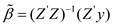
The matrix notation for the OLS estimate of     <div class=answer> Given: 1)   is the OLS estimate of regression of y on X 2) A is   nonsingular matrix 3)      and that it is    nonsingular linear combination of   4) The Z be   matrix with rows   5) The   is the OLS estimate from the regression of y on Z (i) The matrix notation for the OLS estimate of   is given by:   Given that   Since,   That means   Hence,   is given by:

    <div class=answer> Given: 1)   is the OLS estimate of regression of y on X 2) A is   nonsingular matrix 3)      and that it is    nonsingular linear combination of   4) The Z be   matrix with rows   5) The   is the OLS estimate from the regression of y on Z (i) The matrix notation for the OLS estimate of   is given by:   Given that   Since,   That means   Hence,

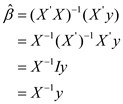
Given that     <div class=answer> Given: 1)   is the OLS estimate of regression of y on X 2) A is   nonsingular matrix 3)      and that it is    nonsingular linear combination of   4) The Z be   matrix with rows   5) The   is the OLS estimate from the regression of y on Z (i) The matrix notation for the OLS estimate of   is given by:   Given that   Since,   That means   Hence,

Since,

    <div class=answer> Given: 1)   is the OLS estimate of regression of y on X 2) A is   nonsingular matrix 3)      and that it is    nonsingular linear combination of   4) The Z be   matrix with rows   5) The   is the OLS estimate from the regression of y on Z (i) The matrix notation for the OLS estimate of   is given by:   Given that   Since,   That means   Hence,

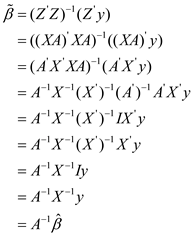
That means

    <div class=answer> Given: 1)   is the OLS estimate of regression of y on X 2) A is   nonsingular matrix 3)      and that it is    nonsingular linear combination of   4) The Z be   matrix with rows   5) The   is the OLS estimate from the regression of y on Z (i) The matrix notation for the OLS estimate of   is given by:   Given that   Since,   That means   Hence,

Hence,     <div class=answer> Given: 1)   is the OLS estimate of regression of y on X 2) A is   nonsingular matrix 3)      and that it is    nonsingular linear combination of   4) The Z be   matrix with rows   5) The   is the OLS estimate from the regression of y on Z (i) The matrix notation for the OLS estimate of   is given by:   Given that   Since,   That means   Hence,


Step 2 of 7


Step 3 of 7


Step 4 of 7


Step 5 of 7


Step 6 of 7


Step 7 of 7

close menu
Introductory Econometrics: A Modern Approach 6th Edition by Jeffrey M Wooldridge
cross icon