


expand icon
book Introductory Econometrics: A Modern Approach 6th Edition by Jeffrey M Wooldridge cover

Introductory Econometrics: A Modern Approach 6th Edition by Jeffrey M Wooldridge

Edition 6ISBN: 130527010X
book Introductory Econometrics: A Modern Approach 6th Edition by Jeffrey M Wooldridge cover

Introductory Econometrics: A Modern Approach 6th Edition by Jeffrey M Wooldridge

Edition 6ISBN: 130527010X
Exercise 2

Suppose the following equation describes the relationship between the average number of classes missed during a semester (missed) and the distance from school (distance, measured in miles): missed = 3 + 0.2 distance.

(i) Sketch this line, being sure to label the axes. How do you interpret the intercept in this equation?

(ii) What is the average number of classes missed for someone who lives five miles away?

(iii) What is the difference in the average number of classes missed for someone who lives 10 miles away and someone who lives 20 miles away?

Step-by-step solution
Verified
like image
like image

Step 1 of 3

The following is a simple linear equation that shows the relation between class missed and the distance from school:

<div class=answer> The following is a simple linear equation that shows the relation between class missed and the distance from school:   (i) <i>Missed (y) </i> is dependent on <i>distance</i> <i>(x)</i> from school. The following graph shows the relation between both. When distance is zero, the missed classes are 3.      <i> Missed 3+0.2distance</i> <i>3</i> <i>Distance</i>

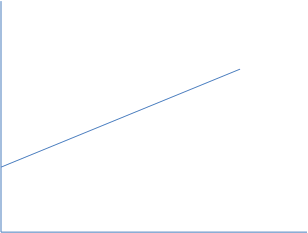
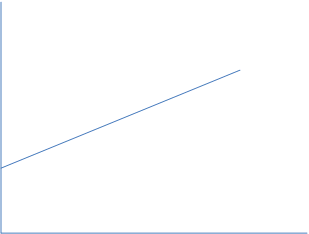
(i) Missed (y) is dependent on distance (x) from school. The following graph shows the relation between both. When distance is zero, the missed classes are 3.
<div class=answer> The following is a simple linear equation that shows the relation between class missed and the distance from school:   (i) <i>Missed (y) </i> is dependent on <i>distance</i> <i>(x)</i> from school. The following graph shows the relation between both. When distance is zero, the missed classes are 3.      <i> Missed 3+0.2distance</i> <i>3</i> <i>Distance</i>

<div class=answer> The following is a simple linear equation that shows the relation between class missed and the distance from school:   (i) <i>Missed (y) </i> is dependent on <i>distance</i> <i>(x)</i> from school. The following graph shows the relation between both. When distance is zero, the missed classes are 3.      <i> Missed 3+0.2distance</i> <i>3</i> <i>Distance</i>

Missed 3+0.2distance

3

Distance


Step 2 of 3

(ii) The average number of classes missed for a student living five miles away would be:

<div class=answer> (ii) The average number of classes missed for a student living five miles away would be:     If a student lives 5 miles away, then he/she would miss 4 classes. <div class=answer> (ii) The average number of classes missed for a student living five miles away would be:     If a student lives 5 miles away, then he/she would miss 4 classes.
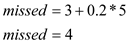
If a student lives 5 miles away, then he/she would miss 4 classes.


Step 3 of 3

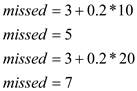
(iii) The average number of classes missed for a student living ten and twenty miles away would be:

<div class=answer> (iii) The average number of classes missed for a student living ten and twenty miles away would be:     The difference between the average class missed for someone living 20 miles and 10 miles away is <i> 2. (7-5) </i> <div class=answer> (iii) The average number of classes missed for a student living ten and twenty miles away would be:     The difference between the average class missed for someone living 20 miles and 10 miles away is <i> 2. (7-5) </i>

The difference between the average class missed for someone living 20 miles and 10 miles away is 2. (7-5)

close menu
Introductory Econometrics: A Modern Approach 6th Edition by Jeffrey M Wooldridge
cross icon



