





 Chat with AI


Urinalysis and Body Fluids 6th Edition by Majorie DiLorenzo, Susan Strasinger
Edition 6ISBN: 0803641044Urinalysis and Body Fluids 6th Edition by Majorie DiLorenzo, Susan Strasinger
Edition 6ISBN: 0803641044A 40-year-old man develops severe back and abdominal pain after dinner. The pain subsides during the night but recurs in the morning, and he visits his family physician. Results of a complete blood count and an amylase are normal. Results of a routine urinalysis are as follows:
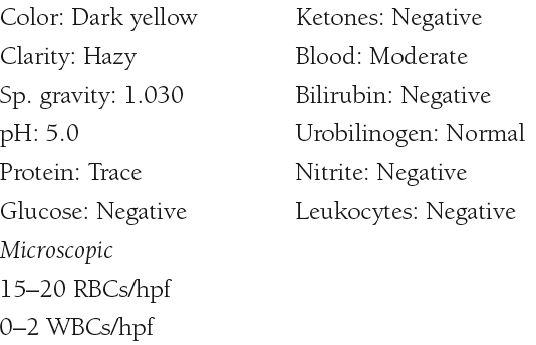
Few squamous epithelial cells
a. What condition could these urinalysis results and the patient’s symptoms represent?
b. What would account for the crenated RBCs?
c. Is there a correlation between the urine color and specific gravity and the patient’s symptoms?
d. Based on the primary substance that causes this condition, what type of crystals might have been present?
e. What changes will the patient be advised to make in his lifestyle to prevent future occurrences?
 Verified
Step 1 of 5
a.
The patient’s symptoms and urinalysis results represent renal lithiasis.
• Kidney stones are otherwise called as renal lithiasis. The stones are hard and small made up of deposition of acid salts, and minerals
• The primary symptom is pain in lower back, and abdomen
Step 2 of 5
Step 3 of 5
Step 4 of 5
Step 5 of 5


Why don’t you like this exercise?
Other






