





 Chat with AI


Accounting: What the Numbers Mean 9th Edition by Wayne W McManus, Daniel F Viele, David H Marshall
Edition 9ISBN: 0073527068Accounting: What the Numbers Mean 9th Edition by Wayne W McManus, Daniel F Viele, David H Marshall
Edition 9ISBN: 0073527068Analysis of accounts receivable and allowance for bad debts—determine beginning balances A portion of the current assets section of the December 31, 2011, balance sheet for Carr Co. is presented here:
Accounts receivable | $50000 |
|
Less: Allowance for bad debts | (7,000) | $43,000 |
The company’s accounting records revealed the following information for the year ended December 31, 2011:
Sales (all on account) | $400,000 |
Cash collections from customers | 410,000 |
Accounts written off | 15000 |
Bad debts expense (accrued at 12/31/11) | 12000 |
Required:
Using the information provided for 2011, calculate the net realizable value of accounts receivable at December 31, 2010, and prepare the appropriate balance sheet presentation for Carr Co., as of that point in time. (Hint: Use T-accounts to analyze the Accounts Receivable and Allowance for Bad Debts accounts. Remember that you are solving for the beginning balance of each account.)
 Verified
Step 1 of 3
Analysis accounts receivable – Allowance for bad debts – Determine beginning balances
The computation of net realizable value for accounts receivable is as follows :

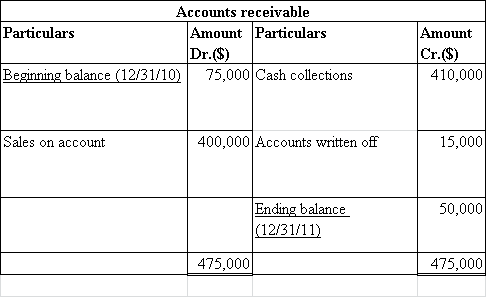
Step 2 of 3
Step 3 of 3


Why don’t you like this exercise?
Other






