





 Chat with AI

Deck 11: Reactions of Alcohols
Full screen (f)

Question
Provide the structure of the major organic product in the reaction below. 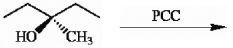

Question
Question
Provide the structure of the major organic product in the reaction below.
(CH3)3CCH2CH2OH
→
(CH3)3CCH2CH2OH
→
Question
Question
Question
Question
Question
Question
Question
Classify the reaction below as an oxidation, a reduction, or neither. 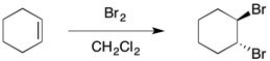
A) oxidation
B) reduction
C) neither
A) oxidation
B) reduction
C) neither
Question
Question
Provide the major organic product of the following reaction. 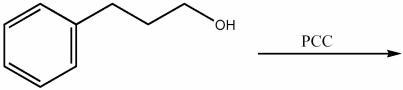
Question
Provide the structure of the major organic product in the reaction below. 
Question
Question
Provide the structure of the major organic product in the reaction below. 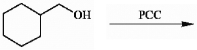
Question
Provide the structure of the major organic product in the reaction below. 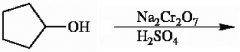
Question
What is the product of the reaction shown below? 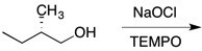
A)
B)
C)
D) No reaction takes place
A)
B)
C)
D) No reaction takes place
Question
Provide the major organic product of the following reaction. 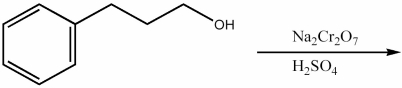
Question
What series of synthetic steps could be used to carry out the transformation shown below? 
Question
Question
Provide the major organic product of the following. 
Question
Provide the major organic product of the following reaction. 
Question
Complete the following reaction by filling in the necessary reagents. 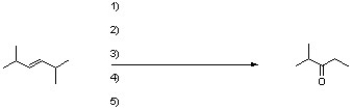
Question
Question
Provide the structure of the major organic product in the reaction below. 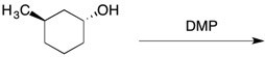
Question
What series of synthetic steps could be used to carry out the transformation shown below? 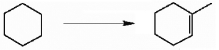
Question
Question
What series of synthetic steps could be used to prepare PhCH(OH)CH2CH3 from 
Question
What is the product of the following reaction? 
Question
Question
Provide the reagents necessary to carry out the multistep synthesis shown below. 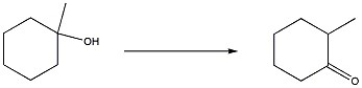
Question
Question
Provide the major organic product of the reaction shown. 
Question
Question
Question
Provide the major organic product of the reaction shown. 
Question
Question
Question
What series of synthetic steps could be used to carry out the transformation shown below? 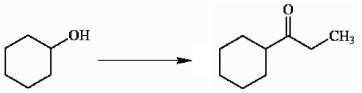
Question
Which reagent could be used to perform the following reaction? 
A) NaOCl/TEMPO
B) Swern Oxidation
C) DMP (periodane) reagent
D) All reagents will work
A) NaOCl/TEMPO
B) Swern Oxidation
C) DMP (periodane) reagent
D) All reagents will work
Question
Question
Provide the major organic product of the reaction shown. 
Question
Provide the major organic product of the following. 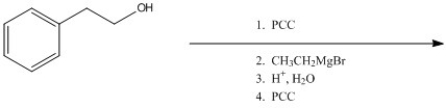
Question
Provide the structure of the major organic product in the reaction below.
PhCH2CH2OH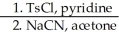
→
PhCH2CH2OH
→
Question
Question
Provide the major organic product of the reaction shown. 
Question
Provide the necessary reagents for the following conversion. 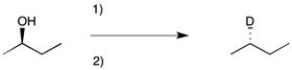
Question
Provide the major organic product of the following reaction. 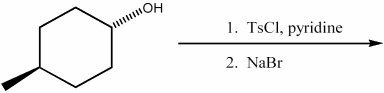
Question
Provide the major organic product of the following. 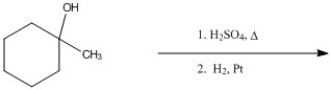
Question
What is the final product of the reaction sequence shown below, making sure to include stereochemistry as appropriate. 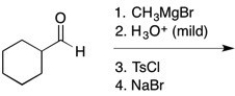
Question
Question
Question
Question
Question
Question
Provide the major organic product of the following. 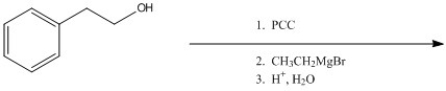
Question
Question
Provide the structure of the major organic product in the reaction below. 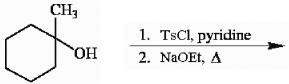
Question
Question
Question
Provide the structure of the major organic product in the reaction below. 
Question
Question
What series of synthetic steps could be used to carry out the transformation shown below? 
1) HBr, ROOR
2) NaCN
or
1) HBr, ROOR
2) NaCN
or
Question
Question
What is the major organic product of the following reaction? 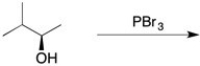
A)
B)
C)
D) Both A and B
A)
B)
C)
D) Both A and B
Question
Question
Which reagent would be best suited to induce the following transformation? 
A) I2
B) HI
C) NaI
D) P / I2
A) I2
B) HI
C) NaI
D) P / I2
Question
Question
Draw a mechanism for the following reaction. 
Question
Provide the structure of the major organic product in the reaction below.
(CH3)2CHCH2OH
(CH3)2CHCH2OH
Question
Question
Provide the major organic product of the reaction shown. 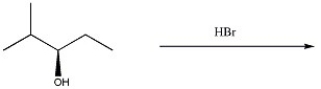
Question
Provide the major organic product of the reaction shown. 
Question
Question
Provide the structure of the major organic product in the reaction below. 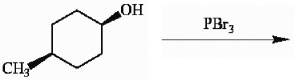
Question
Provide the major organic product of the following. 
Question
Question
Provide the structure of the major organic product in the reaction below. 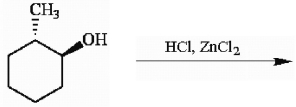
Question
Provide the major organic product of the reaction shown. 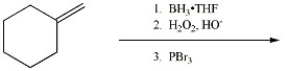
Question

Unlock Deck
Sign up to unlock the cards in this deck!
Unlock Deck
Unlock Deck
1/125

Play

Full screen (f)
Deck 11: Reactions of Alcohols
1
Provide the structure of the major organic product in the reaction below.
No reaction. Tertiary alcohols are not oxidized by PCC.
2
Which of the following compounds has carbon in the highest oxidation state?
A) CO2
B) CH3C(O)CH3
C) CH3CH2OH
D) CH3C(OCH2CH3)3
A) CO2
B) CH3C(O)CH3
C) CH3CH2OH
D) CH3C(OCH2CH3)3
CO2
3
Provide the structure of the major organic product in the reaction below.
(CH3)3CCH2CH2OH
→
(CH3)3CCH2CH2OH
→
(CH3)3CCH2COH
4
What is the major organic product when n-butanol reacts with hydrochloric acid?
Unlock Deck
Unlock for access to all 125 flashcards in this deck.
Unlock Deck
k this deck
5
Which alcohol reacts most rapidly with the Lucas reagent?
A) benzyl alcohol
B) methanol
C) 2-propanol
D) isobutanol
A) benzyl alcohol
B) methanol
C) 2-propanol
D) isobutanol
Unlock Deck
Unlock for access to all 125 flashcards in this deck.
Unlock Deck
k this deck
6
Classify the reaction below as an oxidation, a reduction, or neither.
(CH3)2CHCH2OH → (CH3)2CHCHO
A) oxidation
B) reduction
C) neither
(CH3)2CHCH2OH → (CH3)2CHCHO
A) oxidation
B) reduction
C) neither
Unlock Deck
Unlock for access to all 125 flashcards in this deck.
Unlock Deck
k this deck
7
Which of the following reagents is not typically viewed as an oxidizing agent?
A) Cl2
B) KMnO4
C) O2
D) KCl
E) H2O2
A) Cl2
B) KMnO4
C) O2
D) KCl
E) H2O2
Unlock Deck
Unlock for access to all 125 flashcards in this deck.
Unlock Deck
k this deck
8
The oxidation of a secondary alcohol with NaOCl in acetic acid proceeds through the reaction of the alcohol with the reactive intermediate ClOH2+. Write a mechanism that shows how isopropyl alcohol is oxidized to acetone (CH3COCH3) using ClOH2+ in acetic acid (CH3COOH).
Unlock Deck
Unlock for access to all 125 flashcards in this deck.
Unlock Deck
k this deck
9
Classify the reaction below as an oxidation, a reduction, or neither.
Cis-pent-2-ene → pentane
A) oxidation
B) reduction
C) neither
Cis-pent-2-ene → pentane
A) oxidation
B) reduction
C) neither
Unlock Deck
Unlock for access to all 125 flashcards in this deck.
Unlock Deck
k this deck
10
Classify the reaction below as an oxidation, a reduction, or neither.
A) oxidation
B) reduction
C) neither
A) oxidation
B) reduction
C) neither
Unlock Deck
Unlock for access to all 125 flashcards in this deck.
Unlock Deck
k this deck
11
Which of the following reagents is the best choice for oxidizing a primary alcohol to an aldehyde?
A) H2CrO4
B) pyridinium chlorochromate
C) Na2Cr2O7, H2SO4
D) KMnO4
E) LiAlH4
A) H2CrO4
B) pyridinium chlorochromate
C) Na2Cr2O7, H2SO4
D) KMnO4
E) LiAlH4
Unlock Deck
Unlock for access to all 125 flashcards in this deck.
Unlock Deck
k this deck
12
Provide the major organic product of the following reaction.
Unlock Deck
Unlock for access to all 125 flashcards in this deck.
Unlock Deck
k this deck
13
Provide the structure of the major organic product in the reaction below.
Unlock Deck
Unlock for access to all 125 flashcards in this deck.
Unlock Deck
k this deck
14
In the chromic acid oxidation of alcohols, the chromium is ________.
A) oxidized from Cr+3 to Cr+6
B) reduced from Cr+6 to Cr+3
C) oxidized from Cr+6 to Cr+3
D) reduced from Cr+3 to Cr+6
E) none of the above
A) oxidized from Cr+3 to Cr+6
B) reduced from Cr+6 to Cr+3
C) oxidized from Cr+6 to Cr+3
D) reduced from Cr+3 to Cr+6
E) none of the above
Unlock Deck
Unlock for access to all 125 flashcards in this deck.
Unlock Deck
k this deck
15
Provide the structure of the major organic product in the reaction below.
Unlock Deck
Unlock for access to all 125 flashcards in this deck.
Unlock Deck
k this deck
16
Provide the structure of the major organic product in the reaction below.
Unlock Deck
Unlock for access to all 125 flashcards in this deck.
Unlock Deck
k this deck
17
What is the product of the reaction shown below?
A)
B)
C)
D) No reaction takes place
A)
B)
C)
D) No reaction takes place
Unlock Deck
Unlock for access to all 125 flashcards in this deck.
Unlock Deck
k this deck
18
Provide the major organic product of the following reaction.
Unlock Deck
Unlock for access to all 125 flashcards in this deck.
Unlock Deck
k this deck
19
What series of synthetic steps could be used to carry out the transformation shown below?
Unlock Deck
Unlock for access to all 125 flashcards in this deck.
Unlock Deck
k this deck
20
Which of the following alcohols will give a positive chromic acid test?
A) tert-butanol
B) cyclohexanol
C) pentan-3-ol
D) both A and B
E) both B and C
A) tert-butanol
B) cyclohexanol
C) pentan-3-ol
D) both A and B
E) both B and C
Unlock Deck
Unlock for access to all 125 flashcards in this deck.
Unlock Deck
k this deck
21
Provide the major organic product of the following.
Unlock Deck
Unlock for access to all 125 flashcards in this deck.
Unlock Deck
k this deck
22
Provide the major organic product of the following reaction.
Unlock Deck
Unlock for access to all 125 flashcards in this deck.
Unlock Deck
k this deck
23
Complete the following reaction by filling in the necessary reagents.
Unlock Deck
Unlock for access to all 125 flashcards in this deck.
Unlock Deck
k this deck
24
What series of synthetic steps could be used to prepare hexan-3-ol from propan-1-ol?
1) PCC
2) CH3CH2CH2MgBr
3) H3O+
or
1) PCC
2) CH3CH2CH2MgBr
3) H3O+
or
Unlock Deck
Unlock for access to all 125 flashcards in this deck.
Unlock Deck
k this deck
25
Provide the structure of the major organic product in the reaction below.
Unlock Deck
Unlock for access to all 125 flashcards in this deck.
Unlock Deck
k this deck
26
What series of synthetic steps could be used to carry out the transformation shown below?
Unlock Deck
Unlock for access to all 125 flashcards in this deck.
Unlock Deck
k this deck
27
Which of the following oxidants will convert a primary alcohol to an aldehyde?
1) sodium dichromate /sulfuric acid 3) pyridinium chlorochromate
2) copper oxide 4) dimethylsulfoxide, oxalyl chloride
A) 3 & 4
B) 2, 3, & 4
C) 3
D) 1, 2, 3, & 4
E) none of the above
1) sodium dichromate /sulfuric acid 3) pyridinium chlorochromate
2) copper oxide 4) dimethylsulfoxide, oxalyl chloride
A) 3 & 4
B) 2, 3, & 4
C) 3
D) 1, 2, 3, & 4
E) none of the above
Unlock Deck
Unlock for access to all 125 flashcards in this deck.
Unlock Deck
k this deck
28
What series of synthetic steps could be used to prepare PhCH(OH)CH2CH3 from
Unlock Deck
Unlock for access to all 125 flashcards in this deck.
Unlock Deck
k this deck
29
What is the product of the following reaction?
Unlock Deck
Unlock for access to all 125 flashcards in this deck.
Unlock Deck
k this deck
30
Provide the name of the major organic product that results when trans-4-methylcyclohexanol is treated with Lucas reagent.
Unlock Deck
Unlock for access to all 125 flashcards in this deck.
Unlock Deck
k this deck
31
Provide the reagents necessary to carry out the multistep synthesis shown below.
Unlock Deck
Unlock for access to all 125 flashcards in this deck.
Unlock Deck
k this deck
32
What series of synthetic steps could be used to prepare 1-methylcyclohexanol from cyclohexene?
Unlock Deck
Unlock for access to all 125 flashcards in this deck.
Unlock Deck
k this deck
33
Provide the major organic product of the reaction shown.
Unlock Deck
Unlock for access to all 125 flashcards in this deck.
Unlock Deck
k this deck
34
Provide the structure of the major organic product that results when 1-octanol is treated with pyridinium chlorochromate.
Unlock Deck
Unlock for access to all 125 flashcards in this deck.
Unlock Deck
k this deck
35
Provide the structure of the major organic product that results when 3-hexanol is treated with sodium dichromate.
Unlock Deck
Unlock for access to all 125 flashcards in this deck.
Unlock Deck
k this deck
36
Provide the major organic product of the reaction shown.
Unlock Deck
Unlock for access to all 125 flashcards in this deck.
Unlock Deck
k this deck
37
Name the product which results when 1-methylcyclohexanol is treated with DMP reagent.
Unlock Deck
Unlock for access to all 125 flashcards in this deck.
Unlock Deck
k this deck
38
What series of synthetic steps could be used to prepare (CH3)2CHCHO from (CH3)3CH?
Unlock Deck
Unlock for access to all 125 flashcards in this deck.
Unlock Deck
k this deck
39
What series of synthetic steps could be used to carry out the transformation shown below?
Unlock Deck
Unlock for access to all 125 flashcards in this deck.
Unlock Deck
k this deck
40
Which reagent could be used to perform the following reaction?
A) NaOCl/TEMPO
B) Swern Oxidation
C) DMP (periodane) reagent
D) All reagents will work
A) NaOCl/TEMPO
B) Swern Oxidation
C) DMP (periodane) reagent
D) All reagents will work
Unlock Deck
Unlock for access to all 125 flashcards in this deck.
Unlock Deck
k this deck
41
When (R)-butan-2-ol is treated with TsCl in pyridine, the product formed is ________.
A) a single enantiomer
B) a racemic mixture
C) a mixture of diastereomers
D) an achial compound
E) none of the above
A) a single enantiomer
B) a racemic mixture
C) a mixture of diastereomers
D) an achial compound
E) none of the above
Unlock Deck
Unlock for access to all 125 flashcards in this deck.
Unlock Deck
k this deck
42
Provide the major organic product of the reaction shown.
Unlock Deck
Unlock for access to all 125 flashcards in this deck.
Unlock Deck
k this deck
43
Provide the major organic product of the following.
Unlock Deck
Unlock for access to all 125 flashcards in this deck.
Unlock Deck
k this deck
44
Provide the structure of the major organic product in the reaction below.
PhCH2CH2OH
→
PhCH2CH2OH
→
Unlock Deck
Unlock for access to all 125 flashcards in this deck.
Unlock Deck
k this deck
45
The enzyme, alcohol dehydrogenase, which is produced by the liver, converts ethanol to ________, a normal body metabolite.
Unlock Deck
Unlock for access to all 125 flashcards in this deck.
Unlock Deck
k this deck
46
Provide the major organic product of the reaction shown.
Unlock Deck
Unlock for access to all 125 flashcards in this deck.
Unlock Deck
k this deck
47
Provide the necessary reagents for the following conversion.
Unlock Deck
Unlock for access to all 125 flashcards in this deck.
Unlock Deck
k this deck
48
Provide the major organic product of the following reaction.
Unlock Deck
Unlock for access to all 125 flashcards in this deck.
Unlock Deck
k this deck
49
Provide the major organic product of the following.
Unlock Deck
Unlock for access to all 125 flashcards in this deck.
Unlock Deck
k this deck
50
What is the final product of the reaction sequence shown below, making sure to include stereochemistry as appropriate.
Unlock Deck
Unlock for access to all 125 flashcards in this deck.
Unlock Deck
k this deck
51
Provide the name of the major organic product that results when (R)-2-butyl tosylate is treated with sodium iodide.
Unlock Deck
Unlock for access to all 125 flashcards in this deck.
Unlock Deck
k this deck
52
What compound is produced when (R)-pentan-2-ol is treated with TsCl followed by NaI?
A) sodium (R)-pent-3-oxide
B) sodium (S)-pent-2-oxide
C) (R)-2-iodopentane
D) (S)-2-iodopentane
E) none of the above
A) sodium (R)-pent-3-oxide
B) sodium (S)-pent-2-oxide
C) (R)-2-iodopentane
D) (S)-2-iodopentane
E) none of the above
Unlock Deck
Unlock for access to all 125 flashcards in this deck.
Unlock Deck
k this deck
53
Which of the following reactions or series of reactions would reduce 3-methylbutan-2-ol into 2-methylbutane?
A) 1. TsCl/pyridine
2) conc. KMnO4
B) 1. NaOCH3
2). H2SO4/heat
C) 1. pyridinium chlorochromate
2) ZnCl2/HCl
D) 1. ZnCl2/HCl
2) t-butoxide/t-butanol
E) 1. TsCl/pyridine
2) LiAlH4
A) 1. TsCl/pyridine
2) conc. KMnO4
B) 1. NaOCH3
2). H2SO4/heat
C) 1. pyridinium chlorochromate
2) ZnCl2/HCl
D) 1. ZnCl2/HCl
2) t-butoxide/t-butanol
E) 1. TsCl/pyridine
2) LiAlH4
Unlock Deck
Unlock for access to all 125 flashcards in this deck.
Unlock Deck
k this deck
54
Provide the name of the major organic product that results when cyclopentanol is subjected to the following sequence of reactions: 1. TsCl, pyridine; 2. LiAlH4.
Unlock Deck
Unlock for access to all 125 flashcards in this deck.
Unlock Deck
k this deck
55
Poisonings by methanol and ethylene glycol are relatively common. How are these poisonings treated clinically?
Unlock Deck
Unlock for access to all 125 flashcards in this deck.
Unlock Deck
k this deck
56
Provide the major organic product of the following.
Unlock Deck
Unlock for access to all 125 flashcards in this deck.
Unlock Deck
k this deck
57
Why are alcohols unreactive toward nucleophilic substitution reactions?
Unlock Deck
Unlock for access to all 125 flashcards in this deck.
Unlock Deck
k this deck
58
Provide the structure of the major organic product in the reaction below.
Unlock Deck
Unlock for access to all 125 flashcards in this deck.
Unlock Deck
k this deck
59
How can the electrophilicity of hydroxyls be increased? Suggest several specific ways.
Unlock Deck
Unlock for access to all 125 flashcards in this deck.
Unlock Deck
k this deck
60
Draw the tosylate ion and explain why it is a particularly good leaving group.
Unlock Deck
Unlock for access to all 125 flashcards in this deck.
Unlock Deck
k this deck
61
Provide the structure of the major organic product in the reaction below.
Unlock Deck
Unlock for access to all 125 flashcards in this deck.
Unlock Deck
k this deck
62
It is necessary to add ZnCl2 to promote the reaction of HCl with some alcohols while these same alcohols react with HBr quite readily. Explain.
Unlock Deck
Unlock for access to all 125 flashcards in this deck.
Unlock Deck
k this deck
63
What series of synthetic steps could be used to carry out the transformation shown below?
1) HBr, ROOR
2) NaCN
or
1) HBr, ROOR
2) NaCN
or
Unlock Deck
Unlock for access to all 125 flashcards in this deck.
Unlock Deck
k this deck
64
Through what basic mechanism is 1-methylcyclohexanol converted to 1-bromo-1-methylcyclohexane upon treatment with HBr?
A) SN1
B) SN2
C) E1
D) E2
E) radical chain
A) SN1
B) SN2
C) E1
D) E2
E) radical chain
Unlock Deck
Unlock for access to all 125 flashcards in this deck.
Unlock Deck
k this deck
65
What is the major organic product of the following reaction?
A)
B)
C)
D) Both A and B
A)
B)
C)
D) Both A and B
Unlock Deck
Unlock for access to all 125 flashcards in this deck.
Unlock Deck
k this deck
66
Predict the major product of the reaction below and provide a stepwise mechanism which accounts for its formation.
(CH3)3CCH2OH + HBr →
(CH3)3CCH2OH + HBr →
Unlock Deck
Unlock for access to all 125 flashcards in this deck.
Unlock Deck
k this deck
67
Which reagent would be best suited to induce the following transformation?
A) I2
B) HI
C) NaI
D) P / I2
A) I2
B) HI
C) NaI
D) P / I2
Unlock Deck
Unlock for access to all 125 flashcards in this deck.
Unlock Deck
k this deck
68
What compound results when 1-butanol is treated with P/I2?
A) CH3CH2CH2CH2I
B) racemic CH3CH2CHICH3
C) CH3CH2CH2CH2OP(OH)2
D) CH3CH2CH2CH2PI2
E) Primary alcohols don't react with P/I2.
A) CH3CH2CH2CH2I
B) racemic CH3CH2CHICH3
C) CH3CH2CH2CH2OP(OH)2
D) CH3CH2CH2CH2PI2
E) Primary alcohols don't react with P/I2.
Unlock Deck
Unlock for access to all 125 flashcards in this deck.
Unlock Deck
k this deck
69
Draw a mechanism for the following reaction.
Unlock Deck
Unlock for access to all 125 flashcards in this deck.
Unlock Deck
k this deck
70
Provide the structure of the major organic product in the reaction below.
(CH3)2CHCH2OH
(CH3)2CHCH2OH
Unlock Deck
Unlock for access to all 125 flashcards in this deck.
Unlock Deck
k this deck
71
What series of synthetic steps could be used to prepare 1-bromopentane from 1-bromopropane?
Unlock Deck
Unlock for access to all 125 flashcards in this deck.
Unlock Deck
k this deck
72
Provide the major organic product of the reaction shown.
Unlock Deck
Unlock for access to all 125 flashcards in this deck.
Unlock Deck
k this deck
73
Provide the major organic product of the reaction shown.
Unlock Deck
Unlock for access to all 125 flashcards in this deck.
Unlock Deck
k this deck
74
Provide the structure of the major organic product that results when 4-methyl-1-pentanol is treated with PBr3.
Unlock Deck
Unlock for access to all 125 flashcards in this deck.
Unlock Deck
k this deck
75
Provide the structure of the major organic product in the reaction below.
Unlock Deck
Unlock for access to all 125 flashcards in this deck.
Unlock Deck
k this deck
76
Provide the major organic product of the following.
Unlock Deck
Unlock for access to all 125 flashcards in this deck.
Unlock Deck
k this deck
77
How could tell a sample of n-butanol from tert-butanol?
Unlock Deck
Unlock for access to all 125 flashcards in this deck.
Unlock Deck
k this deck
78
Provide the structure of the major organic product in the reaction below.
Unlock Deck
Unlock for access to all 125 flashcards in this deck.
Unlock Deck
k this deck
79
Provide the major organic product of the reaction shown.
Unlock Deck
Unlock for access to all 125 flashcards in this deck.
Unlock Deck
k this deck
80
Predict the major product of the reaction below and provide a stepwise mechanism which accounts for its formation.
CH3(CH2)6CH2OH + HBr →
CH3(CH2)6CH2OH + HBr →
Unlock Deck
Unlock for access to all 125 flashcards in this deck.
Unlock Deck
k this deck
Unlock Deck
Unlock for access to all 125 flashcards in this deck.







