





 Chat with AI

Deck 39: Animal Cardiovascular and Respiratory Systems
Full screen (f)

Question

Question
Question
Question
Question
Question
Question
Question
Question
Question
Question
Question
Question
Question
Question
Question
Question
Question
Question
Question
Question
Question
Question
Question
Question
Question
Question
Question
Question
Question
Question
Question
Question
Question
Question
Below is a diagram of O2 uptake at the fish gill. The values shown indicate percent fluid saturation of O2. Which choice below identifies the fluid and the direction of flow CORRECTLY? 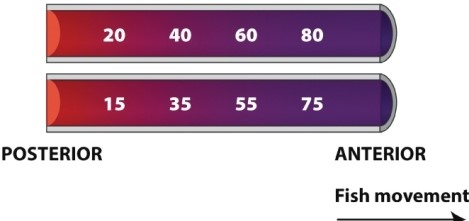
A)
B)
C)
D)
E)
A)
B)
C)
D)
E)
Question
Question
Question
Question
Question
Question
Question
Question
Question
Question
Question
Question
Question
During heavy exercise, the pO2 in muscle may drop to 20 mm Hg. Considering the oxygen-hemoglobin dissociation curve below, what is the approximate percent O2 saturation of hemoglobin in venous blood returning from skeletal muscles during heavy exercise? 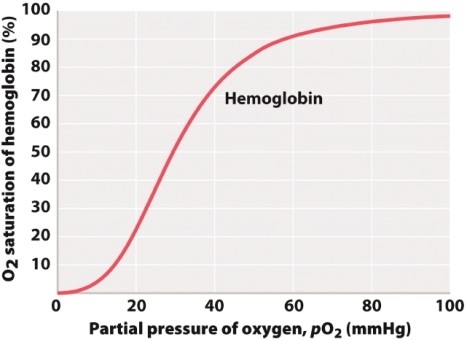
A)approximately 100%
B)approximately 75%
C)approximately 50%
D)approximately 20%
E)nearly 0%
A)approximately 100%
B)approximately 75%
C)approximately 50%
D)approximately 20%
E)nearly 0%
Question
The red curve in the graph below shows O2 saturation in normal conditions and the blue curve to the right shows O2 saturation in someone with carbon monoxide poisoning. You can determine from this curve that carbon monoxide: 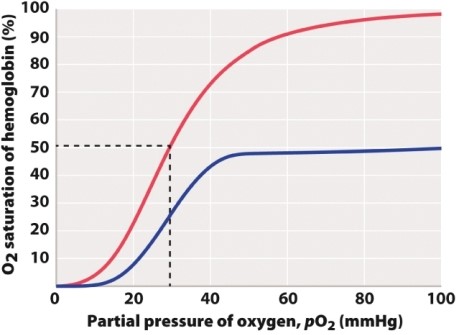
A)decreases the amount of O2 in the air.
B)decreases the amount of hemoglobin.
C)decreases the amount of O2 that can bind to hemoglobin.
A)decreases the amount of O2 in the air.
B)decreases the amount of hemoglobin.
C)decreases the amount of O2 that can bind to hemoglobin.
Question
Question
Question
Given the properties of myoglobin shown in the O2 saturation curve below, what advantage does myoglobin confer to contracting muscles? 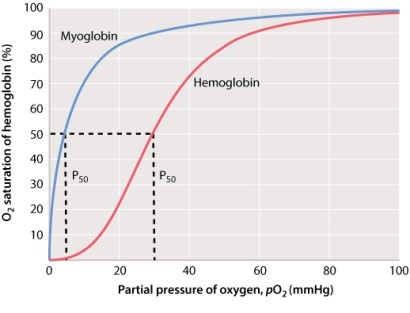
A)It pumps oxygen from hemoglobin in order to bind oxygen.
B)It contributes to the dark color of flight muscle in birds.
C)It increases the effectiveness of glycolytic muscles used in short bursts.
D)It releases bound oxygen at lower pO2 conditions than hemoglobin does.
E)It binds oxygen at pO2 values at which hemoglobin is releasing its bound O2, facilitating O2 delivery to muscle mitochondria.
A)It pumps oxygen from hemoglobin in order to bind oxygen.
B)It contributes to the dark color of flight muscle in birds.
C)It increases the effectiveness of glycolytic muscles used in short bursts.
D)It releases bound oxygen at lower pO2 conditions than hemoglobin does.
E)It binds oxygen at pO2 values at which hemoglobin is releasing its bound O2, facilitating O2 delivery to muscle mitochondria.
Question
Question
Question
Question
Question
Question
Question
Question
Question
Question
Question
Question
Question
Question
Question
At arrow A in the accompanying graph, the hemoglobin is only 20% saturated, and at arrow B it is 97% saturated. The difference is due to the fact that: 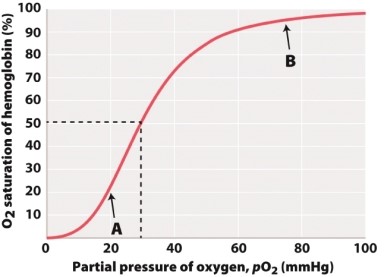
A)oxygen binds irreversibly to hemoglobin in the lungs.
B)pH differs in muscle capillaries vs. pulmonary capillaries.
C)oxygen binds reversibly to hemoglobin with varying affinity due to cooperative binding.
A)oxygen binds irreversibly to hemoglobin in the lungs.
B)pH differs in muscle capillaries vs. pulmonary capillaries.
C)oxygen binds reversibly to hemoglobin with varying affinity due to cooperative binding.
Question
Question
Referring to the accompanying graph, when the partial pressure of oxygen is 38 mmHg, the % saturation of hemoglobin is expected to be: 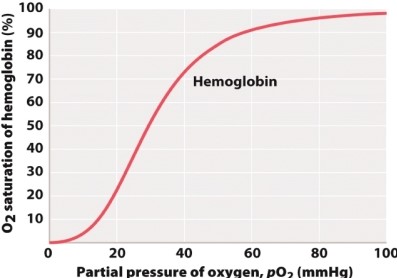
A)98%.
B)70%.
C)50%.
D)30%.
A)98%.
B)70%.
C)50%.
D)30%.
Question
Question
Question
Question
Question
Question
Question
Question
Question
Question
Question

Unlock Deck
Sign up to unlock the cards in this deck!
Unlock Deck
Unlock Deck
1/153

Play

Full screen (f)
Deck 39: Animal Cardiovascular and Respiratory Systems
1
Which of the following would increase the rate of oxygen diffusion from the air into the body cells of a flatworm?
A)increasing the surface area of the body
B)increasing the partial pressure of oxygen inside of the cells
C)increasing the thickness of the body wall
D)increasing the surface area of the body and the partial pressure of oxygen inside the cells
E)All of these choices are correct.
A)increasing the surface area of the body
B)increasing the partial pressure of oxygen inside of the cells
C)increasing the thickness of the body wall
D)increasing the surface area of the body and the partial pressure of oxygen inside the cells
E)All of these choices are correct.
A
2
What are desirable characteristics for a gas exchange surface, such as the endothelial cells lining the inside of lung?
A)a large surface area
B)a small surface area
C)a thickness of 100 micrometers
D)a thickness under 10 micrometers
A)a large surface area
B)a small surface area
C)a thickness of 100 micrometers
D)a thickness under 10 micrometers
A, D
3
Which of the following statements is FALSE?
A)Circulation requires a pump to generate pressure to drive flow, whereas ventilation does not.
B)Ventilation increases the concentration of oxygen in the air on the outside of the respiratory surface.
C)The same amount of oxygen enters the blood through diffusion as is transported by circulation.
D)Oxygen and carbon dioxide both move across the respiratory surface by diffusion.
E)Larger, more complex animals rely on bulk flow and diffusion to deliver oxygen to their cells, whereas some smaller, simpler animals rely on diffusion alone.
A)Circulation requires a pump to generate pressure to drive flow, whereas ventilation does not.
B)Ventilation increases the concentration of oxygen in the air on the outside of the respiratory surface.
C)The same amount of oxygen enters the blood through diffusion as is transported by circulation.
D)Oxygen and carbon dioxide both move across the respiratory surface by diffusion.
E)Larger, more complex animals rely on bulk flow and diffusion to deliver oxygen to their cells, whereas some smaller, simpler animals rely on diffusion alone.
A
4
Which of the following is the CORRECT order of steps of gas transport and exchange?
A)ventilation, diffusion across the respiratory surface, circulation, diffusion between blood and cells
B)diffusion across the respiratory surface, ventilation, diffusion between blood and cells, circulation
C)ventilation, circulation, diffusion across the respiratory surface, diffusion between blood and cells
D)circulation, diffusion across the respiratory surface, ventilation, diffusion between blood and cells
E)diffusion between blood and cells, circulation, ventilation, diffusion across the respiratory surface
A)ventilation, diffusion across the respiratory surface, circulation, diffusion between blood and cells
B)diffusion across the respiratory surface, ventilation, diffusion between blood and cells, circulation
C)ventilation, circulation, diffusion across the respiratory surface, diffusion between blood and cells
D)circulation, diffusion across the respiratory surface, ventilation, diffusion between blood and cells
E)diffusion between blood and cells, circulation, ventilation, diffusion across the respiratory surface
Unlock Deck
Unlock for access to all 153 flashcards in this deck.
Unlock Deck
k this deck
5
One of the functions of the respiratory system is to rid the body of CO2. Where does the CO2 come from?
A)CO2 is a breakdown product of the carbohydrates or lipids oxidized in cellular respiration.
B)CO2 is a breakdown product of the carbohydrates or lipids reduced in cellular respiration.
C)CO2 is produced when inhaled oxygen combines with carbon atoms from carbohydrates or lipids.
D)CO2 is produced when the oxygen atoms of water combine with carbon atoms.
A)CO2 is a breakdown product of the carbohydrates or lipids oxidized in cellular respiration.
B)CO2 is a breakdown product of the carbohydrates or lipids reduced in cellular respiration.
C)CO2 is produced when inhaled oxygen combines with carbon atoms from carbohydrates or lipids.
D)CO2 is produced when the oxygen atoms of water combine with carbon atoms.
Unlock Deck
Unlock for access to all 153 flashcards in this deck.
Unlock Deck
k this deck
6
A constant supply of oxygen is essential to animal survival. Why?
A)Without oxygen animals could not maintain a favorable pH in the bloodstream.
B)Without oxygen, cells could not generate sufficient ATP for survival.
C)Oxygen is necessary for cells to release waste CO2.
D)Oxygen is necessary for lactic acid fermentation.
A)Without oxygen animals could not maintain a favorable pH in the bloodstream.
B)Without oxygen, cells could not generate sufficient ATP for survival.
C)Oxygen is necessary for cells to release waste CO2.
D)Oxygen is necessary for lactic acid fermentation.
Unlock Deck
Unlock for access to all 153 flashcards in this deck.
Unlock Deck
k this deck
7
Which of the following affect the rate of diffusion of a substance?
A)temperature
B)concentration gradient
C)presence of other solutes
D)direct supply of metabolic energy (ATP)
A)temperature
B)concentration gradient
C)presence of other solutes
D)direct supply of metabolic energy (ATP)
Unlock Deck
Unlock for access to all 153 flashcards in this deck.
Unlock Deck
k this deck
8
Simple multicellular organisms that are small can meet their gas exchange needs by means of:
A)a flattened body shape that increases their surface area
B)a flattened or thin body shape that reduces the distance between cells inside their body and the external environment
C)by living in air that provides abundant oxygen, even though they are at risk of losing water and drying out
D)by living in water so that they do not dry out from water loss, even though water has less oxygen per volume than air
E)by relying on anaerobic respiration (glycolysis)for long time periods, so that they don't need to use oxygen for aerobic respiration
A)a flattened body shape that increases their surface area
B)a flattened or thin body shape that reduces the distance between cells inside their body and the external environment
C)by living in air that provides abundant oxygen, even though they are at risk of losing water and drying out
D)by living in water so that they do not dry out from water loss, even though water has less oxygen per volume than air
E)by relying on anaerobic respiration (glycolysis)for long time periods, so that they don't need to use oxygen for aerobic respiration
Unlock Deck
Unlock for access to all 153 flashcards in this deck.
Unlock Deck
k this deck
9
Organisms that use bulk flow to move oxygen are able to:
A)move more quickly through their environment than organisms that only use diffusion.
B)achieve larger size than organisms that only use diffusion.
C)remove carbon dioxide waste from their tissues, whereas organisms that use diffusion cannot.
D)live in aquatic environments, whereas organisms that use diffusion cannot.
A)move more quickly through their environment than organisms that only use diffusion.
B)achieve larger size than organisms that only use diffusion.
C)remove carbon dioxide waste from their tissues, whereas organisms that use diffusion cannot.
D)live in aquatic environments, whereas organisms that use diffusion cannot.
Unlock Deck
Unlock for access to all 153 flashcards in this deck.
Unlock Deck
k this deck
10
Which of the following is an example of bulk flow during gas exchange in vertebrates?
A)movement of water past a respiratory surface
B)movement of hemolymph throughout the body
C)movement of oxygen from the lung into the bloodstream
D)movement of carbon dioxide from body cells into the bloodstream
E)All of these choices are correct.
A)movement of water past a respiratory surface
B)movement of hemolymph throughout the body
C)movement of oxygen from the lung into the bloodstream
D)movement of carbon dioxide from body cells into the bloodstream
E)All of these choices are correct.
Unlock Deck
Unlock for access to all 153 flashcards in this deck.
Unlock Deck
k this deck
11
Diffusion is an effective way to exchange gases over short distances, but not over large distances.
Unlock Deck
Unlock for access to all 153 flashcards in this deck.
Unlock Deck
k this deck
12
If the partial pressure of oxygen outside of a cell is 100 mmHg and the partial pressure of oxygen inside of a cell is 25 mmHg, which of the following statements is CORRECT?
A)There will be a net movement of oxygen from outside the cell to inside the cell.
B)There will be a net movement of oxygen from inside the cell to outside the cell.
C)There will be no net movement of oxygen in either direction.
D)There will be a net movement of carbon dioxide into the cell.
E)There will be a net movement of carbon dioxide out of the cell.
A)There will be a net movement of oxygen from outside the cell to inside the cell.
B)There will be a net movement of oxygen from inside the cell to outside the cell.
C)There will be no net movement of oxygen in either direction.
D)There will be a net movement of carbon dioxide into the cell.
E)There will be a net movement of carbon dioxide out of the cell.
Unlock Deck
Unlock for access to all 153 flashcards in this deck.
Unlock Deck
k this deck
13
The partial pressure of a gas is:
A)the fractional concentration of the gas multiplied by the overall, atmospheric pressure.
B)a measure of how quickly a gas moves across a respiratory surface.
C)the weight of a given volume of the gas.
D)equivalent to the total atmospheric pressure.
E)the difference in concentration of that gas inside and outside of a cell.
A)the fractional concentration of the gas multiplied by the overall, atmospheric pressure.
B)a measure of how quickly a gas moves across a respiratory surface.
C)the weight of a given volume of the gas.
D)equivalent to the total atmospheric pressure.
E)the difference in concentration of that gas inside and outside of a cell.
Unlock Deck
Unlock for access to all 153 flashcards in this deck.
Unlock Deck
k this deck
14
The respiratory and cardiovascular systems of vertebrate animals work in tandem to transport oxygen to metabolizing tissues and to eliminate carbon dioxide as a waste gas. Which of the following statements accurately describes how these systems interact for gas exchange?
A)The rate of oxygen transport by diffusion across the lungs must generally match the rate of transport by the circulatory system.
B)The rate of gas exchange by diffusion need not match rates of ventilation or circulatory transport.
C)Bulk flow of gases and solutes works well over long distances, whereas diffusion is effective only over very short distances.
D)Bulk flow of gases and solutes works well over short distances, whereas diffusion is effective over longer distances.
A)The rate of oxygen transport by diffusion across the lungs must generally match the rate of transport by the circulatory system.
B)The rate of gas exchange by diffusion need not match rates of ventilation or circulatory transport.
C)Bulk flow of gases and solutes works well over long distances, whereas diffusion is effective only over very short distances.
D)Bulk flow of gases and solutes works well over short distances, whereas diffusion is effective over longer distances.
Unlock Deck
Unlock for access to all 153 flashcards in this deck.
Unlock Deck
k this deck
15
Imagine a planet that has a similar atmospheric pressure to Earth (760 mmHg), but different concentrations of gases in its atmosphere. On this hypothetical planet, oxygen makes up 10% of the atmosphere, carbon dioxide makes up 15%, and nitrogen makes up the remaining 75%. Based on this information, what is the partial pressure of oxygen on this new planet?
A)76 mmHg
B)114 mmHg
C)160 mmHg
D)571 mmHg
E)646 mmHg
A)76 mmHg
B)114 mmHg
C)160 mmHg
D)571 mmHg
E)646 mmHg
Unlock Deck
Unlock for access to all 153 flashcards in this deck.
Unlock Deck
k this deck
16
One of the functions of the respiratory system is to rid the body of CO2. What is the specific biochemical pathway that is responsible for CO2 production?
A)electron transport chain
B)the citric acid cycle
C)oxidation of pyruvate to acetyl co-A
D)glycolysis
A)electron transport chain
B)the citric acid cycle
C)oxidation of pyruvate to acetyl co-A
D)glycolysis
Unlock Deck
Unlock for access to all 153 flashcards in this deck.
Unlock Deck
k this deck
17
_____ is the process by which molecules of a substance move from regions of high concentration to regions of low concentration (until an equilibrium is reached).
Unlock Deck
Unlock for access to all 153 flashcards in this deck.
Unlock Deck
k this deck
18
We breathe more quickly and deeply when we exercise. Why does this make sense?
A)Because when we exercise, we consume more CO2 and must increase ventilation to supply the CO2.
B)Because when we exercise, we use more ATP, and additional O2 is necessary to generate sufficient ATP.
C)Because when we exercise, we hydrolyze more ATP to ADP and Pi, and O2 is necessary for the hydrolysis, so we increase our intake of oxygen.
D)Because when we exercise, we produce more CO2 and increased ventilation is necessary to rid ourselves of CO2.
A)Because when we exercise, we consume more CO2 and must increase ventilation to supply the CO2.
B)Because when we exercise, we use more ATP, and additional O2 is necessary to generate sufficient ATP.
C)Because when we exercise, we hydrolyze more ATP to ADP and Pi, and O2 is necessary for the hydrolysis, so we increase our intake of oxygen.
D)Because when we exercise, we produce more CO2 and increased ventilation is necessary to rid ourselves of CO2.
Unlock Deck
Unlock for access to all 153 flashcards in this deck.
Unlock Deck
k this deck
19
Which of the following would INCREASE the rate of flow in blood vessels?
A)decreasing the length and increasing the diameter of the blood vessels
B)decreasing the length and diameter of the blood vessels
C)increasing the length and decreasing the diameter of the blood vessels
D)None of the answer options is correct.
A)decreasing the length and increasing the diameter of the blood vessels
B)decreasing the length and diameter of the blood vessels
C)increasing the length and decreasing the diameter of the blood vessels
D)None of the answer options is correct.
Unlock Deck
Unlock for access to all 153 flashcards in this deck.
Unlock Deck
k this deck
20
Lamellae are structures that are present in the:
A)lungs of fish.
B)lungs of mammals.
C)tracheoles of insects.
D)gills of fish.
A)lungs of fish.
B)lungs of mammals.
C)tracheoles of insects.
D)gills of fish.
Unlock Deck
Unlock for access to all 153 flashcards in this deck.
Unlock Deck
k this deck
21
Chemoreceptors in the circulatory system detect changes in circulating pCO2. If CO2 concentrations get too high, the rate of ventilation increases. Why does this make sense?
A)Actually it doesn't make sense. There is no relationship between CO2 and ventilation rate.
B)It makes sense because CO2 is formed from O2, and therefore CO2 is a sign that oxygen is being consumed.
C)It makes sense because tissues that are more actively working produce more CO2.
D)It makes sense because hemoglobin carries CO2 and therefore blocks oxygen binding to the heme site, creating an oxygen deficiency.
A)Actually it doesn't make sense. There is no relationship between CO2 and ventilation rate.
B)It makes sense because CO2 is formed from O2, and therefore CO2 is a sign that oxygen is being consumed.
C)It makes sense because tissues that are more actively working produce more CO2.
D)It makes sense because hemoglobin carries CO2 and therefore blocks oxygen binding to the heme site, creating an oxygen deficiency.
Unlock Deck
Unlock for access to all 153 flashcards in this deck.
Unlock Deck
k this deck
22
A man visits a doctor, and discovers that, due to tumors, he needs to have both of his carotid bodies removed. How will their removal affect his body?
A)His body will not be able to sense the oxygen concentration of brain-bound blood.
B)His body will not be able to sense the CO2 concentration of brain-bound blood.
C)His body will not be able to sense the oxygen concentration of body-bound blood.
D)His body will not be able to sense the CO2 concentration of body-bound blood.
A)His body will not be able to sense the oxygen concentration of brain-bound blood.
B)His body will not be able to sense the CO2 concentration of brain-bound blood.
C)His body will not be able to sense the oxygen concentration of body-bound blood.
D)His body will not be able to sense the CO2 concentration of body-bound blood.
Unlock Deck
Unlock for access to all 153 flashcards in this deck.
Unlock Deck
k this deck
23
As you read this sentence, you have breathed in and out. What you have just experienced is referred to as "gas exchange," where you have taken oxygen into your lungs and expelled carbon dioxide into the environment.
Unlock Deck
Unlock for access to all 153 flashcards in this deck.
Unlock Deck
k this deck
24
Terrestrial insects are large enough that diffusion through simple openings on their body surface is insufficient to supply oxygen to their tissues. Instead, insects deliver oxygen:
A)to their tissues through a series of lungs within their body.
B)directly to their tissues through branching structures called tracheoles.
C)to their tissues by opening spiracles that allow oxygen to enter their body cavity directly.
D)to their tissues by opening their mouths and creating negative pressure that draws air in to move through their tissues.
A)to their tissues through a series of lungs within their body.
B)directly to their tissues through branching structures called tracheoles.
C)to their tissues by opening spiracles that allow oxygen to enter their body cavity directly.
D)to their tissues by opening their mouths and creating negative pressure that draws air in to move through their tissues.
Unlock Deck
Unlock for access to all 153 flashcards in this deck.
Unlock Deck
k this deck
25
During certain stressful moments, some individuals will begin to hyperventilate-that is, their breathing will be very shallow and quick. A by-product of hyperventilation is much lowered levels of CO2 in the blood. Which of the following would you also expect to find?
A)decreased blood pH, less than 7.2.
B)increased blood pH, greater than 7.2
C)decreased stimulation of chemoreceptors in the brainstem
D)increased stimulation of chemoreceptors in the brainstem
A)decreased blood pH, less than 7.2.
B)increased blood pH, greater than 7.2
C)decreased stimulation of chemoreceptors in the brainstem
D)increased stimulation of chemoreceptors in the brainstem
Unlock Deck
Unlock for access to all 153 flashcards in this deck.
Unlock Deck
k this deck
26
To aid inhalation, both the diaphragm and intercostal muscles are used. By expanding the thoracic cavity, the action of these muscles creates a space with _____ atmospheric pressure.
A)lower pressure than
B)higher pressure than
C)pressure equal to
A)lower pressure than
B)higher pressure than
C)pressure equal to
Unlock Deck
Unlock for access to all 153 flashcards in this deck.
Unlock Deck
k this deck
27
Imagine that a young girl suffers a horseback-riding injury, and one of her ribs punctures her diaphragm. How will this injury affect the girl's breathing?
A)The injury will make it easier to increase negative air pressure in her chest cavity, making inhalation easier.
B)The injury will make it more difficult to increase negative air pressure in her chest cavity, making inhalation more difficult.
C)The injury will make it more difficult to decrease negative air pressure in her chest cavity, making inhalation more difficult.
D)The injury will not affect her at all, as intercostal muscles are responsible for breathing.
A)The injury will make it easier to increase negative air pressure in her chest cavity, making inhalation easier.
B)The injury will make it more difficult to increase negative air pressure in her chest cavity, making inhalation more difficult.
C)The injury will make it more difficult to decrease negative air pressure in her chest cavity, making inhalation more difficult.
D)The injury will not affect her at all, as intercostal muscles are responsible for breathing.
Unlock Deck
Unlock for access to all 153 flashcards in this deck.
Unlock Deck
k this deck
28
If water passed over the gills of fish in the same direction as blood flows through the capillaries in lamellae, how would gas exchange be affected?
A)More oxygen would diffuse from the water into the fish's bloodstream.
B)Less oxygen would diffuse from the water into the fish's bloodstream.
C)More carbon dioxide would diffuse out of the fish's bloodstream into the water.
D)Less carbon dioxide would diffuse out of the fish's bloodstream into the water.
E)Gas exchange would remain the same, regardless of the direction of water flow.
A)More oxygen would diffuse from the water into the fish's bloodstream.
B)Less oxygen would diffuse from the water into the fish's bloodstream.
C)More carbon dioxide would diffuse out of the fish's bloodstream into the water.
D)Less carbon dioxide would diffuse out of the fish's bloodstream into the water.
E)Gas exchange would remain the same, regardless of the direction of water flow.
Unlock Deck
Unlock for access to all 153 flashcards in this deck.
Unlock Deck
k this deck
29
Birds are able to extract more oxygen than mammals from an equal volume of air. Which of the following statements reflects why birds are able to do so?
A)Birds have air sacs that enable them to hold their breath for longer, thereby increasing the time for oxygen to diffuse.
B)Birds have a greater surface area for diffusion because they have air sacs in addition to lungs.
C)Birds don't have air mixing in their lungs; air flows in a unidirectional manner across the lung surface for increased diffusion.
D)Birds have capillaries that are in close contact with the lungs.
A)Birds have air sacs that enable them to hold their breath for longer, thereby increasing the time for oxygen to diffuse.
B)Birds have a greater surface area for diffusion because they have air sacs in addition to lungs.
C)Birds don't have air mixing in their lungs; air flows in a unidirectional manner across the lung surface for increased diffusion.
D)Birds have capillaries that are in close contact with the lungs.
Unlock Deck
Unlock for access to all 153 flashcards in this deck.
Unlock Deck
k this deck
30
The respiratory system of which of the following organisms relies on air sacs to move air through the lungs?
A)birds
B)mammals
C)fish
D)amphibians
E)reptiles
A)birds
B)mammals
C)fish
D)amphibians
E)reptiles
Unlock Deck
Unlock for access to all 153 flashcards in this deck.
Unlock Deck
k this deck
31
Which of the following statements is TRUE regarding respiration in mammals?
A)Air moves in a unidirectional fashion through the lungs.
B)Gas exchange occurs in the bronchioles.
C)Gas exchange occurs in the alveoli.
D)Respiration depends on changes in air pressure in the chest cavity.
E)Respiration depends on contractions of the diaphragm.
A)Air moves in a unidirectional fashion through the lungs.
B)Gas exchange occurs in the bronchioles.
C)Gas exchange occurs in the alveoli.
D)Respiration depends on changes in air pressure in the chest cavity.
E)Respiration depends on contractions of the diaphragm.
Unlock Deck
Unlock for access to all 153 flashcards in this deck.
Unlock Deck
k this deck
32
Which of the following would NOT be considered a step in gas transport and/or gas exchange?
A)the exhalation of CO2 by a human into his or her environment
B)the transport of O2 in the circulatory system of a frog
C)the diffusion of CO2 out of mouse cells into a mouse's bloodstream
D)the diffusion of O2 from the lungs of a horse into its bloodstream
E)All of these choices are correct.
A)the exhalation of CO2 by a human into his or her environment
B)the transport of O2 in the circulatory system of a frog
C)the diffusion of CO2 out of mouse cells into a mouse's bloodstream
D)the diffusion of O2 from the lungs of a horse into its bloodstream
E)All of these choices are correct.
Unlock Deck
Unlock for access to all 153 flashcards in this deck.
Unlock Deck
k this deck
33
Which of the following present challenges that make gas exchange more difficult for fish than for terrestrial animals?
A)Water is denser and more viscous than air.
B)Water contains much less O2 than air per unit volume.
C)Gills have less surface area than lungs.
D)Unidirectional flow of water is less efficient than tidal ventilation.
E)Diffusion occurs more slowly in water than in air.
A)Water is denser and more viscous than air.
B)Water contains much less O2 than air per unit volume.
C)Gills have less surface area than lungs.
D)Unidirectional flow of water is less efficient than tidal ventilation.
E)Diffusion occurs more slowly in water than in air.
Unlock Deck
Unlock for access to all 153 flashcards in this deck.
Unlock Deck
k this deck
34
At the doctor's office, you may have noticed that when you are asked to "breathe deeply," your chest rises and falls and expands more dramatically than when you are breathing normally. Why?
A)Your intercostal muscles are being used to expand your chest cavity.
B)Your spiracles are being used to expand your chest cavity.
C)Your air sacs are being used to expand your chest cavity.
D)Your bronchioles are being used to expand your chest cavity.
A)Your intercostal muscles are being used to expand your chest cavity.
B)Your spiracles are being used to expand your chest cavity.
C)Your air sacs are being used to expand your chest cavity.
D)Your bronchioles are being used to expand your chest cavity.
Unlock Deck
Unlock for access to all 153 flashcards in this deck.
Unlock Deck
k this deck
35
Below is a diagram of O2 uptake at the fish gill. The values shown indicate percent fluid saturation of O2. Which choice below identifies the fluid and the direction of flow CORRECTLY?
A)
B)
C)
D)
E)
A)
B)
C)
D)
E)
Unlock Deck
Unlock for access to all 153 flashcards in this deck.
Unlock Deck
k this deck
36
A man has just learned that he has a blockage in one of his arteries. Which of the following statements is TRUE regarding this blockage?
A)This blockage will likely decrease the resistance to flow in his circulatory system.
B)This blockage will likely increase the resistance to flow in his circulatory system, and as a result will increase the rate of blood flow.
C)This blockage will likely decrease the rate of blood flow.
D)This blockage will likely increase the rate of blood flow.
E)This blockage will likely increase the resistance to flow in his circulatory system, and as a result will decrease the rate of blood flow.
A)This blockage will likely decrease the resistance to flow in his circulatory system.
B)This blockage will likely increase the resistance to flow in his circulatory system, and as a result will increase the rate of blood flow.
C)This blockage will likely decrease the rate of blood flow.
D)This blockage will likely increase the rate of blood flow.
E)This blockage will likely increase the resistance to flow in his circulatory system, and as a result will decrease the rate of blood flow.
Unlock Deck
Unlock for access to all 153 flashcards in this deck.
Unlock Deck
k this deck
37
A researcher is culturing cells in an incubator where the gas levels are carefully regulated. If the researcher observes that the pO2 in the incubator is 200 mmHg, what can the researcher deduce about the pO2 of her cells?
A)The pO2 of her cells is greater than 200 mmHg.
B)The pO2 of her cells is less than or equal to 200 mmHg.
C)The pO2 of her cells must be greater than 400 mmHg.
D)No determination can be made regarding the pO2 in these cells.
E)None of the answer options is correct.
A)The pO2 of her cells is greater than 200 mmHg.
B)The pO2 of her cells is less than or equal to 200 mmHg.
C)The pO2 of her cells must be greater than 400 mmHg.
D)No determination can be made regarding the pO2 in these cells.
E)None of the answer options is correct.
Unlock Deck
Unlock for access to all 153 flashcards in this deck.
Unlock Deck
k this deck
38
Which of the following will NOT pass through the phospholipid bilayer of a membrane?
A)carbon dioxide
B)sodium ions
C)molecular oxygen
A)carbon dioxide
B)sodium ions
C)molecular oxygen
Unlock Deck
Unlock for access to all 153 flashcards in this deck.
Unlock Deck
k this deck
39
A school-aged child is dissecting a grasshopper as part of her biology class. As she breaks the exoskeleton, the grasshopper's circulatory fluid leaks out. This fluid would be referred to as:
A)blood.
B)plasma.
C)surfactant.
D)mucus.
E)hemolymph.
A)blood.
B)plasma.
C)surfactant.
D)mucus.
E)hemolymph.
Unlock Deck
Unlock for access to all 153 flashcards in this deck.
Unlock Deck
k this deck
40
In mammals, bulk flow only refers to the movement of oxygen (either into or out of the lungs and within the bloodstream). Bulk flow never refers to the movement of carbon dioxide.
Unlock Deck
Unlock for access to all 153 flashcards in this deck.
Unlock Deck
k this deck
41
A mammalian fetus possesses a mutation that causes it to synthesize only adult hemoglobin. How will this mutation affect the fetus?
A)The fetus will derive more oxygen from its mother's bloodstream.
B)The fetus will derive less oxygen from its mother's bloodstream.
C)The fetus will derive the same amount of oxygen from its mother's bloodstream as if it produced fetal hemoglobin.
D)The fetus will not derive oxygen from its mother's bloodstream, as oxygen is provided by the amniotic fluid.
E)The fetus will not derive oxygen from its mother's bloodstream, as the blood of the fetus does not come into contact with maternal blood.
A)The fetus will derive more oxygen from its mother's bloodstream.
B)The fetus will derive less oxygen from its mother's bloodstream.
C)The fetus will derive the same amount of oxygen from its mother's bloodstream as if it produced fetal hemoglobin.
D)The fetus will not derive oxygen from its mother's bloodstream, as oxygen is provided by the amniotic fluid.
E)The fetus will not derive oxygen from its mother's bloodstream, as the blood of the fetus does not come into contact with maternal blood.
Unlock Deck
Unlock for access to all 153 flashcards in this deck.
Unlock Deck
k this deck
42
What is meant by "tidal ventilation"?
A)Air moves into the lungs during inhalation and air moves out of the lungs during exhalation.
B)Air moves in a continuous, unidirectional flow through the lungs.
C)Water is pumped back and forth across the respiratory system.
D)The ventilation rate increases and decreases at regular intervals.
E)None of the answer options is correct.
A)Air moves into the lungs during inhalation and air moves out of the lungs during exhalation.
B)Air moves in a continuous, unidirectional flow through the lungs.
C)Water is pumped back and forth across the respiratory system.
D)The ventilation rate increases and decreases at regular intervals.
E)None of the answer options is correct.
Unlock Deck
Unlock for access to all 153 flashcards in this deck.
Unlock Deck
k this deck
43
Which of the following INCREASES the amount of oxygen that a fish can extract from the surrounding seawater?
A)gills with a large surface area
B)very thin lamellae
C)countercurrent exchange
D)ventilation of the gills with the aid of an operculum
E)All of these choices are correct.
A)gills with a large surface area
B)very thin lamellae
C)countercurrent exchange
D)ventilation of the gills with the aid of an operculum
E)All of these choices are correct.
Unlock Deck
Unlock for access to all 153 flashcards in this deck.
Unlock Deck
k this deck
44
Which of the following occurs during exhalation?
A)Negative pressure in the lungs increases.
B)The diaphragm contracts and flattens out.
C)Intercostal muscles elevate the ribs.
D)The volume of the thoracic cavity increases.
E)None of the answer options is correct.
A)Negative pressure in the lungs increases.
B)The diaphragm contracts and flattens out.
C)Intercostal muscles elevate the ribs.
D)The volume of the thoracic cavity increases.
E)None of the answer options is correct.
Unlock Deck
Unlock for access to all 153 flashcards in this deck.
Unlock Deck
k this deck
45
Ventilation only refers to the movement of oxygen into and out of air sacs or lungs. As a result, fish and other gilled animals do not experience ventilation.
Unlock Deck
Unlock for access to all 153 flashcards in this deck.
Unlock Deck
k this deck
46
Which of the following describes the CORRECT path of air through the human respiratory system?
A)larynx, trachea, bronchi, bronchioles, alveoli
B)trachea, larynx, bronchi, bronchioles, alveoli
C)trachea, bronchi, larynx, bronchioles, alveoli
D)larynx, bronchioles, trachea, bronchi, alveoli
E)bronchi, trachea, larynx, bronchioles, alveoli
A)larynx, trachea, bronchi, bronchioles, alveoli
B)trachea, larynx, bronchi, bronchioles, alveoli
C)trachea, bronchi, larynx, bronchioles, alveoli
D)larynx, bronchioles, trachea, bronchi, alveoli
E)bronchi, trachea, larynx, bronchioles, alveoli
Unlock Deck
Unlock for access to all 153 flashcards in this deck.
Unlock Deck
k this deck
47
At any given point along the length of the gill lamella, how does the pO2 of the blood flowing through the blood vessels in the lamella compare to the pO2of the water flowing over the gill lamella?
A)The pO2 of the blood is lower than the pO2 of the water.
B)The pO2 of the blood is higher than the pO2 of the water.
C)The partial pressure of oxygen in the blood is equal to the pO2 of the water.
D)The pO2 of the blood is variable and cannot be compared to the pO2 of the water.
E)The pO2 of the blood never exceeds 50% of the pO2 of the water.
A)The pO2 of the blood is lower than the pO2 of the water.
B)The pO2 of the blood is higher than the pO2 of the water.
C)The partial pressure of oxygen in the blood is equal to the pO2 of the water.
D)The pO2 of the blood is variable and cannot be compared to the pO2 of the water.
E)The pO2 of the blood never exceeds 50% of the pO2 of the water.
Unlock Deck
Unlock for access to all 153 flashcards in this deck.
Unlock Deck
k this deck
48
During heavy exercise, the pO2 in muscle may drop to 20 mm Hg. Considering the oxygen-hemoglobin dissociation curve below, what is the approximate percent O2 saturation of hemoglobin in venous blood returning from skeletal muscles during heavy exercise?
A)approximately 100%
B)approximately 75%
C)approximately 50%
D)approximately 20%
E)nearly 0%
A)approximately 100%
B)approximately 75%
C)approximately 50%
D)approximately 20%
E)nearly 0%
Unlock Deck
Unlock for access to all 153 flashcards in this deck.
Unlock Deck
k this deck
49
The red curve in the graph below shows O2 saturation in normal conditions and the blue curve to the right shows O2 saturation in someone with carbon monoxide poisoning. You can determine from this curve that carbon monoxide:
A)decreases the amount of O2 in the air.
B)decreases the amount of hemoglobin.
C)decreases the amount of O2 that can bind to hemoglobin.
A)decreases the amount of O2 in the air.
B)decreases the amount of hemoglobin.
C)decreases the amount of O2 that can bind to hemoglobin.
Unlock Deck
Unlock for access to all 153 flashcards in this deck.
Unlock Deck
k this deck
50
A researcher has sectioned a mouse embryo, and has noticed that certain muscle components (especially myosin) aggregate around the early-stage cartilage of the ribs. Which of the following is TRUE of these presumptive muscles?
A)Since they associate with the ribs, these muscles are likely components of the diaphragm.
B)Since they associate with the ribs, these muscles are likely developing intercostal muscles.
C)These muscles (when they are fully developed)will help to regulate the volume of the thoracic cavity.
D)These muscles likely only serve a supportive role for the ribs, and will play no role in breathing.
E)Since they associate with the ribs, these muscles are likely developing intercostal muscles. As a result, these muscles (when fully developed)will help to regulate the volume of the mouse's thoracic cavity.
A)Since they associate with the ribs, these muscles are likely components of the diaphragm.
B)Since they associate with the ribs, these muscles are likely developing intercostal muscles.
C)These muscles (when they are fully developed)will help to regulate the volume of the thoracic cavity.
D)These muscles likely only serve a supportive role for the ribs, and will play no role in breathing.
E)Since they associate with the ribs, these muscles are likely developing intercostal muscles. As a result, these muscles (when fully developed)will help to regulate the volume of the mouse's thoracic cavity.
Unlock Deck
Unlock for access to all 153 flashcards in this deck.
Unlock Deck
k this deck
51
The most important factor in the control of breathing is the amount of oxygen in the blood.
Unlock Deck
Unlock for access to all 153 flashcards in this deck.
Unlock Deck
k this deck
52
Given the properties of myoglobin shown in the O2 saturation curve below, what advantage does myoglobin confer to contracting muscles?
A)It pumps oxygen from hemoglobin in order to bind oxygen.
B)It contributes to the dark color of flight muscle in birds.
C)It increases the effectiveness of glycolytic muscles used in short bursts.
D)It releases bound oxygen at lower pO2 conditions than hemoglobin does.
E)It binds oxygen at pO2 values at which hemoglobin is releasing its bound O2, facilitating O2 delivery to muscle mitochondria.
A)It pumps oxygen from hemoglobin in order to bind oxygen.
B)It contributes to the dark color of flight muscle in birds.
C)It increases the effectiveness of glycolytic muscles used in short bursts.
D)It releases bound oxygen at lower pO2 conditions than hemoglobin does.
E)It binds oxygen at pO2 values at which hemoglobin is releasing its bound O2, facilitating O2 delivery to muscle mitochondria.
Unlock Deck
Unlock for access to all 153 flashcards in this deck.
Unlock Deck
k this deck
53
What percentage of oxygen in the air is typically extracted by the mammalian lung when an animal is resting?
A)less than 25%
B)26-50%
C)51-75%
D)76-90%
E)91-100%
A)less than 25%
B)26-50%
C)51-75%
D)76-90%
E)91-100%
Unlock Deck
Unlock for access to all 153 flashcards in this deck.
Unlock Deck
k this deck
54
Which of the following statements is FALSE?
A)Decreasing levels of oxygen in the blood are detected by chemoreceptors in the brainstem.
B)Breathing is controlled by both voluntary and involuntary mechanisms.
C)Chemoreceptors involved in the homeostatic control of breathing are located in the brainstem and the carotid and aortic bodies.
D)Stronger or more frequent contraction of respiratory muscles helps to remove excess CO2 from the blood.
E)As an organism's activity level increases, the level of CO2 in the blood will increase and stimulate faster or stronger breathing.
A)Decreasing levels of oxygen in the blood are detected by chemoreceptors in the brainstem.
B)Breathing is controlled by both voluntary and involuntary mechanisms.
C)Chemoreceptors involved in the homeostatic control of breathing are located in the brainstem and the carotid and aortic bodies.
D)Stronger or more frequent contraction of respiratory muscles helps to remove excess CO2 from the blood.
E)As an organism's activity level increases, the level of CO2 in the blood will increase and stimulate faster or stronger breathing.
Unlock Deck
Unlock for access to all 153 flashcards in this deck.
Unlock Deck
k this deck
55
Which of the following statements about insect respiration is FALSE?
A)After diffusing through the walls of the tracheoles, oxygen is delivered to the body tissues by the circulatory system.
B)Air enters the bodies of insects through abdominal openings called spiracles.
C)Air sacs in many insects increase the speed of air movement through the respiratory system.
D)The insect respiratory system is composed of a series of branching tubes called tracheae.
E)None of the answer options is false.
A)After diffusing through the walls of the tracheoles, oxygen is delivered to the body tissues by the circulatory system.
B)Air enters the bodies of insects through abdominal openings called spiracles.
C)Air sacs in many insects increase the speed of air movement through the respiratory system.
D)The insect respiratory system is composed of a series of branching tubes called tracheae.
E)None of the answer options is false.
Unlock Deck
Unlock for access to all 153 flashcards in this deck.
Unlock Deck
k this deck
56
Which of the following statements about bird respiration is FALSE?
A)Air flowing through the air channels in the lungs moves in a tidal fashion.
B)Oxygen is exchanged between the air and the bloodstream in the lungs, but not in the air sacs.
C)The unidirectional flow of air through a bird's lungs maintains a larger concentration gradient for diffusion than can be obtained through tidal breathing.
D)Bird lungs receive fresh air during both inhalation and exhalation.
E)It takes two ventilation cycles for a single breath of air to move through a bird's respiratory system.
A)Air flowing through the air channels in the lungs moves in a tidal fashion.
B)Oxygen is exchanged between the air and the bloodstream in the lungs, but not in the air sacs.
C)The unidirectional flow of air through a bird's lungs maintains a larger concentration gradient for diffusion than can be obtained through tidal breathing.
D)Bird lungs receive fresh air during both inhalation and exhalation.
E)It takes two ventilation cycles for a single breath of air to move through a bird's respiratory system.
Unlock Deck
Unlock for access to all 153 flashcards in this deck.
Unlock Deck
k this deck
57
Which of the following describes the CORRECT path of air through a bird's respiratory system?
A)trachea, posterior air sacs, lungs, anterior air sacs, trachea
B)trachea, anterior air sacs, lungs, posterior air sacs, trachea
C)trachea, lungs, anterior air sacs, posterior air sacs, trachea
D)trachea, lungs, posterior air sacs, anterior air sacs, trachea
E)trachea, anterior air sacs, posterior air sacs, lungs, trachea
A)trachea, posterior air sacs, lungs, anterior air sacs, trachea
B)trachea, anterior air sacs, lungs, posterior air sacs, trachea
C)trachea, lungs, anterior air sacs, posterior air sacs, trachea
D)trachea, lungs, posterior air sacs, anterior air sacs, trachea
E)trachea, anterior air sacs, posterior air sacs, lungs, trachea
Unlock Deck
Unlock for access to all 153 flashcards in this deck.
Unlock Deck
k this deck
58
Why do cells in the airways of the lungs produce mucus?
A)to decrease the surface tension (of liquids)in the lung
B)to trap pathogens and guard against infection
C)to move oxygen into solution so that it can diffuse into the bloodstream
D)to prevent the diffusion of blood into the alveoli
A)to decrease the surface tension (of liquids)in the lung
B)to trap pathogens and guard against infection
C)to move oxygen into solution so that it can diffuse into the bloodstream
D)to prevent the diffusion of blood into the alveoli
Unlock Deck
Unlock for access to all 153 flashcards in this deck.
Unlock Deck
k this deck
59
Which of the following organisms would be able to extract the GREATEST percentage of oxygen from their respiratory medium?
A)salmon
B)sparrows
C)humans
D)blue whales
E)seagulls
A)salmon
B)sparrows
C)humans
D)blue whales
E)seagulls
Unlock Deck
Unlock for access to all 153 flashcards in this deck.
Unlock Deck
k this deck
60
What is the function of surfactant in the mammalian respiratory system?
A)reduction of surface tension in the fluid covering the alveoli
B)capture and removal of inhaled foreign particles
C)maintaining a moist surface
D)transport of oxygen
E)as an antibiotic
A)reduction of surface tension in the fluid covering the alveoli
B)capture and removal of inhaled foreign particles
C)maintaining a moist surface
D)transport of oxygen
E)as an antibiotic
Unlock Deck
Unlock for access to all 153 flashcards in this deck.
Unlock Deck
k this deck
61
Recall that the muscles of marine mammals contain a great deal of _____. Oxygen binds to the one heme site in this molecule, and can be "stored" in muscles until it is required by muscle cells during a dive.
Unlock Deck
Unlock for access to all 153 flashcards in this deck.
Unlock Deck
k this deck
62
In systemic tissue fluids, the enzyme carbonic anhydrase catalyzes the reaction CO2 + H2O H2CO3 (which then can dissociate into H+ and HCO3-). In fact, CO2 released from cells is converted to HCO3- ions and travels in that form in the bloodstream. HCO3- is reconverted to CO2 + H2O in the pulmonary capillaries by the same enzyme, and there the CO2 is exhaled. How is it possible for the same enzyme to catalyze reverse reactions?
A)The direction of a reversible reaction is influenced by the concentrations of reactants and products. In pulmonary circulation, the low CO2 concentration favors the formation of CO2 and H2O.
B)There must be two forms of carbonic anhydrase. One form catalyzes the forward reaction CO2 + H2O H2CO3 and the other catalyzes the reverse reaction H2CO3 CO2 + H2O.
C)The lungs contain an allosteric inhibitor that prevents the formation of carbonic acid.
A)The direction of a reversible reaction is influenced by the concentrations of reactants and products. In pulmonary circulation, the low CO2 concentration favors the formation of CO2 and H2O.
B)There must be two forms of carbonic anhydrase. One form catalyzes the forward reaction CO2 + H2O H2CO3 and the other catalyzes the reverse reaction H2CO3 CO2 + H2O.
C)The lungs contain an allosteric inhibitor that prevents the formation of carbonic acid.
Unlock Deck
Unlock for access to all 153 flashcards in this deck.
Unlock Deck
k this deck
63
Which of the following statements about hemoglobin is FALSE?
A)Hemoglobin is only found within blood cells in animal bodies.
B)Hemoglobin increases the amount of oxygen in vertebrate blood one hundredfold.
C)The similarity of vertebrate and invertebrate hemoglobins suggests that a shared form of hemoglobin evolved in a common ancestor of these lineages.
D)Some plants use hemoglobin to bind oxygen in order to keep cellular oxygen concentrations low.
E)All of these choices are correct.
A)Hemoglobin is only found within blood cells in animal bodies.
B)Hemoglobin increases the amount of oxygen in vertebrate blood one hundredfold.
C)The similarity of vertebrate and invertebrate hemoglobins suggests that a shared form of hemoglobin evolved in a common ancestor of these lineages.
D)Some plants use hemoglobin to bind oxygen in order to keep cellular oxygen concentrations low.
E)All of these choices are correct.
Unlock Deck
Unlock for access to all 153 flashcards in this deck.
Unlock Deck
k this deck
64
Which of the following statements is TRUE regarding CO2 in the mammalian bloodstream?
A)Like oxygen, CO2 is transported through the mammalian bloodstream via hemoglobin; however, CO2 binds to hemoglobin at subunits rather than heme groups.
B)Unlike oxygen, CO2 is transported through the mammalian bloodstream by myoglobin.
C)All CO2 is transported through the mammalian bloodstream as a dissolved gas, and is carried directly in the plasma.
D)CO2 is mainly transported through the mammalian bloodstream in the form of bicarbonate ions or carbonic acid.
E)In the mammalian bloodstream, CO2 is much less soluble than O2.
A)Like oxygen, CO2 is transported through the mammalian bloodstream via hemoglobin; however, CO2 binds to hemoglobin at subunits rather than heme groups.
B)Unlike oxygen, CO2 is transported through the mammalian bloodstream by myoglobin.
C)All CO2 is transported through the mammalian bloodstream as a dissolved gas, and is carried directly in the plasma.
D)CO2 is mainly transported through the mammalian bloodstream in the form of bicarbonate ions or carbonic acid.
E)In the mammalian bloodstream, CO2 is much less soluble than O2.
Unlock Deck
Unlock for access to all 153 flashcards in this deck.
Unlock Deck
k this deck
65
If the partial pressure of oxygen (pO2) in a man's blood plasma decreased below that in his red blood cells, what would be the result?
A)More oxygen would diffuse into his red blood cells and be transported throughout his body.
B)Oxygen would diffuse out of his red blood cells, and less oxygen would be transported throughout his body.
C)The concentration of oxygen would be the same in red blood cells and blood plasma.
A)More oxygen would diffuse into his red blood cells and be transported throughout his body.
B)Oxygen would diffuse out of his red blood cells, and less oxygen would be transported throughout his body.
C)The concentration of oxygen would be the same in red blood cells and blood plasma.
Unlock Deck
Unlock for access to all 153 flashcards in this deck.
Unlock Deck
k this deck
66
Which of the following statements is TRUE regarding myoglobin?
A)It transports O2 in the bloodstream.
B)It possesses four heme groups.
C)It is found within muscle tissue.
D)It is not found in marine mammals.
E)It irreversibly binds to O2.
A)It transports O2 in the bloodstream.
B)It possesses four heme groups.
C)It is found within muscle tissue.
D)It is not found in marine mammals.
E)It irreversibly binds to O2.
Unlock Deck
Unlock for access to all 153 flashcards in this deck.
Unlock Deck
k this deck
67
At arrow A in the accompanying graph, the hemoglobin is only 20% saturated, and at arrow B it is 97% saturated. The difference is due to the fact that:
A)oxygen binds irreversibly to hemoglobin in the lungs.
B)pH differs in muscle capillaries vs. pulmonary capillaries.
C)oxygen binds reversibly to hemoglobin with varying affinity due to cooperative binding.
A)oxygen binds irreversibly to hemoglobin in the lungs.
B)pH differs in muscle capillaries vs. pulmonary capillaries.
C)oxygen binds reversibly to hemoglobin with varying affinity due to cooperative binding.
Unlock Deck
Unlock for access to all 153 flashcards in this deck.
Unlock Deck
k this deck
68
A rightward shift in the oxygen dissociation curve means that:
A)the affinity of hemoglobin for O2 has decreased.
B)the hemoglobin protein has denatured.
C)the pH of the blood has increased.
D)the CO2 levels in the blood have decreased.
E)less O2 is released by hemoglobin to the body cells.
A)the affinity of hemoglobin for O2 has decreased.
B)the hemoglobin protein has denatured.
C)the pH of the blood has increased.
D)the CO2 levels in the blood have decreased.
E)less O2 is released by hemoglobin to the body cells.
Unlock Deck
Unlock for access to all 153 flashcards in this deck.
Unlock Deck
k this deck
69
Referring to the accompanying graph, when the partial pressure of oxygen is 38 mmHg, the % saturation of hemoglobin is expected to be:
A)98%.
B)70%.
C)50%.
D)30%.
A)98%.
B)70%.
C)50%.
D)30%.
Unlock Deck
Unlock for access to all 153 flashcards in this deck.
Unlock Deck
k this deck
70
The binding of one O2 molecule to hemoglobin makes it easier for additional O2 molecules to bind.
Unlock Deck
Unlock for access to all 153 flashcards in this deck.
Unlock Deck
k this deck
71
How many molecules of O2 can a single hemoglobin molecule carry when fully saturated?
A)4
B)8
C)1
D)2
E)16
A)4
B)8
C)1
D)2
E)16
Unlock Deck
Unlock for access to all 153 flashcards in this deck.
Unlock Deck
k this deck
72
Which of the following relationships BEST describes the partial pressure of oxygen (pO2) in the lung (alveolar air), red blood cells, and blood plasma?
A)pO2 lung < pO2 blood plasma < pO2 red blood cell
B)pO2 blood plasma < pO2 lung < pO2 red blood cell
C)pO2 red blood cell < pO2 lung < pO2 blood plasma
D)pO2 red blood cell < pO2 blood plasma < pO2 lung
A)pO2 lung < pO2 blood plasma < pO2 red blood cell
B)pO2 blood plasma < pO2 lung < pO2 red blood cell
C)pO2 red blood cell < pO2 lung < pO2 blood plasma
D)pO2 red blood cell < pO2 blood plasma < pO2 lung
Unlock Deck
Unlock for access to all 153 flashcards in this deck.
Unlock Deck
k this deck
73
A genetic mutation causes an individual to produce hemoglobin molecules that do not change their binding affinity for oxygen, even after oxygen binds to a single heme site. How will this mutation affect the transport of oxygen through the individual's bloodstream?
A)More oxygen will be transported by hemoglobin to tissues throughout the body.
B)Oxygen will not be bound or released from hemoglobin as readily, limiting O2 delivery to the tissues.
C)The same amount of oxygen will be transported by hemoglobin to tissues throughout the body.
A)More oxygen will be transported by hemoglobin to tissues throughout the body.
B)Oxygen will not be bound or released from hemoglobin as readily, limiting O2 delivery to the tissues.
C)The same amount of oxygen will be transported by hemoglobin to tissues throughout the body.
Unlock Deck
Unlock for access to all 153 flashcards in this deck.
Unlock Deck
k this deck
74
What is the main benefit of having hemoglobin in the blood?
A)It increases the amount of oxygen that can be carried in the blood.
B)It keeps oxygen separated from carbon dioxide within the blood.
C)It increases the solubility of carbon dioxide in the blood plasma.
D)It is an important source of iron for body cells.
A)It increases the amount of oxygen that can be carried in the blood.
B)It keeps oxygen separated from carbon dioxide within the blood.
C)It increases the solubility of carbon dioxide in the blood plasma.
D)It is an important source of iron for body cells.
Unlock Deck
Unlock for access to all 153 flashcards in this deck.
Unlock Deck
k this deck
75
In what organisms would you find oxygen bound to hemoglobin?
A)earthworms
B)horses
C)spiders
D)soybeans
E)frogs
A)earthworms
B)horses
C)spiders
D)soybeans
E)frogs
Unlock Deck
Unlock for access to all 153 flashcards in this deck.
Unlock Deck
k this deck
76
In a mammal's bloodstream, where would you expect to find oxygen?
A)dissolved in blood plasma
B)attached to the heme group of myoglobin in red blood cells
C)attached to the heme groups of hemoglobin in red blood cells
D)attached to the heme group of myosin in red blood cells
E)dissolved in hemolymph
A)dissolved in blood plasma
B)attached to the heme group of myoglobin in red blood cells
C)attached to the heme groups of hemoglobin in red blood cells
D)attached to the heme group of myosin in red blood cells
E)dissolved in hemolymph
Unlock Deck
Unlock for access to all 153 flashcards in this deck.
Unlock Deck
k this deck
77
How is a fetus able to extract O2 from its mother's blood?
A)Fetal hemoglobin has a higher affinity for O2 than maternal hemoglobin.
B)Fetal hemoglobin has a lower affinity for O2 than maternal hemoglobin.
C)The pO2 of fetal blood is higher than the pO2 of maternal blood.
D)Fetal blood has a higher concentration of hemoglobin than maternal blood.
E)The maternal blood mixes with the fetal blood in the placenta to provide O2.
A)Fetal hemoglobin has a higher affinity for O2 than maternal hemoglobin.
B)Fetal hemoglobin has a lower affinity for O2 than maternal hemoglobin.
C)The pO2 of fetal blood is higher than the pO2 of maternal blood.
D)Fetal blood has a higher concentration of hemoglobin than maternal blood.
E)The maternal blood mixes with the fetal blood in the placenta to provide O2.
Unlock Deck
Unlock for access to all 153 flashcards in this deck.
Unlock Deck
k this deck
78
Which of the following factors would not increase the amount of oxygen released from hemoglobin?
A)an increase in the acidity or pH of blood
B)an increase in CO2 in the bloodstream
C)the formation of lactic acid by muscles
D)an increase in aerobic respiration
E)an increase in pO2 in the lungs
A)an increase in the acidity or pH of blood
B)an increase in CO2 in the bloodstream
C)the formation of lactic acid by muscles
D)an increase in aerobic respiration
E)an increase in pO2 in the lungs
Unlock Deck
Unlock for access to all 153 flashcards in this deck.
Unlock Deck
k this deck
79
Which of the following statements about myoglobin is FALSE?
A)When fully saturated, myoglobin carries more O2 molecules than hemoglobin.
B)Myoglobin is found within vertebrate muscle cells.
C)Myoglobin has a greater affinity for O2 than hemoglobin.
D)Myoglobin binds O2 more tightly than hemoglobin.
E)None of the answer options is false.
A)When fully saturated, myoglobin carries more O2 molecules than hemoglobin.
B)Myoglobin is found within vertebrate muscle cells.
C)Myoglobin has a greater affinity for O2 than hemoglobin.
D)Myoglobin binds O2 more tightly than hemoglobin.
E)None of the answer options is false.
Unlock Deck
Unlock for access to all 153 flashcards in this deck.
Unlock Deck
k this deck
80
As plants don't have blood, or even hemolymph, you would never expect to find hemoglobin in plants.
Unlock Deck
Unlock for access to all 153 flashcards in this deck.
Unlock Deck
k this deck
Unlock Deck
Unlock for access to all 153 flashcards in this deck.







