





 Chat with AI

Deck 25: War and Revolution 1914-1919
Full screen (f)

Question

Question
Question
Question
Question
Question
Question
Question
Question
Question
Question
Question
Question
Question
Question
Question
Question
Question
Question
Question
Question
Question
Question
Question
Question
Question
Question
Question
Question
Question
Question
Question
Question
Question
Question
Question
Question
Question
Question
Question
Question
Which countries are in the Triple Entente according to Map 25.1: European Alliances at the Outbreak of World War I, 1914? 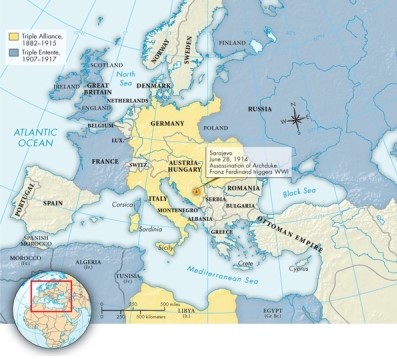
A)Great Britain, the Netherlands, and Italy
B)Denmark, Germany, and Russia
C)Spain, France, and Belgium
D)Great Britain, France, and Russia
A)Great Britain, the Netherlands, and Italy
B)Denmark, Germany, and Russia
C)Spain, France, and Belgium
D)Great Britain, France, and Russia
Question
Question
Question
Question
Question
Question
Question
Question
Question
Question
Question
Question
Question
Question
Which nations made up the Central Powers and allies according to Map 25.3: World War I in Europe and the Middle East, 1914-1918? 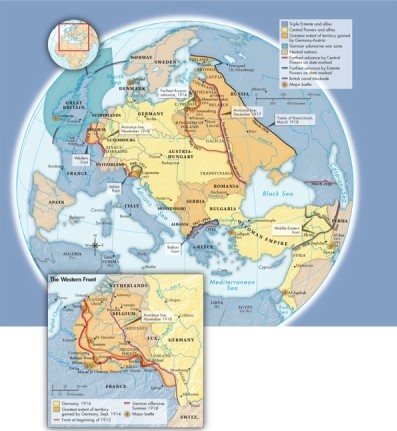
A)Germany, Luxembourg, Switzerland, and Austria-Hungary
B)Denmark, Germany, Serbia, and Bulgaria
C)Italy, Bulgaria, Austria-Hungary, and the Ottoman Empire
D)Germany, Austria-Hungary, Bulgaria, and the Ottoman Empire
A)Germany, Luxembourg, Switzerland, and Austria-Hungary
B)Denmark, Germany, Serbia, and Bulgaria
C)Italy, Bulgaria, Austria-Hungary, and the Ottoman Empire
D)Germany, Austria-Hungary, Bulgaria, and the Ottoman Empire
Question
Which European nations were neutral in World War I according to Map 25.3: World War I in Europe and the Middle East, 1914-1918? 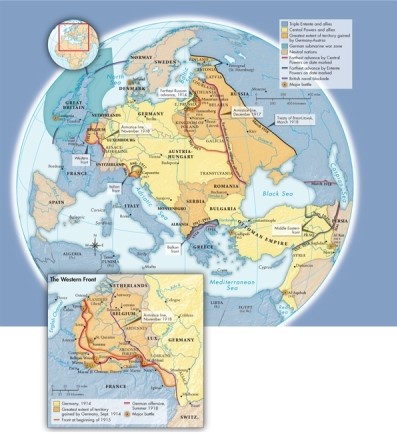
A)Spain, Italy, Greece, Switzerland, Serbia, and Denmark
B)Spain, France, Belgium, the Netherlands, Denmark, and Norway
C)Italy, Switzerland, Greece, Bulgaria, Sweden, and Norway
D)Spain, the Netherlands, Denmark, Norway, Sweden, and Switzerland
A)Spain, Italy, Greece, Switzerland, Serbia, and Denmark
B)Spain, France, Belgium, the Netherlands, Denmark, and Norway
C)Italy, Switzerland, Greece, Bulgaria, Sweden, and Norway
D)Spain, the Netherlands, Denmark, Norway, Sweden, and Switzerland
Question
Question
Question
According to Map 25.4: Territorial Changes After World War I, which new states were once part of the Russian Empire? 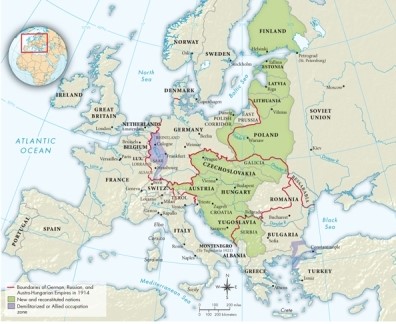
A)Czechoslovakia, Austria, Hungary, and Yugoslavia
B)Albania, Greece, Bulgaria, and Romania
C)Turkey, Romania, Finland, and Poland
D)Finland, Estonia, Latvia, Lithuania, and Poland
A)Czechoslovakia, Austria, Hungary, and Yugoslavia
B)Albania, Greece, Bulgaria, and Romania
C)Turkey, Romania, Finland, and Poland
D)Finland, Estonia, Latvia, Lithuania, and Poland
Question
Question
Question
Question
Question
Question
Question
Question
Question
Question
Question
Question
Question
Question
Question
Question
Question
Question
Question
Question
Question

Unlock Deck
Sign up to unlock the cards in this deck!
Unlock Deck
Unlock Deck
1/81

Play

Full screen (f)
Deck 25: War and Revolution 1914-1919
1
Why did Austria-Hungary deliberately choose war in July 1914?
A)It was prompted by the urging of Serbia's enemies in the Balkans.
B)It believed Russia would not intervene.
C)It hoped to stem the tide of hostile nationalism within its borders.
D)It hoped to seize Italian territory.
A)It was prompted by the urging of Serbia's enemies in the Balkans.
B)It believed Russia would not intervene.
C)It hoped to stem the tide of hostile nationalism within its borders.
D)It hoped to seize Italian territory.
It hoped to stem the tide of hostile nationalism within its borders.
2
What issue contributed to tensions between Germany and Great Britain in the first decade of the 1900s?
A)Germany's decision to build a large fleet of battleships
B)Commercial rivalry in world markets
C)Germany's pursuit of colonies
D)British ambitions in the collapsing Ottoman Empire
A)Germany's decision to build a large fleet of battleships
B)Commercial rivalry in world markets
C)Germany's pursuit of colonies
D)British ambitions in the collapsing Ottoman Empire
Germany's decision to build a large fleet of battleships
3
Germany's initial offensive was stopped on the outskirts of Paris at the Battle of
A)Verdun.
B)the Somme.
C)the Marne.
D)Ypres.
A)Verdun.
B)the Somme.
C)the Marne.
D)Ypres.
the Marne.
4
Walter Rathenau is remembered for his
A)May Day rally in opposition to the German war effort.
B)assassination of Archduke Franz Ferdinand.
C)role in Germany's total war mobilization.
D)advocacy of violent revolution against the German government.
A)May Day rally in opposition to the German war effort.
B)assassination of Archduke Franz Ferdinand.
C)role in Germany's total war mobilization.
D)advocacy of violent revolution against the German government.
Unlock Deck
Unlock for access to all 81 flashcards in this deck.
Unlock Deck
k this deck
5
What did Germany's Auxiliary Service Law require?
A)That colonial people serve in support roles in the German army
B)That soldiers who had served their draft requirement reenlist in the military after a three-month break if they were healthy and fit for battle
C)That unmarried women join the medical corps to help take care of wounded soldiers
D)That all men between seventeen and sixty work at jobs considered critical to the war effort
A)That colonial people serve in support roles in the German army
B)That soldiers who had served their draft requirement reenlist in the military after a three-month break if they were healthy and fit for battle
C)That unmarried women join the medical corps to help take care of wounded soldiers
D)That all men between seventeen and sixty work at jobs considered critical to the war effort
Unlock Deck
Unlock for access to all 81 flashcards in this deck.
Unlock Deck
k this deck
6
Why did the German military command recommence submarine warfare in the Atlantic despite knowing that it would lead the United States to enter the war against them?
A)They believed that the United States had already decided secretly to enter the war and wanted to inflict as much damage as possible on Britain before U.S. troops arrived.
B)They believed that the war was already lost and wanted to inflict as much damage as possible on Britain so that it would be weakened in its victory.
C)They believed that improved submarines could starve Britain into submission before the United States could come to Britain's rescue.
D)They believed that Britain would abandon its war effort once the power of the new German submarines was recognized.
A)They believed that the United States had already decided secretly to enter the war and wanted to inflict as much damage as possible on Britain before U.S. troops arrived.
B)They believed that the war was already lost and wanted to inflict as much damage as possible on Britain so that it would be weakened in its victory.
C)They believed that improved submarines could starve Britain into submission before the United States could come to Britain's rescue.
D)They believed that Britain would abandon its war effort once the power of the new German submarines was recognized.
Unlock Deck
Unlock for access to all 81 flashcards in this deck.
Unlock Deck
k this deck
7
What was the February Revolution in Russia in 1917?
A)An unplanned uprising of hungry and angry people in the capital
B)A military coup in which the tsar was forced to abdicate in the midst of a mutiny
C)A planned and coordinated Communist takeover of the government
D)Originally a peasant rebellion that moved from the provinces to the cities
A)An unplanned uprising of hungry and angry people in the capital
B)A military coup in which the tsar was forced to abdicate in the midst of a mutiny
C)A planned and coordinated Communist takeover of the government
D)Originally a peasant rebellion that moved from the provinces to the cities
Unlock Deck
Unlock for access to all 81 flashcards in this deck.
Unlock Deck
k this deck
8
What were the two-front wars that military planners had anticipated prior to the First World War?
A)Russia had assumed a two-front war against Germany and the Ottoman Empire, and Germany had assumed a two-front war against France and Italy.
B)The Ottoman Empire had assumed a two-front war against Russia and Austria-Hungary, and France had assumed a two-front war against Germany and Spain.
C)Germany had assumed a two-front war against France and Russia, and Italy had assumed a two-front war against Austria-Hungary and France.
D)Russia had assumed a two-front war against Germany and Austria-Hungary, and Germany had assumed a two-front war against Russia and France.
A)Russia had assumed a two-front war against Germany and the Ottoman Empire, and Germany had assumed a two-front war against France and Italy.
B)The Ottoman Empire had assumed a two-front war against Russia and Austria-Hungary, and France had assumed a two-front war against Germany and Spain.
C)Germany had assumed a two-front war against France and Russia, and Italy had assumed a two-front war against Austria-Hungary and France.
D)Russia had assumed a two-front war against Germany and Austria-Hungary, and Germany had assumed a two-front war against Russia and France.
Unlock Deck
Unlock for access to all 81 flashcards in this deck.
Unlock Deck
k this deck
9
What was the primary consequence of the First Moroccan Crisis in 1905?
A)The United States chose to withdraw from European affairs.
B)The French Empire in northern Africa began to collapse.
C)The Ottoman Empire abandoned its claims throughout most of the Middle East.
D)Britain, France, and Russia began to see Germany as a threat to dominate all of Europe.
A)The United States chose to withdraw from European affairs.
B)The French Empire in northern Africa began to collapse.
C)The Ottoman Empire abandoned its claims throughout most of the Middle East.
D)Britain, France, and Russia began to see Germany as a threat to dominate all of Europe.
Unlock Deck
Unlock for access to all 81 flashcards in this deck.
Unlock Deck
k this deck
10
Who assassinated Grigori Rasputin in 1916?
A)Bolshevik revolutionaries
B)Agents of the tsarist police force
C)German mercenaries
D)Nationalistic aristocrats
A)Bolshevik revolutionaries
B)Agents of the tsarist police force
C)German mercenaries
D)Nationalistic aristocrats
Unlock Deck
Unlock for access to all 81 flashcards in this deck.
Unlock Deck
k this deck
11
Why were the Balkans considered the "powder keg of Europe"?
A)Russia had destabilized the region by claiming control over the straits to the Black Sea.
B)The Ottoman Empire had been forced to give up its territory in the region, leading to growing ethnic nationalism.
C)The region had failed to begin the process of modernization, leaving it backwards and extremely poor.
D)Famine caused by Austro-Hungarian trade restrictions had left the region struggling for survival and furious at Austrian policies.
A)Russia had destabilized the region by claiming control over the straits to the Black Sea.
B)The Ottoman Empire had been forced to give up its territory in the region, leading to growing ethnic nationalism.
C)The region had failed to begin the process of modernization, leaving it backwards and extremely poor.
D)Famine caused by Austro-Hungarian trade restrictions had left the region struggling for survival and furious at Austrian policies.
Unlock Deck
Unlock for access to all 81 flashcards in this deck.
Unlock Deck
k this deck
12
Which nations joined the war on the side of the Central Powers?
A)Bulgaria and Greece
B)The Ottoman Empire and Spain
C)Spain and Greece
D)Bulgaria and the Ottoman Empire
A)Bulgaria and Greece
B)The Ottoman Empire and Spain
C)Spain and Greece
D)Bulgaria and the Ottoman Empire
Unlock Deck
Unlock for access to all 81 flashcards in this deck.
Unlock Deck
k this deck
13
How did Henri-Philippe Pétain maintain order among French troops by late 1917?
A)He promised a program of land redistribution after the war.
B)He permitted troops to name their own commanders, who could countermand orders from headquarters.
C)He formed a tacit agreement with the troops that there would be no more grand offensives.
D)He adopted a practice of awarding divisions that performed well with time off away from the front.
A)He promised a program of land redistribution after the war.
B)He permitted troops to name their own commanders, who could countermand orders from headquarters.
C)He formed a tacit agreement with the troops that there would be no more grand offensives.
D)He adopted a practice of awarding divisions that performed well with time off away from the front.
Unlock Deck
Unlock for access to all 81 flashcards in this deck.
Unlock Deck
k this deck
14
Bismarck's alliance system was designed to isolate France and to
A)expand German territory eastward.
B)challenge Britain's dominant world position.
C)maintain peace between Russia and Austria-Hungary.
D)control the Balkans.
A)expand German territory eastward.
B)challenge Britain's dominant world position.
C)maintain peace between Russia and Austria-Hungary.
D)control the Balkans.
Unlock Deck
Unlock for access to all 81 flashcards in this deck.
Unlock Deck
k this deck
15
Why did Italy, after declaring neutrality in 1914, decide to join the Triple Entente in 1915?
A)It believed that Austria had launched a war of aggression and took responsibility for helping to stop Austria and Germany.
B)It was promised Austrian territory in return.
C)The pope had convinced Italian leaders that it was their Christian duty.
D)Growing Italian nationalism shamed Italian leaders into doing so.
A)It believed that Austria had launched a war of aggression and took responsibility for helping to stop Austria and Germany.
B)It was promised Austrian territory in return.
C)The pope had convinced Italian leaders that it was their Christian duty.
D)Growing Italian nationalism shamed Italian leaders into doing so.
Unlock Deck
Unlock for access to all 81 flashcards in this deck.
Unlock Deck
k this deck
16
What was the immediate cause of British entry into the First World War?
A)The sinking of the Lusitania
B)The German invasion of neutral Belgium
C)The Austrian ultimatum to Serbia
D)The Algeciras Conference
A)The sinking of the Lusitania
B)The German invasion of neutral Belgium
C)The Austrian ultimatum to Serbia
D)The Algeciras Conference
Unlock Deck
Unlock for access to all 81 flashcards in this deck.
Unlock Deck
k this deck
17
Throughout the First World War, what mistake did military commanders repeatedly make?
A)They attempted to mount massive offensives designed to break through entrenched lines.
B)They failed to recognize that armies could move faster than they could be supplied.
C)They adopted new technology that had not previously been tried in battle.
D)They failed to properly prepare defensive positions after seizing new territory.
A)They attempted to mount massive offensives designed to break through entrenched lines.
B)They failed to recognize that armies could move faster than they could be supplied.
C)They adopted new technology that had not previously been tried in battle.
D)They failed to properly prepare defensive positions after seizing new territory.
Unlock Deck
Unlock for access to all 81 flashcards in this deck.
Unlock Deck
k this deck
18
What did the Schlieffen Plan call for in 1914?
A)Support of Austria-Hungary in its attack on Serbia and an invasion of Russia
B)A quick defeat of Russia before turning on France
C)A lightning attack through neutral Belgium and a quick defeat of France before turning on Russia
D)An invasion of Russia together with diplomatic reassurances to France
A)Support of Austria-Hungary in its attack on Serbia and an invasion of Russia
B)A quick defeat of Russia before turning on France
C)A lightning attack through neutral Belgium and a quick defeat of France before turning on Russia
D)An invasion of Russia together with diplomatic reassurances to France
Unlock Deck
Unlock for access to all 81 flashcards in this deck.
Unlock Deck
k this deck
19
How did the war on the eastern front differ from the war on the western front?
A)The war on the eastern front immediately became immobile as both sides established vast trench networks.
B)The war on the eastern front included a more significant naval component with competition for the Black Sea.
C)The war on the eastern front lacked the use of modern technologies and, therefore, led to less loss of life.
D)The war on the eastern front remained more mobile, with Germany in a more dominant position.
A)The war on the eastern front immediately became immobile as both sides established vast trench networks.
B)The war on the eastern front included a more significant naval component with competition for the Black Sea.
C)The war on the eastern front lacked the use of modern technologies and, therefore, led to less loss of life.
D)The war on the eastern front remained more mobile, with Germany in a more dominant position.
Unlock Deck
Unlock for access to all 81 flashcards in this deck.
Unlock Deck
k this deck
20
What part of Otto von Bismarck's alliance system did William II abandon?
A)Germany's alliance with Austria-Hungary to resist Russian expansion into the Balkans
B)Germany's nonaggression pact with Russia
C)Germany's alliance with Great Britain to control the North Sea
D)Germany's mutual defense agreement with France
A)Germany's alliance with Austria-Hungary to resist Russian expansion into the Balkans
B)Germany's nonaggression pact with Russia
C)Germany's alliance with Great Britain to control the North Sea
D)Germany's mutual defense agreement with France
Unlock Deck
Unlock for access to all 81 flashcards in this deck.
Unlock Deck
k this deck
21
How did Lenin respond to the peasants' seizure of land when he rose to power in 1917?
A)He attacked the peasants in order to be able to collectivize all land.
B)He used the peasants' actions to coerce the nobility to support his new regime in hopes of reclaiming their lands.
C)He mandated land reform in order to offer his approval for what the peasants had already done.
D)He required peasants to join the Red Army in order to earn the right to their land.
A)He attacked the peasants in order to be able to collectivize all land.
B)He used the peasants' actions to coerce the nobility to support his new regime in hopes of reclaiming their lands.
C)He mandated land reform in order to offer his approval for what the peasants had already done.
D)He required peasants to join the Red Army in order to earn the right to their land.
Unlock Deck
Unlock for access to all 81 flashcards in this deck.
Unlock Deck
k this deck
22
During the First World War, the African colonial subjects of Britain and France
A)used the war as an opportunity to revolt.
B)played no part in the war.
C)lent clandestine support to Germany.
D)generally supported their foreign masters.
A)used the war as an opportunity to revolt.
B)played no part in the war.
C)lent clandestine support to Germany.
D)generally supported their foreign masters.
Unlock Deck
Unlock for access to all 81 flashcards in this deck.
Unlock Deck
k this deck
23
What was the principle of national self-determination promoted by Woodrow Wilson?
A)People should be able to choose their own nationality and form whatever borders they find most convenient.
B)People should be able to select their form of government, whether authoritarian or democratic, and establish their own place in the international order.
C)People should be able to choose a structure of government within the framework of the League of Nations to ensure that individual rights are sustained.
D)People should be able to choose a national government through a democratic process and live free from outside interference.
A)People should be able to choose their own nationality and form whatever borders they find most convenient.
B)People should be able to select their form of government, whether authoritarian or democratic, and establish their own place in the international order.
C)People should be able to choose a structure of government within the framework of the League of Nations to ensure that individual rights are sustained.
D)People should be able to choose a national government through a democratic process and live free from outside interference.
Unlock Deck
Unlock for access to all 81 flashcards in this deck.
Unlock Deck
k this deck
24
How did the Western powers react to the declarations of independence by Syria and Iraq shortly following the First World War?
A)They invaded the two regions and defeated the independence movements.
B)They pointed to the declarations as models of national self-determination.
C)They reinforced the ability of the Ottoman Empire to reclaim the territories.
D)They placed the regions under the protectorate of the League of Nations.
A)They invaded the two regions and defeated the independence movements.
B)They pointed to the declarations as models of national self-determination.
C)They reinforced the ability of the Ottoman Empire to reclaim the territories.
D)They placed the regions under the protectorate of the League of Nations.
Unlock Deck
Unlock for access to all 81 flashcards in this deck.
Unlock Deck
k this deck
25
What ultimately happened to Ukraine and Belarus, parts of the Russian Empire ceded to Germany in the Treaty of Brest-Litovsk?
A)They were made protectorates of the League of Nations.
B)The Soviet Union reconquered those territories during its civil war.
C)They were established as independent nations.
D)Germany incorporated most of those lands into its new, expanded empire.
A)They were made protectorates of the League of Nations.
B)The Soviet Union reconquered those territories during its civil war.
C)They were established as independent nations.
D)Germany incorporated most of those lands into its new, expanded empire.
Unlock Deck
Unlock for access to all 81 flashcards in this deck.
Unlock Deck
k this deck
26
Why did the Germans accept the Treaty of Versailles?
A)They believed it was the best agreement they would receive from the Allied Powers.
B)They had little alternative, especially as the naval blockade was still in place and the German people were starving.
C)They believed that neither France nor Great Britain would enforce the provisions of the treaty that Germany disliked.
D)They realized that some of the provisions would permit them to establish German authority toward the east.
A)They believed it was the best agreement they would receive from the Allied Powers.
B)They had little alternative, especially as the naval blockade was still in place and the German people were starving.
C)They believed that neither France nor Great Britain would enforce the provisions of the treaty that Germany disliked.
D)They realized that some of the provisions would permit them to establish German authority toward the east.
Unlock Deck
Unlock for access to all 81 flashcards in this deck.
Unlock Deck
k this deck
27
What was the common effect of western-front offensives during the First World War?
A)They won significant territorial gains.
B)They failed on nearly every mission.
C)They caused the slaughter of massed infantry units.
D)They captured countless prisoners of war.
A)They won significant territorial gains.
B)They failed on nearly every mission.
C)They caused the slaughter of massed infantry units.
D)They captured countless prisoners of war.
Unlock Deck
Unlock for access to all 81 flashcards in this deck.
Unlock Deck
k this deck
28
What did the Petrograd Soviet Army Order No. 1 state?
A)All troops were free to return to their homes and farms and to abandon the war effort.
B)Military officers were to be stripped of their authority, and power was to be placed in the hands of elected committees of soldiers.
C)Soldiers who abandoned their positions were to be shot on sight as deserters.
D)Military authority was to be placed under the control of the Bolshevik Leon Trotsky.
A)All troops were free to return to their homes and farms and to abandon the war effort.
B)Military officers were to be stripped of their authority, and power was to be placed in the hands of elected committees of soldiers.
C)Soldiers who abandoned their positions were to be shot on sight as deserters.
D)Military authority was to be placed under the control of the Bolshevik Leon Trotsky.
Unlock Deck
Unlock for access to all 81 flashcards in this deck.
Unlock Deck
k this deck
29
How did Paul von Hindenburg and Erich Ludendorff react to Germany's loss in the war in the fall of 1918?
A)They decided to mount one last grand offensive to save the honor of the German army.
B)They accepted responsibility for the failure to win the war and decided to sue for peace.
C)They staged a coup against the government and deposed the German emperor.
D)Not wanting to shoulder the blame, they insisted moderate politicians should take responsibility for the defeat.
A)They decided to mount one last grand offensive to save the honor of the German army.
B)They accepted responsibility for the failure to win the war and decided to sue for peace.
C)They staged a coup against the government and deposed the German emperor.
D)Not wanting to shoulder the blame, they insisted moderate politicians should take responsibility for the defeat.
Unlock Deck
Unlock for access to all 81 flashcards in this deck.
Unlock Deck
k this deck
30
Who was Alexander Kerensky?
A)A colleague of Lenin's and an important figure in the successful Bolshevik Revolution
B)An important liberal political leader of the Provisional Government in Russia
C)An agrarian socialist who became prime minister of Russia in July 1917
D)A member of the Russian aristocracy who was an early opponent of the new Bolshevik regime
A)A colleague of Lenin's and an important figure in the successful Bolshevik Revolution
B)An important liberal political leader of the Provisional Government in Russia
C)An agrarian socialist who became prime minister of Russia in July 1917
D)A member of the Russian aristocracy who was an early opponent of the new Bolshevik regime
Unlock Deck
Unlock for access to all 81 flashcards in this deck.
Unlock Deck
k this deck
31
Following the First World War, what was one of the most difficult domestic problems faced by governments?
A)Providing care for the large number of injured veterans
B)Identifying collaborators who had aided the enemy
C)Adapting to new expectations about women's voting rights
D)Returning to peacetime economic production
A)Providing care for the large number of injured veterans
B)Identifying collaborators who had aided the enemy
C)Adapting to new expectations about women's voting rights
D)Returning to peacetime economic production
Unlock Deck
Unlock for access to all 81 flashcards in this deck.
Unlock Deck
k this deck
32
What was the fatal turning point in the Russian prosecution of the war?
A)The formation of the Progressive bloc, which called for a completely new government responsible to the Duma
B)The tsar's decision to assume command of Russia's armies, leaving the government in the hands of the strong-willed, autocratic tsarina
C)The murder of court favorite Rasputin in December 1916
D)The failure to produce enough rifles to send all Russian soldiers to the front with their own weapon
A)The formation of the Progressive bloc, which called for a completely new government responsible to the Duma
B)The tsar's decision to assume command of Russia's armies, leaving the government in the hands of the strong-willed, autocratic tsarina
C)The murder of court favorite Rasputin in December 1916
D)The failure to produce enough rifles to send all Russian soldiers to the front with their own weapon
Unlock Deck
Unlock for access to all 81 flashcards in this deck.
Unlock Deck
k this deck
33
What did the Balfour Declaration of November 1917, written by British Foreign Secretary Arthur Balfour, announce?
A)Britain favored a national state for Arab peoples in the Middle East.
B)Britain favored a national home for the Jewish people in Palestine.
C)Britain wished to grant India independence as quickly as possible after the war.
D)Britain supported Polish demands for an independent nation-state.
A)Britain favored a national state for Arab peoples in the Middle East.
B)Britain favored a national home for the Jewish people in Palestine.
C)Britain wished to grant India independence as quickly as possible after the war.
D)Britain supported Polish demands for an independent nation-state.
Unlock Deck
Unlock for access to all 81 flashcards in this deck.
Unlock Deck
k this deck
34
What was French premier Georges Clemenceau's opinion at the Paris Peace Conference?
A)He strongly supported the creation of a League of Nations.
B)He advocated lenient treatment of Germany.
C)He agreed to renounce France's claim to Alsace and Lorraine.
D)He wanted to create a buffer state between Germany and France.
A)He strongly supported the creation of a League of Nations.
B)He advocated lenient treatment of Germany.
C)He agreed to renounce France's claim to Alsace and Lorraine.
D)He wanted to create a buffer state between Germany and France.
Unlock Deck
Unlock for access to all 81 flashcards in this deck.
Unlock Deck
k this deck
35
What was the primary political weakness of the White forces as they fought against the Bolsheviks?
A)They insisted on the restoration of the monarchy, which had little support among the peasants.
B)They refused to negotiate with the Bolsheviks when invited to participate in the new government.
C)They lacked any financial backing from foreign governments.
D)They had a poorly defined political program that failed to unite the enemies of the Bolsheviks.
A)They insisted on the restoration of the monarchy, which had little support among the peasants.
B)They refused to negotiate with the Bolsheviks when invited to participate in the new government.
C)They lacked any financial backing from foreign governments.
D)They had a poorly defined political program that failed to unite the enemies of the Bolsheviks.
Unlock Deck
Unlock for access to all 81 flashcards in this deck.
Unlock Deck
k this deck
36
What was the result of Allied support of the White armies in the Russian civil war?
A)It helped the Bolsheviks, who could appeal to patriotic nationalism against the Allies.
B)It blocked the Germans from advancing into Ukraine.
C)It caused the Bolsheviks to initiate their policy of terror.
D)It helped the Finns to gain their independence.
A)It helped the Bolsheviks, who could appeal to patriotic nationalism against the Allies.
B)It blocked the Germans from advancing into Ukraine.
C)It caused the Bolsheviks to initiate their policy of terror.
D)It helped the Finns to gain their independence.
Unlock Deck
Unlock for access to all 81 flashcards in this deck.
Unlock Deck
k this deck
37
How did Lenin's and the Bolsheviks' view of the Marxist party in Russia differ from the Mensheviks' view of the party?
A)The Bolsheviks wanted a militaristic party, while the Mensheviks wanted a party that promoted peace and an end to the war.
B)The Bolsheviks wanted a party that focused on electoral victory, while the Mensheviks wanted a party that focused on a military coup.
C)The Bolsheviks wanted a populist party that emerged from below, while the Mensheviks wanted a party that was hierarchically shaped by its leadership.
D)The Bolsheviks wanted a small, disciplined party, while the Mensheviks wanted a democratic party with mass membership.
A)The Bolsheviks wanted a militaristic party, while the Mensheviks wanted a party that promoted peace and an end to the war.
B)The Bolsheviks wanted a party that focused on electoral victory, while the Mensheviks wanted a party that focused on a military coup.
C)The Bolsheviks wanted a populist party that emerged from below, while the Mensheviks wanted a party that was hierarchically shaped by its leadership.
D)The Bolsheviks wanted a small, disciplined party, while the Mensheviks wanted a democratic party with mass membership.
Unlock Deck
Unlock for access to all 81 flashcards in this deck.
Unlock Deck
k this deck
38
How did the moderate Social Democrats in Germany put down the radical Communist Spartacist Uprising?
A)They called on bands of demobilized soldiers called Free Corps to crush the uprising.
B)They had the Catholic Church condemn the Communists and authorize parishioners to join in a revolt against them.
C)They called for a labor strike against the Communists until their movement collapsed.
D)They accused the Communists of being Russian spies and had them arrested on counterespionage charges.
A)They called on bands of demobilized soldiers called Free Corps to crush the uprising.
B)They had the Catholic Church condemn the Communists and authorize parishioners to join in a revolt against them.
C)They called for a labor strike against the Communists until their movement collapsed.
D)They accused the Communists of being Russian spies and had them arrested on counterespionage charges.
Unlock Deck
Unlock for access to all 81 flashcards in this deck.
Unlock Deck
k this deck
39
What was the Sykes-Picot Agreement of 1916?
A)An agreement between Germany and the Bolsheviks by which Germany funded Lenin's effort to overthrow the monarchy in Russia
B)An agreement between Great Britain and France to divvy up parts of the Middle East after the war
C)An agreement between France and Belgium to establish a new German border after the end of the war
D)An agreement between Germany and France to abandon the use of mustard gas
A)An agreement between Germany and the Bolsheviks by which Germany funded Lenin's effort to overthrow the monarchy in Russia
B)An agreement between Great Britain and France to divvy up parts of the Middle East after the war
C)An agreement between France and Belgium to establish a new German border after the end of the war
D)An agreement between Germany and France to abandon the use of mustard gas
Unlock Deck
Unlock for access to all 81 flashcards in this deck.
Unlock Deck
k this deck
40
What did the "war guilt clause" in the Treaty of Versailles declare?
A)All of the Great Powers involved in the war were equally responsible for starting the war.
B)All of the Great Powers with the exception of the United States were equally responsible for starting the war.
C)The Russian Empire was primarily responsible for starting the war, and the Soviet Union was obligated to pay reparations.
D)Germany (with Austria)was solely responsible for the war and had to pay reparations.
A)All of the Great Powers involved in the war were equally responsible for starting the war.
B)All of the Great Powers with the exception of the United States were equally responsible for starting the war.
C)The Russian Empire was primarily responsible for starting the war, and the Soviet Union was obligated to pay reparations.
D)Germany (with Austria)was solely responsible for the war and had to pay reparations.
Unlock Deck
Unlock for access to all 81 flashcards in this deck.
Unlock Deck
k this deck
41
Which countries are in the Triple Entente according to Map 25.1: European Alliances at the Outbreak of World War I, 1914?
A)Great Britain, the Netherlands, and Italy
B)Denmark, Germany, and Russia
C)Spain, France, and Belgium
D)Great Britain, France, and Russia
A)Great Britain, the Netherlands, and Italy
B)Denmark, Germany, and Russia
C)Spain, France, and Belgium
D)Great Britain, France, and Russia
Unlock Deck
Unlock for access to all 81 flashcards in this deck.
Unlock Deck
k this deck
42
How did Vladimir Lenin transform Karl Marx's philosophy to address the environment of Russia?
Unlock Deck
Unlock for access to all 81 flashcards in this deck.
Unlock Deck
k this deck
43
The following is an excerpt from Lenin's manifesto on behalf of the Congress of Soviets in Petrograd (Evaluating the Evidence 25.3): "The Congress calls upon the soldiers in the trenches to be vigilant and firm. The Congress of Soviets is convinced that the revolutionary army will be able to defend the revolution against all attacks of imperialism until such time as the new government succeeds in concluding a democratic peace, which it will propose directly to all peoples. The new government will do everything to fully supply the revolutionary army by means of a determined policy of requisitions and taxation of the propertied classes, and also will improve the condition of the soldiers' families."
What does this passage imply about Lenin's plans with respect to the war?
A)He planned to settle in for a long defensive struggle.
B)He planned to join Germany in the fight against the Allies.
C)He planned to fight until the bitter end.
D)He planned to make peace with Germany as soon as possible.
What does this passage imply about Lenin's plans with respect to the war?
A)He planned to settle in for a long defensive struggle.
B)He planned to join Germany in the fight against the Allies.
C)He planned to fight until the bitter end.
D)He planned to make peace with Germany as soon as possible.
Unlock Deck
Unlock for access to all 81 flashcards in this deck.
Unlock Deck
k this deck
44
Why did the Bolsheviks sign the Treaty of Brest-Litovsk?
Unlock Deck
Unlock for access to all 81 flashcards in this deck.
Unlock Deck
k this deck
45
How did Germany respond to the need to wage total war?
Unlock Deck
Unlock for access to all 81 flashcards in this deck.
Unlock Deck
k this deck
46
How did the experience of total war affect the power of labor unions?
Unlock Deck
Unlock for access to all 81 flashcards in this deck.
Unlock Deck
k this deck
47
Describe the impact of new military technology on the fighting during World War I.
Unlock Deck
Unlock for access to all 81 flashcards in this deck.
Unlock Deck
k this deck
48
Why did France and Russia become allies in 1894 despite their political differences?
Unlock Deck
Unlock for access to all 81 flashcards in this deck.
Unlock Deck
k this deck
49
How did Mustafa Kemal seek to transform Turkish society?
Unlock Deck
Unlock for access to all 81 flashcards in this deck.
Unlock Deck
k this deck
50
The following is an excerpt from Lenin's manifesto on behalf of the Congress of Soviets in Petrograd (Evaluating the Evidence 25.3): "The . . . All-Russia Congress of Soviets of Workers and Soldiers' Deputies has opened. The vast majority of the Soviets are represented at the Congress. A number of delegates from the Peasants' Soviets are also present. . . . Backed by the will of the vast majority of the workers, soldiers, and peasants, backed by the victorious uprising of the workers and the garrison which has taken place in Petrograd, the Congress takes power into its own hands."
What does this passage imply about Lenin and allies?
A)That their legitimacy had been recognized by the other European powers
B)That they had the unanimous support of all Russians
C)That they enjoyed the support of the vast majority of ordinary Russians
D)That they were supported by the Provisional Government
What does this passage imply about Lenin and allies?
A)That their legitimacy had been recognized by the other European powers
B)That they had the unanimous support of all Russians
C)That they enjoyed the support of the vast majority of ordinary Russians
D)That they were supported by the Provisional Government
Unlock Deck
Unlock for access to all 81 flashcards in this deck.
Unlock Deck
k this deck
51
In the decades before the First World War, why did leading statesmen promote militarism and nationalism?
Unlock Deck
Unlock for access to all 81 flashcards in this deck.
Unlock Deck
k this deck
52
The following is an excerpt from Wilfred Owen's poem "Dulce et Decorum Est" (Evaluating the Evidence 25.1). It describes the death of a soldier by poison gas: "If you could hear, at every jolt, the blood
Come gargling from the froth-corrupted lungs
Bitter as the cud
Of vile, incurable sores on innocent tongues,-
My friend, you would not tell with such high zest
To children ardent for some desperate glory,
The old Lie: Dulce et decorum est
Pro patria mori. [It is sweet and fitting to die / For one's country.]"
Owen's poem can be read as a critique of
A)the military strategies of the leading generals.
B)the patriotic fervor that accompanied the war.
C)the conduct of British soldiers.
D)pacifists and other opponents of the war.
Come gargling from the froth-corrupted lungs
Bitter as the cud
Of vile, incurable sores on innocent tongues,-
My friend, you would not tell with such high zest
To children ardent for some desperate glory,
The old Lie: Dulce et decorum est
Pro patria mori. [It is sweet and fitting to die / For one's country.]"
Owen's poem can be read as a critique of
A)the military strategies of the leading generals.
B)the patriotic fervor that accompanied the war.
C)the conduct of British soldiers.
D)pacifists and other opponents of the war.
Unlock Deck
Unlock for access to all 81 flashcards in this deck.
Unlock Deck
k this deck
53
What happened to Armenian inhabitants of the Ottoman Empire during World War I?
A)Having lived on both sides of the border between the Ottoman and Russian Empires, they left the former in large numbers to seek sanctuary in Russia.
B)The Ottoman Empire ordered their mass deportation from their homeland, resulting in about a million Armenian deaths from murder, starvation, and disease.
C)They largely remained within their homeland in the Ottoman Empire but were criticized for not contributing more to the war effort.
D)Most found ways to leave the Ottoman Empire during the war and make their way to the United States.
A)Having lived on both sides of the border between the Ottoman and Russian Empires, they left the former in large numbers to seek sanctuary in Russia.
B)The Ottoman Empire ordered their mass deportation from their homeland, resulting in about a million Armenian deaths from murder, starvation, and disease.
C)They largely remained within their homeland in the Ottoman Empire but were criticized for not contributing more to the war effort.
D)Most found ways to leave the Ottoman Empire during the war and make their way to the United States.
Unlock Deck
Unlock for access to all 81 flashcards in this deck.
Unlock Deck
k this deck
54
Why was Article 231 of the Versailles Treaty, the "war guilt clause," so controversial?
Unlock Deck
Unlock for access to all 81 flashcards in this deck.
Unlock Deck
k this deck
55
Which nations made up the Central Powers and allies according to Map 25.3: World War I in Europe and the Middle East, 1914-1918?
A)Germany, Luxembourg, Switzerland, and Austria-Hungary
B)Denmark, Germany, Serbia, and Bulgaria
C)Italy, Bulgaria, Austria-Hungary, and the Ottoman Empire
D)Germany, Austria-Hungary, Bulgaria, and the Ottoman Empire
A)Germany, Luxembourg, Switzerland, and Austria-Hungary
B)Denmark, Germany, Serbia, and Bulgaria
C)Italy, Bulgaria, Austria-Hungary, and the Ottoman Empire
D)Germany, Austria-Hungary, Bulgaria, and the Ottoman Empire
Unlock Deck
Unlock for access to all 81 flashcards in this deck.
Unlock Deck
k this deck
56
Which European nations were neutral in World War I according to Map 25.3: World War I in Europe and the Middle East, 1914-1918?
A)Spain, Italy, Greece, Switzerland, Serbia, and Denmark
B)Spain, France, Belgium, the Netherlands, Denmark, and Norway
C)Italy, Switzerland, Greece, Bulgaria, Sweden, and Norway
D)Spain, the Netherlands, Denmark, Norway, Sweden, and Switzerland
A)Spain, Italy, Greece, Switzerland, Serbia, and Denmark
B)Spain, France, Belgium, the Netherlands, Denmark, and Norway
C)Italy, Switzerland, Greece, Bulgaria, Sweden, and Norway
D)Spain, the Netherlands, Denmark, Norway, Sweden, and Switzerland
Unlock Deck
Unlock for access to all 81 flashcards in this deck.
Unlock Deck
k this deck
57
The following is an excerpt from Lenin's manifesto on behalf of the Congress of Soviets in Petrograd (Evaluating the Evidence 25.3): "The Soviet government will propose an immediate democratic peace to all the nations and an immediate armistice on all fronts. It will secure the transfer of the land of the landed proprietors, the crown and the monasteries to the peasant committees without compensation; it will protect the rights of the soldiers by introducing complete democracy in the army; it will establish workers' control over production; it will ensure the convocation of the Constituent Assembly at the time appointed; it will see to it that bread is supplied to the cities and prime necessities to the villages; it will guarantee all the nations inhabiting Russia the genuine right to self-determination."
What promise did Lenin make on behalf of the Soviet government?
A)To guarantee the right to self-determination
B)To protect religious freedom
C)To protect private property
D)To defeat Germany on the battlefield
What promise did Lenin make on behalf of the Soviet government?
A)To guarantee the right to self-determination
B)To protect religious freedom
C)To protect private property
D)To defeat Germany on the battlefield
Unlock Deck
Unlock for access to all 81 flashcards in this deck.
Unlock Deck
k this deck
58
What was the Schlieffen Plan, and why did it fail?
Unlock Deck
Unlock for access to all 81 flashcards in this deck.
Unlock Deck
k this deck
59
According to Map 25.4: Territorial Changes After World War I, which new states were once part of the Russian Empire?
A)Czechoslovakia, Austria, Hungary, and Yugoslavia
B)Albania, Greece, Bulgaria, and Romania
C)Turkey, Romania, Finland, and Poland
D)Finland, Estonia, Latvia, Lithuania, and Poland
A)Czechoslovakia, Austria, Hungary, and Yugoslavia
B)Albania, Greece, Bulgaria, and Romania
C)Turkey, Romania, Finland, and Poland
D)Finland, Estonia, Latvia, Lithuania, and Poland
Unlock Deck
Unlock for access to all 81 flashcards in this deck.
Unlock Deck
k this deck
60
The following is an excerpt from John McCrae's poem "In Flanders Fields" (Evaluating the Evidence 25.1): "In Flanders fields the poppies blow
Between the crosses, row on row
That mark our place; and in the sky
The larks, still bravely singing, fly
Scarce heard amid the guns below."
This poem was written from the point of view of
A)the wives of soldiers.
B)the dead.
C)the British people.
D)the wild birds of Flanders.
Between the crosses, row on row
That mark our place; and in the sky
The larks, still bravely singing, fly
Scarce heard amid the guns below."
This poem was written from the point of view of
A)the wives of soldiers.
B)the dead.
C)the British people.
D)the wild birds of Flanders.
Unlock Deck
Unlock for access to all 81 flashcards in this deck.
Unlock Deck
k this deck
61
Answer the following questions:
Bolsheviks
A)The alliance of Austria, Germany, and Italy. Italy left the alliance when war broke out in 1914 on the grounds that Austria had launched a war of aggression.
B)Peace treaty signed in March 1918 between the Central Powers and Russia that ended Russian participation in World War I and ceded Russian territories containing one-third of the Russian Empire's population to the Central Powers.
C)A type of fighting used in World War I behind rows of trenches, mines, and barbed wire; the cost in lives was staggering and the gains in territory minimal.
D)Woodrow Wilson's 1918 peace proposal calling for open diplomacy, a reduction in armaments, freedom of commerce and trade, the establishment of the League of Nations, and national self-determination.
E)A war in which distinctions between the soldiers on the battlefield and civilians at home are blurred, and where the government plans and controls economic social life in order to supply the armies at the front with supplies and weapons.
F)An article in the Treaty of Versailles declaring that Germany (with Austria) was solely responsible for the war and had to pay reparations equal to all civilian damages caused by the fighting.
G)A huge, fluctuating mass meeting of two thousand to three thousand workers, soldiers, and socialist intellectuals modeled on the revolutionary soviets of 1905.
H)A permanent international organization, established during the 1919 Paris peace conference, designed to protect member states from aggression and avert future wars.
I)The application of centralized state control during the Russian civil war, in which the Bolsheviks seized grain from peasants, introduced rationing, nationalized all banks and industry, and required everyone to work.
J)The 1919 peace settlement that ended war between Germany and the Allied powers.
K)A 1917 British statement that declared British support of a National Home for the Jewish People in Palestine.
L)The notion that peoples should be able to choose their own national governments through democratic majority-rule elections and live free from outside interference in nation-states with clearly defined borders.
M)The alliance of Great Britain, France, and Russia prior to and during the First World War.
N)Failed German plan calling for a lightning attack through neutral Belgium and a quick defeat of France before turning on Russia.
O)Unplanned uprisings accompanied by violent street demonstrations begun in March 1917 (old calendar February) in Petrograd, Russia, that led to the abdication of the tsar and the establishment of a provisional government.
P)Vladimir Lenin's radical, revolutionary arm of the Russian party of Marxist socialism, which successfully installed a dictatorial socialist regime in Russia.
Bolsheviks
A)The alliance of Austria, Germany, and Italy. Italy left the alliance when war broke out in 1914 on the grounds that Austria had launched a war of aggression.
B)Peace treaty signed in March 1918 between the Central Powers and Russia that ended Russian participation in World War I and ceded Russian territories containing one-third of the Russian Empire's population to the Central Powers.
C)A type of fighting used in World War I behind rows of trenches, mines, and barbed wire; the cost in lives was staggering and the gains in territory minimal.
D)Woodrow Wilson's 1918 peace proposal calling for open diplomacy, a reduction in armaments, freedom of commerce and trade, the establishment of the League of Nations, and national self-determination.
E)A war in which distinctions between the soldiers on the battlefield and civilians at home are blurred, and where the government plans and controls economic social life in order to supply the armies at the front with supplies and weapons.
F)An article in the Treaty of Versailles declaring that Germany (with Austria) was solely responsible for the war and had to pay reparations equal to all civilian damages caused by the fighting.
G)A huge, fluctuating mass meeting of two thousand to three thousand workers, soldiers, and socialist intellectuals modeled on the revolutionary soviets of 1905.
H)A permanent international organization, established during the 1919 Paris peace conference, designed to protect member states from aggression and avert future wars.
I)The application of centralized state control during the Russian civil war, in which the Bolsheviks seized grain from peasants, introduced rationing, nationalized all banks and industry, and required everyone to work.
J)The 1919 peace settlement that ended war between Germany and the Allied powers.
K)A 1917 British statement that declared British support of a National Home for the Jewish People in Palestine.
L)The notion that peoples should be able to choose their own national governments through democratic majority-rule elections and live free from outside interference in nation-states with clearly defined borders.
M)The alliance of Great Britain, France, and Russia prior to and during the First World War.
N)Failed German plan calling for a lightning attack through neutral Belgium and a quick defeat of France before turning on Russia.
O)Unplanned uprisings accompanied by violent street demonstrations begun in March 1917 (old calendar February) in Petrograd, Russia, that led to the abdication of the tsar and the establishment of a provisional government.
P)Vladimir Lenin's radical, revolutionary arm of the Russian party of Marxist socialism, which successfully installed a dictatorial socialist regime in Russia.
Unlock Deck
Unlock for access to all 81 flashcards in this deck.
Unlock Deck
k this deck
62
The First World War can be viewed as a triumph of nationalism. In what ways did nationalism contribute to the war's origins, outbreak, and course? How did nationalism affect the Versailles settlement?
Unlock Deck
Unlock for access to all 81 flashcards in this deck.
Unlock Deck
k this deck
63
Answer the following questions:
Schlieffen Plan
A)The alliance of Austria, Germany, and Italy. Italy left the alliance when war broke out in 1914 on the grounds that Austria had launched a war of aggression.
B)Peace treaty signed in March 1918 between the Central Powers and Russia that ended Russian participation in World War I and ceded Russian territories containing one-third of the Russian Empire's population to the Central Powers.
C)A type of fighting used in World War I behind rows of trenches, mines, and barbed wire; the cost in lives was staggering and the gains in territory minimal.
D)Woodrow Wilson's 1918 peace proposal calling for open diplomacy, a reduction in armaments, freedom of commerce and trade, the establishment of the League of Nations, and national self-determination.
E)A war in which distinctions between the soldiers on the battlefield and civilians at home are blurred, and where the government plans and controls economic social life in order to supply the armies at the front with supplies and weapons.
F)An article in the Treaty of Versailles declaring that Germany (with Austria) was solely responsible for the war and had to pay reparations equal to all civilian damages caused by the fighting.
G)A huge, fluctuating mass meeting of two thousand to three thousand workers, soldiers, and socialist intellectuals modeled on the revolutionary soviets of 1905.
H)A permanent international organization, established during the 1919 Paris peace conference, designed to protect member states from aggression and avert future wars.
I)The application of centralized state control during the Russian civil war, in which the Bolsheviks seized grain from peasants, introduced rationing, nationalized all banks and industry, and required everyone to work.
J)The 1919 peace settlement that ended war between Germany and the Allied powers.
K)A 1917 British statement that declared British support of a National Home for the Jewish People in Palestine.
L)The notion that peoples should be able to choose their own national governments through democratic majority-rule elections and live free from outside interference in nation-states with clearly defined borders.
M)The alliance of Great Britain, France, and Russia prior to and during the First World War.
N)Failed German plan calling for a lightning attack through neutral Belgium and a quick defeat of France before turning on Russia.
O)Unplanned uprisings accompanied by violent street demonstrations begun in March 1917 (old calendar February) in Petrograd, Russia, that led to the abdication of the tsar and the establishment of a provisional government.
P)Vladimir Lenin's radical, revolutionary arm of the Russian party of Marxist socialism, which successfully installed a dictatorial socialist regime in Russia.
Schlieffen Plan
A)The alliance of Austria, Germany, and Italy. Italy left the alliance when war broke out in 1914 on the grounds that Austria had launched a war of aggression.
B)Peace treaty signed in March 1918 between the Central Powers and Russia that ended Russian participation in World War I and ceded Russian territories containing one-third of the Russian Empire's population to the Central Powers.
C)A type of fighting used in World War I behind rows of trenches, mines, and barbed wire; the cost in lives was staggering and the gains in territory minimal.
D)Woodrow Wilson's 1918 peace proposal calling for open diplomacy, a reduction in armaments, freedom of commerce and trade, the establishment of the League of Nations, and national self-determination.
E)A war in which distinctions between the soldiers on the battlefield and civilians at home are blurred, and where the government plans and controls economic social life in order to supply the armies at the front with supplies and weapons.
F)An article in the Treaty of Versailles declaring that Germany (with Austria) was solely responsible for the war and had to pay reparations equal to all civilian damages caused by the fighting.
G)A huge, fluctuating mass meeting of two thousand to three thousand workers, soldiers, and socialist intellectuals modeled on the revolutionary soviets of 1905.
H)A permanent international organization, established during the 1919 Paris peace conference, designed to protect member states from aggression and avert future wars.
I)The application of centralized state control during the Russian civil war, in which the Bolsheviks seized grain from peasants, introduced rationing, nationalized all banks and industry, and required everyone to work.
J)The 1919 peace settlement that ended war between Germany and the Allied powers.
K)A 1917 British statement that declared British support of a National Home for the Jewish People in Palestine.
L)The notion that peoples should be able to choose their own national governments through democratic majority-rule elections and live free from outside interference in nation-states with clearly defined borders.
M)The alliance of Great Britain, France, and Russia prior to and during the First World War.
N)Failed German plan calling for a lightning attack through neutral Belgium and a quick defeat of France before turning on Russia.
O)Unplanned uprisings accompanied by violent street demonstrations begun in March 1917 (old calendar February) in Petrograd, Russia, that led to the abdication of the tsar and the establishment of a provisional government.
P)Vladimir Lenin's radical, revolutionary arm of the Russian party of Marxist socialism, which successfully installed a dictatorial socialist regime in Russia.
Unlock Deck
Unlock for access to all 81 flashcards in this deck.
Unlock Deck
k this deck
64
Answer the following questions:
Triple Entente
A)The alliance of Austria, Germany, and Italy. Italy left the alliance when war broke out in 1914 on the grounds that Austria had launched a war of aggression.
B)Peace treaty signed in March 1918 between the Central Powers and Russia that ended Russian participation in World War I and ceded Russian territories containing one-third of the Russian Empire's population to the Central Powers.
C)A type of fighting used in World War I behind rows of trenches, mines, and barbed wire; the cost in lives was staggering and the gains in territory minimal.
D)Woodrow Wilson's 1918 peace proposal calling for open diplomacy, a reduction in armaments, freedom of commerce and trade, the establishment of the League of Nations, and national self-determination.
E)A war in which distinctions between the soldiers on the battlefield and civilians at home are blurred, and where the government plans and controls economic social life in order to supply the armies at the front with supplies and weapons.
F)An article in the Treaty of Versailles declaring that Germany (with Austria) was solely responsible for the war and had to pay reparations equal to all civilian damages caused by the fighting.
G)A huge, fluctuating mass meeting of two thousand to three thousand workers, soldiers, and socialist intellectuals modeled on the revolutionary soviets of 1905.
H)A permanent international organization, established during the 1919 Paris peace conference, designed to protect member states from aggression and avert future wars.
I)The application of centralized state control during the Russian civil war, in which the Bolsheviks seized grain from peasants, introduced rationing, nationalized all banks and industry, and required everyone to work.
J)The 1919 peace settlement that ended war between Germany and the Allied powers.
K)A 1917 British statement that declared British support of a National Home for the Jewish People in Palestine.
L)The notion that peoples should be able to choose their own national governments through democratic majority-rule elections and live free from outside interference in nation-states with clearly defined borders.
M)The alliance of Great Britain, France, and Russia prior to and during the First World War.
N)Failed German plan calling for a lightning attack through neutral Belgium and a quick defeat of France before turning on Russia.
O)Unplanned uprisings accompanied by violent street demonstrations begun in March 1917 (old calendar February) in Petrograd, Russia, that led to the abdication of the tsar and the establishment of a provisional government.
P)Vladimir Lenin's radical, revolutionary arm of the Russian party of Marxist socialism, which successfully installed a dictatorial socialist regime in Russia.
Triple Entente
A)The alliance of Austria, Germany, and Italy. Italy left the alliance when war broke out in 1914 on the grounds that Austria had launched a war of aggression.
B)Peace treaty signed in March 1918 between the Central Powers and Russia that ended Russian participation in World War I and ceded Russian territories containing one-third of the Russian Empire's population to the Central Powers.
C)A type of fighting used in World War I behind rows of trenches, mines, and barbed wire; the cost in lives was staggering and the gains in territory minimal.
D)Woodrow Wilson's 1918 peace proposal calling for open diplomacy, a reduction in armaments, freedom of commerce and trade, the establishment of the League of Nations, and national self-determination.
E)A war in which distinctions between the soldiers on the battlefield and civilians at home are blurred, and where the government plans and controls economic social life in order to supply the armies at the front with supplies and weapons.
F)An article in the Treaty of Versailles declaring that Germany (with Austria) was solely responsible for the war and had to pay reparations equal to all civilian damages caused by the fighting.
G)A huge, fluctuating mass meeting of two thousand to three thousand workers, soldiers, and socialist intellectuals modeled on the revolutionary soviets of 1905.
H)A permanent international organization, established during the 1919 Paris peace conference, designed to protect member states from aggression and avert future wars.
I)The application of centralized state control during the Russian civil war, in which the Bolsheviks seized grain from peasants, introduced rationing, nationalized all banks and industry, and required everyone to work.
J)The 1919 peace settlement that ended war between Germany and the Allied powers.
K)A 1917 British statement that declared British support of a National Home for the Jewish People in Palestine.
L)The notion that peoples should be able to choose their own national governments through democratic majority-rule elections and live free from outside interference in nation-states with clearly defined borders.
M)The alliance of Great Britain, France, and Russia prior to and during the First World War.
N)Failed German plan calling for a lightning attack through neutral Belgium and a quick defeat of France before turning on Russia.
O)Unplanned uprisings accompanied by violent street demonstrations begun in March 1917 (old calendar February) in Petrograd, Russia, that led to the abdication of the tsar and the establishment of a provisional government.
P)Vladimir Lenin's radical, revolutionary arm of the Russian party of Marxist socialism, which successfully installed a dictatorial socialist regime in Russia.
Unlock Deck
Unlock for access to all 81 flashcards in this deck.
Unlock Deck
k this deck
65
Discuss the phenomenon of total war and its impact on the social, political, and economic structure of Europe during and after the war.
Unlock Deck
Unlock for access to all 81 flashcards in this deck.
Unlock Deck
k this deck
66
The end of the First World War was accompanied by revolutions and revolutionary activity throughout Europe. Describe this activity and identify its causes. How can we explain the failure of the several radical revolutionary actions that took place outside Russia?
Unlock Deck
Unlock for access to all 81 flashcards in this deck.
Unlock Deck
k this deck
67
Answer the following questions:
national self-determination
A)The alliance of Austria, Germany, and Italy. Italy left the alliance when war broke out in 1914 on the grounds that Austria had launched a war of aggression.
B)Peace treaty signed in March 1918 between the Central Powers and Russia that ended Russian participation in World War I and ceded Russian territories containing one-third of the Russian Empire's population to the Central Powers.
C)A type of fighting used in World War I behind rows of trenches, mines, and barbed wire; the cost in lives was staggering and the gains in territory minimal.
D)Woodrow Wilson's 1918 peace proposal calling for open diplomacy, a reduction in armaments, freedom of commerce and trade, the establishment of the League of Nations, and national self-determination.
E)A war in which distinctions between the soldiers on the battlefield and civilians at home are blurred, and where the government plans and controls economic social life in order to supply the armies at the front with supplies and weapons.
F)An article in the Treaty of Versailles declaring that Germany (with Austria) was solely responsible for the war and had to pay reparations equal to all civilian damages caused by the fighting.
G)A huge, fluctuating mass meeting of two thousand to three thousand workers, soldiers, and socialist intellectuals modeled on the revolutionary soviets of 1905.
H)A permanent international organization, established during the 1919 Paris peace conference, designed to protect member states from aggression and avert future wars.
I)The application of centralized state control during the Russian civil war, in which the Bolsheviks seized grain from peasants, introduced rationing, nationalized all banks and industry, and required everyone to work.
J)The 1919 peace settlement that ended war between Germany and the Allied powers.
K)A 1917 British statement that declared British support of a National Home for the Jewish People in Palestine.
L)The notion that peoples should be able to choose their own national governments through democratic majority-rule elections and live free from outside interference in nation-states with clearly defined borders.
M)The alliance of Great Britain, France, and Russia prior to and during the First World War.
N)Failed German plan calling for a lightning attack through neutral Belgium and a quick defeat of France before turning on Russia.
O)Unplanned uprisings accompanied by violent street demonstrations begun in March 1917 (old calendar February) in Petrograd, Russia, that led to the abdication of the tsar and the establishment of a provisional government.
P)Vladimir Lenin's radical, revolutionary arm of the Russian party of Marxist socialism, which successfully installed a dictatorial socialist regime in Russia.
national self-determination
A)The alliance of Austria, Germany, and Italy. Italy left the alliance when war broke out in 1914 on the grounds that Austria had launched a war of aggression.
B)Peace treaty signed in March 1918 between the Central Powers and Russia that ended Russian participation in World War I and ceded Russian territories containing one-third of the Russian Empire's population to the Central Powers.
C)A type of fighting used in World War I behind rows of trenches, mines, and barbed wire; the cost in lives was staggering and the gains in territory minimal.
D)Woodrow Wilson's 1918 peace proposal calling for open diplomacy, a reduction in armaments, freedom of commerce and trade, the establishment of the League of Nations, and national self-determination.
E)A war in which distinctions between the soldiers on the battlefield and civilians at home are blurred, and where the government plans and controls economic social life in order to supply the armies at the front with supplies and weapons.
F)An article in the Treaty of Versailles declaring that Germany (with Austria) was solely responsible for the war and had to pay reparations equal to all civilian damages caused by the fighting.
G)A huge, fluctuating mass meeting of two thousand to three thousand workers, soldiers, and socialist intellectuals modeled on the revolutionary soviets of 1905.
H)A permanent international organization, established during the 1919 Paris peace conference, designed to protect member states from aggression and avert future wars.
I)The application of centralized state control during the Russian civil war, in which the Bolsheviks seized grain from peasants, introduced rationing, nationalized all banks and industry, and required everyone to work.
J)The 1919 peace settlement that ended war between Germany and the Allied powers.
K)A 1917 British statement that declared British support of a National Home for the Jewish People in Palestine.
L)The notion that peoples should be able to choose their own national governments through democratic majority-rule elections and live free from outside interference in nation-states with clearly defined borders.
M)The alliance of Great Britain, France, and Russia prior to and during the First World War.
N)Failed German plan calling for a lightning attack through neutral Belgium and a quick defeat of France before turning on Russia.
O)Unplanned uprisings accompanied by violent street demonstrations begun in March 1917 (old calendar February) in Petrograd, Russia, that led to the abdication of the tsar and the establishment of a provisional government.
P)Vladimir Lenin's radical, revolutionary arm of the Russian party of Marxist socialism, which successfully installed a dictatorial socialist regime in Russia.
Unlock Deck
Unlock for access to all 81 flashcards in this deck.
Unlock Deck
k this deck
68
Answer the following questions:
total war
A)The alliance of Austria, Germany, and Italy. Italy left the alliance when war broke out in 1914 on the grounds that Austria had launched a war of aggression.
B)Peace treaty signed in March 1918 between the Central Powers and Russia that ended Russian participation in World War I and ceded Russian territories containing one-third of the Russian Empire's population to the Central Powers.
C)A type of fighting used in World War I behind rows of trenches, mines, and barbed wire; the cost in lives was staggering and the gains in territory minimal.
D)Woodrow Wilson's 1918 peace proposal calling for open diplomacy, a reduction in armaments, freedom of commerce and trade, the establishment of the League of Nations, and national self-determination.
E)A war in which distinctions between the soldiers on the battlefield and civilians at home are blurred, and where the government plans and controls economic social life in order to supply the armies at the front with supplies and weapons.
F)An article in the Treaty of Versailles declaring that Germany (with Austria) was solely responsible for the war and had to pay reparations equal to all civilian damages caused by the fighting.
G)A huge, fluctuating mass meeting of two thousand to three thousand workers, soldiers, and socialist intellectuals modeled on the revolutionary soviets of 1905.
H)A permanent international organization, established during the 1919 Paris peace conference, designed to protect member states from aggression and avert future wars.
I)The application of centralized state control during the Russian civil war, in which the Bolsheviks seized grain from peasants, introduced rationing, nationalized all banks and industry, and required everyone to work.
J)The 1919 peace settlement that ended war between Germany and the Allied powers.
K)A 1917 British statement that declared British support of a National Home for the Jewish People in Palestine.
L)The notion that peoples should be able to choose their own national governments through democratic majority-rule elections and live free from outside interference in nation-states with clearly defined borders.
M)The alliance of Great Britain, France, and Russia prior to and during the First World War.
N)Failed German plan calling for a lightning attack through neutral Belgium and a quick defeat of France before turning on Russia.
O)Unplanned uprisings accompanied by violent street demonstrations begun in March 1917 (old calendar February) in Petrograd, Russia, that led to the abdication of the tsar and the establishment of a provisional government.
P)Vladimir Lenin's radical, revolutionary arm of the Russian party of Marxist socialism, which successfully installed a dictatorial socialist regime in Russia.
total war
A)The alliance of Austria, Germany, and Italy. Italy left the alliance when war broke out in 1914 on the grounds that Austria had launched a war of aggression.
B)Peace treaty signed in March 1918 between the Central Powers and Russia that ended Russian participation in World War I and ceded Russian territories containing one-third of the Russian Empire's population to the Central Powers.
C)A type of fighting used in World War I behind rows of trenches, mines, and barbed wire; the cost in lives was staggering and the gains in territory minimal.
D)Woodrow Wilson's 1918 peace proposal calling for open diplomacy, a reduction in armaments, freedom of commerce and trade, the establishment of the League of Nations, and national self-determination.
E)A war in which distinctions between the soldiers on the battlefield and civilians at home are blurred, and where the government plans and controls economic social life in order to supply the armies at the front with supplies and weapons.
F)An article in the Treaty of Versailles declaring that Germany (with Austria) was solely responsible for the war and had to pay reparations equal to all civilian damages caused by the fighting.
G)A huge, fluctuating mass meeting of two thousand to three thousand workers, soldiers, and socialist intellectuals modeled on the revolutionary soviets of 1905.
H)A permanent international organization, established during the 1919 Paris peace conference, designed to protect member states from aggression and avert future wars.
I)The application of centralized state control during the Russian civil war, in which the Bolsheviks seized grain from peasants, introduced rationing, nationalized all banks and industry, and required everyone to work.
J)The 1919 peace settlement that ended war between Germany and the Allied powers.
K)A 1917 British statement that declared British support of a National Home for the Jewish People in Palestine.
L)The notion that peoples should be able to choose their own national governments through democratic majority-rule elections and live free from outside interference in nation-states with clearly defined borders.
M)The alliance of Great Britain, France, and Russia prior to and during the First World War.
N)Failed German plan calling for a lightning attack through neutral Belgium and a quick defeat of France before turning on Russia.
O)Unplanned uprisings accompanied by violent street demonstrations begun in March 1917 (old calendar February) in Petrograd, Russia, that led to the abdication of the tsar and the establishment of a provisional government.
P)Vladimir Lenin's radical, revolutionary arm of the Russian party of Marxist socialism, which successfully installed a dictatorial socialist regime in Russia.
Unlock Deck
Unlock for access to all 81 flashcards in this deck.
Unlock Deck
k this deck
69
In January 1917, Russia was an autocratic empire; by the end of 1920, it was a socialist state. Trace the course of the Russian Revolution from March 1917 through 1920. How can we explain the ultimate victory of Lenin's Bolsheviks?
Unlock Deck
Unlock for access to all 81 flashcards in this deck.
Unlock Deck
k this deck
70
Answer the following questions:
League of Nations
A)The alliance of Austria, Germany, and Italy. Italy left the alliance when war broke out in 1914 on the grounds that Austria had launched a war of aggression.
B)Peace treaty signed in March 1918 between the Central Powers and Russia that ended Russian participation in World War I and ceded Russian territories containing one-third of the Russian Empire's population to the Central Powers.
C)A type of fighting used in World War I behind rows of trenches, mines, and barbed wire; the cost in lives was staggering and the gains in territory minimal.
D)Woodrow Wilson's 1918 peace proposal calling for open diplomacy, a reduction in armaments, freedom of commerce and trade, the establishment of the League of Nations, and national self-determination.
E)A war in which distinctions between the soldiers on the battlefield and civilians at home are blurred, and where the government plans and controls economic social life in order to supply the armies at the front with supplies and weapons.
F)An article in the Treaty of Versailles declaring that Germany (with Austria) was solely responsible for the war and had to pay reparations equal to all civilian damages caused by the fighting.
G)A huge, fluctuating mass meeting of two thousand to three thousand workers, soldiers, and socialist intellectuals modeled on the revolutionary soviets of 1905.
H)A permanent international organization, established during the 1919 Paris peace conference, designed to protect member states from aggression and avert future wars.
I)The application of centralized state control during the Russian civil war, in which the Bolsheviks seized grain from peasants, introduced rationing, nationalized all banks and industry, and required everyone to work.
J)The 1919 peace settlement that ended war between Germany and the Allied powers.
K)A 1917 British statement that declared British support of a National Home for the Jewish People in Palestine.
L)The notion that peoples should be able to choose their own national governments through democratic majority-rule elections and live free from outside interference in nation-states with clearly defined borders.
M)The alliance of Great Britain, France, and Russia prior to and during the First World War.
N)Failed German plan calling for a lightning attack through neutral Belgium and a quick defeat of France before turning on Russia.
O)Unplanned uprisings accompanied by violent street demonstrations begun in March 1917 (old calendar February) in Petrograd, Russia, that led to the abdication of the tsar and the establishment of a provisional government.
P)Vladimir Lenin's radical, revolutionary arm of the Russian party of Marxist socialism, which successfully installed a dictatorial socialist regime in Russia.
League of Nations
A)The alliance of Austria, Germany, and Italy. Italy left the alliance when war broke out in 1914 on the grounds that Austria had launched a war of aggression.
B)Peace treaty signed in March 1918 between the Central Powers and Russia that ended Russian participation in World War I and ceded Russian territories containing one-third of the Russian Empire's population to the Central Powers.
C)A type of fighting used in World War I behind rows of trenches, mines, and barbed wire; the cost in lives was staggering and the gains in territory minimal.
D)Woodrow Wilson's 1918 peace proposal calling for open diplomacy, a reduction in armaments, freedom of commerce and trade, the establishment of the League of Nations, and national self-determination.
E)A war in which distinctions between the soldiers on the battlefield and civilians at home are blurred, and where the government plans and controls economic social life in order to supply the armies at the front with supplies and weapons.
F)An article in the Treaty of Versailles declaring that Germany (with Austria) was solely responsible for the war and had to pay reparations equal to all civilian damages caused by the fighting.
G)A huge, fluctuating mass meeting of two thousand to three thousand workers, soldiers, and socialist intellectuals modeled on the revolutionary soviets of 1905.
H)A permanent international organization, established during the 1919 Paris peace conference, designed to protect member states from aggression and avert future wars.
I)The application of centralized state control during the Russian civil war, in which the Bolsheviks seized grain from peasants, introduced rationing, nationalized all banks and industry, and required everyone to work.
J)The 1919 peace settlement that ended war between Germany and the Allied powers.
K)A 1917 British statement that declared British support of a National Home for the Jewish People in Palestine.
L)The notion that peoples should be able to choose their own national governments through democratic majority-rule elections and live free from outside interference in nation-states with clearly defined borders.
M)The alliance of Great Britain, France, and Russia prior to and during the First World War.
N)Failed German plan calling for a lightning attack through neutral Belgium and a quick defeat of France before turning on Russia.
O)Unplanned uprisings accompanied by violent street demonstrations begun in March 1917 (old calendar February) in Petrograd, Russia, that led to the abdication of the tsar and the establishment of a provisional government.
P)Vladimir Lenin's radical, revolutionary arm of the Russian party of Marxist socialism, which successfully installed a dictatorial socialist regime in Russia.
Unlock Deck
Unlock for access to all 81 flashcards in this deck.
Unlock Deck
k this deck
71
Answer the following questions:
Treaty of Versailles
A)The alliance of Austria, Germany, and Italy. Italy left the alliance when war broke out in 1914 on the grounds that Austria had launched a war of aggression.
B)Peace treaty signed in March 1918 between the Central Powers and Russia that ended Russian participation in World War I and ceded Russian territories containing one-third of the Russian Empire's population to the Central Powers.
C)A type of fighting used in World War I behind rows of trenches, mines, and barbed wire; the cost in lives was staggering and the gains in territory minimal.
D)Woodrow Wilson's 1918 peace proposal calling for open diplomacy, a reduction in armaments, freedom of commerce and trade, the establishment of the League of Nations, and national self-determination.
E)A war in which distinctions between the soldiers on the battlefield and civilians at home are blurred, and where the government plans and controls economic social life in order to supply the armies at the front with supplies and weapons.
F)An article in the Treaty of Versailles declaring that Germany (with Austria) was solely responsible for the war and had to pay reparations equal to all civilian damages caused by the fighting.
G)A huge, fluctuating mass meeting of two thousand to three thousand workers, soldiers, and socialist intellectuals modeled on the revolutionary soviets of 1905.
H)A permanent international organization, established during the 1919 Paris peace conference, designed to protect member states from aggression and avert future wars.
I)The application of centralized state control during the Russian civil war, in which the Bolsheviks seized grain from peasants, introduced rationing, nationalized all banks and industry, and required everyone to work.
J)The 1919 peace settlement that ended war between Germany and the Allied powers.
K)A 1917 British statement that declared British support of a National Home for the Jewish People in Palestine.
L)The notion that peoples should be able to choose their own national governments through democratic majority-rule elections and live free from outside interference in nation-states with clearly defined borders.
M)The alliance of Great Britain, France, and Russia prior to and during the First World War.
N)Failed German plan calling for a lightning attack through neutral Belgium and a quick defeat of France before turning on Russia.
O)Unplanned uprisings accompanied by violent street demonstrations begun in March 1917 (old calendar February) in Petrograd, Russia, that led to the abdication of the tsar and the establishment of a provisional government.
P)Vladimir Lenin's radical, revolutionary arm of the Russian party of Marxist socialism, which successfully installed a dictatorial socialist regime in Russia.
Treaty of Versailles
A)The alliance of Austria, Germany, and Italy. Italy left the alliance when war broke out in 1914 on the grounds that Austria had launched a war of aggression.
B)Peace treaty signed in March 1918 between the Central Powers and Russia that ended Russian participation in World War I and ceded Russian territories containing one-third of the Russian Empire's population to the Central Powers.
C)A type of fighting used in World War I behind rows of trenches, mines, and barbed wire; the cost in lives was staggering and the gains in territory minimal.
D)Woodrow Wilson's 1918 peace proposal calling for open diplomacy, a reduction in armaments, freedom of commerce and trade, the establishment of the League of Nations, and national self-determination.
E)A war in which distinctions between the soldiers on the battlefield and civilians at home are blurred, and where the government plans and controls economic social life in order to supply the armies at the front with supplies and weapons.
F)An article in the Treaty of Versailles declaring that Germany (with Austria) was solely responsible for the war and had to pay reparations equal to all civilian damages caused by the fighting.
G)A huge, fluctuating mass meeting of two thousand to three thousand workers, soldiers, and socialist intellectuals modeled on the revolutionary soviets of 1905.
H)A permanent international organization, established during the 1919 Paris peace conference, designed to protect member states from aggression and avert future wars.
I)The application of centralized state control during the Russian civil war, in which the Bolsheviks seized grain from peasants, introduced rationing, nationalized all banks and industry, and required everyone to work.
J)The 1919 peace settlement that ended war between Germany and the Allied powers.
K)A 1917 British statement that declared British support of a National Home for the Jewish People in Palestine.
L)The notion that peoples should be able to choose their own national governments through democratic majority-rule elections and live free from outside interference in nation-states with clearly defined borders.
M)The alliance of Great Britain, France, and Russia prior to and during the First World War.
N)Failed German plan calling for a lightning attack through neutral Belgium and a quick defeat of France before turning on Russia.
O)Unplanned uprisings accompanied by violent street demonstrations begun in March 1917 (old calendar February) in Petrograd, Russia, that led to the abdication of the tsar and the establishment of a provisional government.
P)Vladimir Lenin's radical, revolutionary arm of the Russian party of Marxist socialism, which successfully installed a dictatorial socialist regime in Russia.
Unlock Deck
Unlock for access to all 81 flashcards in this deck.
Unlock Deck
k this deck
72
Answer the following questions:
"war guilt clause"
A)The alliance of Austria, Germany, and Italy. Italy left the alliance when war broke out in 1914 on the grounds that Austria had launched a war of aggression.
B)Peace treaty signed in March 1918 between the Central Powers and Russia that ended Russian participation in World War I and ceded Russian territories containing one-third of the Russian Empire's population to the Central Powers.
C)A type of fighting used in World War I behind rows of trenches, mines, and barbed wire; the cost in lives was staggering and the gains in territory minimal.
D)Woodrow Wilson's 1918 peace proposal calling for open diplomacy, a reduction in armaments, freedom of commerce and trade, the establishment of the League of Nations, and national self-determination.
E)A war in which distinctions between the soldiers on the battlefield and civilians at home are blurred, and where the government plans and controls economic social life in order to supply the armies at the front with supplies and weapons.
F)An article in the Treaty of Versailles declaring that Germany (with Austria) was solely responsible for the war and had to pay reparations equal to all civilian damages caused by the fighting.
G)A huge, fluctuating mass meeting of two thousand to three thousand workers, soldiers, and socialist intellectuals modeled on the revolutionary soviets of 1905.
H)A permanent international organization, established during the 1919 Paris peace conference, designed to protect member states from aggression and avert future wars.
I)The application of centralized state control during the Russian civil war, in which the Bolsheviks seized grain from peasants, introduced rationing, nationalized all banks and industry, and required everyone to work.
J)The 1919 peace settlement that ended war between Germany and the Allied powers.
K)A 1917 British statement that declared British support of a National Home for the Jewish People in Palestine.
L)The notion that peoples should be able to choose their own national governments through democratic majority-rule elections and live free from outside interference in nation-states with clearly defined borders.
M)The alliance of Great Britain, France, and Russia prior to and during the First World War.
N)Failed German plan calling for a lightning attack through neutral Belgium and a quick defeat of France before turning on Russia.
O)Unplanned uprisings accompanied by violent street demonstrations begun in March 1917 (old calendar February) in Petrograd, Russia, that led to the abdication of the tsar and the establishment of a provisional government.
P)Vladimir Lenin's radical, revolutionary arm of the Russian party of Marxist socialism, which successfully installed a dictatorial socialist regime in Russia.
"war guilt clause"
A)The alliance of Austria, Germany, and Italy. Italy left the alliance when war broke out in 1914 on the grounds that Austria had launched a war of aggression.
B)Peace treaty signed in March 1918 between the Central Powers and Russia that ended Russian participation in World War I and ceded Russian territories containing one-third of the Russian Empire's population to the Central Powers.
C)A type of fighting used in World War I behind rows of trenches, mines, and barbed wire; the cost in lives was staggering and the gains in territory minimal.
D)Woodrow Wilson's 1918 peace proposal calling for open diplomacy, a reduction in armaments, freedom of commerce and trade, the establishment of the League of Nations, and national self-determination.
E)A war in which distinctions between the soldiers on the battlefield and civilians at home are blurred, and where the government plans and controls economic social life in order to supply the armies at the front with supplies and weapons.
F)An article in the Treaty of Versailles declaring that Germany (with Austria) was solely responsible for the war and had to pay reparations equal to all civilian damages caused by the fighting.
G)A huge, fluctuating mass meeting of two thousand to three thousand workers, soldiers, and socialist intellectuals modeled on the revolutionary soviets of 1905.
H)A permanent international organization, established during the 1919 Paris peace conference, designed to protect member states from aggression and avert future wars.
I)The application of centralized state control during the Russian civil war, in which the Bolsheviks seized grain from peasants, introduced rationing, nationalized all banks and industry, and required everyone to work.
J)The 1919 peace settlement that ended war between Germany and the Allied powers.
K)A 1917 British statement that declared British support of a National Home for the Jewish People in Palestine.
L)The notion that peoples should be able to choose their own national governments through democratic majority-rule elections and live free from outside interference in nation-states with clearly defined borders.
M)The alliance of Great Britain, France, and Russia prior to and during the First World War.
N)Failed German plan calling for a lightning attack through neutral Belgium and a quick defeat of France before turning on Russia.
O)Unplanned uprisings accompanied by violent street demonstrations begun in March 1917 (old calendar February) in Petrograd, Russia, that led to the abdication of the tsar and the establishment of a provisional government.
P)Vladimir Lenin's radical, revolutionary arm of the Russian party of Marxist socialism, which successfully installed a dictatorial socialist regime in Russia.
Unlock Deck
Unlock for access to all 81 flashcards in this deck.
Unlock Deck
k this deck
73
Answer the following questions:
War Communism
A)The alliance of Austria, Germany, and Italy. Italy left the alliance when war broke out in 1914 on the grounds that Austria had launched a war of aggression.
B)Peace treaty signed in March 1918 between the Central Powers and Russia that ended Russian participation in World War I and ceded Russian territories containing one-third of the Russian Empire's population to the Central Powers.
C)A type of fighting used in World War I behind rows of trenches, mines, and barbed wire; the cost in lives was staggering and the gains in territory minimal.
D)Woodrow Wilson's 1918 peace proposal calling for open diplomacy, a reduction in armaments, freedom of commerce and trade, the establishment of the League of Nations, and national self-determination.
E)A war in which distinctions between the soldiers on the battlefield and civilians at home are blurred, and where the government plans and controls economic social life in order to supply the armies at the front with supplies and weapons.
F)An article in the Treaty of Versailles declaring that Germany (with Austria) was solely responsible for the war and had to pay reparations equal to all civilian damages caused by the fighting.
G)A huge, fluctuating mass meeting of two thousand to three thousand workers, soldiers, and socialist intellectuals modeled on the revolutionary soviets of 1905.
H)A permanent international organization, established during the 1919 Paris peace conference, designed to protect member states from aggression and avert future wars.
I)The application of centralized state control during the Russian civil war, in which the Bolsheviks seized grain from peasants, introduced rationing, nationalized all banks and industry, and required everyone to work.
J)The 1919 peace settlement that ended war between Germany and the Allied powers.
K)A 1917 British statement that declared British support of a National Home for the Jewish People in Palestine.
L)The notion that peoples should be able to choose their own national governments through democratic majority-rule elections and live free from outside interference in nation-states with clearly defined borders.
M)The alliance of Great Britain, France, and Russia prior to and during the First World War.
N)Failed German plan calling for a lightning attack through neutral Belgium and a quick defeat of France before turning on Russia.
O)Unplanned uprisings accompanied by violent street demonstrations begun in March 1917 (old calendar February) in Petrograd, Russia, that led to the abdication of the tsar and the establishment of a provisional government.
P)Vladimir Lenin's radical, revolutionary arm of the Russian party of Marxist socialism, which successfully installed a dictatorial socialist regime in Russia.
War Communism
A)The alliance of Austria, Germany, and Italy. Italy left the alliance when war broke out in 1914 on the grounds that Austria had launched a war of aggression.
B)Peace treaty signed in March 1918 between the Central Powers and Russia that ended Russian participation in World War I and ceded Russian territories containing one-third of the Russian Empire's population to the Central Powers.
C)A type of fighting used in World War I behind rows of trenches, mines, and barbed wire; the cost in lives was staggering and the gains in territory minimal.
D)Woodrow Wilson's 1918 peace proposal calling for open diplomacy, a reduction in armaments, freedom of commerce and trade, the establishment of the League of Nations, and national self-determination.
E)A war in which distinctions between the soldiers on the battlefield and civilians at home are blurred, and where the government plans and controls economic social life in order to supply the armies at the front with supplies and weapons.
F)An article in the Treaty of Versailles declaring that Germany (with Austria) was solely responsible for the war and had to pay reparations equal to all civilian damages caused by the fighting.
G)A huge, fluctuating mass meeting of two thousand to three thousand workers, soldiers, and socialist intellectuals modeled on the revolutionary soviets of 1905.
H)A permanent international organization, established during the 1919 Paris peace conference, designed to protect member states from aggression and avert future wars.
I)The application of centralized state control during the Russian civil war, in which the Bolsheviks seized grain from peasants, introduced rationing, nationalized all banks and industry, and required everyone to work.
J)The 1919 peace settlement that ended war between Germany and the Allied powers.
K)A 1917 British statement that declared British support of a National Home for the Jewish People in Palestine.
L)The notion that peoples should be able to choose their own national governments through democratic majority-rule elections and live free from outside interference in nation-states with clearly defined borders.
M)The alliance of Great Britain, France, and Russia prior to and during the First World War.
N)Failed German plan calling for a lightning attack through neutral Belgium and a quick defeat of France before turning on Russia.
O)Unplanned uprisings accompanied by violent street demonstrations begun in March 1917 (old calendar February) in Petrograd, Russia, that led to the abdication of the tsar and the establishment of a provisional government.
P)Vladimir Lenin's radical, revolutionary arm of the Russian party of Marxist socialism, which successfully installed a dictatorial socialist regime in Russia.
Unlock Deck
Unlock for access to all 81 flashcards in this deck.
Unlock Deck
k this deck
74
Answer the following questions:
Petrograd Soviet
A)The alliance of Austria, Germany, and Italy. Italy left the alliance when war broke out in 1914 on the grounds that Austria had launched a war of aggression.
B)Peace treaty signed in March 1918 between the Central Powers and Russia that ended Russian participation in World War I and ceded Russian territories containing one-third of the Russian Empire's population to the Central Powers.
C)A type of fighting used in World War I behind rows of trenches, mines, and barbed wire; the cost in lives was staggering and the gains in territory minimal.
D)Woodrow Wilson's 1918 peace proposal calling for open diplomacy, a reduction in armaments, freedom of commerce and trade, the establishment of the League of Nations, and national self-determination.
E)A war in which distinctions between the soldiers on the battlefield and civilians at home are blurred, and where the government plans and controls economic social life in order to supply the armies at the front with supplies and weapons.
F)An article in the Treaty of Versailles declaring that Germany (with Austria) was solely responsible for the war and had to pay reparations equal to all civilian damages caused by the fighting.
G)A huge, fluctuating mass meeting of two thousand to three thousand workers, soldiers, and socialist intellectuals modeled on the revolutionary soviets of 1905.
H)A permanent international organization, established during the 1919 Paris peace conference, designed to protect member states from aggression and avert future wars.
I)The application of centralized state control during the Russian civil war, in which the Bolsheviks seized grain from peasants, introduced rationing, nationalized all banks and industry, and required everyone to work.
J)The 1919 peace settlement that ended war between Germany and the Allied powers.
K)A 1917 British statement that declared British support of a National Home for the Jewish People in Palestine.
L)The notion that peoples should be able to choose their own national governments through democratic majority-rule elections and live free from outside interference in nation-states with clearly defined borders.
M)The alliance of Great Britain, France, and Russia prior to and during the First World War.
N)Failed German plan calling for a lightning attack through neutral Belgium and a quick defeat of France before turning on Russia.
O)Unplanned uprisings accompanied by violent street demonstrations begun in March 1917 (old calendar February) in Petrograd, Russia, that led to the abdication of the tsar and the establishment of a provisional government.
P)Vladimir Lenin's radical, revolutionary arm of the Russian party of Marxist socialism, which successfully installed a dictatorial socialist regime in Russia.
Petrograd Soviet
A)The alliance of Austria, Germany, and Italy. Italy left the alliance when war broke out in 1914 on the grounds that Austria had launched a war of aggression.
B)Peace treaty signed in March 1918 between the Central Powers and Russia that ended Russian participation in World War I and ceded Russian territories containing one-third of the Russian Empire's population to the Central Powers.
C)A type of fighting used in World War I behind rows of trenches, mines, and barbed wire; the cost in lives was staggering and the gains in territory minimal.
D)Woodrow Wilson's 1918 peace proposal calling for open diplomacy, a reduction in armaments, freedom of commerce and trade, the establishment of the League of Nations, and national self-determination.
E)A war in which distinctions between the soldiers on the battlefield and civilians at home are blurred, and where the government plans and controls economic social life in order to supply the armies at the front with supplies and weapons.
F)An article in the Treaty of Versailles declaring that Germany (with Austria) was solely responsible for the war and had to pay reparations equal to all civilian damages caused by the fighting.
G)A huge, fluctuating mass meeting of two thousand to three thousand workers, soldiers, and socialist intellectuals modeled on the revolutionary soviets of 1905.
H)A permanent international organization, established during the 1919 Paris peace conference, designed to protect member states from aggression and avert future wars.
I)The application of centralized state control during the Russian civil war, in which the Bolsheviks seized grain from peasants, introduced rationing, nationalized all banks and industry, and required everyone to work.
J)The 1919 peace settlement that ended war between Germany and the Allied powers.
K)A 1917 British statement that declared British support of a National Home for the Jewish People in Palestine.
L)The notion that peoples should be able to choose their own national governments through democratic majority-rule elections and live free from outside interference in nation-states with clearly defined borders.
M)The alliance of Great Britain, France, and Russia prior to and during the First World War.
N)Failed German plan calling for a lightning attack through neutral Belgium and a quick defeat of France before turning on Russia.
O)Unplanned uprisings accompanied by violent street demonstrations begun in March 1917 (old calendar February) in Petrograd, Russia, that led to the abdication of the tsar and the establishment of a provisional government.
P)Vladimir Lenin's radical, revolutionary arm of the Russian party of Marxist socialism, which successfully installed a dictatorial socialist regime in Russia.
Unlock Deck
Unlock for access to all 81 flashcards in this deck.
Unlock Deck
k this deck
75
Answer the following questions:
Treaty of Brest-Litovsk
A)The alliance of Austria, Germany, and Italy. Italy left the alliance when war broke out in 1914 on the grounds that Austria had launched a war of aggression.
B)Peace treaty signed in March 1918 between the Central Powers and Russia that ended Russian participation in World War I and ceded Russian territories containing one-third of the Russian Empire's population to the Central Powers.
C)A type of fighting used in World War I behind rows of trenches, mines, and barbed wire; the cost in lives was staggering and the gains in territory minimal.
D)Woodrow Wilson's 1918 peace proposal calling for open diplomacy, a reduction in armaments, freedom of commerce and trade, the establishment of the League of Nations, and national self-determination.
E)A war in which distinctions between the soldiers on the battlefield and civilians at home are blurred, and where the government plans and controls economic social life in order to supply the armies at the front with supplies and weapons.
F)An article in the Treaty of Versailles declaring that Germany (with Austria) was solely responsible for the war and had to pay reparations equal to all civilian damages caused by the fighting.
G)A huge, fluctuating mass meeting of two thousand to three thousand workers, soldiers, and socialist intellectuals modeled on the revolutionary soviets of 1905.
H)A permanent international organization, established during the 1919 Paris peace conference, designed to protect member states from aggression and avert future wars.
I)The application of centralized state control during the Russian civil war, in which the Bolsheviks seized grain from peasants, introduced rationing, nationalized all banks and industry, and required everyone to work.
J)The 1919 peace settlement that ended war between Germany and the Allied powers.
K)A 1917 British statement that declared British support of a National Home for the Jewish People in Palestine.
L)The notion that peoples should be able to choose their own national governments through democratic majority-rule elections and live free from outside interference in nation-states with clearly defined borders.
M)The alliance of Great Britain, France, and Russia prior to and during the First World War.
N)Failed German plan calling for a lightning attack through neutral Belgium and a quick defeat of France before turning on Russia.
O)Unplanned uprisings accompanied by violent street demonstrations begun in March 1917 (old calendar February) in Petrograd, Russia, that led to the abdication of the tsar and the establishment of a provisional government.
P)Vladimir Lenin's radical, revolutionary arm of the Russian party of Marxist socialism, which successfully installed a dictatorial socialist regime in Russia.
Treaty of Brest-Litovsk
A)The alliance of Austria, Germany, and Italy. Italy left the alliance when war broke out in 1914 on the grounds that Austria had launched a war of aggression.
B)Peace treaty signed in March 1918 between the Central Powers and Russia that ended Russian participation in World War I and ceded Russian territories containing one-third of the Russian Empire's population to the Central Powers.
C)A type of fighting used in World War I behind rows of trenches, mines, and barbed wire; the cost in lives was staggering and the gains in territory minimal.
D)Woodrow Wilson's 1918 peace proposal calling for open diplomacy, a reduction in armaments, freedom of commerce and trade, the establishment of the League of Nations, and national self-determination.
E)A war in which distinctions between the soldiers on the battlefield and civilians at home are blurred, and where the government plans and controls economic social life in order to supply the armies at the front with supplies and weapons.
F)An article in the Treaty of Versailles declaring that Germany (with Austria) was solely responsible for the war and had to pay reparations equal to all civilian damages caused by the fighting.
G)A huge, fluctuating mass meeting of two thousand to three thousand workers, soldiers, and socialist intellectuals modeled on the revolutionary soviets of 1905.
H)A permanent international organization, established during the 1919 Paris peace conference, designed to protect member states from aggression and avert future wars.
I)The application of centralized state control during the Russian civil war, in which the Bolsheviks seized grain from peasants, introduced rationing, nationalized all banks and industry, and required everyone to work.
J)The 1919 peace settlement that ended war between Germany and the Allied powers.
K)A 1917 British statement that declared British support of a National Home for the Jewish People in Palestine.
L)The notion that peoples should be able to choose their own national governments through democratic majority-rule elections and live free from outside interference in nation-states with clearly defined borders.
M)The alliance of Great Britain, France, and Russia prior to and during the First World War.
N)Failed German plan calling for a lightning attack through neutral Belgium and a quick defeat of France before turning on Russia.
O)Unplanned uprisings accompanied by violent street demonstrations begun in March 1917 (old calendar February) in Petrograd, Russia, that led to the abdication of the tsar and the establishment of a provisional government.
P)Vladimir Lenin's radical, revolutionary arm of the Russian party of Marxist socialism, which successfully installed a dictatorial socialist regime in Russia.
Unlock Deck
Unlock for access to all 81 flashcards in this deck.
Unlock Deck
k this deck
76
Answer the following questions:
Balfour Declaration
A)The alliance of Austria, Germany, and Italy. Italy left the alliance when war broke out in 1914 on the grounds that Austria had launched a war of aggression.
B)Peace treaty signed in March 1918 between the Central Powers and Russia that ended Russian participation in World War I and ceded Russian territories containing one-third of the Russian Empire's population to the Central Powers.
C)A type of fighting used in World War I behind rows of trenches, mines, and barbed wire; the cost in lives was staggering and the gains in territory minimal.
D)Woodrow Wilson's 1918 peace proposal calling for open diplomacy, a reduction in armaments, freedom of commerce and trade, the establishment of the League of Nations, and national self-determination.
E)A war in which distinctions between the soldiers on the battlefield and civilians at home are blurred, and where the government plans and controls economic social life in order to supply the armies at the front with supplies and weapons.
F)An article in the Treaty of Versailles declaring that Germany (with Austria) was solely responsible for the war and had to pay reparations equal to all civilian damages caused by the fighting.
G)A huge, fluctuating mass meeting of two thousand to three thousand workers, soldiers, and socialist intellectuals modeled on the revolutionary soviets of 1905.
H)A permanent international organization, established during the 1919 Paris peace conference, designed to protect member states from aggression and avert future wars.
I)The application of centralized state control during the Russian civil war, in which the Bolsheviks seized grain from peasants, introduced rationing, nationalized all banks and industry, and required everyone to work.
J)The 1919 peace settlement that ended war between Germany and the Allied powers.
K)A 1917 British statement that declared British support of a National Home for the Jewish People in Palestine.
L)The notion that peoples should be able to choose their own national governments through democratic majority-rule elections and live free from outside interference in nation-states with clearly defined borders.
M)The alliance of Great Britain, France, and Russia prior to and during the First World War.
N)Failed German plan calling for a lightning attack through neutral Belgium and a quick defeat of France before turning on Russia.
O)Unplanned uprisings accompanied by violent street demonstrations begun in March 1917 (old calendar February) in Petrograd, Russia, that led to the abdication of the tsar and the establishment of a provisional government.
P)Vladimir Lenin's radical, revolutionary arm of the Russian party of Marxist socialism, which successfully installed a dictatorial socialist regime in Russia.
Balfour Declaration
A)The alliance of Austria, Germany, and Italy. Italy left the alliance when war broke out in 1914 on the grounds that Austria had launched a war of aggression.
B)Peace treaty signed in March 1918 between the Central Powers and Russia that ended Russian participation in World War I and ceded Russian territories containing one-third of the Russian Empire's population to the Central Powers.
C)A type of fighting used in World War I behind rows of trenches, mines, and barbed wire; the cost in lives was staggering and the gains in territory minimal.
D)Woodrow Wilson's 1918 peace proposal calling for open diplomacy, a reduction in armaments, freedom of commerce and trade, the establishment of the League of Nations, and national self-determination.
E)A war in which distinctions between the soldiers on the battlefield and civilians at home are blurred, and where the government plans and controls economic social life in order to supply the armies at the front with supplies and weapons.
F)An article in the Treaty of Versailles declaring that Germany (with Austria) was solely responsible for the war and had to pay reparations equal to all civilian damages caused by the fighting.
G)A huge, fluctuating mass meeting of two thousand to three thousand workers, soldiers, and socialist intellectuals modeled on the revolutionary soviets of 1905.
H)A permanent international organization, established during the 1919 Paris peace conference, designed to protect member states from aggression and avert future wars.
I)The application of centralized state control during the Russian civil war, in which the Bolsheviks seized grain from peasants, introduced rationing, nationalized all banks and industry, and required everyone to work.
J)The 1919 peace settlement that ended war between Germany and the Allied powers.
K)A 1917 British statement that declared British support of a National Home for the Jewish People in Palestine.
L)The notion that peoples should be able to choose their own national governments through democratic majority-rule elections and live free from outside interference in nation-states with clearly defined borders.
M)The alliance of Great Britain, France, and Russia prior to and during the First World War.
N)Failed German plan calling for a lightning attack through neutral Belgium and a quick defeat of France before turning on Russia.
O)Unplanned uprisings accompanied by violent street demonstrations begun in March 1917 (old calendar February) in Petrograd, Russia, that led to the abdication of the tsar and the establishment of a provisional government.
P)Vladimir Lenin's radical, revolutionary arm of the Russian party of Marxist socialism, which successfully installed a dictatorial socialist regime in Russia.
Unlock Deck
Unlock for access to all 81 flashcards in this deck.
Unlock Deck
k this deck
77
Answer the following questions:
February Revolution
A)The alliance of Austria, Germany, and Italy. Italy left the alliance when war broke out in 1914 on the grounds that Austria had launched a war of aggression.
B)Peace treaty signed in March 1918 between the Central Powers and Russia that ended Russian participation in World War I and ceded Russian territories containing one-third of the Russian Empire's population to the Central Powers.
C)A type of fighting used in World War I behind rows of trenches, mines, and barbed wire; the cost in lives was staggering and the gains in territory minimal.
D)Woodrow Wilson's 1918 peace proposal calling for open diplomacy, a reduction in armaments, freedom of commerce and trade, the establishment of the League of Nations, and national self-determination.
E)A war in which distinctions between the soldiers on the battlefield and civilians at home are blurred, and where the government plans and controls economic social life in order to supply the armies at the front with supplies and weapons.
F)An article in the Treaty of Versailles declaring that Germany (with Austria) was solely responsible for the war and had to pay reparations equal to all civilian damages caused by the fighting.
G)A huge, fluctuating mass meeting of two thousand to three thousand workers, soldiers, and socialist intellectuals modeled on the revolutionary soviets of 1905.
H)A permanent international organization, established during the 1919 Paris peace conference, designed to protect member states from aggression and avert future wars.
I)The application of centralized state control during the Russian civil war, in which the Bolsheviks seized grain from peasants, introduced rationing, nationalized all banks and industry, and required everyone to work.
J)The 1919 peace settlement that ended war between Germany and the Allied powers.
K)A 1917 British statement that declared British support of a National Home for the Jewish People in Palestine.
L)The notion that peoples should be able to choose their own national governments through democratic majority-rule elections and live free from outside interference in nation-states with clearly defined borders.
M)The alliance of Great Britain, France, and Russia prior to and during the First World War.
N)Failed German plan calling for a lightning attack through neutral Belgium and a quick defeat of France before turning on Russia.
O)Unplanned uprisings accompanied by violent street demonstrations begun in March 1917 (old calendar February) in Petrograd, Russia, that led to the abdication of the tsar and the establishment of a provisional government.
P)Vladimir Lenin's radical, revolutionary arm of the Russian party of Marxist socialism, which successfully installed a dictatorial socialist regime in Russia.
February Revolution
A)The alliance of Austria, Germany, and Italy. Italy left the alliance when war broke out in 1914 on the grounds that Austria had launched a war of aggression.
B)Peace treaty signed in March 1918 between the Central Powers and Russia that ended Russian participation in World War I and ceded Russian territories containing one-third of the Russian Empire's population to the Central Powers.
C)A type of fighting used in World War I behind rows of trenches, mines, and barbed wire; the cost in lives was staggering and the gains in territory minimal.
D)Woodrow Wilson's 1918 peace proposal calling for open diplomacy, a reduction in armaments, freedom of commerce and trade, the establishment of the League of Nations, and national self-determination.
E)A war in which distinctions between the soldiers on the battlefield and civilians at home are blurred, and where the government plans and controls economic social life in order to supply the armies at the front with supplies and weapons.
F)An article in the Treaty of Versailles declaring that Germany (with Austria) was solely responsible for the war and had to pay reparations equal to all civilian damages caused by the fighting.
G)A huge, fluctuating mass meeting of two thousand to three thousand workers, soldiers, and socialist intellectuals modeled on the revolutionary soviets of 1905.
H)A permanent international organization, established during the 1919 Paris peace conference, designed to protect member states from aggression and avert future wars.
I)The application of centralized state control during the Russian civil war, in which the Bolsheviks seized grain from peasants, introduced rationing, nationalized all banks and industry, and required everyone to work.
J)The 1919 peace settlement that ended war between Germany and the Allied powers.
K)A 1917 British statement that declared British support of a National Home for the Jewish People in Palestine.
L)The notion that peoples should be able to choose their own national governments through democratic majority-rule elections and live free from outside interference in nation-states with clearly defined borders.
M)The alliance of Great Britain, France, and Russia prior to and during the First World War.
N)Failed German plan calling for a lightning attack through neutral Belgium and a quick defeat of France before turning on Russia.
O)Unplanned uprisings accompanied by violent street demonstrations begun in March 1917 (old calendar February) in Petrograd, Russia, that led to the abdication of the tsar and the establishment of a provisional government.
P)Vladimir Lenin's radical, revolutionary arm of the Russian party of Marxist socialism, which successfully installed a dictatorial socialist regime in Russia.
Unlock Deck
Unlock for access to all 81 flashcards in this deck.
Unlock Deck
k this deck
78
Answer the following questions:
trench warfare
A)The alliance of Austria, Germany, and Italy. Italy left the alliance when war broke out in 1914 on the grounds that Austria had launched a war of aggression.
B)Peace treaty signed in March 1918 between the Central Powers and Russia that ended Russian participation in World War I and ceded Russian territories containing one-third of the Russian Empire's population to the Central Powers.
C)A type of fighting used in World War I behind rows of trenches, mines, and barbed wire; the cost in lives was staggering and the gains in territory minimal.
D)Woodrow Wilson's 1918 peace proposal calling for open diplomacy, a reduction in armaments, freedom of commerce and trade, the establishment of the League of Nations, and national self-determination.
E)A war in which distinctions between the soldiers on the battlefield and civilians at home are blurred, and where the government plans and controls economic social life in order to supply the armies at the front with supplies and weapons.
F)An article in the Treaty of Versailles declaring that Germany (with Austria) was solely responsible for the war and had to pay reparations equal to all civilian damages caused by the fighting.
G)A huge, fluctuating mass meeting of two thousand to three thousand workers, soldiers, and socialist intellectuals modeled on the revolutionary soviets of 1905.
H)A permanent international organization, established during the 1919 Paris peace conference, designed to protect member states from aggression and avert future wars.
I)The application of centralized state control during the Russian civil war, in which the Bolsheviks seized grain from peasants, introduced rationing, nationalized all banks and industry, and required everyone to work.
J)The 1919 peace settlement that ended war between Germany and the Allied powers.
K)A 1917 British statement that declared British support of a National Home for the Jewish People in Palestine.
L)The notion that peoples should be able to choose their own national governments through democratic majority-rule elections and live free from outside interference in nation-states with clearly defined borders.
M)The alliance of Great Britain, France, and Russia prior to and during the First World War.
N)Failed German plan calling for a lightning attack through neutral Belgium and a quick defeat of France before turning on Russia.
O)Unplanned uprisings accompanied by violent street demonstrations begun in March 1917 (old calendar February) in Petrograd, Russia, that led to the abdication of the tsar and the establishment of a provisional government.
P)Vladimir Lenin's radical, revolutionary arm of the Russian party of Marxist socialism, which successfully installed a dictatorial socialist regime in Russia.
trench warfare
A)The alliance of Austria, Germany, and Italy. Italy left the alliance when war broke out in 1914 on the grounds that Austria had launched a war of aggression.
B)Peace treaty signed in March 1918 between the Central Powers and Russia that ended Russian participation in World War I and ceded Russian territories containing one-third of the Russian Empire's population to the Central Powers.
C)A type of fighting used in World War I behind rows of trenches, mines, and barbed wire; the cost in lives was staggering and the gains in territory minimal.
D)Woodrow Wilson's 1918 peace proposal calling for open diplomacy, a reduction in armaments, freedom of commerce and trade, the establishment of the League of Nations, and national self-determination.
E)A war in which distinctions between the soldiers on the battlefield and civilians at home are blurred, and where the government plans and controls economic social life in order to supply the armies at the front with supplies and weapons.
F)An article in the Treaty of Versailles declaring that Germany (with Austria) was solely responsible for the war and had to pay reparations equal to all civilian damages caused by the fighting.
G)A huge, fluctuating mass meeting of two thousand to three thousand workers, soldiers, and socialist intellectuals modeled on the revolutionary soviets of 1905.
H)A permanent international organization, established during the 1919 Paris peace conference, designed to protect member states from aggression and avert future wars.
I)The application of centralized state control during the Russian civil war, in which the Bolsheviks seized grain from peasants, introduced rationing, nationalized all banks and industry, and required everyone to work.
J)The 1919 peace settlement that ended war between Germany and the Allied powers.
K)A 1917 British statement that declared British support of a National Home for the Jewish People in Palestine.
L)The notion that peoples should be able to choose their own national governments through democratic majority-rule elections and live free from outside interference in nation-states with clearly defined borders.
M)The alliance of Great Britain, France, and Russia prior to and during the First World War.
N)Failed German plan calling for a lightning attack through neutral Belgium and a quick defeat of France before turning on Russia.
O)Unplanned uprisings accompanied by violent street demonstrations begun in March 1917 (old calendar February) in Petrograd, Russia, that led to the abdication of the tsar and the establishment of a provisional government.
P)Vladimir Lenin's radical, revolutionary arm of the Russian party of Marxist socialism, which successfully installed a dictatorial socialist regime in Russia.
Unlock Deck
Unlock for access to all 81 flashcards in this deck.
Unlock Deck
k this deck
79
Explain the importance of Otto von Bismarck's dismissal (1890) in the course of events that led to the outbreak of the First World War.
Unlock Deck
Unlock for access to all 81 flashcards in this deck.
Unlock Deck
k this deck
80
Answer the following questions:
Triple Alliance
A)The alliance of Austria, Germany, and Italy. Italy left the alliance when war broke out in 1914 on the grounds that Austria had launched a war of aggression.
B)Peace treaty signed in March 1918 between the Central Powers and Russia that ended Russian participation in World War I and ceded Russian territories containing one-third of the Russian Empire's population to the Central Powers.
C)A type of fighting used in World War I behind rows of trenches, mines, and barbed wire; the cost in lives was staggering and the gains in territory minimal.
D)Woodrow Wilson's 1918 peace proposal calling for open diplomacy, a reduction in armaments, freedom of commerce and trade, the establishment of the League of Nations, and national self-determination.
E)A war in which distinctions between the soldiers on the battlefield and civilians at home are blurred, and where the government plans and controls economic social life in order to supply the armies at the front with supplies and weapons.
F)An article in the Treaty of Versailles declaring that Germany (with Austria) was solely responsible for the war and had to pay reparations equal to all civilian damages caused by the fighting.
G)A huge, fluctuating mass meeting of two thousand to three thousand workers, soldiers, and socialist intellectuals modeled on the revolutionary soviets of 1905.
H)A permanent international organization, established during the 1919 Paris peace conference, designed to protect member states from aggression and avert future wars.
I)The application of centralized state control during the Russian civil war, in which the Bolsheviks seized grain from peasants, introduced rationing, nationalized all banks and industry, and required everyone to work.
J)The 1919 peace settlement that ended war between Germany and the Allied powers.
K)A 1917 British statement that declared British support of a National Home for the Jewish People in Palestine.
L)The notion that peoples should be able to choose their own national governments through democratic majority-rule elections and live free from outside interference in nation-states with clearly defined borders.
M)The alliance of Great Britain, France, and Russia prior to and during the First World War.
N)Failed German plan calling for a lightning attack through neutral Belgium and a quick defeat of France before turning on Russia.
O)Unplanned uprisings accompanied by violent street demonstrations begun in March 1917 (old calendar February) in Petrograd, Russia, that led to the abdication of the tsar and the establishment of a provisional government.
P)Vladimir Lenin's radical, revolutionary arm of the Russian party of Marxist socialism, which successfully installed a dictatorial socialist regime in Russia.
Triple Alliance
A)The alliance of Austria, Germany, and Italy. Italy left the alliance when war broke out in 1914 on the grounds that Austria had launched a war of aggression.
B)Peace treaty signed in March 1918 between the Central Powers and Russia that ended Russian participation in World War I and ceded Russian territories containing one-third of the Russian Empire's population to the Central Powers.
C)A type of fighting used in World War I behind rows of trenches, mines, and barbed wire; the cost in lives was staggering and the gains in territory minimal.
D)Woodrow Wilson's 1918 peace proposal calling for open diplomacy, a reduction in armaments, freedom of commerce and trade, the establishment of the League of Nations, and national self-determination.
E)A war in which distinctions between the soldiers on the battlefield and civilians at home are blurred, and where the government plans and controls economic social life in order to supply the armies at the front with supplies and weapons.
F)An article in the Treaty of Versailles declaring that Germany (with Austria) was solely responsible for the war and had to pay reparations equal to all civilian damages caused by the fighting.
G)A huge, fluctuating mass meeting of two thousand to three thousand workers, soldiers, and socialist intellectuals modeled on the revolutionary soviets of 1905.
H)A permanent international organization, established during the 1919 Paris peace conference, designed to protect member states from aggression and avert future wars.
I)The application of centralized state control during the Russian civil war, in which the Bolsheviks seized grain from peasants, introduced rationing, nationalized all banks and industry, and required everyone to work.
J)The 1919 peace settlement that ended war between Germany and the Allied powers.
K)A 1917 British statement that declared British support of a National Home for the Jewish People in Palestine.
L)The notion that peoples should be able to choose their own national governments through democratic majority-rule elections and live free from outside interference in nation-states with clearly defined borders.
M)The alliance of Great Britain, France, and Russia prior to and during the First World War.
N)Failed German plan calling for a lightning attack through neutral Belgium and a quick defeat of France before turning on Russia.
O)Unplanned uprisings accompanied by violent street demonstrations begun in March 1917 (old calendar February) in Petrograd, Russia, that led to the abdication of the tsar and the establishment of a provisional government.
P)Vladimir Lenin's radical, revolutionary arm of the Russian party of Marxist socialism, which successfully installed a dictatorial socialist regime in Russia.
Unlock Deck
Unlock for access to all 81 flashcards in this deck.
Unlock Deck
k this deck
Unlock Deck
Unlock for access to all 81 flashcards in this deck.







