





 Chat with AI

Deck 27: Pericyclic Reactions
Full screen (f)

Question
What is the correct classification of the following reaction? 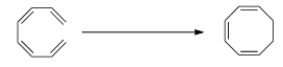
A) cycloaddition reaction
B) electrophilic reaction
C) electrocyclic reaction
D) sigmatropic reaction
A) cycloaddition reaction
B) electrophilic reaction
C) electrocyclic reaction
D) sigmatropic reaction

Question
Question
Question
What is the correct classification of the following reaction? 
A) cycloaddition reaction
B) electrocyclic reaction
C) electrophilic reaction
D) sigmatropic reaction
A) cycloaddition reaction
B) electrocyclic reaction
C) electrophilic reaction
D) sigmatropic reaction
Question
Question
Question
Question
Question
Question
Question
What is the correct classification of the following reaction? 
A) cycloaddition reaction
B) electrophilic reaction
C) electrocyclic reaction
D) sigmatropic reaction
A) cycloaddition reaction
B) electrophilic reaction
C) electrocyclic reaction
D) sigmatropic reaction
Question
Question
What is the organic product of the following electrocyclic reaction? 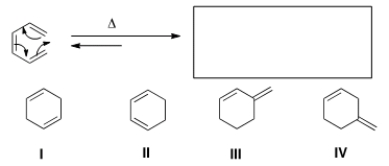
A) I
B) II
C) III
D) IV
A) I
B) II
C) III
D) IV
Question
Question
Question
Question
Question
Question
What is the correct classification of the following reaction? 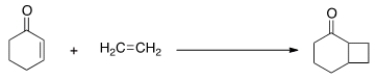
A) cycloaddition reaction
B) electrocyclic reaction
C) electrophilic reaction
D) sigmatropic reaction
A) cycloaddition reaction
B) electrocyclic reaction
C) electrophilic reaction
D) sigmatropic reaction
Question
Question
Question
Question
What type of cycloaddition reaction is shown below? ![<strong>What type of cycloaddition reaction is shown below? </strong> A) [2+2] B) [4+2] C) [4+4] D) [0+2] <div style=padding-top: 35px>](https://d2lvgg3v3hfg70.cloudfront.net/TB5871/11ea9088_7054_5b5a_aec7_e5bd9bd95306_TB5871_00_TB5871_00_TB5871_00_TB5871_00_TB5871_00_TB5871_00_TB5871_00.jpg)
A) [2+2]
B) [4+2]
C) [4+4]
D) [0+2]
A) [2+2]
B) [4+2]
C) [4+4]
D) [0+2]
Question
Question
Question
Question
Question
Predict the major organic product(s) of the following electrocyclic reaction. 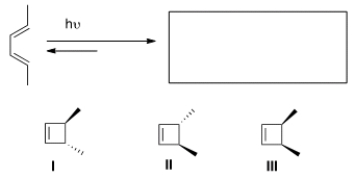
A) Only I
B) Only II
C) Only III
D) Only I and II
A) Only I
B) Only II
C) Only III
D) Only I and II
Question
What type of cycloaddition reaction is shown in the following equation? ![<strong>What type of cycloaddition reaction is shown in the following equation? </strong> A) [2+2] B) [4+2] C) [4+4] D) [0+2] <div style=padding-top: 35px>](https://d2lvgg3v3hfg70.cloudfront.net/TB5871/11ea9088_7054_a97b_aec7_05475357e065_TB5871_00_TB5871_00_TB5871_00_TB5871_00_TB5871_00_TB5871_00_TB5871_00.jpg)
A) [2+2]
B) [4+2]
C) [4+4]
D) [0+2]
A) [2+2]
B) [4+2]
C) [4+4]
D) [0+2]
Question
Predict the major organic product(s) of the following electrocyclic reaction. 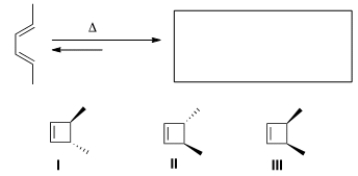
A) Only I
B) Only II
C) Only III
D) Only I and II
A) Only I
B) Only II
C) Only III
D) Only I and II
Question
Question
Question
Question
Predict the major organic product(s) of the following electrocyclic reaction. 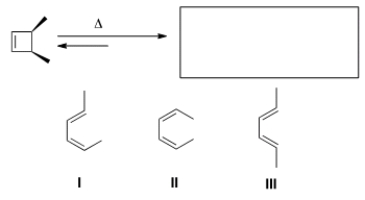
A) Only I
B) Only II
C) Only III
D) Only I and II
A) Only I
B) Only II
C) Only III
D) Only I and II
Question
Question
Question
Question
Question
Predict the major organic product(s) of the following electrocyclic reaction. 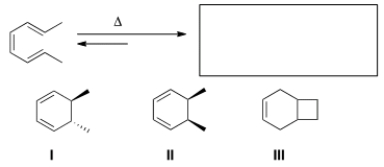
A) Only I
B) Only II
C) Only III
D) Only I and II
A) Only I
B) Only II
C) Only III
D) Only I and II
Question
Question
Question
Question
Question
What is the major organic product of the following Cope rearrangement? 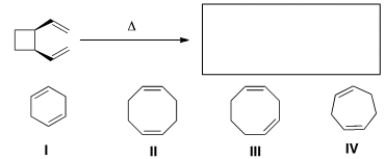
A) I
B) II
C) III
D) IV
A) I
B) II
C) III
D) IV
Question
What is the major organic product of the following Claisen rearrangement? 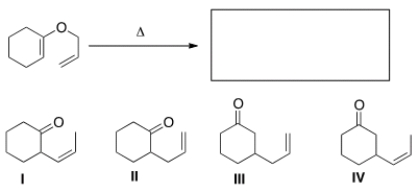
A) I
B) II
C) III
D) IV
A) I
B) II
C) III
D) IV
Question
What type of sigmatropic rearrangement is illustrated below? ![<strong>What type of sigmatropic rearrangement is illustrated below? </strong> A) [1,3] B) [1,4] C) [3,3] D) [1,5] <div style=padding-top: 35px>](https://d2lvgg3v3hfg70.cloudfront.net/TB5871/11ea9088_7055_6ccc_aec7_7b8a2ff856d0_TB5871_00_TB5871_00_TB5871_00_TB5871_00_TB5871_00_TB5871_00_TB5871_00.jpg)
A) [1,3]
B) [1,4]
C) [3,3]
D) [1,5]
A) [1,3]
B) [1,4]
C) [3,3]
D) [1,5]
Question
What is the major organic product of the following oxy-Cope rearrangement? 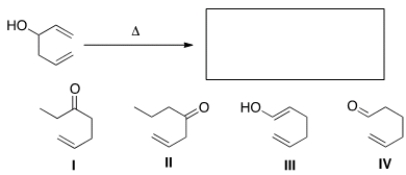
A) I
B) II
C) III
D) IV
A) I
B) II
C) III
D) IV
Question
What type of sigmatropic rearrangement is illustrated below? ![<strong>What type of sigmatropic rearrangement is illustrated below? </strong> A) [1,3] B) [1,4] C) [3,3] D) [1,5] <div style=padding-top: 35px>](https://d2lvgg3v3hfg70.cloudfront.net/TB5871/11ea9088_7055_baed_aec7_af99f6635d03_TB5871_00_TB5871_00_TB5871_00_TB5871_00_TB5871_00_TB5871_00_TB5871_00.jpg)
A) [1,3]
B) [1,4]
C) [3,3]
D) [1,5]
A) [1,3]
B) [1,4]
C) [3,3]
D) [1,5]
Question
Question
What is the major organic product of the following Claisen rearrangement? 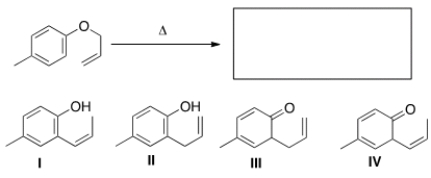
A) I
B) II
C) III
D) IV
A) I
B) II
C) III
D) IV
Question
Question
What type of sigmatropic rearrangement is illustrated below? ![<strong>What type of sigmatropic rearrangement is illustrated below? </strong> A) [1,3] B) [1,4] C) [3,3] D) [1,5] <div style=padding-top: 35px>](https://d2lvgg3v3hfg70.cloudfront.net/TB5871/11ea9088_7055_e1fe_aec7_7f52f6e27045_TB5871_00_TB5871_00_TB5871_00_TB5871_00_TB5871_00_TB5871_00_TB5871_00.jpg)
A) [1,3]
B) [1,4]
C) [3,3]
D) [1,5]
A) [1,3]
B) [1,4]
C) [3,3]
D) [1,5]

Unlock Deck
Sign up to unlock the cards in this deck!
Unlock Deck
Unlock Deck
1/52

Play

Full screen (f)
Deck 27: Pericyclic Reactions
1
What is the correct classification of the following reaction?
A) cycloaddition reaction
B) electrophilic reaction
C) electrocyclic reaction
D) sigmatropic reaction
A) cycloaddition reaction
B) electrophilic reaction
C) electrocyclic reaction
D) sigmatropic reaction
electrocyclic reaction
2
Which of the following statements about a -bonding molecular orbital is true?
A) A -bonding molecular orbital is formed when two p orbitals of similar phase overlap.
B) A -bonding molecular orbital is lower in energy than a -bonding molecular orbital.
C) A -bonding molecular orbital is formed when two p orbitals of opposite phase overlap.
D) Both the statements "a -bonding molecular orbital is formed when two p orbitals of similar phase overlap" and a -bonding molecular orbital is lower in energy than a -bonding molecular orbital" are true.
A) A -bonding molecular orbital is formed when two p orbitals of similar phase overlap.
B) A -bonding molecular orbital is lower in energy than a -bonding molecular orbital.
C) A -bonding molecular orbital is formed when two p orbitals of opposite phase overlap.
D) Both the statements "a -bonding molecular orbital is formed when two p orbitals of similar phase overlap" and a -bonding molecular orbital is lower in energy than a -bonding molecular orbital" are true.
Both the statements "a -bonding molecular orbital is formed when two p orbitals of similar phase overlap" and a -bonding molecular orbital is lower in energy than a -bonding molecular orbital" are true.
3
Which of the following is a type of pericyclic reaction?
A) electrocyclic reactions
B) acyclic reactions
C) cycloelimination reactions
D) electrophilic reactions
A) electrocyclic reactions
B) acyclic reactions
C) cycloelimination reactions
D) electrophilic reactions
electrocyclic reactions
4
What is the correct classification of the following reaction?
A) cycloaddition reaction
B) electrocyclic reaction
C) electrophilic reaction
D) sigmatropic reaction
A) cycloaddition reaction
B) electrocyclic reaction
C) electrophilic reaction
D) sigmatropic reaction
Unlock Deck
Unlock for access to all 52 flashcards in this deck.
Unlock Deck
k this deck
5
Which of the following statements about pericyclic reactions is true?
A) In pericyclic reactions, bonds are broken and formed in multiple steps.
B) In pericyclic reactions, all bonds are broken and formed in a single step.
C) One intermediate has been identified in pericyclic reactions.
D) The transition state in a pericyclic reaction is acyclic.
A) In pericyclic reactions, bonds are broken and formed in multiple steps.
B) In pericyclic reactions, all bonds are broken and formed in a single step.
C) One intermediate has been identified in pericyclic reactions.
D) The transition state in a pericyclic reaction is acyclic.
Unlock Deck
Unlock for access to all 52 flashcards in this deck.
Unlock Deck
k this deck
6
Which of the following statements about cycloaddition reactions is true?
A) Cycloaddition reactions occur only intermolecularly.
B) Cycloaddition reactions occur only intramolecularly.
C) Cycloaddition reactions form a cyclic product with two new bonds.
D) Cycloaddition reactions can be intramolecular or intermolecular.
A) Cycloaddition reactions occur only intermolecularly.
B) Cycloaddition reactions occur only intramolecularly.
C) Cycloaddition reactions form a cyclic product with two new bonds.
D) Cycloaddition reactions can be intramolecular or intermolecular.
Unlock Deck
Unlock for access to all 52 flashcards in this deck.
Unlock Deck
k this deck
7
Which of the following is not a type of pericyclic reactions?
A) cycloadditions
B) nucleophilic reactions
C) electrocyclic reactions
D) sigmatropic rearrangements
A) cycloadditions
B) nucleophilic reactions
C) electrocyclic reactions
D) sigmatropic rearrangements
Unlock Deck
Unlock for access to all 52 flashcards in this deck.
Unlock Deck
k this deck
8
Which of the following statements about electrocyclic ring closure is not true?
A) It is an intramolecular reaction.
B) It requires heat or light.
C) The cyclic product contains one more bond and one fewer bond than the reactants.
D) The cyclic product contains one more bond and one fewer bond than the reactants.
A) It is an intramolecular reaction.
B) It requires heat or light.
C) The cyclic product contains one more bond and one fewer bond than the reactants.
D) The cyclic product contains one more bond and one fewer bond than the reactants.
Unlock Deck
Unlock for access to all 52 flashcards in this deck.
Unlock Deck
k this deck
9
Which of the following statements about molecular orbitals is true?
A) The number of molecular orbitals formed is different from the number of atomic orbitals used.
B) The number of molecular orbitals formed is equal to the number of atomic orbitals used.
C) The number of molecular orbitals formed is equal to twice the number of atomic orbitals used.
D) The number of molecular orbitals formed is equal to half the number of atomic orbitals used.
A) The number of molecular orbitals formed is different from the number of atomic orbitals used.
B) The number of molecular orbitals formed is equal to the number of atomic orbitals used.
C) The number of molecular orbitals formed is equal to twice the number of atomic orbitals used.
D) The number of molecular orbitals formed is equal to half the number of atomic orbitals used.
Unlock Deck
Unlock for access to all 52 flashcards in this deck.
Unlock Deck
k this deck
10
Which of the following statements about pericyclic reactions is true?
A) Pericyclic reactions occur by way of ionic intermediates.
B) Pericyclic reactions occur by way of radical intermediates.
C) Pericyclic reactions involve multiple steps.
D) Reactive intermediates are not formed in pericyclic reactions.
A) Pericyclic reactions occur by way of ionic intermediates.
B) Pericyclic reactions occur by way of radical intermediates.
C) Pericyclic reactions involve multiple steps.
D) Reactive intermediates are not formed in pericyclic reactions.
Unlock Deck
Unlock for access to all 52 flashcards in this deck.
Unlock Deck
k this deck
11
What is the correct classification of the following reaction?
A) cycloaddition reaction
B) electrophilic reaction
C) electrocyclic reaction
D) sigmatropic reaction
A) cycloaddition reaction
B) electrophilic reaction
C) electrocyclic reaction
D) sigmatropic reaction
Unlock Deck
Unlock for access to all 52 flashcards in this deck.
Unlock Deck
k this deck
12
How many bonding molecular orbitals are present in 1,3,5-hexatriene?
A) 3
B) 4
C) 5
D) 6
A) 3
B) 4
C) 5
D) 6
Unlock Deck
Unlock for access to all 52 flashcards in this deck.
Unlock Deck
k this deck
13
What is the organic product of the following electrocyclic reaction?
A) I
B) II
C) III
D) IV
A) I
B) II
C) III
D) IV
Unlock Deck
Unlock for access to all 52 flashcards in this deck.
Unlock Deck
k this deck
14
Which of the following statements about orbitals is true?
A) " orbitals are formed by the linear combination of two sp3 orbitals."
B) " orbitals are formed by the linear combination of two sp2 orbitals."
C) " orbitals are formed by the linear combination of two sp orbitals."
D) " orbitals are formed by the linear combination of two p orbitals."
A) " orbitals are formed by the linear combination of two sp3 orbitals."
B) " orbitals are formed by the linear combination of two sp2 orbitals."
C) " orbitals are formed by the linear combination of two sp orbitals."
D) " orbitals are formed by the linear combination of two p orbitals."
Unlock Deck
Unlock for access to all 52 flashcards in this deck.
Unlock Deck
k this deck
15
Which of the following statements about sigmatropic reactions is true?
A) The reactants contain one more bond than the product.
B) The product contains one more bond than the reactant.
C) A bond is broken in the reactant.
D) A bond is broken in the reactant.
A) The reactants contain one more bond than the product.
B) The product contains one more bond than the reactant.
C) A bond is broken in the reactant.
D) A bond is broken in the reactant.
Unlock Deck
Unlock for access to all 52 flashcards in this deck.
Unlock Deck
k this deck
16
Which of the following statements about a * antibonding molecular orbital is true?
A) A * antibonding molecular orbital is formed when two p orbitals of similar phase overlap.
B) A * antibonding molecular orbital is formed when two p orbitals of opposite phase overlap.
C) A * antibonding molecular orbital is a higher-energy molecular orbital than a bonding molecular orbital.
D) Both the statements "a * antibonding molecular orbital is formed when two p orbitals of opposite phase overlap" and "a * antibonding molecular orbital is a higher-energy molecular orbital than a bonding molecular orbital" are true.
A) A * antibonding molecular orbital is formed when two p orbitals of similar phase overlap.
B) A * antibonding molecular orbital is formed when two p orbitals of opposite phase overlap.
C) A * antibonding molecular orbital is a higher-energy molecular orbital than a bonding molecular orbital.
D) Both the statements "a * antibonding molecular orbital is formed when two p orbitals of opposite phase overlap" and "a * antibonding molecular orbital is a higher-energy molecular orbital than a bonding molecular orbital" are true.
Unlock Deck
Unlock for access to all 52 flashcards in this deck.
Unlock Deck
k this deck
17
Which of the following statements about an electrocyclic ring-opening reaction is not true?
A) An electrocyclic ring-opening reaction is an intramolecular reaction.
B) An electrocyclic ring-opening reaction requires a source of energy (heat or light).
C) The product of an electrocyclic ring-opening reaction contains one fewer bond than the reactant.
D) The product of an electrocyclic ring-opening reaction contains one more bond than the reactant.
A) An electrocyclic ring-opening reaction is an intramolecular reaction.
B) An electrocyclic ring-opening reaction requires a source of energy (heat or light).
C) The product of an electrocyclic ring-opening reaction contains one fewer bond than the reactant.
D) The product of an electrocyclic ring-opening reaction contains one more bond than the reactant.
Unlock Deck
Unlock for access to all 52 flashcards in this deck.
Unlock Deck
k this deck
18
Which of the following statements about pericyclic reactions is not true?
A) Pericyclic reactions are concerted reactions.
B) Pericyclic reactions proceed through a cyclic transition state.
C) Pericyclic reactions are not stereospecific.
D) Pericyclic reactions require light or heat.
A) Pericyclic reactions are concerted reactions.
B) Pericyclic reactions proceed through a cyclic transition state.
C) Pericyclic reactions are not stereospecific.
D) Pericyclic reactions require light or heat.
Unlock Deck
Unlock for access to all 52 flashcards in this deck.
Unlock Deck
k this deck
19
What is the correct classification of the following reaction?
A) cycloaddition reaction
B) electrocyclic reaction
C) electrophilic reaction
D) sigmatropic reaction
A) cycloaddition reaction
B) electrocyclic reaction
C) electrophilic reaction
D) sigmatropic reaction
Unlock Deck
Unlock for access to all 52 flashcards in this deck.
Unlock Deck
k this deck
20
How many molecular orbitals are present in 1,3,5-hexatriene?
A) 3
B) 4
C) 5
D) 6
A) 3
B) 4
C) 5
D) 6
Unlock Deck
Unlock for access to all 52 flashcards in this deck.
Unlock Deck
k this deck
21
Which of the following statements about orbital symmetry and cycloaddition reactions is true?
A) Thermal cycloadditions involving an even number of bonds proceed by a suprafacial pathway.
B) Thermal cycloaddition involving an odd number of bonds proceed by an antarafacial pathway.
C) Photochemical cycloadditions involving an even number of bonds proceed by an antarafacial pathway.
D) Photochemical cycloadditions involving an even number of bonds proceed by a suprafacial pathway.
A) Thermal cycloadditions involving an even number of bonds proceed by a suprafacial pathway.
B) Thermal cycloaddition involving an odd number of bonds proceed by an antarafacial pathway.
C) Photochemical cycloadditions involving an even number of bonds proceed by an antarafacial pathway.
D) Photochemical cycloadditions involving an even number of bonds proceed by a suprafacial pathway.
Unlock Deck
Unlock for access to all 52 flashcards in this deck.
Unlock Deck
k this deck
22
Which of the following statements about thermal electrocyclic reactions is not true?
A) The number of bonds in the conjugated polyene determines whether rotation is conrotatory or disrotatory.
B) Thermal electrocyclic reactions occur in a disrotatory fashion for a conjugated polyene with an odd number of bonds.
C) Thermal electrocyclic reactions occur in a conrotatory fashion for a conjugated polyene with an even number of bonds.
D) In thermal reactions, we consider the orbitals of the HOMO of the ground state electronic configuration to determine the course of the reaction.
A) The number of bonds in the conjugated polyene determines whether rotation is conrotatory or disrotatory.
B) Thermal electrocyclic reactions occur in a disrotatory fashion for a conjugated polyene with an odd number of bonds.
C) Thermal electrocyclic reactions occur in a conrotatory fashion for a conjugated polyene with an even number of bonds.
D) In thermal reactions, we consider the orbitals of the HOMO of the ground state electronic configuration to determine the course of the reaction.
Unlock Deck
Unlock for access to all 52 flashcards in this deck.
Unlock Deck
k this deck
23
What type of cycloaddition reaction is shown below?
A) [2+2]
B) [4+2]
C) [4+4]
D) [0+2]
A) [2+2]
B) [4+2]
C) [4+4]
D) [0+2]
Unlock Deck
Unlock for access to all 52 flashcards in this deck.
Unlock Deck
k this deck
24
Which of the following statements about electrocyclic reactions is true?
A) An electrocyclic reaction is generally irreversible.
B) Generally, an acyclic triene is favored over a six-membered ring at equilibrium.
C) Generally, a four-membered ring is favored over an acyclic diene at equilibrium.
D) An electrocyclic reaction is generally reversible.
A) An electrocyclic reaction is generally irreversible.
B) Generally, an acyclic triene is favored over a six-membered ring at equilibrium.
C) Generally, a four-membered ring is favored over an acyclic diene at equilibrium.
D) An electrocyclic reaction is generally reversible.
Unlock Deck
Unlock for access to all 52 flashcards in this deck.
Unlock Deck
k this deck
25
How many molecular orbitals are present in 1,3,5,7,9-decapentaene?
A) 4
B) 5
C) 10
D) 12
A) 4
B) 5
C) 10
D) 12
Unlock Deck
Unlock for access to all 52 flashcards in this deck.
Unlock Deck
k this deck
26
Which of the following statements about cycloaddition reactions is true?
A) Cycloaddition reactions can be initiated by heat only.
B) Cycloaddition reactions can be initiated by light only.
C) Cycloaddition reactions can be initiated by heat or light.
D) Cycloaddition reactions are identified by the number of electrons in the two products.
A) Cycloaddition reactions can be initiated by heat only.
B) Cycloaddition reactions can be initiated by light only.
C) Cycloaddition reactions can be initiated by heat or light.
D) Cycloaddition reactions are identified by the number of electrons in the two products.
Unlock Deck
Unlock for access to all 52 flashcards in this deck.
Unlock Deck
k this deck
27
Which of the following statements about cycloaddition reactions is not true?
A) Cycloaddition reactions form a cyclic product with two new bonds.
B) The course of the reaction is determined by the symmetry of the molecular orbitals of the products.
C) Cycloaddition reactions are concerted.
D) Cycloaddition reactions are stereospecific.
A) Cycloaddition reactions form a cyclic product with two new bonds.
B) The course of the reaction is determined by the symmetry of the molecular orbitals of the products.
C) Cycloaddition reactions are concerted.
D) Cycloaddition reactions are stereospecific.
Unlock Deck
Unlock for access to all 52 flashcards in this deck.
Unlock Deck
k this deck
28
Predict the major organic product(s) of the following electrocyclic reaction.
A) Only I
B) Only II
C) Only III
D) Only I and II
A) Only I
B) Only II
C) Only III
D) Only I and II
Unlock Deck
Unlock for access to all 52 flashcards in this deck.
Unlock Deck
k this deck
29
What type of cycloaddition reaction is shown in the following equation?
A) [2+2]
B) [4+2]
C) [4+4]
D) [0+2]
A) [2+2]
B) [4+2]
C) [4+4]
D) [0+2]
Unlock Deck
Unlock for access to all 52 flashcards in this deck.
Unlock Deck
k this deck
30
Predict the major organic product(s) of the following electrocyclic reaction.
A) Only I
B) Only II
C) Only III
D) Only I and II
A) Only I
B) Only II
C) Only III
D) Only I and II
Unlock Deck
Unlock for access to all 52 flashcards in this deck.
Unlock Deck
k this deck
31
Which of the following statements about photochemical electrocyclic reactions is not true?
A) In photochemical reactions, we consider the orbitals of the HOMO of the excited state to determine the course of the reaction.
B) Photochemical electrocyclic reactions occur in a conrotatory fashion for a conjugated polyene with an odd number of bonds.
C) Photochemical electrocyclic reactions occur in a disrotatory fashion for a conjugated polyene with an even number of bonds.
D) In photochemical reactions, we consider the orbitals of the LUMO of the excited state to determine the course of the reaction.
A) In photochemical reactions, we consider the orbitals of the HOMO of the excited state to determine the course of the reaction.
B) Photochemical electrocyclic reactions occur in a conrotatory fashion for a conjugated polyene with an odd number of bonds.
C) Photochemical electrocyclic reactions occur in a disrotatory fashion for a conjugated polyene with an even number of bonds.
D) In photochemical reactions, we consider the orbitals of the LUMO of the excited state to determine the course of the reaction.
Unlock Deck
Unlock for access to all 52 flashcards in this deck.
Unlock Deck
k this deck
32
How many nodes are present in 5 of 1,3,5,7,9-decapentaene?
A) 2
B) 3
C) 4
D) 5
A) 2
B) 3
C) 4
D) 5
Unlock Deck
Unlock for access to all 52 flashcards in this deck.
Unlock Deck
k this deck
33
Which of the following statements about sigmatropic reactions is not true?
A) A sigmatropic reaction is an intramolecular pericyclic reaction.
B) In a sigmatropic reaction, bond is broken in one of the reactants.
C) The bonds rearrange in a sigmatropic reaction.
D) The number of bonds in the reactants and product differs in a sigmatropic reaction.
A) A sigmatropic reaction is an intramolecular pericyclic reaction.
B) In a sigmatropic reaction, bond is broken in one of the reactants.
C) The bonds rearrange in a sigmatropic reaction.
D) The number of bonds in the reactants and product differs in a sigmatropic reaction.
Unlock Deck
Unlock for access to all 52 flashcards in this deck.
Unlock Deck
k this deck
34
Predict the major organic product(s) of the following electrocyclic reaction.
A) Only I
B) Only II
C) Only III
D) Only I and II
A) Only I
B) Only II
C) Only III
D) Only I and II
Unlock Deck
Unlock for access to all 52 flashcards in this deck.
Unlock Deck
k this deck
35
How many bonding molecular orbitals are present in 1,3,5,7,9-decapentaene?
A) 4
B) 5
C) 10
D) 12
A) 4
B) 5
C) 10
D) 12
Unlock Deck
Unlock for access to all 52 flashcards in this deck.
Unlock Deck
k this deck
36
What are the two modes of bond formation in cycloaddition reactions?
A) suprafacial and antarafacial bond formations.
B) superfacial and antifacial bond formations.
C) suprafacial and synfacial bond formations.
D) synfacial and antifacial bond formations.
A) suprafacial and antarafacial bond formations.
B) superfacial and antifacial bond formations.
C) suprafacial and synfacial bond formations.
D) synfacial and antifacial bond formations.
Unlock Deck
Unlock for access to all 52 flashcards in this deck.
Unlock Deck
k this deck
37
Why is the Diels-Alder reaction called a thermal [4+2] cycloaddition?
A) Because the reaction is initiated by heat; the diene has four electrons and the dienophile has two electrons.
B) Because the reaction is initiated by light; the diene has four electrons and the dienophile has two electrons.
C) Because the reaction is initiated by heat; the dienophile has four electrons and the diene has two electrons.
D) Because the reaction is initiated by light; the dienophile has four electrons and the diene has two electrons.
A) Because the reaction is initiated by heat; the diene has four electrons and the dienophile has two electrons.
B) Because the reaction is initiated by light; the diene has four electrons and the dienophile has two electrons.
C) Because the reaction is initiated by heat; the dienophile has four electrons and the diene has two electrons.
D) Because the reaction is initiated by light; the dienophile has four electrons and the diene has two electrons.
Unlock Deck
Unlock for access to all 52 flashcards in this deck.
Unlock Deck
k this deck
38
Which of the following statements about [2+2] cycloaddition reactions between two alkenes is true?
A) The reaction is initiated by heat.
B) The reaction is initiated by light.
C) The product is a cyclopentane derivative.
D) Each reactant contains two electrons that participate in the formation of new bonds.
A) The reaction is initiated by heat.
B) The reaction is initiated by light.
C) The product is a cyclopentane derivative.
D) Each reactant contains two electrons that participate in the formation of new bonds.
Unlock Deck
Unlock for access to all 52 flashcards in this deck.
Unlock Deck
k this deck
39
Predict the major organic product(s) of the following electrocyclic reaction.
A) Only I
B) Only II
C) Only III
D) Only I and II
A) Only I
B) Only II
C) Only III
D) Only I and II
Unlock Deck
Unlock for access to all 52 flashcards in this deck.
Unlock Deck
k this deck
40
Which of the following statements about orbital symmetry and cycloaddition reactions is true?
A) Thermal cycloadditions involving an even number of bonds proceed by a suprafacial pathway.
B) Thermal cycloadditions involving an odd number of bonds proceed by a suprafacial pathway.
C) Photochemical cycloadditions involving an odd number of bonds proceed by a suprafacial pathway.
D) Photochemical sycloadditions involving an even number of bonds proceed by an antarafacial pathway.
A) Thermal cycloadditions involving an even number of bonds proceed by a suprafacial pathway.
B) Thermal cycloadditions involving an odd number of bonds proceed by a suprafacial pathway.
C) Photochemical cycloadditions involving an odd number of bonds proceed by a suprafacial pathway.
D) Photochemical sycloadditions involving an even number of bonds proceed by an antarafacial pathway.
Unlock Deck
Unlock for access to all 52 flashcards in this deck.
Unlock Deck
k this deck
41
Which of the following statements about the Claisen rearrangement is true?
A) The Claisen rearrangement occurs readily in a suprafacial pathway under photochemical conditions.
B) The Claisen rearrangement occurs readily in an antarafacial pathway under thermal conditions.
C) The Claisen rearrangement involves three electron pairs; two in bonds and one in a bond.
D) The Claisen rearrangement involves the rearrangement of an unsaturated ether to a , -unsaturated carbonyl compound.
A) The Claisen rearrangement occurs readily in a suprafacial pathway under photochemical conditions.
B) The Claisen rearrangement occurs readily in an antarafacial pathway under thermal conditions.
C) The Claisen rearrangement involves three electron pairs; two in bonds and one in a bond.
D) The Claisen rearrangement involves the rearrangement of an unsaturated ether to a , -unsaturated carbonyl compound.
Unlock Deck
Unlock for access to all 52 flashcards in this deck.
Unlock Deck
k this deck
42
Which of the following statements about the Cope rearrangement is not true?
A) The Cope rearrangement involves the rearrangement of a 1,5-diene to an isomeric 1,5-diene.
B) The Cope rearrangement takes place readily in a suprafacial pathway under photochemical conditions.
C) The Cope rearrangement involves three electron pairs; two in bonds and one in a bond.
D) The Cope rearrangement takes place readily in a suprafacial pathway, when heated.
A) The Cope rearrangement involves the rearrangement of a 1,5-diene to an isomeric 1,5-diene.
B) The Cope rearrangement takes place readily in a suprafacial pathway under photochemical conditions.
C) The Cope rearrangement involves three electron pairs; two in bonds and one in a bond.
D) The Cope rearrangement takes place readily in a suprafacial pathway, when heated.
Unlock Deck
Unlock for access to all 52 flashcards in this deck.
Unlock Deck
k this deck
43
Which of the following statements about a thermal reaction involving an even number of electron pairs is true?
A) A thermal reaction involving an even number of electron pairs is conrotatory or antarafacial
B) A thermal reaction involving an even number of electron pairs is disrotatory or suprafacial
C) A thermal reaction involving an even number of electron pairs is conrotatory or suprafacial
D) A thermal reaction involving an even number of electron pairs is disrotatory or antarafacial
A) A thermal reaction involving an even number of electron pairs is conrotatory or antarafacial
B) A thermal reaction involving an even number of electron pairs is disrotatory or suprafacial
C) A thermal reaction involving an even number of electron pairs is conrotatory or suprafacial
D) A thermal reaction involving an even number of electron pairs is disrotatory or antarafacial
Unlock Deck
Unlock for access to all 52 flashcards in this deck.
Unlock Deck
k this deck
44
What is the major organic product of the following Cope rearrangement?
A) I
B) II
C) III
D) IV
A) I
B) II
C) III
D) IV
Unlock Deck
Unlock for access to all 52 flashcards in this deck.
Unlock Deck
k this deck
45
What is the major organic product of the following Claisen rearrangement?
A) I
B) II
C) III
D) IV
A) I
B) II
C) III
D) IV
Unlock Deck
Unlock for access to all 52 flashcards in this deck.
Unlock Deck
k this deck
46
What type of sigmatropic rearrangement is illustrated below?
A) [1,3]
B) [1,4]
C) [3,3]
D) [1,5]
A) [1,3]
B) [1,4]
C) [3,3]
D) [1,5]
Unlock Deck
Unlock for access to all 52 flashcards in this deck.
Unlock Deck
k this deck
47
What is the major organic product of the following oxy-Cope rearrangement?
A) I
B) II
C) III
D) IV
A) I
B) II
C) III
D) IV
Unlock Deck
Unlock for access to all 52 flashcards in this deck.
Unlock Deck
k this deck
48
What type of sigmatropic rearrangement is illustrated below?
A) [1,3]
B) [1,4]
C) [3,3]
D) [1,5]
A) [1,3]
B) [1,4]
C) [3,3]
D) [1,5]
Unlock Deck
Unlock for access to all 52 flashcards in this deck.
Unlock Deck
k this deck
49
Which of the following statements about sigmatropic rearrangements and orbital symmetry is not true?
A) Reactions involving six atoms or fewer must take place by suprafacial pathways.
B) In a suprafacial rearrangement, the new bond forms on the opposite side of the system as the broken bond.
C) In an antarafacial rearrangement, the new bond forms on the opposite side of the system as the broken bond.
D) In a suprafacial rearrangement, the new bond forms on the same side of the system as the broken bond.
A) Reactions involving six atoms or fewer must take place by suprafacial pathways.
B) In a suprafacial rearrangement, the new bond forms on the opposite side of the system as the broken bond.
C) In an antarafacial rearrangement, the new bond forms on the opposite side of the system as the broken bond.
D) In a suprafacial rearrangement, the new bond forms on the same side of the system as the broken bond.
Unlock Deck
Unlock for access to all 52 flashcards in this deck.
Unlock Deck
k this deck
50
What is the major organic product of the following Claisen rearrangement?
A) I
B) II
C) III
D) IV
A) I
B) II
C) III
D) IV
Unlock Deck
Unlock for access to all 52 flashcards in this deck.
Unlock Deck
k this deck
51
Which of the following is not a correct designation for a sigmatropic rearrangement?
A) [1,3]
B) [1,5]
C) [3,3]
D) [3,1]
A) [1,3]
B) [1,5]
C) [3,3]
D) [3,1]
Unlock Deck
Unlock for access to all 52 flashcards in this deck.
Unlock Deck
k this deck
52
What type of sigmatropic rearrangement is illustrated below?
A) [1,3]
B) [1,4]
C) [3,3]
D) [1,5]
A) [1,3]
B) [1,4]
C) [3,3]
D) [1,5]
Unlock Deck
Unlock for access to all 52 flashcards in this deck.
Unlock Deck
k this deck
Unlock Deck
Unlock for access to all 52 flashcards in this deck.







