





 Chat with AI

Deck 4: The Energy of Life
Full screen (f)

Question

Question
Question
Question
Question
Question
Question
Question
Question
Question
Question
Question
Question
Question
Question
Question
Question
Question
Question
Question
Question
Question
Question
Question
Question
Question
Question
Question
Question
Question
Question
Question
Question
Question
Question
Question
Question
Question
Question
Question
Question
Question
Question
Question
Question
Question
Question
Question
Question
Question
Question
Question
Question
Question
Question
Question
Question
Question
Question
Question
Question
Question
What is the dependent variable in figure 4.24? 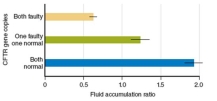
A)The number of defective copies of the CFTR gene in mice
B)The number of defective copies of the CFTR gene in humans
C)The amount of fluid in the intestines
D)Whether or not the subjects were exposed to cholera toxin
E)Whether or not the subjects were exposed to Vibrio cholera bacteria
A)The number of defective copies of the CFTR gene in mice
B)The number of defective copies of the CFTR gene in humans
C)The amount of fluid in the intestines
D)Whether or not the subjects were exposed to cholera toxin
E)Whether or not the subjects were exposed to Vibrio cholera bacteria
Question
Question
Question
Question
Question
Question
Question
Question
What is the independent variable in figure 4.24? 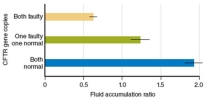
A)The number of defective copies of the CFTR gene in humans
B)The number of defective copies of the CFTR gene in mice
C)The amount of fluid in the intestines
D)Whether or not the subjects were exposed to cholera toxin
E)Whether or not the subjects were exposed to Vibrio cholera bacteria.
A)The number of defective copies of the CFTR gene in humans
B)The number of defective copies of the CFTR gene in mice
C)The amount of fluid in the intestines
D)Whether or not the subjects were exposed to cholera toxin
E)Whether or not the subjects were exposed to Vibrio cholera bacteria.
Question
Question
Question
Question
Question
Question
Question
What did the scientists conclude from figure 4.24? 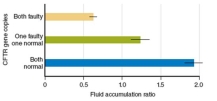
A)The fewer copies of a defective CFTR gene an organism has, the more resistant it is to cholera toxin
B)The number of defective CFTR genes did not correlate with resistance to cholera toxin
C)The more cholera toxin an organism was exposed to, the more copies of its CFTR gene that became defective
D)The more cholera toxin an organism was exposed to, fewer copies of its CFTR gene that became defective
E)The more copies of a defective CFTR gene an organism has, the more resistant it is to cholera toxin
A)The fewer copies of a defective CFTR gene an organism has, the more resistant it is to cholera toxin
B)The number of defective CFTR genes did not correlate with resistance to cholera toxin
C)The more cholera toxin an organism was exposed to, the more copies of its CFTR gene that became defective
D)The more cholera toxin an organism was exposed to, fewer copies of its CFTR gene that became defective
E)The more copies of a defective CFTR gene an organism has, the more resistant it is to cholera toxin
Question
Question
Question

Unlock Deck
Sign up to unlock the cards in this deck!
Unlock Deck
Unlock Deck
1/80

Play

Full screen (f)
Deck 4: The Energy of Life
1
Reduction means:
A)The gain of oxygen by a cell
B)The loss of oxygen from a cell
C)The gain of electrons by a molecule
D)The loss of electrons by a molecule
A)The gain of oxygen by a cell
B)The loss of oxygen from a cell
C)The gain of electrons by a molecule
D)The loss of electrons by a molecule
C
2
The amount of energy required to raise the temperature of one kilogram of water by one degree Celsius is a:
A)Calorie
B)Joule
C)Kilocalorie
D)Measure of density
E)None of these are correct
A)Calorie
B)Joule
C)Kilocalorie
D)Measure of density
E)None of these are correct
C
3
Which statement is not part of the first law of thermodynamics?
A)The amount of energy in the universe is constant
B)Energy cannot be created or destroyed
C)Energy can be converted to other forms of energy
D)Any energy transformation loses some energy to its surroundings as heat
E)None of these are correct
A)The amount of energy in the universe is constant
B)Energy cannot be created or destroyed
C)Energy can be converted to other forms of energy
D)Any energy transformation loses some energy to its surroundings as heat
E)None of these are correct
D
4
Oxidation means:
A)The gain of oxygen by a cell
B)The loss of electrons from a molecule
C)The loss of oxygen by a cell
D)The gain of electrons by a molecule
A)The gain of oxygen by a cell
B)The loss of electrons from a molecule
C)The loss of oxygen by a cell
D)The gain of electrons by a molecule
Unlock Deck
Unlock for access to all 80 flashcards in this deck.
Unlock Deck
k this deck
5
The process of phosphorylation:
A)Releases a phosphate group from one molecule
B)All are correct
C)Adds a phosphate group to a molecule
D)May change the shape of the target molecule
E)May energize the target molecule
A)Releases a phosphate group from one molecule
B)All are correct
C)Adds a phosphate group to a molecule
D)May change the shape of the target molecule
E)May energize the target molecule
Unlock Deck
Unlock for access to all 80 flashcards in this deck.
Unlock Deck
k this deck
6
Oxidation-reduction reactions:
A)Transfer electrons from one molecule to another
B)Are not used by living cells
C)Transfer protons from one molecule to another
D)Reduce the amount of oxygen in the cell
E)Increase the amount of oxygen in the cell
A)Transfer electrons from one molecule to another
B)Are not used by living cells
C)Transfer protons from one molecule to another
D)Reduce the amount of oxygen in the cell
E)Increase the amount of oxygen in the cell
Unlock Deck
Unlock for access to all 80 flashcards in this deck.
Unlock Deck
k this deck
7
Entropy is:
A)Order
B)Complexity
C)Disorder
D)Both order and disorder are correct
E)Both complexity and disorder are correct
A)Order
B)Complexity
C)Disorder
D)Both order and disorder are correct
E)Both complexity and disorder are correct
Unlock Deck
Unlock for access to all 80 flashcards in this deck.
Unlock Deck
k this deck
8
The chemical formula for glucose is:
A)C6H6O6
B)C12H6O12
C)C12H22O11
D)C6H6O12
E)C6H12O6
A)C6H6O6
B)C12H6O12
C)C12H22O11
D)C6H6O12
E)C6H12O6
Unlock Deck
Unlock for access to all 80 flashcards in this deck.
Unlock Deck
k this deck
9
An endergonic reaction is a reaction that:
A)Requires an input of energy
B)That typically builds complex molecules from smaller molecules
C)Releases energy to its surroundings
D)Both releases energy to its surroundings and typically build complex molecules from smaller molecules are correct
E)Both requires an input of energy and typically builds complex molecules from smaller molecules are correct
A)Requires an input of energy
B)That typically builds complex molecules from smaller molecules
C)Releases energy to its surroundings
D)Both releases energy to its surroundings and typically build complex molecules from smaller molecules are correct
E)Both requires an input of energy and typically builds complex molecules from smaller molecules are correct
Unlock Deck
Unlock for access to all 80 flashcards in this deck.
Unlock Deck
k this deck
10
The energy source that powers the process of photosynthesis is:
A)Water
B)Glucose
C)Carbon dioxide
D)Sunlight
E)Oxygen
A)Water
B)Glucose
C)Carbon dioxide
D)Sunlight
E)Oxygen
Unlock Deck
Unlock for access to all 80 flashcards in this deck.
Unlock Deck
k this deck
11
The metabolic rate of individuals is influenced by:
A)Age
B)Weight
C)The amount of thyroxin produced by the thyroid
D)The amount of body fat
E)All are correct
A)Age
B)Weight
C)The amount of thyroxin produced by the thyroid
D)The amount of body fat
E)All are correct
Unlock Deck
Unlock for access to all 80 flashcards in this deck.
Unlock Deck
k this deck
12
Oxidation-reduction reactions:
A)Never occur at the same time
B)Remove electrons from both molecules involved
C)Remove protons from one molecule and join them to another molecule
D)Occur simultaneously
E)Remove oxygen from the cell
A)Never occur at the same time
B)Remove electrons from both molecules involved
C)Remove protons from one molecule and join them to another molecule
D)Occur simultaneously
E)Remove oxygen from the cell
Unlock Deck
Unlock for access to all 80 flashcards in this deck.
Unlock Deck
k this deck
13
In which type of metabolic pathway is the product of the last reaction also the starting material of the first?
A)A straight chain
B)A cycle
C)A branched chain
D)This is impossible
A)A straight chain
B)A cycle
C)A branched chain
D)This is impossible
Unlock Deck
Unlock for access to all 80 flashcards in this deck.
Unlock Deck
k this deck
14
Which of the following is not an example of kinetic energy?
A)Heat
B)Light
C)Sound
D)The energy in chemical bonds
E)Random molecular movement
A)Heat
B)Light
C)Sound
D)The energy in chemical bonds
E)Random molecular movement
Unlock Deck
Unlock for access to all 80 flashcards in this deck.
Unlock Deck
k this deck
15
Coupled reactions:
A)Are reactions in which a exergonic reaction drives an endergonic reaction
B)Are reactions in which a exergonic reaction drives a spontaneous reaction
C)Are reactions in which a endergonic reaction drives an exergonic reaction
D)Are reactions in which a endergonic reaction drives a spontaneous reaction
A)Are reactions in which a exergonic reaction drives an endergonic reaction
B)Are reactions in which a exergonic reaction drives a spontaneous reaction
C)Are reactions in which a endergonic reaction drives an exergonic reaction
D)Are reactions in which a endergonic reaction drives a spontaneous reaction
Unlock Deck
Unlock for access to all 80 flashcards in this deck.
Unlock Deck
k this deck
16
The reactants for photosynthesis are:
A)Water and carbon dioxide
B)Organic compounds
C)Glucose and water
D)Glucose and carbon dioxide
E)Glucose and sunlight
A)Water and carbon dioxide
B)Organic compounds
C)Glucose and water
D)Glucose and carbon dioxide
E)Glucose and sunlight
Unlock Deck
Unlock for access to all 80 flashcards in this deck.
Unlock Deck
k this deck
17
At chemical equilibrium:
A)No reactions are occurring in either direction
B)There are no more products being formed
C)There are no more reactants for the cell to utilize
D)The amount of reactants is equal to the amount of products
E)Reaction rates are in balance
A)No reactions are occurring in either direction
B)There are no more products being formed
C)There are no more reactants for the cell to utilize
D)The amount of reactants is equal to the amount of products
E)Reaction rates are in balance
Unlock Deck
Unlock for access to all 80 flashcards in this deck.
Unlock Deck
k this deck
18
The breakdown of glucose to carbon dioxide and water is:
A)An endergonic reaction in photosynthesis
B)An endergonic reaction in cellular respiration
C)An exergonic reaction in photosynthesis
D)An exergonic reaction in cellular respiration
A)An endergonic reaction in photosynthesis
B)An endergonic reaction in cellular respiration
C)An exergonic reaction in photosynthesis
D)An exergonic reaction in cellular respiration
Unlock Deck
Unlock for access to all 80 flashcards in this deck.
Unlock Deck
k this deck
19
Sucrose is a disaccharide consisting of the monosaccharides:
A)Fructose and glucose
B)Glucose and glucose
C)Galactose and fructose
D)Glucose and galactose
A)Fructose and glucose
B)Glucose and glucose
C)Galactose and fructose
D)Glucose and galactose
Unlock Deck
Unlock for access to all 80 flashcards in this deck.
Unlock Deck
k this deck
20
An example (examples)of potential energy is (are):
A)Chemical bonds and concentration gradients
B)Light and chemical bonds
C)Concentration gradients
D)Chemical bonds
E)Light
A)Chemical bonds and concentration gradients
B)Light and chemical bonds
C)Concentration gradients
D)Chemical bonds
E)Light
Unlock Deck
Unlock for access to all 80 flashcards in this deck.
Unlock Deck
k this deck
21
Active transport is different from simple diffusion in that active transport:
A)Requires energy
B)Moves molecules against a concentration gradient
C)Requires proteins embedded within the cell membrane
D)Moves molecules from an area of lower concentration to an area of higher concentration
E)All are correct
A)Requires energy
B)Moves molecules against a concentration gradient
C)Requires proteins embedded within the cell membrane
D)Moves molecules from an area of lower concentration to an area of higher concentration
E)All are correct
Unlock Deck
Unlock for access to all 80 flashcards in this deck.
Unlock Deck
k this deck
22
Beriberi is caused by a deficiency of:
A)Vitamin B1
B)Niacin
C)Vitamin C
D)Minerals
E)None are correct
A)Vitamin B1
B)Niacin
C)Vitamin C
D)Minerals
E)None are correct
Unlock Deck
Unlock for access to all 80 flashcards in this deck.
Unlock Deck
k this deck
23
Simple diffusion:
A)Requires energy
B)Utilizes proteins to move molecules across a membrane
C)Moves molecules against a concentration gradient
D)Cannot occur without a membrane present
E)Does not require energy
A)Requires energy
B)Utilizes proteins to move molecules across a membrane
C)Moves molecules against a concentration gradient
D)Cannot occur without a membrane present
E)Does not require energy
Unlock Deck
Unlock for access to all 80 flashcards in this deck.
Unlock Deck
k this deck
24
An enzyme:
A)Is not catalytic
B)Is not necessary to sustain life in a cell
C)Both A and B are correct
D)Is a protein
E)Both A and C are correct
A)Is not catalytic
B)Is not necessary to sustain life in a cell
C)Both A and B are correct
D)Is a protein
E)Both A and C are correct
Unlock Deck
Unlock for access to all 80 flashcards in this deck.
Unlock Deck
k this deck
25
Pellagra is caused by a deficiency of:
A)Vitamin C
B)Vitamin B1
C)Niacin
D)Minerals
E)None are correct
A)Vitamin C
B)Vitamin B1
C)Niacin
D)Minerals
E)None are correct
Unlock Deck
Unlock for access to all 80 flashcards in this deck.
Unlock Deck
k this deck
26
Competitive inhibition of enzymes:
A)Occurs when a substance other than the substrate binds at the active site of an enzyme
B)Occurs when a substance binds to an enzyme at a site away from the active site
C)Occurs by denaturation of an enzyme
D)Occurs by blocking the production of an enzyme
A)Occurs when a substance other than the substrate binds at the active site of an enzyme
B)Occurs when a substance binds to an enzyme at a site away from the active site
C)Occurs by denaturation of an enzyme
D)Occurs by blocking the production of an enzyme
Unlock Deck
Unlock for access to all 80 flashcards in this deck.
Unlock Deck
k this deck
27
Enzymes speed chemical reactions by:
A)Lowering the amount of reactants that are needed
B)Maintaining chemical equilibrium
C)Lowering the energy required to start a chemical reaction
D)Raising the temperature of the surroundings
E)Supplying energy to the reaction process
A)Lowering the amount of reactants that are needed
B)Maintaining chemical equilibrium
C)Lowering the energy required to start a chemical reaction
D)Raising the temperature of the surroundings
E)Supplying energy to the reaction process
Unlock Deck
Unlock for access to all 80 flashcards in this deck.
Unlock Deck
k this deck
28
Which of the following are examples of kinetic energy?
A)Electrons moving through the electron transport chain, and protons moving through ATPase
B)Electrons in chemical bonds, proton gradient, ATP
C)Electrons moving through electron transport chain, proton gradient
D)Protons moving through ATPase, ATP
E)All are correct
A)Electrons moving through the electron transport chain, and protons moving through ATPase
B)Electrons in chemical bonds, proton gradient, ATP
C)Electrons moving through electron transport chain, proton gradient
D)Protons moving through ATPase, ATP
E)All are correct
Unlock Deck
Unlock for access to all 80 flashcards in this deck.
Unlock Deck
k this deck
29
Turgor pressure is not:
A)Due to a walled cell being in a hypertonic environment
B)Necessary to keep plants from wilting
C)The force of water against the inside of the cell wall
D)Due to osmosis
E)Due to a walled cell being in a hypotonic environment
A)Due to a walled cell being in a hypertonic environment
B)Necessary to keep plants from wilting
C)The force of water against the inside of the cell wall
D)Due to osmosis
E)Due to a walled cell being in a hypotonic environment
Unlock Deck
Unlock for access to all 80 flashcards in this deck.
Unlock Deck
k this deck
30
The region of an enzyme that catalyzes reactions is called:
A)An active site
B)A binding pocket
C)A reaction site
D)A catalyst site
E)An analog
A)An active site
B)A binding pocket
C)A reaction site
D)A catalyst site
E)An analog
Unlock Deck
Unlock for access to all 80 flashcards in this deck.
Unlock Deck
k this deck
31
Phagocytosis is:
A)An example of exocytosis
B)An example of active transport
C)An example of diffusion
D)An example of endocytosis
E)An example of facilitated diffusion
A)An example of exocytosis
B)An example of active transport
C)An example of diffusion
D)An example of endocytosis
E)An example of facilitated diffusion
Unlock Deck
Unlock for access to all 80 flashcards in this deck.
Unlock Deck
k this deck
32
Scurvy is caused by a deficiency of:
A)Niacin
B)Vitamin B1
C)Minerals
D)None are correct
E)Vitamin C
A)Niacin
B)Vitamin B1
C)Minerals
D)None are correct
E)Vitamin C
Unlock Deck
Unlock for access to all 80 flashcards in this deck.
Unlock Deck
k this deck
33
The molecule (molecules)that fits into the active site of an enzyme and reacts with the enzyme is:
A)Always a protein
B)An analog
C)Always a carbohydrate
D)A substrate
E)Always broken down by the enzyme
A)Always a protein
B)An analog
C)Always a carbohydrate
D)A substrate
E)Always broken down by the enzyme
Unlock Deck
Unlock for access to all 80 flashcards in this deck.
Unlock Deck
k this deck
34
If the environment surrounding a cell has a lower concentration of solute than the cell:
A)The environment is isotonic to the cell
B)The environment is hypertonic to the cell
C)The cell will not experience a net gain or loss of water
D)The environment is hypotonic to the cell
E)The cell will die
A)The environment is isotonic to the cell
B)The environment is hypertonic to the cell
C)The cell will not experience a net gain or loss of water
D)The environment is hypotonic to the cell
E)The cell will die
Unlock Deck
Unlock for access to all 80 flashcards in this deck.
Unlock Deck
k this deck
35
Noncompetitive inhibition of enzymes:
A)Occurs when a substance other than the substrate binds at the active site of an enzyme.
B)Occurs when a substance binds to an enzyme at a site away from the active site
C)Occurs by denaturation of an enzyme
D)Occurs by blocking the production of an enzyme
A)Occurs when a substance other than the substrate binds at the active site of an enzyme.
B)Occurs when a substance binds to an enzyme at a site away from the active site
C)Occurs by denaturation of an enzyme
D)Occurs by blocking the production of an enzyme
Unlock Deck
Unlock for access to all 80 flashcards in this deck.
Unlock Deck
k this deck
36
If a cell has a 95% concentration of water in its cytoplasm and the environment surrounding the cell has a 90% concentration of water:
A)Water will flow into the cell by osmosis
B)Water will flow out of the cell by active transport
C)Water will flow out of the cell by osmosis
D)Water will flow into the cell by active transport
E)Water will flow into the cell by facilitated diffusion
A)Water will flow into the cell by osmosis
B)Water will flow out of the cell by active transport
C)Water will flow out of the cell by osmosis
D)Water will flow into the cell by active transport
E)Water will flow into the cell by facilitated diffusion
Unlock Deck
Unlock for access to all 80 flashcards in this deck.
Unlock Deck
k this deck
37
If a cell has a greater concentration of solute than its environment:
A)The cell is hypertonic to the environment
B)The cell is isotonic to the environment
C)The cell is hypotonic to the environment
D)The cell will not experience a net gain or loss of water
E)The cell will die
A)The cell is hypertonic to the environment
B)The cell is isotonic to the environment
C)The cell is hypotonic to the environment
D)The cell will not experience a net gain or loss of water
E)The cell will die
Unlock Deck
Unlock for access to all 80 flashcards in this deck.
Unlock Deck
k this deck
38
A contractile vacuole is not:
A)Used to pump water into a cell
B)Found in Paramecium
C)Used to pump water out of a cell
D)An organelle
E)None of these are correct
A)Used to pump water into a cell
B)Found in Paramecium
C)Used to pump water out of a cell
D)An organelle
E)None of these are correct
Unlock Deck
Unlock for access to all 80 flashcards in this deck.
Unlock Deck
k this deck
39
The diffusion of water across a selectively permeable (biological)membrane is:
A)Facilitated diffusion
B)Active transport
C)A rare occurrence
D)Osmosis
E)Always beneficial to a cell
A)Facilitated diffusion
B)Active transport
C)A rare occurrence
D)Osmosis
E)Always beneficial to a cell
Unlock Deck
Unlock for access to all 80 flashcards in this deck.
Unlock Deck
k this deck
40
Which of the following are examples of potential energy?
A)Electrons moving through electron transport chain, proton gradient
B)Electrons in chemical bonds, proton gradient, ATP
C)Protons moving through ATPase, ATP
D)Electrons moving through the electron transport chain, and protons moving through ATPase
E)All are correct
A)Electrons moving through electron transport chain, proton gradient
B)Electrons in chemical bonds, proton gradient, ATP
C)Protons moving through ATPase, ATP
D)Electrons moving through the electron transport chain, and protons moving through ATPase
E)All are correct
Unlock Deck
Unlock for access to all 80 flashcards in this deck.
Unlock Deck
k this deck
41
Which condition in the environment of the cell would affect the charge on amino acids in the active site of an enzyme?
A)Temperature
B)Salt concentration
C)pH
D)Antibiotics
E)Substrate concentration
A)Temperature
B)Salt concentration
C)pH
D)Antibiotics
E)Substrate concentration
Unlock Deck
Unlock for access to all 80 flashcards in this deck.
Unlock Deck
k this deck
42
Plants require light to perform photosynthesis in which glucose is formed from carbon dioxide and water.This is a _____ reaction.
A)Exergonic
B)Kinetic energy
C)Endergonic
D)Potential energy
E)Equilibrium
A)Exergonic
B)Kinetic energy
C)Endergonic
D)Potential energy
E)Equilibrium
Unlock Deck
Unlock for access to all 80 flashcards in this deck.
Unlock Deck
k this deck
43
Once ATP donates its phosphate to a coupled reaction it becomes ADP.The ADP:
A)Can be recharged in an exergonic reaction to form ATP
B)Is a waste product that must be broken down
C)Can be recharged in an equilibrium reaction to form ATP
D)Can be recharged in an oxidation reaction to form ATP
E)Can be recharged in an endergonic reaction to form ATP
A)Can be recharged in an exergonic reaction to form ATP
B)Is a waste product that must be broken down
C)Can be recharged in an equilibrium reaction to form ATP
D)Can be recharged in an oxidation reaction to form ATP
E)Can be recharged in an endergonic reaction to form ATP
Unlock Deck
Unlock for access to all 80 flashcards in this deck.
Unlock Deck
k this deck
44
When electrons are removed from a food molecule it is:
A)Being reduced
B)In equilibrium
C)Being oxidized
D)An exergonic reaction
E)An endergonic reaction
A)Being reduced
B)In equilibrium
C)Being oxidized
D)An exergonic reaction
E)An endergonic reaction
Unlock Deck
Unlock for access to all 80 flashcards in this deck.
Unlock Deck
k this deck
45
Why does phenylalanine accumulate in patients with phenylketonuria?
A)They lack an enzyme to break down phenylalanine
B)They lack an enzyme to produce phenylalanine
C)They produce too much phenylalanine
D)They lack an inhibitor of an enzyme to break down phenylalanine
E)They eat more phenylalanine than most other people
A)They lack an enzyme to break down phenylalanine
B)They lack an enzyme to produce phenylalanine
C)They produce too much phenylalanine
D)They lack an inhibitor of an enzyme to break down phenylalanine
E)They eat more phenylalanine than most other people
Unlock Deck
Unlock for access to all 80 flashcards in this deck.
Unlock Deck
k this deck
46
During low tide a plant cell will have an advantage over an animal cell because of its ____.
A)Cell wall
B)Plasma membrane
C)Chloroplasts
D)Nucleus
E)Mitochondria
A)Cell wall
B)Plasma membrane
C)Chloroplasts
D)Nucleus
E)Mitochondria
Unlock Deck
Unlock for access to all 80 flashcards in this deck.
Unlock Deck
k this deck
47
During high tide a plant or animal would be at risk of ______.
A)Bursting by osmosis of water
B)Dehydration by facilitated diffusion of salts
C)Dehydration by osmosis of water
D)Bursting by active transport of salts
E)Dehydration by active transport of salts
A)Bursting by osmosis of water
B)Dehydration by facilitated diffusion of salts
C)Dehydration by osmosis of water
D)Bursting by active transport of salts
E)Dehydration by active transport of salts
Unlock Deck
Unlock for access to all 80 flashcards in this deck.
Unlock Deck
k this deck
48
If a person is poisoned with cyanide they cannot generate ATP and die within a few minutes.What would happen to sodium and potassium concentrations across a cell membrane?
A)Sodium would be higher outside the cell and potassium would be higher inside the cell
B)Sodium would be higher inside the cell and potassium would be higher outside the cell
C)They would reach equilibrium
D)Sodium and potassium concentrations would both be higher outside the cell
E)Sodium and potassium concentrations would both be higher inside the cell
A)Sodium would be higher outside the cell and potassium would be higher inside the cell
B)Sodium would be higher inside the cell and potassium would be higher outside the cell
C)They would reach equilibrium
D)Sodium and potassium concentrations would both be higher outside the cell
E)Sodium and potassium concentrations would both be higher inside the cell
Unlock Deck
Unlock for access to all 80 flashcards in this deck.
Unlock Deck
k this deck
49
Your liver produces 90% of the cholesterol found in your body.When cholesterol levels get too high,the first enzyme in the pathway of cholesterol synthesis is inhibited.This is an example of:
A)Positive feedback
B)Denaturation
C)Equilibrium
D)Negative feedback
E)A coenzyme
A)Positive feedback
B)Denaturation
C)Equilibrium
D)Negative feedback
E)A coenzyme
Unlock Deck
Unlock for access to all 80 flashcards in this deck.
Unlock Deck
k this deck
50
One way to produce a vaccine is to heat a virus or bacteria and then inject the inactive pathogen as a vaccination.How would the heat inactivate a virus?
A)All are correct
B)By inhibiting its metabolism
C)By destroying the membrane
D)By blocking facilitated diffusion
E)By denaturing proteins
A)All are correct
B)By inhibiting its metabolism
C)By destroying the membrane
D)By blocking facilitated diffusion
E)By denaturing proteins
Unlock Deck
Unlock for access to all 80 flashcards in this deck.
Unlock Deck
k this deck
51
Diffusion occurs naturally as it ___ of a system.
A)Decreases the kinetic energy
B)Increases the entropy
C)Increases the potential energy
D)Decreases the equilibrium
E)All are correct
A)Decreases the kinetic energy
B)Increases the entropy
C)Increases the potential energy
D)Decreases the equilibrium
E)All are correct
Unlock Deck
Unlock for access to all 80 flashcards in this deck.
Unlock Deck
k this deck
52
CFTR moves chloride ions out of cells by active transport.What can be inferred from this statement?
A)Chloride concentrations are higher on the outside of the cell
B)Chloride concentrations are higher on the inside of the cell
C)Sodium concentrations are higher on the outside of the cell
D)Sodium concentrations are higher on the inside of the cell
E)Water crosses membranes by osmosis
A)Chloride concentrations are higher on the outside of the cell
B)Chloride concentrations are higher on the inside of the cell
C)Sodium concentrations are higher on the outside of the cell
D)Sodium concentrations are higher on the inside of the cell
E)Water crosses membranes by osmosis
Unlock Deck
Unlock for access to all 80 flashcards in this deck.
Unlock Deck
k this deck
53
The CFTR receptor is used to move chloride ions out of a cell by active transport.This is an example of:
A)A reaction coupled with the production of ATP
B)An oxidation reaction
C)A reduction reaction
D)A reaction coupled with the hydrolysis of ATP
E)Equilibrium
A)A reaction coupled with the production of ATP
B)An oxidation reaction
C)A reduction reaction
D)A reaction coupled with the hydrolysis of ATP
E)Equilibrium
Unlock Deck
Unlock for access to all 80 flashcards in this deck.
Unlock Deck
k this deck
54
A bowl of sugar water is very stable.But if you feed it to cells it is rapidly broken down into carbon dioxide and water.What is the best explanation for this observation?
A)Enzymes in the cell catalyze the breakdown of the glucose
B)Cells use energy to break down the glucose
C)Glucose becomes more chemically reactive inside of a cell
D)Glucose cannot be broken down outside of a cell
E)Glucose is removed from the cell by active transport
A)Enzymes in the cell catalyze the breakdown of the glucose
B)Cells use energy to break down the glucose
C)Glucose becomes more chemically reactive inside of a cell
D)Glucose cannot be broken down outside of a cell
E)Glucose is removed from the cell by active transport
Unlock Deck
Unlock for access to all 80 flashcards in this deck.
Unlock Deck
k this deck
55
Diffusion occurs naturally as it ___ of a system.
A)Decreases the kinetic energy
B)Increases the potential energy
C)Increases the entropy
D)Decreases the equilibrium
E)All are correct
A)Decreases the kinetic energy
B)Increases the potential energy
C)Increases the entropy
D)Decreases the equilibrium
E)All are correct
Unlock Deck
Unlock for access to all 80 flashcards in this deck.
Unlock Deck
k this deck
56
At high tide a plant or animal cell will be in ____.
A)An isotonic solution
B)A hypertonic solution
C)A hypotonic solution
D)Equilibrium
E)Osmosis
A)An isotonic solution
B)A hypertonic solution
C)A hypotonic solution
D)Equilibrium
E)Osmosis
Unlock Deck
Unlock for access to all 80 flashcards in this deck.
Unlock Deck
k this deck
57
The sodium-potassium pump catalyzes:
A)Osmosis
B)Facilitated diffusion
C)Diffusion
D)Equilibrium
E)Active transport
A)Osmosis
B)Facilitated diffusion
C)Diffusion
D)Equilibrium
E)Active transport
Unlock Deck
Unlock for access to all 80 flashcards in this deck.
Unlock Deck
k this deck
58
After the active transport of chloride ions out of the cell by CFTR,why does water follow by osmosis?
A)The cell is now in a hypertonic solution
B)The cell is now in a hypotonic solution
C)The cell is now in an isotonic solution
D)The cell needs to regenerate the ATP used in active transport
E)The cell must pump out water to avoid bursting
A)The cell is now in a hypertonic solution
B)The cell is now in a hypotonic solution
C)The cell is now in an isotonic solution
D)The cell needs to regenerate the ATP used in active transport
E)The cell must pump out water to avoid bursting
Unlock Deck
Unlock for access to all 80 flashcards in this deck.
Unlock Deck
k this deck
59
If you drop a rubber ball it doesn't bounce back to the height you dropped it from.This is consistent with:
A)Conversion of entropy into potential energy
B)The first law of thermodynamics
C)Conversion of kinetic energy into potential energy
D)Conversion of kinetic energy into entropy
E)The second law of thermodynamics
A)Conversion of entropy into potential energy
B)The first law of thermodynamics
C)Conversion of kinetic energy into potential energy
D)Conversion of kinetic energy into entropy
E)The second law of thermodynamics
Unlock Deck
Unlock for access to all 80 flashcards in this deck.
Unlock Deck
k this deck
60
The wood in a match is made up of cellulose,which is a polymer of glucose molecules.When you light the match,heat and light are given off,indicating that a ________ reaction is occurring.
A)Endergonic
B)Kinetic energy
C)Exergonic
D)Potential energy
E)Equilibrium
A)Endergonic
B)Kinetic energy
C)Exergonic
D)Potential energy
E)Equilibrium
Unlock Deck
Unlock for access to all 80 flashcards in this deck.
Unlock Deck
k this deck
61
An enzyme is a protein that catalyzes chemical reactions.
Unlock Deck
Unlock for access to all 80 flashcards in this deck.
Unlock Deck
k this deck
62
What is the dependent variable in figure 4.24?
A)The number of defective copies of the CFTR gene in mice
B)The number of defective copies of the CFTR gene in humans
C)The amount of fluid in the intestines
D)Whether or not the subjects were exposed to cholera toxin
E)Whether or not the subjects were exposed to Vibrio cholera bacteria
A)The number of defective copies of the CFTR gene in mice
B)The number of defective copies of the CFTR gene in humans
C)The amount of fluid in the intestines
D)Whether or not the subjects were exposed to cholera toxin
E)Whether or not the subjects were exposed to Vibrio cholera bacteria
Unlock Deck
Unlock for access to all 80 flashcards in this deck.
Unlock Deck
k this deck
63
Reduction is the loss of electrons.
Unlock Deck
Unlock for access to all 80 flashcards in this deck.
Unlock Deck
k this deck
64
When an end product of a reaction pathway is in excess and inhibits the first enzyme of the pathway,this is an example of negative feedback.
Unlock Deck
Unlock for access to all 80 flashcards in this deck.
Unlock Deck
k this deck
65
Exergonic reactions do not require activation energy to get started since they release energy.
Unlock Deck
Unlock for access to all 80 flashcards in this deck.
Unlock Deck
k this deck
66
Movement of molecules down a concentration gradient is an example of:
A)Potential energy
B)Oxidation
C)Reduction
D)Active transport
E)Kinetic energy
A)Potential energy
B)Oxidation
C)Reduction
D)Active transport
E)Kinetic energy
Unlock Deck
Unlock for access to all 80 flashcards in this deck.
Unlock Deck
k this deck
67
The first and second laws of thermodynamics apply to nonliving systems like gasoline engines but do not apply to reactions in living cells.
Unlock Deck
Unlock for access to all 80 flashcards in this deck.
Unlock Deck
k this deck
68
One in 25 Caucasians is a carrier for the defective CFTR gene,making it the most common genetic disease in this population.Why would the frequency of defects in CFTR be so common in this population?
A)Carriers with one copy of the defective CFTR gene have decreased resistance to cholera compared to those with no defective copies
B)These individuals were exposed to cholera, causing mutations in their CFTR gene that can then be passed on to their children
C)Carriers will be more likely to have children who develop cystic fibrosis
D)Carriers with one copy of the defective CFTR gene have increased resistance to cholera compared to those with no defective copies
E)Only carriers would be able to survive exposure to cholera
A)Carriers with one copy of the defective CFTR gene have decreased resistance to cholera compared to those with no defective copies
B)These individuals were exposed to cholera, causing mutations in their CFTR gene that can then be passed on to their children
C)Carriers will be more likely to have children who develop cystic fibrosis
D)Carriers with one copy of the defective CFTR gene have increased resistance to cholera compared to those with no defective copies
E)Only carriers would be able to survive exposure to cholera
Unlock Deck
Unlock for access to all 80 flashcards in this deck.
Unlock Deck
k this deck
69
When an end product of a reaction pathway is in excess and inhibits the first enzyme of the pathway,this is an example of positive feedback.
Unlock Deck
Unlock for access to all 80 flashcards in this deck.
Unlock Deck
k this deck
70
What is the independent variable in figure 4.24?
A)The number of defective copies of the CFTR gene in humans
B)The number of defective copies of the CFTR gene in mice
C)The amount of fluid in the intestines
D)Whether or not the subjects were exposed to cholera toxin
E)Whether or not the subjects were exposed to Vibrio cholera bacteria.
A)The number of defective copies of the CFTR gene in humans
B)The number of defective copies of the CFTR gene in mice
C)The amount of fluid in the intestines
D)Whether or not the subjects were exposed to cholera toxin
E)Whether or not the subjects were exposed to Vibrio cholera bacteria.
Unlock Deck
Unlock for access to all 80 flashcards in this deck.
Unlock Deck
k this deck
71
A reason that some antibiotics harm bacteria but not humans is because humans have many more cells than bacteria.
Unlock Deck
Unlock for access to all 80 flashcards in this deck.
Unlock Deck
k this deck
72
Reduction is the gain of electrons.
Unlock Deck
Unlock for access to all 80 flashcards in this deck.
Unlock Deck
k this deck
73
An enzyme is a lipid that catalyzes chemical reactions.
Unlock Deck
Unlock for access to all 80 flashcards in this deck.
Unlock Deck
k this deck
74
Phagocytosis is a process that cells only use to obtain nutrients.
Unlock Deck
Unlock for access to all 80 flashcards in this deck.
Unlock Deck
k this deck
75
Whenever ATP is produced by a chemical reaction some energy is lost into the surroundings as heat.
Unlock Deck
Unlock for access to all 80 flashcards in this deck.
Unlock Deck
k this deck
76
How does the bacteria that causes cholera,Vibrio cholera,trigger potentially life threatening diarrhea?
A)Cholera toxin stimulates CFTR leading to increased osmosis of water into the intestines
B)Cholera toxin inhibits CFTR leading to increased osmosis of water into the intestines
C)Cholera toxin stimulates CFTR leading to decreased osmosis of water into the intestines
D)Cholera toxin inhibits CFTR leading to decreased osmosis of water into the intestines
A)Cholera toxin stimulates CFTR leading to increased osmosis of water into the intestines
B)Cholera toxin inhibits CFTR leading to increased osmosis of water into the intestines
C)Cholera toxin stimulates CFTR leading to decreased osmosis of water into the intestines
D)Cholera toxin inhibits CFTR leading to decreased osmosis of water into the intestines
Unlock Deck
Unlock for access to all 80 flashcards in this deck.
Unlock Deck
k this deck
77
What did the scientists conclude from figure 4.24?
A)The fewer copies of a defective CFTR gene an organism has, the more resistant it is to cholera toxin
B)The number of defective CFTR genes did not correlate with resistance to cholera toxin
C)The more cholera toxin an organism was exposed to, the more copies of its CFTR gene that became defective
D)The more cholera toxin an organism was exposed to, fewer copies of its CFTR gene that became defective
E)The more copies of a defective CFTR gene an organism has, the more resistant it is to cholera toxin
A)The fewer copies of a defective CFTR gene an organism has, the more resistant it is to cholera toxin
B)The number of defective CFTR genes did not correlate with resistance to cholera toxin
C)The more cholera toxin an organism was exposed to, the more copies of its CFTR gene that became defective
D)The more cholera toxin an organism was exposed to, fewer copies of its CFTR gene that became defective
E)The more copies of a defective CFTR gene an organism has, the more resistant it is to cholera toxin
Unlock Deck
Unlock for access to all 80 flashcards in this deck.
Unlock Deck
k this deck
78
If two carriers of the defective CFTR gene have a child,what is the probability that the child will have cystic fibrosis?
A)75%
B)50%
C)100%
D)0%
E)25%
A)75%
B)50%
C)100%
D)0%
E)25%
Unlock Deck
Unlock for access to all 80 flashcards in this deck.
Unlock Deck
k this deck
79
A reason that some antibiotics harm bacteria but not humans is because the antibiotic inhibits bacterial enzymes that humans do not have.
Unlock Deck
Unlock for access to all 80 flashcards in this deck.
Unlock Deck
k this deck
80
What hypothesis were the scientists testing?
A)Do defects in CFTR cause cholera
B)Does defective CFTR make people more sensitive to cholera
C)Does defective CFTR give people natural resistance to cholera
D)Does cholera causes cystic fibrosis
E)Does cholera increase the risk of transmission of cystic fibrosis
A)Do defects in CFTR cause cholera
B)Does defective CFTR make people more sensitive to cholera
C)Does defective CFTR give people natural resistance to cholera
D)Does cholera causes cystic fibrosis
E)Does cholera increase the risk of transmission of cystic fibrosis
Unlock Deck
Unlock for access to all 80 flashcards in this deck.
Unlock Deck
k this deck
Unlock Deck
Unlock for access to all 80 flashcards in this deck.







