





 Chat with AI

Deck 14: Human Effects on the Atmosphere
Full screen (f)

Question

Question
Question
Question
Question
Question
Question
Question
Question
Question
Question
Question
Question
Question
Question
Question
Question
Question
Question
Question
Question
Question
Question
Question
Question
Question
Question
Question
Question
Question
Question
Question
Question
Question
Question
Question
Question
Question
Question
Question
Question
Question
Question
Question
Question
Question
Question
Question
Question
Question
Question
Question
Question
Question
Question
Question
Question
Question
Question
Question
Question
The concentration of air pollution is ________ wind speed. 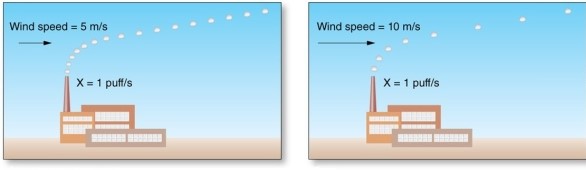
A)proportional to
B)inversely proportional to
C)unaffected by
D)always half of the
A)proportional to
B)inversely proportional to
C)unaffected by
D)always half of the
Question
Sine 1990,the most dramatic reduction in US aggregate pollution levels is for 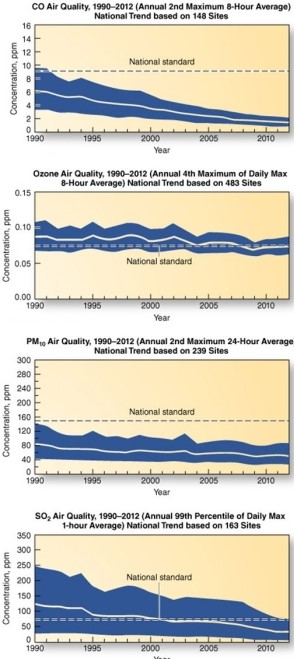
A)ozone.
B)PM10.
C)ozone and PM10.
D)CO and SO2.
A)ozone.
B)PM10.
C)ozone and PM10.
D)CO and SO2.
Question
A subsidence inversion 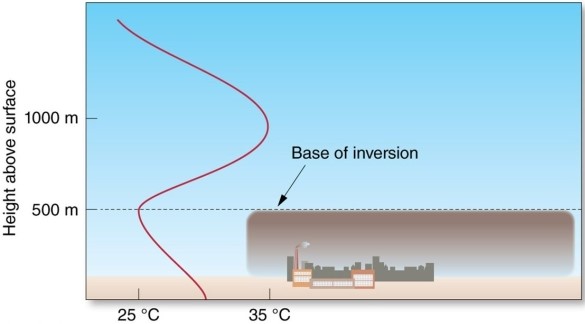
A)increases pollutant concentration aloft and decreases pollutant concentration near the surface.
B)decreases pollutant concentration aloft and increases pollutant concentration near the surface.
C)increases pollutant concentration both aloft and near the surface.
D)decreases pollutant concentration both aloft and near the surface.
A)increases pollutant concentration aloft and decreases pollutant concentration near the surface.
B)decreases pollutant concentration aloft and increases pollutant concentration near the surface.
C)increases pollutant concentration both aloft and near the surface.
D)decreases pollutant concentration both aloft and near the surface.
Question
Question
Question
Question
An unstable atmosphere 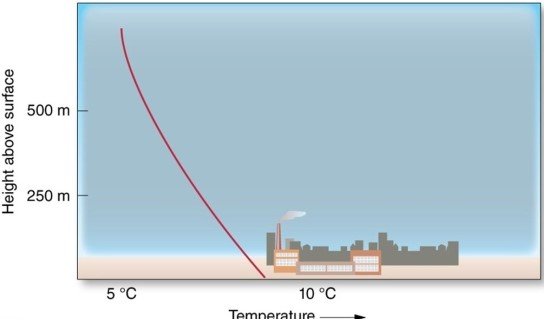
A)increases pollutant concentration aloft and decreases pollutant concentration near the surface.
B)decreases pollutant concentration aloft and increases pollutant concentration near the surface.
C)increases pollutant concentration both aloft and near the surface.
D)decreases pollutant concentration both aloft and near the surface.
A)increases pollutant concentration aloft and decreases pollutant concentration near the surface.
B)decreases pollutant concentration aloft and increases pollutant concentration near the surface.
C)increases pollutant concentration both aloft and near the surface.
D)decreases pollutant concentration both aloft and near the surface.
Question
A strong radiation inversion 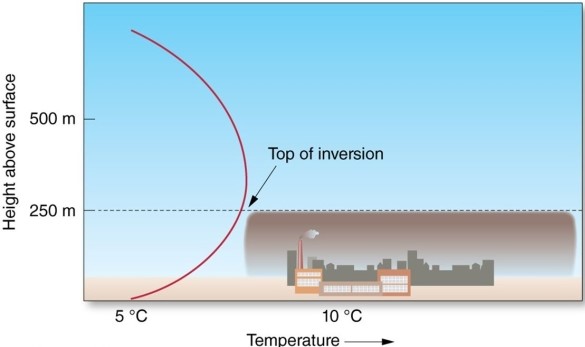
A)increases pollutant concentration aloft and decreases pollutant concentration near the surface.
B)decreases pollutant concentration aloft and increases pollutant concentration near the surface.
C)increases pollutant concentration both aloft and near the surface.
D)decreases pollutant concentration both aloft and near the surface.
A)increases pollutant concentration aloft and decreases pollutant concentration near the surface.
B)decreases pollutant concentration aloft and increases pollutant concentration near the surface.
C)increases pollutant concentration both aloft and near the surface.
D)decreases pollutant concentration both aloft and near the surface.
Question
The figure illustrates the 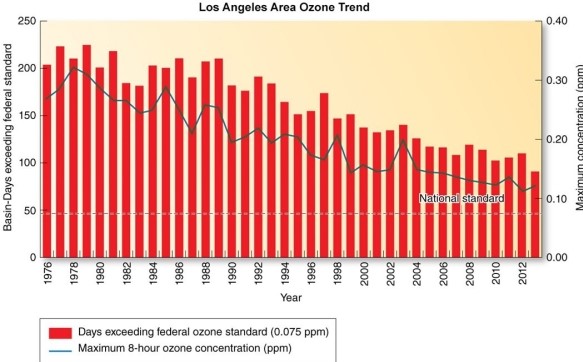
A)downward trend in the frequency of radiation inversions in the Los Angeles area.
B)consistent improvement in Los Angeles area air quality.
C)downward trend in the frequency of subsidence inversions in the Los Angeles area.
D)increasing trend in pollutant dispersion in the Los Angeles area.
A)downward trend in the frequency of radiation inversions in the Los Angeles area.
B)consistent improvement in Los Angeles area air quality.
C)downward trend in the frequency of subsidence inversions in the Los Angeles area.
D)increasing trend in pollutant dispersion in the Los Angeles area.
Question
Question
Question
The photo provides evidence of 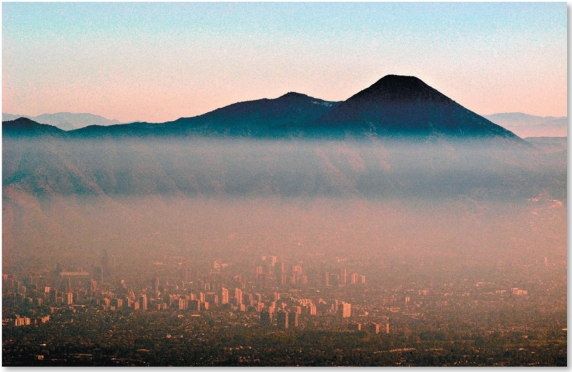
A)effective dispersion.
B)strong eddies.
C)strong dilution.
D)a subsidence inversion.
A)effective dispersion.
B)strong eddies.
C)strong dilution.
D)a subsidence inversion.
Question
Since 1990,average ________ levels in the US have consistently been below the national standard. 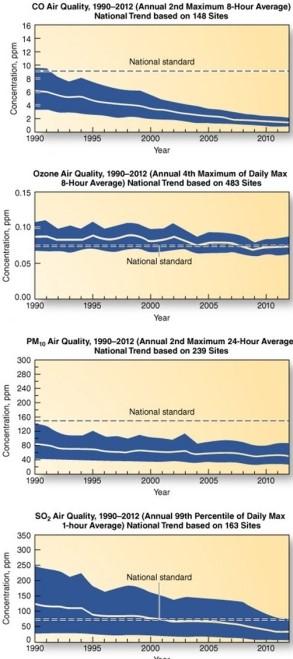
A)CO
B)ozone
C)PM10
D)CO and PM10
A)CO
B)ozone
C)PM10
D)CO and PM10
Question
Question
Question
Question
Question
Which of the following is not a contributing factor to the poor air quality in Los Angeles? 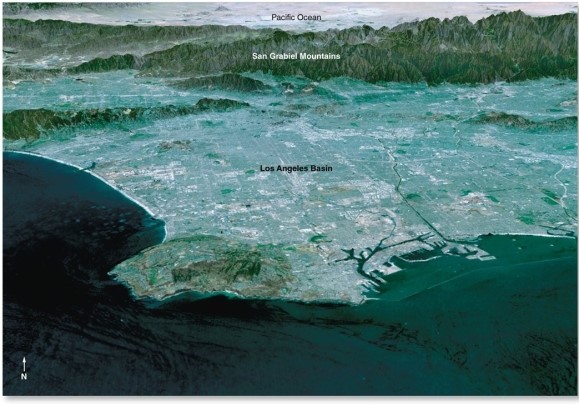
A)the city lies in a basin surrounded by mountains
B)frequent subsidence inversions
C)typically cloud-free conditions during afternoon
D)heavy rainfall
A)the city lies in a basin surrounded by mountains
B)frequent subsidence inversions
C)typically cloud-free conditions during afternoon
D)heavy rainfall
Question
Question

Unlock Deck
Sign up to unlock the cards in this deck!
Unlock Deck
Unlock Deck
1/116

Play

Full screen (f)
Deck 14: Human Effects on the Atmosphere
1
Which of the following are sources of particulates?
A)natural fires
B)volcanic eruptions
C)wind-blown pollen
D)all of these
A)natural fires
B)volcanic eruptions
C)wind-blown pollen
D)all of these
D
2
Air pollutants can take the form of
A)gasses.
B)particulates.
C)liquids.
D)all the above
A)gasses.
B)particulates.
C)liquids.
D)all the above
D
3
Carbon monoxide
A)has a pungent odor.
B)is consumed in volcanic eruptions.
C)is consumed by some microorganisms.
D)catalyzes the production of high levels of carbon dioxide.
A)has a pungent odor.
B)is consumed in volcanic eruptions.
C)is consumed by some microorganisms.
D)catalyzes the production of high levels of carbon dioxide.
C
4
Atmospheric sulfur compounds
A)originate primarily from natural sources.
B)occur only in the gaseous form.
C)occur primarily in the form of sulfur monoxide.
D)do not have a role in acid precipitation.
A)originate primarily from natural sources.
B)occur only in the gaseous form.
C)occur primarily in the form of sulfur monoxide.
D)do not have a role in acid precipitation.
Unlock Deck
Unlock for access to all 116 flashcards in this deck.
Unlock Deck
k this deck
5
Acid precipitation
A)reaches lakes and rivers primarily by leaching through soil.
B)is less of a problem downwind of areas that burn large amounts of coal.
C)is caused by only one compound.
D)is less of a problem in Scandinavia than in northern Canada.
A)reaches lakes and rivers primarily by leaching through soil.
B)is less of a problem downwind of areas that burn large amounts of coal.
C)is caused by only one compound.
D)is less of a problem in Scandinavia than in northern Canada.
Unlock Deck
Unlock for access to all 116 flashcards in this deck.
Unlock Deck
k this deck
6
Sulfur trioxide
A)easily combines with water to form sulfuric acid.
B)most commonly enters the atmosphere as a primary pollutant.
C)helps counter the effects of acid rain.
D)is one of the major components of air pollution.
A)easily combines with water to form sulfuric acid.
B)most commonly enters the atmosphere as a primary pollutant.
C)helps counter the effects of acid rain.
D)is one of the major components of air pollution.
Unlock Deck
Unlock for access to all 116 flashcards in this deck.
Unlock Deck
k this deck
7
Carbon monoxide tightly binds to ________.
Unlock Deck
Unlock for access to all 116 flashcards in this deck.
Unlock Deck
k this deck
8
Acid precipitation,historically,is the most concentrated in the
A)Pacific Northwest.
B)Desert Southwest.
C)Gulf Coast.
D)Ohio River Valley.
A)Pacific Northwest.
B)Desert Southwest.
C)Gulf Coast.
D)Ohio River Valley.
Unlock Deck
Unlock for access to all 116 flashcards in this deck.
Unlock Deck
k this deck
9
This form of air pollution is created when sunlight transforms gases and aerosols: ________.
Unlock Deck
Unlock for access to all 116 flashcards in this deck.
Unlock Deck
k this deck
10
Air is often much cleaner after a rain primarily because
A)droplets and crystals scavenge particulates.
B)particulates act as condensation nuclei.
C)gravitational settling works faster when the air is saturated.
D)the lower temperature increases the efficiency of automobile engines.
A)droplets and crystals scavenge particulates.
B)particulates act as condensation nuclei.
C)gravitational settling works faster when the air is saturated.
D)the lower temperature increases the efficiency of automobile engines.
Unlock Deck
Unlock for access to all 116 flashcards in this deck.
Unlock Deck
k this deck
11
This secondary pollutant is the source of most acid precipitation problems in the Northeast: ________.
Unlock Deck
Unlock for access to all 116 flashcards in this deck.
Unlock Deck
k this deck
12
This chemical tightly binds to hemoglobin,blocking its ability to deliver oxygen to red blood cells.
A)sulfur dioxide
B)nitrogen dioxide
C)sulfuric acid
D)carbon monoxide
A)sulfur dioxide
B)nitrogen dioxide
C)sulfuric acid
D)carbon monoxide
Unlock Deck
Unlock for access to all 116 flashcards in this deck.
Unlock Deck
k this deck
13
All of the following statements about particulates are true,except
A)they can be solid.
B)they can be liquid.
C)they can have natural sources.
D)they are larger than aerosols.
A)they can be solid.
B)they can be liquid.
C)they can have natural sources.
D)they are larger than aerosols.
Unlock Deck
Unlock for access to all 116 flashcards in this deck.
Unlock Deck
k this deck
14
Particulate pollution can be removed through
A)settling.
B)scrubbing.
C)washing.
D)All of these ways
A)settling.
B)scrubbing.
C)washing.
D)All of these ways
Unlock Deck
Unlock for access to all 116 flashcards in this deck.
Unlock Deck
k this deck
15
The most famous air pollution disaster in North America occurred in
A)New York, NY.
B)Los Angeles, CA.
C)Donora, PA.
D)none of these
A)New York, NY.
B)Los Angeles, CA.
C)Donora, PA.
D)none of these
Unlock Deck
Unlock for access to all 116 flashcards in this deck.
Unlock Deck
k this deck
16
These compounds are made entirely of hydrogen and carbon: ________.
Unlock Deck
Unlock for access to all 116 flashcards in this deck.
Unlock Deck
k this deck
17
Small suspended solids and liquids are called
A)precipitation.
B)particulates.
C)smog.
D)all of these
A)precipitation.
B)particulates.
C)smog.
D)all of these
Unlock Deck
Unlock for access to all 116 flashcards in this deck.
Unlock Deck
k this deck
18
Sulfur dioxide
A)is yellowish in color.
B)is produced primarily through the burning of fossil fuels.
C)does not have any established detrimental effects on humans.
D)is not corrosive.
A)is yellowish in color.
B)is produced primarily through the burning of fossil fuels.
C)does not have any established detrimental effects on humans.
D)is not corrosive.
Unlock Deck
Unlock for access to all 116 flashcards in this deck.
Unlock Deck
k this deck
19
This area of the United States has the greatest acidity in its precipitation.
A)West
B)Southeast
C)northern Plains
D)Northeast
A)West
B)Southeast
C)northern Plains
D)Northeast
Unlock Deck
Unlock for access to all 116 flashcards in this deck.
Unlock Deck
k this deck
20
Acid precipitation is primarily associated with
A)the Ohio Valley.
B)the Southwest.
C)the Pacific Northwest.
D)the western Great Lakes.
A)the Ohio Valley.
B)the Southwest.
C)the Pacific Northwest.
D)the western Great Lakes.
Unlock Deck
Unlock for access to all 116 flashcards in this deck.
Unlock Deck
k this deck
21
Pollutants that are formed as a result of chemical reactions with the atmosphere are called
A)primary pollutants.
B)secondary pollutants.
C)ash.
D)sediment pollutants.
A)primary pollutants.
B)secondary pollutants.
C)ash.
D)sediment pollutants.
Unlock Deck
Unlock for access to all 116 flashcards in this deck.
Unlock Deck
k this deck
22
All of the following statements about nitrogen dioxide are true,except
A)it can lead to increased numbers of acid molecules in the atmosphere.
B)it is corrosive.
C)it breaks down slowly.
D)it is bad for the pulmonary system.
A)it can lead to increased numbers of acid molecules in the atmosphere.
B)it is corrosive.
C)it breaks down slowly.
D)it is bad for the pulmonary system.
Unlock Deck
Unlock for access to all 116 flashcards in this deck.
Unlock Deck
k this deck
23
Carbon monoxide is
A)a non-lethal gas that forms as the result of combustion.
B)an extremely deadly gas because it emulates oxygen in the blood stream.
C)a solid that can be filtered.
D)a particulate that settles via gravity.
A)a non-lethal gas that forms as the result of combustion.
B)an extremely deadly gas because it emulates oxygen in the blood stream.
C)a solid that can be filtered.
D)a particulate that settles via gravity.
Unlock Deck
Unlock for access to all 116 flashcards in this deck.
Unlock Deck
k this deck
24
Acid rain is the result of
A)carbon monoxide.
B)the dioxides of carbon going into solution with rain water.
C)the dioxides of sulfur going into solution with rain water.
D)particulates deposited on buildings and then being brought into solution by rain water.
A)carbon monoxide.
B)the dioxides of carbon going into solution with rain water.
C)the dioxides of sulfur going into solution with rain water.
D)particulates deposited on buildings and then being brought into solution by rain water.
Unlock Deck
Unlock for access to all 116 flashcards in this deck.
Unlock Deck
k this deck
25
Photochemical smog is produced
A)when conditions for acid rain are at their peak.
B)when secondary pollutants are present.
C)only in industrial areas.
D)when sunlight transforms certain gasses and aerosols.
A)when conditions for acid rain are at their peak.
B)when secondary pollutants are present.
C)only in industrial areas.
D)when sunlight transforms certain gasses and aerosols.
Unlock Deck
Unlock for access to all 116 flashcards in this deck.
Unlock Deck
k this deck
26
Pollutants that are formed in a manufacturing process or in the combustion process are called
A)primary pollutants.
B)secondary pollutants.
C)acid rain.
D)smog.
A)primary pollutants.
B)secondary pollutants.
C)acid rain.
D)smog.
Unlock Deck
Unlock for access to all 116 flashcards in this deck.
Unlock Deck
k this deck
27
What proportion of sulfur compounds in the atmosphere come from natural sources?
A)1/10
B)1/5
C)1/3
D)2/3
A)1/10
B)1/5
C)1/3
D)2/3
Unlock Deck
Unlock for access to all 116 flashcards in this deck.
Unlock Deck
k this deck
28
Discuss the effects of acid precipitation on the environment.
Unlock Deck
Unlock for access to all 116 flashcards in this deck.
Unlock Deck
k this deck
29
Define and distinguish between primary pollutants and secondary pollutants.
Unlock Deck
Unlock for access to all 116 flashcards in this deck.
Unlock Deck
k this deck
30
First define particulates.Then discuss their sources,how they are removed from the atmosphere,and the effects particulates have on health.
Unlock Deck
Unlock for access to all 116 flashcards in this deck.
Unlock Deck
k this deck
31
Nitric oxide
A)is a highly toxic compound.
B)easily oxidizes to form nitrogen dioxide.
C)takes thousands of years to break down once released into the atmosphere.
D)primarily affects the pulmonary system.
A)is a highly toxic compound.
B)easily oxidizes to form nitrogen dioxide.
C)takes thousands of years to break down once released into the atmosphere.
D)primarily affects the pulmonary system.
Unlock Deck
Unlock for access to all 116 flashcards in this deck.
Unlock Deck
k this deck
32
What is the Air Quality Index (AQI)?
Unlock Deck
Unlock for access to all 116 flashcards in this deck.
Unlock Deck
k this deck
33
List three important sources of pollutants in the United States.
Unlock Deck
Unlock for access to all 116 flashcards in this deck.
Unlock Deck
k this deck
34
Fog forms at humidity values less than 100 percent
A)because of a large concentration of condensation nuclei.
B)because of a relatively small concentration of condensation nuclei.
C)only over ocean areas.
D)only over inland swamps and stagnant water areas.
A)because of a large concentration of condensation nuclei.
B)because of a relatively small concentration of condensation nuclei.
C)only over ocean areas.
D)only over inland swamps and stagnant water areas.
Unlock Deck
Unlock for access to all 116 flashcards in this deck.
Unlock Deck
k this deck
35
Photochemical smog
A)is a major component of London type smog.
B)is caused by primary pollutants.
C)includes ozone as a component.
D)has few if any health effects.
A)is a major component of London type smog.
B)is caused by primary pollutants.
C)includes ozone as a component.
D)has few if any health effects.
Unlock Deck
Unlock for access to all 116 flashcards in this deck.
Unlock Deck
k this deck
36
Hydrocarbons
A)typically contain other elements besides carbon and hydrogen.
B)occur only in particulate forms.
C)are released into the atmosphere primarily through natural processes.
D)cause substantial health problems in cities with high levels of air pollution.
A)typically contain other elements besides carbon and hydrogen.
B)occur only in particulate forms.
C)are released into the atmosphere primarily through natural processes.
D)cause substantial health problems in cities with high levels of air pollution.
Unlock Deck
Unlock for access to all 116 flashcards in this deck.
Unlock Deck
k this deck
37
Smog is
A)a combination of smoke and fog.
B)a combination of smoke and organic waste.
C)only found in California.
D)more of a nuisance than a threat to health.
A)a combination of smoke and fog.
B)a combination of smoke and organic waste.
C)only found in California.
D)more of a nuisance than a threat to health.
Unlock Deck
Unlock for access to all 116 flashcards in this deck.
Unlock Deck
k this deck
38
This compound or group of compounds is primarily responsible for the yellow to reddish-brown color of Los Angeles smog.
A)carbon monoxide
B)sulfur dioxide
C)volatile organic compounds
D)nitrogen dioxide
A)carbon monoxide
B)sulfur dioxide
C)volatile organic compounds
D)nitrogen dioxide
Unlock Deck
Unlock for access to all 116 flashcards in this deck.
Unlock Deck
k this deck
39
Describe how carbon monoxide is produced by both humans and nature.Then discuss why it is so toxic to humans.
Unlock Deck
Unlock for access to all 116 flashcards in this deck.
Unlock Deck
k this deck
40
Which of the following types of fog would be associated with areas where smoke combines with damp air?
A)London-type smog
B)Los Angeles-type smog
C)Cairo-type fog
D)Albuquerque-type fog
A)London-type smog
B)Los Angeles-type smog
C)Cairo-type fog
D)Albuquerque-type fog
Unlock Deck
Unlock for access to all 116 flashcards in this deck.
Unlock Deck
k this deck
41
Pollution concentration is
A)determined solely by the quantity of emissions.
B)determined solely by the wind speed.
C)the quantity of a pollutant found within a specific volume of air.
D)always higher during the day than at night.
A)determined solely by the quantity of emissions.
B)determined solely by the wind speed.
C)the quantity of a pollutant found within a specific volume of air.
D)always higher during the day than at night.
Unlock Deck
Unlock for access to all 116 flashcards in this deck.
Unlock Deck
k this deck
42
In the United States,acid precipitation is least likely to be related to compounds of
A)nitrogen.
B)sulfur.
C)carbon.
D)oxygen.
A)nitrogen.
B)sulfur.
C)carbon.
D)oxygen.
Unlock Deck
Unlock for access to all 116 flashcards in this deck.
Unlock Deck
k this deck
43
Los Angeles type smog is primarily a result of
A)smoke.
B)fog.
C)photochemical reactions.
D)advected coastal fog laden with salt crystals.
A)smoke.
B)fog.
C)photochemical reactions.
D)advected coastal fog laden with salt crystals.
Unlock Deck
Unlock for access to all 116 flashcards in this deck.
Unlock Deck
k this deck
44
This is the least important reason why Los Angeles has such a substantial smog problem.
A)noncompliance with environmental regulations
B)location in a basin bounded by mountains
C)a subsidence inversion in warmer months
D)a large number of cloudless days
A)noncompliance with environmental regulations
B)location in a basin bounded by mountains
C)a subsidence inversion in warmer months
D)a large number of cloudless days
Unlock Deck
Unlock for access to all 116 flashcards in this deck.
Unlock Deck
k this deck
45
Which of the following is considered to be the smoggiest of U.S.national parks?
A)Grand Canyon National Park
B)Sequoia/Kings Canyon National Park
C)Crater Lake National Park
D)Shenandoah National Park
A)Grand Canyon National Park
B)Sequoia/Kings Canyon National Park
C)Crater Lake National Park
D)Shenandoah National Park
Unlock Deck
Unlock for access to all 116 flashcards in this deck.
Unlock Deck
k this deck
46
Cloud conditions influence
A)the quantity of pollution emitted into the atmosphere from industrial and mobile sources.
B)the vertical and horizontal dispersion of pollutants.
C)the rate of photochemical reactions taking place.
D)the increased use of fuel for heating or cooling.
A)the quantity of pollution emitted into the atmosphere from industrial and mobile sources.
B)the vertical and horizontal dispersion of pollutants.
C)the rate of photochemical reactions taking place.
D)the increased use of fuel for heating or cooling.
Unlock Deck
Unlock for access to all 116 flashcards in this deck.
Unlock Deck
k this deck
47
The chief source of Los Angeles air pollution is
A)automobile exhaust.
B)coal-burning electricity plants.
C)industrial pollutants.
D)fog from the ocean.
A)automobile exhaust.
B)coal-burning electricity plants.
C)industrial pollutants.
D)fog from the ocean.
Unlock Deck
Unlock for access to all 116 flashcards in this deck.
Unlock Deck
k this deck
48
The most important source of airborne pollutants is ________.
Unlock Deck
Unlock for access to all 116 flashcards in this deck.
Unlock Deck
k this deck
49
Explain the historical significance of the Donora,Pennsylvania pollution episode.
Unlock Deck
Unlock for access to all 116 flashcards in this deck.
Unlock Deck
k this deck
50
Atmospheric stability and wind conditions control
A)the quantity of pollution emitted into the atmosphere from industrial and mobile sources.
B)the vertical and horizontal dispersion of pollutants.
C)the rate of photochemical reactions taking place.
D)the increased use of fuel for heating or cooling.
A)the quantity of pollution emitted into the atmosphere from industrial and mobile sources.
B)the vertical and horizontal dispersion of pollutants.
C)the rate of photochemical reactions taking place.
D)the increased use of fuel for heating or cooling.
Unlock Deck
Unlock for access to all 116 flashcards in this deck.
Unlock Deck
k this deck
51
The Environmental Protection Agency considers this city to have the worst ozone pollution.
A)Los Angeles
B)Chicago
C)New York
D)Phoenix
A)Los Angeles
B)Chicago
C)New York
D)Phoenix
Unlock Deck
Unlock for access to all 116 flashcards in this deck.
Unlock Deck
k this deck
52
This city typically has the worst pollution in the United States: ________.
Unlock Deck
Unlock for access to all 116 flashcards in this deck.
Unlock Deck
k this deck
53
Subsidence from the semipermanent Hawaiian high-pressure system
A)contributes to the poor air quality of Los Angeles.
B)improves the poor air quality of Los Angeles.
C)is irrelevant to the poor air quality of Los Angeles.
D)causes adiabatic cooling of pollution.
A)contributes to the poor air quality of Los Angeles.
B)improves the poor air quality of Los Angeles.
C)is irrelevant to the poor air quality of Los Angeles.
D)causes adiabatic cooling of pollution.
Unlock Deck
Unlock for access to all 116 flashcards in this deck.
Unlock Deck
k this deck
54
List two pollutants that are monitored to calculate the Air Quality Index (AQI).
Unlock Deck
Unlock for access to all 116 flashcards in this deck.
Unlock Deck
k this deck
55
The first major US initiative to clean up the nation's air was
A)the 1870 Clean Air Act.
B)the 1920 Clean Air Act.
C)the 1970 Clean Air Act.
D)the Magna Carta.
A)the 1870 Clean Air Act.
B)the 1920 Clean Air Act.
C)the 1970 Clean Air Act.
D)the Magna Carta.
Unlock Deck
Unlock for access to all 116 flashcards in this deck.
Unlock Deck
k this deck
56
This is the largest source of atmospheric pollutants.
A)volcanic eruptions
B)human activities
C)forest fires
D)heavy winds in dry deserts
A)volcanic eruptions
B)human activities
C)forest fires
D)heavy winds in dry deserts
Unlock Deck
Unlock for access to all 116 flashcards in this deck.
Unlock Deck
k this deck
57
The responsibility for complying with US federal air quality standards lies with
A)individuals.
B)individual states.
C)tri-state regions.
D)the federal government.
A)individuals.
B)individual states.
C)tri-state regions.
D)the federal government.
Unlock Deck
Unlock for access to all 116 flashcards in this deck.
Unlock Deck
k this deck
58
The most important source of carbon monoxide emissions in the United States is
A)natural emissions.
B)automobile engines.
C)coal-fired energy plants.
D)industrial processes.
A)natural emissions.
B)automobile engines.
C)coal-fired energy plants.
D)industrial processes.
Unlock Deck
Unlock for access to all 116 flashcards in this deck.
Unlock Deck
k this deck
59
Of the following pollutants,the greatest percentage of this one comes from fuel combustion.
A)nitrogen oxides
B)volatile organic compounds
C)suspended particulate matter
D)sulfur dioxide
A)nitrogen oxides
B)volatile organic compounds
C)suspended particulate matter
D)sulfur dioxide
Unlock Deck
Unlock for access to all 116 flashcards in this deck.
Unlock Deck
k this deck
60
According to the Environmental Protection Agency,this is the most important agent of photochemical smog: ________.
Unlock Deck
Unlock for access to all 116 flashcards in this deck.
Unlock Deck
k this deck
61
The concentration of air pollution is ________ wind speed.
A)proportional to
B)inversely proportional to
C)unaffected by
D)always half of the
A)proportional to
B)inversely proportional to
C)unaffected by
D)always half of the
Unlock Deck
Unlock for access to all 116 flashcards in this deck.
Unlock Deck
k this deck
62
Sine 1990,the most dramatic reduction in US aggregate pollution levels is for
A)ozone.
B)PM10.
C)ozone and PM10.
D)CO and SO2.
A)ozone.
B)PM10.
C)ozone and PM10.
D)CO and SO2.
Unlock Deck
Unlock for access to all 116 flashcards in this deck.
Unlock Deck
k this deck
63
A subsidence inversion
A)increases pollutant concentration aloft and decreases pollutant concentration near the surface.
B)decreases pollutant concentration aloft and increases pollutant concentration near the surface.
C)increases pollutant concentration both aloft and near the surface.
D)decreases pollutant concentration both aloft and near the surface.
A)increases pollutant concentration aloft and decreases pollutant concentration near the surface.
B)decreases pollutant concentration aloft and increases pollutant concentration near the surface.
C)increases pollutant concentration both aloft and near the surface.
D)decreases pollutant concentration both aloft and near the surface.
Unlock Deck
Unlock for access to all 116 flashcards in this deck.
Unlock Deck
k this deck
64
This type of air leads to the greatest vertical mixing of pollutants.
A)stable air
B)unstable air
C)radiation inversion
D)subsidence inversion
A)stable air
B)unstable air
C)radiation inversion
D)subsidence inversion
Unlock Deck
Unlock for access to all 116 flashcards in this deck.
Unlock Deck
k this deck
65
Which of the following vertical temperature profiles is most likely to trigger an episode of pollution?
A)inversion
B)lapse
C)isothermal
D)dry adiabatic
A)inversion
B)lapse
C)isothermal
D)dry adiabatic
Unlock Deck
Unlock for access to all 116 flashcards in this deck.
Unlock Deck
k this deck
66
Great wind speeds favor
A)increased horizontal dispersion.
B)increased vertical dispersion.
C)increased horizontal and vertical dispersion.
D)reduced dispersion.
A)increased horizontal dispersion.
B)increased vertical dispersion.
C)increased horizontal and vertical dispersion.
D)reduced dispersion.
Unlock Deck
Unlock for access to all 116 flashcards in this deck.
Unlock Deck
k this deck
67
An unstable atmosphere
A)increases pollutant concentration aloft and decreases pollutant concentration near the surface.
B)decreases pollutant concentration aloft and increases pollutant concentration near the surface.
C)increases pollutant concentration both aloft and near the surface.
D)decreases pollutant concentration both aloft and near the surface.
A)increases pollutant concentration aloft and decreases pollutant concentration near the surface.
B)decreases pollutant concentration aloft and increases pollutant concentration near the surface.
C)increases pollutant concentration both aloft and near the surface.
D)decreases pollutant concentration both aloft and near the surface.
Unlock Deck
Unlock for access to all 116 flashcards in this deck.
Unlock Deck
k this deck
68
A strong radiation inversion
A)increases pollutant concentration aloft and decreases pollutant concentration near the surface.
B)decreases pollutant concentration aloft and increases pollutant concentration near the surface.
C)increases pollutant concentration both aloft and near the surface.
D)decreases pollutant concentration both aloft and near the surface.
A)increases pollutant concentration aloft and decreases pollutant concentration near the surface.
B)decreases pollutant concentration aloft and increases pollutant concentration near the surface.
C)increases pollutant concentration both aloft and near the surface.
D)decreases pollutant concentration both aloft and near the surface.
Unlock Deck
Unlock for access to all 116 flashcards in this deck.
Unlock Deck
k this deck
69
The figure illustrates the
A)downward trend in the frequency of radiation inversions in the Los Angeles area.
B)consistent improvement in Los Angeles area air quality.
C)downward trend in the frequency of subsidence inversions in the Los Angeles area.
D)increasing trend in pollutant dispersion in the Los Angeles area.
A)downward trend in the frequency of radiation inversions in the Los Angeles area.
B)consistent improvement in Los Angeles area air quality.
C)downward trend in the frequency of subsidence inversions in the Los Angeles area.
D)increasing trend in pollutant dispersion in the Los Angeles area.
Unlock Deck
Unlock for access to all 116 flashcards in this deck.
Unlock Deck
k this deck
70
Describe the important aspects of wind speed and direction on dispersal of air pollution.
Unlock Deck
Unlock for access to all 116 flashcards in this deck.
Unlock Deck
k this deck
71
Atmospheric stability
A)has no effect on pollution concentration.
B)can have a tremendous effect on pollution concentration.
C)is only a problem during periods of low pressure systems.
D)will affect the concentration rate but not the settling rate of pollutants.
A)has no effect on pollution concentration.
B)can have a tremendous effect on pollution concentration.
C)is only a problem during periods of low pressure systems.
D)will affect the concentration rate but not the settling rate of pollutants.
Unlock Deck
Unlock for access to all 116 flashcards in this deck.
Unlock Deck
k this deck
72
The photo provides evidence of
A)effective dispersion.
B)strong eddies.
C)strong dilution.
D)a subsidence inversion.
A)effective dispersion.
B)strong eddies.
C)strong dilution.
D)a subsidence inversion.
Unlock Deck
Unlock for access to all 116 flashcards in this deck.
Unlock Deck
k this deck
73
Since 1990,average ________ levels in the US have consistently been below the national standard.
A)CO
B)ozone
C)PM10
D)CO and PM10
A)CO
B)ozone
C)PM10
D)CO and PM10
Unlock Deck
Unlock for access to all 116 flashcards in this deck.
Unlock Deck
k this deck
74
Which of the following meteorological settings is most favorable for severe air pollution?
A)strong wind; inversion; stable
B)light wind; isothermal; stable
C)light wind; inversion; unstable
D)strong wind; lapse; unstable
A)strong wind; inversion; stable
B)light wind; isothermal; stable
C)light wind; inversion; unstable
D)strong wind; lapse; unstable
Unlock Deck
Unlock for access to all 116 flashcards in this deck.
Unlock Deck
k this deck
75
Radiation inversions
A)lead to substantial vertical mixing of air.
B)typically dissipate just after sunrise.
C)have the greatest impact on pollution in the late afternoon.
D)originate at the surface.
A)lead to substantial vertical mixing of air.
B)typically dissipate just after sunrise.
C)have the greatest impact on pollution in the late afternoon.
D)originate at the surface.
Unlock Deck
Unlock for access to all 116 flashcards in this deck.
Unlock Deck
k this deck
76
Subsidence inversions
A)have little impact on regions where photochemical smog is prevalent.
B)do not often occur in the Los Angeles basin.
C)have a base that delineates the maximum elevation under which air can easily mix.
D)are a subcategory of radiation inversions.
A)have little impact on regions where photochemical smog is prevalent.
B)do not often occur in the Los Angeles basin.
C)have a base that delineates the maximum elevation under which air can easily mix.
D)are a subcategory of radiation inversions.
Unlock Deck
Unlock for access to all 116 flashcards in this deck.
Unlock Deck
k this deck
77
The "land-sea breeze" is
A)reversible from day to night.
B)shallow, does not reach to great heights.
C)driven only by a thermal differential.
D)All of these
A)reversible from day to night.
B)shallow, does not reach to great heights.
C)driven only by a thermal differential.
D)All of these
Unlock Deck
Unlock for access to all 116 flashcards in this deck.
Unlock Deck
k this deck
78
Which of the following is not a contributing factor to the poor air quality in Los Angeles?
A)the city lies in a basin surrounded by mountains
B)frequent subsidence inversions
C)typically cloud-free conditions during afternoon
D)heavy rainfall
A)the city lies in a basin surrounded by mountains
B)frequent subsidence inversions
C)typically cloud-free conditions during afternoon
D)heavy rainfall
Unlock Deck
Unlock for access to all 116 flashcards in this deck.
Unlock Deck
k this deck
79
Near Los Angeles,the sea breeze front
A)separates marine air from polluted air.
B)moves farther off-shore as the day progresses.
C)leads to lowering pollution in the eastern portion of the Los Angeles basin in the late afternoon.
D)does not affect the concentrations of photochemically generated smog components.
A)separates marine air from polluted air.
B)moves farther off-shore as the day progresses.
C)leads to lowering pollution in the eastern portion of the Los Angeles basin in the late afternoon.
D)does not affect the concentrations of photochemically generated smog components.
Unlock Deck
Unlock for access to all 116 flashcards in this deck.
Unlock Deck
k this deck
80
The effect of winds on pollution dispersal is such that
A)the concentration of air pollutants is directly proportional to the wind speed.
B)forced convection decreases with increased wind speed.
C)strong horizontal winds will lead to some vertical distribution of pollutants.
D)changing direction of wind has no significant impact on the rate of pollution dispersal.
A)the concentration of air pollutants is directly proportional to the wind speed.
B)forced convection decreases with increased wind speed.
C)strong horizontal winds will lead to some vertical distribution of pollutants.
D)changing direction of wind has no significant impact on the rate of pollution dispersal.
Unlock Deck
Unlock for access to all 116 flashcards in this deck.
Unlock Deck
k this deck
Unlock Deck
Unlock for access to all 116 flashcards in this deck.







