





 Chat with AI

Deck 8: Animal Feeding and Digestion
Full screen (f)

Question

Question
Question
Question
Question
Question
Question
Question
Question
Question
Question
Question
Question
Question
Question
Question
Question
Question
Question
Question
Question
Question
Question
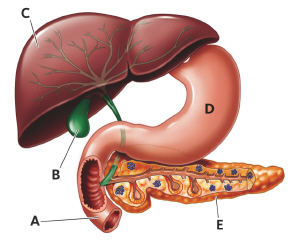 In this figure, which organ is associated with the breakdown of fat globules?
A) A
B) B
C) C
D) D
E) E
Question
Question
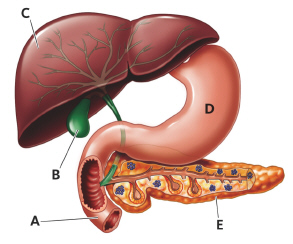 In this figure, which organ is associated with the production of the majority of digestive enzymes?
A) A
B) B
C) C
D) D
E) E
Question
Question
Question
Question
Question
Question
Question
Question
Question
Question
Question
Question
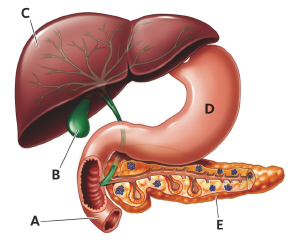 Chemical digestion of amino acids using pepsin begins in which organ?
A) A
B) B
C) C
D) D
E) E
Question
Question
Question
Question
Question

Unlock Deck
Sign up to unlock the cards in this deck!
Unlock Deck
Unlock Deck
1/42

Play

Full screen (f)
Deck 8: Animal Feeding and Digestion
1
The night prior to a football game, the coach tells his students to eat pasta to "carbo load" their bodies. Excess carbohydrates are stored as __________ in animals.
A) glucose
B) simple sugars
C) glycogen
D) starch
A) glucose
B) simple sugars
C) glycogen
D) starch
C
2
All of the following are fluid feeders EXCEPT
A) aphids.
B) leeches.
C) earthworms.
D) ticks.
A) aphids.
B) leeches.
C) earthworms.
D) ticks.
C
3
A high proportion of the food that cattle eat cannot be digested by cattle.
A) True, cattle have large saclike pouches that house plant-digesting microbes.
B) False, cattle are herbivores and thus produce the necessary enzyme to digest plant material.
C) True, this is why cattle have to eat large amounts of food, because most passes undigested through their gut.
D) False, cattle eat highly nutritious plants that are readily digested.
A) True, cattle have large saclike pouches that house plant-digesting microbes.
B) False, cattle are herbivores and thus produce the necessary enzyme to digest plant material.
C) True, this is why cattle have to eat large amounts of food, because most passes undigested through their gut.
D) False, cattle eat highly nutritious plants that are readily digested.
A
4
Chris is studying the chemical properties of different amino acids. Thus, he is paying particular attention to __________.
A) hydrocarbon chains
B) the R group
C) triglycerides
D) enzymes
A) hydrocarbon chains
B) the R group
C) triglycerides
D) enzymes
Unlock Deck
Unlock for access to all 42 flashcards in this deck.
Unlock Deck
k this deck
5
Which of the following are adaptations of fluid feeders that feed on the blood of other animals?
A) piercing and sucking mouthparts
B) production of anesthetic compounds
C) production of anticoagulants
D) all of these
A) piercing and sucking mouthparts
B) production of anesthetic compounds
C) production of anticoagulants
D) all of these
Unlock Deck
Unlock for access to all 42 flashcards in this deck.
Unlock Deck
k this deck
6
Which one of the following macronutrients stores the most amount of energy per gram?
A) fats
B) carbohydrates
C) nucleic acids
D) proteins
A) fats
B) carbohydrates
C) nucleic acids
D) proteins
Unlock Deck
Unlock for access to all 42 flashcards in this deck.
Unlock Deck
k this deck
7
Minerals differ from nutrients because minerals __________.
A) do not contain carbon
B) are organic
C) are only required in small quantities
D) are essential to the diet
A) do not contain carbon
B) are organic
C) are only required in small quantities
D) are essential to the diet
Unlock Deck
Unlock for access to all 42 flashcards in this deck.
Unlock Deck
k this deck
8
Sponges, which are found in aquatic environments, have special flagellated cells that help to draw food into their body cavities. Sponges are most likely __________.
A) filter feeders
B) fluid feeders
C) bulk feeders
D) predators
A) filter feeders
B) fluid feeders
C) bulk feeders
D) predators
Unlock Deck
Unlock for access to all 42 flashcards in this deck.
Unlock Deck
k this deck
9
Starch, cellulose, and glycogen have all of the following in common EXCEPT:
A) They are complex carbohydrates.
B) They are composed of glucose molecules.
C) They contain hydrocarbon chains.
D) They contain oxygen, carbon, and hydrogen atoms.
A) They are complex carbohydrates.
B) They are composed of glucose molecules.
C) They contain hydrocarbon chains.
D) They contain oxygen, carbon, and hydrogen atoms.
Unlock Deck
Unlock for access to all 42 flashcards in this deck.
Unlock Deck
k this deck
10
Compounds such as salt and calcium are __________.
A) minerals
B) vitamins
C) micronutrients
D) organic
A) minerals
B) vitamins
C) micronutrients
D) organic
Unlock Deck
Unlock for access to all 42 flashcards in this deck.
Unlock Deck
k this deck
11
Stacy is studying the structure of plant cell walls. Thus, she is studying __________.
A) a carbohydrate
B) a protein
C) glucose molecules
D) both a carbohydrate and glucose molecules
A) a carbohydrate
B) a protein
C) glucose molecules
D) both a carbohydrate and glucose molecules
Unlock Deck
Unlock for access to all 42 flashcards in this deck.
Unlock Deck
k this deck
12
An essential nutrient __________.
A) is produced in high quantities in the body
B) is produced in small quantities in the body
C) must be obtained through the diet
D) is a rich source of minerals
A) is produced in high quantities in the body
B) is produced in small quantities in the body
C) must be obtained through the diet
D) is a rich source of minerals
Unlock Deck
Unlock for access to all 42 flashcards in this deck.
Unlock Deck
k this deck
13
Prior to hibernation, bears seek food with what primary nutrient?
A) fat
B) protein
C) carbohydrate
D) starch
A) fat
B) protein
C) carbohydrate
D) starch
Unlock Deck
Unlock for access to all 42 flashcards in this deck.
Unlock Deck
k this deck
14
All of the following are involved with chewing the cud EXCEPT
A) regurgitation of food.
B) increased breakdown of food.
C) exposure of new surfaces for rumen microbes.
D) incorporation of more oxygen into the food.
A) regurgitation of food.
B) increased breakdown of food.
C) exposure of new surfaces for rumen microbes.
D) incorporation of more oxygen into the food.
Unlock Deck
Unlock for access to all 42 flashcards in this deck.
Unlock Deck
k this deck
15
Vultures feed on dead and decaying animals. They have large, powerful beaks, which rip strips of meat off a carcass that are then swallowed whole. These animals are __________.
A) bulk feeders
B) fluid feeders
C) predators
D) filter feeders
A) bulk feeders
B) fluid feeders
C) predators
D) filter feeders
Unlock Deck
Unlock for access to all 42 flashcards in this deck.
Unlock Deck
k this deck
16
Which one of the following is not one of the major elements that make up 96 percent of all living organisms?
A) carbon
B) oxygen
C) helium
D) nitrogen
A) carbon
B) oxygen
C) helium
D) nitrogen
Unlock Deck
Unlock for access to all 42 flashcards in this deck.
Unlock Deck
k this deck
17
If an adult man and woman, both weighing 160 pounds, were stranded on a desert island with no food, which individual would survive the longest on their body stores?
A) the man
B) the woman
C) impossible to tell
D) There would be no difference because they have the same body mass.
A) the man
B) the woman
C) impossible to tell
D) There would be no difference because they have the same body mass.
Unlock Deck
Unlock for access to all 42 flashcards in this deck.
Unlock Deck
k this deck
18
Which of the following are most important at all levels of metabolism?
A) enzymes
B) carbohydrates
C) minerals
D) hydrogen ions
A) enzymes
B) carbohydrates
C) minerals
D) hydrogen ions
Unlock Deck
Unlock for access to all 42 flashcards in this deck.
Unlock Deck
k this deck
19
Which one of the following would provide the most calories?
A) 2 grams of salt
B) 3 grams of butter
C) 4 grams of sugar
D) 5 grams of hamburger
A) 2 grams of salt
B) 3 grams of butter
C) 4 grams of sugar
D) 5 grams of hamburger
Unlock Deck
Unlock for access to all 42 flashcards in this deck.
Unlock Deck
k this deck
20
Incisors and canine teeth are most commonly found in __________.
A) carnivores
B) herbivores
C) filter feeders
D) both carnivores and filter feeders
A) carnivores
B) herbivores
C) filter feeders
D) both carnivores and filter feeders
Unlock Deck
Unlock for access to all 42 flashcards in this deck.
Unlock Deck
k this deck
21
Which of the following is essential for chemical reactions, metabolic processes, and body temperature regulation?
A) water
B) oxygen
C) carbon dioxide
D) all of these
A) water
B) oxygen
C) carbon dioxide
D) all of these
Unlock Deck
Unlock for access to all 42 flashcards in this deck.
Unlock Deck
k this deck
22
All of the following are examples of how animals gain water EXCEPT
A) metabolism.
B) foods.
C) drink.
D) evaporation.
A) metabolism.
B) foods.
C) drink.
D) evaporation.
Unlock Deck
Unlock for access to all 42 flashcards in this deck.
Unlock Deck
k this deck
23
In this figure, which organ is associated with the breakdown of fat globules?A) A
B) B
C) C
D) D
E) E
Unlock Deck
Unlock for access to all 42 flashcards in this deck.
Unlock Deck
k this deck
24
In many animals that have a high cellulose diet but who are not ruminants, the __________ tends to be large.
A) cecum
B) stomach
C) large intestine
D) pancreas
A) cecum
B) stomach
C) large intestine
D) pancreas
Unlock Deck
Unlock for access to all 42 flashcards in this deck.
Unlock Deck
k this deck
25
In this figure, which organ is associated with the production of the majority of digestive enzymes?A) A
B) B
C) C
D) D
E) E
Unlock Deck
Unlock for access to all 42 flashcards in this deck.
Unlock Deck
k this deck
26
If the pH of the mouth becomes more acidic, which of the following is true?
A) All food types are broken down chemically.
B) Amylase function decreases.
C) Pepsin starts breaking down proteins.
D) Amylase function increases.
A) All food types are broken down chemically.
B) Amylase function decreases.
C) Pepsin starts breaking down proteins.
D) Amylase function increases.
Unlock Deck
Unlock for access to all 42 flashcards in this deck.
Unlock Deck
k this deck
27
Lactose intolerance in humans is the inability to digest a specific sugar found in milk and some milk-derived dairy products. This milk sugar is called lactose, and it is broken down into two simple sugars, glucose and galactose, by the enzyme lactase. Symptoms of this disease, which occur after a person consumes significant amounts of lactose, include abdominal bloating and cramps as well as diarrhea and nausea. Many mammalian species become lactose intolerant shortly after weaning. At this time, the gene that produces lactase becomes inactive so that the enzyme is no longer produced. However, some human populations (approximately 25 percent of all adults) have developed lactase persistence, in which lactase is continually produced throughout adulthood. Milk often contains fats as well as sugars. Fats require secretions from the __________ before they can be fully digested and absorbed.
A) gallbladder
B) small intestine
C) pancreas
D) liver
A) gallbladder
B) small intestine
C) pancreas
D) liver
Unlock Deck
Unlock for access to all 42 flashcards in this deck.
Unlock Deck
k this deck
28
Andrew is studying bone development and calcium absorption in elephants. Which vitamin is likely an important component of his study?
A) vitamin D
B) vitamin A
C) vitamin K
D) vitamin B
A) vitamin D
B) vitamin A
C) vitamin K
D) vitamin B
Unlock Deck
Unlock for access to all 42 flashcards in this deck.
Unlock Deck
k this deck
29
Lactose intolerance in humans is the inability to digest a specific sugar found in milk and some milk-derived dairy products. This milk sugar is called lactose, and it is broken down into two simple sugars, glucose and galactose, by the enzyme lactase. Symptoms of this disease, which occur after a person consumes significant amounts of lactose, include abdominal bloating and cramps as well as diarrhea and nausea. Many mammalian species become lactose intolerant shortly after weaning. At this time, the gene that produces lactase becomes inactive so that the enzyme is no longer produced. However, some human populations (approximately 25 percent of all adults) have developed lactase persistence, in which lactase is continually produced throughout adulthood. Which of the following human populations likely evolved lactase persistence?
A) populations living on islands
B) populations in which milk is a component of the diet throughout an individual's life
C) populations in which milk-derived products are essential for young individuals
D) Lactase persistence will evolve in any population that has a strong need for digesting milk.
A) populations living on islands
B) populations in which milk is a component of the diet throughout an individual's life
C) populations in which milk-derived products are essential for young individuals
D) Lactase persistence will evolve in any population that has a strong need for digesting milk.
Unlock Deck
Unlock for access to all 42 flashcards in this deck.
Unlock Deck
k this deck
30
Lactose intolerance in humans is the inability to digest a specific sugar found in milk and some milk-derived dairy products. This milk sugar is called lactose, and it is broken down into two simple sugars, glucose and galactose, by the enzyme lactase. Symptoms of this disease, which occur after a person consumes significant amounts of lactose, include abdominal bloating and cramps as well as diarrhea and nausea. Many mammalian species become lactose intolerant shortly after weaning. At this time, the gene that produces lactase becomes inactive so that the enzyme is no longer produced. However, some human populations (approximately 25 percent of all adults) have developed lactase persistence, in which lactase is continually produced throughout adulthood. In humans, where does lactose digestion occur?
A) stomach
B) mouth
C) small intestine
D) pancreas
A) stomach
B) mouth
C) small intestine
D) pancreas
Unlock Deck
Unlock for access to all 42 flashcards in this deck.
Unlock Deck
k this deck
31
Lactose intolerance in humans is the inability to digest a specific sugar found in milk and some milk-derived dairy products. This milk sugar is called lactose, and it is broken down into two simple sugars, glucose and galactose, by the enzyme lactase. Symptoms of this disease, which occur after a person consumes significant amounts of lactose, include abdominal bloating and cramps as well as diarrhea and nausea. Many mammalian species become lactose intolerant shortly after weaning. At this time, the gene that produces lactase becomes inactive so that the enzyme is no longer produced. However, some human populations (approximately 25 percent of all adults) have developed lactase persistence, in which lactase is continually produced throughout adulthood. The building blocks for the enzyme lactase are
A) proteins.
B) amino acids.
C) nucleic acids.
D) glucose molecules.
A) proteins.
B) amino acids.
C) nucleic acids.
D) glucose molecules.
Unlock Deck
Unlock for access to all 42 flashcards in this deck.
Unlock Deck
k this deck
32
Amylase has specific active sites for which type of molecule?
A) carbohydrates
B) proteins
C) lipids
D) amino acids
A) carbohydrates
B) proteins
C) lipids
D) amino acids
Unlock Deck
Unlock for access to all 42 flashcards in this deck.
Unlock Deck
k this deck
33
Many desert animals will restrict activity to the cooler parts of the day. In terms of water conservation, nighttime activity reduces water loss via __________.
A) metabolism
B) evaporation
C) urine
D) drinking
A) metabolism
B) evaporation
C) urine
D) drinking
Unlock Deck
Unlock for access to all 42 flashcards in this deck.
Unlock Deck
k this deck
34
Lactose intolerance in humans is the inability to digest a specific sugar found in milk and some milk-derived dairy products. This milk sugar is called lactose, and it is broken down into two simple sugars, glucose and galactose, by the enzyme lactase. Symptoms of this disease, which occur after a person consumes significant amounts of lactose, include abdominal bloating and cramps as well as diarrhea and nausea. Many mammalian species become lactose intolerant shortly after weaning. At this time, the gene that produces lactase becomes inactive so that the enzyme is no longer produced. However, some human populations (approximately 25 percent of all adults) have developed lactase persistence, in which lactase is continually produced throughout adulthood. Based on the information provided, lactose is likely a(n) __________.
A) complex carbohydrate
B) protein
C) amino acid
D) triglyceride
A) complex carbohydrate
B) protein
C) amino acid
D) triglyceride
Unlock Deck
Unlock for access to all 42 flashcards in this deck.
Unlock Deck
k this deck
35
Which of the following is incorrectly paired?
A) villi-increase surface-to-volume ratio for absorption of nutrients
B) pancreas-secretes substances that neutralize stomach acid
C) gallbladder-produces bile that breaks down fat globules
D) colon-functions in water reabsorption
A) villi-increase surface-to-volume ratio for absorption of nutrients
B) pancreas-secretes substances that neutralize stomach acid
C) gallbladder-produces bile that breaks down fat globules
D) colon-functions in water reabsorption
Unlock Deck
Unlock for access to all 42 flashcards in this deck.
Unlock Deck
k this deck
36
Animals such as rabbits eat their own feces.
A) False, this behavior is only seen in ruminants.
B) True, this behavior is seen in many ruminants such as rabbits.
C) False, however, this behavior can be observed in any malnourished animal.
D) True, they can recapture some essential nutrients from their feces.
A) False, this behavior is only seen in ruminants.
B) True, this behavior is seen in many ruminants such as rabbits.
C) False, however, this behavior can be observed in any malnourished animal.
D) True, they can recapture some essential nutrients from their feces.
Unlock Deck
Unlock for access to all 42 flashcards in this deck.
Unlock Deck
k this deck
37
Chemical digestion of amino acids using pepsin begins in which organ?A) A
B) B
C) C
D) D
E) E
Unlock Deck
Unlock for access to all 42 flashcards in this deck.
Unlock Deck
k this deck
38
Celiac disease is a condition in which the lining of the small intestine is damaged. Which of the following is most affected by this disease?
A) villi
B) gallbladder
C) bile secretion
D) salivary glands
A) villi
B) gallbladder
C) bile secretion
D) salivary glands
Unlock Deck
Unlock for access to all 42 flashcards in this deck.
Unlock Deck
k this deck
39
The chemical digestion of which macromolecule occurs in the mouth?
A) carbohydrates
B) proteins
C) lipids
D) all of these
A) carbohydrates
B) proteins
C) lipids
D) all of these
Unlock Deck
Unlock for access to all 42 flashcards in this deck.
Unlock Deck
k this deck
40
Celiac disease is a condition in which the lining of the small intestine is damaged. Which digestive process is primarily impacted by this disease?
A) nutrient absorption
B) chemical breakdown
C) production of digestive enzymes
D) bile production
A) nutrient absorption
B) chemical breakdown
C) production of digestive enzymes
D) bile production
Unlock Deck
Unlock for access to all 42 flashcards in this deck.
Unlock Deck
k this deck
41
Lactose intolerance in humans is the inability to digest a specific sugar found in milk and some milk-derived dairy products. This milk sugar is called lactose, and it is broken down into two simple sugars, glucose and galactose, by the enzyme lactase. Symptoms of this disease, which occur after a person consumes significant amounts of lactose, include abdominal bloating and cramps as well as diarrhea and nausea. Many mammalian species become lactose intolerant shortly after weaning. At this time, the gene that produces lactase becomes inactive so that the enzyme is no longer produced. However, some human populations (approximately 25 percent of all adults) have developed lactase persistence, in which lactase is continually produced throughout adulthood. Genes for lactase must be __________ in the nucleus to produce a strand of mRNA.
A) transcribed
B) translated
C) decoded
D) read
A) transcribed
B) translated
C) decoded
D) read
Unlock Deck
Unlock for access to all 42 flashcards in this deck.
Unlock Deck
k this deck
42
Lactose intolerance in humans is the inability to digest a specific sugar found in milk and some milk-derived dairy products. This milk sugar is called lactose, and it is broken down into two simple sugars, glucose and galactose, by the enzyme lactase. Symptoms of this disease, which occur after a person consumes significant amounts of lactose, include abdominal bloating and cramps as well as diarrhea and nausea. Many mammalian species become lactose intolerant shortly after weaning. At this time, the gene that produces lactase becomes inactive so that the enzyme is no longer produced. However, some human populations (approximately 25 percent of all adults) have developed lactase persistence, in which lactase is continually produced throughout adulthood. Which organelle is involved directly with lactase production?
A) ribosome
B) mitochondrion
C) Golgi complex
D) lysosome
A) ribosome
B) mitochondrion
C) Golgi complex
D) lysosome
Unlock Deck
Unlock for access to all 42 flashcards in this deck.
Unlock Deck
k this deck
Unlock Deck
Unlock for access to all 42 flashcards in this deck.







