





 Chat with AI

Deck 8: Income Disparity Among Countries and Endogenous Growth
Full screen (f)

Question

Question
Question
Question
Question
Question
Question
Question
Question
Question
Question
Question
In the endogenous growth model presented in the text, suppose that u represents the fraction of time spent working (as opposed to accumulating human capital)and b represents the efficiency of
Human capital accumulation. The growth rate of human capital equals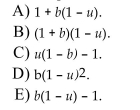
Human capital accumulation. The growth rate of human capital equals
Question
Question
Question
Question
Question
Question
Question
Question
Question
Question
Question
Question
Question
Question
Question
Question
Question
Question
Question
Question
Question
Question
In the endogenous growth model presented in the text, suppose that  represents the fraction of time spent working (as opposed to accumulating human capital)and b represents the efficiency of
Human capital accumulation. The growth rate of consumption equals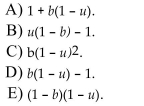
represents the fraction of time spent working (as opposed to accumulating human capital)and b represents the efficiency ofHuman capital accumulation. The growth rate of consumption equals
Question
Question
Question
Question
Question
Question
Question
Question
Question
Question
Question
Question
Question
Question
Question
Question
Question
Question
Question
In the equation describing the accumulation of human capital, 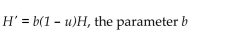 determines
A)the growth rate of the labour force in equilibrium.
B)physical capital accumulation.
C)the efficiency of human capital.
D)the efficiency of the educational sector.
E)the level of human capital in equilibrium.
determinesA)the growth rate of the labour force in equilibrium.
B)physical capital accumulation.
C)the efficiency of human capital.
D)the efficiency of the educational sector.
E)the level of human capital in equilibrium.
Question
Question
Question
Question
Question
Question
Question
Question
Question

Unlock Deck
Sign up to unlock the cards in this deck!
Unlock Deck
Unlock Deck
1/62

Play

Full screen (f)
Deck 8: Income Disparity Among Countries and Endogenous Growth
1
A human capital externality is
A)when an individual has an unique skill.
B)when someone purchases a book, for example.
C)when there is a human capital congestion effect.
D)when higher human capital for one person increases the human capital of others, or makes them more productive.
E)when human capital causes pollution.
A)when an individual has an unique skill.
B)when someone purchases a book, for example.
C)when there is a human capital congestion effect.
D)when higher human capital for one person increases the human capital of others, or makes them more productive.
E)when human capital causes pollution.
D
2
In the endogenous growth model, government policy can affect
A)the budgetary deficit.
B)exports.
C)leisure.
D)the growth rate of aggregate output and consumption.
E)interest rates.
A)the budgetary deficit.
B)exports.
C)leisure.
D)the growth rate of aggregate output and consumption.
E)interest rates.
D
3
In contrast to the Solow growth model, the endogenous growth model
A)predicts convergence in per capita incomes over time.
B)does not take savings into account.
C)does not explain reality.
D)does not take standards of living into account.
E)predicts persistent differences in per capita income.
A)predicts convergence in per capita incomes over time.
B)does not take savings into account.
C)does not explain reality.
D)does not take standards of living into account.
E)predicts persistent differences in per capita income.
E
4
In the endogenous growth model presented in the text, an increase in the fraction of time accumulating human capital
A)decreases the growth rate of human capital and reduces total factor productivity.
B)decreases the growth rate of human capital and decreases the growth rate of output.
C)decreases the growth rate of human capital and increases the growth rate of output.
D)increases the growth rate of human capital and decreases the growth rate of output.
E)increases the growth rate of human capital and increases the growth rate of output.
A)decreases the growth rate of human capital and reduces total factor productivity.
B)decreases the growth rate of human capital and decreases the growth rate of output.
C)decreases the growth rate of human capital and increases the growth rate of output.
D)increases the growth rate of human capital and decreases the growth rate of output.
E)increases the growth rate of human capital and increases the growth rate of output.
Unlock Deck
Unlock for access to all 62 flashcards in this deck.
Unlock Deck
k this deck
5
What explains the differences in standards of living across countries?
A)free trade agreements
B)different barriers to technology adoption
C)different employment levels
D)different climates
E)barriers to foreign capital flows
A)free trade agreements
B)different barriers to technology adoption
C)different employment levels
D)different climates
E)barriers to foreign capital flows
Unlock Deck
Unlock for access to all 62 flashcards in this deck.
Unlock Deck
k this deck
6
Romer's model of endogenous growth is
A)inconsistent with evidence of convergence in the richer countries and inconsistent with evidence of convergence in the poorer countries.
B)inconsistent with evidence of convergence in the richer countries and consistent with evidence of convergence in the poorer countries.
C)consistent with evidence of convergence in the richer countries and inconsistent with evidence of convergence in the poorer countries.
D)consistent with evidence of convergence in the richer countries and consistent with evidence of convergence in the poorer countries.
E)only consistent with evidence of convergence in the richer countries.
A)inconsistent with evidence of convergence in the richer countries and inconsistent with evidence of convergence in the poorer countries.
B)inconsistent with evidence of convergence in the richer countries and consistent with evidence of convergence in the poorer countries.
C)consistent with evidence of convergence in the richer countries and inconsistent with evidence of convergence in the poorer countries.
D)consistent with evidence of convergence in the richer countries and consistent with evidence of convergence in the poorer countries.
E)only consistent with evidence of convergence in the richer countries.
Unlock Deck
Unlock for access to all 62 flashcards in this deck.
Unlock Deck
k this deck
7
Human capital is
A)the accumulated stock of physical capital per worker.
B)a measure of physical capital per worker used in endogenous growth models.
C)the accumulated stock of skills and capital a worker has.
D)the accumulated stock of skills and education a worker has.
E)a measure of aggregate economic welfare.
A)the accumulated stock of physical capital per worker.
B)a measure of physical capital per worker used in endogenous growth models.
C)the accumulated stock of skills and capital a worker has.
D)the accumulated stock of skills and education a worker has.
E)a measure of aggregate economic welfare.
Unlock Deck
Unlock for access to all 62 flashcards in this deck.
Unlock Deck
k this deck
8
Nonrivalry means
A)it is possible to prevent a person from enjoying the benefits of a good.
B)consumption of a good does not decrease the consumption of the good by another person.
C)the quantity of a good that a person is able to consume is not influenced by the amount the person pays for the good.
D)the consumption of a good by one person decreases consumption of the good by another person.
E)it is impossible or extremely costly to prevent someone from benefitting from a good.
A)it is possible to prevent a person from enjoying the benefits of a good.
B)consumption of a good does not decrease the consumption of the good by another person.
C)the quantity of a good that a person is able to consume is not influenced by the amount the person pays for the good.
D)the consumption of a good by one person decreases consumption of the good by another person.
E)it is impossible or extremely costly to prevent someone from benefitting from a good.
Unlock Deck
Unlock for access to all 62 flashcards in this deck.
Unlock Deck
k this deck
9
If the time allocated to human capital accumulation increases
A)output grows at a higher rate, but is lower initially.
B)international trade declines.
C)the government sector grows.
D)output is higher forever.
E)output is lower forever.
A)output grows at a higher rate, but is lower initially.
B)international trade declines.
C)the government sector grows.
D)output is higher forever.
E)output is lower forever.
Unlock Deck
Unlock for access to all 62 flashcards in this deck.
Unlock Deck
k this deck
10
Which of the following is best characterized as being nonrivalrous?
A)natural resources
B)knowledge
C)physical capital
D)consumption goods
E)services
A)natural resources
B)knowledge
C)physical capital
D)consumption goods
E)services
Unlock Deck
Unlock for access to all 62 flashcards in this deck.
Unlock Deck
k this deck
11
In the Solow growth model
A)higher total factor productivity results in no long-run change in consumption per capita.
B)higher consumption per capita causes the population to increase.
C)business cycles explain differences in income per capita across countries.
D)the model predicts that growth ultimately stops and all countries look the same.
E)a country with higher total factor productivity has higher per capita income.
A)higher total factor productivity results in no long-run change in consumption per capita.
B)higher consumption per capita causes the population to increase.
C)business cycles explain differences in income per capita across countries.
D)the model predicts that growth ultimately stops and all countries look the same.
E)a country with higher total factor productivity has higher per capita income.
Unlock Deck
Unlock for access to all 62 flashcards in this deck.
Unlock Deck
k this deck
12
In the endogenous growth model presented in the text, suppose that u represents the fraction of time spent working (as opposed to accumulating human capital)and b represents the efficiency of
Human capital accumulation. The growth rate of human capital equals
Human capital accumulation. The growth rate of human capital equals
Unlock Deck
Unlock for access to all 62 flashcards in this deck.
Unlock Deck
k this deck
13
What causes barriers to technology adoption?
A)population
B)tax policies
C)the size of government
D)weather
E)political barriers to international trade
A)population
B)tax policies
C)the size of government
D)weather
E)political barriers to international trade
Unlock Deck
Unlock for access to all 62 flashcards in this deck.
Unlock Deck
k this deck
14
Which of the following statements best describes the characteristics of accumulating physical capital and human capital?
A)Physical capital accumulation is subject to decreasing marginal returns, but human capital accumulation is not.
B)Both physical capital accumulation and human capital accumulation are characterized by increasing marginal returns.
C)Human capital accumulation is subject to decreasing marginal returns, but physical capital accumulation is not.
D)Both physical capital accumulation and human capital accumulation are characterized by decreasing marginal returns.
E)Neither physical capital accumulation nor human capital accumulation is characterized by decreasing marginal returns.
A)Physical capital accumulation is subject to decreasing marginal returns, but human capital accumulation is not.
B)Both physical capital accumulation and human capital accumulation are characterized by increasing marginal returns.
C)Human capital accumulation is subject to decreasing marginal returns, but physical capital accumulation is not.
D)Both physical capital accumulation and human capital accumulation are characterized by decreasing marginal returns.
E)Neither physical capital accumulation nor human capital accumulation is characterized by decreasing marginal returns.
Unlock Deck
Unlock for access to all 62 flashcards in this deck.
Unlock Deck
k this deck
15
Barriers to Riches, by S. Parente and E. Prescott, emphasizes the importance of
A)public education.
B)barriers to technological adoption.
C)free trade.
D)endogenous growth.
E)barriers to the development of natural resources.
A)public education.
B)barriers to technological adoption.
C)free trade.
D)endogenous growth.
E)barriers to the development of natural resources.
Unlock Deck
Unlock for access to all 62 flashcards in this deck.
Unlock Deck
k this deck
16
In the endogenous growth models of Lucas and Romer, workers divide their time between market work and
A)trying to invent new production processes.
B)leisure.
C)accumulating physical capital.
D)accumulating human capital.
E)work at home.
A)trying to invent new production processes.
B)leisure.
C)accumulating physical capital.
D)accumulating human capital.
E)work at home.
Unlock Deck
Unlock for access to all 62 flashcards in this deck.
Unlock Deck
k this deck
17
Barriers to the adoption of new technology causes
A)new government policies to be implemented.
B)trade restrictions to be imposed.
C)the size of government to diminish.
D)total factor productivity to differ.
E)output per worker to rise.
A)new government policies to be implemented.
B)trade restrictions to be imposed.
C)the size of government to diminish.
D)total factor productivity to differ.
E)output per worker to rise.
Unlock Deck
Unlock for access to all 62 flashcards in this deck.
Unlock Deck
k this deck
18
The importance of barriers to the adoption of technologies is supported by research by
A)P. Romer.
B)R. Lucas.
C)G. Glomm and B. Ravikumar.
D)Friedman and Lucas.
E)S. Parente and E. Prescott.
A)P. Romer.
B)R. Lucas.
C)G. Glomm and B. Ravikumar.
D)Friedman and Lucas.
E)S. Parente and E. Prescott.
Unlock Deck
Unlock for access to all 62 flashcards in this deck.
Unlock Deck
k this deck
19
In the endogenous growth model
A)the growth rate of capital is less than the growth rate of output.
B)the growth rate of human capital is greater than the growth rate of output.
C)the growth rate of human capital is equal to the growth rate of output.
D)the growth rate of output is equal to the growth rate of human capital.
E)the growth rate of output is greater than to the growth rate of human capital.
A)the growth rate of capital is less than the growth rate of output.
B)the growth rate of human capital is greater than the growth rate of output.
C)the growth rate of human capital is equal to the growth rate of output.
D)the growth rate of output is equal to the growth rate of human capital.
E)the growth rate of output is greater than to the growth rate of human capital.
Unlock Deck
Unlock for access to all 62 flashcards in this deck.
Unlock Deck
k this deck
20
Countries do NOT have access to the same technology when
A)total factor productivity does not converge.
B)population growth rates increase.
C)governments enter into free trade agreements.
D)labour supply declines.
E)government introduces laws to make it easy for labour unions to organize.
A)total factor productivity does not converge.
B)population growth rates increase.
C)governments enter into free trade agreements.
D)labour supply declines.
E)government introduces laws to make it easy for labour unions to organize.
Unlock Deck
Unlock for access to all 62 flashcards in this deck.
Unlock Deck
k this deck
21
A primary deficiency of the Solow growth model is that
A)it does not explain how to control population.
B)it does not explain economic development.
C)it does not explain per capita output itself.
D)it does not explain changes in total factor productivity.
E)it does not explain the savings and investment relationship.
A)it does not explain how to control population.
B)it does not explain economic development.
C)it does not explain per capita output itself.
D)it does not explain changes in total factor productivity.
E)it does not explain the savings and investment relationship.
Unlock Deck
Unlock for access to all 62 flashcards in this deck.
Unlock Deck
k this deck
22
Parente and Prescott provide evidence that total factor productivity across countries can be explained by
A)differences in savings rates.
B)differences in economic systems.
C)barriers to technology adoption.
D)differences in political ideologies.
E)differences in levels of human capital.
A)differences in savings rates.
B)differences in economic systems.
C)barriers to technology adoption.
D)differences in political ideologies.
E)differences in levels of human capital.
Unlock Deck
Unlock for access to all 62 flashcards in this deck.
Unlock Deck
k this deck
23
If, in a given country, there is a large effect of the human capital of others on human capital accumulation by each individual, then
A)the government should tax human capital transfers.
B)the economy must be inefficient.
C)there will be speedy convergence in incomes across the population.
D)this is probably due to private education.
E)incomes will never converge across the population.
A)the government should tax human capital transfers.
B)the economy must be inefficient.
C)there will be speedy convergence in incomes across the population.
D)this is probably due to private education.
E)incomes will never converge across the population.
Unlock Deck
Unlock for access to all 62 flashcards in this deck.
Unlock Deck
k this deck
24
Paul Romer argues that a key feature of knowledge is
A)durability.
B)physical capital.
C)private ownership.
D)divisibility.
E)nonrivalry.
A)durability.
B)physical capital.
C)private ownership.
D)divisibility.
E)nonrivalry.
Unlock Deck
Unlock for access to all 62 flashcards in this deck.
Unlock Deck
k this deck
25
Suppose a country is significantly richer than the others. According to the Solow growth model, what happens in the long run?
A)Nothing.
B)The rich country grows the fastest.
C)The other countries catch up to the rich one.
D)The rich country becomes poorer than the other ones.
E)Both grow at the same rate and the income differences persist.
A)Nothing.
B)The rich country grows the fastest.
C)The other countries catch up to the rich one.
D)The rich country becomes poorer than the other ones.
E)Both grow at the same rate and the income differences persist.
Unlock Deck
Unlock for access to all 62 flashcards in this deck.
Unlock Deck
k this deck
26
The Solow growth model
A)predicts differences in standards of living if total factor productivity is different in different countries.
B)predicts that income per capita will diverge across countries.
C)can explain why output grows at a relatively high rate when capital per worker is high.
D)can explain why output grows at a low rate when population growth is low.
E)cannot explain differences in standards of living across countries.
A)predicts differences in standards of living if total factor productivity is different in different countries.
B)predicts that income per capita will diverge across countries.
C)can explain why output grows at a relatively high rate when capital per worker is high.
D)can explain why output grows at a low rate when population growth is low.
E)cannot explain differences in standards of living across countries.
Unlock Deck
Unlock for access to all 62 flashcards in this deck.
Unlock Deck
k this deck
27
In the endogenous growth models of Lucas and Romer, an increase in a worker's level of human capital
A)increases neither the amount of additional human capital he or she can produce nor the amount of output she can produce.
B)increases the amount of additional human capital he or she can produce, but does not increase the amount of output she can produce.
C)increases both the amount of additional human capital he or she can produce and the amount of output she can produce.
D)increases both the amount of additional human capital he or she can produce and the amount of total factor productivity produced.
E)increases the amount of additional output he or she can produce, but does not increase the amount of human capital she can produce.
A)increases neither the amount of additional human capital he or she can produce nor the amount of output she can produce.
B)increases the amount of additional human capital he or she can produce, but does not increase the amount of output she can produce.
C)increases both the amount of additional human capital he or she can produce and the amount of output she can produce.
D)increases both the amount of additional human capital he or she can produce and the amount of total factor productivity produced.
E)increases the amount of additional output he or she can produce, but does not increase the amount of human capital she can produce.
Unlock Deck
Unlock for access to all 62 flashcards in this deck.
Unlock Deck
k this deck
28
In the endogenous growth model presented in the text, an increase in the efficiency of human capital accumulation
A)decreases the growth rate of human capital and reduces total factor productivity.
B)increases the growth rate of human capital and decreases the growth rate of output.
C)increases the growth rate of human capital and increases the growth rate of output.
D)decreases the growth rate of human capital and increases the growth rate of output.
E)decreases the growth rate of human capital and decreases the growth rate of output.
A)decreases the growth rate of human capital and reduces total factor productivity.
B)increases the growth rate of human capital and decreases the growth rate of output.
C)increases the growth rate of human capital and increases the growth rate of output.
D)decreases the growth rate of human capital and increases the growth rate of output.
E)decreases the growth rate of human capital and decreases the growth rate of output.
Unlock Deck
Unlock for access to all 62 flashcards in this deck.
Unlock Deck
k this deck
29
In the endogenous growth model, for the consumer more time spent working implies
A)less human capital accumulation.
B)no effects on human capital accumulation.
C)more leisure.
D)more human capital accumulation.
E)learning by doing human capital accumulation.
A)less human capital accumulation.
B)no effects on human capital accumulation.
C)more leisure.
D)more human capital accumulation.
E)learning by doing human capital accumulation.
Unlock Deck
Unlock for access to all 62 flashcards in this deck.
Unlock Deck
k this deck
30
A major differences between the Solow growth model and the endogenous growth model is
A)the different levels of steady states.
B)the Solow growth model assumes favourable changes in government regulations.
C)the endogenous growth model does not predict convergence in levels of per capita incomes across countries.
D)the level of consumption in the long run.
E)the endogenous growth model assumes continuous declines in the prices of inputs.
A)the different levels of steady states.
B)the Solow growth model assumes favourable changes in government regulations.
C)the endogenous growth model does not predict convergence in levels of per capita incomes across countries.
D)the level of consumption in the long run.
E)the endogenous growth model assumes continuous declines in the prices of inputs.
Unlock Deck
Unlock for access to all 62 flashcards in this deck.
Unlock Deck
k this deck
31
In the Solow growth model, a country can grow at a higher rate than the population growth rate if
A)capital per worker is below its steady state level.
B)there is free trade.
C)convergence has occurred.
D)the economy is in a steady state.
E)capital per worker is above its steady state level.
A)capital per worker is below its steady state level.
B)there is free trade.
C)convergence has occurred.
D)the economy is in a steady state.
E)capital per worker is above its steady state level.
Unlock Deck
Unlock for access to all 62 flashcards in this deck.
Unlock Deck
k this deck
32
In the endogenous growth model presented in the text, suppose that u represents the fraction of time spent working (as opposed to accumulating human capital), b represents the efficiency of
Human capital accumulation, H represents the amount of human capital, and z represents the
Marginal product of efficiency units of labour. Consumption equals
A)zuH.
B)ebuH2.
C)buzH.
D)buz.
E)buH
Human capital accumulation, H represents the amount of human capital, and z represents the
Marginal product of efficiency units of labour. Consumption equals
A)zuH.
B)ebuH2.
C)buzH.
D)buz.
E)buH
Unlock Deck
Unlock for access to all 62 flashcards in this deck.
Unlock Deck
k this deck
33
Total factor productivity growth involves
A)research and development by firms, education, and training on the job.
B)favourable government policies.
C)increasing consumption per worker and income per worker.
D)spending on national defence and the environment.
E)increasing the size of government.
A)research and development by firms, education, and training on the job.
B)favourable government policies.
C)increasing consumption per worker and income per worker.
D)spending on national defence and the environment.
E)increasing the size of government.
Unlock Deck
Unlock for access to all 62 flashcards in this deck.
Unlock Deck
k this deck
34
In the endogenous growth model presented in the text, suppose that represents the fraction of time spent working (as opposed to accumulating human capital)and b represents the efficiency of
Human capital accumulation. The growth rate of consumption equals
represents the fraction of time spent working (as opposed to accumulating human capital)and b represents the efficiency ofHuman capital accumulation. The growth rate of consumption equals
Unlock Deck
Unlock for access to all 62 flashcards in this deck.
Unlock Deck
k this deck
35
The government can cause growth to increase in the endogenous growth model by
A)increasing physical capital investment.
B)closing schools so that people can consume more.
C)reducing physical capital investment.
D)promoting more efficient human capital accumulation and the devotion of more time to human capital accumulation.
E)cutting back on government spending.
A)increasing physical capital investment.
B)closing schools so that people can consume more.
C)reducing physical capital investment.
D)promoting more efficient human capital accumulation and the devotion of more time to human capital accumulation.
E)cutting back on government spending.
Unlock Deck
Unlock for access to all 62 flashcards in this deck.
Unlock Deck
k this deck
36
For the Solow model to accurately explain the observed divergence of growth experience around the world would require
A)differences in consumption per worker.
B)barriers to the introduction of new technologies.
C)inadequate educational opportunities in poor countries.
D)differences in savings rates across countries.
E)differences in population growth rates across countries.
A)differences in consumption per worker.
B)barriers to the introduction of new technologies.
C)inadequate educational opportunities in poor countries.
D)differences in savings rates across countries.
E)differences in population growth rates across countries.
Unlock Deck
Unlock for access to all 62 flashcards in this deck.
Unlock Deck
k this deck
37
Human capital accumulation is different from physical capital accumulation in that
A)human capital suffers from diminishing marginal returns.
B)there is no limit to human knowledge or how productive individuals can become.
C)physical capital has higher returns.
D)human capital costs more to acquire.
E)human capital is less productive.
A)human capital suffers from diminishing marginal returns.
B)there is no limit to human knowledge or how productive individuals can become.
C)physical capital has higher returns.
D)human capital costs more to acquire.
E)human capital is less productive.
Unlock Deck
Unlock for access to all 62 flashcards in this deck.
Unlock Deck
k this deck
38
Income per worker has been
A)converging in neither the poor nor the rich countries.
B)converging in the poor countries but not converging in the rich countries.
C)converging in the rich countries, but not converging in the poor countries.
D)converging in both the rich countries and the poor countries.
E)fluctuating significantly for both the rich and poor countries.
A)converging in neither the poor nor the rich countries.
B)converging in the poor countries but not converging in the rich countries.
C)converging in the rich countries, but not converging in the poor countries.
D)converging in both the rich countries and the poor countries.
E)fluctuating significantly for both the rich and poor countries.
Unlock Deck
Unlock for access to all 62 flashcards in this deck.
Unlock Deck
k this deck
39
Government ownership of production
A)increases total factor productivity.
B)is negatively correlated with economic growth.
C)should never happen.
D)leads to protection of employment at the expense of efficiency.
E)encourages competition.
A)increases total factor productivity.
B)is negatively correlated with economic growth.
C)should never happen.
D)leads to protection of employment at the expense of efficiency.
E)encourages competition.
Unlock Deck
Unlock for access to all 62 flashcards in this deck.
Unlock Deck
k this deck
40
The endogenous growth models were characterized by
A)Friedman and Lucas.
B)Malthus.
C)Parente and Prescott.
D)Lucas and Romer.
E)Solow.
A)Friedman and Lucas.
B)Malthus.
C)Parente and Prescott.
D)Lucas and Romer.
E)Solow.
Unlock Deck
Unlock for access to all 62 flashcards in this deck.
Unlock Deck
k this deck
41
As a measure of aggregate economic welfare, real GDP per capita misses which of the following?
A)total output
B)incomes
C)market activity
D)the distribution of output across sectors of the economy
E)how the income is distributed across the population
A)total output
B)incomes
C)market activity
D)the distribution of output across sectors of the economy
E)how the income is distributed across the population
Unlock Deck
Unlock for access to all 62 flashcards in this deck.
Unlock Deck
k this deck
42
If a larger fraction of the population receives public education, and a smaller fraction receives private education, then
A)there will be a higher rate of convergence of incomes across the population.
B)aggregate growth rates must fall in the long run.
C)for each individual there should be a smaller effect on human capital accumulation due to the human capital of others.
D)human capital will grow at a higher rate for everyone.
E)inefficiency must increase.
A)there will be a higher rate of convergence of incomes across the population.
B)aggregate growth rates must fall in the long run.
C)for each individual there should be a smaller effect on human capital accumulation due to the human capital of others.
D)human capital will grow at a higher rate for everyone.
E)inefficiency must increase.
Unlock Deck
Unlock for access to all 62 flashcards in this deck.
Unlock Deck
k this deck
43
In the endogenous growth model, more time spent accumulating human capital implies
A)less consumption in the near term, but a higher growth rate of consumption in the future.
B)more consumption in both the short and long run.
C)more consumption in the near term and a higher growth rate of consumption.
D)less consumption in the near term and no change in the growth rate of consumption.
E)more consumption in the near term, but a lower growth rate of consumption in the future.
A)less consumption in the near term, but a higher growth rate of consumption in the future.
B)more consumption in both the short and long run.
C)more consumption in the near term and a higher growth rate of consumption.
D)less consumption in the near term and no change in the growth rate of consumption.
E)more consumption in the near term, but a lower growth rate of consumption in the future.
Unlock Deck
Unlock for access to all 62 flashcards in this deck.
Unlock Deck
k this deck
44
If monopoly power is NOT protected by government
A)firms must develop and implement new technologies to increase productivity.
B)other barriers to technology adoption will emerge.
C)firms must lobby for protection.
D)a country's standard of living will decline.
E)firms have no incentive to innovate and increase productivity.
A)firms must develop and implement new technologies to increase productivity.
B)other barriers to technology adoption will emerge.
C)firms must lobby for protection.
D)a country's standard of living will decline.
E)firms have no incentive to innovate and increase productivity.
Unlock Deck
Unlock for access to all 62 flashcards in this deck.
Unlock Deck
k this deck
45
The Solow growth model
A)predicts convergence in incomes per capita across countries.
B)shows why China will exceed the United States in terms of per-capita income.
C)is not consistent with post-industrial revolution development, in contrast to the Malthusian model.
D)explains research and development.
E)does a better job of explaining income inequality within a country than income inequality in the world.
A)predicts convergence in incomes per capita across countries.
B)shows why China will exceed the United States in terms of per-capita income.
C)is not consistent with post-industrial revolution development, in contrast to the Malthusian model.
D)explains research and development.
E)does a better job of explaining income inequality within a country than income inequality in the world.
Unlock Deck
Unlock for access to all 62 flashcards in this deck.
Unlock Deck
k this deck
46
In the endogenous growth model
A)growth depends on the government sector.
B)growth depends on the efficiency of human capital accumulation and the time devoted to it.
C)growth depends on international trade.
D)countries with different initial human capital will converge in the steady state.
E)growth ceases in the steady state.
A)growth depends on the government sector.
B)growth depends on the efficiency of human capital accumulation and the time devoted to it.
C)growth depends on international trade.
D)countries with different initial human capital will converge in the steady state.
E)growth ceases in the steady state.
Unlock Deck
Unlock for access to all 62 flashcards in this deck.
Unlock Deck
k this deck
47
The Solow growth model predicts that aggregate output
A)will grow at the rate of the growth in income per worker in the long run.
B)will be maximized in the long run.
C)will grow at the rate of the population growth in the long run.
D)will grow at the rate of the growth in capital per worker in the long run.
E)will grow at the rate of the labour force growth in the long run.
A)will grow at the rate of the growth in income per worker in the long run.
B)will be maximized in the long run.
C)will grow at the rate of the population growth in the long run.
D)will grow at the rate of the growth in capital per worker in the long run.
E)will grow at the rate of the labour force growth in the long run.
Unlock Deck
Unlock for access to all 62 flashcards in this deck.
Unlock Deck
k this deck
48
Suppose that two countries share identical levels of total factor productivity, identical labour force growth rates and identical savings rates. According to the Solow model
A)the country with the smaller initial income per worker will grow more rapidly than the country with the greater initial level of income per worker.
B)if both countries start out with different levels of income per worker, both countries may have different growth rates of output per worker, but we cannot be certain which country
Will have the higher growth rate of output per worker.
C)the country with the greater initial level of output per worker will grow more rapidly than the country with the smaller initial level of output per worker.
D)both countries will have the same growth rates of output per worker, even if they start out with different levels of output per worker.
E)the country with the smaller initial level of output per worker will grow more rapidly than the country with the greater initial level of output per worker.
A)the country with the smaller initial income per worker will grow more rapidly than the country with the greater initial level of income per worker.
B)if both countries start out with different levels of income per worker, both countries may have different growth rates of output per worker, but we cannot be certain which country
Will have the higher growth rate of output per worker.
C)the country with the greater initial level of output per worker will grow more rapidly than the country with the smaller initial level of output per worker.
D)both countries will have the same growth rates of output per worker, even if they start out with different levels of output per worker.
E)the country with the smaller initial level of output per worker will grow more rapidly than the country with the greater initial level of output per worker.
Unlock Deck
Unlock for access to all 62 flashcards in this deck.
Unlock Deck
k this deck
49
In the endogenous growth models of Lucas and Romer, human capital accumulation is best described as a form of
A)consumption.
B)government spending.
C)total factor productivity.
D)natural resource.
E)investment.
A)consumption.
B)government spending.
C)total factor productivity.
D)natural resource.
E)investment.
Unlock Deck
Unlock for access to all 62 flashcards in this deck.
Unlock Deck
k this deck
50
In the endogenous growth model presented in the text
A)consumption grows faster than human capital.
B)human capital grows faster than consumption.
C)consumption and human capital grow at varying rates.
D)both consumption and human capital grow at the same rate.
E)neither consumption nor human capital grows in the steady-state.
A)consumption grows faster than human capital.
B)human capital grows faster than consumption.
C)consumption and human capital grow at varying rates.
D)both consumption and human capital grow at the same rate.
E)neither consumption nor human capital grows in the steady-state.
Unlock Deck
Unlock for access to all 62 flashcards in this deck.
Unlock Deck
k this deck
51
Which of the following is a way to obtain endogenous growth?
A)population growth
B)inflation
C)human capital accumulation
D)physical capital accumulation
E)reduce barriers to technology adoption
A)population growth
B)inflation
C)human capital accumulation
D)physical capital accumulation
E)reduce barriers to technology adoption
Unlock Deck
Unlock for access to all 62 flashcards in this deck.
Unlock Deck
k this deck
52
The endogenous growth model appears consistent with the fact that there are
A)persistent differences in income per worker between the poorer countries and the richer countries.
B)persistent differences in infrastructure between the poorer countries and the richer countries.
C)persistent differences in education per worker between the poorer countries and the richer countries.
D)persistent differences in government spending between the poorer countries and the richer countries.
E)persistent differences in consumption per worker between the poorer countries and the richer countries.
A)persistent differences in income per worker between the poorer countries and the richer countries.
B)persistent differences in infrastructure between the poorer countries and the richer countries.
C)persistent differences in education per worker between the poorer countries and the richer countries.
D)persistent differences in government spending between the poorer countries and the richer countries.
E)persistent differences in consumption per worker between the poorer countries and the richer countries.
Unlock Deck
Unlock for access to all 62 flashcards in this deck.
Unlock Deck
k this deck
53
In the equation describing the accumulation of human capital, determines
A)the growth rate of the labour force in equilibrium.
B)physical capital accumulation.
C)the efficiency of human capital.
D)the efficiency of the educational sector.
E)the level of human capital in equilibrium.
determinesA)the growth rate of the labour force in equilibrium.
B)physical capital accumulation.
C)the efficiency of human capital.
D)the efficiency of the educational sector.
E)the level of human capital in equilibrium.
Unlock Deck
Unlock for access to all 62 flashcards in this deck.
Unlock Deck
k this deck
54
What can governments do to promote economic development in light of technology adoption barriers?
A)promote free trade
B)increase government spending
C)improve the environment
D)promote labour unions
E)allow population growth rates to increase
A)promote free trade
B)increase government spending
C)improve the environment
D)promote labour unions
E)allow population growth rates to increase
Unlock Deck
Unlock for access to all 62 flashcards in this deck.
Unlock Deck
k this deck
55
The idea that contact with others with high levels of human capital increases ones' own human capital is called human capital
A)equilibrium.
B)contagion.
C)transference.
D)convergence.
E)externality.
A)equilibrium.
B)contagion.
C)transference.
D)convergence.
E)externality.
Unlock Deck
Unlock for access to all 62 flashcards in this deck.
Unlock Deck
k this deck
56
Government policy can change the rate of economic growth by changing
A)the size of government.
B)the fraction of time devoted to working.
C)labour supply.
D)the legal system.
E)free trade arrangements.
A)the size of government.
B)the fraction of time devoted to working.
C)labour supply.
D)the legal system.
E)free trade arrangements.
Unlock Deck
Unlock for access to all 62 flashcards in this deck.
Unlock Deck
k this deck
57
Decreasing the fraction of time devoted to working leads to
A)lower labour supply.
B)higher consumption per worker.
C)higher incomes per worker.
D)increases in the fraction of time spent accumulating human capital.
E)a cleaner environment.
A)lower labour supply.
B)higher consumption per worker.
C)higher incomes per worker.
D)increases in the fraction of time spent accumulating human capital.
E)a cleaner environment.
Unlock Deck
Unlock for access to all 62 flashcards in this deck.
Unlock Deck
k this deck
58
In the Solow growth model, countries with identical total factor productivities, identical labour force growth rates, and identical savings rates
A)in equilibrium, have identical levels of capital per worker and output per worker.
B)in equilibrium, have identical levels of capital per worker but not necessarily identical levels of output per worker.
C)in equilibrium, have identical levels of output per worker but not necessarily identical levels of capital per worker.
D)always have identical levels of capital per worker and output per worker.
E)there is no convergence to the same level of capital per worker or output per worker.
A)in equilibrium, have identical levels of capital per worker and output per worker.
B)in equilibrium, have identical levels of capital per worker but not necessarily identical levels of output per worker.
C)in equilibrium, have identical levels of output per worker but not necessarily identical levels of capital per worker.
D)always have identical levels of capital per worker and output per worker.
E)there is no convergence to the same level of capital per worker or output per worker.
Unlock Deck
Unlock for access to all 62 flashcards in this deck.
Unlock Deck
k this deck
59
Government policies that increase the efficiency of the education sector
A)increase the growth rate of consumption, has no effect on output.
B)imply a trade-off between accumulating human capital and physical capital.
C)increase the growth rate of output but have an ambiguous impact on consumption growth and welfare.
D)increase the growth rate of output and consumption, unambiguously increasing welfare.
E)increase welfare but have ambiguous effects on growth rates of consumption and output.
A)increase the growth rate of consumption, has no effect on output.
B)imply a trade-off between accumulating human capital and physical capital.
C)increase the growth rate of output but have an ambiguous impact on consumption growth and welfare.
D)increase the growth rate of output and consumption, unambiguously increasing welfare.
E)increase welfare but have ambiguous effects on growth rates of consumption and output.
Unlock Deck
Unlock for access to all 62 flashcards in this deck.
Unlock Deck
k this deck
60
According to the Solow model, differences in standards of living across countries is explained by
A)different barriers to technology adoption.
B)differences in labour supply.
C)different steady states.
D)differences in total factor productivity.
E)differences in population growth.
A)different barriers to technology adoption.
B)differences in labour supply.
C)different steady states.
D)differences in total factor productivity.
E)differences in population growth.
Unlock Deck
Unlock for access to all 62 flashcards in this deck.
Unlock Deck
k this deck
61
What are the major factors affecting standards of living and economic development across nations?
Unlock Deck
Unlock for access to all 62 flashcards in this deck.
Unlock Deck
k this deck
62
A key characteristic of the production function in the endogenous growth model presented in the text is that
A)there are constant returns to scale in human capital.
B)there are decreasing returns to scale in human capital.
C)at low levels of human capital, there are increasing returns to scale in human capital, while at high levels of human capital, there are decreasing returns to scale in human capital.
D)there are increasing returns to scale in human capital.
E)there are substantial diminishing marginal returns to human capital.
A)there are constant returns to scale in human capital.
B)there are decreasing returns to scale in human capital.
C)at low levels of human capital, there are increasing returns to scale in human capital, while at high levels of human capital, there are decreasing returns to scale in human capital.
D)there are increasing returns to scale in human capital.
E)there are substantial diminishing marginal returns to human capital.
Unlock Deck
Unlock for access to all 62 flashcards in this deck.
Unlock Deck
k this deck
Unlock Deck
Unlock for access to all 62 flashcards in this deck.







