





 Chat with AI

Deck 25: Digestion and Human Nutrition
Full screen (f)

Question

Question
Question
Question
Question
Question
Question
Question
Question
Question
Question
Question
Question
Question
Question
Question
Question
Question
Question
Question
Question
Question
Question
Question
Question
Question
Question
Question
Question
Question
Question
Question
Question
Question
Question
Question
Question
Question
Question
Question
Question
Question
Question
Question
Question
Question
Question
Question
Question
Question
Question
Question
Question
Question
Question
Question
Question
Question
Question
Question
One serving of the food shown on this label contains _____ calories from protein. 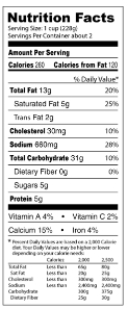
A) 20
B) 5
C) 45
D) 15
E) 120
A) 20
B) 5
C) 45
D) 15
E) 120
Question
Question
Question
Question
Question
Question
Question
Question
Question
Question
Question
Question
Question
Question

Unlock Deck
Sign up to unlock the cards in this deck!
Unlock Deck
Unlock Deck
1/74

Play

Full screen (f)
Deck 25: Digestion and Human Nutrition
1
Essential amino acids are obtained only from animal proteins.
False
2
Carbohydrates are typically broken down to
A) maltose, the molecule stored for future energy needs.
B) fructose, the molecule stored for future energy needs.
C) glucose, the molecule used as the energy source in cells.
D) glycogen, the molecule used as the energy source in cells.
E) glucose, the molecule stored for future energy needs.
A) maltose, the molecule stored for future energy needs.
B) fructose, the molecule stored for future energy needs.
C) glucose, the molecule used as the energy source in cells.
D) glycogen, the molecule used as the energy source in cells.
E) glucose, the molecule stored for future energy needs.
C
3
Cholesterol can be synthesized by the body and is found in certain foods.
True
4
Trans fats are
A) found naturally in all animals.
B) found naturally in all plants.
C) produced by hydrogenating unsaturated oils.
D) produced by hydrogenating saturated fats and unsaturated oils together.
E) produced by hydrogenating polysaturated fats.
A) found naturally in all animals.
B) found naturally in all plants.
C) produced by hydrogenating unsaturated oils.
D) produced by hydrogenating saturated fats and unsaturated oils together.
E) produced by hydrogenating polysaturated fats.
Unlock Deck
Unlock for access to all 74 flashcards in this deck.
Unlock Deck
k this deck
5
Scientific testing has not been performed on many herbal supplements.
Unlock Deck
Unlock for access to all 74 flashcards in this deck.
Unlock Deck
k this deck
6
Bleeding gums and easy bruising of the skin can be symptoms of a deficiency disorder involving
A) vitamin D.
B) vitamin A.
C) lipids.
D) vitamin C.
E) potassium.
A) vitamin D.
B) vitamin A.
C) lipids.
D) vitamin C.
E) potassium.
Unlock Deck
Unlock for access to all 74 flashcards in this deck.
Unlock Deck
k this deck
7
Fiber is important in the diet in
A) providing glucose for cells.
B) stimulating movements of the large intestine.
C) assisting in fat digestion in the small intestine.
D) aiding absorption of fats in the small intestine.
E) providing essential amino acids.
A) providing glucose for cells.
B) stimulating movements of the large intestine.
C) assisting in fat digestion in the small intestine.
D) aiding absorption of fats in the small intestine.
E) providing essential amino acids.
Unlock Deck
Unlock for access to all 74 flashcards in this deck.
Unlock Deck
k this deck
8
Dietary supplements
A) are always safe because they are natural.
B) can be harmful.
C) can accumulate to toxic levels.
D) can be harmful and accumulate to toxic levels.
E) are regulated by the federal government.
A) are always safe because they are natural.
B) can be harmful.
C) can accumulate to toxic levels.
D) can be harmful and accumulate to toxic levels.
E) are regulated by the federal government.
Unlock Deck
Unlock for access to all 74 flashcards in this deck.
Unlock Deck
k this deck
9
Ruminants have a stomach that enables them to digest cellulose.
Unlock Deck
Unlock for access to all 74 flashcards in this deck.
Unlock Deck
k this deck
10
The best definition of a nutrient is
A) any food taken into the body.
B) a food component which performs a physiological function in the body.
C) a food component which can be stored in the body for future energy needs.
D) an essential vitamin or mineral.
E) a food component which enhances one's health.
A) any food taken into the body.
B) a food component which performs a physiological function in the body.
C) a food component which can be stored in the body for future energy needs.
D) an essential vitamin or mineral.
E) a food component which enhances one's health.
Unlock Deck
Unlock for access to all 74 flashcards in this deck.
Unlock Deck
k this deck
11
The longer digestive tract of herbivores is necessary to complete digestion of plant material.
Unlock Deck
Unlock for access to all 74 flashcards in this deck.
Unlock Deck
k this deck
12
Energy needs are supplied by
A) carbohydrates, lipids, and proteins.
B) micronutrients.
C) antioxidants.
D) fiber.
E) essential amino acids.
A) carbohydrates, lipids, and proteins.
B) micronutrients.
C) antioxidants.
D) fiber.
E) essential amino acids.
Unlock Deck
Unlock for access to all 74 flashcards in this deck.
Unlock Deck
k this deck
13
A person's total daily intake of water must be obtained through drinking liquids.
Unlock Deck
Unlock for access to all 74 flashcards in this deck.
Unlock Deck
k this deck
14
Obesity increases the risk of type 2 diabetes and cardiovascular disease.
Unlock Deck
Unlock for access to all 74 flashcards in this deck.
Unlock Deck
k this deck
15
Micronutrients
A) supply the body's energy needs.
B) are needed in large quantities.
C) include lipids and proteins.
D) include vitamins and minerals.
E) include carbohydrates.
A) supply the body's energy needs.
B) are needed in large quantities.
C) include lipids and proteins.
D) include vitamins and minerals.
E) include carbohydrates.
Unlock Deck
Unlock for access to all 74 flashcards in this deck.
Unlock Deck
k this deck
16
Fiber is a type of _____ provided by _____.
A) fat; animals
B) carbohydrate; plants
C) protein; plants
D) carbohydrate; animals
E) protein; animals
A) fat; animals
B) carbohydrate; plants
C) protein; plants
D) carbohydrate; animals
E) protein; animals
Unlock Deck
Unlock for access to all 74 flashcards in this deck.
Unlock Deck
k this deck
17
Foods derived from animals typically contain _____, while foods derived from plants typically contain _____.
A) saturated fats; unsaturated fats
B) trans fats; saturated fats
C) unsaturated fats; saturated fats
D) saturated fats; trans fats
E) unsaturated fats; trans fats
A) saturated fats; unsaturated fats
B) trans fats; saturated fats
C) unsaturated fats; saturated fats
D) saturated fats; trans fats
E) unsaturated fats; trans fats
Unlock Deck
Unlock for access to all 74 flashcards in this deck.
Unlock Deck
k this deck
18
Fats are absorbed by the epithelial cells of villi in the intestinal tract and enter the capillary beds of the circulatory system.
Unlock Deck
Unlock for access to all 74 flashcards in this deck.
Unlock Deck
k this deck
19
Dietary supplements are safe to use due to the governmental testing they go through before they are approved for sale.
Unlock Deck
Unlock for access to all 74 flashcards in this deck.
Unlock Deck
k this deck
20
Nutrients that are deemed to be "essential" are those which
A) the body is not able to produce.
B) the body is able to produce so no food source is needed.
C) are needed in very low quantities.
D) are essential for muscle development.
E) make up a large proportion of the body.
A) the body is not able to produce.
B) the body is able to produce so no food source is needed.
C) are needed in very low quantities.
D) are essential for muscle development.
E) make up a large proportion of the body.
Unlock Deck
Unlock for access to all 74 flashcards in this deck.
Unlock Deck
k this deck
21
Which of the following minerals is typically overconsumed by Americans?
A) sodium
B) potassium
C) iron
D) cholesterol
E) calcium
A) sodium
B) potassium
C) iron
D) cholesterol
E) calcium
Unlock Deck
Unlock for access to all 74 flashcards in this deck.
Unlock Deck
k this deck
22
If egg yolks are a source of cholesterol, why doesn't eating a few eggs a week raise blood cholesterol?
A) Cholesterol from eggs does not affect HDL-cholesterol levels.
B) The impact on LDL-cholesterol levels is greater from dietary saturated and trans fats than from cholesterol.
C) Cholesterol from eggs naturally lowers LDL-cholesterol levels.
D) The human body produces more cholesterol than is in the two eggs.
E) Cholesterol from eggs naturally raises LDL-cholesterol levels.
A) Cholesterol from eggs does not affect HDL-cholesterol levels.
B) The impact on LDL-cholesterol levels is greater from dietary saturated and trans fats than from cholesterol.
C) Cholesterol from eggs naturally lowers LDL-cholesterol levels.
D) The human body produces more cholesterol than is in the two eggs.
E) Cholesterol from eggs naturally raises LDL-cholesterol levels.
Unlock Deck
Unlock for access to all 74 flashcards in this deck.
Unlock Deck
k this deck
23
Which of the following is an inaccurate statement about antioxidant vitamins?
A) They include certain water-soluble vitamins, specifically vitamin C.
B) They are abundant in fruits and vegetables.
C) They protect the body against free radicals.
D) They include certain fat-soluble vitamins, specifically vitamins A and E.
E) They are difficult to get in the diet.
A) They include certain water-soluble vitamins, specifically vitamin C.
B) They are abundant in fruits and vegetables.
C) They protect the body against free radicals.
D) They include certain fat-soluble vitamins, specifically vitamins A and E.
E) They are difficult to get in the diet.
Unlock Deck
Unlock for access to all 74 flashcards in this deck.
Unlock Deck
k this deck
24
Proteins must be ingested in order to obtain
A) necessary trans fats.
B) essential amino acids.
C) essential cholesterol.
D) needed minerals such as potassium and magnesium.
E) needed vitamins such as vitamin C.
A) necessary trans fats.
B) essential amino acids.
C) essential cholesterol.
D) needed minerals such as potassium and magnesium.
E) needed vitamins such as vitamin C.
Unlock Deck
Unlock for access to all 74 flashcards in this deck.
Unlock Deck
k this deck
25
Which of the following is part of a plan to maintain a healthy weight?
A) physical activity
B) a kilocalorie output equal to the kilocalorie input
C) appropriate intake of vitamins and minerals
D) moderate intake of fats
E) All of the above are part of a plan to maintain a healthy weight.
A) physical activity
B) a kilocalorie output equal to the kilocalorie input
C) appropriate intake of vitamins and minerals
D) moderate intake of fats
E) All of the above are part of a plan to maintain a healthy weight.
Unlock Deck
Unlock for access to all 74 flashcards in this deck.
Unlock Deck
k this deck
26
Adult females need more iron in their diet than males because females
A) require more red blood cells.
B) require more iron to maintain eggs.
C) lose hemoglobin during menstruation.
D) are not as efficient in manufacturing hemoglobin.
E) are not as efficient in manufacturing red blood cells.
A) require more red blood cells.
B) require more iron to maintain eggs.
C) lose hemoglobin during menstruation.
D) are not as efficient in manufacturing hemoglobin.
E) are not as efficient in manufacturing red blood cells.
Unlock Deck
Unlock for access to all 74 flashcards in this deck.
Unlock Deck
k this deck
27
Which of the following minerals is incorrectly matched with its source?
A) calcium - leafy green vegetables
B) phosphorus - meat
C) iodine - seafood
D) zinc - fruit
E) magnesium - whole grains
A) calcium - leafy green vegetables
B) phosphorus - meat
C) iodine - seafood
D) zinc - fruit
E) magnesium - whole grains
Unlock Deck
Unlock for access to all 74 flashcards in this deck.
Unlock Deck
k this deck
28
Which food choice below offers the healthiest fat for your heart?
A) oily fish
B) red meat
C) whole milk
D) cheese
E) shrimp and lobster
A) oily fish
B) red meat
C) whole milk
D) cheese
E) shrimp and lobster
Unlock Deck
Unlock for access to all 74 flashcards in this deck.
Unlock Deck
k this deck
29
When looking at a food label, in order to know how many calories you will ingest, it is important to know total number of calories and
A) serving size.
B) % daily value of protein.
C) number of grams of fat.
D) number of grams of fiber.
E) % daily value of sodium.
A) serving size.
B) % daily value of protein.
C) number of grams of fat.
D) number of grams of fiber.
E) % daily value of sodium.
Unlock Deck
Unlock for access to all 74 flashcards in this deck.
Unlock Deck
k this deck
30
Lipids
A) add to fecal bulk.
B) regulate metabolism and physiological development.
C) may be used to make certain hormones and vitamin D.
D) should be the main component of a healthy diet.
E) are found only in low amounts in animal sources of food.
A) add to fecal bulk.
B) regulate metabolism and physiological development.
C) may be used to make certain hormones and vitamin D.
D) should be the main component of a healthy diet.
E) are found only in low amounts in animal sources of food.
Unlock Deck
Unlock for access to all 74 flashcards in this deck.
Unlock Deck
k this deck
31
Which of the following is an incorrect match?
A) trans fat - margarine
B) saturated fat - beef
C) unsaturated fat - olive oil
D) trans fat - coldwater fish
E) unsaturated fat - walnut oil
A) trans fat - margarine
B) saturated fat - beef
C) unsaturated fat - olive oil
D) trans fat - coldwater fish
E) unsaturated fat - walnut oil
Unlock Deck
Unlock for access to all 74 flashcards in this deck.
Unlock Deck
k this deck
32
Which of the following minerals is incorrectly matched with its function in the body?
A) potassium - nerve conduction
B) sulfur - component of some amino acids and vitamins
C) iron - bone growth
D) sodium - water balance
E) copper - iron metabolism
A) potassium - nerve conduction
B) sulfur - component of some amino acids and vitamins
C) iron - bone growth
D) sodium - water balance
E) copper - iron metabolism
Unlock Deck
Unlock for access to all 74 flashcards in this deck.
Unlock Deck
k this deck
33
Stephen has a family history of type 2 diabetes. He knows he should reduce the amount of sugars in his diet but is not sure how to go about it. What is some advice you might give him?
A) Most breakfast cereals are a good way to start the day.
B) Eat white bread instead of whole wheat.
C) Cooking with sugar is all right since it breaks down in the process of heating.
D) Avoid jams and jellies.
E) Use honey instead of spices like cinnamon to flavor your food.
A) Most breakfast cereals are a good way to start the day.
B) Eat white bread instead of whole wheat.
C) Cooking with sugar is all right since it breaks down in the process of heating.
D) Avoid jams and jellies.
E) Use honey instead of spices like cinnamon to flavor your food.
Unlock Deck
Unlock for access to all 74 flashcards in this deck.
Unlock Deck
k this deck
34
Eating disorders
A) are caused primarily by biological factors.
B) occur only in woman.
C) are caused by a combination of biological, social, and psychological factors.
D) always involve overeating.
E) rarely have serious consequences for one's health.
A) are caused primarily by biological factors.
B) occur only in woman.
C) are caused by a combination of biological, social, and psychological factors.
D) always involve overeating.
E) rarely have serious consequences for one's health.
Unlock Deck
Unlock for access to all 74 flashcards in this deck.
Unlock Deck
k this deck
35
Carbohydrates
A) should not comprise a large amount of the diet.
B) are mostly found in animal sources of food.
C) are stored as starch by animals.
D) are converted to glucose for transport in the blood.
E) are stored for insulation and protection of organs.
A) should not comprise a large amount of the diet.
B) are mostly found in animal sources of food.
C) are stored as starch by animals.
D) are converted to glucose for transport in the blood.
E) are stored for insulation and protection of organs.
Unlock Deck
Unlock for access to all 74 flashcards in this deck.
Unlock Deck
k this deck
36
In type 2 diabetes, cells become resistant to insulin because of
A) reduced levels of glucose.
B) chronically reduced levels of insulin.
C) chronically high levels of insulin.
D) chronically high levels of glycogen.
E) chronically reduced levels of glycogen.
A) reduced levels of glucose.
B) chronically reduced levels of insulin.
C) chronically high levels of insulin.
D) chronically high levels of glycogen.
E) chronically reduced levels of glycogen.
Unlock Deck
Unlock for access to all 74 flashcards in this deck.
Unlock Deck
k this deck
37
Anorexia nervosa and bulimia nervosa are similar in that both involve
A) a starvation diet.
B) a less-than-healthy body weight.
C) binging and purging.
D) a normal body weight.
E) an abnormal focus on muscle development.
A) a starvation diet.
B) a less-than-healthy body weight.
C) binging and purging.
D) a normal body weight.
E) an abnormal focus on muscle development.
Unlock Deck
Unlock for access to all 74 flashcards in this deck.
Unlock Deck
k this deck
38
If a person increases his food intake without increasing his energy need for metabolic functions or processing, what will he need to do in order to maintain his weight?
A) decrease physical activity
B) increase physical activity
C) consume additional vitamins
D) drink additional water
E) drink less water
A) decrease physical activity
B) increase physical activity
C) consume additional vitamins
D) drink additional water
E) drink less water
Unlock Deck
Unlock for access to all 74 flashcards in this deck.
Unlock Deck
k this deck
39
Regulation of metabolic activities typically involves
A) cholesterol.
B) water.
C) vitamins.
D) glucose.
E) glycogen.
A) cholesterol.
B) water.
C) vitamins.
D) glucose.
E) glycogen.
Unlock Deck
Unlock for access to all 74 flashcards in this deck.
Unlock Deck
k this deck
40
The USDA recommends which type of food should compose the smallest percentage of our diet?
A) fruits and vegetables
B) fats and oils
C) meat, eggs, and nuts
D) breads and cereals
E) dairy products
A) fruits and vegetables
B) fats and oils
C) meat, eggs, and nuts
D) breads and cereals
E) dairy products
Unlock Deck
Unlock for access to all 74 flashcards in this deck.
Unlock Deck
k this deck
41
A diet high in fiber may contribute to a lower chance of heart disease because
A) fiber absorbs cholesterol.
B) fiber absorbs excess sugars in the bloodstream.
C) fiber is capable of breaking apart clots in the bloodstream.
D) fiber produces cholesterol.
E) fiber promotes fecal formation which contributes to movements of the large intestine.
A) fiber absorbs cholesterol.
B) fiber absorbs excess sugars in the bloodstream.
C) fiber is capable of breaking apart clots in the bloodstream.
D) fiber produces cholesterol.
E) fiber promotes fecal formation which contributes to movements of the large intestine.
Unlock Deck
Unlock for access to all 74 flashcards in this deck.
Unlock Deck
k this deck
42
Ashley has been diagnosed with high blood pressure. Her doctor recommended that she try to lower the amount of sodium in her diet. What advice would you give her?
A) Eat canned soups; they are typically low in salt.
B) Cheese is a good source of protein and calcium and is low in sodium.
C) Adding salt to vegetables while cooking is all right since most of the salt pours off when you drain them.
D) Use spices instead of salt to flavor food when cooking.
E) Hot dogs, bacon, and other processed meats are a good source of protein and are low in sodium.
A) Eat canned soups; they are typically low in salt.
B) Cheese is a good source of protein and calcium and is low in sodium.
C) Adding salt to vegetables while cooking is all right since most of the salt pours off when you drain them.
D) Use spices instead of salt to flavor food when cooking.
E) Hot dogs, bacon, and other processed meats are a good source of protein and are low in sodium.
Unlock Deck
Unlock for access to all 74 flashcards in this deck.
Unlock Deck
k this deck
43
What criteria is used to distinguish between an empty-calorie food and a junk food?
A) Empty-calorie foods have a high sugar and/or fat-to-vitamin ratio.
B) Empty-calorie foods have a low sugar and/or fat-to-vitamin ratio.
C) Empty-calorie foods have no calories in them at all.
D) Empty-calorie foods are made completely from artificial ingredients.
E) Junk foods have a higher vitamins-to-sugar ratio than empty-calorie foods.
A) Empty-calorie foods have a high sugar and/or fat-to-vitamin ratio.
B) Empty-calorie foods have a low sugar and/or fat-to-vitamin ratio.
C) Empty-calorie foods have no calories in them at all.
D) Empty-calorie foods are made completely from artificial ingredients.
E) Junk foods have a higher vitamins-to-sugar ratio than empty-calorie foods.
Unlock Deck
Unlock for access to all 74 flashcards in this deck.
Unlock Deck
k this deck
44
It is midsummer and Julie was out playing softball all day. She had to leave the game early because she was not feeling well. What is most likely happening to Julie?
A) Her body is dehydrated and her core body temperature is increasing.
B) Her body is dehydrated and her core body temperature is decreasing.
C) Her body is fatigued from all of the exercise.
D) Her muscles are cramped up due to a lack of calcium.
E) Her aerobic conditioning was not strong enough to handle all of the exercise.
A) Her body is dehydrated and her core body temperature is increasing.
B) Her body is dehydrated and her core body temperature is decreasing.
C) Her body is fatigued from all of the exercise.
D) Her muscles are cramped up due to a lack of calcium.
E) Her aerobic conditioning was not strong enough to handle all of the exercise.
Unlock Deck
Unlock for access to all 74 flashcards in this deck.
Unlock Deck
k this deck
45
Which statement is correct about empty-calorie foods?
A) Empty-calorie foods have a high amount of sugar and/or fat in relation to the vitamin content.
B) Empty-calorie foods have a low amount of sugar and/or fat in relation to the vitamin content.
C) Empty-calorie foods have a high amount of protein in relation to the vitamin content.
D) Empty-calorie foods have a high amount of vitamins in them.
E) Empty-calorie foods have a high amount of fiber in them.
A) Empty-calorie foods have a high amount of sugar and/or fat in relation to the vitamin content.
B) Empty-calorie foods have a low amount of sugar and/or fat in relation to the vitamin content.
C) Empty-calorie foods have a high amount of protein in relation to the vitamin content.
D) Empty-calorie foods have a high amount of vitamins in them.
E) Empty-calorie foods have a high amount of fiber in them.
Unlock Deck
Unlock for access to all 74 flashcards in this deck.
Unlock Deck
k this deck
46
Which of the following food sources would contain the least amount of fiber?
A) chicken
B) beans
C) peas
D) nuts
E) fruits
A) chicken
B) beans
C) peas
D) nuts
E) fruits
Unlock Deck
Unlock for access to all 74 flashcards in this deck.
Unlock Deck
k this deck
47
Yellow-orange and dark-green fruits and vegetables are a good source of
A) vitamin A.
B) vitamin D.
C) vitamin E.
D) biotin.
E) vitamin C.
A) vitamin A.
B) vitamin D.
C) vitamin E.
D) biotin.
E) vitamin C.
Unlock Deck
Unlock for access to all 74 flashcards in this deck.
Unlock Deck
k this deck
48
Mark is 72 inches tall and weighs 180 pounds. According to Mark's BMI, he is
A) at a healthy weight.
B) overweight.
C) moderately obese.
D) morbidly obese.
E) underweight.
A) at a healthy weight.
B) overweight.
C) moderately obese.
D) morbidly obese.
E) underweight.
Unlock Deck
Unlock for access to all 74 flashcards in this deck.
Unlock Deck
k this deck
49
Which of the following is a healthy body mass index?
A) 20.3
B) 26.6
C) 29.2
D) 32.8
E) 41.5
A) 20.3
B) 26.6
C) 29.2
D) 32.8
E) 41.5
Unlock Deck
Unlock for access to all 74 flashcards in this deck.
Unlock Deck
k this deck
50
Which of the following foods is considered an empty-calorie food?
A) potato chips
B) broccoli
C) sweet potatoes
D) salmon
E) whole-grain pasta
A) potato chips
B) broccoli
C) sweet potatoes
D) salmon
E) whole-grain pasta
Unlock Deck
Unlock for access to all 74 flashcards in this deck.
Unlock Deck
k this deck
51
Which of the following correctly ranks the following food groups in order from most to least amount to be consumed each day?
A) grains, vegetables, protein, oils
B) vegetables, grains, protein, oils
C) grains, oils, vegetables, protein
D) oils, protein, grains, vegetables
E) protein, oils, grains, vegetables
A) grains, vegetables, protein, oils
B) vegetables, grains, protein, oils
C) grains, oils, vegetables, protein
D) oils, protein, grains, vegetables
E) protein, oils, grains, vegetables
Unlock Deck
Unlock for access to all 74 flashcards in this deck.
Unlock Deck
k this deck
52
During water toxication (hyponatremia), which electrolytes can become out of balance?
A) sodium and potassium
B) sodium and calcium
C) calcium and potassium
D) iron and magnesium
E) zinc and iron
A) sodium and potassium
B) sodium and calcium
C) calcium and potassium
D) iron and magnesium
E) zinc and iron
Unlock Deck
Unlock for access to all 74 flashcards in this deck.
Unlock Deck
k this deck
53
The percent daily value on a Nutrition Facts label is based on a(n)
A) diet of 2,000 calories each day.
B) diet of 2,500 calories each day.
C) BMI of 22.
D) individual weighing 175 pounds.
E) individual weighting 120 pounds.
A) diet of 2,000 calories each day.
B) diet of 2,500 calories each day.
C) BMI of 22.
D) individual weighing 175 pounds.
E) individual weighting 120 pounds.
Unlock Deck
Unlock for access to all 74 flashcards in this deck.
Unlock Deck
k this deck
54
Which eating disorder is characterized by a person thinking that his or her body is underdeveloped?
A) muscle dysmorphia
B) binge-eating disorder
C) bulimia nervosa
D) anorexia nervosa
E) type 2 diabetes
A) muscle dysmorphia
B) binge-eating disorder
C) bulimia nervosa
D) anorexia nervosa
E) type 2 diabetes
Unlock Deck
Unlock for access to all 74 flashcards in this deck.
Unlock Deck
k this deck
55
Which of the following substances is incorrectly matched with its caloric value?
A) carbohydrate - 4 kcal/gram
B) fat - 4 kcal/gram
C) water - 0 kcal/gram
D) protein - 4 kcal/gram
E) fiber - 0 kcal/gram
A) carbohydrate - 4 kcal/gram
B) fat - 4 kcal/gram
C) water - 0 kcal/gram
D) protein - 4 kcal/gram
E) fiber - 0 kcal/gram
Unlock Deck
Unlock for access to all 74 flashcards in this deck.
Unlock Deck
k this deck
56
Mark is 72 inches tall and weighs 180 pounds. His body mass index is
A) 24.4.
B) 20.0.
C) 29.8.
D) 33.2.
E) 35.4.
A) 24.4.
B) 20.0.
C) 29.8.
D) 33.2.
E) 35.4.
Unlock Deck
Unlock for access to all 74 flashcards in this deck.
Unlock Deck
k this deck
57
Which source of protein does not contain the nine essential amino acids?
A) nuts
B) eggs
C) milk
D) chicken
E) beef
A) nuts
B) eggs
C) milk
D) chicken
E) beef
Unlock Deck
Unlock for access to all 74 flashcards in this deck.
Unlock Deck
k this deck
58
Which of the following is the least likely to contribute protein to the diet?
A) eggs
B) fish
C) beans
D) milk
E) apples
A) eggs
B) fish
C) beans
D) milk
E) apples
Unlock Deck
Unlock for access to all 74 flashcards in this deck.
Unlock Deck
k this deck
59
A serving of food contains 9g carbohydrate, 3g protein, and 5g fat. The total calories per serving of this food is
A) 73.
B) 83.
C) 93.
D) 103.
A) 73.
B) 83.
C) 93.
D) 103.
Unlock Deck
Unlock for access to all 74 flashcards in this deck.
Unlock Deck
k this deck
60
One serving of the food shown on this label contains _____ calories from protein.
A) 20
B) 5
C) 45
D) 15
E) 120
A) 20
B) 5
C) 45
D) 15
E) 120
Unlock Deck
Unlock for access to all 74 flashcards in this deck.
Unlock Deck
k this deck
61
Which of the following pieces of nutritional information is not included on the nutritional label of a food package?
A) daily % of water available in the food
B) daily % of protein available in the food
C) daily % of fat available in the food
D) serving size
E) calories based upon serving size
A) daily % of water available in the food
B) daily % of protein available in the food
C) daily % of fat available in the food
D) serving size
E) calories based upon serving size
Unlock Deck
Unlock for access to all 74 flashcards in this deck.
Unlock Deck
k this deck
62
Which of the following is in the correct order for protein digestion?
A) pepsin - peptides - peptidase - amino acids
B) peptidase - peptides - pepsin - amino acids
C) peptidase - amino acids - pepsin - peptides
D) amino acids - peptidase - peptides - pepsin
E) peptides - pepsin - peptidase - amino acids
A) pepsin - peptides - peptidase - amino acids
B) peptidase - peptides - pepsin - amino acids
C) peptidase - amino acids - pepsin - peptides
D) amino acids - peptidase - peptides - pepsin
E) peptides - pepsin - peptidase - amino acids
Unlock Deck
Unlock for access to all 74 flashcards in this deck.
Unlock Deck
k this deck
63
Which of the following is a function of the digestive system?
A) eliminate dead bacteria
B) eliminate nondigestible food
C) eliminate bile pigments from the breakdown of hemoglobin
D) absorb nutrients
E) All of the above are functions of the digestive system.
A) eliminate dead bacteria
B) eliminate nondigestible food
C) eliminate bile pigments from the breakdown of hemoglobin
D) absorb nutrients
E) All of the above are functions of the digestive system.
Unlock Deck
Unlock for access to all 74 flashcards in this deck.
Unlock Deck
k this deck
64
Which of the following is a function of the small intestine?
A) storage of indigestible material
B) absorption of water
C) absorption of salts
D) absorption of vitamin K
E) absorption of amino acids
A) storage of indigestible material
B) absorption of water
C) absorption of salts
D) absorption of vitamin K
E) absorption of amino acids
Unlock Deck
Unlock for access to all 74 flashcards in this deck.
Unlock Deck
k this deck
65
Villi are important because they
A) produce vitamin K.
B) help absorb nutrients.
C) produce pepsin.
D) secrete insulin.
E) produce feces.
A) produce vitamin K.
B) help absorb nutrients.
C) produce pepsin.
D) secrete insulin.
E) produce feces.
Unlock Deck
Unlock for access to all 74 flashcards in this deck.
Unlock Deck
k this deck
66
Which of the following incorrectly pairs the enzyme and the molecule on which it acts?
A) salivary amylase - starch
B) pepsin - protein
C) maltase - starch
D) trypsin - protein
E) pancreatic amylase - starch
A) salivary amylase - starch
B) pepsin - protein
C) maltase - starch
D) trypsin - protein
E) pancreatic amylase - starch
Unlock Deck
Unlock for access to all 74 flashcards in this deck.
Unlock Deck
k this deck
67
Starch digestion begins in the _____ and protein digestion begins in the _____.
A) mouth; small intestine
B) stomach; small intestine
C) mouth; stomach
D) stomach; large intestine
E) small intestine; stomach
A) mouth; small intestine
B) stomach; small intestine
C) mouth; stomach
D) stomach; large intestine
E) small intestine; stomach
Unlock Deck
Unlock for access to all 74 flashcards in this deck.
Unlock Deck
k this deck
68
The digestion and absorption of fats differs from that of sugars and proteins in that
A) sugars and proteins must be emulsified before being digested.
B) fats are absorbed into lymphatic capillaries instead of blood capillaries.
C) sugars and proteins interact with bile salts in order for absorption to occur.
D) fats are digested primarily in the stomach.
E) fats do not require digestion before being absorbed.
A) sugars and proteins must be emulsified before being digested.
B) fats are absorbed into lymphatic capillaries instead of blood capillaries.
C) sugars and proteins interact with bile salts in order for absorption to occur.
D) fats are digested primarily in the stomach.
E) fats do not require digestion before being absorbed.
Unlock Deck
Unlock for access to all 74 flashcards in this deck.
Unlock Deck
k this deck
69
Which of the following is a function of the pancreas?
A) produces plasma proteins such as fibrin and fibrinogen
B) detoxifies the blood by removing poisonous substances
C) produces insulin and glucagon
D) produces bile
E) produces urea from amino acids
A) produces plasma proteins such as fibrin and fibrinogen
B) detoxifies the blood by removing poisonous substances
C) produces insulin and glucagon
D) produces bile
E) produces urea from amino acids
Unlock Deck
Unlock for access to all 74 flashcards in this deck.
Unlock Deck
k this deck
70
If an area of the stomach lining lacks mucus, it will result in
A) a bolus.
B) acid reflux.
C) heartburn.
D) an ulcer.
E) chyme.
A) a bolus.
B) acid reflux.
C) heartburn.
D) an ulcer.
E) chyme.
Unlock Deck
Unlock for access to all 74 flashcards in this deck.
Unlock Deck
k this deck
71
Digestion in humans and earthworms
A) is similar in that in both organisms, digestion is an extracellular process, occurring in a complete digestive tract.
B) is different in that earthworms have a sac plan body plan and humans have a tube-within-a-tube body plan.
C) is different in that digestion is an extracellular process in humans but an intracellular process in earthworms.
D) is similar in that in both organisms, digestion is an intracellular process, occurring in an incomplete digestive system.
E) is similar in that in both organisms, digestion occurs in a simple tract, in which all parts of the tract are similar.
A) is similar in that in both organisms, digestion is an extracellular process, occurring in a complete digestive tract.
B) is different in that earthworms have a sac plan body plan and humans have a tube-within-a-tube body plan.
C) is different in that digestion is an extracellular process in humans but an intracellular process in earthworms.
D) is similar in that in both organisms, digestion is an intracellular process, occurring in an incomplete digestive system.
E) is similar in that in both organisms, digestion occurs in a simple tract, in which all parts of the tract are similar.
Unlock Deck
Unlock for access to all 74 flashcards in this deck.
Unlock Deck
k this deck
72
Humans are omnivores as shown by the type of
A) enzymes secreted in human saliva.
B) urine produced by humans.
C) human teeth.
D) human taste buds.
E) enzymes secreted in human intestines.
A) enzymes secreted in human saliva.
B) urine produced by humans.
C) human teeth.
D) human taste buds.
E) enzymes secreted in human intestines.
Unlock Deck
Unlock for access to all 74 flashcards in this deck.
Unlock Deck
k this deck
73
Food in the digestive tract is called chyme after
A) the tongue mixes it with saliva.
B) the stomach processes it.
C) all nutrients have been absorbed by the small intestines.
D) elimination through the anus.
E) it is chewed by the teeth.
A) the tongue mixes it with saliva.
B) the stomach processes it.
C) all nutrients have been absorbed by the small intestines.
D) elimination through the anus.
E) it is chewed by the teeth.
Unlock Deck
Unlock for access to all 74 flashcards in this deck.
Unlock Deck
k this deck
74
Vanessa and her friends are having lunch together. Just as Vanessa takes a drink of her chocolate milk, one of her friends tells a joke. Laughing, Vanessa has some of her milk come out of her nose. What is the explanation for this unusual event?
A) The laughter interfered with the movement of the soft palate so it did not shut off the nasal cavity.
B) The laughter interfered with the movement of the epiglottis so it did not shut off the nasal cavity.
C) The laughter interfered with the movement of the epiglottis so it did not shut off the trachea.
D) Vanessa has something wrong with the structure of her pharynx which allowed the milk to come out her nose.
E) The laughter interfered with the movement of the soft palate so it did not shut off the trachea.
A) The laughter interfered with the movement of the soft palate so it did not shut off the nasal cavity.
B) The laughter interfered with the movement of the epiglottis so it did not shut off the nasal cavity.
C) The laughter interfered with the movement of the epiglottis so it did not shut off the trachea.
D) Vanessa has something wrong with the structure of her pharynx which allowed the milk to come out her nose.
E) The laughter interfered with the movement of the soft palate so it did not shut off the trachea.
Unlock Deck
Unlock for access to all 74 flashcards in this deck.
Unlock Deck
k this deck
Unlock Deck
Unlock for access to all 74 flashcards in this deck.







