





 Chat with AI

Deck 13: The Rise of a Mass Democracy, 1824-1840
Full screen (f)

Question

Question
Question
Question
Question
Question
Question
Question
Question
Question
Question
Question
Question
Question
Question
Question
Question
Question
Question
Question
Question
Question
Question
Question
Question
Question
Question
Question
Question
Question
Question
Question
Question
Question
Question
Question
Question
Question
Question
Question
Question
Locate the following places by reference number on the map:
The Texas Revolution, Indian Territory, and Florida Territory, c. 1836
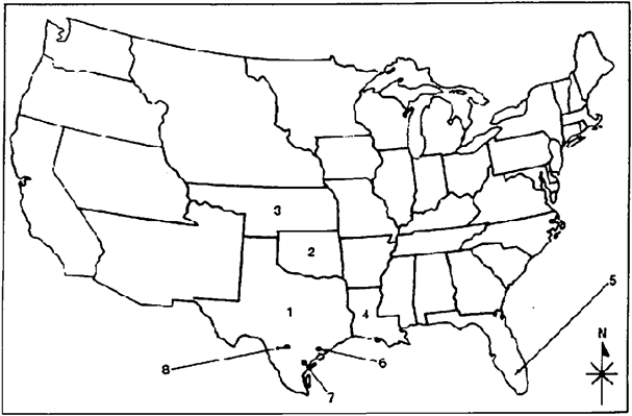
____ Goliad
The Texas Revolution, Indian Territory, and Florida Territory, c. 1836
____ Goliad
Question
Question
Question
Question
Question
Question
Question
Question
Question
Locate the following places by reference number on the map:
The Texas Revolution, Indian Territory, and Florida Territory, c. 1836
____ Louisiana
The Texas Revolution, Indian Territory, and Florida Territory, c. 1836
____ Louisiana
Question
Question
Locate the following places by reference number on the map:
The Texas Revolution, Indian Territory, and Florida Territory, c. 1836
____ Everglades
The Texas Revolution, Indian Territory, and Florida Territory, c. 1836
____ Everglades
Question
Question
Locate the following places by reference number on the map:
The Texas Revolution, Indian Territory, and Florida Territory, c. 1836
____ San Jacinto
The Texas Revolution, Indian Territory, and Florida Territory, c. 1836
____ San Jacinto
Question
Question
Locate the following places by reference number on the map:
The Texas Revolution, Indian Territory, and Florida Territory, c. 1836
____ Indian Territory
The Texas Revolution, Indian Territory, and Florida Territory, c. 1836
____ Indian Territory
Question
Question
Locate the following places by reference number on the map:
The Texas Revolution, Indian Territory, and Florida Territory, c. 1836
____ Texas
The Texas Revolution, Indian Territory, and Florida Territory, c. 1836
____ Texas
Question
Locate the following places by reference number on the map:
The Texas Revolution, Indian Territory, and Florida Territory, c. 1836
____ Alamo
The Texas Revolution, Indian Territory, and Florida Territory, c. 1836
____ Alamo
Question
Question
Question
Question
Question
Question
Question
Question
Question
Question
Question
Question
Question
Question
Question
Question
Question
Question
Question
Question
Question

Unlock Deck
Sign up to unlock the cards in this deck!
Unlock Deck
Unlock Deck
1/145

Play

Full screen (f)
Deck 13: The Rise of a Mass Democracy, 1824-1840
1
Identify and state the historical significance of the following:
Andrew Jackson
Andrew Jackson
Student answers will vary.
2
Identify and state the historical significance of the following:
Daniel Webster
Daniel Webster
Student answers will vary.
3
Identify and state the historical significance of the following:
William Harrison
William Harrison
Student answers will vary.
4
Identify and state the historical significance of the following:
Nullification Crisis
Nullification Crisis
Unlock Deck
Unlock for access to all 145 flashcards in this deck.
Unlock Deck
k this deck
5
Identify and state the historical significance of the following:
John C. Calhoun
John C. Calhoun
Unlock Deck
Unlock for access to all 145 flashcards in this deck.
Unlock Deck
k this deck
6
Identify and state the historical significance of the following:
Santa Anna
Santa Anna
Unlock Deck
Unlock for access to all 145 flashcards in this deck.
Unlock Deck
k this deck
7
Identify and state the historical significance of the following:
spoils system
spoils system
Unlock Deck
Unlock for access to all 145 flashcards in this deck.
Unlock Deck
k this deck
8
Identify and state the historical significance of the following:
Black Hawk
Black Hawk
Unlock Deck
Unlock for access to all 145 flashcards in this deck.
Unlock Deck
k this deck
9
Identify and state the historical significance of the following:
John Quincy Adams
John Quincy Adams
Unlock Deck
Unlock for access to all 145 flashcards in this deck.
Unlock Deck
k this deck
10
Identify and state the historical significance of the following:
Sam Houston
Sam Houston
Unlock Deck
Unlock for access to all 145 flashcards in this deck.
Unlock Deck
k this deck
11
Identify and state the historical significance of the following:
John Tyler
John Tyler
Unlock Deck
Unlock for access to all 145 flashcards in this deck.
Unlock Deck
k this deck
12
Identify and state the historical significance of the following:
William Crawford
William Crawford
Unlock Deck
Unlock for access to all 145 flashcards in this deck.
Unlock Deck
k this deck
13
Identify and state the historical significance of the following:
Alexis de Tocqueville
Alexis de Tocqueville
Unlock Deck
Unlock for access to all 145 flashcards in this deck.
Unlock Deck
k this deck
14
Identify and state the historical significance of the following:
Stephen Austin
Stephen Austin
Unlock Deck
Unlock for access to all 145 flashcards in this deck.
Unlock Deck
k this deck
15
Identify and state the historical significance of the following:
Martin Van Buren
Martin Van Buren
Unlock Deck
Unlock for access to all 145 flashcards in this deck.
Unlock Deck
k this deck
16
Identify and state the historical significance of the following:
"favorite son"
"favorite son"
Unlock Deck
Unlock for access to all 145 flashcards in this deck.
Unlock Deck
k this deck
17
Identify and state the historical significance of the following:
Nicholas Biddle
Nicholas Biddle
Unlock Deck
Unlock for access to all 145 flashcards in this deck.
Unlock Deck
k this deck
18
Identify and state the historical significance of the following:
Henry Clay
Henry Clay
Unlock Deck
Unlock for access to all 145 flashcards in this deck.
Unlock Deck
k this deck
19
Identify and state the historical significance of the following:
minority president
minority president
Unlock Deck
Unlock for access to all 145 flashcards in this deck.
Unlock Deck
k this deck
20
Identify and state the historical significance of the following:
Denmark Vesey
Denmark Vesey
Unlock Deck
Unlock for access to all 145 flashcards in this deck.
Unlock Deck
k this deck
21
Identify and state the historical significance of the following:
Force Bill
Force Bill
Unlock Deck
Unlock for access to all 145 flashcards in this deck.
Unlock Deck
k this deck
22
Identify and state the historical significance of the following:
speculation
speculation
Unlock Deck
Unlock for access to all 145 flashcards in this deck.
Unlock Deck
k this deck
23
Identify and state the historical significance of the following:
antislavery crusaders and Texas
antislavery crusaders and Texas
Unlock Deck
Unlock for access to all 145 flashcards in this deck.
Unlock Deck
k this deck
24
Identify and state the historical significance of the following:
Twelfth Amendment
Twelfth Amendment
Unlock Deck
Unlock for access to all 145 flashcards in this deck.
Unlock Deck
k this deck
25
Identify and state the historical significance of the following:
annexation
annexation
Unlock Deck
Unlock for access to all 145 flashcards in this deck.
Unlock Deck
k this deck
26
Identify and state the historical significance of the following:
"King Mob"
"King Mob"
Unlock Deck
Unlock for access to all 145 flashcards in this deck.
Unlock Deck
k this deck
27
Identify and state the historical significance of the following:
Unionists
Unionists
Unlock Deck
Unlock for access to all 145 flashcards in this deck.
Unlock Deck
k this deck
28
Identify and state the historical significance of the following:
rotation in office
rotation in office
Unlock Deck
Unlock for access to all 145 flashcards in this deck.
Unlock Deck
k this deck
29
Identify and state the historical significance of the following:
"slavocracy"
"slavocracy"
Unlock Deck
Unlock for access to all 145 flashcards in this deck.
Unlock Deck
k this deck
30
Identify and state the historical significance of the following:
"corrupt bargain"
"corrupt bargain"
Unlock Deck
Unlock for access to all 145 flashcards in this deck.
Unlock Deck
k this deck
31
Identify and state the historical significance of the following:
Specie Circular
Specie Circular
Unlock Deck
Unlock for access to all 145 flashcards in this deck.
Unlock Deck
k this deck
32
Identify and state the historical significance of the following:
Tariff of 1832
Tariff of 1832
Unlock Deck
Unlock for access to all 145 flashcards in this deck.
Unlock Deck
k this deck
33
Identify and state the historical significance of the following:
National Republicans
National Republicans
Unlock Deck
Unlock for access to all 145 flashcards in this deck.
Unlock Deck
k this deck
34
Identify and state the historical significance of the following:
Democratic party
Democratic party
Unlock Deck
Unlock for access to all 145 flashcards in this deck.
Unlock Deck
k this deck
35
Identify and state the historical significance of the following:
Tariff of Abominations
Tariff of Abominations
Unlock Deck
Unlock for access to all 145 flashcards in this deck.
Unlock Deck
k this deck
36
Identify and state the historical significance of the following:
South Carolina Exposition
South Carolina Exposition
Unlock Deck
Unlock for access to all 145 flashcards in this deck.
Unlock Deck
k this deck
37
Identify and state the historical significance of the following:
Anti-Masonic party
Anti-Masonic party
Unlock Deck
Unlock for access to all 145 flashcards in this deck.
Unlock Deck
k this deck
38
Identify and state the historical significance of the following:
common man
common man
Unlock Deck
Unlock for access to all 145 flashcards in this deck.
Unlock Deck
k this deck
39
Identify and state the historical significance of the following:
compromise Tariff of 1833
compromise Tariff of 1833
Unlock Deck
Unlock for access to all 145 flashcards in this deck.
Unlock Deck
k this deck
40
Identify and state the historical significance of the following:
Nullifiers
Nullifiers
Unlock Deck
Unlock for access to all 145 flashcards in this deck.
Unlock Deck
k this deck
41
Locate the following places by reference number on the map:
The Texas Revolution, Indian Territory, and Florida Territory, c. 1836
____ Goliad
The Texas Revolution, Indian Territory, and Florida Territory, c. 1836
____ Goliad
Unlock Deck
Unlock for access to all 145 flashcards in this deck.
Unlock Deck
k this deck
42
Identify and state the historical significance of the following:
Bank War
Bank War
Unlock Deck
Unlock for access to all 145 flashcards in this deck.
Unlock Deck
k this deck
43
Identify and state the historical significance of the following:
"Trail of Tears"
"Trail of Tears"
Unlock Deck
Unlock for access to all 145 flashcards in this deck.
Unlock Deck
k this deck
44
Identify and state the historical significance of the following:
Alamo
Alamo
Unlock Deck
Unlock for access to all 145 flashcards in this deck.
Unlock Deck
k this deck
45
Identify and state the historical significance of the following:
Indian Removal Act (1830)
Indian Removal Act (1830)
Unlock Deck
Unlock for access to all 145 flashcards in this deck.
Unlock Deck
k this deck
46
Identify and state the historical significance of the following:
"Five Civilized Tribes"
"Five Civilized Tribes"
Unlock Deck
Unlock for access to all 145 flashcards in this deck.
Unlock Deck
k this deck
47
In the 1820s and 1830s, the two issues that greatly raised the political stakes were
A)westward expansion and Indian removal.
B)the end of property qualifications for voting and political conventions.
C)the admission of Texas and Oregon to the Union.
D)hard money and banking regulation.
E)slavery and economic distress.
A)westward expansion and Indian removal.
B)the end of property qualifications for voting and political conventions.
C)the admission of Texas and Oregon to the Union.
D)hard money and banking regulation.
E)slavery and economic distress.
Unlock Deck
Unlock for access to all 145 flashcards in this deck.
Unlock Deck
k this deck
48
Identify and state the historical significance of the following:
Battle of San Jacinto
Battle of San Jacinto
Unlock Deck
Unlock for access to all 145 flashcards in this deck.
Unlock Deck
k this deck
49
Identify and state the historical significance of the following:
independent treasury
independent treasury
Unlock Deck
Unlock for access to all 145 flashcards in this deck.
Unlock Deck
k this deck
50
Locate the following places by reference number on the map:
The Texas Revolution, Indian Territory, and Florida Territory, c. 1836
____ Louisiana
The Texas Revolution, Indian Territory, and Florida Territory, c. 1836
____ Louisiana
Unlock Deck
Unlock for access to all 145 flashcards in this deck.
Unlock Deck
k this deck
51
Identify and state the historical significance of the following:
Panic of 1837
Panic of 1837
Unlock Deck
Unlock for access to all 145 flashcards in this deck.
Unlock Deck
k this deck
52
Locate the following places by reference number on the map:
The Texas Revolution, Indian Territory, and Florida Territory, c. 1836
____ Everglades
The Texas Revolution, Indian Territory, and Florida Territory, c. 1836
____ Everglades
Unlock Deck
Unlock for access to all 145 flashcards in this deck.
Unlock Deck
k this deck
53
Identify and state the historical significance of the following:
Whig party
Whig party
Unlock Deck
Unlock for access to all 145 flashcards in this deck.
Unlock Deck
k this deck
54
Locate the following places by reference number on the map:
The Texas Revolution, Indian Territory, and Florida Territory, c. 1836
____ San Jacinto
The Texas Revolution, Indian Territory, and Florida Territory, c. 1836
____ San Jacinto
Unlock Deck
Unlock for access to all 145 flashcards in this deck.
Unlock Deck
k this deck
55
Identify and state the historical significance of the following:
Seminole Indians
Seminole Indians
Unlock Deck
Unlock for access to all 145 flashcards in this deck.
Unlock Deck
k this deck
56
Locate the following places by reference number on the map:
The Texas Revolution, Indian Territory, and Florida Territory, c. 1836
____ Indian Territory
The Texas Revolution, Indian Territory, and Florida Territory, c. 1836
____ Indian Territory
Unlock Deck
Unlock for access to all 145 flashcards in this deck.
Unlock Deck
k this deck
57
Identify and state the historical significance of the following:
Goliad
Goliad
Unlock Deck
Unlock for access to all 145 flashcards in this deck.
Unlock Deck
k this deck
58
Locate the following places by reference number on the map:
The Texas Revolution, Indian Territory, and Florida Territory, c. 1836
____ Texas
The Texas Revolution, Indian Territory, and Florida Territory, c. 1836
____ Texas
Unlock Deck
Unlock for access to all 145 flashcards in this deck.
Unlock Deck
k this deck
59
Locate the following places by reference number on the map:
The Texas Revolution, Indian Territory, and Florida Territory, c. 1836
____ Alamo
The Texas Revolution, Indian Territory, and Florida Territory, c. 1836
____ Alamo
Unlock Deck
Unlock for access to all 145 flashcards in this deck.
Unlock Deck
k this deck
60
Identify and state the historical significance of the following:
Anti-Masonic party
Anti-Masonic party
Unlock Deck
Unlock for access to all 145 flashcards in this deck.
Unlock Deck
k this deck
61
In the 1820s and 1830s, the public's attitude regarding political parties
A)was uniformly hostile to all political parties, regardless of the party or the region of the country.
B)was deeply ambivalent.
C)was more positive in the North than in the South.
D)reflected growing acceptance of the wild contentiousness of political life.
E)was that they were the best expressions of political ideologies.
A)was uniformly hostile to all political parties, regardless of the party or the region of the country.
B)was deeply ambivalent.
C)was more positive in the North than in the South.
D)reflected growing acceptance of the wild contentiousness of political life.
E)was that they were the best expressions of political ideologies.
Unlock Deck
Unlock for access to all 145 flashcards in this deck.
Unlock Deck
k this deck
62
As president, John Quincy Adams
A)was more successful than as secretary of state.
B)was impeached by the House of Representatives, but he was acquitted by the Senate.
C)was one of the least successful presidents in American history.
D)put many of his supporters on the federal payroll.
E)was successful in getting most of his programs enacted into law.
A)was more successful than as secretary of state.
B)was impeached by the House of Representatives, but he was acquitted by the Senate.
C)was one of the least successful presidents in American history.
D)put many of his supporters on the federal payroll.
E)was successful in getting most of his programs enacted into law.
Unlock Deck
Unlock for access to all 145 flashcards in this deck.
Unlock Deck
k this deck
63
The purpose behind the spoils system was
A)to press those with experience into governmental service.
B)to make politics a sideline and not a full-time business.
C)to reward political supporters with public office.
D)to reverse the trend of rotation in office.
E)the widespread encouragement of a bureaucratic office-holding class.
A)to press those with experience into governmental service.
B)to make politics a sideline and not a full-time business.
C)to reward political supporters with public office.
D)to reverse the trend of rotation in office.
E)the widespread encouragement of a bureaucratic office-holding class.
Unlock Deck
Unlock for access to all 145 flashcards in this deck.
Unlock Deck
k this deck
64
People in the West tended to prefer Andrew Jackson in the 1824 election because he
A)was less inclined to engage in wars with Indian nations than to seek fair negotiated treaties with Native Americans to resolve territorial disputes.
B)campaigned against the forces of corruption and privilege in government.
C)promised to uphold the needs of free labor.
D)had embraced the American System.
E)None of these choices are correct.
A)was less inclined to engage in wars with Indian nations than to seek fair negotiated treaties with Native Americans to resolve territorial disputes.
B)campaigned against the forces of corruption and privilege in government.
C)promised to uphold the needs of free labor.
D)had embraced the American System.
E)None of these choices are correct.
Unlock Deck
Unlock for access to all 145 flashcards in this deck.
Unlock Deck
k this deck
65
Opposing the Tariff of 1828, Southerners labeled it a "Yankee Tariff" because
A)the tariff protected New England manufacturing at their economic expense.
B)it charged a tax on Southern manufactured goods, making it difficult for the South to compete in the world market.
C)it imposed a high tax on Southern-grown cotton.
D)it placed a substantially lower tax on European manufactured goods imported into the New England and middle states than it did on similar European gods imported into states in the South.
E)None of these choices are correct.
A)the tariff protected New England manufacturing at their economic expense.
B)it charged a tax on Southern manufactured goods, making it difficult for the South to compete in the world market.
C)it imposed a high tax on Southern-grown cotton.
D)it placed a substantially lower tax on European manufactured goods imported into the New England and middle states than it did on similar European gods imported into states in the South.
E)None of these choices are correct.
Unlock Deck
Unlock for access to all 145 flashcards in this deck.
Unlock Deck
k this deck
66
The presidential election of 1824
A)was the first to use the electoral college.
B)was the first one to see the election of a president who failed to win a majority of the electoral vote from the state electors.
C)saw a record high voter turn-out show up at the polls.
D)saw the formulation of well-organized political parties.
E)was decided by the U.S.Supreme Court.
A)was the first to use the electoral college.
B)was the first one to see the election of a president who failed to win a majority of the electoral vote from the state electors.
C)saw a record high voter turn-out show up at the polls.
D)saw the formulation of well-organized political parties.
E)was decided by the U.S.Supreme Court.
Unlock Deck
Unlock for access to all 145 flashcards in this deck.
Unlock Deck
k this deck
67
John C. Calhoun's South Carolina Exposition was an argument for
A)secession.
B)protective tariffs.
C)majority rule.
D)states' rights.
E)trade with England.
A)secession.
B)protective tariffs.
C)majority rule.
D)states' rights.
E)trade with England.
Unlock Deck
Unlock for access to all 145 flashcards in this deck.
Unlock Deck
k this deck
68
Despite his suspicions of the federal government, Andrew Jackson's Democratic political party
A)offered support of a strong central government directing economic affairs.
B)advocated strongly for the enactment of Henry Clay's "American System."
C)favored using the U.S.Army to restrict westward and southern American settlement into Indian areas.
D)created the spoils system in the federal government.
E)asserted conviction of the need for "the best and the brightest" in government.
A)offered support of a strong central government directing economic affairs.
B)advocated strongly for the enactment of Henry Clay's "American System."
C)favored using the U.S.Army to restrict westward and southern American settlement into Indian areas.
D)created the spoils system in the federal government.
E)asserted conviction of the need for "the best and the brightest" in government.
Unlock Deck
Unlock for access to all 145 flashcards in this deck.
Unlock Deck
k this deck
69
Andrew Jackson's inauguration as president symbolized the
A)return of Jeffersonian simplicity.
B)newly won ascendancy of the masses.
C)supremacy of states' rights over federal power.
D)reemergence of a dominant Federalist ethic of government and Federalist economic policies.
E)All of these choices are correct.
A)return of Jeffersonian simplicity.
B)newly won ascendancy of the masses.
C)supremacy of states' rights over federal power.
D)reemergence of a dominant Federalist ethic of government and Federalist economic policies.
E)All of these choices are correct.
Unlock Deck
Unlock for access to all 145 flashcards in this deck.
Unlock Deck
k this deck
70
Southerners feared the Tariff of 1828 because
A)it would hurt their growing manufacturing sector.
B)this same use of the power of the federal government could be used to suppress slavery.
C)it might hurt Andrew Jackson's political career.
D)they were convinced that it would destroy the American woolen industry.
E)it could damage the chances of the American System's success.
A)it would hurt their growing manufacturing sector.
B)this same use of the power of the federal government could be used to suppress slavery.
C)it might hurt Andrew Jackson's political career.
D)they were convinced that it would destroy the American woolen industry.
E)it could damage the chances of the American System's success.
Unlock Deck
Unlock for access to all 145 flashcards in this deck.
Unlock Deck
k this deck
71
The new two-party political system that emerged in the 1830s and 1840s
A)significantly reduced sectional political divisions in the country.
B)was seen at the time as a weakening of democracy.
C)resulted in the Civil War.
D)fulfilled the wishes of the founding fathers.
E)became an important part of the nation's checks and balances.
A)significantly reduced sectional political divisions in the country.
B)was seen at the time as a weakening of democracy.
C)resulted in the Civil War.
D)fulfilled the wishes of the founding fathers.
E)became an important part of the nation's checks and balances.
Unlock Deck
Unlock for access to all 145 flashcards in this deck.
Unlock Deck
k this deck
72
Writing about his observations of America and Americans as he traveled across the United States, the Frenchman Alexis de Tocqueville was most struck by
A)the comparative wealth of Americans versus Europeans.
B)the general equality of social and economic conditions among Americans.
C)the low voter participation.
D)the ugliness of political campaigns.
E)None of these choices are correct.
A)the comparative wealth of Americans versus Europeans.
B)the general equality of social and economic conditions among Americans.
C)the low voter participation.
D)the ugliness of political campaigns.
E)None of these choices are correct.
Unlock Deck
Unlock for access to all 145 flashcards in this deck.
Unlock Deck
k this deck
73
John Quincy Adams could be described as
A)a politician who enjoyed engaging in political bargaining and "horse-trading" with political colleagues and adversaries.
B)a man who sought popular support.
C)a politician with great tact.
D)possessing almost none of the arts of the politician.
E)a man of limited intelligence.
A)a politician who enjoyed engaging in political bargaining and "horse-trading" with political colleagues and adversaries.
B)a man who sought popular support.
C)a politician with great tact.
D)possessing almost none of the arts of the politician.
E)a man of limited intelligence.
Unlock Deck
Unlock for access to all 145 flashcards in this deck.
Unlock Deck
k this deck
74
By the 1840s, voter participation in the presidential election reached
A)nearly 50 percent.
B)25 percent.
C)40 percent.
D)15 percent.
E)nearly 80 percent.
A)nearly 50 percent.
B)25 percent.
C)40 percent.
D)15 percent.
E)nearly 80 percent.
Unlock Deck
Unlock for access to all 145 flashcards in this deck.
Unlock Deck
k this deck
75
The Nullification Crisis of 1832-1833 erupted directly over
A)banking policy.
B)internal improvements.
C)tariff policy.
D)extension of slavery into the western territories.
E)Indian policy.
A)banking policy.
B)internal improvements.
C)tariff policy.
D)extension of slavery into the western territories.
E)Indian policy.
Unlock Deck
Unlock for access to all 145 flashcards in this deck.
Unlock Deck
k this deck
76
The House of Representatives decided the 1824 presidential election when
A)no candidate received a majority of the vote in the Electoral College.
B)William Crawford suffered a stroke and was forced to drop out of the race.
C)the House was forced to do so by "King Caucus."
D)the Supreme Court declined to hear a case brought by Andrew Jackson contesting the electoral results.
E)widespread voter fraud was discovered.
A)no candidate received a majority of the vote in the Electoral College.
B)William Crawford suffered a stroke and was forced to drop out of the race.
C)the House was forced to do so by "King Caucus."
D)the Supreme Court declined to hear a case brought by Andrew Jackson contesting the electoral results.
E)widespread voter fraud was discovered.
Unlock Deck
Unlock for access to all 145 flashcards in this deck.
Unlock Deck
k this deck
77
The spoils system under Andrew Jackson resulted in
A)a superior class of intelligent, competent federal job holders than under previous presidential administrations.
B)the replacement of insecurity by security in employment.
C)the destruction of the personalized political machine.
D)the appointment of many corrupt and incompetent officials to federal jobs.
E)the same public policies as those taken by John Quincy Adams.
A)a superior class of intelligent, competent federal job holders than under previous presidential administrations.
B)the replacement of insecurity by security in employment.
C)the destruction of the personalized political machine.
D)the appointment of many corrupt and incompetent officials to federal jobs.
E)the same public policies as those taken by John Quincy Adams.
Unlock Deck
Unlock for access to all 145 flashcards in this deck.
Unlock Deck
k this deck
78
John Quincy Adams's weaknesses as president included all of the following except
A)his strong nationalistic ideology.
B)his support for elitist proposals like a national university.
C)his personal coldness and tactlessness with people.
D)the charges of "corrupt bargain" hanging over his presidency.
E)his encouragement of his supporters to "sling mud" at Jackson.
A)his strong nationalistic ideology.
B)his support for elitist proposals like a national university.
C)his personal coldness and tactlessness with people.
D)the charges of "corrupt bargain" hanging over his presidency.
E)his encouragement of his supporters to "sling mud" at Jackson.
Unlock Deck
Unlock for access to all 145 flashcards in this deck.
Unlock Deck
k this deck
79
Which of the following interest group(s) supported the exceptionally high rates of the Tariff of 1828?
A)Western backcountry farmers, shopkeepers, artisans, and laborers who thought the tariff would revive a stagnant American economy
B)Abolitionists who saw it as the opening wedge for the use of federal power against slavery
C)Wool and textile manufacturers from New England
D)Supporters of Henry Clay's American System
E)Southern plantation owners who wanted to prevent dumping of Egyptian cotton in America
A)Western backcountry farmers, shopkeepers, artisans, and laborers who thought the tariff would revive a stagnant American economy
B)Abolitionists who saw it as the opening wedge for the use of federal power against slavery
C)Wool and textile manufacturers from New England
D)Supporters of Henry Clay's American System
E)Southern plantation owners who wanted to prevent dumping of Egyptian cotton in America
Unlock Deck
Unlock for access to all 145 flashcards in this deck.
Unlock Deck
k this deck
80
John Quincy Adams, elected president in 1825, was charged by his political opponents with having struck a "corrupt bargain" when he appointed ____ to become ____.
A)John C.Calhoun, vice president
B)William Crawford, chief justice of the United States
C)Henry Clay, secretary of state
D)Daniel Webster, secretary of state
E)John Eaton, secretary of the navy
A)John C.Calhoun, vice president
B)William Crawford, chief justice of the United States
C)Henry Clay, secretary of state
D)Daniel Webster, secretary of state
E)John Eaton, secretary of the navy
Unlock Deck
Unlock for access to all 145 flashcards in this deck.
Unlock Deck
k this deck
Unlock Deck
Unlock for access to all 145 flashcards in this deck.







