





 Chat with AI

Deck 27: Environmental Microbiology
Full screen (f)

Question

Question
Question
Question
Figure 27.1
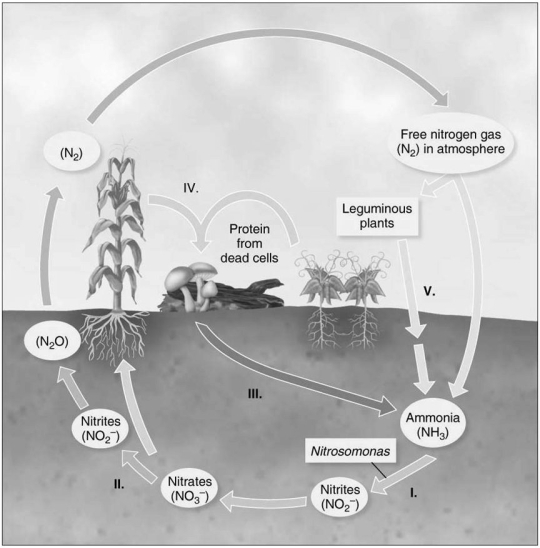
Which step in Figure 27.1 represents anaerobic respiration?
A) I
B) II
C) III
D) IV
E) V
Which step in Figure 27.1 represents anaerobic respiration?
A) I
B) II
C) III
D) IV
E) V
Question
Question
Figure 27.1
Which step in Figure 27.1 represents the following reaction: amino acid ( -NH2) → NH3?
A) I
B) II
C) III
D) IV
E) V
Which step in Figure 27.1 represents the following reaction: amino acid ( -NH2) → NH3?
A) I
B) II
C) III
D) IV
E) V
Question
Question
Question
Question
Question
6H2S + 6Co2 light 6S0 + glucose 
A) takes place under aerobic conditions.
B) takes place under anaerobic conditions.
C) The amount of oxygen does not make any difference.
A) takes place under aerobic conditions.
B) takes place under anaerobic conditions.
C) The amount of oxygen does not make any difference.
Question
Question
Figure 27.1
Which term in Figure 27.1 describes step V?
A) nitrogen fixation
B) ammonification
C) nitrification
D) dissimilation
E) denitrification
Which term in Figure 27.1 describes step V?
A) nitrogen fixation
B) ammonification
C) nitrification
D) dissimilation
E) denitrification
Question
Question
Question
Question
Question
Question
Question
Question
Question
Question
Question
Question
Question
Question
Question
Figure 27.1
Nitrification is beneficial to farmers. It is represented by which step in Figure 27.1?
A) I
B) II
C) III
D) IV
E) V
Nitrification is beneficial to farmers. It is represented by which step in Figure 27.1?
A) I
B) II
C) III
D) IV
E) V
Question
Question
Question
Question
Question
Question
Question
Question
Question
Question
Question
Question
Figure 27.2
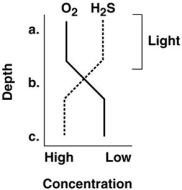
Where are photosynthetic bacteria most likely to be found in Figure 27.2?
A) a
B) b
C) c
D) a and b
E) b and c
Where are photosynthetic bacteria most likely to be found in Figure 27.2?
A) a
B) b
C) c
D) a and b
E) b and c
Question
Question
Figure 27.2
Where are the benthic microbes such as Desulfovibrio and Clostridium most likely to be found in Figure 27.2?
A) a
B) b
C) c
D) b and c
E) a and b
Where are the benthic microbes such as Desulfovibrio and Clostridium most likely to be found in Figure 27.2?
A) a
B) b
C) c
D) b and c
E) a and b
Question
Question
Question
Question
Question
Question
Question
Question
Question
Question
Question
Question
Question
Question
Question
Question

Unlock Deck
Sign up to unlock the cards in this deck!
Unlock Deck
Unlock Deck
1/58

Play

Full screen (f)
Deck 27: Environmental Microbiology
1
For the biogeochemical cycles of the following elements, which does NOT have an atmospheric cycle?
A) nitrogen
B) phosphorus
C) carbon
D) sulfur
A) nitrogen
B) phosphorus
C) carbon
D) sulfur
B
2
Which of the following requires aerobic conditions?
A) water treatment
B) sludge digestion
C) secondary sewage treatment
D) primary sewage treatment
E) nitrogen fixation
A) water treatment
B) sludge digestion
C) secondary sewage treatment
D) primary sewage treatment
E) nitrogen fixation
C
3
Which of the following is required for composting?
A) periodic turning or raking of the compost pile
B) addition of non-biodegradable materials
C) addition of thermophilic microbes
D) addition of nitrogen and phosphorus sources
E) constant anaerobic conditions
A) periodic turning or raking of the compost pile
B) addition of non-biodegradable materials
C) addition of thermophilic microbes
D) addition of nitrogen and phosphorus sources
E) constant anaerobic conditions
A
4
Figure 27.1
Which step in Figure 27.1 represents anaerobic respiration?
A) I
B) II
C) III
D) IV
E) V
Which step in Figure 27.1 represents anaerobic respiration?
A) I
B) II
C) III
D) IV
E) V
Unlock Deck
Unlock for access to all 58 flashcards in this deck.
Unlock Deck
k this deck
5
Bioremediation of petroleum
A) takes place under aerobic conditions.
B) takes place under anaerobic conditions.
C) The amount of oxygen does not make any difference.
A) takes place under aerobic conditions.
B) takes place under anaerobic conditions.
C) The amount of oxygen does not make any difference.
Unlock Deck
Unlock for access to all 58 flashcards in this deck.
Unlock Deck
k this deck
6
Figure 27.1
Which step in Figure 27.1 represents the following reaction: amino acid ( -NH2) → NH3?
A) I
B) II
C) III
D) IV
E) V
Which step in Figure 27.1 represents the following reaction: amino acid ( -NH2) → NH3?
A) I
B) II
C) III
D) IV
E) V
Unlock Deck
Unlock for access to all 58 flashcards in this deck.
Unlock Deck
k this deck
7
In freshwater lakes and ponds, the majority of photosynthetic microbes are located in the zone(s).
A) benthic
B) littoral
C) profundal
D) limnetic
E) benthic and profundal
A) benthic
B) littoral
C) profundal
D) limnetic
E) benthic and profundal
Unlock Deck
Unlock for access to all 58 flashcards in this deck.
Unlock Deck
k this deck
8
What stage of sewage treatment produces methane?
A) tertiary treatment
B) primary treatment
C) secondary treatment
D) sludge digestion
E) None of the stages of sewage treatment produce methane.
A) tertiary treatment
B) primary treatment
C) secondary treatment
D) sludge digestion
E) None of the stages of sewage treatment produce methane.
Unlock Deck
Unlock for access to all 58 flashcards in this deck.
Unlock Deck
k this deck
9
Which of the following organisms is using sulfur as a source of energy?
A) Photosynthetic bacteria: H2S → S0
B) Desulfovibrio: SO42- → H2S
C) Redwood tree: SO42- → Amino acids
D) Thiobacillus: H2S → S0
E) Proteus: Amino acids → H2S
A) Photosynthetic bacteria: H2S → S0
B) Desulfovibrio: SO42- → H2S
C) Redwood tree: SO42- → Amino acids
D) Thiobacillus: H2S → S0
E) Proteus: Amino acids → H2S
Unlock Deck
Unlock for access to all 58 flashcards in this deck.
Unlock Deck
k this deck
10
All of the following are habitats for extremophiles EXCEPT
A) an acid mine wash.
B) the topmost portions of the Atlantic Ocean.
C) a salt-evaporating pond.
D) 100°C water.
E) inside rock.
A) an acid mine wash.
B) the topmost portions of the Atlantic Ocean.
C) a salt-evaporating pond.
D) 100°C water.
E) inside rock.
Unlock Deck
Unlock for access to all 58 flashcards in this deck.
Unlock Deck
k this deck
11
6H2S + 6Co2 light 6S0 + glucose
A) takes place under aerobic conditions.
B) takes place under anaerobic conditions.
C) The amount of oxygen does not make any difference.
A) takes place under aerobic conditions.
B) takes place under anaerobic conditions.
C) The amount of oxygen does not make any difference.
Unlock Deck
Unlock for access to all 58 flashcards in this deck.
Unlock Deck
k this deck
12
All of the following are used in secondary sewage treatment EXCEPT
A) trickling filters.
B) aeration.
C) sludge granules or floc formation.
D) activated sludge.
E) anaerobic digestion.
A) trickling filters.
B) aeration.
C) sludge granules or floc formation.
D) activated sludge.
E) anaerobic digestion.
Unlock Deck
Unlock for access to all 58 flashcards in this deck.
Unlock Deck
k this deck
13
Figure 27.1
Which term in Figure 27.1 describes step V?
A) nitrogen fixation
B) ammonification
C) nitrification
D) dissimilation
E) denitrification
Which term in Figure 27.1 describes step V?
A) nitrogen fixation
B) ammonification
C) nitrification
D) dissimilation
E) denitrification
Unlock Deck
Unlock for access to all 58 flashcards in this deck.
Unlock Deck
k this deck
14
Biochemical oxygen demand is a measure of the
A) amount of organic matter present in a water sample.
B) number of bacteria present in a water sample.
C) amount of nitrogen in a water sample.
D) amount of oxygen present in a water sample.
E) amount of undissolved solid matter present in a water sample.
A) amount of organic matter present in a water sample.
B) number of bacteria present in a water sample.
C) amount of nitrogen in a water sample.
D) amount of oxygen present in a water sample.
E) amount of undissolved solid matter present in a water sample.
Unlock Deck
Unlock for access to all 58 flashcards in this deck.
Unlock Deck
k this deck
15
All of the following are true of mycorrhizae EXCEPT
A) ectomycorrhizae extend the surface area of roots for nutrient absorption.
B) they enable plants to absorb soil nutrients.
C) an example is the food delicacy truffles.
D) the vesicular-arbuscular mycorrhizae are a type of ectomycorrhizae.
E) they are fungi that form beneficial relationships with plants.
A) ectomycorrhizae extend the surface area of roots for nutrient absorption.
B) they enable plants to absorb soil nutrients.
C) an example is the food delicacy truffles.
D) the vesicular-arbuscular mycorrhizae are a type of ectomycorrhizae.
E) they are fungi that form beneficial relationships with plants.
Unlock Deck
Unlock for access to all 58 flashcards in this deck.
Unlock Deck
k this deck
16
The guano deposited by seabirds is used a source for which of the following fertilizer components?
A) nitrate
B) carbonate
C) potassium
D) sulfate
E) phosphate
A) nitrate
B) carbonate
C) potassium
D) sulfate
E) phosphate
Unlock Deck
Unlock for access to all 58 flashcards in this deck.
Unlock Deck
k this deck
17
Adding untreated sewage to a freshwater lake would cause the biochemical oxygen demand to
A) decrease.
B) increase.
C) stay the same.
D) The answer cannot be determined based on the information provided.
A) decrease.
B) increase.
C) stay the same.
D) The answer cannot be determined based on the information provided.
Unlock Deck
Unlock for access to all 58 flashcards in this deck.
Unlock Deck
k this deck
18
NH3 → No2-
A) takes place under anaerobic conditions.
B) takes place under aerobic conditions.
C) The amount of oxygen does not make any difference.
A) takes place under anaerobic conditions.
B) takes place under aerobic conditions.
C) The amount of oxygen does not make any difference.
Unlock Deck
Unlock for access to all 58 flashcards in this deck.
Unlock Deck
k this deck
19
All of the following organisms are involved in carbon fixation EXCEPT
A) cyanobacteria.
B) mycorrhizae.
C) green and purple sulfur bacteria.
D) lichens.
E) algae.
A) cyanobacteria.
B) mycorrhizae.
C) green and purple sulfur bacteria.
D) lichens.
E) algae.
Unlock Deck
Unlock for access to all 58 flashcards in this deck.
Unlock Deck
k this deck
20
Which of the following is NOT a symbiotic pair of organisms?
A) onions and arbuscules
B) elk and rumen bacteria
C) bean plant and Rhizobium
D) orchid and mycorrhizae
E) sulfur and Thiobacillus
A) onions and arbuscules
B) elk and rumen bacteria
C) bean plant and Rhizobium
D) orchid and mycorrhizae
E) sulfur and Thiobacillus
Unlock Deck
Unlock for access to all 58 flashcards in this deck.
Unlock Deck
k this deck
21
Which one of the following processes in sewage treatment requires bacterial metabolism?
A) chlorination
B) primary treatment
C) sedimentation
D) removal of BOD
E) None of the answers is correct.
A) chlorination
B) primary treatment
C) sedimentation
D) removal of BOD
E) None of the answers is correct.
Unlock Deck
Unlock for access to all 58 flashcards in this deck.
Unlock Deck
k this deck
22
Drinking water supplies are routinely tested for the presence of
A) Vibrio.
B) Cryptosporidium.
C) Giardia.
D) fecal viruses.
E) fecal coliforms.
A) Vibrio.
B) Cryptosporidium.
C) Giardia.
D) fecal viruses.
E) fecal coliforms.
Unlock Deck
Unlock for access to all 58 flashcards in this deck.
Unlock Deck
k this deck
23
Sedimentation of sludge occurs in
A) anaerobic sludge digestion.
B) primary sewage treatment.
C) secondary sewage treatment.
D) tertiary sewage treatment.
E) water treatment.
A) anaerobic sludge digestion.
B) primary sewage treatment.
C) secondary sewage treatment.
D) tertiary sewage treatment.
E) water treatment.
Unlock Deck
Unlock for access to all 58 flashcards in this deck.
Unlock Deck
k this deck
24
Residual chlorine must be maintained in
A) anaerobic sludge digestion.
B) primary sewage treatment.
C) secondary sewage treatment.
D) tertiary sewage treatment.
E) water treatment.
A) anaerobic sludge digestion.
B) primary sewage treatment.
C) secondary sewage treatment.
D) tertiary sewage treatment.
E) water treatment.
Unlock Deck
Unlock for access to all 58 flashcards in this deck.
Unlock Deck
k this deck
25
Bacteria can increase the Earthʹs temperature by
A) using the greenhouse gas Co2.
B) providing nutrients for plant growth.
C) oxidizing CH4.
D) producing CH4, which is a greenhouse gas.
E) generating a great deal of heat in metabolism.
A) using the greenhouse gas Co2.
B) providing nutrients for plant growth.
C) oxidizing CH4.
D) producing CH4, which is a greenhouse gas.
E) generating a great deal of heat in metabolism.
Unlock Deck
Unlock for access to all 58 flashcards in this deck.
Unlock Deck
k this deck
26
Which of the following is mismatched?
A) N2 + 6H+ → 2NH3 Beijerinckia
B) Co2 + 4H2 → CH4 + 2H2O Methane-producing bacteria
C) SO42- + 10H+ → H2S + 4H2O Desulfovibrio
D) 6Co2 + 6H2O → C6H12O6 + 6o2 Clostridium
E) 2 No2- + o2→ 2 NO3 Nitrobacter
A) N2 + 6H+ → 2NH3 Beijerinckia
B) Co2 + 4H2 → CH4 + 2H2O Methane-producing bacteria
C) SO42- + 10H+ → H2S + 4H2O Desulfovibrio
D) 6Co2 + 6H2O → C6H12O6 + 6o2 Clostridium
E) 2 No2- + o2→ 2 NO3 Nitrobacter
Unlock Deck
Unlock for access to all 58 flashcards in this deck.
Unlock Deck
k this deck
27
Which of the following do NOT fix atmospheric nitrogen?
A) cyanobacteria
B) mycorrhizae
C) lichens
D) Rhizobium
E) Azotobacter
A) cyanobacteria
B) mycorrhizae
C) lichens
D) Rhizobium
E) Azotobacter
Unlock Deck
Unlock for access to all 58 flashcards in this deck.
Unlock Deck
k this deck
28
Figure 27.1
Nitrification is beneficial to farmers. It is represented by which step in Figure 27.1?
A) I
B) II
C) III
D) IV
E) V
Nitrification is beneficial to farmers. It is represented by which step in Figure 27.1?
A) I
B) II
C) III
D) IV
E) V
Unlock Deck
Unlock for access to all 58 flashcards in this deck.
Unlock Deck
k this deck
29
Which of the following terms describes NO3- → No2- → N2O → N2?
A) nitrogen fixation
B) nitrification
C) ammonification
D) denitrification
E) anaerobic respiration
A) nitrogen fixation
B) nitrification
C) ammonification
D) denitrification
E) anaerobic respiration
Unlock Deck
Unlock for access to all 58 flashcards in this deck.
Unlock Deck
k this deck
30
Filtration to remove protozoa occurs in
A) tertiary sewage treatment.
B) secondary sewage treatment.
C) water treatment.
D) primary sewage treatment.
E) anaerobic sludge digestion.
A) tertiary sewage treatment.
B) secondary sewage treatment.
C) water treatment.
D) primary sewage treatment.
E) anaerobic sludge digestion.
Unlock Deck
Unlock for access to all 58 flashcards in this deck.
Unlock Deck
k this deck
31
Zoogloea form flocculent masses in
A) tertiary sewage treatment.
B) anaerobic sludge digestion.
C) water treatment.
D) primary sewage treatment.
E) activated sludge digestion.
A) tertiary sewage treatment.
B) anaerobic sludge digestion.
C) water treatment.
D) primary sewage treatment.
E) activated sludge digestion.
Unlock Deck
Unlock for access to all 58 flashcards in this deck.
Unlock Deck
k this deck
32
Aerobic respiration occurs in
A) secondary sewage treatment.
B) tertiary sewage treatment.
C) anaerobic sludge digestion.
D) water treatment.
E) primary sewage treatment.
A) secondary sewage treatment.
B) tertiary sewage treatment.
C) anaerobic sludge digestion.
D) water treatment.
E) primary sewage treatment.
Unlock Deck
Unlock for access to all 58 flashcards in this deck.
Unlock Deck
k this deck
33
Which of the following is an assimilation process?
A) Redwood tree: SO42- → Sulfhydryl groups of amino acids
B) Desulfovibrio: SO42- → H2S
C) Thiobacillus: H2S → S0
D) Proteus: Sulfhydryl-containing amino acids → H2S
E) Photosynthetic bacteria: H2S → S0
A) Redwood tree: SO42- → Sulfhydryl groups of amino acids
B) Desulfovibrio: SO42- → H2S
C) Thiobacillus: H2S → S0
D) Proteus: Sulfhydryl-containing amino acids → H2S
E) Photosynthetic bacteria: H2S → S0
Unlock Deck
Unlock for access to all 58 flashcards in this deck.
Unlock Deck
k this deck
34
In the ONPG and MUG test for fecal coliforms, a sample that is positive for E. coli will be
A) positive for ONPG; non-fluorescent in UV light.
B) positive for ONPG; fluorescent in UV light.
C) negative for ONPG; fluorescent in UV light.
D) negative for ONPG; non-fluorescent in UV light.
A) positive for ONPG; non-fluorescent in UV light.
B) positive for ONPG; fluorescent in UV light.
C) negative for ONPG; fluorescent in UV light.
D) negative for ONPG; non-fluorescent in UV light.
Unlock Deck
Unlock for access to all 58 flashcards in this deck.
Unlock Deck
k this deck
35
Which of the following is NOT characteristic of fecal coliforms?
A) lactose-fermenting
B) rod-shaped
C) pathogenic
D) gram-negative
E) non-spore forming
A) lactose-fermenting
B) rod-shaped
C) pathogenic
D) gram-negative
E) non-spore forming
Unlock Deck
Unlock for access to all 58 flashcards in this deck.
Unlock Deck
k this deck
36
Which wastewater treatment process produces BOD-containing effluent used for irrigation?
A) anaerobic sludge digestion
B) primary sewage treatment
C) secondary sewage treatment
D) tertiary sewage treatment
E) water treatment
A) anaerobic sludge digestion
B) primary sewage treatment
C) secondary sewage treatment
D) tertiary sewage treatment
E) water treatment
Unlock Deck
Unlock for access to all 58 flashcards in this deck.
Unlock Deck
k this deck
37
The product of which process contains the highest BOD?
A) anaerobic sludge digestion
B) primary sewage treatment
C) secondary sewage treatment
D) tertiary sewage treatment
E) water treatment
A) anaerobic sludge digestion
B) primary sewage treatment
C) secondary sewage treatment
D) tertiary sewage treatment
E) water treatment
Unlock Deck
Unlock for access to all 58 flashcards in this deck.
Unlock Deck
k this deck
38
Which of the following terms describes step III in Figure 27.1?
A) ammonification
B) nitrification
C) nitrogen fixation
D) denitrification
E) assimilation
A) ammonification
B) nitrification
C) nitrogen fixation
D) denitrification
E) assimilation
Unlock Deck
Unlock for access to all 58 flashcards in this deck.
Unlock Deck
k this deck
39
Which wastewater treatment process is responsible for removal of most of the BOD in sewage?
A) anaerobic sludge digestion
B) primary sewage treatment
C) secondary sewage treatment
D) tertiary sewage treatment
E) water treatment
A) anaerobic sludge digestion
B) primary sewage treatment
C) secondary sewage treatment
D) tertiary sewage treatment
E) water treatment
Unlock Deck
Unlock for access to all 58 flashcards in this deck.
Unlock Deck
k this deck
40
Figure 27.2
Where are photosynthetic bacteria most likely to be found in Figure 27.2?
A) a
B) b
C) c
D) a and b
E) b and c
Where are photosynthetic bacteria most likely to be found in Figure 27.2?
A) a
B) b
C) c
D) a and b
E) b and c
Unlock Deck
Unlock for access to all 58 flashcards in this deck.
Unlock Deck
k this deck
41
The purpose of tertiary sewage treatment is to remove all of the phosphorus, nitrogen, and BOD left from secondary treatment.
Unlock Deck
Unlock for access to all 58 flashcards in this deck.
Unlock Deck
k this deck
42
Figure 27.2
Where are the benthic microbes such as Desulfovibrio and Clostridium most likely to be found in Figure 27.2?
A) a
B) b
C) c
D) b and c
E) a and b
Where are the benthic microbes such as Desulfovibrio and Clostridium most likely to be found in Figure 27.2?
A) a
B) b
C) c
D) b and c
E) a and b
Unlock Deck
Unlock for access to all 58 flashcards in this deck.
Unlock Deck
k this deck
43
The dense growth of algae in an algal bloom leads to increased oxygen levels in lakes that enhance the habitat for fish.
Unlock Deck
Unlock for access to all 58 flashcards in this deck.
Unlock Deck
k this deck
44
What is the effect of discharging primary-treated sewage on the BOD and dissolved o2 (DO) of the receiving body of water? What is the effect of secondary-treated sewage on the BOD and DO?
Unlock Deck
Unlock for access to all 58 flashcards in this deck.
Unlock Deck
k this deck
45
Based on your knowledge of extremophiles and endoliths, describe the characteristics you would expect of microorganisms capable of living on Mars or other non -Earth environments.
Unlock Deck
Unlock for access to all 58 flashcards in this deck.
Unlock Deck
k this deck
46
Nitrogen fixation by bacteria occurs only in the root nodules of leguminous plants.
Unlock Deck
Unlock for access to all 58 flashcards in this deck.
Unlock Deck
k this deck
47
Microorganisms in deep-sea vents and caves serve as autotrophic primary producers in the absence of sunlight.
Unlock Deck
Unlock for access to all 58 flashcards in this deck.
Unlock Deck
k this deck
48
A newspaper headline reported ʺAlgal Bloom Kills Fish.ʺ What actually caused fish death, given that the algae were not toxic? What could have caused the algal bloom?
Unlock Deck
Unlock for access to all 58 flashcards in this deck.
Unlock Deck
k this deck
49
In small communities lacking municipal sewage systems, sewage is treated in septic systems or oxidation ponds.
Unlock Deck
Unlock for access to all 58 flashcards in this deck.
Unlock Deck
k this deck
50
The bacteriological safety of drinking water is determined by testing water samples for the presence of human pathogens.
Unlock Deck
Unlock for access to all 58 flashcards in this deck.
Unlock Deck
k this deck
51
The BOD is a measurement of the amount of bacteria present before and after the sewage treatment process.
Unlock Deck
Unlock for access to all 58 flashcards in this deck.
Unlock Deck
k this deck
52
In water treatment, the purpose of flocculation is to remove microbes, such as Giardia and
Cryptosporidium.
Cryptosporidium.
Unlock Deck
Unlock for access to all 58 flashcards in this deck.
Unlock Deck
k this deck
53
The release of phosphate-containing detergents into a river would
A) improve the water quality.
B) kill algae.
C) increase algal growth.
D) kill bacteria.
E) None of the answers is correct.
A) improve the water quality.
B) kill algae.
C) increase algal growth.
D) kill bacteria.
E) None of the answers is correct.
Unlock Deck
Unlock for access to all 58 flashcards in this deck.
Unlock Deck
k this deck
54
Untreated sewage is released into a river. Which of the following statements is FALSE?
A) The untreated sewage increases the BOD.
B) The untreated sewage is a health hazard.
C) The untreated sewage kills bacteria.
D) The untreated sewage decreases the dissolved oxygen.
E) All of the statements are true.
A) The untreated sewage increases the BOD.
B) The untreated sewage is a health hazard.
C) The untreated sewage kills bacteria.
D) The untreated sewage decreases the dissolved oxygen.
E) All of the statements are true.
Unlock Deck
Unlock for access to all 58 flashcards in this deck.
Unlock Deck
k this deck
55
The water from tertiary sewage treatment can be used as drinking water.
Unlock Deck
Unlock for access to all 58 flashcards in this deck.
Unlock Deck
k this deck
56
Bacteria that are used as biosensors
A) degrade hazardous chemicals.
B) have chlorophyll.
C) do not emit light in the presence of a hazardous chemical.
D) may use the lux operon.
E) migrate to the hazardous chemical.
A) degrade hazardous chemicals.
B) have chlorophyll.
C) do not emit light in the presence of a hazardous chemical.
D) may use the lux operon.
E) migrate to the hazardous chemical.
Unlock Deck
Unlock for access to all 58 flashcards in this deck.
Unlock Deck
k this deck
57
Bioremediation involves the use of microbes to degrade or detoxify pollutants.
Unlock Deck
Unlock for access to all 58 flashcards in this deck.
Unlock Deck
k this deck
58
In the early 1900s, cities such as Philadelphia reduced the incidence of typhoid fever by
A) using tertiary water treatment systems.
B) filtering municipal drinking water through sand-bed filters.
C) isolating human carriers.
D) requiring residents to boil drinking water.
E) mass vaccination of residents.
A) using tertiary water treatment systems.
B) filtering municipal drinking water through sand-bed filters.
C) isolating human carriers.
D) requiring residents to boil drinking water.
E) mass vaccination of residents.
Unlock Deck
Unlock for access to all 58 flashcards in this deck.
Unlock Deck
k this deck
Unlock Deck
Unlock for access to all 58 flashcards in this deck.







