





 Chat with AI

Deck 26: Animal Evolution the Chordates
Full screen (f)

Question

Question
Question
Which of the following traits does the fossil above share with modern birds? 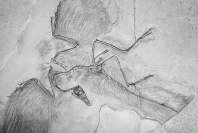
A)long,clawed fingers on each forelimb
B)teeth
C)feathers
D)a long bony tail
E)all of the above
A)long,clawed fingers on each forelimb
B)teeth
C)feathers
D)a long bony tail
E)all of the above
Question
Question
Question
Question
Question
Question
Question
Question
Question
Question
Question
Question
Question
Question
Question
Question
Question
Question
Question
Question
Question
Question
Question
Question
Question
The malformation in the animal pictured in the figure above is caused by which of the following? 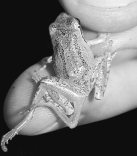
A)increases in UV light
B)chytrid fungi
C)a parasitic fluke
D)introduction of an alien amphibian
E)none of these
A)increases in UV light
B)chytrid fungi
C)a parasitic fluke
D)introduction of an alien amphibian
E)none of these
Question
Question
Question
Question
Question
Question
Question
Question
Question
Question
Question
Question
Question
Question
Question
Question
Question
Question
Question
Question
Question
Question
Question
Question
Question
Which of the following statements is NOT true for the animal depicted in the above figure? 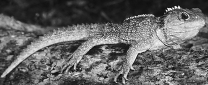
A)It has a third eye that gets covered over by scales.
B)It is a tuatara.
C)They walk like salamanders.
D)They thrived during the Triassic period.
E)All of these are true.
A)It has a third eye that gets covered over by scales.
B)It is a tuatara.
C)They walk like salamanders.
D)They thrived during the Triassic period.
E)All of these are true.
Question
Question
Question
Question
Question
Question
Question
Question
Question
Question
Question
Question
Question
Question
Question
Question
Use the above figure to answer questions
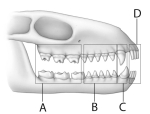
The letter "A" in the above figure represents which teeth?
A)incisors
B)molars
C)canines
D)premolars
E)none of these
The letter "A" in the above figure represents which teeth?
A)incisors
B)molars
C)canines
D)premolars
E)none of these
Question
Question
Question
The letter "A" in the above figure represents 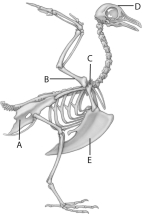
A)humerus
B)pectoral girdle
C)skull
D)sternum
E)pelvic girdle
A)humerus
B)pectoral girdle
C)skull
D)sternum
E)pelvic girdle
Question
Question
Question
Question
Question
Use the above figure to answer questions
The letter "C" in the above figure represents which teeth?
A)incisors
B)molars
C)canines
D)premolars
E)none of these
The letter "C" in the above figure represents which teeth?
A)incisors
B)molars
C)canines
D)premolars
E)none of these
Question
Use the above figure to answer questions
The letter "D" in the above figure represents which teeth?
A)incisors
B)molars
C)canines
D)premolars
E)none of these
The letter "D" in the above figure represents which teeth?
A)incisors
B)molars
C)canines
D)premolars
E)none of these
Question
Question

Unlock Deck
Sign up to unlock the cards in this deck!
Unlock Deck
Unlock Deck
1/105

Play

Full screen (f)
Deck 26: Animal Evolution the Chordates
1
Which of the following statements is false?
A)All vertebrates have a ventral tubular nervous system.
B)All vertebrates have a tail at some stage in their life cycle.
C)All vertebrates have a notochord at some stage in their life cycle.
D)All vertebrates have pharyngeal gill slits at some stage in their life cycle.
E)None of these are false.
A)All vertebrates have a ventral tubular nervous system.
B)All vertebrates have a tail at some stage in their life cycle.
C)All vertebrates have a notochord at some stage in their life cycle.
D)All vertebrates have pharyngeal gill slits at some stage in their life cycle.
E)None of these are false.
A
2
Which structure has cilia that create water currents and mucous sheets that capture nutrients suspended in the water in filter-feeding chordates?
A)notochord
B)differentially permeable membrane
C)filiform tongue
D)gill slits
E)jaw
A)notochord
B)differentially permeable membrane
C)filiform tongue
D)gill slits
E)jaw
D
3
Which of the following traits does the fossil above share with modern birds?
A)long,clawed fingers on each forelimb
B)teeth
C)feathers
D)a long bony tail
E)all of the above
A)long,clawed fingers on each forelimb
B)teeth
C)feathers
D)a long bony tail
E)all of the above
C
4
Radiometric dating shows that Archaeopteryx lived __________ million years ago.
A)50
B)150
C)250
D)350
E)450
A)50
B)150
C)250
D)350
E)450
Unlock Deck
Unlock for access to all 105 flashcards in this deck.
Unlock Deck
k this deck
5
All amphibians, reptiles, birds, and mammals alive today
A)have jaws.
B)are chordates.
C)are vertebrates.
D)are craniates.
E)are craniate, vertebrate chordates with jaws.
A)have jaws.
B)are chordates.
C)are vertebrates.
D)are craniates.
E)are craniate, vertebrate chordates with jaws.
Unlock Deck
Unlock for access to all 105 flashcards in this deck.
Unlock Deck
k this deck
6
The vertebrate jaw first appeared in
A)fishes.
B)amphibians.
C)reptiles.
D)birds.
E)mammals.
A)fishes.
B)amphibians.
C)reptiles.
D)birds.
E)mammals.
Unlock Deck
Unlock for access to all 105 flashcards in this deck.
Unlock Deck
k this deck
7
Which of the following is a diagnostic feature that forms the basis for classification of sea squirts as chordates?
A)metamorphosis from a motile larva to a sessile adult
B)a heart that allows circulation of blood
C)a notochord located in the tail of the larva
D)sexual reproduction during the larval stage
E)the presence of a tunic or coat over the body of the adult
A)metamorphosis from a motile larva to a sessile adult
B)a heart that allows circulation of blood
C)a notochord located in the tail of the larva
D)sexual reproduction during the larval stage
E)the presence of a tunic or coat over the body of the adult
Unlock Deck
Unlock for access to all 105 flashcards in this deck.
Unlock Deck
k this deck
8
Two groups of invertebrate chordates are
A)filter feeders.
B)scavengers.
C)herbivores.
D)predators.
E)parasites.
A)filter feeders.
B)scavengers.
C)herbivores.
D)predators.
E)parasites.
Unlock Deck
Unlock for access to all 105 flashcards in this deck.
Unlock Deck
k this deck
9
Which of the following is (are) a subphylum(a) of Chordata?
A)Urochordata
B)Hemichordata
C)Cephalochordata
D)Vertebrata
E)Urochordata, Cephalochordata, and Vertebrata
A)Urochordata
B)Hemichordata
C)Cephalochordata
D)Vertebrata
E)Urochordata, Cephalochordata, and Vertebrata
Unlock Deck
Unlock for access to all 105 flashcards in this deck.
Unlock Deck
k this deck
10
The notochord has a similar function to the
A)nervous system.
B)spinal cord.
C)skeletal system.
D)skin system.
E)muscle system.
A)nervous system.
B)spinal cord.
C)skeletal system.
D)skin system.
E)muscle system.
Unlock Deck
Unlock for access to all 105 flashcards in this deck.
Unlock Deck
k this deck
11
Placoderms were among the first fishes to display
A)jaws.
B)gill openings.
C)cartilaginous skeletons.
D)jaws and gill openings.
E)jaws, gill openings, and cartilaginous skeletons.
A)jaws.
B)gill openings.
C)cartilaginous skeletons.
D)jaws and gill openings.
E)jaws, gill openings, and cartilaginous skeletons.
Unlock Deck
Unlock for access to all 105 flashcards in this deck.
Unlock Deck
k this deck
12
The feeding habits of lampreys are best described as
A)suspension feeding.
B)predatory.
C)parasitic.
D)scavenging.
E)all of these.
A)suspension feeding.
B)predatory.
C)parasitic.
D)scavenging.
E)all of these.
Unlock Deck
Unlock for access to all 105 flashcards in this deck.
Unlock Deck
k this deck
13
The "tunic" of tunicate refers to
A)a body covering.
B)the type of food-gathering mechanism.
C)muscle arrangements in the larva.
D)the immature stage of a true fish.
E)organ rotation during reorganization.
A)a body covering.
B)the type of food-gathering mechanism.
C)muscle arrangements in the larva.
D)the immature stage of a true fish.
E)organ rotation during reorganization.
Unlock Deck
Unlock for access to all 105 flashcards in this deck.
Unlock Deck
k this deck
14
Which of the following groups are tetrapods?
A)cartilaginous fishes
B)amphibians
C)birds
D)mammals
E)amphibians, birds, and mammals
A)cartilaginous fishes
B)amphibians
C)birds
D)mammals
E)amphibians, birds, and mammals
Unlock Deck
Unlock for access to all 105 flashcards in this deck.
Unlock Deck
k this deck
15
Which of the following statements is NOT true?
A)All chordates have a notochord.
B)All chordates have pharyngeal pouches or gill slits.
C)All chordates have a dorsal nerve cord.
D)All chordates are vertebrates.
E)Chordates are deuterostomes.
A)All chordates have a notochord.
B)All chordates have pharyngeal pouches or gill slits.
C)All chordates have a dorsal nerve cord.
D)All chordates are vertebrates.
E)Chordates are deuterostomes.
Unlock Deck
Unlock for access to all 105 flashcards in this deck.
Unlock Deck
k this deck
16
During the life of a tunicate, the notochord
A)is present throughout life.
B)appears only in the larva.
C)develops during adulthood.
D)is completely absent.
E)changes into the nerve cord.
A)is present throughout life.
B)appears only in the larva.
C)develops during adulthood.
D)is completely absent.
E)changes into the nerve cord.
Unlock Deck
Unlock for access to all 105 flashcards in this deck.
Unlock Deck
k this deck
17
Archaeopteryx is a transitional form between
A)birds and mammals.
B)mammals and reptiles.
C)birds and reptiles.
D)fish and amphibians.
E)amphibians and reptiles.
A)birds and mammals.
B)mammals and reptiles.
C)birds and reptiles.
D)fish and amphibians.
E)amphibians and reptiles.
Unlock Deck
Unlock for access to all 105 flashcards in this deck.
Unlock Deck
k this deck
18
Archaeopteryx
A)is an example of a "missing link."
B)had teeth.
C)had feathers.
D)had a long bony tail.
E)all of the above are true.
A)is an example of a "missing link."
B)had teeth.
C)had feathers.
D)had a long bony tail.
E)all of the above are true.
Unlock Deck
Unlock for access to all 105 flashcards in this deck.
Unlock Deck
k this deck
19
Filter-feeding is used by
A)sea squirts.
B)clams.
C)sponges.
D)lancelets.
E)all of these.
A)sea squirts.
B)clams.
C)sponges.
D)lancelets.
E)all of these.
Unlock Deck
Unlock for access to all 105 flashcards in this deck.
Unlock Deck
k this deck
20
Which of the following is NOT a feature that is found exclusively among all vertebrates?
A)notochord
B)pharyngeal gill slits
C)four legs
D)post-anal tail
E)dorsal nerve cord
A)notochord
B)pharyngeal gill slits
C)four legs
D)post-anal tail
E)dorsal nerve cord
Unlock Deck
Unlock for access to all 105 flashcards in this deck.
Unlock Deck
k this deck
21
Which of the following is (are) common fish adaptation(s) to the challenges of life in water?
A)fins
B)swim bladder
C)streamlined body
D)scales
E)all of these
A)fins
B)swim bladder
C)streamlined body
D)scales
E)all of these
Unlock Deck
Unlock for access to all 105 flashcards in this deck.
Unlock Deck
k this deck
22
When vertebrates invaded land, they encountered several conditions.Which of the following most favored the invasion?
A)an increased gravitational force not encountered in water
B)more efficient lungs due to increased oxygen content of air
C)more extreme temperature variations
D)absence of predators and competitors
E)absence of prey
A)an increased gravitational force not encountered in water
B)more efficient lungs due to increased oxygen content of air
C)more extreme temperature variations
D)absence of predators and competitors
E)absence of prey
Unlock Deck
Unlock for access to all 105 flashcards in this deck.
Unlock Deck
k this deck
23
Which of the following statements is false about amphibians?
A)There are currently about 5,500 known species.
B)Many species are declining in abundance.
C)Several species of frogs and salamanders are now listed as threatened or endangered.
D)Chemical pollution of aquatic habitats is not a contributing factor to their current problems.
E)Mark Twain's "celebrated jumping frog" is at risk.
A)There are currently about 5,500 known species.
B)Many species are declining in abundance.
C)Several species of frogs and salamanders are now listed as threatened or endangered.
D)Chemical pollution of aquatic habitats is not a contributing factor to their current problems.
E)Mark Twain's "celebrated jumping frog" is at risk.
Unlock Deck
Unlock for access to all 105 flashcards in this deck.
Unlock Deck
k this deck
24
Sharks differ from most other fish in that they lack
A)gill slits.
B)scales.
C)bone.
D)paired appendages.
E)teeth.
A)gill slits.
B)scales.
C)bone.
D)paired appendages.
E)teeth.
Unlock Deck
Unlock for access to all 105 flashcards in this deck.
Unlock Deck
k this deck
25
Which of the following is not a member of Osteichthyes?
A)teleosts
B)ray-finned fish
C)lungfish
D)stingrays
E)lobe-finned fishes
A)teleosts
B)ray-finned fish
C)lungfish
D)stingrays
E)lobe-finned fishes
Unlock Deck
Unlock for access to all 105 flashcards in this deck.
Unlock Deck
k this deck
26
All EXCEPT which of the following have cartilaginous skeletons?
A)sharks
B)lampreys
C)perch
D)Manta rays
E)stingrays
A)sharks
B)lampreys
C)perch
D)Manta rays
E)stingrays
Unlock Deck
Unlock for access to all 105 flashcards in this deck.
Unlock Deck
k this deck
27
Most amphibians are completely dependent on an aquatic environment for
A)respiration.
B)feeding.
C)reproduction.
D)respiration and reproduction.
E)respiration, reproduction, and feeding.
A)respiration.
B)feeding.
C)reproduction.
D)respiration and reproduction.
E)respiration, reproduction, and feeding.
Unlock Deck
Unlock for access to all 105 flashcards in this deck.
Unlock Deck
k this deck
28
The malformation in the animal pictured in the figure above is caused by which of the following?
A)increases in UV light
B)chytrid fungi
C)a parasitic fluke
D)introduction of an alien amphibian
E)none of these
A)increases in UV light
B)chytrid fungi
C)a parasitic fluke
D)introduction of an alien amphibian
E)none of these
Unlock Deck
Unlock for access to all 105 flashcards in this deck.
Unlock Deck
k this deck
29
The first group to exhibit an amniotic egg was the
A)Aves.
B)Amphibia.
C)Reptilia.
D)Osteichthyes.
E)Mammalia.
A)Aves.
B)Amphibia.
C)Reptilia.
D)Osteichthyes.
E)Mammalia.
Unlock Deck
Unlock for access to all 105 flashcards in this deck.
Unlock Deck
k this deck
30
The early amniotes
A)developed a land egg.
B)had a four-chambered heart.
C)had lungs equipped with air sacs.
D)were bipedal and gave rise to the mammals.
E)appeared at the start of the Paleozoic Era.
A)developed a land egg.
B)had a four-chambered heart.
C)had lungs equipped with air sacs.
D)were bipedal and gave rise to the mammals.
E)appeared at the start of the Paleozoic Era.
Unlock Deck
Unlock for access to all 105 flashcards in this deck.
Unlock Deck
k this deck
31
Vertebrate colonization of terrestrial habitats increased dramatically with the evolution of
A)lungs.
B)paired appendages.
C)shelled eggs.
D)the four-chambered heart.
E)scales.
A)lungs.
B)paired appendages.
C)shelled eggs.
D)the four-chambered heart.
E)scales.
Unlock Deck
Unlock for access to all 105 flashcards in this deck.
Unlock Deck
k this deck
32
Pouches in the gut wall developed into __________ in fishes that are ancestral to land vertebrates.
A)heart chambers
B)the notochord
C)lobes of the liver
D)lungs
E)vocal cords
A)heart chambers
B)the notochord
C)lobes of the liver
D)lungs
E)vocal cords
Unlock Deck
Unlock for access to all 105 flashcards in this deck.
Unlock Deck
k this deck
33
Declining amphibian populations are correlated with
A)habitat loss.
B)introduction of new species.
C)long-term changes in climate.
D)fungal infections and parasitic diseases.
E)all of these.
A)habitat loss.
B)introduction of new species.
C)long-term changes in climate.
D)fungal infections and parasitic diseases.
E)all of these.
Unlock Deck
Unlock for access to all 105 flashcards in this deck.
Unlock Deck
k this deck
34
Sharks, rays, and skates belong to the
A)Aves.
B)Amphibia.
C)Chondrichthyes.
D)Osteichthyes.
E)Reptilia.
A)Aves.
B)Amphibia.
C)Chondrichthyes.
D)Osteichthyes.
E)Reptilia.
Unlock Deck
Unlock for access to all 105 flashcards in this deck.
Unlock Deck
k this deck
35
The first tetrapods evolved
A)on land.
B)after the amphibians.
C)in water.
D)after the first amniotes.
E)from the ray-finned fishes.
A)on land.
B)after the amphibians.
C)in water.
D)after the first amniotes.
E)from the ray-finned fishes.
Unlock Deck
Unlock for access to all 105 flashcards in this deck.
Unlock Deck
k this deck
36
Exchange of respiratory gases through the skin is a characteristic of many
A)fishes.
B)amphibians.
C)reptiles.
D)mammals.
E)birds.
A)fishes.
B)amphibians.
C)reptiles.
D)mammals.
E)birds.
Unlock Deck
Unlock for access to all 105 flashcards in this deck.
Unlock Deck
k this deck
37
Amniotes differ from earlier vertebrates by
A)their large size.
B)their three-chambered heart.
C)their internal fertilization.
D)the possession of a slimy skin.
E)having external scales.
A)their large size.
B)their three-chambered heart.
C)their internal fertilization.
D)the possession of a slimy skin.
E)having external scales.
Unlock Deck
Unlock for access to all 105 flashcards in this deck.
Unlock Deck
k this deck
38
In which group are retention of larval characteristics and sexual maturity seen in the same body?
A)toads
B)salamanders
C)frogs
D)caecilians
E)none of these
A)toads
B)salamanders
C)frogs
D)caecilians
E)none of these
Unlock Deck
Unlock for access to all 105 flashcards in this deck.
Unlock Deck
k this deck
39
In true fishes, the gills primarily serve which function?
A)gas exchange
B)feeding
C)water elimination
D)both feeding and gas exchange
E)all of these
A)gas exchange
B)feeding
C)water elimination
D)both feeding and gas exchange
E)all of these
Unlock Deck
Unlock for access to all 105 flashcards in this deck.
Unlock Deck
k this deck
40
Which of the following statements is false?
A)Shark's teeth are modified scales that are continuously shed and replaced.
B)Many fish use a swim bladder to provide buoyancy control.
C)The bony fishes were the ancestors of the cartilaginous fishes.
D)The ray-finned fishes are the most numerous and diverse of the fish groups.
E)The lobe-finned fishes are represented today only by the coelacanths.
A)Shark's teeth are modified scales that are continuously shed and replaced.
B)Many fish use a swim bladder to provide buoyancy control.
C)The bony fishes were the ancestors of the cartilaginous fishes.
D)The ray-finned fishes are the most numerous and diverse of the fish groups.
E)The lobe-finned fishes are represented today only by the coelacanths.
Unlock Deck
Unlock for access to all 105 flashcards in this deck.
Unlock Deck
k this deck
41
Which of the following statements is false?
A)Lizards are a very small component of the present-day reptiles.
B)Lizards gave rise to the snakes.
C)Some lizards are herbivorous.
D)Some lizards can break off their tails when grabbed by predators.
E)Some lizards startle potential predators by displaying a throat fan.
A)Lizards are a very small component of the present-day reptiles.
B)Lizards gave rise to the snakes.
C)Some lizards are herbivorous.
D)Some lizards can break off their tails when grabbed by predators.
E)Some lizards startle potential predators by displaying a throat fan.
Unlock Deck
Unlock for access to all 105 flashcards in this deck.
Unlock Deck
k this deck
42
Finding a very large crater in the Gulf of Mexico provided support for the
A)gradual model of speciation.
B)central dogma.
C)biological species concept.
D)K-T asteroid impact theory.
E)cell theory.
A)gradual model of speciation.
B)central dogma.
C)biological species concept.
D)K-T asteroid impact theory.
E)cell theory.
Unlock Deck
Unlock for access to all 105 flashcards in this deck.
Unlock Deck
k this deck
43
Birds and crocodiles share which of the following characteristics?
A)ectothermy (body temperature regulated by environment)
B)body hair
C)four-chambered heart
D)lung design
E)light-weight bones
A)ectothermy (body temperature regulated by environment)
B)body hair
C)four-chambered heart
D)lung design
E)light-weight bones
Unlock Deck
Unlock for access to all 105 flashcards in this deck.
Unlock Deck
k this deck
44
The reptile group most closely related to the birds is the
A)turtles.
B)snakes.
C)lizards.
D)tuataras.
E)crocodilians.
A)turtles.
B)snakes.
C)lizards.
D)tuataras.
E)crocodilians.
Unlock Deck
Unlock for access to all 105 flashcards in this deck.
Unlock Deck
k this deck
45
Which of the following is NOT a characteristic of birds?
A)feathers modified from scales
B)a four-chambered heart
C)excellent vision
D)migratory behavior
E)teeth
A)feathers modified from scales
B)a four-chambered heart
C)excellent vision
D)migratory behavior
E)teeth
Unlock Deck
Unlock for access to all 105 flashcards in this deck.
Unlock Deck
k this deck
46
Reptiles resemble __________ in being able to __________.
A)ray-finned fishes; freely leave the water
B)birds; breathe by use of lungs
C)ostracoderms; utilize their jaws
D)amphibians; exchange gases across their skin
E)lobe-finned fishes; exchange gases across their gills
A)ray-finned fishes; freely leave the water
B)birds; breathe by use of lungs
C)ostracoderms; utilize their jaws
D)amphibians; exchange gases across their skin
E)lobe-finned fishes; exchange gases across their gills
Unlock Deck
Unlock for access to all 105 flashcards in this deck.
Unlock Deck
k this deck
47
The dinosaurs disappeared at the end of which period?
A)Cretaceous
B)Permian
C)Triassic
D)Jurassic
E)Tertiary
A)Cretaceous
B)Permian
C)Triassic
D)Jurassic
E)Tertiary
Unlock Deck
Unlock for access to all 105 flashcards in this deck.
Unlock Deck
k this deck
48
All crocodilians
A)live in or near water.
B)are predators with sharp teeth.
C)have a four-chambered heart.
D)show parental behavior.
E)fit all of these descriptions.
A)live in or near water.
B)are predators with sharp teeth.
C)have a four-chambered heart.
D)show parental behavior.
E)fit all of these descriptions.
Unlock Deck
Unlock for access to all 105 flashcards in this deck.
Unlock Deck
k this deck
49
Both existing mammals and extinct mammal-like groups are
A)synapsids.
B)archosaurs.
C)sauropsids.
D)anapsids.
E)pleiosaurs.
A)synapsids.
B)archosaurs.
C)sauropsids.
D)anapsids.
E)pleiosaurs.
Unlock Deck
Unlock for access to all 105 flashcards in this deck.
Unlock Deck
k this deck
50
The last mass extinction of dinosaurs on Earth occurred between which two geologic periods?
A)Devonian and Carboniferous
B)Silurian and Devonian
C)Triassic and Permian
D)Cretaceous and Tertiary
E)Jurassic and Cretaceous
A)Devonian and Carboniferous
B)Silurian and Devonian
C)Triassic and Permian
D)Cretaceous and Tertiary
E)Jurassic and Cretaceous
Unlock Deck
Unlock for access to all 105 flashcards in this deck.
Unlock Deck
k this deck
51
All EXCEPT which of these statements about tuataras is true?
A)They live on islands near New Zealand.
B)They are more successful now than in the past.
C)They have a third, median "eye" that links to the brain.
D)They resemble modern amphibians in brain and locomotion.
E)They resemble lizards in body form.
A)They live on islands near New Zealand.
B)They are more successful now than in the past.
C)They have a third, median "eye" that links to the brain.
D)They resemble modern amphibians in brain and locomotion.
E)They resemble lizards in body form.
Unlock Deck
Unlock for access to all 105 flashcards in this deck.
Unlock Deck
k this deck
52
The amniotes differ from the amphibians in that they
A)have efficient kidneys.
B)have a waterproof skin.
C)have internal fertilization.
D)have a shelled amniotic egg.
E)include all of these.
A)have efficient kidneys.
B)have a waterproof skin.
C)have internal fertilization.
D)have a shelled amniotic egg.
E)include all of these.
Unlock Deck
Unlock for access to all 105 flashcards in this deck.
Unlock Deck
k this deck
53
Which of the following statements is NOT true for the animal depicted in the above figure?
A)It has a third eye that gets covered over by scales.
B)It is a tuatara.
C)They walk like salamanders.
D)They thrived during the Triassic period.
E)All of these are true.
A)It has a third eye that gets covered over by scales.
B)It is a tuatara.
C)They walk like salamanders.
D)They thrived during the Triassic period.
E)All of these are true.
Unlock Deck
Unlock for access to all 105 flashcards in this deck.
Unlock Deck
k this deck
54
Adaptive zones opened up for the dinosaurs after
A)early dinosaurs evolved a four-chambered heart.
B)large fragments from an asteroid or comet hit multiple locations on Earth.
C)volcanic eruptions and global climate change during the Cretaceous.
D)reptiles became very large in size.
E)all of these occurred.
A)early dinosaurs evolved a four-chambered heart.
B)large fragments from an asteroid or comet hit multiple locations on Earth.
C)volcanic eruptions and global climate change during the Cretaceous.
D)reptiles became very large in size.
E)all of these occurred.
Unlock Deck
Unlock for access to all 105 flashcards in this deck.
Unlock Deck
k this deck
55
Birds differ from earlier vertebrates by
A)their lack of scales.
B)producing land eggs.
C)the ability to maintain a constant body temperature through metabolic activities.
D)the ability to fertilize eggs internally.
E)their possession of a dorsal nerve cord.
A)their lack of scales.
B)producing land eggs.
C)the ability to maintain a constant body temperature through metabolic activities.
D)the ability to fertilize eggs internally.
E)their possession of a dorsal nerve cord.
Unlock Deck
Unlock for access to all 105 flashcards in this deck.
Unlock Deck
k this deck
56
Adaptations for flight in birds include all EXCEPT which of the following?
A)sound production
B)lightweight bones
C)feathers
D)efficient respiration
E)four-chambered heart
A)sound production
B)lightweight bones
C)feathers
D)efficient respiration
E)four-chambered heart
Unlock Deck
Unlock for access to all 105 flashcards in this deck.
Unlock Deck
k this deck
57
Which of these statements about snakes is false?
A)All snakes are carnivores.
B)All snakes use internal fertilization.
C)All snakes are venomous.
D)All snakes have flexible skull bones and hinged jaws.
E)Some snakes retain skeletal remnants of hindlimbs.
A)All snakes are carnivores.
B)All snakes use internal fertilization.
C)All snakes are venomous.
D)All snakes have flexible skull bones and hinged jaws.
E)Some snakes retain skeletal remnants of hindlimbs.
Unlock Deck
Unlock for access to all 105 flashcards in this deck.
Unlock Deck
k this deck
58
The most primitive of the current reptiles based upon the time of divergence from the stem reptiles are the
A)crocodiles.
B)snakes.
C)tuataras.
D)lizards.
E)turtles.
A)crocodiles.
B)snakes.
C)tuataras.
D)lizards.
E)turtles.
Unlock Deck
Unlock for access to all 105 flashcards in this deck.
Unlock Deck
k this deck
59
Which is NOT one of the four extraembryonic membranes of the amniote egg?
A)albumin
B)amnion
C)chorion
D)allantois
E)yolk sac
A)albumin
B)amnion
C)chorion
D)allantois
E)yolk sac
Unlock Deck
Unlock for access to all 105 flashcards in this deck.
Unlock Deck
k this deck
60
The "ruling reptiles"
A)dominated the land for 125 million years.
B)coexisted with ichthyosaurs.
C)coexisted with turtles and tuataras.
D)lost many lineages in a mass extinction that ended the Jurassic.
E)did all of these.
A)dominated the land for 125 million years.
B)coexisted with ichthyosaurs.
C)coexisted with turtles and tuataras.
D)lost many lineages in a mass extinction that ended the Jurassic.
E)did all of these.
Unlock Deck
Unlock for access to all 105 flashcards in this deck.
Unlock Deck
k this deck
61
The letter "D" in the above figure represents
A)humerus
B)pectoral girdle
C)skull
D)sternum
E)pelvic girdle
A)humerus
B)pectoral girdle
C)skull
D)sternum
E)pelvic girdle
Unlock Deck
Unlock for access to all 105 flashcards in this deck.
Unlock Deck
k this deck
62
Egg-laying mammals
A)have no nipples yet produce milk.
B)are commonly found in North America.
C)are hairless.
D)are confined to South America.
E)bear their young into permanent pouches.
A)have no nipples yet produce milk.
B)are commonly found in North America.
C)are hairless.
D)are confined to South America.
E)bear their young into permanent pouches.
Unlock Deck
Unlock for access to all 105 flashcards in this deck.
Unlock Deck
k this deck
63
Which is NOT one of the three groups of modern mammals?
A)placentals
B)therapsids
C)marsupials
D)monotremes
E)pouched
A)placentals
B)therapsids
C)marsupials
D)monotremes
E)pouched
Unlock Deck
Unlock for access to all 105 flashcards in this deck.
Unlock Deck
k this deck
64
Which of the following features is NOT an important evolutionary advancement in the evolution of the arboreal primates?
A)opposable thumbs
B)depth perception
C)elongated snout with well-developed sense of smell
D)the ability to see in color
E)a brain with a well-developed ability to judge distances and with the ability to quickly compensate for misjudgments
A)opposable thumbs
B)depth perception
C)elongated snout with well-developed sense of smell
D)the ability to see in color
E)a brain with a well-developed ability to judge distances and with the ability to quickly compensate for misjudgments
Unlock Deck
Unlock for access to all 105 flashcards in this deck.
Unlock Deck
k this deck
65
Early primates arose
A)in tropical forests of East Africa.
B)in temperate savanna and grassland habitats.
C)near rivers, lakes, and streams in the East African Rift Valley.
D)in caves with abundant supplies of insects.
E)in all of these places.
A)in tropical forests of East Africa.
B)in temperate savanna and grassland habitats.
C)near rivers, lakes, and streams in the East African Rift Valley.
D)in caves with abundant supplies of insects.
E)in all of these places.
Unlock Deck
Unlock for access to all 105 flashcards in this deck.
Unlock Deck
k this deck
66
Which group of mammals exhibits the widest distribution and greatest diversity?
A)marsupials
B)monotremes
C)placentals
D)marsupials and monotremes
E)placentals and monotremes
A)marsupials
B)monotremes
C)placentals
D)marsupials and monotremes
E)placentals and monotremes
Unlock Deck
Unlock for access to all 105 flashcards in this deck.
Unlock Deck
k this deck
67
The primate-like mammals first arose about how many million years ago?
A)95
B)65
C)45
D)25
E)15
A)95
B)65
C)45
D)25
E)15
Unlock Deck
Unlock for access to all 105 flashcards in this deck.
Unlock Deck
k this deck
68
The placental mammalian counterpart of Australia's spiny anteater is (are) the
A)Tasmanian devil.
B)aardvark.
C)giant anteater.
D)woolly lemur.
E)aardvark and giant anteater.
A)Tasmanian devil.
B)aardvark.
C)giant anteater.
D)woolly lemur.
E)aardvark and giant anteater.
Unlock Deck
Unlock for access to all 105 flashcards in this deck.
Unlock Deck
k this deck
69
Use the above figure to answer questions
The letter "A" in the above figure represents which teeth?
A)incisors
B)molars
C)canines
D)premolars
E)none of these
The letter "A" in the above figure represents which teeth?
A)incisors
B)molars
C)canines
D)premolars
E)none of these
Unlock Deck
Unlock for access to all 105 flashcards in this deck.
Unlock Deck
k this deck
70
Which of the following is (are) an important influence(s) on the evolution of mammals?
A)continental movements
B)geographic isolation
C)competition between species
D)decline of the dinosaurs
E)all of these
A)continental movements
B)geographic isolation
C)competition between species
D)decline of the dinosaurs
E)all of these
Unlock Deck
Unlock for access to all 105 flashcards in this deck.
Unlock Deck
k this deck
71
What is incorrect about the ostrich?
A)It weighs over 300 pounds.
B)It is featherless.
C)It is flightless.
D)It has a four-chambered heart.
E)It is a runner.
A)It weighs over 300 pounds.
B)It is featherless.
C)It is flightless.
D)It has a four-chambered heart.
E)It is a runner.
Unlock Deck
Unlock for access to all 105 flashcards in this deck.
Unlock Deck
k this deck
72
The letter "A" in the above figure represents
A)humerus
B)pectoral girdle
C)skull
D)sternum
E)pelvic girdle
A)humerus
B)pectoral girdle
C)skull
D)sternum
E)pelvic girdle
Unlock Deck
Unlock for access to all 105 flashcards in this deck.
Unlock Deck
k this deck
73
A great adaptive radiation of mammals began about __________ million years ago.
A)25
B)65
C)95
D)125
E)165
A)25
B)65
C)95
D)125
E)165
Unlock Deck
Unlock for access to all 105 flashcards in this deck.
Unlock Deck
k this deck
74
Egg-laying mammals
A)hatch fully developed young from their eggs.
B)are monotremes.
C)are hairless.
D)are confined to South America.
E)bear their young into permanent pouches.
A)hatch fully developed young from their eggs.
B)are monotremes.
C)are hairless.
D)are confined to South America.
E)bear their young into permanent pouches.
Unlock Deck
Unlock for access to all 105 flashcards in this deck.
Unlock Deck
k this deck
75
On the landmass that became South America
A)monotremes were replaced by marsupials and early placental mammals starting about 65 million years ago.
B)highly evolved placental mammals radiated south from North America about 5 million years ago.
C)many early placental mammals became extinct in the Pliocene.
D)early placental mammals arose between 130 and 85 million years ago.
E)all of these occurred.
A)monotremes were replaced by marsupials and early placental mammals starting about 65 million years ago.
B)highly evolved placental mammals radiated south from North America about 5 million years ago.
C)many early placental mammals became extinct in the Pliocene.
D)early placental mammals arose between 130 and 85 million years ago.
E)all of these occurred.
Unlock Deck
Unlock for access to all 105 flashcards in this deck.
Unlock Deck
k this deck
76
Primates apparently arose from ancestral forms of
A)Insectivora, which includes omnivorous shrews and moles.
B)Carnivora, which includes dogs, cats, and seals.
C)Rodentia, which includes mice and beavers.
D)Metatheria, which includes the opossum and kangaroo.
E)Primata, which means first.
A)Insectivora, which includes omnivorous shrews and moles.
B)Carnivora, which includes dogs, cats, and seals.
C)Rodentia, which includes mice and beavers.
D)Metatheria, which includes the opossum and kangaroo.
E)Primata, which means first.
Unlock Deck
Unlock for access to all 105 flashcards in this deck.
Unlock Deck
k this deck
77
Use the above figure to answer questions
The letter "C" in the above figure represents which teeth?
A)incisors
B)molars
C)canines
D)premolars
E)none of these
The letter "C" in the above figure represents which teeth?
A)incisors
B)molars
C)canines
D)premolars
E)none of these
Unlock Deck
Unlock for access to all 105 flashcards in this deck.
Unlock Deck
k this deck
78
Use the above figure to answer questions
The letter "D" in the above figure represents which teeth?
A)incisors
B)molars
C)canines
D)premolars
E)none of these
The letter "D" in the above figure represents which teeth?
A)incisors
B)molars
C)canines
D)premolars
E)none of these
Unlock Deck
Unlock for access to all 105 flashcards in this deck.
Unlock Deck
k this deck
79
Which of these adaptation(s) is (are) unique to mammals?
A)hair or fur
B)four types of upper and lower teeth that match up
C)sweat glands
D)secretion of milk by females
E)all of these
A)hair or fur
B)four types of upper and lower teeth that match up
C)sweat glands
D)secretion of milk by females
E)all of these
Unlock Deck
Unlock for access to all 105 flashcards in this deck.
Unlock Deck
k this deck
80
The letter "B" in the above figure represents
A)humerus
B)pectoral girdle
C)skull
D)sternum
E)pelvic girdle
A)humerus
B)pectoral girdle
C)skull
D)sternum
E)pelvic girdle
Unlock Deck
Unlock for access to all 105 flashcards in this deck.
Unlock Deck
k this deck
Unlock Deck
Unlock for access to all 105 flashcards in this deck.







