





 Chat with AI

Deck 8: Growth, Capital Accumulation and the Economics of Ideas: Catching up Vs the Cutting Edge
Full screen (f)

Question

Question
Question
Question
Question
Question
Question
Question
Question
Question
Question
Question
Question
Question
Question
Question
Question
Question
Question
Question
Question
Question
Question
Question
Question
Question
Question
Question
Question
Question
Question
Question
Question
Question
Question
Question
Question
Question
Question
Question
Question
Question
Question
Question
Question
Question
Question
Question
Question
Question
Question
Question
Use the following to answer question : (Figure: Four Production Functions) 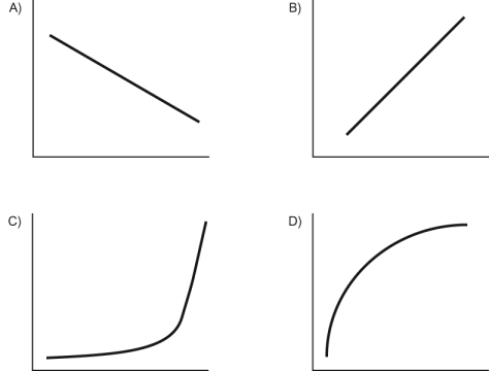
Refer to the figure. Which of these production functions exhibits diminishing returns?
A) A
B) B
C) C
D) D
Refer to the figure. Which of these production functions exhibits diminishing returns?
A) A
B) B
C) C
D) D
Question
Question
Question
Question
Question
Question
Question
Question
Question
Question
Question
Question
Question
Question
Question
Question
Question
Question
Question
Question
Question
Question
Question
Question
Question
Use the following to answer question 63:
Figure: Production Function 1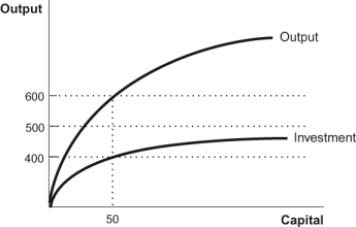
(Figure: Production Function 1) Refer to the figure. In this diagram of the Solow model, if output is 600, consumption equals:
A)50.
B)200.
C)400.
D)600.
Figure: Production Function 1
(Figure: Production Function 1) Refer to the figure. In this diagram of the Solow model, if output is 600, consumption equals:
A)50.
B)200.
C)400.
D)600.
Question
Question
Question

Unlock Deck
Sign up to unlock the cards in this deck!
Unlock Deck
Unlock Deck
1/295

Play

Full screen (f)
Deck 8: Growth, Capital Accumulation and the Economics of Ideas: Catching up Vs the Cutting Edge
1
In 2010, China's GDP per capita grew by approximately:
A) 7%.
B) 8%.
C) 9%.
D) 10%.
A) 7%.
B) 8%.
C) 9%.
D) 10%.
10%.
2
An economy with production function Y = F(K) = that has 400 units of capital will produce _____ units of output.
A) 1,600
B) 400
C) 40
D) 20
A) 1,600
B) 400
C) 40
D) 20
20
3
Catching-up growth is growth due to:
A) capital accumulation.
B) new ideas.
C) new human capital.
D) improving the organization of existing resources.
A) capital accumulation.
B) new ideas.
C) new human capital.
D) improving the organization of existing resources.
capital accumulation.
4
Countries on the "cutting edge" grow primarily by:
A) adopting ideas already used by other countries.
B) capital accumulation.
C) developing new ideas.
D) eliminating waste and inefficiency.
A) adopting ideas already used by other countries.
B) capital accumulation.
C) developing new ideas.
D) eliminating waste and inefficiency.
Unlock Deck
Unlock for access to all 295 flashcards in this deck.
Unlock Deck
k this deck
5
The production function is a mathematical function that shows:
A) the most cost-efficient means of producing output.
B) the relationship between output and the factors of production.
C) how various inputs are produced.
D) the most efficient level of output produced in an economy.
A) the most cost-efficient means of producing output.
B) the relationship between output and the factors of production.
C) how various inputs are produced.
D) the most efficient level of output produced in an economy.
Unlock Deck
Unlock for access to all 295 flashcards in this deck.
Unlock Deck
k this deck
6
Cutting-edge growth is growth due to:
A) capital accumulation.
B) new ideas.
C) new human capital.
D) improving the organization of existing resources.
A) capital accumulation.
B) new ideas.
C) new human capital.
D) improving the organization of existing resources.
Unlock Deck
Unlock for access to all 295 flashcards in this deck.
Unlock Deck
k this deck
7
The two types of economic growth are:
A) ultimate and immediate.
B) progressive and regressive.
C) fast and slow.
D) cutting-edge and catching-up.
A) ultimate and immediate.
B) progressive and regressive.
C) fast and slow.
D) cutting-edge and catching-up.
Unlock Deck
Unlock for access to all 295 flashcards in this deck.
Unlock Deck
k this deck
8
In 2010, U.S. GDP per capita grew by approximately:
A) 1.2%.
B) 2.2%.
C) 3.2%.
D) 4.2%.
A) 1.2%.
B) 2.2%.
C) 3.2%.
D) 4.2%.
Unlock Deck
Unlock for access to all 295 flashcards in this deck.
Unlock Deck
k this deck
9
In the Solow model production function, Y = F(A, K, eL), L stands for:
A) labor.
B) leisure.
C) liquidity.
D) long run.
A) labor.
B) leisure.
C) liquidity.
D) long run.
Unlock Deck
Unlock for access to all 295 flashcards in this deck.
Unlock Deck
k this deck
10
In the Solow model production function, Y = F(A, K, eL), A stands for:
A) aggregate demand.
B) assets.
C) attitude.
D) ideas.
A) aggregate demand.
B) assets.
C) attitude.
D) ideas.
Unlock Deck
Unlock for access to all 295 flashcards in this deck.
Unlock Deck
k this deck
11
In 2010, GDP per capita in the United States grew by 2.2%. In the same year, GDP per capita in China grew by almost:
A) 2%.
B) 5%.
C) 7%.
D) 10%.
A) 2%.
B) 5%.
C) 7%.
D) 10%.
Unlock Deck
Unlock for access to all 295 flashcards in this deck.
Unlock Deck
k this deck
12
Imagine an economy with production function Y = F(K) = and 400 units of capital. If the fraction of output invested in new capital is = 0.2, how much new capital will be created in the next period?
A) 2
B) 4
C) 6
D) 8
A) 2
B) 4
C) 6
D) 8
Unlock Deck
Unlock for access to all 295 flashcards in this deck.
Unlock Deck
k this deck
13
Imagine an economy with production function Y = F(K) = and 400 units of capital. If the depreciation rate is = .05, how much capital will deteriorate in the next period?
A) 4 units
B) 8 units
C) 16 units
D) 20 units
A) 4 units
B) 8 units
C) 16 units
D) 20 units
Unlock Deck
Unlock for access to all 295 flashcards in this deck.
Unlock Deck
k this deck
14
The "A" term in the production function Y = F(A, K, eL) represents which factor of production in the Solow growth model?
A) physical capital
B) human capital
C) technological knowledge
D) organization of resources
A) physical capital
B) human capital
C) technological knowledge
D) organization of resources
Unlock Deck
Unlock for access to all 295 flashcards in this deck.
Unlock Deck
k this deck
15
In the Solow model production function, Y = F(A, K, eL), eL stands for:
A) efficiency.
B) liquidity.
C) elasticity.
D) human capital.
A) efficiency.
B) liquidity.
C) elasticity.
D) human capital.
Unlock Deck
Unlock for access to all 295 flashcards in this deck.
Unlock Deck
k this deck
16
In the Solow model production function, Y = F(A, K, eL), K stands for:
A) kurtosis.
B) consumption.
C) physical capital.
D) human capital.
A) kurtosis.
B) consumption.
C) physical capital.
D) human capital.
Unlock Deck
Unlock for access to all 295 flashcards in this deck.
Unlock Deck
k this deck
17
Which is NOT a key institution for economic growth?
A) property rights
B) honest government
C) political stability
D) income equality
A) property rights
B) honest government
C) political stability
D) income equality
Unlock Deck
Unlock for access to all 295 flashcards in this deck.
Unlock Deck
k this deck
18
Countries on a "catching-up" growth path are growing primarily through:
A) capital accumulation.
B) new technological knowledge.
C) new ideas.
D) foreign aid.
A) capital accumulation.
B) new technological knowledge.
C) new ideas.
D) foreign aid.
Unlock Deck
Unlock for access to all 295 flashcards in this deck.
Unlock Deck
k this deck
19
In recent years, real GDP in China has grown:
A) at about the same rate as real GDP in the United States.
B) much faster than real GDP in the United States.
C) much slower than real GDP in the United States.
D) faster than real GDP in the United States in some years, slower than real GDP in the United States in other years.
A) at about the same rate as real GDP in the United States.
B) much faster than real GDP in the United States.
C) much slower than real GDP in the United States.
D) faster than real GDP in the United States in some years, slower than real GDP in the United States in other years.
Unlock Deck
Unlock for access to all 295 flashcards in this deck.
Unlock Deck
k this deck
20
The Solow growth model features _____ returns to physical capital.
A) decreasing
B) constant
C) increasing
D) no
A) decreasing
B) constant
C) increasing
D) no
Unlock Deck
Unlock for access to all 295 flashcards in this deck.
Unlock Deck
k this deck
21
In the Solow model, if a country's depreciation rate ( ) increased from 1% to 2% and it was operating at its steady state before the change, we would expect to see:
A) a decrease in both the capital stock and output.
B) a decrease in the capital stock only.
C) a decrease in output only.
D) an increase in both the capital stock and output.
A) a decrease in both the capital stock and output.
B) a decrease in the capital stock only.
C) a decrease in output only.
D) an increase in both the capital stock and output.
Unlock Deck
Unlock for access to all 295 flashcards in this deck.
Unlock Deck
k this deck
22
In the Solow model, if a country's saving rate ( ) increased from 10% to 12% and it was operating at its steady state before the change, we would expect to see:
A) a decrease in both the capital stock and output.
B) an increase in the capital stock only.
C) an increase in output only.
D) an increase in both the capital stock and output.
A) a decrease in both the capital stock and output.
B) an increase in the capital stock only.
C) an increase in output only.
D) an increase in both the capital stock and output.
Unlock Deck
Unlock for access to all 295 flashcards in this deck.
Unlock Deck
k this deck
23
As more units of capital are added in the Solow model, output:
A) increases at an increasing rate.
B) increases at a constant rate.
C) increases at a decreasing rate.
D) remains constant.
A) increases at an increasing rate.
B) increases at a constant rate.
C) increases at a decreasing rate.
D) remains constant.
Unlock Deck
Unlock for access to all 295 flashcards in this deck.
Unlock Deck
k this deck
24
The marginal product of capital is the increase in:
A) employment when one more unit of capital is added.
B) unemployment when one more unit of capital is added.
C) output when one more unit of capital is added.
D) the number of machines when one more unit of capital is added.
A) employment when one more unit of capital is added.
B) unemployment when one more unit of capital is added.
C) output when one more unit of capital is added.
D) the number of machines when one more unit of capital is added.
Unlock Deck
Unlock for access to all 295 flashcards in this deck.
Unlock Deck
k this deck
25
The Solow model is based on:
A) a production function.
B) supply and demand curves.
C) the GDP accounts.
D) consumer preferences.
A) a production function.
B) supply and demand curves.
C) the GDP accounts.
D) consumer preferences.
Unlock Deck
Unlock for access to all 295 flashcards in this deck.
Unlock Deck
k this deck
26
Imagine an economy with production function Y = F(K) = and 400 units of capital. If the fraction of output invested in new capital is = 0.2 and the depreciation rate is = .05, how much total capital will be available in the next period?
A) 380 units
B) 384 units
C) 400 units
D) 404 units
A) 380 units
B) 384 units
C) 400 units
D) 404 units
Unlock Deck
Unlock for access to all 295 flashcards in this deck.
Unlock Deck
k this deck
27
Imagine an economy with production function Y = F(K) = and 400 units of capital. If the fraction of output invested in new capital is = 0.2, the depreciation rate is = .05, and the economy starts with output of 20, what does the Solow model predict will happen to output in the long run?
A) It will remain at 20.
B) It will decline.
C) It will increase.
D) It will increase for a time and then return to 20.
A) It will remain at 20.
B) It will decline.
C) It will increase.
D) It will increase for a time and then return to 20.
Unlock Deck
Unlock for access to all 295 flashcards in this deck.
Unlock Deck
k this deck
28
In the Solow model, if the first unit of capital increases output by one unit, then the second unit of capital will cause total output to:
A) increase, but by less than one unit.
B) increase by more than one unit.
C) remain the same.
D) decrease.
A) increase, but by less than one unit.
B) increase by more than one unit.
C) remain the same.
D) decrease.
Unlock Deck
Unlock for access to all 295 flashcards in this deck.
Unlock Deck
k this deck
29
Consider the following production function: Y = F(K) = . When the capital stock is 144, output is:
A)12.
B)24.
C)72.
D)144.
A)12.
B)24.
C)72.
D)144.
Unlock Deck
Unlock for access to all 295 flashcards in this deck.
Unlock Deck
k this deck
30
As more units of capital are added in the Solow model, the marginal product of capital:
A) increases.
B) decreases at first, then increases.
C) decreases.
D) remains constant.
A) increases.
B) decreases at first, then increases.
C) decreases.
D) remains constant.
Unlock Deck
Unlock for access to all 295 flashcards in this deck.
Unlock Deck
k this deck
31
Diminishing returns to capital implies that _____ diminishes as more capital is added.
A) output
B) the marginal product of capital
C) the cost of producing goods and services
D) technological knowledge
A) output
B) the marginal product of capital
C) the cost of producing goods and services
D) technological knowledge
Unlock Deck
Unlock for access to all 295 flashcards in this deck.
Unlock Deck
k this deck
32
According to the Solow model, output is a function of the quantity of:
A) labor.
B) capital.
C) ideas.
D) labor, capital, and ideas.
A) labor.
B) capital.
C) ideas.
D) labor, capital, and ideas.
Unlock Deck
Unlock for access to all 295 flashcards in this deck.
Unlock Deck
k this deck
33
If we hold ideas, education, and labor constant in the Solow model, then output (GDP) is a function of:
A) human capital only.
B) physical capital only.
C) labor only.
D) technological knowledge only.
A) human capital only.
B) physical capital only.
C) labor only.
D) technological knowledge only.
Unlock Deck
Unlock for access to all 295 flashcards in this deck.
Unlock Deck
k this deck
34
Which would decrease national output?
A) a new idea to improve the production process
B) a natural disaster that destroys some capital
C) an increase in human capital
D) an increase in labor
A) a new idea to improve the production process
B) a natural disaster that destroys some capital
C) an increase in human capital
D) an increase in labor
Unlock Deck
Unlock for access to all 295 flashcards in this deck.
Unlock Deck
k this deck
35
_____ first developed the model that explains economic growth using a production function.
A) Milton Friedman
B) Robert Solow
C) John Maynard Keynes
D) Ben Bernanke
A) Milton Friedman
B) Robert Solow
C) John Maynard Keynes
D) Ben Bernanke
Unlock Deck
Unlock for access to all 295 flashcards in this deck.
Unlock Deck
k this deck
36
Imagine an economy with production function Y = F(K) = and 400 units of capital. If the fraction of output invested in new capital is = 0.2 and the depreciation rate is = .05, what is the steady-state amount of capital?
A) 16 units
B) 64 units
C) 100 units
D) 225 units
A) 16 units
B) 64 units
C) 100 units
D) 225 units
Unlock Deck
Unlock for access to all 295 flashcards in this deck.
Unlock Deck
k this deck
37
In the Solow model, an increase in the capital stock with all other variables held constant will _____ the country's real GDP but at a(n) _____ rate.
A) increase; decreasing
B) decrease; decreasing
C) increase; increasing
D) decrease; increasing
A) increase; decreasing
B) decrease; decreasing
C) increase; increasing
D) decrease; increasing
Unlock Deck
Unlock for access to all 295 flashcards in this deck.
Unlock Deck
k this deck
38
Imagine an economy with production function Y = F(K) = and 400 units of capital. If the fraction of output invested in new capital increases from = 0.2 to = 0.5 and the depreciation rate is = .05, what is the new steady-state amount of capital?
A) 16 units
B) 64 units
C) 100 units
D) 256 units
A) 16 units
B) 64 units
C) 100 units
D) 256 units
Unlock Deck
Unlock for access to all 295 flashcards in this deck.
Unlock Deck
k this deck
39
The increase in output caused by the addition of one more unit of capital is called:
A) the average product.
B) total product.
C) the production function.
D) the marginal product of capital.
A) the average product.
B) total product.
C) the production function.
D) the marginal product of capital.
Unlock Deck
Unlock for access to all 295 flashcards in this deck.
Unlock Deck
k this deck
40
A production function can be used to express the relationship between _____ and GDP.
A) GDP per capita
B) productivity
C) the factors of production
D) an economy's growth rate
A) GDP per capita
B) productivity
C) the factors of production
D) an economy's growth rate
Unlock Deck
Unlock for access to all 295 flashcards in this deck.
Unlock Deck
k this deck
41
Which statement best explains why growth in China has been so rapid recently?
A) China began with very little capital, so its marginal product of capital was very high.
B) China began with very little capital, so its marginal product of capital was very low.
C) China began with very high capital, so its marginal product of capital was very high.
D) China began with very high capital, so its marginal product of capital was very low.
A) China began with very little capital, so its marginal product of capital was very high.
B) China began with very little capital, so its marginal product of capital was very low.
C) China began with very high capital, so its marginal product of capital was very high.
D) China began with very high capital, so its marginal product of capital was very low.
Unlock Deck
Unlock for access to all 295 flashcards in this deck.
Unlock Deck
k this deck
42
The principle of diminishing returns to capital implies that a country that loses much of its capital during a war will:
A) experience a slower growth rate than before the war.
B) never catch up to its level of output before the war.
C) never be able to replace the capital lost during the war.
D) experience a faster growth rate than before the war.
A) experience a slower growth rate than before the war.
B) never catch up to its level of output before the war.
C) never be able to replace the capital lost during the war.
D) experience a faster growth rate than before the war.
Unlock Deck
Unlock for access to all 295 flashcards in this deck.
Unlock Deck
k this deck
43
Following World War II, Japan and Germany grew rapidly because:
A) each country had a lot of capital that survived the war.
B) each country's new capital was highly productive after the war.
C) postwar institutions were not effective.
D) little rebuilding was required at the end of the war.
A) each country had a lot of capital that survived the war.
B) each country's new capital was highly productive after the war.
C) postwar institutions were not effective.
D) little rebuilding was required at the end of the war.
Unlock Deck
Unlock for access to all 295 flashcards in this deck.
Unlock Deck
k this deck
44
Diminishing returns to capital implies that:
A) the marginal product of capital is decreasing.
B) more capital produces less output.
C) the production function is downward sloping.
D) capital is not the most efficient input.
A) the marginal product of capital is decreasing.
B) more capital produces less output.
C) the production function is downward sloping.
D) capital is not the most efficient input.
Unlock Deck
Unlock for access to all 295 flashcards in this deck.
Unlock Deck
k this deck
45
Which statement is NOT an explanation for why Germany and Japan both grew faster than the United States following World War II?
A) Both countries had very little capital stock remaining after the war.
B) Both countries had a high marginal product of capital after the war.
C) Both countries had strong incentive to put new capital stock into place.
D) Both countries were experiencing cutting-edge growth at the time.
A) Both countries had very little capital stock remaining after the war.
B) Both countries had a high marginal product of capital after the war.
C) Both countries had strong incentive to put new capital stock into place.
D) Both countries were experiencing cutting-edge growth at the time.
Unlock Deck
Unlock for access to all 295 flashcards in this deck.
Unlock Deck
k this deck
46
As a city rebuilds after a hurricane destroys most of its physical capital, we would expect growth in this locale to be:
A) higher than average in both the short run and long run.
B) lower than average in both the short run and long run.
C) higher than average in the short run, but return to normal levels in the long run.
D) lower than average in the short run, but eventually rise above average in the long run.
A) higher than average in both the short run and long run.
B) lower than average in both the short run and long run.
C) higher than average in the short run, but return to normal levels in the long run.
D) lower than average in the short run, but eventually rise above average in the long run.
Unlock Deck
Unlock for access to all 295 flashcards in this deck.
Unlock Deck
k this deck
47
The 2003 Iraq War destroyed large amounts of capital. Later, insurgent activity continued to destroy capital and created instability in the government. Today, hostilities have waned and the government has become more stable. According to the Solow growth model, over the next few years we would expect to see growth rates in Iraq _____ those of high-income countries with similar institutions, followed by growth rates that are _____ the growth rates in those countries.
A) higher than; much higher than
B) lower than; similar to
C) higher than; similar to
D) similar to; lower than
A) higher than; much higher than
B) lower than; similar to
C) higher than; similar to
D) similar to; lower than
Unlock Deck
Unlock for access to all 295 flashcards in this deck.
Unlock Deck
k this deck
48
Based on the nature of China's growth in recent years, it is likely that its growth rate will _____ in coming years.
A) increase
B) decrease
C) remain about the same
D) turn negative
A) increase
B) decrease
C) remain about the same
D) turn negative
Unlock Deck
Unlock for access to all 295 flashcards in this deck.
Unlock Deck
k this deck
49
Countries that have been bombed extensively in a war typically have _____ marginal product of capital in the aftermath of conflict.
A) a lower
B) a higher
C) an unchanged
D) a zero
A) a lower
B) a higher
C) an unchanged
D) a zero
Unlock Deck
Unlock for access to all 295 flashcards in this deck.
Unlock Deck
k this deck
50
Recent growth in China has been driven primarily by:
A) capital accumulation.
B) developing new technology.
C) foreign aid.
D) improving the organization of existing resources.
A) capital accumulation.
B) developing new technology.
C) foreign aid.
D) improving the organization of existing resources.
Unlock Deck
Unlock for access to all 295 flashcards in this deck.
Unlock Deck
k this deck
51
Which statement is NOT a reason for high growth rates in Germany and Japan following World War II?
A) Good institutions were in place soon after the war.
B) Both countries had higher growth rates than the United States before World War II.
C) New capital was highly productive during the rebuilding process.
D) The incentive to invest in capital was very high after the war.
A) Good institutions were in place soon after the war.
B) Both countries had higher growth rates than the United States before World War II.
C) New capital was highly productive during the rebuilding process.
D) The incentive to invest in capital was very high after the war.
Unlock Deck
Unlock for access to all 295 flashcards in this deck.
Unlock Deck
k this deck
52
Use the following to answer question : (Figure: Four Production Functions)
Refer to the figure. Which of these production functions exhibits diminishing returns?
A) A
B) B
C) C
D) D
Refer to the figure. Which of these production functions exhibits diminishing returns?
A) A
B) B
C) C
D) D
Unlock Deck
Unlock for access to all 295 flashcards in this deck.
Unlock Deck
k this deck
53
Diminishing returns to tractors indicates that:
A) having more tractors does not always lead to more output.
B) having more tractors leads to increases in output only if there are corresponding increases in technology.
C) additional output may be produced with fewer tractors.
D) having more tractors leads to more output, but at a decreasing rate.
A) having more tractors does not always lead to more output.
B) having more tractors leads to increases in output only if there are corresponding increases in technology.
C) additional output may be produced with fewer tractors.
D) having more tractors leads to more output, but at a decreasing rate.
Unlock Deck
Unlock for access to all 295 flashcards in this deck.
Unlock Deck
k this deck
54
Recent rapid growth in China is primarily due to:
A) a high marginal product of capital that will eventually decrease as the country grows.
B) a high marginal product of capital that will continue to grow as the country grows.
C) the development of new technology that has increased productivity.
D) increases in human capital that have significantly increased the marginal product of labor.
A) a high marginal product of capital that will eventually decrease as the country grows.
B) a high marginal product of capital that will continue to grow as the country grows.
C) the development of new technology that has increased productivity.
D) increases in human capital that have significantly increased the marginal product of labor.
Unlock Deck
Unlock for access to all 295 flashcards in this deck.
Unlock Deck
k this deck
55
The marginal product of capital in China is _____ relative to the marginal product of capital in developed economies.
A) high
B) moderate
C) low
D) zero
A) high
B) moderate
C) low
D) zero
Unlock Deck
Unlock for access to all 295 flashcards in this deck.
Unlock Deck
k this deck
56
Countries that have been bombed extensively in a war often experience _____ growth rate in the aftermath of the conflict.
A) a lower
B) a higher
C) an unchanged
D) a zero
A) a lower
B) a higher
C) an unchanged
D) a zero
Unlock Deck
Unlock for access to all 295 flashcards in this deck.
Unlock Deck
k this deck
57
Germany and Japan's rapid growth following the end of World War II is an example of:
A) indirect growth.
B) cutting-edge growth.
C) catching-up growth.
D) increasing returns to capital.
A) indirect growth.
B) cutting-edge growth.
C) catching-up growth.
D) increasing returns to capital.
Unlock Deck
Unlock for access to all 295 flashcards in this deck.
Unlock Deck
k this deck
58
Economists speculate that China's rapid growth will eventually slow as:
A) its excess labor supply becomes exhausted.
B) its capital stock rises.
C) other countries catch up to China.
D) economies of scale diminish.
A) its excess labor supply becomes exhausted.
B) its capital stock rises.
C) other countries catch up to China.
D) economies of scale diminish.
Unlock Deck
Unlock for access to all 295 flashcards in this deck.
Unlock Deck
k this deck
59
Capital growth is equal to investment _____ depreciation.
A) minus
B) plus
C) times
D) divided by
A) minus
B) plus
C) times
D) divided by
Unlock Deck
Unlock for access to all 295 flashcards in this deck.
Unlock Deck
k this deck
60
Since the death of Chairman Mao in 1976, China has moved toward:
A) a more communist society.
B) more communal manufacturing.
C) more market-based production.
D) a more closed economy.
A) a more communist society.
B) more communal manufacturing.
C) more market-based production.
D) a more closed economy.
Unlock Deck
Unlock for access to all 295 flashcards in this deck.
Unlock Deck
k this deck
61
If the depreciation rate is .03 and the capital stock is 200, how many units of capital will depreciate this period?
A) 2 units
B) 3 units
C) 6 units
D) 12 units
A) 2 units
B) 3 units
C) 6 units
D) 12 units
Unlock Deck
Unlock for access to all 295 flashcards in this deck.
Unlock Deck
k this deck
62
Depreciation refers to the:
A) loss of capital because of technological change.
B) underuse of capital because of a reduced workforce.
C) wear and tear on capital through normal use.
D) underuse of capital because of inefficiency.
A) loss of capital because of technological change.
B) underuse of capital because of a reduced workforce.
C) wear and tear on capital through normal use.
D) underuse of capital because of inefficiency.
Unlock Deck
Unlock for access to all 295 flashcards in this deck.
Unlock Deck
k this deck
63
In the Solow model with constant technological knowledge (A), if investment exceeds depreciation:
A) economic growth will occur.
B) economic decline will occur.
C) the economy will remain at its current output level.
D) depreciation will cause the capital stock to decline.
A) economic growth will occur.
B) economic decline will occur.
C) the economy will remain at its current output level.
D) depreciation will cause the capital stock to decline.
Unlock Deck
Unlock for access to all 295 flashcards in this deck.
Unlock Deck
k this deck
64
In the Solow model with constant technological knowledge (A), if investment equals depreciation:
A) economic growth will occur.
B) economic decline will occur.
C) the economy will remain at its current output level.
D) depreciation will cause the capital stock to decline.
A) economic growth will occur.
B) economic decline will occur.
C) the economy will remain at its current output level.
D) depreciation will cause the capital stock to decline.
Unlock Deck
Unlock for access to all 295 flashcards in this deck.
Unlock Deck
k this deck
65
Consider a small country with a capital stock equal to 900 units. This year it produced 20 units of new capital goods, with a depreciation rate of 20% and a production function of Y = K1/2. What will its capital stock be next year?
A) 920 units
B) 720 units
C) 740 units
D) 900 units
A) 920 units
B) 720 units
C) 740 units
D) 900 units
Unlock Deck
Unlock for access to all 295 flashcards in this deck.
Unlock Deck
k this deck
66
In a steady state, the level of investment:
A) exceeds depreciation.
B) is equal to depreciation.
C) is less than depreciation.
D) could be equal to, greater than, or less than depreciation.
A) exceeds depreciation.
B) is equal to depreciation.
C) is less than depreciation.
D) could be equal to, greater than, or less than depreciation.
Unlock Deck
Unlock for access to all 295 flashcards in this deck.
Unlock Deck
k this deck
67
When investment exceeds depreciation, the capital stock:
A) falls and output falls.
B) falls and output rises.
C) rises and output falls.
D) rises and output rises.
A) falls and output falls.
B) falls and output rises.
C) rises and output falls.
D) rises and output rises.
Unlock Deck
Unlock for access to all 295 flashcards in this deck.
Unlock Deck
k this deck
68
In the Solow model with constant technological knowledge (A), if the economy is initially above its steady-state capital stock:
A) economic growth will occur.
B) economic decline will occur.
C) the economy will remain at its current output level.
D) investment will cause the capital stock to increase.
A) economic growth will occur.
B) economic decline will occur.
C) the economy will remain at its current output level.
D) investment will cause the capital stock to increase.
Unlock Deck
Unlock for access to all 295 flashcards in this deck.
Unlock Deck
k this deck
69
In a steady state, output is:
A) growing.
B) declining.
C) constant.
D) zero.
A) growing.
B) declining.
C) constant.
D) zero.
Unlock Deck
Unlock for access to all 295 flashcards in this deck.
Unlock Deck
k this deck
70
If output in an economy is 500 and the investment function is 0.25Y, then:
A) 125 units of output are being consumed.
B) 375 units of output are being consumed.
C) 100 units of output are being consumed.
D) 400 units of output are being invested.
A) 125 units of output are being consumed.
B) 375 units of output are being consumed.
C) 100 units of output are being consumed.
D) 400 units of output are being invested.
Unlock Deck
Unlock for access to all 295 flashcards in this deck.
Unlock Deck
k this deck
71
If output in an economy is 20 and the investment function is 0.25Y, then:
A) 16 units of output are being consumed.
B) 25 units of output are being invested.
C) 15 units of output are being consumed.
D) 20 units of output are being invested.
A) 16 units of output are being consumed.
B) 25 units of output are being invested.
C) 15 units of output are being consumed.
D) 20 units of output are being invested.
Unlock Deck
Unlock for access to all 295 flashcards in this deck.
Unlock Deck
k this deck
72
In a steady state, the capital stock:
A) increases.
B) decreases.
C) neither increases nor decreases.
D) equals zero.
A) increases.
B) decreases.
C) neither increases nor decreases.
D) equals zero.
Unlock Deck
Unlock for access to all 295 flashcards in this deck.
Unlock Deck
k this deck
73
Capital growth is the difference between:
A) investment and economic growth.
B) investment and depreciation.
C) depreciation and economic growth.
D) investment and saving.
A) investment and economic growth.
B) investment and depreciation.
C) depreciation and economic growth.
D) investment and saving.
Unlock Deck
Unlock for access to all 295 flashcards in this deck.
Unlock Deck
k this deck
74
The level of capital stock increases when investment in physical capital is:
A) greater than depreciation.
B) less than depreciation.
C) greater than personal consumption.
D) greater than investment in human capital.
A) greater than depreciation.
B) less than depreciation.
C) greater than personal consumption.
D) greater than investment in human capital.
Unlock Deck
Unlock for access to all 295 flashcards in this deck.
Unlock Deck
k this deck
75
The steady-state capital stock is the capital stock where:
A) investment exceeds depreciation.
B) investment equals depreciation.
C) investment is less than depreciation.
D) depreciation equals zero.
A) investment exceeds depreciation.
B) investment equals depreciation.
C) investment is less than depreciation.
D) depreciation equals zero.
Unlock Deck
Unlock for access to all 295 flashcards in this deck.
Unlock Deck
k this deck
76
In the Solow model with constant technological knowledge (A), if depreciation exceeds investment:
A) economic growth will occur.
B) economic decline will occur.
C) the economy will remain at its current output level.
D) depreciation will cause the capital stock to decline.
A) economic growth will occur.
B) economic decline will occur.
C) the economy will remain at its current output level.
D) depreciation will cause the capital stock to decline.
Unlock Deck
Unlock for access to all 295 flashcards in this deck.
Unlock Deck
k this deck
77
Use the following to answer question 63:
Figure: Production Function 1
(Figure: Production Function 1) Refer to the figure. In this diagram of the Solow model, if output is 600, consumption equals:
A)50.
B)200.
C)400.
D)600.
Figure: Production Function 1
(Figure: Production Function 1) Refer to the figure. In this diagram of the Solow model, if output is 600, consumption equals:
A)50.
B)200.
C)400.
D)600.
Unlock Deck
Unlock for access to all 295 flashcards in this deck.
Unlock Deck
k this deck
78
In the Solow model with constant technological knowledge (A), if the economy is initially below its steady-state capital stock:
A) catching-up growth will occur.
B) cutting-edge growth will occur.
C) there will be no growth.
D) both catching-up and cutting-edge growth occurs.
A) catching-up growth will occur.
B) cutting-edge growth will occur.
C) there will be no growth.
D) both catching-up and cutting-edge growth occurs.
Unlock Deck
Unlock for access to all 295 flashcards in this deck.
Unlock Deck
k this deck
79
In the Solow model with constant technological knowledge (A), if the economy is initially below its steady-state capital stock:
A) economic growth will occur.
B) economic decline will occur.
C) the economy will remain at its current output level.
D) depreciation will cause the capital stock to decline.
A) economic growth will occur.
B) economic decline will occur.
C) the economy will remain at its current output level.
D) depreciation will cause the capital stock to decline.
Unlock Deck
Unlock for access to all 295 flashcards in this deck.
Unlock Deck
k this deck
80
In the Solow model with constant technological knowledge (A), when the economy reaches a steady state:
A) catching-up growth occurs.
B) cutting-edge growth occurs.
C) growth stops.
D) both catching-up and cutting-edge growth occur.
A) catching-up growth occurs.
B) cutting-edge growth occurs.
C) growth stops.
D) both catching-up and cutting-edge growth occur.
Unlock Deck
Unlock for access to all 295 flashcards in this deck.
Unlock Deck
k this deck
Unlock Deck
Unlock for access to all 295 flashcards in this deck.







