





 Chat with AI

Deck 4: The Market Forces of Supply and Demand
Full screen (f)

Question

Question
Question
Question
Question
Question
Question
Question
Question
Question
Question
Question
Question
Question
Question
Question
Question
Question
Question
Question
Question
Question
Question
Question
Question
Question
Question
Question
Question
Question
Question
Question
Question
Question
Question
Question
Question
Question
Question
Question
Question
Question
Question
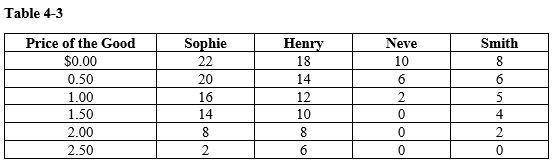
Refer to the Table 4-3. What happens if the price decreases from $1.50 to $1.00?
A) The market demand increases by 35 units.
B) The quantity demanded in the market decreases by 2 units.
C) Individual demands will increase.
D) The quantity demanded in the market increases by 7 units.
Question
Question
Question
Question
Question
Question
Question
Question
Question
Question
Question
Question
Question
Question
Question
Question
Refer to the Table 4-3. When the price of the good is $1.50, what is the quantity demanded in this market?
A) 18 units
B) 28 units
C) 35 units
D) 46 units
Question
Question
Question
Question
Question
Question
Question
Question
Question
Question
Question
Question
Question
Question
Question
Question
Question
Question
Question
Question
Question

Unlock Deck
Sign up to unlock the cards in this deck!
Unlock Deck
Unlock Deck
1/307

Play

Full screen (f)
Deck 4: The Market Forces of Supply and Demand
1
What happens in a competitive market?
A) Only a few sellers sell the same product.
B) Each seller has limited control over the price of his product.
C) If one buyer chooses to purchase a large quantity of the product, the price will rise.
D) If one seller withholds his product from the market, prices will rise.
A) Only a few sellers sell the same product.
B) Each seller has limited control over the price of his product.
C) If one buyer chooses to purchase a large quantity of the product, the price will rise.
D) If one seller withholds his product from the market, prices will rise.
Each seller has limited control over the price of his product.
2
What is the term for buyers and sellers who have no influence on market price?
A) price makers
B) market pawns
C) price takers
D) powerless
A) price makers
B) market pawns
C) price takers
D) powerless
price takers
3
Who or what allocates an economy's scarce resources?
A) economic planners
B) producers who use resources
C) prices for resources
D) government regulation of scarce resources
A) economic planners
B) producers who use resources
C) prices for resources
D) government regulation of scarce resources
prices for resources
4
What is an example of a perfectly competitive market?
A) cereal market
B) wheat market
C) smart phone market
D) hockey equipment market
A) cereal market
B) wheat market
C) smart phone market
D) hockey equipment market
Unlock Deck
Unlock for access to all 307 flashcards in this deck.
Unlock Deck
k this deck
5
What happens in a competitive market?
A) There is only one seller of the product.
B) Each seller of the product is free to set the price of his product.
C) Each seller attempts to compete with other sellers, causing fewer sellers in the market.
D) There are so many buyers and sellers that each has a negligible impact on price.
A) There is only one seller of the product.
B) Each seller of the product is free to set the price of his product.
C) Each seller attempts to compete with other sellers, causing fewer sellers in the market.
D) There are so many buyers and sellers that each has a negligible impact on price.
Unlock Deck
Unlock for access to all 307 flashcards in this deck.
Unlock Deck
k this deck
6
In a competitive market, why does each seller have limited control over the price of his product?
A) Other sellers are offering similar products.
B) In competitive markets, buyers have more influence over price than sellers.
C) The products sold in competitive markets are generally in abundant supply.
D) Sellers in competitive markets prefer to meet and set a price where profits will be realized.
A) Other sellers are offering similar products.
B) In competitive markets, buyers have more influence over price than sellers.
C) The products sold in competitive markets are generally in abundant supply.
D) Sellers in competitive markets prefer to meet and set a price where profits will be realized.
Unlock Deck
Unlock for access to all 307 flashcards in this deck.
Unlock Deck
k this deck
7
Which of the following best describes a perfectly competitive market?
A) A seller who charges more than the going price can increase her profit.
B) If a seller charges more than the going price, buyers will go elsewhere.
C) A seller often charges less than the going price to increase sales and profit.
D) A buyer can influence the price of the product.
A) A seller who charges more than the going price can increase her profit.
B) If a seller charges more than the going price, buyers will go elsewhere.
C) A seller often charges less than the going price to increase sales and profit.
D) A buyer can influence the price of the product.
Unlock Deck
Unlock for access to all 307 flashcards in this deck.
Unlock Deck
k this deck
8
Which of the following is NOT a characteristic of a perfectly competitive market?
A) identical products
B) numerous sellers
C) price makers
D) numerous buyers
A) identical products
B) numerous sellers
C) price makers
D) numerous buyers
Unlock Deck
Unlock for access to all 307 flashcards in this deck.
Unlock Deck
k this deck
9
What type of market is a monopoly?
A) with one seller
B) with few sellers
C) with one buyer
D) with many buyers
A) with one seller
B) with few sellers
C) with one buyer
D) with many buyers
Unlock Deck
Unlock for access to all 307 flashcards in this deck.
Unlock Deck
k this deck
10
Which of the following are the words most commonly used by economists?
A) surplus and shortage
B) scarcity and human wants
C) supply and demand
D) price and quantity
A) surplus and shortage
B) scarcity and human wants
C) supply and demand
D) price and quantity
Unlock Deck
Unlock for access to all 307 flashcards in this deck.
Unlock Deck
k this deck
11
What represents the behaviour of buyers?
A) demand
B) supply
C) a market
D) competition
A) demand
B) supply
C) a market
D) competition
Unlock Deck
Unlock for access to all 307 flashcards in this deck.
Unlock Deck
k this deck
12
Which of the following best resembles a perfectly competitive market?
A) electricity market
B) sugar market
C) automobile market
D) textbook market
A) electricity market
B) sugar market
C) automobile market
D) textbook market
Unlock Deck
Unlock for access to all 307 flashcards in this deck.
Unlock Deck
k this deck
13
Which of the following would be an example of a monopoly?
A) a coffee shop in a large city
B) a local car dealership
C) a local utilities company
D) a poultry farmer
A) a coffee shop in a large city
B) a local car dealership
C) a local utilities company
D) a poultry farmer
Unlock Deck
Unlock for access to all 307 flashcards in this deck.
Unlock Deck
k this deck
14
Who ultimately determines the demand for a product or service?
A) those who buy the product or service
B) the government
C) the producers who create the product or service
D) those who supply the raw materials used in the production of the good or service
A) those who buy the product or service
B) the government
C) the producers who create the product or service
D) those who supply the raw materials used in the production of the good or service
Unlock Deck
Unlock for access to all 307 flashcards in this deck.
Unlock Deck
k this deck
15
There are thousands of wheat farmers who produce and sell wheat and there are millions of consumers who use wheat and wheat products. What would the market for wheat be considered?
A) oligopolistic
B) monopolistic
C) perfectly competitive
D) monopolistically competitive
A) oligopolistic
B) monopolistic
C) perfectly competitive
D) monopolistically competitive
Unlock Deck
Unlock for access to all 307 flashcards in this deck.
Unlock Deck
k this deck
16
If a seller in a competitive market chooses to charge more than the market price, what would happen?
A) Buyers would tend to buy more from this seller.
B) The owners of the raw materials used in production would raise the prices for the raw materials.
C) Other sellers would also raise their prices.
D) Buyers will tend to make purchases from other sellers.
A) Buyers would tend to buy more from this seller.
B) The owners of the raw materials used in production would raise the prices for the raw materials.
C) Other sellers would also raise their prices.
D) Buyers will tend to make purchases from other sellers.
Unlock Deck
Unlock for access to all 307 flashcards in this deck.
Unlock Deck
k this deck
17
What is the amount of the good buyers are willing and able to purchase?
A) demand
B) quantity supplied
C) quantity demanded
D) supply
A) demand
B) quantity supplied
C) quantity demanded
D) supply
Unlock Deck
Unlock for access to all 307 flashcards in this deck.
Unlock Deck
k this deck
18
Why does market price prevail in a perfectly competitive market?
A) because there are few sellers
B) because the market is unregulated
C) because there are distinctive products
D) because no one has market power
A) because there are few sellers
B) because the market is unregulated
C) because there are distinctive products
D) because no one has market power
Unlock Deck
Unlock for access to all 307 flashcards in this deck.
Unlock Deck
k this deck
19
If buyers and/or sellers are price takers, what can they do individually?
A) They have no influence on market price.
B) They have ultimate control over market price.
C) Buyers will be able to find prices lower than those determined in the market.
D) They can somewhat influence the market price.
A) They have no influence on market price.
B) They have ultimate control over market price.
C) Buyers will be able to find prices lower than those determined in the market.
D) They can somewhat influence the market price.
Unlock Deck
Unlock for access to all 307 flashcards in this deck.
Unlock Deck
k this deck
20
In what type of market do we refer to buyers and sellers as "price takers"?
A) a perfectly competitive market
B) a monopolistically competitive market
C) an oligopolistic market
D) a monopolistic market
A) a perfectly competitive market
B) a monopolistically competitive market
C) an oligopolistic market
D) a monopolistic market
Unlock Deck
Unlock for access to all 307 flashcards in this deck.
Unlock Deck
k this deck
21
What does the law of demand imply?
A) When price rises, quantity demanded falls.
B) When price rises, quantity demanded rises also.
C) When price falls, quantity supplied rises.
D) When price falls, quantity supplied falls also.
A) When price rises, quantity demanded falls.
B) When price rises, quantity demanded rises also.
C) When price falls, quantity supplied rises.
D) When price falls, quantity supplied falls also.
Unlock Deck
Unlock for access to all 307 flashcards in this deck.
Unlock Deck
k this deck
22
Which best describes the relationship shown by a demand table?
A) the price of a good and the quantity supplied
B) income and the quantity of the good demanded
C) the price of a good and the quantity buyers are willing and able to purchase
D) the number of buyers and the quantity demanded
A) the price of a good and the quantity supplied
B) income and the quantity of the good demanded
C) the price of a good and the quantity buyers are willing and able to purchase
D) the number of buyers and the quantity demanded
Unlock Deck
Unlock for access to all 307 flashcards in this deck.
Unlock Deck
k this deck
23
Which of the following demonstrates the law of demand?
A) Jon buys more pretzels at $1.50 each since he got a $1 raise at work.
B) Melissa buys fewer muffins at $0.75 each than at $1 each.
C) Johan buys more burgers at $2 each than at $4 each.
D) Kendra buys fewer milk chocolate bars at $0.60 each since the price of white chocolate bars fell to $0.50 each.
A) Jon buys more pretzels at $1.50 each since he got a $1 raise at work.
B) Melissa buys fewer muffins at $0.75 each than at $1 each.
C) Johan buys more burgers at $2 each than at $4 each.
D) Kendra buys fewer milk chocolate bars at $0.60 each since the price of white chocolate bars fell to $0.50 each.
Unlock Deck
Unlock for access to all 307 flashcards in this deck.
Unlock Deck
k this deck
24
What impact would a higher price for golf clubs tend to have?
A) increase the demand for golf green fees
B) increase the demand for tennis rackets
C) decrease the demand for tennis rackets
D) increase the demand for golf clubs
A) increase the demand for golf green fees
B) increase the demand for tennis rackets
C) decrease the demand for tennis rackets
D) increase the demand for golf clubs
Unlock Deck
Unlock for access to all 307 flashcards in this deck.
Unlock Deck
k this deck
25
What is the market demand?
A) the sum of all individual demands
B) the demand for every product in an industry
C) the average quantity demanded at each price
D) the quantity demanded that exceeds supply
A) the sum of all individual demands
B) the demand for every product in an industry
C) the average quantity demanded at each price
D) the quantity demanded that exceeds supply
Unlock Deck
Unlock for access to all 307 flashcards in this deck.
Unlock Deck
k this deck
26
What is a table called that shows the relationship between the price of a good and the quantity demanded?
A) demand table
B) demand schedule
C) market table
D) quantity-demanded schedule
A) demand table
B) demand schedule
C) market table
D) quantity-demanded schedule
Unlock Deck
Unlock for access to all 307 flashcards in this deck.
Unlock Deck
k this deck
27
What is on the vertical axis of a demand graph?
A) income
B) quantity
C) cost of production
D) price
A) income
B) quantity
C) cost of production
D) price
Unlock Deck
Unlock for access to all 307 flashcards in this deck.
Unlock Deck
k this deck
28
How do the variables price and quantity demanded relate to each other?
A) Price and quantity demanded are independent of each other.
B) Price is the dependent variable and quantity demanded is the independent variable.
C) Price is the independent variable and quantity demanded is the dependent variable.
D) Price and quantity demanded are both dependent variables, since both depend on the actions of buyers and sellers.
A) Price and quantity demanded are independent of each other.
B) Price is the dependent variable and quantity demanded is the independent variable.
C) Price is the independent variable and quantity demanded is the dependent variable.
D) Price and quantity demanded are both dependent variables, since both depend on the actions of buyers and sellers.
Unlock Deck
Unlock for access to all 307 flashcards in this deck.
Unlock Deck
k this deck
29
What does a demand curve illustrate?
A) the negative relationship between number of buyers and quantity demanded
B) the positive relationship between price and quantity demanded
C) the negative relationship between price and quantity demanded
D) the maximum quantity of two goods an economy is capable of producing with available resources and technology
A) the negative relationship between number of buyers and quantity demanded
B) the positive relationship between price and quantity demanded
C) the negative relationship between price and quantity demanded
D) the maximum quantity of two goods an economy is capable of producing with available resources and technology
Unlock Deck
Unlock for access to all 307 flashcards in this deck.
Unlock Deck
k this deck
30
What does a market demand curve reflect?
A) how much all buyers are willing and able to buy at each possible price
B) how quantity demanded changes when the number of buyers changes
C) the fact that the level of income is inversely related to quantity demanded
D) when the buyers are willing to buy the most
A) how much all buyers are willing and able to buy at each possible price
B) how quantity demanded changes when the number of buyers changes
C) the fact that the level of income is inversely related to quantity demanded
D) when the buyers are willing to buy the most
Unlock Deck
Unlock for access to all 307 flashcards in this deck.
Unlock Deck
k this deck
31
What is the law of demand?
A) When the price of a good falls, buyers respond by purchasing more.
B) When income levels increase, buyers respond by purchasing more.
C) When buyers' tastes for the good increase, they purchase more of the good.
D) When the price of a good or service rises, buyers respond by purchasing more.
A) When the price of a good falls, buyers respond by purchasing more.
B) When income levels increase, buyers respond by purchasing more.
C) When buyers' tastes for the good increase, they purchase more of the good.
D) When the price of a good or service rises, buyers respond by purchasing more.
Unlock Deck
Unlock for access to all 307 flashcards in this deck.
Unlock Deck
k this deck
32
What is the sum of all individual demand curves for a product?
A) total demand
B) consumption demand
C) summation demand
D) market demand
A) total demand
B) consumption demand
C) summation demand
D) market demand
Unlock Deck
Unlock for access to all 307 flashcards in this deck.
Unlock Deck
k this deck
33
To find the market demand for a product, how are individual demand curves summed?
A) vertically
B) diagonally
C) horizontally
D) by averaging
A) vertically
B) diagonally
C) horizontally
D) by averaging
Unlock Deck
Unlock for access to all 307 flashcards in this deck.
Unlock Deck
k this deck
34
What is the downward-sloping line that relates prices and quantity demanded?
A) demand schedule
B) demand curve
C) quantity demanded line
D) quantity demanded curve
A) demand schedule
B) demand curve
C) quantity demanded line
D) quantity demanded curve
Unlock Deck
Unlock for access to all 307 flashcards in this deck.
Unlock Deck
k this deck
35
What does the law of demand imply?
A) price and quantity supplied are inversely related
B) price and quantity demanded are inversely related
C) price and quantity demanded are positively related
D) price and quantity supplied are positively related
A) price and quantity supplied are inversely related
B) price and quantity demanded are inversely related
C) price and quantity demanded are positively related
D) price and quantity supplied are positively related
Unlock Deck
Unlock for access to all 307 flashcards in this deck.
Unlock Deck
k this deck
36
Lauren buys five lattes per month when the price is $4.00 each and seven lattes per month when the price is $3.50. What has Lauren demonstrated?
A) law of price
B) law of supply
C) actions of an irrational consumer
D) law of demand
A) law of price
B) law of supply
C) actions of an irrational consumer
D) law of demand
Unlock Deck
Unlock for access to all 307 flashcards in this deck.
Unlock Deck
k this deck
37
What is market demand?
A) It is a vertical summation of individual demand curves.
B) It is a horizontal summation of individual demand curves.
C) It is not responsive to change in tastes and preferences.
D) It is determined solely by the number of buyers and sellers in the market.
A) It is a vertical summation of individual demand curves.
B) It is a horizontal summation of individual demand curves.
C) It is not responsive to change in tastes and preferences.
D) It is determined solely by the number of buyers and sellers in the market.
Unlock Deck
Unlock for access to all 307 flashcards in this deck.
Unlock Deck
k this deck
38
What is a demand curve?
A) the downward-sloping line relating the price of the good to the quantity demanded
B) the upward-sloping line relating price to quantity supplied
C) the curve that relates income to quantity demanded
D) the curve that shows the same relationship between two goods as a production possibilities frontier
A) the downward-sloping line relating the price of the good to the quantity demanded
B) the upward-sloping line relating price to quantity supplied
C) the curve that relates income to quantity demanded
D) the curve that shows the same relationship between two goods as a production possibilities frontier
Unlock Deck
Unlock for access to all 307 flashcards in this deck.
Unlock Deck
k this deck
39
What are the forces that make market economies work?
A) price and quantity
B) demand and supply
C) cost and benefit
D) employment and income
A) price and quantity
B) demand and supply
C) cost and benefit
D) employment and income
Unlock Deck
Unlock for access to all 307 flashcards in this deck.
Unlock Deck
k this deck
40
Which of the following reflects the downward-sloping demand curve?
A) Price is positively related to quantity supplied.
B) There is an inverse relationship between price and quantity demanded.
C) There is a direct relationship between price and quantity demanded.
D) When the price falls, buyers willingly buy less.
A) Price is positively related to quantity supplied.
B) There is an inverse relationship between price and quantity demanded.
C) There is a direct relationship between price and quantity demanded.
D) When the price falls, buyers willingly buy less.
Unlock Deck
Unlock for access to all 307 flashcards in this deck.
Unlock Deck
k this deck
41
Which of the following is NOT a determinant of demand?
A) tastes
B) technology
C) income
D) the price of related goods
A) tastes
B) technology
C) income
D) the price of related goods
Unlock Deck
Unlock for access to all 307 flashcards in this deck.
Unlock Deck
k this deck
42
If two goods are substitutes, what happens if there is a decrease in the price of one good?
A) It increases the demand for the other good.
B) It reduces the demand for the other good.
C) It reduces the quantity demanded of the other good.
D) It increases the quantity demanded of the other good.
A) It increases the demand for the other good.
B) It reduces the demand for the other good.
C) It reduces the quantity demanded of the other good.
D) It increases the quantity demanded of the other good.
Unlock Deck
Unlock for access to all 307 flashcards in this deck.
Unlock Deck
k this deck
43
Refer to the Table 4-3. What happens if the price decreases from $1.50 to $1.00?
A) The market demand increases by 35 units.
B) The quantity demanded in the market decreases by 2 units.
C) Individual demands will increase.
D) The quantity demanded in the market increases by 7 units.
Unlock Deck
Unlock for access to all 307 flashcards in this deck.
Unlock Deck
k this deck
44
What does the number of buyers affect?
A) the market demand curve
B) all individual demand curves
C) the market supply curve
D) all individual supply curves
A) the market demand curve
B) all individual demand curves
C) the market supply curve
D) all individual supply curves
Unlock Deck
Unlock for access to all 307 flashcards in this deck.
Unlock Deck
k this deck
45
If a decrease in income increases the demand for a good, what is the good called?
A) a substitute good
B) a complementary good
C) a normal good
D) an inferior good
A) a substitute good
B) a complementary good
C) a normal good
D) an inferior good
Unlock Deck
Unlock for access to all 307 flashcards in this deck.
Unlock Deck
k this deck
46
Which of the following would NOT be a determinant of demand?
A) the price of related goods
B) income
C) expectations
D) the prices of the inputs used to produce the good
A) the price of related goods
B) income
C) expectations
D) the prices of the inputs used to produce the good
Unlock Deck
Unlock for access to all 307 flashcards in this deck.
Unlock Deck
k this deck
47
If two goods are complements, what happens if there is a decrease in the price of one good?
A) It increases the quantity demanded of the other good.
B) It reduces the demand for the other good.
C) It reduces the quantity demanded of the other good.
D) It raises the demand for the other good.
A) It increases the quantity demanded of the other good.
B) It reduces the demand for the other good.
C) It reduces the quantity demanded of the other good.
D) It raises the demand for the other good.
Unlock Deck
Unlock for access to all 307 flashcards in this deck.
Unlock Deck
k this deck
48
You lose your job and, as a result, you buy fewer pizzas. What does this show that you consider pizzas to be?
A) a normal good
B) an inferior good
C) a luxury good
D) a complementary good
A) a normal good
B) an inferior good
C) a luxury good
D) a complementary good
Unlock Deck
Unlock for access to all 307 flashcards in this deck.
Unlock Deck
k this deck
49
When economists are interested in how markets work, what do they most often work with?
A) the market demand curve
B) individuals' demand curves
C) individuals' demand schedules
D) targeted consumers' demand curves
A) the market demand curve
B) individuals' demand curves
C) individuals' demand schedules
D) targeted consumers' demand curves
Unlock Deck
Unlock for access to all 307 flashcards in this deck.
Unlock Deck
k this deck
50
If Nick receives a decrease in his pay, what would we expect?
A) Nick's demand for each good he purchases to remain unchanged
B) Nick's demand for normal goods to increase
C) Nick's demand for luxury goods to increase
D) Nick's demand for inferior goods to increase
A) Nick's demand for each good he purchases to remain unchanged
B) Nick's demand for normal goods to increase
C) Nick's demand for luxury goods to increase
D) Nick's demand for inferior goods to increase
Unlock Deck
Unlock for access to all 307 flashcards in this deck.
Unlock Deck
k this deck
51
What is an example of an inferior good?
A) a family restaurant meal
B) instant noodles
C) fresh baked rolls
D) a steak dinner
A) a family restaurant meal
B) instant noodles
C) fresh baked rolls
D) a steak dinner
Unlock Deck
Unlock for access to all 307 flashcards in this deck.
Unlock Deck
k this deck
52
If a good is "normal," what will an increase in income result in?
A) an increase in supply of that good
B) an increase in the demand for the good
C) a decrease in the demand for the good
D) a lower market price
A) an increase in supply of that good
B) an increase in the demand for the good
C) a decrease in the demand for the good
D) a lower market price
Unlock Deck
Unlock for access to all 307 flashcards in this deck.
Unlock Deck
k this deck
53
Currently you purchase six packages of hot dogs a month. You graduate in December and will start your new job on January 2. You have no plans to purchase hot dogs in January. What are hot dogs for you?
A) a "college-only" good
B) a normal good
C) an inferior good
D) a consumer good
A) a "college-only" good
B) a normal good
C) an inferior good
D) a consumer good
Unlock Deck
Unlock for access to all 307 flashcards in this deck.
Unlock Deck
k this deck
54
Suppose that a decrease in the price of X results in less of good Y sold. What are X and Y called?
A) complementary goods
B) normal goods
C) inferior goods
D) substitute goods
A) complementary goods
B) normal goods
C) inferior goods
D) substitute goods
Unlock Deck
Unlock for access to all 307 flashcards in this deck.
Unlock Deck
k this deck
55
If Nick receives an increase in his pay, what would we expect?
A) Nick's demand for each good he purchases to remain unchanged
B) Nick's demand for normal goods to decrease
C) Nick's demand for luxury goods to increase
D) Nick's demand for inferior goods to increase
A) Nick's demand for each good he purchases to remain unchanged
B) Nick's demand for normal goods to decrease
C) Nick's demand for luxury goods to increase
D) Nick's demand for inferior goods to increase
Unlock Deck
Unlock for access to all 307 flashcards in this deck.
Unlock Deck
k this deck
56
Which of the following would NOT affect an individual's demand curve?
A) expectations
B) income
C) price of related goods
D) the number of buyers
A) expectations
B) income
C) price of related goods
D) the number of buyers
Unlock Deck
Unlock for access to all 307 flashcards in this deck.
Unlock Deck
k this deck
57
What is an example of complementary goods?
A) coffee and cream
B) lawnmowers and ATVs
C) cereal and pancakes
D) wine and beer
A) coffee and cream
B) lawnmowers and ATVs
C) cereal and pancakes
D) wine and beer
Unlock Deck
Unlock for access to all 307 flashcards in this deck.
Unlock Deck
k this deck
58
If the price of a substitute to good X increases, what will happen?
A) Demand for good X will decrease.
B) Market price of good X will decrease.
C) Demand for good X will increase.
D) Quantity demanded for good X will increase.
A) Demand for good X will decrease.
B) Market price of good X will decrease.
C) Demand for good X will increase.
D) Quantity demanded for good X will increase.
Unlock Deck
Unlock for access to all 307 flashcards in this deck.
Unlock Deck
k this deck
59
Refer to the Table 4-3. When the price of the good is $1.50, what is the quantity demanded in this market?
A) 18 units
B) 28 units
C) 35 units
D) 46 units
Unlock Deck
Unlock for access to all 307 flashcards in this deck.
Unlock Deck
k this deck
60
On what basis is a good considered either a normal good or an inferior good?
A) the quality of the good
B) the price of the good
C) personal preference toward the good
D) the amount of a person's income
A) the quality of the good
B) the price of the good
C) personal preference toward the good
D) the amount of a person's income
Unlock Deck
Unlock for access to all 307 flashcards in this deck.
Unlock Deck
k this deck
61
If buyers now wanted to purchase larger quantities of cereal, what do we know about its demand curve?
A) The demand curve for cereal would shift to the left.
B) We would move down the demand curve for cereal.
C) The demand curve for cereal would shift to the right.
D) We would move up the demand curve for cereal.
A) The demand curve for cereal would shift to the left.
B) We would move down the demand curve for cereal.
C) The demand curve for cereal would shift to the right.
D) We would move up the demand curve for cereal.
Unlock Deck
Unlock for access to all 307 flashcards in this deck.
Unlock Deck
k this deck
62
If the number of buyers in the housing market decreases, what will happen?
A) Demand in the market will increase.
B) Demand in the market will decrease.
C) Supply in the market will increase.
D) Supply in the market will decrease.
A) Demand in the market will increase.
B) Demand in the market will decrease.
C) Supply in the market will increase.
D) Supply in the market will decrease.
Unlock Deck
Unlock for access to all 307 flashcards in this deck.
Unlock Deck
k this deck
63
Suppose that the Canadian Medical Association announces that men who shave their heads are less likely to die of heart failure. What could we expect to happen?
A) the current demand for hair gel to increase
B) the current demand for razors to increase
C) the current demand for combs to increase
D) the current demand for hair dye for men to increase
A) the current demand for hair gel to increase
B) the current demand for razors to increase
C) the current demand for combs to increase
D) the current demand for hair dye for men to increase
Unlock Deck
Unlock for access to all 307 flashcards in this deck.
Unlock Deck
k this deck
64
Which of the following would NOT shift the demand curve for a good or service?
A) a change in income
B) a change in the price of the good or service
C) a change in expectations about the price of the good or service
D) a change in the price of a related good
A) a change in income
B) a change in the price of the good or service
C) a change in expectations about the price of the good or service
D) a change in the price of a related good
Unlock Deck
Unlock for access to all 307 flashcards in this deck.
Unlock Deck
k this deck
65
If goods A and B are complements, what will result from an increase in the price of A?
A) more A and more B is sold
B) more A and less B is sold
C) less A and more B is sold
D) less A and less B is sold
A) more A and more B is sold
B) more A and less B is sold
C) less A and more B is sold
D) less A and less B is sold
Unlock Deck
Unlock for access to all 307 flashcards in this deck.
Unlock Deck
k this deck
66
Once the demand curve for a product or service is drawn, what is possible?
A) It can shift either right or left.
B) It remains stable over time at a given price.
C) It can shift if the price changes.
D) It can only be accurate at one price.
A) It can shift either right or left.
B) It remains stable over time at a given price.
C) It can shift if the price changes.
D) It can only be accurate at one price.
Unlock Deck
Unlock for access to all 307 flashcards in this deck.
Unlock Deck
k this deck
67
Given a fixed demand curve, which of the following is affected when the price changes?
A) income
B) tastes
C) expectations
D) quantity demanded
A) income
B) tastes
C) expectations
D) quantity demanded
Unlock Deck
Unlock for access to all 307 flashcards in this deck.
Unlock Deck
k this deck
68
Morgan tells you that the price of lattes at the coffee shop will be going up next week. How will you probably respond?
A) by decreasing your current demand for lattes
B) by increasing your current demand for lattes
C) by not changing your current demand for lattes
D) by refusing to ever buy any more lattes at that shop
A) by decreasing your current demand for lattes
B) by increasing your current demand for lattes
C) by not changing your current demand for lattes
D) by refusing to ever buy any more lattes at that shop
Unlock Deck
Unlock for access to all 307 flashcards in this deck.
Unlock Deck
k this deck
69
What is an example of substitute goods?
A) butter and margarine
B) golf balls and golf clubs
C) motorhomes and picnic tables
D) toast and jam
A) butter and margarine
B) golf balls and golf clubs
C) motorhomes and picnic tables
D) toast and jam
Unlock Deck
Unlock for access to all 307 flashcards in this deck.
Unlock Deck
k this deck
70
Which of the following is NOT a determinant of demand?
A) the price of an input
B) the price of a complementary good
C) the price of the good next month
D) the price of a substitute good
A) the price of an input
B) the price of a complementary good
C) the price of the good next month
D) the price of a substitute good
Unlock Deck
Unlock for access to all 307 flashcards in this deck.
Unlock Deck
k this deck
71
Peter tells you that he thinks the price of chocolate bars, his favourite food, will decrease in the near future. How will he probably respond?
A) by decreasing his current demand for chocolate bars
B) by not changing his current demand for chocolate bars
C) by increasing his current demand for chocolate bars
D) by currently refusing to buy any more chocolate bars
A) by decreasing his current demand for chocolate bars
B) by not changing his current demand for chocolate bars
C) by increasing his current demand for chocolate bars
D) by currently refusing to buy any more chocolate bars
Unlock Deck
Unlock for access to all 307 flashcards in this deck.
Unlock Deck
k this deck
72
You have decided to purchase a new Range Rover SUV. A friend tells you that Land Rover will be offering a $3000 rebate on Range Rovers starting next month. As a result of this information, what will happen to your demand curve for Range Rovers?
A) could shift either right or left
B) shifts right today
C) curve will be unaffected
D) shifts left today
A) could shift either right or left
B) shifts right today
C) curve will be unaffected
D) shifts left today
Unlock Deck
Unlock for access to all 307 flashcards in this deck.
Unlock Deck
k this deck
73
You love grapes. You hear on the news that 50% of the world's grape crop has been wiped out because of a virus, which will cause the price to double by the end of the year. What happens as a result?
A) Your demand for grapes will increase at the end of the year.
B) Your demand for grapes increases today.
C) Your demand for grapes falls as you look for a substitute good.
D) Your demand for grapes falls because the price increases today.
A) Your demand for grapes will increase at the end of the year.
B) Your demand for grapes increases today.
C) Your demand for grapes falls as you look for a substitute good.
D) Your demand for grapes falls because the price increases today.
Unlock Deck
Unlock for access to all 307 flashcards in this deck.
Unlock Deck
k this deck
74
Holding all else constant, what will result from a higher price for ski-lift tickets?
A) increased number of skiers
B) decreased supply of ski resorts
C) decreased demand for other winter recreational activities
D) decreased ski sales
A) increased number of skiers
B) decreased supply of ski resorts
C) decreased demand for other winter recreational activities
D) decreased ski sales
Unlock Deck
Unlock for access to all 307 flashcards in this deck.
Unlock Deck
k this deck
75
When it comes to people's tastes, what do economists generally believe?
A) Tastes are based on forces beyond the realm of economics.
B) Tastes are based on historical and psychological forces.
C) Tastes don't change.
D) Tastes do not directly affect demand.
A) Tastes are based on forces beyond the realm of economics.
B) Tastes are based on historical and psychological forces.
C) Tastes don't change.
D) Tastes do not directly affect demand.
Unlock Deck
Unlock for access to all 307 flashcards in this deck.
Unlock Deck
k this deck
76
You have decided to purchase a new Range Rover SUV. A friend tells you that Land Rover will stop offering a $3000 rebate on Range Rovers starting next month. As a result of this information, what will happen to your demand curve for Range Rovers?
A) could shift either right or left
B) shifts right today
C) curve will be unaffected
D) shifts left today
A) could shift either right or left
B) shifts right today
C) curve will be unaffected
D) shifts left today
Unlock Deck
Unlock for access to all 307 flashcards in this deck.
Unlock Deck
k this deck
77
Suppose that scientists find evidence that proves tattoos improve the body's immune system. What would we expect to see?
A) no change in the demand for tattoos
B) a decrease in the demand for tattoos
C) an increase in the demand for tattoos
D) a decrease in the supply of tattoos
A) no change in the demand for tattoos
B) a decrease in the demand for tattoos
C) an increase in the demand for tattoos
D) a decrease in the supply of tattoos
Unlock Deck
Unlock for access to all 307 flashcards in this deck.
Unlock Deck
k this deck
78
What impact does a person's expectations about the future have?
A) cannot affect demand because expectations change
B) can affect future demand
C) can affect current demand
D) can shift a supply curve
A) cannot affect demand because expectations change
B) can affect future demand
C) can affect current demand
D) can shift a supply curve
Unlock Deck
Unlock for access to all 307 flashcards in this deck.
Unlock Deck
k this deck
79
What will happen in the rice market if buyers are expecting higher prices in the near future?
A) Demand increases and supply decreases.
B) Both demand and supply increase.
C) Demand decreases and supply increases.
D) Both demand and supply decrease.
A) Demand increases and supply decreases.
B) Both demand and supply increase.
C) Demand decreases and supply increases.
D) Both demand and supply decrease.
Unlock Deck
Unlock for access to all 307 flashcards in this deck.
Unlock Deck
k this deck
80
What can be said about economists in general?
A) They do not try to explain people's tastes but do try to explain what happens when tastes change.
B) They must be able to explain people's tastes to explain what happens when tastes change.
C) They do not believe that people's tastes determine demand and therefore ignore the subject of tastes.
D) They believe that tastes and demand move in opposite directions.
A) They do not try to explain people's tastes but do try to explain what happens when tastes change.
B) They must be able to explain people's tastes to explain what happens when tastes change.
C) They do not believe that people's tastes determine demand and therefore ignore the subject of tastes.
D) They believe that tastes and demand move in opposite directions.
Unlock Deck
Unlock for access to all 307 flashcards in this deck.
Unlock Deck
k this deck
Unlock Deck
Unlock for access to all 307 flashcards in this deck.







