





 Chat with AI

Deck 41: Animal Nutrition
Full screen (f)

Question
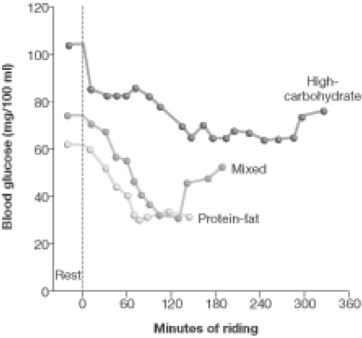 Figure 41.1
How would you, as an athlete or trainer, interpret the data portrayed in the graph above?
A) It is highly probable that muscle cells involved in exercise use fatty acids as a fuel source.
B) The protein- fat diet resulted in the longest endurance.
C) A high- carbohydrate diet consumed before an endurance event improves endurance.
D) A high- carbohydrate diet is deleterious to all individuals because carbohydrates contain empty calories.

Question
Question
Question
Question
Question
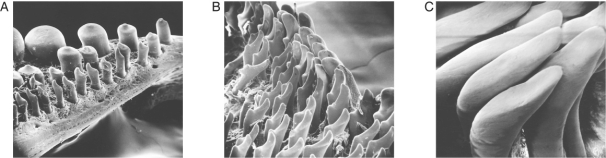 Figure 41.2
-Refer to Figure 41.2. Which of the mouthparts shown in the figure above are specialized for crushing and grinding?
Question
Question
Question
Question
Question
Question
Question
Question
Question
Question
Question
Question
Question
Question
Question
Question
Question
Question
Question
Question
Question
Question
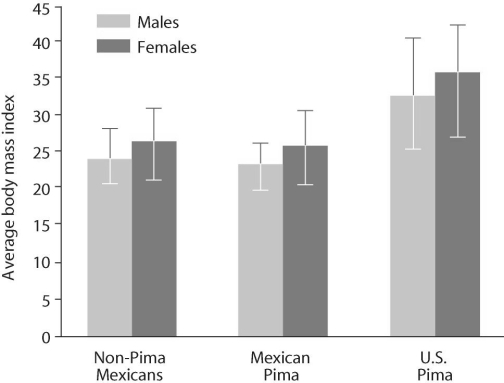 Figure 41.3
Based on the graph in the Figure 41.3, what can you infer about the incidence of type II diabetes mellitus?
A) People who develop type II diabetes mellitus are typically diagnosed in childhood or adolescence.
B) If you maintain a normal body weight BMI < 25), you will not get type II diabetes mellitus.
C) Obesity is a risk factor for development of type II diabetes mellitus.
D) The incidence of type II diabetes mellitus has increased in the past 10 years.
Question
Question
Question
Question
Question
Question
Question
Question
Question
Question
Question
Question
Question
Question
Question

Unlock Deck
Sign up to unlock the cards in this deck!
Unlock Deck
Unlock Deck
1/43

Play

Full screen (f)
Deck 41: Animal Nutrition
1
Figure 41.1How would you, as an athlete or trainer, interpret the data portrayed in the graph above?
A) It is highly probable that muscle cells involved in exercise use fatty acids as a fuel source.
B) The protein- fat diet resulted in the longest endurance.
C) A high- carbohydrate diet consumed before an endurance event improves endurance.
D) A high- carbohydrate diet is deleterious to all individuals because carbohydrates contain empty calories.
C
2
Fangs, like those found in wolves, are designed to
A) grind and chew.
B) filter feed.
C) swallow the prey whole.
D) tear flesh.
A) grind and chew.
B) filter feed.
C) swallow the prey whole.
D) tear flesh.
D
3
What are the molar teeth of herbivorous mammals especially effective at?
A) splitting
B) piercing
C) ripping
D) cutting
E) grinding
A) splitting
B) piercing
C) ripping
D) cutting
E) grinding
E
4
A major enzyme involved in protein digestion is
A) pepsin.
B) facilitated diffusion.
C) amylase.
D) lipase.
A) pepsin.
B) facilitated diffusion.
C) amylase.
D) lipase.
Unlock Deck
Unlock for access to all 43 flashcards in this deck.
Unlock Deck
k this deck
5
Food labels provide nutrient information and express the amount of a given nutrient as
A) International Units.
B) a percentage of the Recommended Dietary Allowances.
C) percent composition of the food product.
D) calories.
A) International Units.
B) a percentage of the Recommended Dietary Allowances.
C) percent composition of the food product.
D) calories.
Unlock Deck
Unlock for access to all 43 flashcards in this deck.
Unlock Deck
k this deck
6
Figure 41.2-Refer to Figure 41.2. Which of the mouthparts shown in the figure above are specialized for crushing and grinding?
Unlock Deck
Unlock for access to all 43 flashcards in this deck.
Unlock Deck
k this deck
7
What is the importance of consuming an adequate amount of proteins in a diet?
A) They are used as cofactors for metabolic reactions and are required in minute quantities.
B) Proteins are necessary to produce urea and other important metabolites.
C) They are most commonly used to meet cell energy demands.
D) Proteins serve a variety of functions, and the body does not store excess quantities of protein.
A) They are used as cofactors for metabolic reactions and are required in minute quantities.
B) Proteins are necessary to produce urea and other important metabolites.
C) They are most commonly used to meet cell energy demands.
D) Proteins serve a variety of functions, and the body does not store excess quantities of protein.
Unlock Deck
Unlock for access to all 43 flashcards in this deck.
Unlock Deck
k this deck
8
If you chew a salted cracker long enough, it begins to taste sweet. Why?
A) The taste buds for "salty" become fatigued and cease to fire.
B) Salivary amylase degrades the starch from the cracker into glucose.
C) Sugar that remained in the mouth from previous meals becomes soluble in saliva.
D) The contents of the cracker become soluble in saliva.
A) The taste buds for "salty" become fatigued and cease to fire.
B) Salivary amylase degrades the starch from the cracker into glucose.
C) Sugar that remained in the mouth from previous meals becomes soluble in saliva.
D) The contents of the cracker become soluble in saliva.
Unlock Deck
Unlock for access to all 43 flashcards in this deck.
Unlock Deck
k this deck
9
Food and its products of degradation move through the alimentary canal by means of peristalsis. What is peristalsis?
A) rhythmic lengthening and shortening of epithelial cells lining the lumen of the alimentary canal
B) movement of nerve impulses from the central nervous system to the autorhythmic smooth muscle cells
C) rhythmic waves of contraction of the muscular layer surrounding the alimentary canal that are responsible for moving contents of the lumen along the length of the digestive tract
D) movements of the muscular layer surrounding the alimentary canal that are under voluntary control
A) rhythmic lengthening and shortening of epithelial cells lining the lumen of the alimentary canal
B) movement of nerve impulses from the central nervous system to the autorhythmic smooth muscle cells
C) rhythmic waves of contraction of the muscular layer surrounding the alimentary canal that are responsible for moving contents of the lumen along the length of the digestive tract
D) movements of the muscular layer surrounding the alimentary canal that are under voluntary control
Unlock Deck
Unlock for access to all 43 flashcards in this deck.
Unlock Deck
k this deck
10
What is the importance of the mucins that are released by salivary glands?
A) They are hormonal molecules that stimulate the release of gastric juice by the stomach in anticipation of receipt of the contents of the mouth.
B) They aid in degradation of triglycerides to fatty acids and monoglycerides.
C) They are glycoproteins that make food slippery enough to slide easily through the esophagus.
D) They are beginning the process of starch digestion.
A) They are hormonal molecules that stimulate the release of gastric juice by the stomach in anticipation of receipt of the contents of the mouth.
B) They aid in degradation of triglycerides to fatty acids and monoglycerides.
C) They are glycoproteins that make food slippery enough to slide easily through the esophagus.
D) They are beginning the process of starch digestion.
Unlock Deck
Unlock for access to all 43 flashcards in this deck.
Unlock Deck
k this deck
11
The process of obtaining is known as and requires specialized mouthparts.
A) excretion
B) ingestion
C) absorption
D) digestion
A) excretion
B) ingestion
C) absorption
D) digestion
Unlock Deck
Unlock for access to all 43 flashcards in this deck.
Unlock Deck
k this deck
12
Starch digestion begins where?
A) in the small intestine
B) in the mouth
C) in the stomach
D) in the bloodstream
A) in the small intestine
B) in the mouth
C) in the stomach
D) in the bloodstream
Unlock Deck
Unlock for access to all 43 flashcards in this deck.
Unlock Deck
k this deck
13
The process of breaking down food particles into molecules that can be transported into circulation is known as
A) absorption.
B) digestion.
C) excretion.
D) ingestion.
A) absorption.
B) digestion.
C) excretion.
D) ingestion.
Unlock Deck
Unlock for access to all 43 flashcards in this deck.
Unlock Deck
k this deck
14
If the person consumes 2500 calories daily to maintain body weight, what percentage of the RDA for iron would this person receive from a serving of apple juice?
A) 20%
B) more than 20%
C) less than 20%
A) 20%
B) more than 20%
C) less than 20%
Unlock Deck
Unlock for access to all 43 flashcards in this deck.
Unlock Deck
k this deck
15
How many food calories does the jug of apple juice contain?
A) 960
B) 120
C) 240
D) 480
A) 960
B) 120
C) 240
D) 480
Unlock Deck
Unlock for access to all 43 flashcards in this deck.
Unlock Deck
k this deck
16
Which of the following molecules are absorbed from the lumen of the small intestine into epithelial cells through simple diffusion?
A) lipids
B) disaccharides and trisaccharides
C) amino acids
D) monosaccharides
A) lipids
B) disaccharides and trisaccharides
C) amino acids
D) monosaccharides
Unlock Deck
Unlock for access to all 43 flashcards in this deck.
Unlock Deck
k this deck
17
Refer to the following nutrition label for the corresponding questions). Apple juice has the following nutrition label: Contains 100% Juice
-From the information contained on the label above, you can infer that apple juice is a good source of which of the following?
A) vitamin A
B) sodium
C) vitamin C
D) calcium
-From the information contained on the label above, you can infer that apple juice is a good source of which of the following?
A) vitamin A
B) sodium
C) vitamin C
D) calcium
Unlock Deck
Unlock for access to all 43 flashcards in this deck.
Unlock Deck
k this deck
18
Protein digestion begins where?
A) in the mouth
B) in the bloodstream
C) in the small intestine
D) in the stomach
A) in the mouth
B) in the bloodstream
C) in the small intestine
D) in the stomach
Unlock Deck
Unlock for access to all 43 flashcards in this deck.
Unlock Deck
k this deck
19
What can the mouthparts of an animal tell you about its diet?
A) Mouthparts of all animals are designed to reduce the size of the food particles ingested.
B) Mouthparts are important in mating rituals and provide few clues about diet.
C) Mouthparts provide clues about the type of digestion that goes on in the stomach.
D) Mouthparts of animals are specialized to obtain desired food items efficiently.
A) Mouthparts of all animals are designed to reduce the size of the food particles ingested.
B) Mouthparts are important in mating rituals and provide few clues about diet.
C) Mouthparts provide clues about the type of digestion that goes on in the stomach.
D) Mouthparts of animals are specialized to obtain desired food items efficiently.
Unlock Deck
Unlock for access to all 43 flashcards in this deck.
Unlock Deck
k this deck
20
If you found a vertebrate skull in the woods and the teeth were sharp and scissor- like, what type of food would you expect this animal to eat?
A) nectar
B) blood
C) grass
D) flesh of another animal
A) nectar
B) blood
C) grass
D) flesh of another animal
Unlock Deck
Unlock for access to all 43 flashcards in this deck.
Unlock Deck
k this deck
21
The parietal cells that line the stomach secrete hydrogen ions into the stomach against a concentration gradient. Based on that knowledge, which of the following transport processes is most likely involved in hydrogen ion secretion?
A) active transport
B) diffusion
C) facilitated diffusion
D) endocytosis
A) active transport
B) diffusion
C) facilitated diffusion
D) endocytosis
Unlock Deck
Unlock for access to all 43 flashcards in this deck.
Unlock Deck
k this deck
22
Villi and microvilli that are associated with the luminal surface of the intestinal epithelium are important in that they
A) contain stratified layered) epithelial cells for protection against pathogens entering with food.
B) transport substances from the epithelial cells into the circulatory system.
C) contain cilia that facilitate movement of the contents of the alimentary canal toward the anus.
D) increase the surface area available for absorption.
A) contain stratified layered) epithelial cells for protection against pathogens entering with food.
B) transport substances from the epithelial cells into the circulatory system.
C) contain cilia that facilitate movement of the contents of the alimentary canal toward the anus.
D) increase the surface area available for absorption.
Unlock Deck
Unlock for access to all 43 flashcards in this deck.
Unlock Deck
k this deck
23
Why did scientists originally hypothesize that proteolytic enzymes like pepsin and trypsin are secreted in inactive form?
A) These proteolytic enzymes, in active form, would digest the very tissues that synthesize them.
B) Upon study of chief cells, they were able to isolate active forms of pepsin and trypsin.
C) They identified the hormone that activates pepsin and trypsin.
D) The stomach is too acidic to maintain these enzymes in their active form.
A) These proteolytic enzymes, in active form, would digest the very tissues that synthesize them.
B) Upon study of chief cells, they were able to isolate active forms of pepsin and trypsin.
C) They identified the hormone that activates pepsin and trypsin.
D) The stomach is too acidic to maintain these enzymes in their active form.
Unlock Deck
Unlock for access to all 43 flashcards in this deck.
Unlock Deck
k this deck
24
If there is a strong genetic link for type II diabetes mellitus in your family, how might you minimize your risk of developing the disorder?
A) Diet and exercise.
B) Take oral insulin daily.
C) Monitor your blood glucose levels daily.
D) Eat carbohydrates like starch instead of sweets.
A) Diet and exercise.
B) Take oral insulin daily.
C) Monitor your blood glucose levels daily.
D) Eat carbohydrates like starch instead of sweets.
Unlock Deck
Unlock for access to all 43 flashcards in this deck.
Unlock Deck
k this deck
25
Coprophagy benefits animals by allowing them to
A) absorb more nutrients from food.
B) hide their feces from predators.
C) ferment their feces in their stomachs.
D) digest starches in their stomach.
E) All of the above are benefits of coprophagy.
A) absorb more nutrients from food.
B) hide their feces from predators.
C) ferment their feces in their stomachs.
D) digest starches in their stomach.
E) All of the above are benefits of coprophagy.
Unlock Deck
Unlock for access to all 43 flashcards in this deck.
Unlock Deck
k this deck
26
The stomach releases hydrochloric acid to create an acidic environment. Which cells release acid?
A) parietal cells
B) smooth muscle cells
C) goblet cells
D) chief cells
A) parietal cells
B) smooth muscle cells
C) goblet cells
D) chief cells
Unlock Deck
Unlock for access to all 43 flashcards in this deck.
Unlock Deck
k this deck
27
Bile, which is synthesized in the liver and stored in the gallbladder, is important in lipid digestion. What feature/function of bile makes it an effective emulsifying agent?
A) Its enzymatic activity removes fatty acids from triglycerides, making them more soluble in water.
B) Bile stimulates the transport processes involved in movement of triglycerides into intestinal epithelial cells.
C) Bile adds hydroxyl groups to the hydrocarbon tails of fatty acids, making them more soluble in water.
D) Bile is an amphipathic molecule, having both hydrophobic and hydrophilic regions.
A) Its enzymatic activity removes fatty acids from triglycerides, making them more soluble in water.
B) Bile stimulates the transport processes involved in movement of triglycerides into intestinal epithelial cells.
C) Bile adds hydroxyl groups to the hydrocarbon tails of fatty acids, making them more soluble in water.
D) Bile is an amphipathic molecule, having both hydrophobic and hydrophilic regions.
Unlock Deck
Unlock for access to all 43 flashcards in this deck.
Unlock Deck
k this deck
28
Figure 41.3Based on the graph in the Figure 41.3, what can you infer about the incidence of type II diabetes mellitus?
A) People who develop type II diabetes mellitus are typically diagnosed in childhood or adolescence.
B) If you maintain a normal body weight BMI < 25), you will not get type II diabetes mellitus.
C) Obesity is a risk factor for development of type II diabetes mellitus.
D) The incidence of type II diabetes mellitus has increased in the past 10 years.
Unlock Deck
Unlock for access to all 43 flashcards in this deck.
Unlock Deck
k this deck
29
What should individuals who have their gallbladders removed reduce their consumption of?
A) carbohydrates
B) proteins and carbohydrates
C) proteins
D) fats
A) carbohydrates
B) proteins and carbohydrates
C) proteins
D) fats
Unlock Deck
Unlock for access to all 43 flashcards in this deck.
Unlock Deck
k this deck
30
The stomach is highly acidic, creating a hostile environment for invading bacteria. Another function of the acidic environment is to activate the enzyme that initiates protein digestion in the stomach. What proteolytic enzyme is activated by the acidic environment?
A) pepsin
B) insulin
C) trypsin
D) chymotrypsin
A) pepsin
B) insulin
C) trypsin
D) chymotrypsin
Unlock Deck
Unlock for access to all 43 flashcards in this deck.
Unlock Deck
k this deck
31
Which of the following is a major function of the small intestine?
A) to store bile
B) to initiate protein digestion
C) to produce and release bile to aid in fat absorption
D) to absorb the end- products of digestion
A) to store bile
B) to initiate protein digestion
C) to produce and release bile to aid in fat absorption
D) to absorb the end- products of digestion
Unlock Deck
Unlock for access to all 43 flashcards in this deck.
Unlock Deck
k this deck
32
Helicobacter pylori is a bacterial organism that causes ulcers and digestive disturbances. How might they survive the acid pH of the stomach?
A) They release chemicals that decrease acid production in the stomach.
B) They burrow under the mucus layer that covers the stomach epithelium.
C) They secrete a buffer to neutralize acid.
D) They hook up to the blood supply of the stomach.
A) They release chemicals that decrease acid production in the stomach.
B) They burrow under the mucus layer that covers the stomach epithelium.
C) They secrete a buffer to neutralize acid.
D) They hook up to the blood supply of the stomach.
Unlock Deck
Unlock for access to all 43 flashcards in this deck.
Unlock Deck
k this deck
33
Glucose is transported from the intestinal lumen into epithelial cells through and from the intestinal epithelium into circulation by .
A) active transport; active transport
B) cotransport with sodium; cotransport with sodium
C) facilitated diffusion; primary active transport
D) cotransport with sodium; facilitated diffusion
A) active transport; active transport
B) cotransport with sodium; cotransport with sodium
C) facilitated diffusion; primary active transport
D) cotransport with sodium; facilitated diffusion
Unlock Deck
Unlock for access to all 43 flashcards in this deck.
Unlock Deck
k this deck
34
Which of the following words best completes this sentence? The human body cannot essential nutrients.
A) make
B) absorb
C) secrete
D) excrete
A) make
B) absorb
C) secrete
D) excrete
Unlock Deck
Unlock for access to all 43 flashcards in this deck.
Unlock Deck
k this deck
35
Ruminants have a multi- compartmented stomach. They have a symbiotic relationship with bacterial organisms resident in the first of four compartments the rumen). How do the bacteria help ruminant digestion?
A) They increase the rate of movement of contents through the alimentary canal.
B) They do not help with digestion, but benefit from foods eaten by the ruminant.
C) They maintain a basic pH in the rumen.
D) They break down cellulose, a complex polysaccharide that would be indigestible without the assistance of bacterial organisms.
A) They increase the rate of movement of contents through the alimentary canal.
B) They do not help with digestion, but benefit from foods eaten by the ruminant.
C) They maintain a basic pH in the rumen.
D) They break down cellulose, a complex polysaccharide that would be indigestible without the assistance of bacterial organisms.
Unlock Deck
Unlock for access to all 43 flashcards in this deck.
Unlock Deck
k this deck
36
Vitamin D is indirectly responsible for calcium uptake in the intestine. What is the mechanism by which Vitamin D and its receptor affect the calcium transporter gene?
A) gene initiation
B) gene repression
C) gene expression
D) gene translation
A) gene initiation
B) gene repression
C) gene expression
D) gene translation
Unlock Deck
Unlock for access to all 43 flashcards in this deck.
Unlock Deck
k this deck
37
Following a meal high in starch, digestive processes break the starch into , which when absorbed into circulation cause a release of the hormone _ .
A) glucose; insulin
B) free fatty acids; cholecystokinin
C) glucose; glucagon
D) amino acids; glucagon
A) glucose; insulin
B) free fatty acids; cholecystokinin
C) glucose; glucagon
D) amino acids; glucagon
Unlock Deck
Unlock for access to all 43 flashcards in this deck.
Unlock Deck
k this deck
38
Cholecystokinin CCK) stimulates the release of numerous digestive enzymes. Which of the following digestive enzymes is NOT released by CCK?
A) pancreatic amylase
B) pepsin
C) elastase
D) chymotrypsin
A) pancreatic amylase
B) pepsin
C) elastase
D) chymotrypsin
Unlock Deck
Unlock for access to all 43 flashcards in this deck.
Unlock Deck
k this deck
39
Amino acids, dipeptides, and sugars are transported from intestinal epithelial cells into circulation. Lipids are transported from the intestinal epithelium into
A) the gall bladder.
B) the lymph system.
C) smooth muscles that make up the core of the villi of the intestinal epithelium.
D) the liver.
A) the gall bladder.
B) the lymph system.
C) smooth muscles that make up the core of the villi of the intestinal epithelium.
D) the liver.
Unlock Deck
Unlock for access to all 43 flashcards in this deck.
Unlock Deck
k this deck
40
Cattle are able to survive on a diet consisting almost entirely of plant material because cattle
A) have cellulose- digesting, symbiotic microorganisms in their stomach chambers.
B) saliva has enzymes capable of digesting cellulose.
C) re- ingest their feces.
D) manufacture all 15 amino acids out of sugars in the liver.
E) are autotrophic.
A) have cellulose- digesting, symbiotic microorganisms in their stomach chambers.
B) saliva has enzymes capable of digesting cellulose.
C) re- ingest their feces.
D) manufacture all 15 amino acids out of sugars in the liver.
E) are autotrophic.
Unlock Deck
Unlock for access to all 43 flashcards in this deck.
Unlock Deck
k this deck
41
What condition may arise in an individual who has defective pancreatic cells?
A) gestational diabetes
B) diabetes mellitus type II
C) diabetes insipidus
D) diabetes mellitus type I
A) gestational diabetes
B) diabetes mellitus type II
C) diabetes insipidus
D) diabetes mellitus type I
Unlock Deck
Unlock for access to all 43 flashcards in this deck.
Unlock Deck
k this deck
42
What is the role of HCl in the human stomach?
A) activates pepsin into pepsinogen
B) breaks down lipids
C) denatures carbohydrates
D) denatures proteins
A) activates pepsin into pepsinogen
B) breaks down lipids
C) denatures carbohydrates
D) denatures proteins
Unlock Deck
Unlock for access to all 43 flashcards in this deck.
Unlock Deck
k this deck
43
What condition may arise if an individual has defective insulin receptors?
A) diabetes mellitus type I
B) diabetes insipidus
C) gestational diabetes
D) diabetes mellitus type II
A) diabetes mellitus type I
B) diabetes insipidus
C) gestational diabetes
D) diabetes mellitus type II
Unlock Deck
Unlock for access to all 43 flashcards in this deck.
Unlock Deck
k this deck
Unlock Deck
Unlock for access to all 43 flashcards in this deck.







